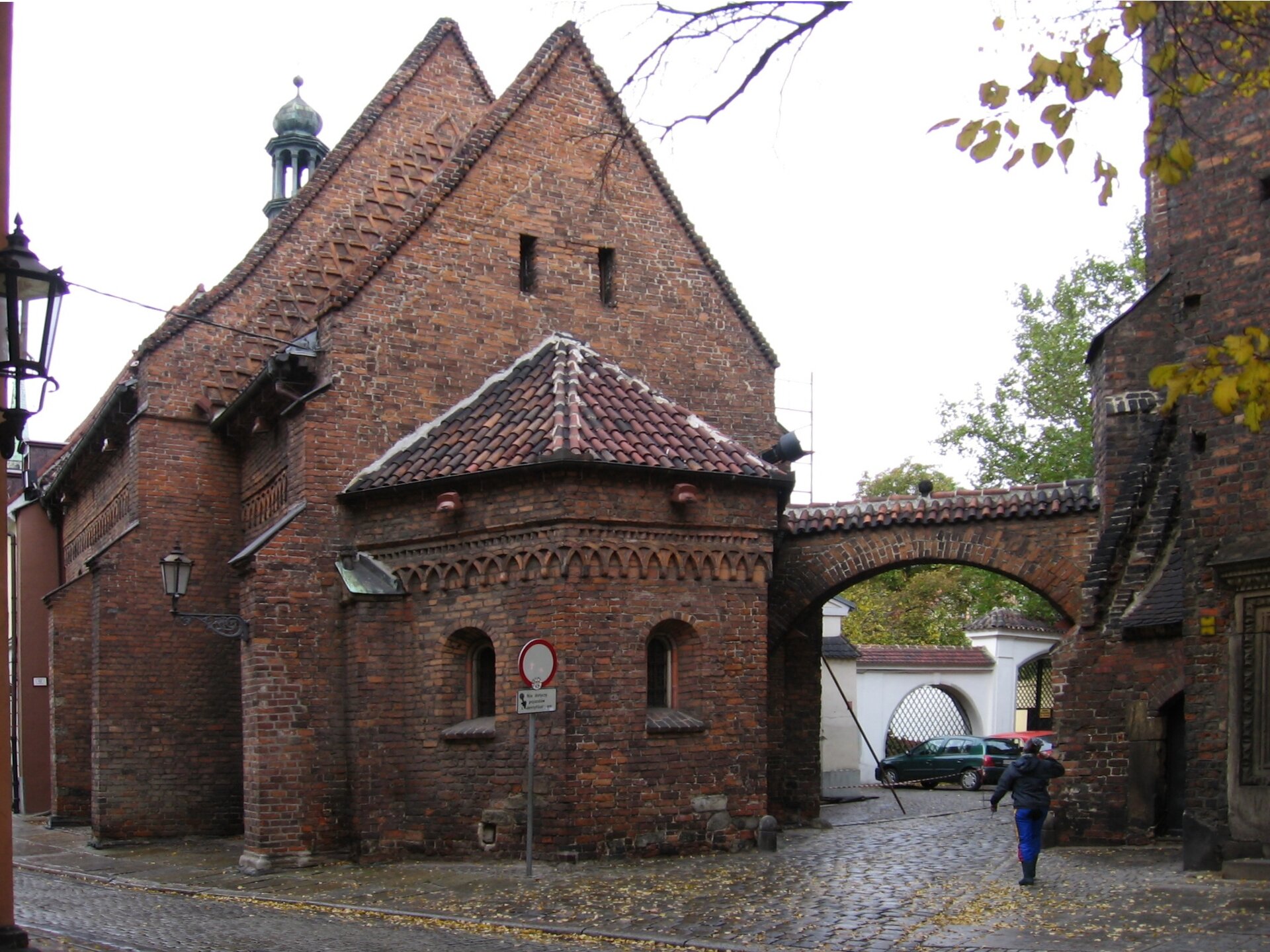
Art has been a part of our lives since the beginning of time. We often find it incomprehensible or lacking in meaning or beauty. Quite often we don't even notice art in art. The situation was strikingly different in the Middle Ages. Art had one task – to tell a story, pass on the knowledge and some specific content, helping the recipients to understand the world around them. In the first centuries of the Middle Ages culture was divided into two worlds – the Roman one, that was slowly coming to an end and the barbarian one, created by German peoples. Both of them, in their own way, expressed beauty through various creations. Sometimes, they became intertwined and took inspiration from each other.
The first style of art in the Middle Ages was the Romanesque one. Its typical elements were thick walls, small windows, semi‑circular arches and bulky structures, which was dictated by limited techniques that were used. Such structures ensured the durability of the buildings. Sculptures from that period were tightly connected to architecture and were mostly of a religious character. In the Romanesque period, most of the artists and creators remained anonymous, as they created art „for God's glory”, as we tend to call it nowadays.
The mid‑twelfth century brought slow changes in the creation of the buildings and artworks. The development of technology and knowledge together with some accompanying changes in the religious sphere of life, were also reflected in art, which we now call gothic. Similarly to Romanesque artRomanesque artRomanesque art it was characterized by many references to God and spirituality, portraits of Jesus and the saints, however, it also added some new elements – faith in the importantce of human choices and expressing human emotions. When it comes to architecture, buildings became taller and more slender and were characterized by their inner harmony. Big windows and rosettesrosetterosettes and stained glassstained glass windowstained glass in them filled churches and castles with colourful light. Gothic art sought to picture the perfection of the world created by God while often expressing some complex theological messages.
Gothic artgothic artGothic art was not only the style of cathedrals and churches, but also secular buildings. It was connected with the development of knight and bourgeois culture. Medieval cities were full of brick buildings, such as bourgeoisie houses, beautifully decorated town halls and city fortifications. Castles and palaces were often rebuilt so that they included slender and tall towers and barbicans.
Exercise 1
Wymień cechy architektury średniowiecznej.
Wymień cechy architektury średniowiecznej.
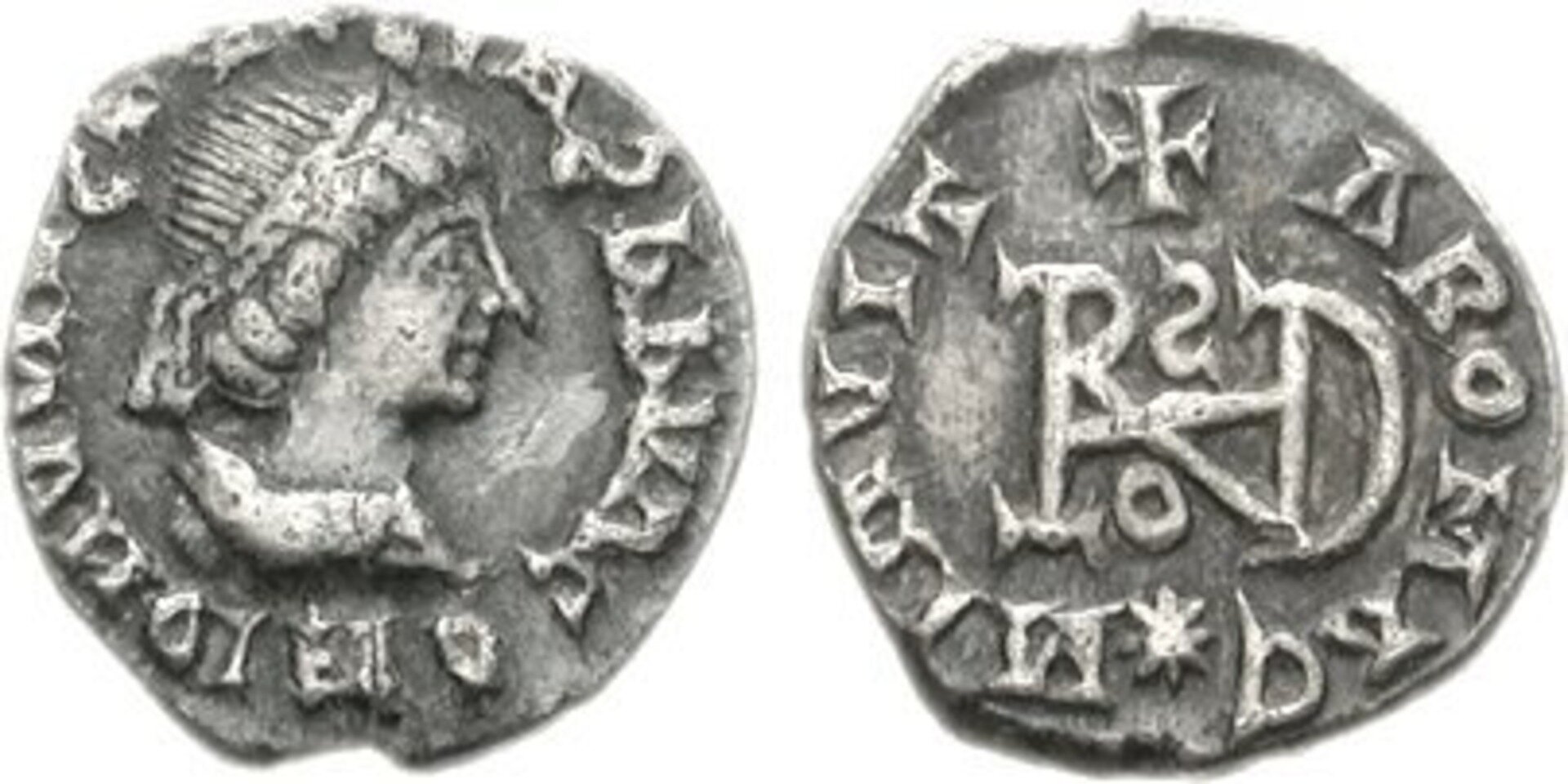
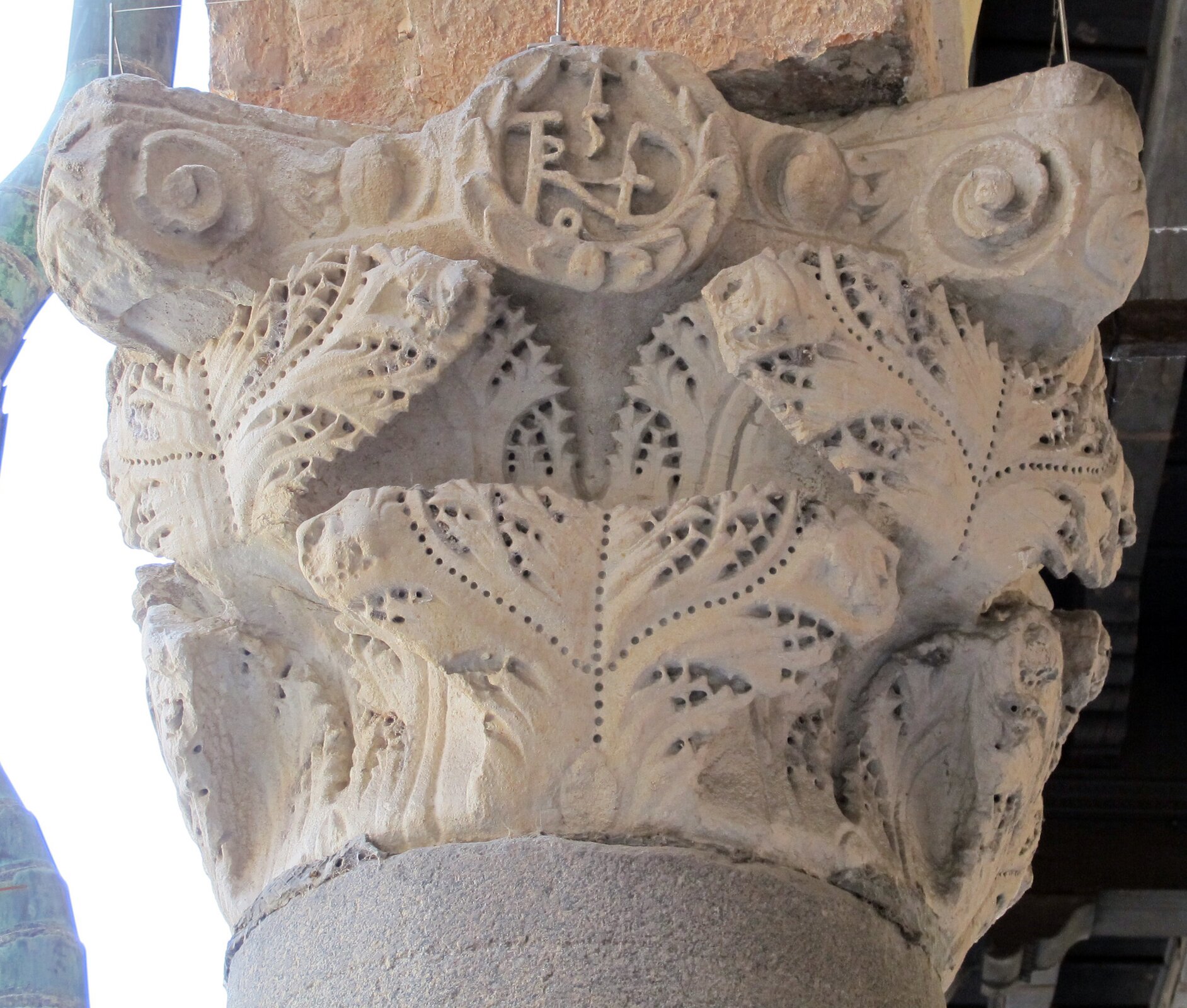
Look at the coin of Theoderic the Great, the Ostrogoth ruler of Italy. Compare the pictures on the coin to the decorations on the column heads in Palazzo del Popolo in Ravenna. In your opinion, what do these two completely different relics have in common?
Source: a. nn., domena publiczna, [online], dostępny w internecie: www.epodreczniki.pl.
R7HGUTKdUTQEl
Fotografia barwna przedstawiająca kolumnę w Palazzo del popolo w Rawennie.
Head of the column in Palazzo del popolo in Ravenna
Source: Sailko, Wikimedia Commons, licencja: CC BY-SA 3.0.
R3FtdP5mLmSMC
Wyjaśnij kluczowe pojęcia związane z tematem abstraktu.
Wyjaśnij kluczowe pojęcia związane z tematem abstraktu.
What do the two monuments have in common?
They both refer to the tradition of ancient art (the bust of a ruler, decorations on the capital).
Presence of a special sign with Theoderic's name.
Germanic horns as a popular element of decoration.
Exercise 2
R1aY1I51CwBSR
Wybierz jedno zagadnienie opisane w abstrakcie. Poszerz swoją wiedzę na jego temat, szukając dodatkowych informacji w dostępnych ci źródłach (np. w internecie, encyklopedii lub specjalistycznych publikacjach).
Wybierz jedno zagadnienie opisane w abstrakcie. Poszerz swoją wiedzę na jego temat, szukając dodatkowych informacji w dostępnych ci źródłach (np. w internecie, encyklopedii lub specjalistycznych publikacjach).
Source: Contentplus.pl sp. z o.o., licencja: CC BY 3.0.
R1CuH386wnqOy
Jakie elementy architektury Średniowiecze przejęło z antyku?
Jakie elementy architektury Średniowiecze przejęło z antyku?
Which element of the characters' outfits refer to ancient traditions?
a crown
trousers
coats resembling togas
Exercise 3
Szukając dodatkowych informacji w dostępnych ci źródłach (np. w internecie, encyklopedii lub specjalistycznych publikacjach), dowiedz się więcej na temat Katedry Se w Lizbonie oraz katedry w Pizie.
Szukając dodatkowych informacji w dostępnych ci źródłach (np. w internecie, encyklopedii lub specjalistycznych publikacjach), dowiedz się więcej na temat Katedry Se w Lizbonie oraz katedry w Pizie.
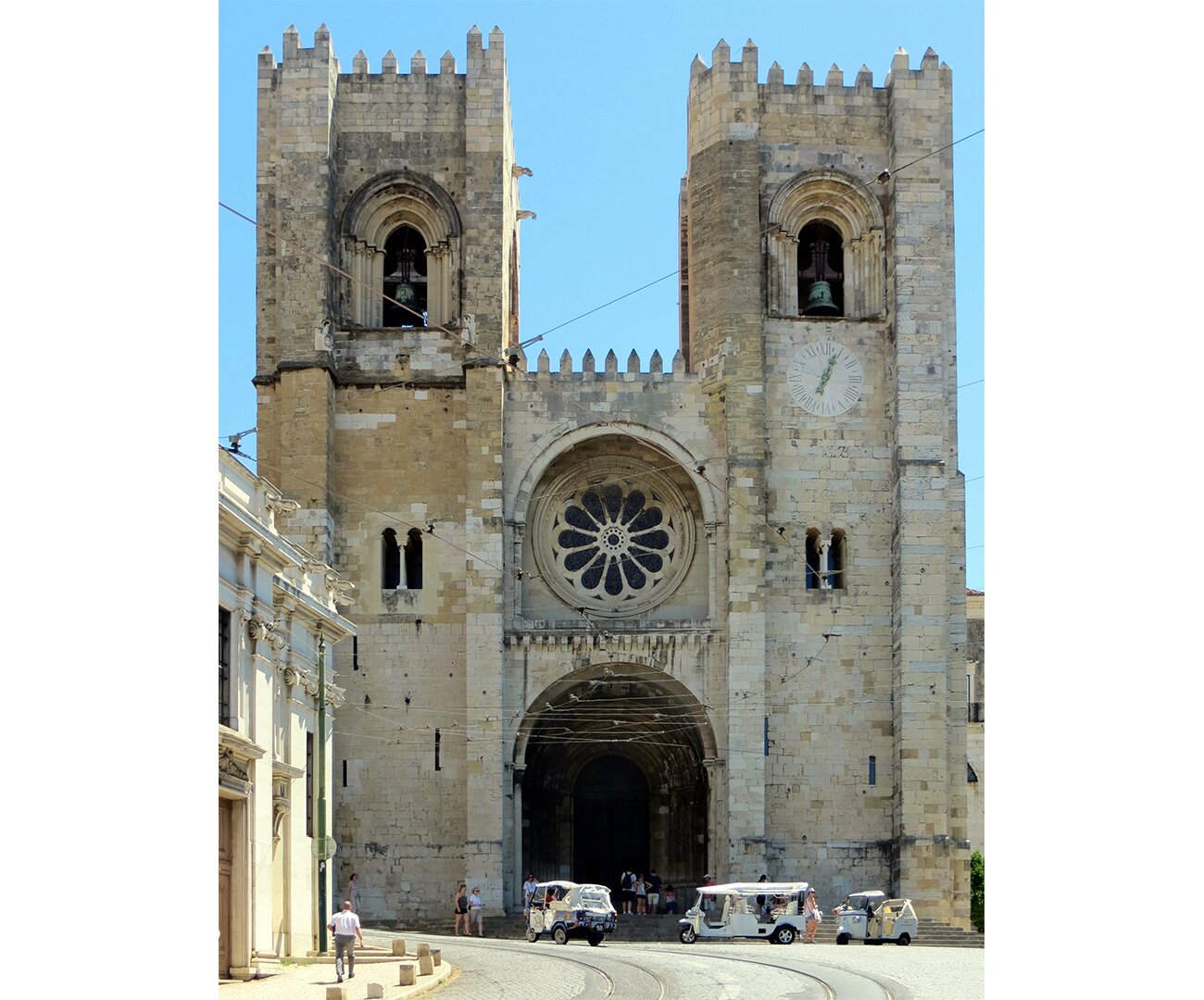
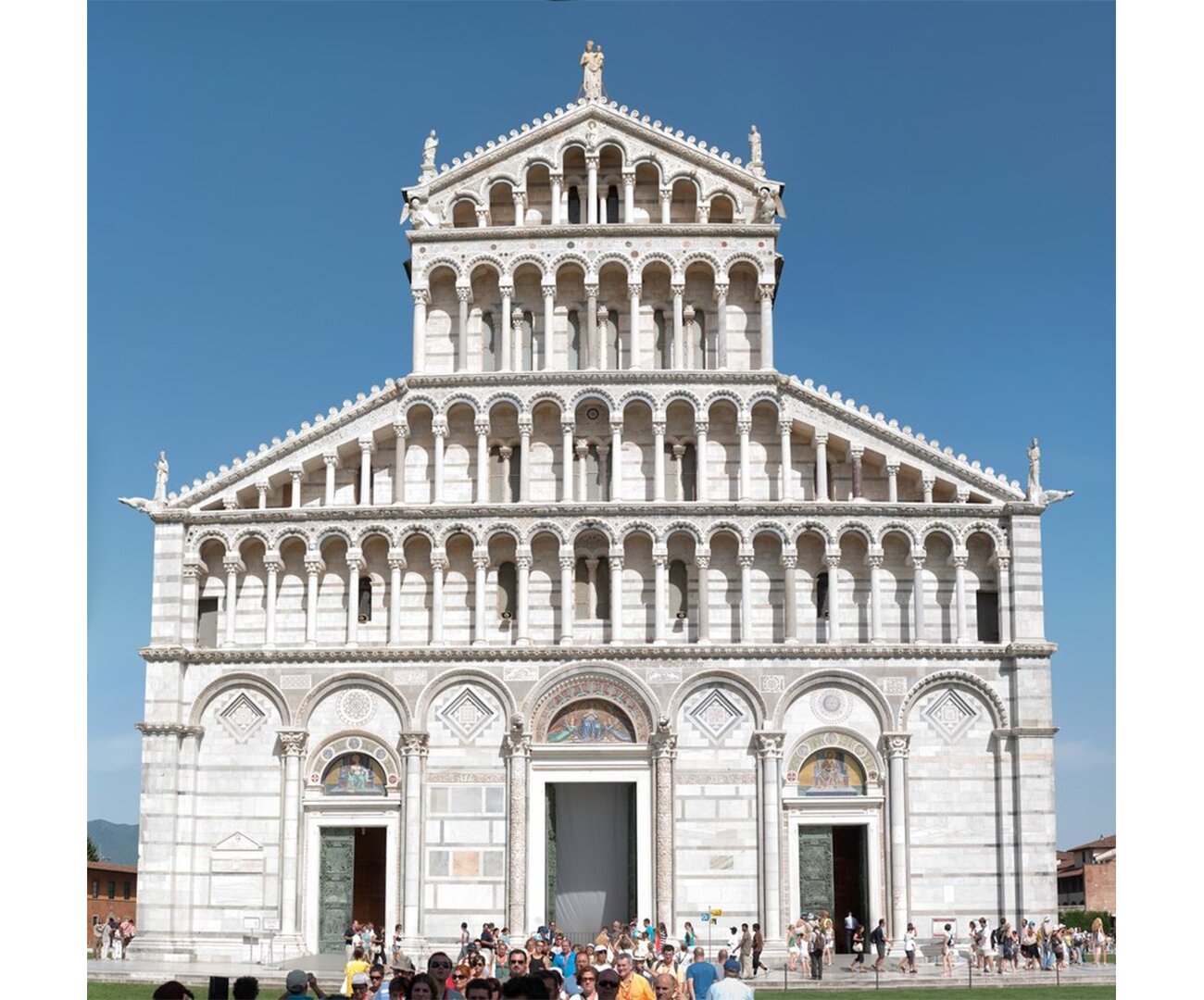
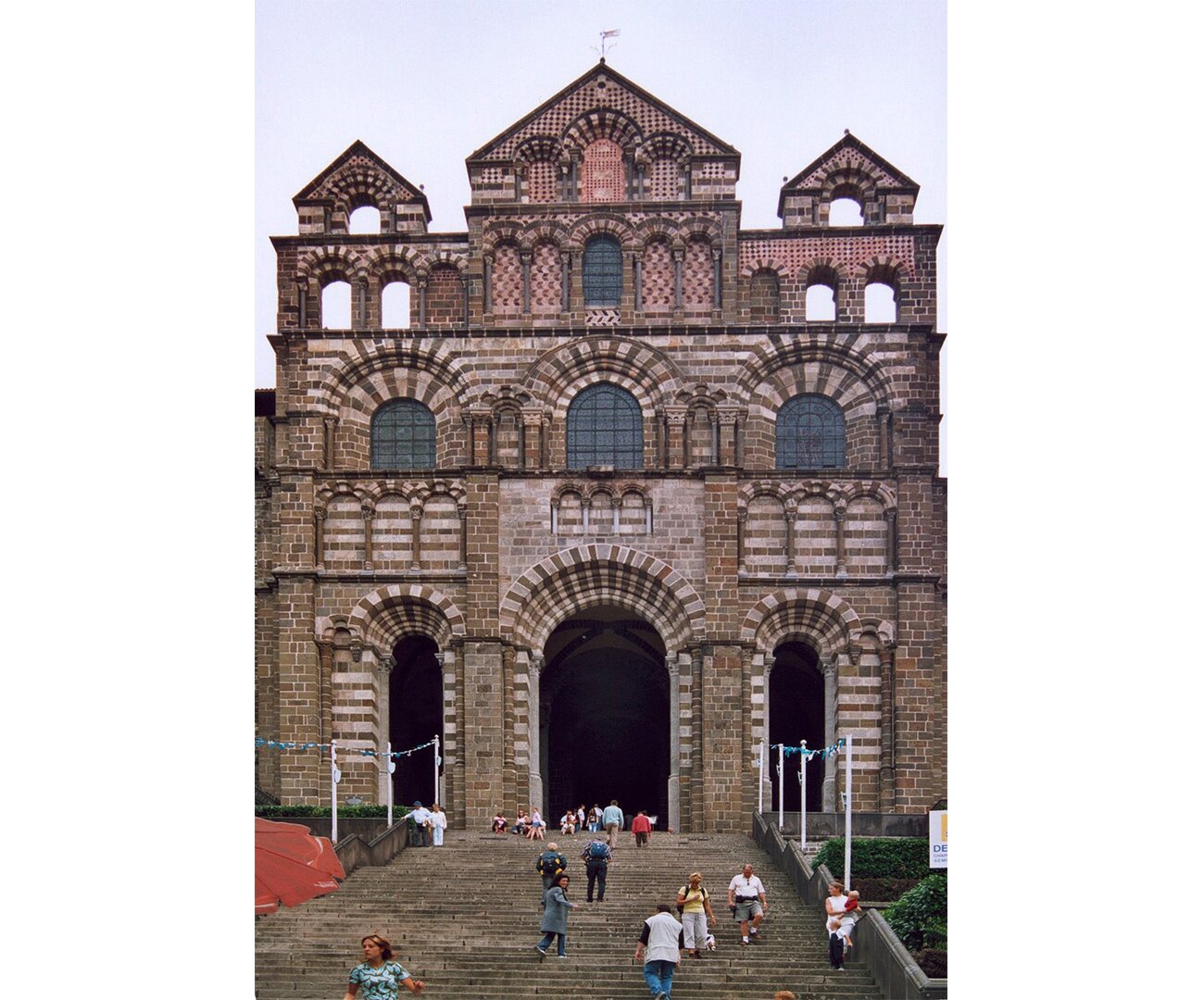
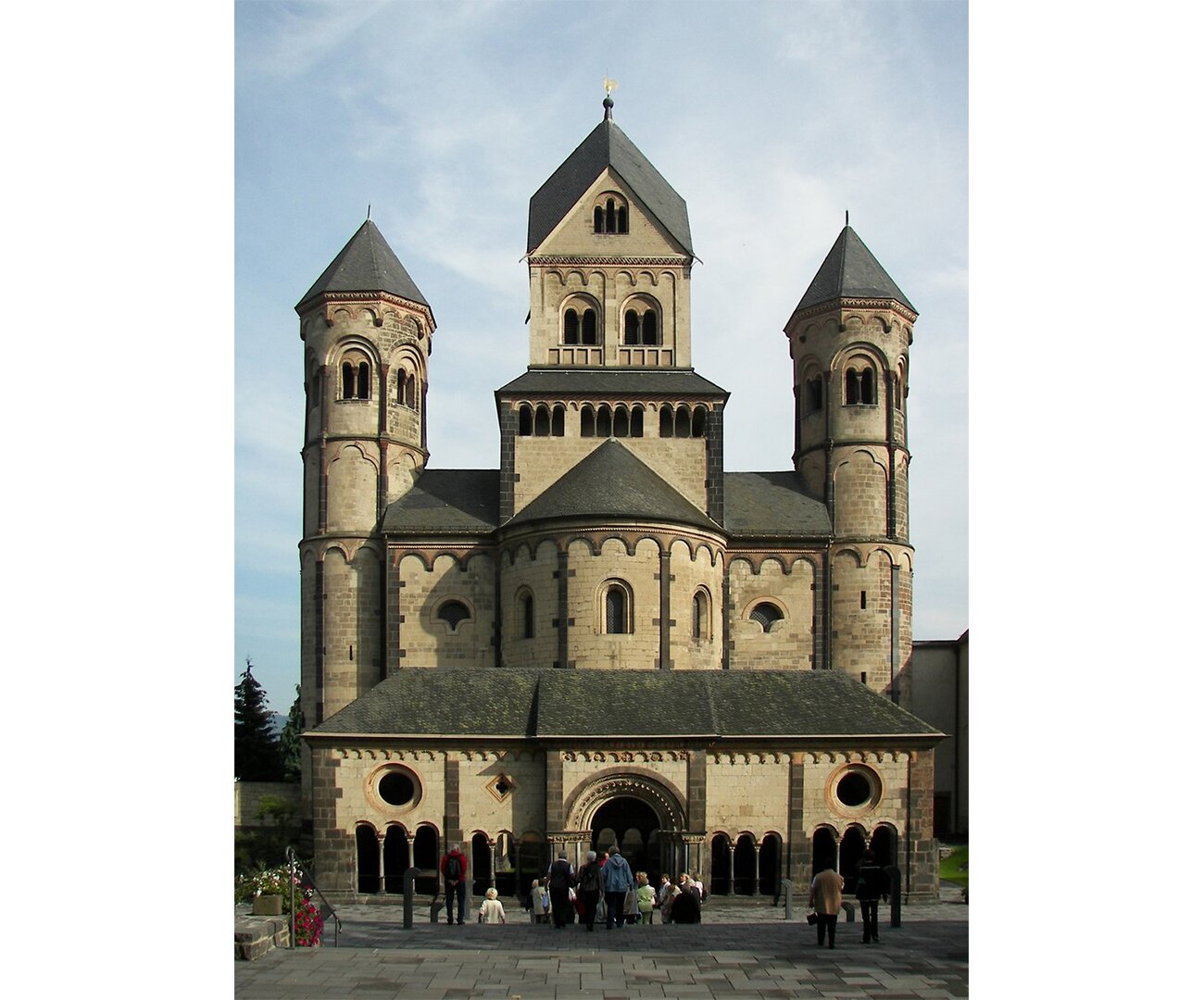
Compare the churches from four different countries, bearing in mind that they come from different cultural areas (gallery below). All of them were built between the 10th century and the end of the 12th ecntury. Then answer the question.
ReVACfEnDwJQY
Fotografia barwna przedstawiająca Katedrę w Lizbonie w Portugalii, w połowie XII wieku. Katedra zbudowana na kształt dwóch wieży. Ozdobione zewnętrznie okna z wyżłobionymi elementami. Po środku, pomiędzy wieżami wielkie okrągłe okno- witraż. Pod nim ogromna brama wejściowa.
Lisbon Cathedral, Portugal, mid-12th century.
Source: xlibber, licencja: CC BY 2.0.
RiySwvdSJk7BY
Fotografia barwna przedstawiająca Katedrę w Pizie w 1. poł. XII wieku. Wysoka konstrukcja z uwidocznionymi zewnętrznymi wyżłobieniami na elewacji. Zbudowana na kształt wieży, postawa szersza, im wyżej wzniesiona tym węższe zakończenie. Na elewacji zewnętrznej, w zagłębieniach dostrzec można namalowane obrazy.
Cathedral in Pisa, 1st half of the 12th century
Source: a. nn., licencja: CC BY-SA 3.0.
RCdvFAr8CYDi3
Fotografia barwna przedstawiająca Katedrę Le Puy-en-Velay, Owernia, w 1. poł. XII wieku. Katedra na zewnątrz ma widoczne trzy wieże. Jedna środkowa większa, poboczne mniejsze z futrynami okiennymi. Elewacja jest z czerwonobrunatnej cegły.
Le Puy-en-Velay Cathedral, Auvergne, 1st half of the 12th century.
Source: Patrick Giraud, licencja: CC BY-SA 1.0.
RtzOKk6OfznQ6
Fotografia barwna przedstawiająca Kościół opactwa Maria Laach, XII wiek (portyk przed kościołem - I ćw. XIII w.) Kościół ma charakterystyczne wyżłobione elementy przy oknach. Na dole u podstawy okna są mniejsze, okrągłe. Budynek ma trzy wieże z czego środkowa jest najwyższa.
Church of the Maria Laach Abbey, 12th century (portico in front of the church - 1st quarter of 13th century)
Source: Nikanos, licencja: CC BY-SA 2.5.
R1eLNLtiSj9kS
Wyjaśnij kluczowe pojęcia związane z tematem abstraktu.
Wyjaśnij kluczowe pojęcia związane z tematem abstraktu.
What all the buildings have in common is/are.
The shape of the facade, especially bulky towers.
The portal, big, round windows in the facade.
Gently curved arches at the top of the portals and window openings.
Exercise 4
Szukając dodatkowych informacji w dostępnych ci źródłach (np. w internecie, encyklopedii lub specjalistycznych publikacjach), dowiedz się, co to jest tympanon.
Szukając dodatkowych informacji w dostępnych ci źródłach (np. w internecie, encyklopedii lub specjalistycznych publikacjach), dowiedz się, co to jest tympanon.
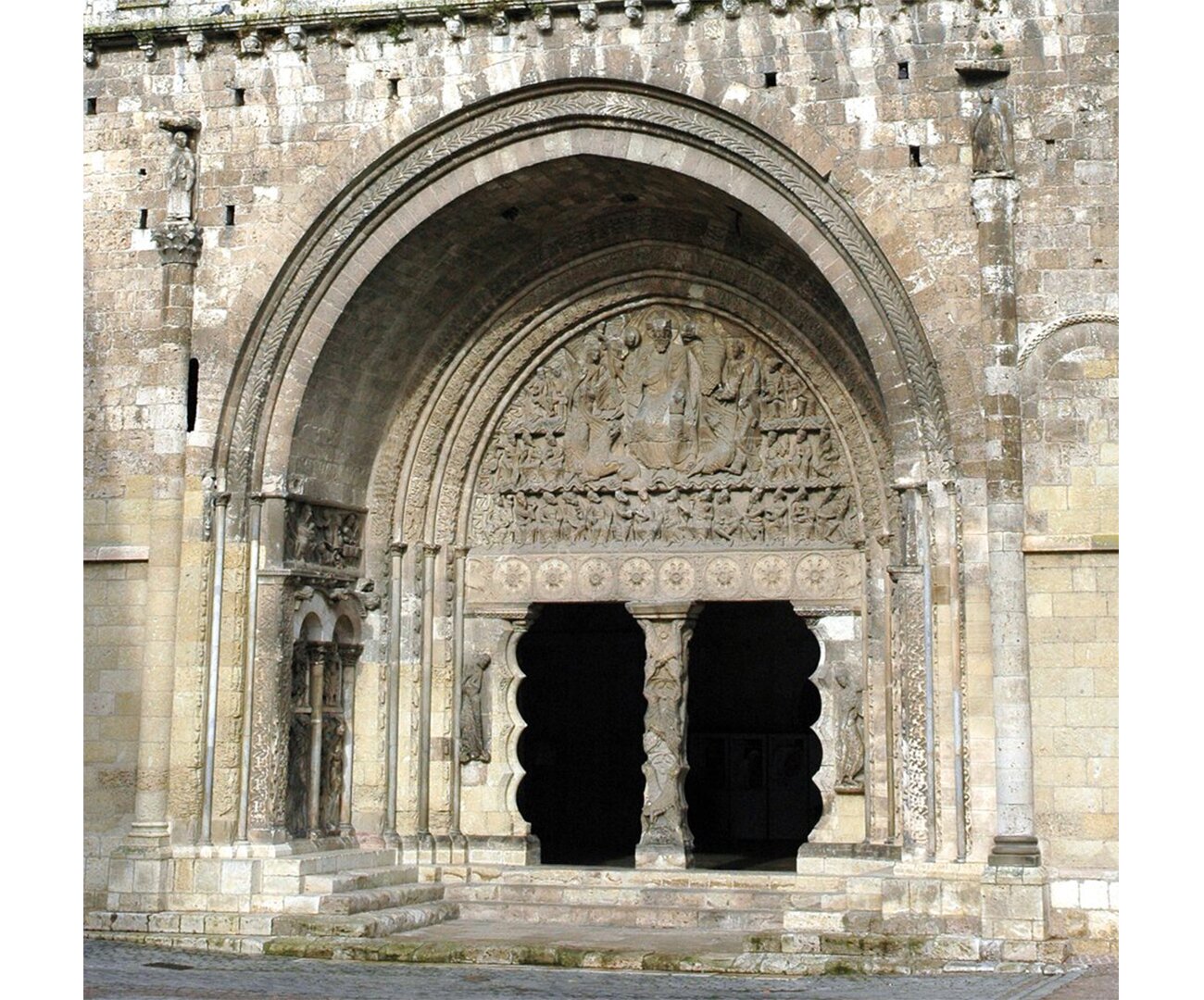
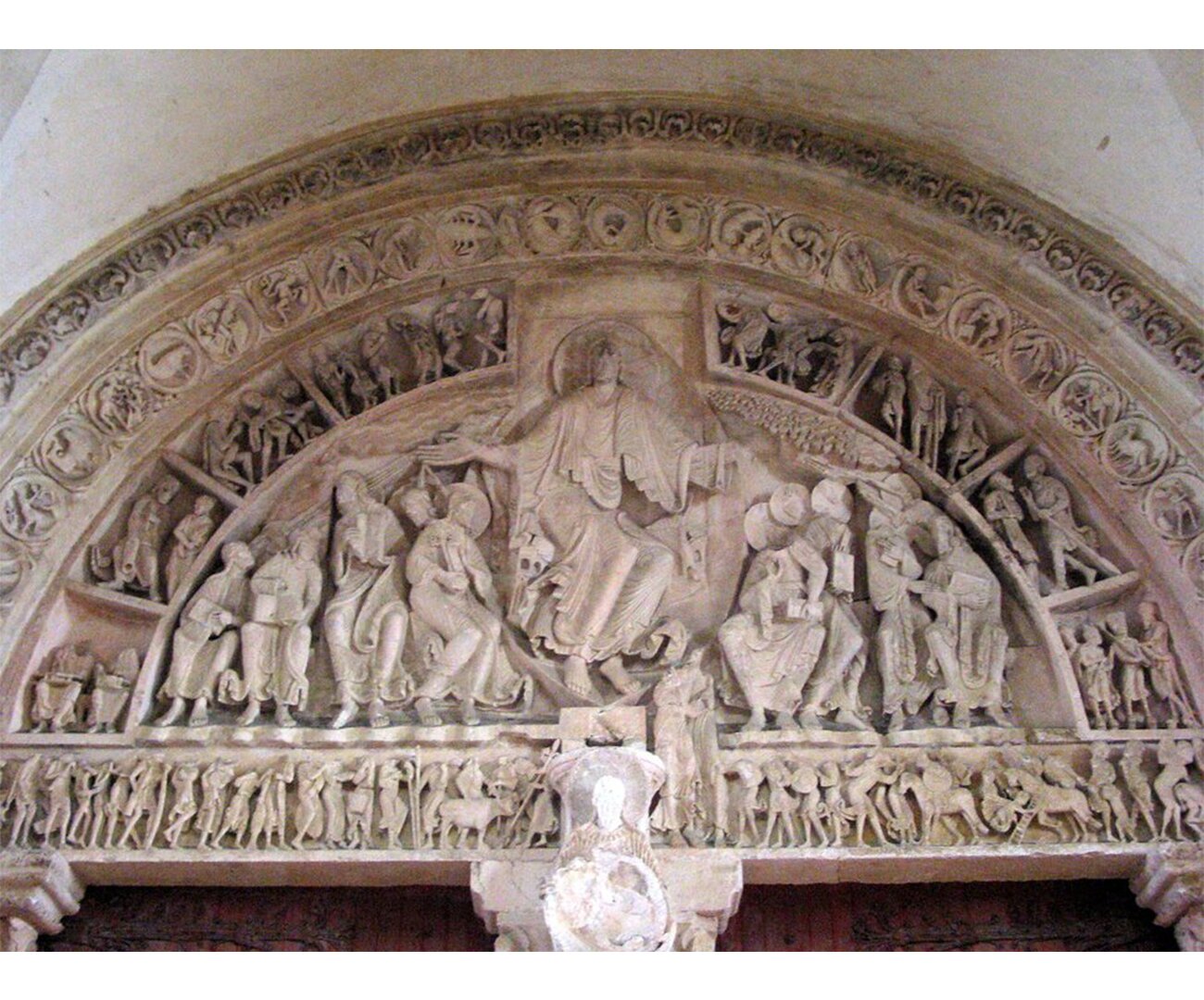
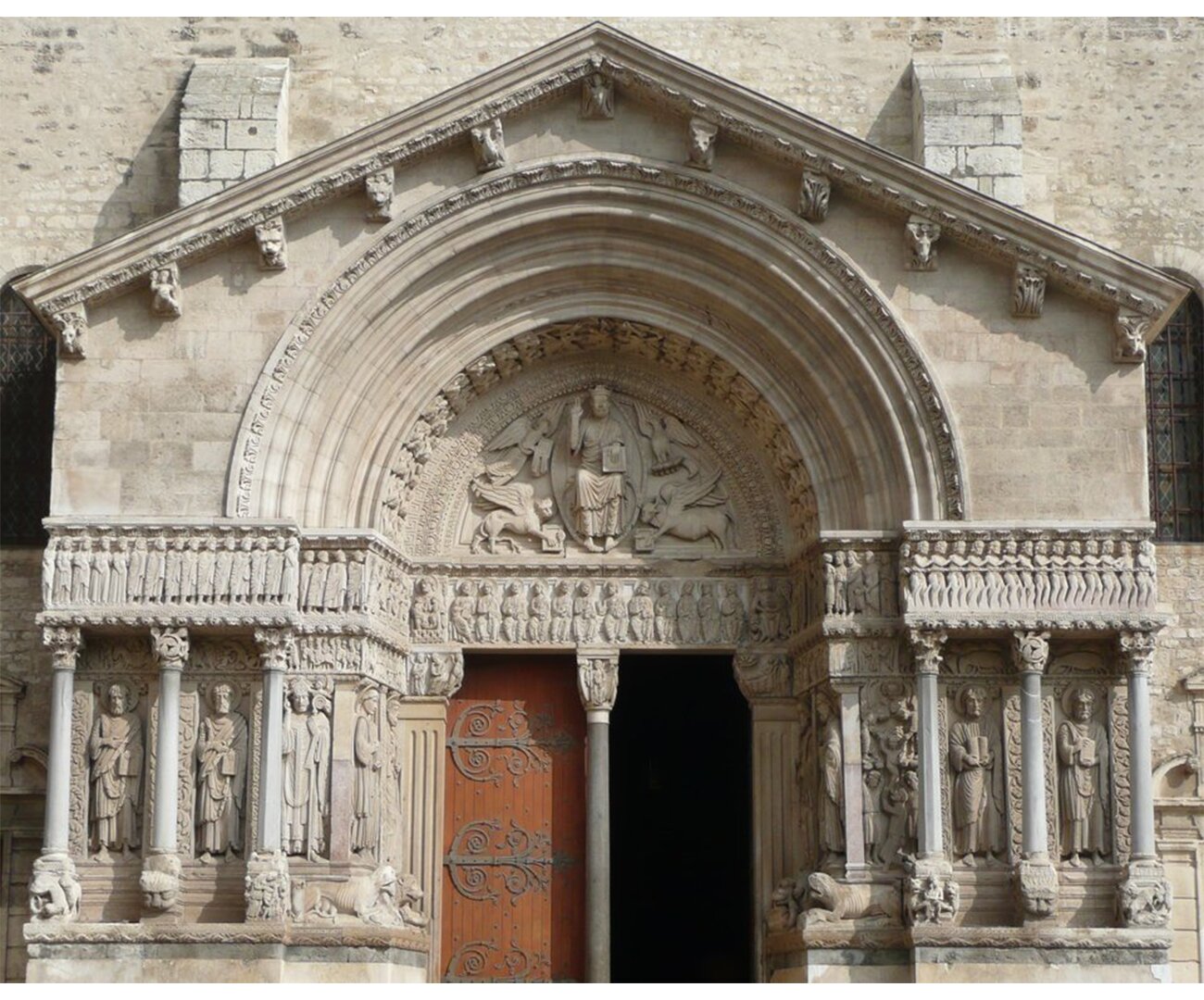
Look at the of three churches in France - from Moissac , Vazley and Arles. All of them portray Jesus Christ, each one in a different way. However, are the ways of portraying the Saviour very different in terms of the message that the artists wanted to pass across? Complete the exercise under the pictures by searching for smimilarities and differences.
R1On9iZDy5Prn
Fotografia barwna przedstawiająca tympanon kościoła w Moissac. Nad bramą uwidocznione elementy wyżłobień, sklepienia.
Tympanum of the church in Moissac
Source: Josep Renalias, Wikimedia Commons, licencja: CC BY-SA 3.0.
R1e5A9LusmHWP
Fotografia barwna przedstawiająca Tympanon kościoła w Vazley. Uwidocznione zostały wyżłobienia sceny z główną postacią, największą w środku. W tle dużo wyżłobionych postaci.
Tympanum of the church in Vazley
Source: Jean-Pol GRANDMONT Grandmont, Wikimedia Commons, licencja: CC BY-SA 3.0.
R11pxSS6tcxTq
Fotografia barwna przedstawiająca Tympanon kościoła w Arles. Nad bramą główną liczne wyżłobienia, sklepienia.
Tympanum of the church in Arles
Source: Finoskov, Wikimedia Commons, licencja: CC BY-SA 3.0.
R1ACNx4bF71PY
Wyjaśnij, w jaki sposób można wykorzystać w codziennym życiu zawarte w abstrakcie informacje.
Wyjaśnij, w jaki sposób można wykorzystać w codziennym życiu zawarte w abstrakcie informacje.
Put the elements to the corresponding places.
Unlike the tympanum in Vazley, the ones in Arles and Moissac show a symbolic picture of the evangelists., Unlike the tympana in Arles and Moissac, the tympanum of the church in Vazley does not depict the Last Judgement., Unlike the tympana in Moissac and Vazeley, on the tympanum in Arles, Jesus is pictured without an aureole., All of them present, among others, the evangelists., Jesus is the central figure in each case.
Similarities
Differences
Exercise 5
Read the text bellow that the abbot Suger allegedly placed on the door of the abbey he had built in Saint Denis, close to Paris. The building is thought to be the first church built in the gothic style.
Ty, który chciałbyś uhonorować te drzwi, Zwróć uwagę nie na złoto i koszt ich powstania, ale na kunszt ich wykonania. Szlachetne dzieło jest jasnością, ale błyszcząc szlachetnie, dzieło powinno rozjaśniać umysły, pozwalając im na wędrówkę przez światło do prawdziwego światła, gdzie Chrystus jest prawdziwymi drzwiami. (...) Prosty umysł wznosi się do prawdy poprzez rzeczy materialne, I jest wynoszony z jego wcześniejszego zanurzenia [w materii], gdy światło jest widoczne.
Ru8rUbMfaNWys
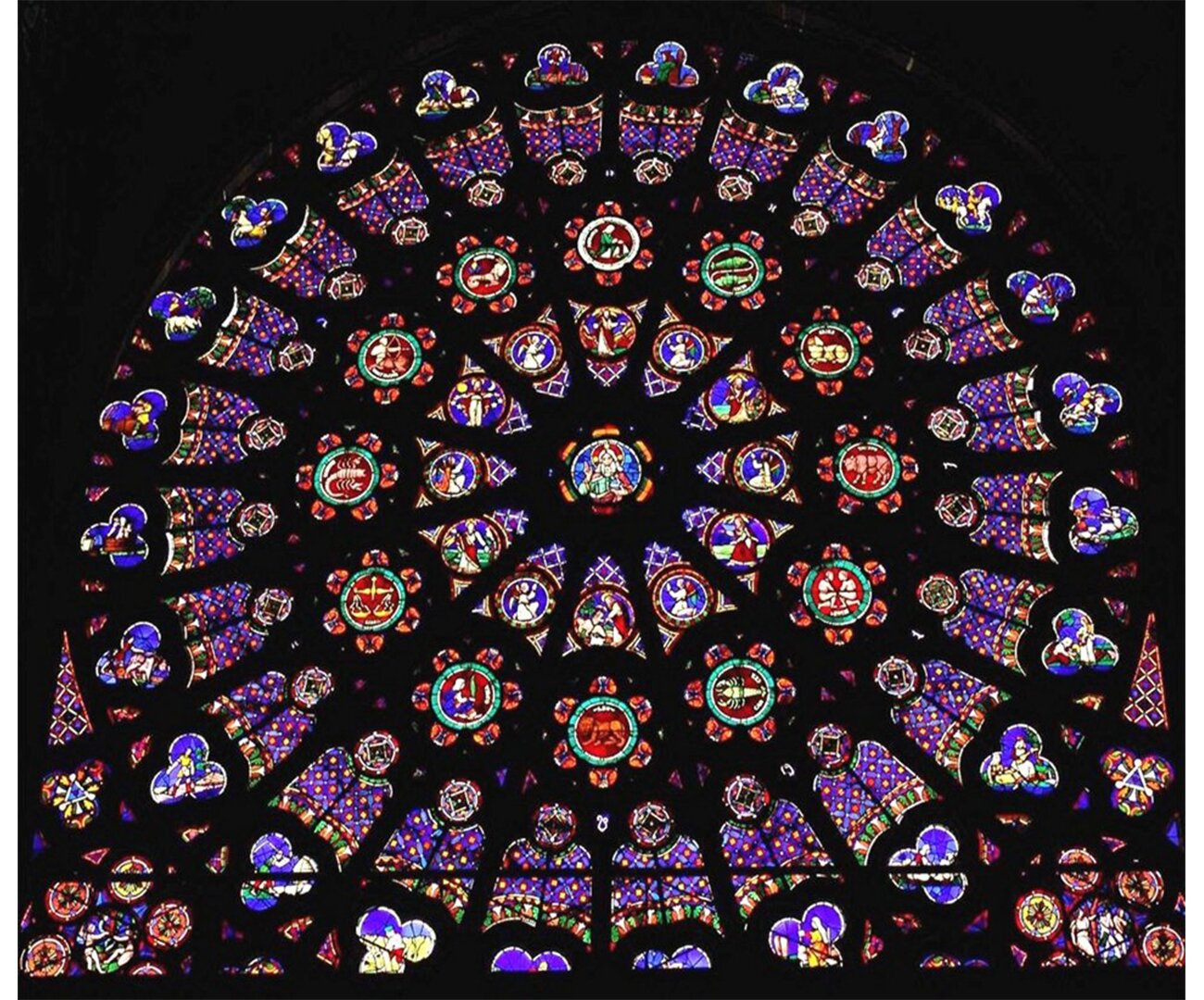
Fotografia barwna przedstawiająca widok na północną rozetę w kościele Saint Denis. Rozeta stworzona z wielu małych, barwnych okienek tworząca jedną całość.
View on the northern rosette in Saint Denis church
Source: TTaylor, Wikimedia Commons, licencja: CC BY-SA 3.0.
R15SbwF5SbjJi
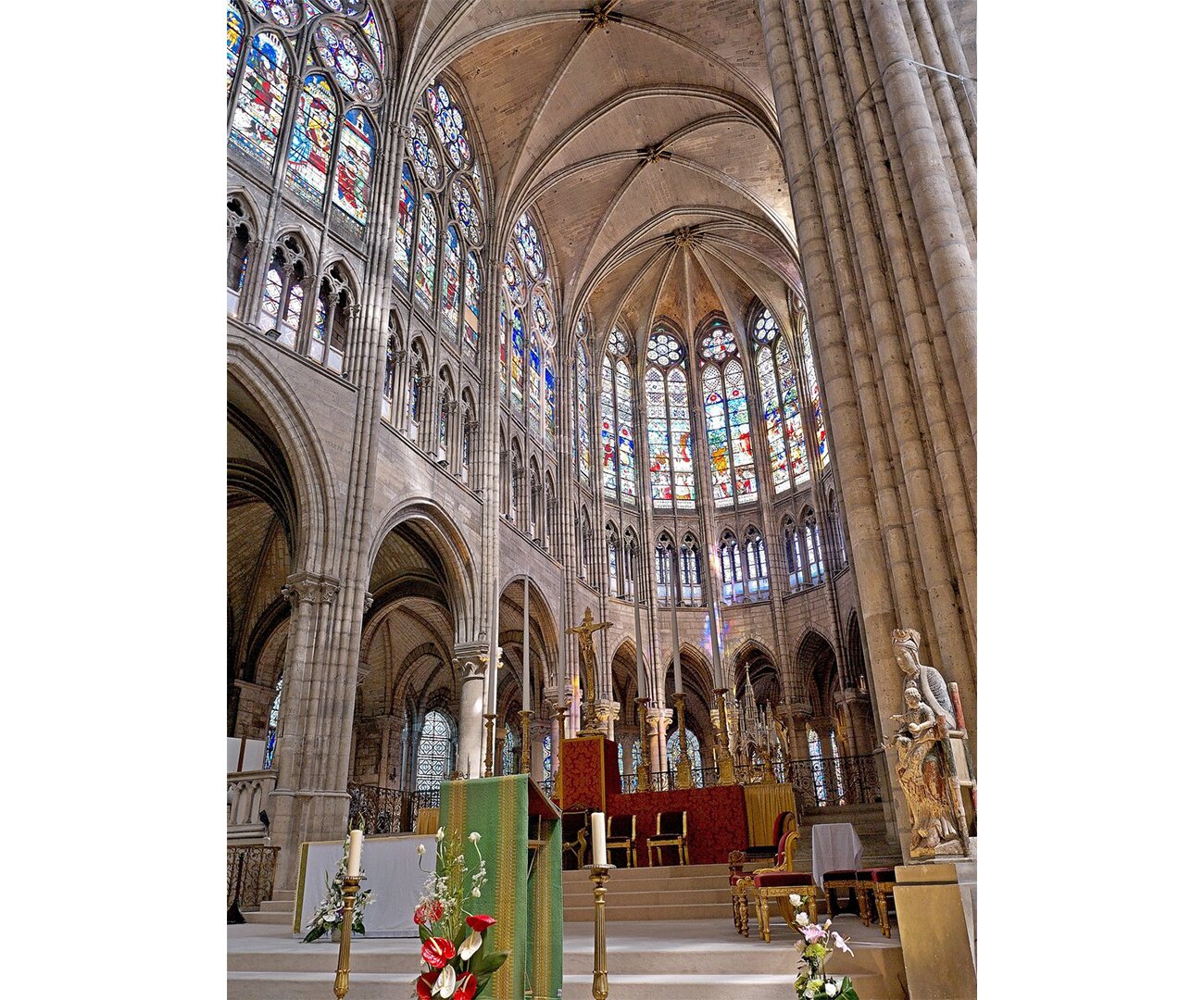
Fotografia barwna przedstawiająca Prezbiterium nawy głównej kościoła św. Denisa, XIII wiek. Uwidocznione zostały wewnętrzne sklepienia, wyżłobione elementy jak i duży witraż składający się z małych, barwnych okienek szklanych.
Presbytery of the main nave of Saint Denis church, 13th century
Source: a. nn., Wikimedia Commons, licencja: CC BY 3.0.
RDukKYOvaNOSy
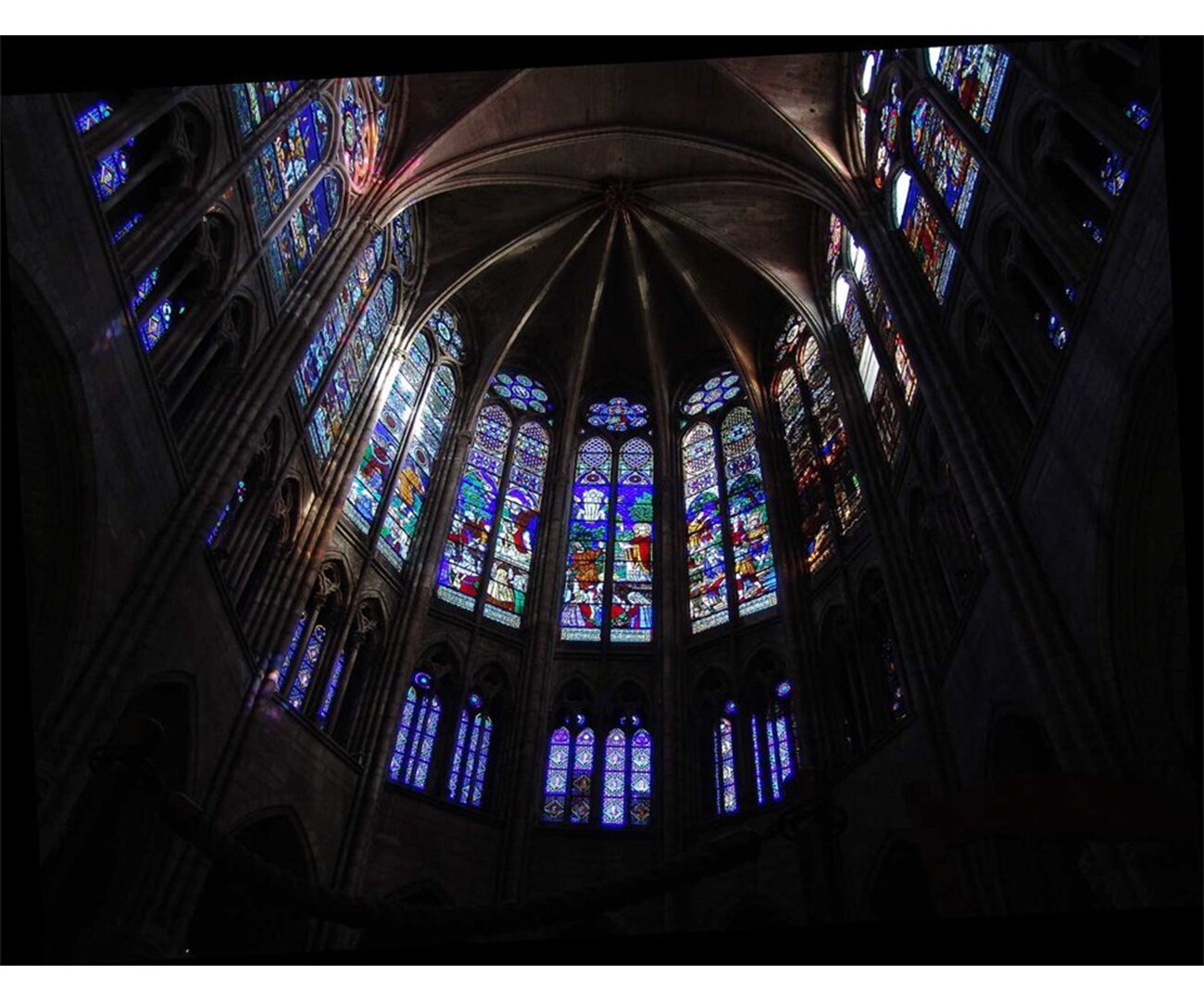
Fotografia barwna przedstawiająca kościół Saint Denis w 13 wieku. Widać wewnętrzną stronę witraży zdobiących sufit. Kolorowe okienka przedstawiają różne scenki.
Choir place of Saint Denis church, 13th century
Source: a. nn., Wikimedia Commons, licencja: CC BY 3.0.
RHfWkku603ouv
Wysłuchaj nagrania abstraktu, ułóż do niego pytania i zadaj je koledze.
Wysłuchaj nagrania abstraktu, ułóż do niego pytania i zadaj je koledze.
Compare the text with the pictures of a new church in Saint Denis, also in gothic style, but built slightly later. In both cases, there was a belief that...
Light indicates the presence of God, who embraces the world.
Light shows people the way to the truth.
Light helps to understand the Bible better.
RrmGl9lIyrxai1
Exercise 6
Which elements of the buildings are characteristic of romanesque art and which of the gothic one? Romanesque art Możliwe odpowiedzi: 1. Slender and tall buildings, 2. Bulky structure, 3. Thick walls, 4. Massive, closed vaults, 5. Semi-circular arches, 6. Cross-ribbed structures, 7. Rich interior decorations, 8. High windows, 9. Interiors full of light,, 10. Small windows, 11. Harmony and proportions., 12. Massive columns, 13. Pointed arches, 14. Colourful stained glass windows, rosettes Gothic art Możliwe odpowiedzi: 1. Slender and tall buildings, 2. Bulky structure, 3. Thick walls, 4. Massive, closed vaults, 5. Semi-circular arches, 6. Cross-ribbed structures, 7. Rich interior decorations, 8. High windows, 9. Interiors full of light,, 10. Small windows, 11. Harmony and proportions., 12. Massive columns, 13. Pointed arches, 14. Colourful stained glass windows, rosettes
Which elements of the buildings are characteristic of romanesque art and which of the gothic one? Romanesque art Możliwe odpowiedzi: 1. Slender and tall buildings, 2. Bulky structure, 3. Thick walls, 4. Massive, closed vaults, 5. Semi-circular arches, 6. Cross-ribbed structures, 7. Rich interior decorations, 8. High windows, 9. Interiors full of light,, 10. Small windows, 11. Harmony and proportions., 12. Massive columns, 13. Pointed arches, 14. Colourful stained glass windows, rosettes Gothic art Możliwe odpowiedzi: 1. Slender and tall buildings, 2. Bulky structure, 3. Thick walls, 4. Massive, closed vaults, 5. Semi-circular arches, 6. Cross-ribbed structures, 7. Rich interior decorations, 8. High windows, 9. Interiors full of light,, 10. Small windows, 11. Harmony and proportions., 12. Massive columns, 13. Pointed arches, 14. Colourful stained glass windows, rosettes
Which elements of the buildings are characteristic of romanesque art and which of the gothic one?
Cross-ribbed structures, Colourful stained glass windows, rosettes, Thick walls, Slender and tall buildings, Pointed arches, Small windows, Massive, closed vaults, High windows, Interiors full of light,, Bulky structure, Massive columns, Rich interior decorations, Harmony and proportions., Semi-circular arches
Romanesque art
Gothic art
Task 1
Listen carefully to the recording and read the reference text. Answer the question: Why did the citizens of Wrocław think it was necessary to open the parish school?
One of the biggest changes in the late Middle Ages was the development of education. Many urban schools were founded in the 12th century. Initially, they were only cathedral schools founded by the bishops and chapters obliged to do so by the Popes since the late 11th century. Then, some more schools started springing up - they were founded by city convents. The curriculum was the same for all types of Christian education and was based on seven liberal arts. As recommended by the Fourth Council of the Lateran in 1215, many parish schools started to appear also in villages. Those schools, however, aimed mostly at teaching basic skills of reading and writing in Latin, as well as prayers, religious songs and hymns or the church calendar.
The following is a description of the foundation of the first urban parish school in Wrocław on the Cathedral Island (Ostrów Tumski), by the Papal legate's from 1267:
RJxdlgH1pzi731
Fotografia barwna przedstawiająca ceglany kościół św. Idziego - to najstarszy zachowany budynek w Ostrowie Tumskim.
St. Giles church is the oldest remaining building in Ostrów Tumski
Source: licencja: CC 0.
„Brother Gwido [...] presbyter cardinal and the legate of the Holy See, God's blessings to the sons, councilors and all the citizens of Wrocław. In the past, standing in front of us, you stated that your boys, especially the youngest ones, as they go to schools outside the walls of this city, firstly because of the distance and secondly because of the difficult path through poor and narrow bridges set up across the rivers and also because of the huge number of people, carts and horses, continuously going through the bridges and the roads in great numbers, they suffer considerable inconvenience and difficulties and they have to face great danger. That's why you humbly asked us to take care of you and your little boys in the future and to find effective means for the difficulties in question, which with fatherly care we consider admirable. Therefore […] we decide that inside the city walls of Wrocław, by St. Mary Magdalene's Church, the schools will be built, where young boys will study, learn the alphabet, the Lord's Prayer and the Angelic Salutation, as well as the symbols of faith, the psalter and seven psalms and they will also learn to sing, so that they are able to read and sing in church in the name of God's glory. At school they should also listen to Donatus, Cato and Teodol and study rules for the boys. If those boys, however, want to listen to more advanced classes, they shall move to the school by St. John's Church in Wrocław or to any other school they consider worthy. [...] It happened in Wrocław, on 12th February, during the second year of the pontificate of Clement IV.”
Exercise 7
Ułóż trzy pytania quizowe odnoszące się do abstraktu i daj je do rozwiązania swoim kolegom i koleżankom.
Ułóż trzy pytania quizowe odnoszące się do abstraktu i daj je do rozwiązania swoim kolegom i koleżankom.
Do the puzzle, then answer the question.
R15s8Yf8EIqP4
Wykonaj polecenie.
Wykonaj polecenie.
R7MvVxINLzrJU
Wykonaj polecenie.
Wykonaj polecenie.
R15lFKgR2ZtOs
Własnymi słowami zdefiniuj wybrane terminy ze słownika.
Własnymi słowami zdefiniuj wybrane terminy ze słownika.
Complete the missing words.
The photograph from the first puzzle shows .....................
The photograph from the second puzzle shows .....................
Romanizm – sztuka romańska, styl w sztuce rozwijający się między XI a XIII wiekiem. Wyrósł na bazie antyku i sztuki karolińskiej. Był związany z działalnością Kościoła i wyrażał się przede wszystkim w sztuce sakralnej. Charakteryzował się m.in. grubymi murami, niewielkimi oknami, prostotą i surowością.
Gotyk – styl w sztuce średniowiecznej i wczesnorenesansowej związany z rozwojem kultury dworskiej i mieszczańskiej. Charakteryzował się smukłością i strzelistością budowli, sklepieniami krzyżowymi oraz harmonią i oświetlonymi wnętrzami.
Witraż – ozdobne wnętrze okna wykonane z różnokolorowych kawałków szkła oprawionych w ołowiane ramki. Rozwinął się w budownictwie gotyckim. Stosowano je najczęściej w budowlach sakralnych.