Przeczytaj
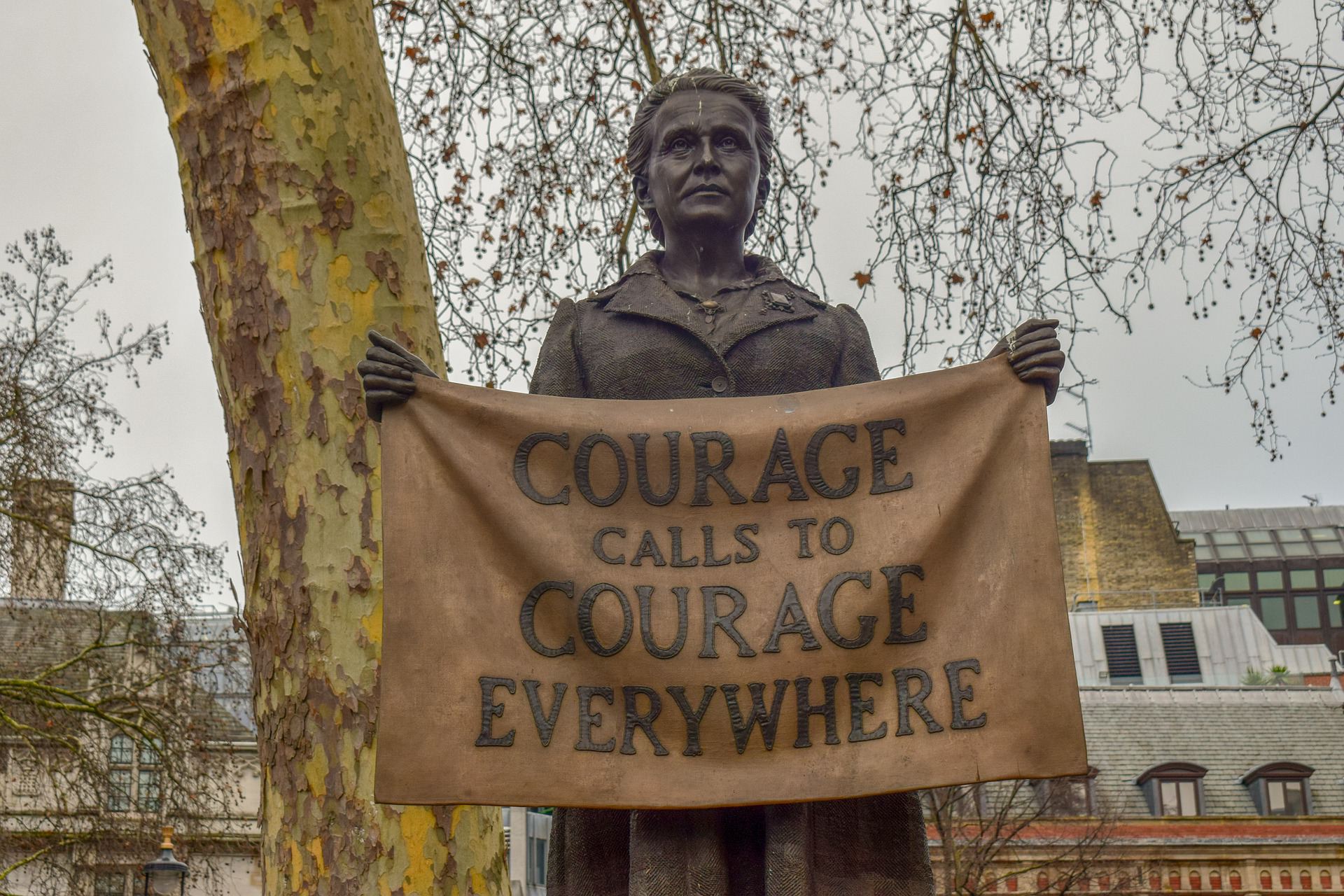
How much courage and determination one must have to fight for their rights on the streets. The woman in the picture is Millicent Fawcett, an English suffragist and reformer. She was the leader of the women’s movement fighting for voting rights and equal access to education. She was given support by her husband, which was a quite unique thing at that time because men usually didn’t believe women needed such privileges. Millicent was even allowed to give a speech about women’s rights in Parliament in 1866. In this section of the material you will learn about the long and arduous road women in England had to take to become full citizens at the ballot box.
Jak wiele trzeba mieć w sobie odwagi i determinacji, by wyjść na ulicę i domagać się swoich praw. Kobieta uwieczniona na rzeźbie to Millicent Fawcett, angielska sufrażystka i reformatorka. W staraniach i walce o prawa wyborcze kobiet i dostęp do edukacji wspierał ją mąż, co w XIX wieku było zjawiskiem nieczęstym. Większość mężczyzn uważało wówczas, że kobietom takie przywileje nie były potrzebne. Millicent dzięki wsparciu męża udało się w 1868 roku wygłosić przemówienie w Parlamencie na temat praw kobiet. W tej części materiału dowiesz się, jak długą i arcytrudną drogę musiały przebyć kobiety w Anglii, by stać się pełnoprawnymi obywatelami przy urnach wyborczych.
Study the text and do the exercises below.
Deeds Not Words!Getting the right to vote wasn’t easy for women. In the 19th century it was assumed that men made all the decisions while women’s role was in the home. It was not until 1918, with Lloyd George’s electoral reform introducing the „principle of universal suffrageprinciple of universal suffrage” that women „were granted the right to votewere granted the right to vote”. That was an unbelievable success, but it wouldn’t have happened if not for the determination of some courageous women.
A. Historically, the UK and the USA make good examples of the fight and struggle for women’s suffrage in the 19th and 20th century. You may come across two similarly sounding names: suffragettessuffragettes and suffragistssuffragists. Both were women’s movements fighting for their rights but the methods they used were different. The word suffragists appeared at the beginning of the 19th century and denoted women’s rights campaigners who were characterised by their dedication to nonviolencededication to nonviolence. They believed that peaceful marchespeaceful marches, handing out pamphletshanding out pamphlets and giving public speechesgiving public speeches would convince men that women deserved equal rights.
B. The name suffragette first appeared in print in 1906 as an offensive term given by a British reporter to women’s suffrage activists. Instead of being displeased with the name, some more radical British groups adopted it. Suffragettes didn’t feel like distributing pamphlets or giving speeches at a public meeting. They were demanding their right to vote by more radical meansradical means. They damaged public propertydamaged public property, set things on fireset things on fire, spat at police officersspat at police officers. They even chained themselves to railingschained themselves to railings. When caught by the police, they often ended up in jailended up in jail.
C. Many arrested suffragettes went on hunger strikeshunger strikes: they refused to eat. After a couple of days they were force fedwere force fed, which was a very brutal process. The prison management and doctors decided to do it for fear of a sudden deterioration in the prisoners’ health and their risk of death. Hunger strikers gained a lot of sympathy and the word about their determination was widely spread. Even when the hunger strikes left the suffragettes weak and in bad health, they didn’t intend to give up. The authorities decided to break their spirit and introduced the Cat and Mouse ActCat and Mouse Act which forced the prisoners who became weak and at risk of death to go home but only until they recovered. After a short while they were rearrested and the whole process repeated.
D. In 1914 when the First World War broke outbroke out, many women had to take on the jobs that used to be done by men who were now forced to join the army. Suffragettes limited their violent actions as they concentrated on giving support on the war front. They proved they could work as well as men even at the time of war. In 1918 the government introduced a new law that allowed soldiers to vote. Women demanded to be also included due to their devoted roledevoted role during the war. Finally, in 1918 the British Parliament passed the Representation of the People Act, which granted the right to vote to women but only those who were over 30 and owned property. This right was not extended to all women until 1928.
“Deeds not words”, the famous slogan that suffragettes adopted, meant two things: instead of promises, they demanded the actual right to vote and in case it wouldn’t work, women were willing to act in protests, sacrificingsacrificing their families, their health, sometimes their lives. The principle of universal suffrage was finally introduced, but bear in mind that the price for it was high.
Źródło: Anna Faszcza, dostępny w internecie: https://www.britannica.com/topic/woman-suffrage [dostęp 16.11.2023], licencja: CC BY-SA 3.0.
B. 1. Long awaited victory, 2. Pseudo-humane law, 3. Activists’ will power, 4. Suffragists movement, 5. Significant distinction, 6. Unwarranted imprisonment
C. 1. Long awaited victory, 2. Pseudo-humane law, 3. Activists’ will power, 4. Suffragists movement, 5. Significant distinction, 6. Unwarranted imprisonment
D. 1. Long awaited victory, 2. Pseudo-humane law, 3. Activists’ will power, 4. Suffragists movement, 5. Significant distinction, 6. Unwarranted imprisonment
2. Hunger strikes’ resistance was hardly known among the society. TrueFalse
3. The Cat and Mouse Act guaranteed hunger strikers medical assistance. TrueFalse
4. During the war suffragettes scarcely reduced their violent tactics. TrueFalse
5. Only particular groups of women in Britain gained the right to vote in 1918. TrueFalse
You have been discussing the topic of women’s rights with your friends. Explain to them what methods women used in the past to gain the right to vote. Write 5‑6 sentences.
Słownik
/ ˈbælət /
karta do głosowania (a writing system of voting)
/ ˈbælət bɒks /
urna wyborcza (a container where we leave ballots)
/ brəʊk ˈaʊt / / ˈbreɪk ˈaʊt /
o wojnie: wybuchła [wybuchnąć] (about the war: to start)
/ ˈkændɪdət /
kandydat/kandydata (a person who applies for a position)
/ kæpˈtɪvəti /
niewola (the state of being kept in prison)
/ kæt ənd maʊs ækt /
ustawa o więźniach, która zezwalała na tymczasowe zwolnienie z powodu złego stanu zdrowia (the Act that allowed to release hunger strikers who were at the risk of death to get better at home, and rearrest them after they recovered)
/ tʃeɪnd ðəmˈselvz tu ˈreɪlɪŋz / / ˈtʃeɪn wʌnˈself tu ə ˈreɪlɪŋ /
przykuwali/przykuwały się łańcuchami do poręczy [przykuwać się do poręczy] (to tie oneself with a chain to the railing)
/ ˈsɪtɪzən /
obywatel/obywatelka (an inhabitant of a town or city)
/ ˈdæmɪdʒd ˌpʌblɪk ˈprɒpəti / / ˈdæmɪdʒ ˌpʌblɪk ˈprɒpəti /
niszczyli/niszczyły mienie publiczne [niszczyć mienie publiczne] (destroy things that belong to the city)
/ ˌdedɪˈkeɪʃn̩ tu nɒnˈvaɪələns /
zaangażowanie bez użycia przemocy [zaangażować się bez użycia przemocy] (employing peaceful means)
/ dɪˈvəʊtɪd rəʊl /
rola pełna poświęcenia (dedicated to a given matter)
/ eˈlekt /
wybierać (choose someone to hold a public office)
/ ˈendɪd ˈʌp ɪn dʒeɪl / / end ˈʌp ɪn dʒeɪl /
trafiali/trafiały do więzienia [trafić do więzienia] (get arrested)
/ ˈɡɪvɪŋ ˌpʌblɪk ˈspiːtʃɪz / / ɡɪv ə ˌpʌblɪk spiːtʃ /
przemawiając publicznie [przemawiać publicznie] (speak to people publicly)
/ ˈhændɪŋ aʊt ˈpæmflɪts / / hænd aʊt ə ˈpæmflɪt /
wręczając broszury [wręczać broszurę] (distribute leaflets)
/ ˈhʌŋgə straɪk /
strajk głodowy (refuse to eat to draw public attention to an important matter)
/ ɪnˈsʌlt ˈsʌmwʌn /
obrażać kogoś
/ ˈpiːsfəl ˈmɑːtʃɪz / / ˈpiːsfəl mɑːtʃ /
marsze pokojowe [marsz pokojowy] (nonviolence march)
/ ˈprɪnsəpl̩ əv ˌjuːnɪˈvɜːsl̩ ˈsʌfrɪdʒ /
zasada powszechnego prawa wyborczego (the right to vote for everybody)
/ ˈrædɪkl̩ miːnz / / ˈrædɪkl̩ miːn /
radykalne kroki/środki [radykalny krok/środek] (extreme methods)
/ ˈrezɪdənt /
mieszkaniec/mieszkanka (a person who lives somewhere permanently)
/ ˈsækrɪfaɪsɪŋ / / ˈsækrɪfaɪs /
poświęcając [poświęcać] (to give up something or someone for something more important)
/ set ˈthetaɪŋz ˈɒn ˈfaɪə / / set ə ˈthetaɪŋ ˈɒn ˈfaɪə /
podpalali/podpalały rzeczy [podpalać rzecz] (commit the crime of arson)
/ spæt ət ðə pəˈli:s ɒfɪsəz / / spɪt ət ə pəˈli:s ˈɒfɪsə /
opluwali/opluwały policjantów [opluwać policjanta/policjantkę] (eject salvia at somebody as a sign of anger)
/ ˌsʌfrəˈdʒets / / ˌsʌfrəˈdʒet /
sufrażetki [sufrażetka] (women who fight for their voting right using violence)
/ ˈsəfrəˌdʒɪsts / / ˈsəfrəˌdʒɪst /
sufrażystki [sufrażystka] (women who fight for their voting rights without using violence)
/ vəʊt /
głosować (express your choice in the elections)
/ wə ˈfɔ:s fed / / bi ˈfɔ:s fed /
byli karmieni/były karmione przy użyciu przemocy [być karmionym przy użyciu przemocy], byli karmieni/były karmione na siłę [być karmionym na siłę] (to feed somebody using force against their will)
/ wə ˈɡrɑːntɪd ðə ˈraɪt tu vəʊt / / bi ˈɡrɑːntɪd ðə ˈraɪt tu vəʊt /
uzyskali/uzyskały prawo do głosowania [uzyskać prawo do głosowania] (get the right to vote)
Źródło: GroMar Sp. z o.o., licencja: CC BY‑SA 3.0