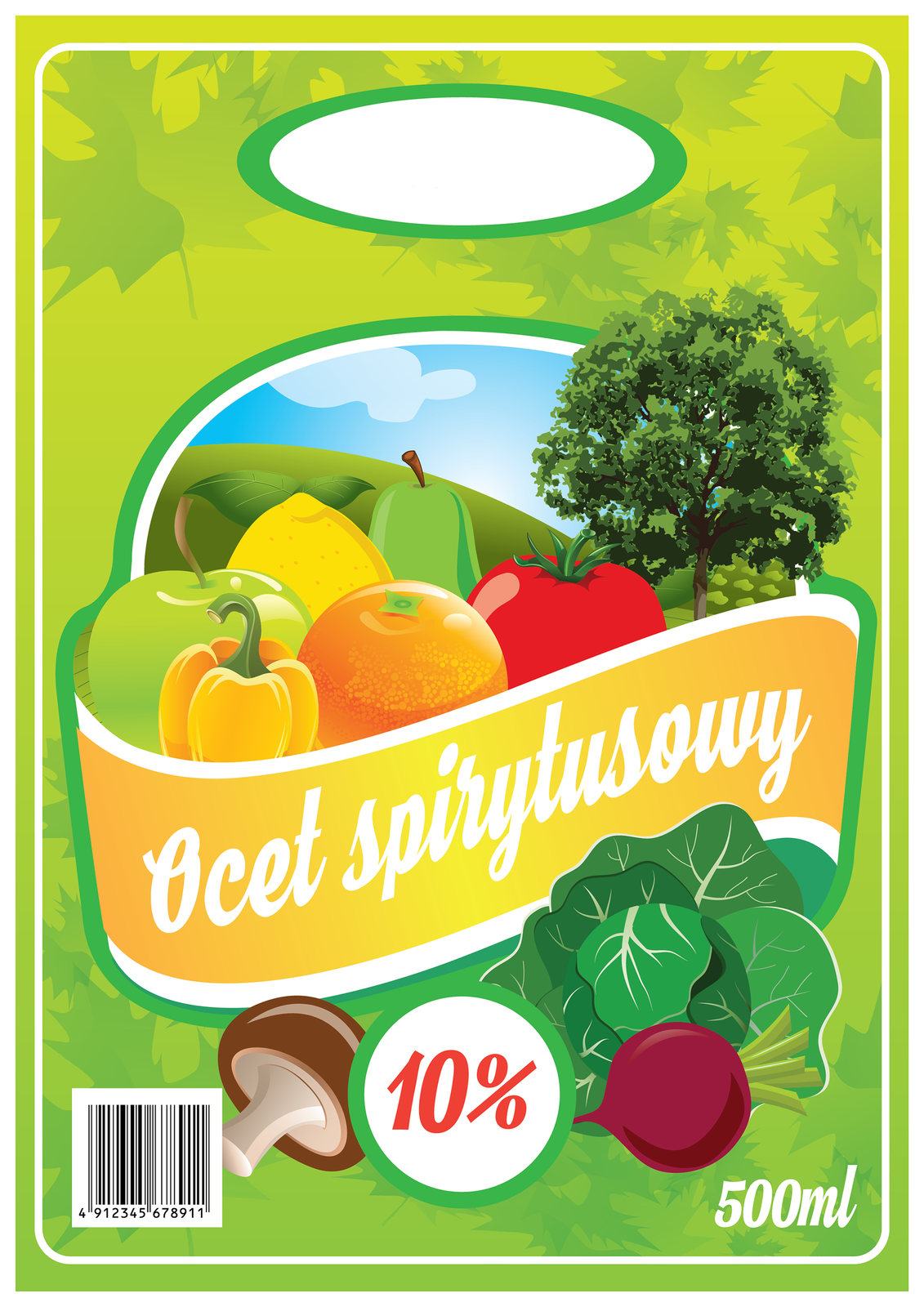
Ilustracja przedstawia etykietę dziesięcioprocentowego octu spirytusowego. Na etykiecie narysowane zostały owoce i warzywa: jabłko, papryka, pomarańcza, pomidor, cytryna, gruszka, grzyb i burak.
An example of vinegar label
Source: Dariusz Adryan, licencja: CC BY 3.0.
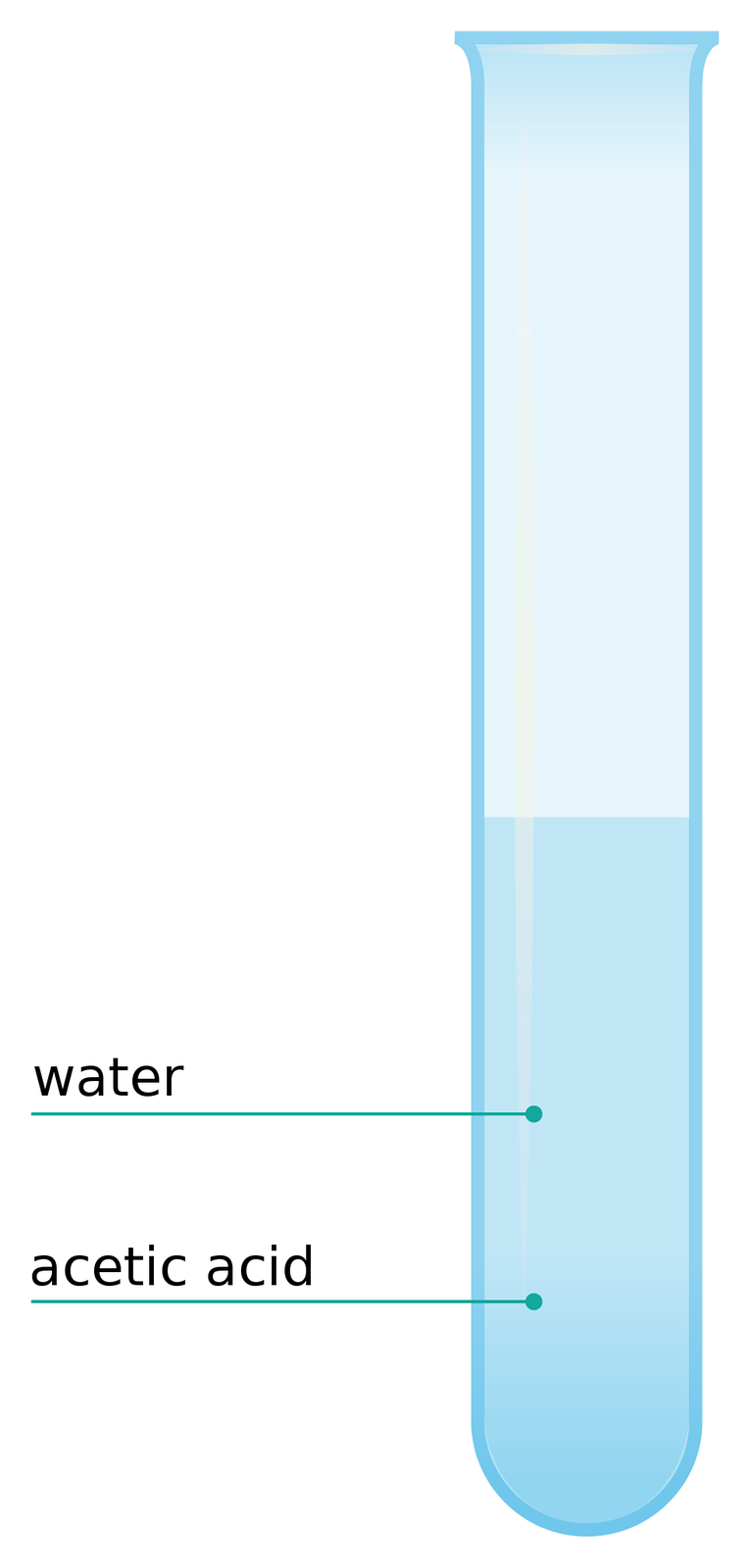
Physical properties of acetic acid
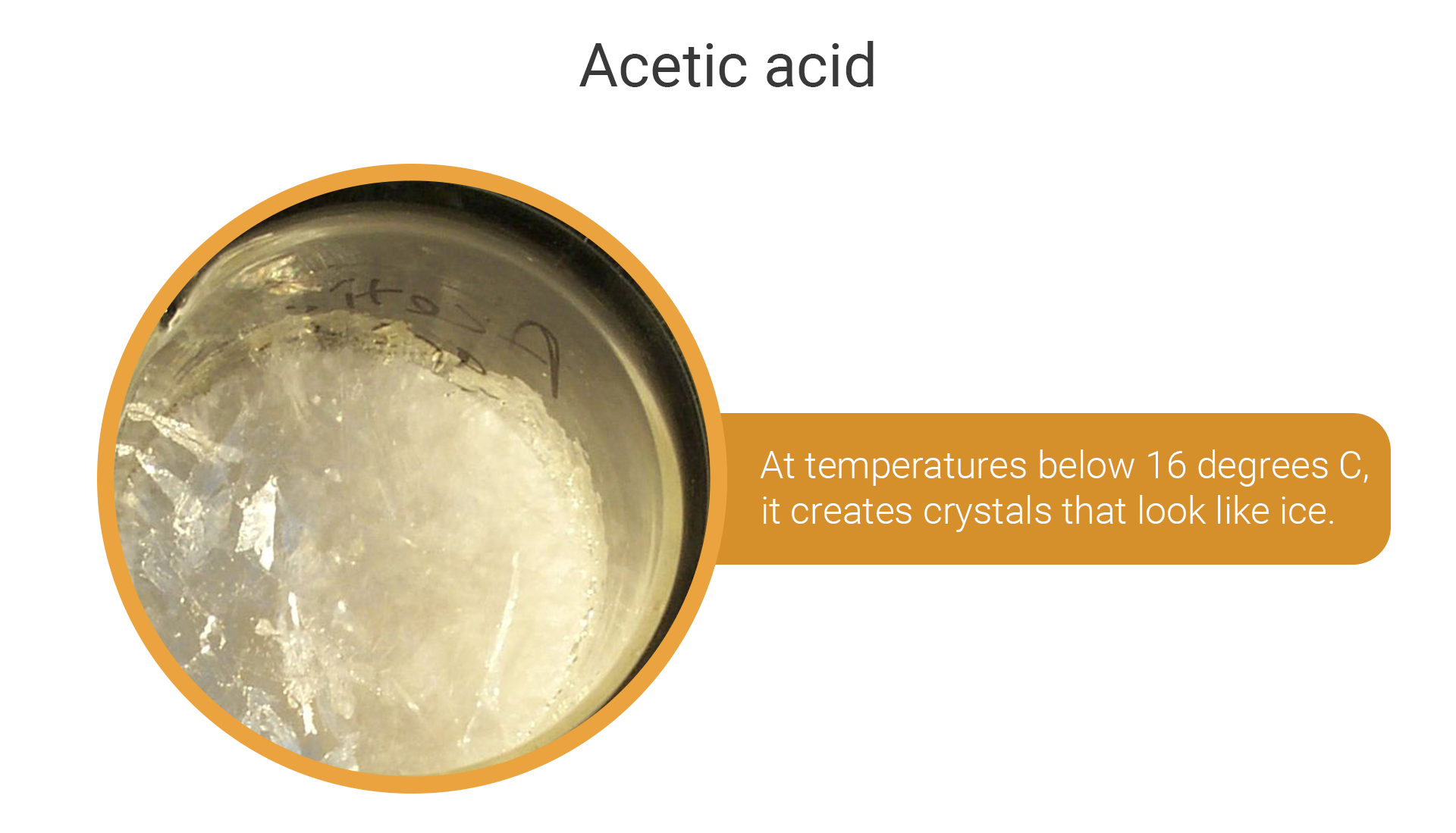
VinegarvinegarVinegar is used in the kitchen as a condiment or food preservative. Surely you know its sour taste. The label tells us that vinegar is a 10% aqueous solution of acetic acid. Anhydrous acetic acid at temperatures below 16°C takes the form of colourless mass. It looks like ice – hence the name glacial acid. Acetic acidAcetic acidAcetic acid, as a product of sour wine, has accompanied man since ancient times.
Test of the physical properties of acetic acid
Experiment 1
Research problem
Is acetic acid soluble in water?
Design your own experiment.
RyDFO7mOLvJ7y
Before you do an experiment, formulate a hypothesis and an instruction. Hypothesis (Uzupełnij). Instruction (Uzupełnij).
Before you do an experiment, formulate a hypothesis and an instruction. Hypothesis (Uzupełnij). Instruction (Uzupełnij).
Before you do an experiment, formulate a hypothesis and an instruction.
Now compare your experiment with the description below.
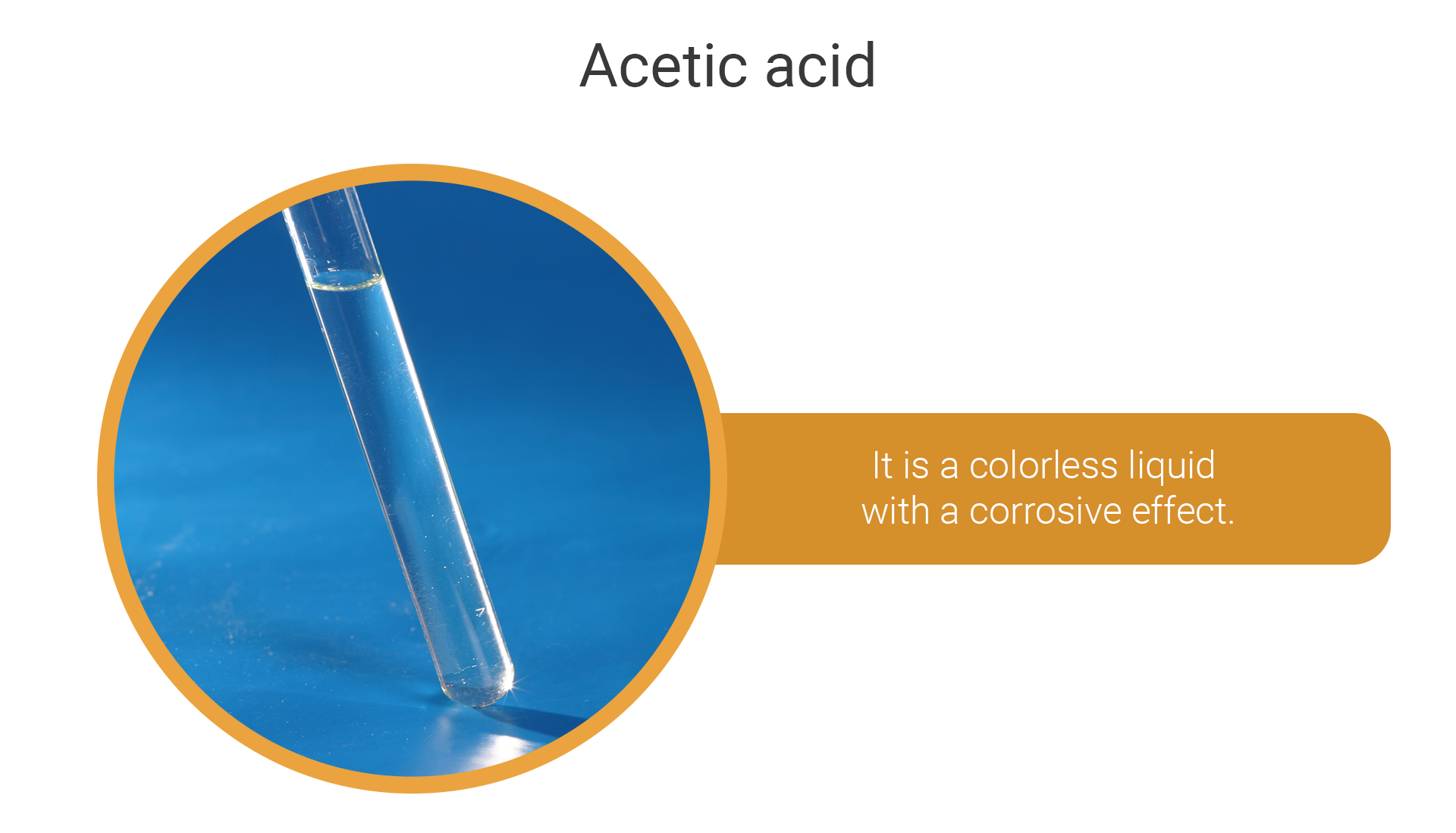
Ilustracja przedstawia właściwości kwasu octowego: Ciecz bezbarwna i silnie żrąca. It is a colorless liquid with a corrosive effect.
Source: GroMar Sp. z o.o., licencja: CC BY-SA 3.0.
RmdhBAaEx9OQ3
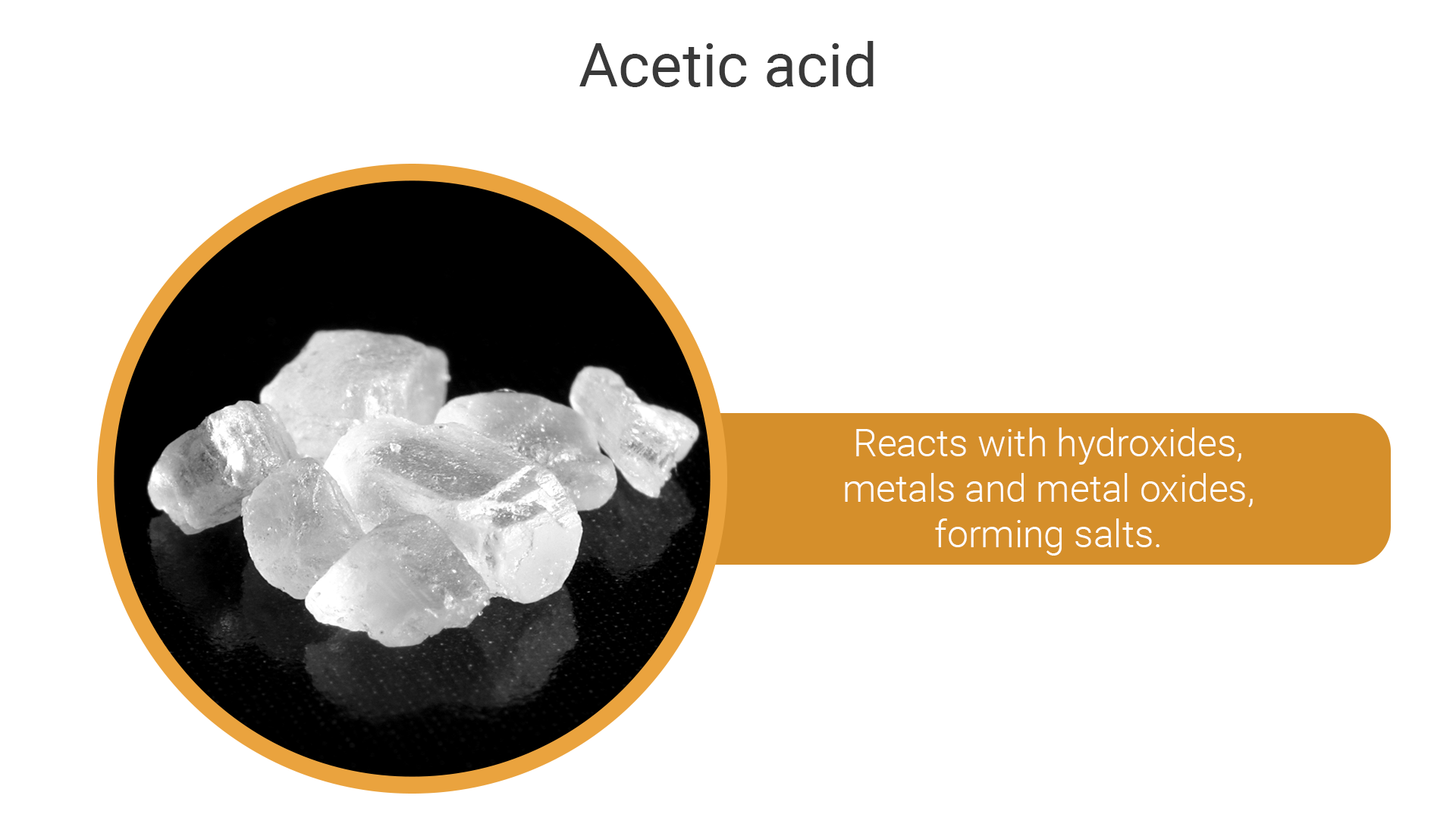
Ilustracja przedstawia właściwości kwasu octowego: Poniżej szesnastu stopni Celcjusza formuje kryształki wyglądające jak lód. At temperatures below sixteen degrees Celsjus it creates crystals that look like ice.
Source: GroMar Sp. z o.o., licencja: CC BY-SA 3.0.
R18X3CATkKIdt
Ilustracja przedstawia właściwości kwasu octowego:Reaguje z tlenkami metali, wodorotlenkami i metalami tworząc sole. Napis: Reacts with hydroxides, metals and metal oxides, forming salts.
Source: GroMar Sp. z o.o., licencja: CC BY-SA 3.0.
Chemical properties of acetic acid
Testing acetic acid, we will answer the following questions: What are the chemical properties of lower carboxylic acids? Do they react with metals and their oxides like inorganic acids? What effect does the presence of the carboxylic group have on their reaction? Do indicators in aqueous solutions of organic acids change colour just like in aqueous solutions of inorganic acids?
What properties of acetic acid can we read from pictograms?
RqfRzrQSJSBDa
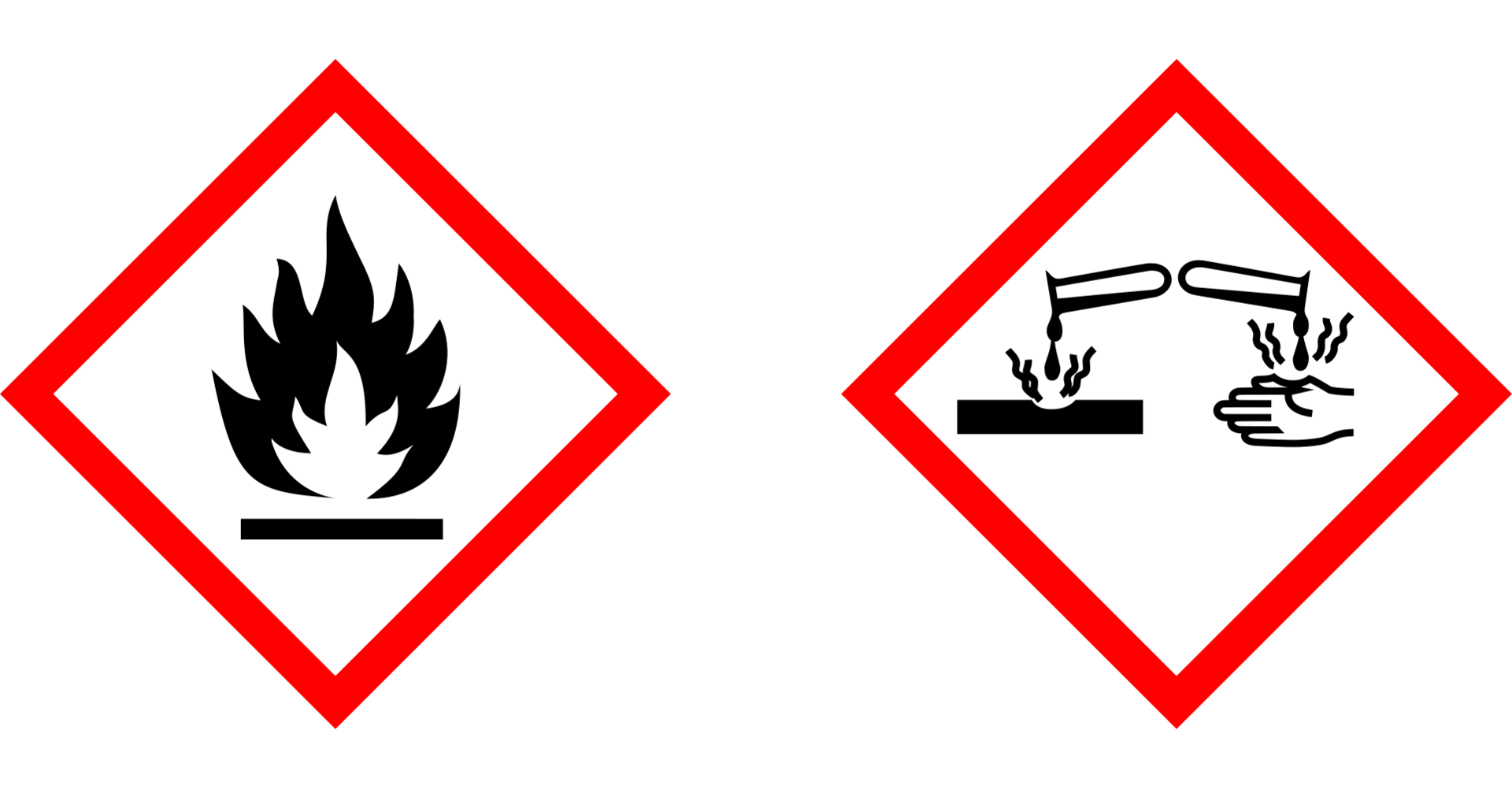
Ilustracja przedstawia piktogramy informujące o właściwościach kwasu octowego. Jeden z piktogramów dotyczy ostrzeżenia przed substancjami łatwopalnymi, drugi substancji żrących - krople z probówki spadające na dłoń i fragment powierzchni - uszkadzają je.
Source: Krzysztof Jaworski, licencja: CC BY 3.0.
Pictograms tell us that concentrated acetic acid is a flammable substance. It causes skin and eye burns. Due to the dangers, no concentrated acetic acid solution is stored in the school's chemical workshop. For experiments, we use only an acetic acid solution whose concentration does not exceed 10%.
The odour of acetic acid
Acetic acid is easily recognizable by its sharp, characteristic odour. This is why we should try to close the acid bottle quickly and tightly.
Reaction of acetic acid with metals and metals oxides
Write down the hypothesis and instructions for each experiment. Write down observations and conclusions. After completing the experiments, watch the video.
Effect of acetic acid on magnesium
Experiment 2
Research problem
Does acetic acid react with metals?
Design your own experiment.
R1DHdf7SlJulG
Before you do an experiment, formulate a hypothesis and an instruction. Hypothesis (Uzupełnij). Instruction (Uzupełnij)
Now compare your experiment with the description below.
Before you do an experiment, formulate a hypothesis and an instruction. Hypothesis (Uzupełnij). Instruction (Uzupełnij)
Now compare your experiment with the description below.
Before you do an experiment, formulate a hypothesis and an instruction.
Now compare your experiment with the description below.
Hypothesis
Acetic acid reacts with magnesium just like inorganic acids. Hydrogen is released during the reaction of acetic acid with magnesium.
You will need
aqueous solution of acetic acid,
magnesium turnings,
test tube.
Instruction
R1Y8ol8evluR1
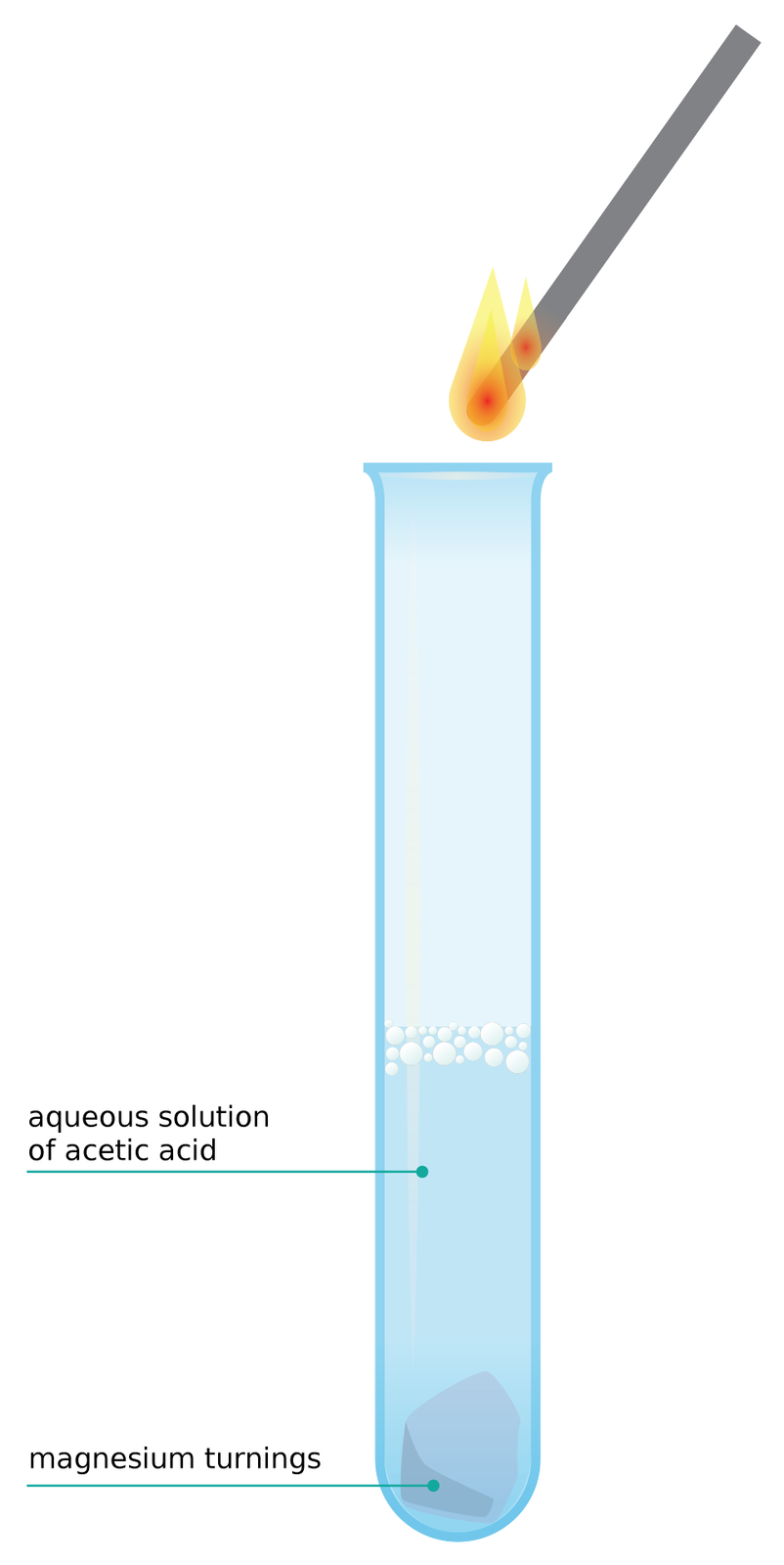
Ilustracja przedstawia probówkę, w której zaobserwować reakcję magnezu (magnesium) z roztworem wodnym kwasu octowego (aqueous solution of acetic acid). Nad probówką zapalone łuczywo.
In the test tube you can observe the reaction of magnesium with acetic acid.
Source: Dariusz Adryan, licencja: CC BY 3.0.
Pour approx. 3 cmIndeks górny 33 of the aqueous solution of acetic acid into the test tube.
Put a small amount of magnesium turnings in the tube.
Observe the changes that occur.
Bring a burning torch close to the tube's outlet.
Pay attention to the sound effects of the reaction.
Summary
RxkaImY0Ki6oE
Write down your observations and conclusions. Observations (Uzupełnij). Conclusions (Uzupełnij).
Write down your observations and conclusions. Observations (Uzupełnij). Conclusions (Uzupełnij).
Write down your observations and conclusions.
Effect of acetic acid on copper(II) oxide
Experiment 3
Research problem
Does acetic acid react with the oxides of metals?
Design your own experiment.
RtS4YJa0eje6C
Before you do an experiment, formulate a hypothesis and an instruction. Hypothesis (Uzupełnij). Instruction (Uzupełnij)
Now compare your experiment with the description below.
Before you do an experiment, formulate a hypothesis and an instruction. Hypothesis (Uzupełnij). Instruction (Uzupełnij)
Now compare your experiment with the description below.
Before you do an experiment, formulate a hypothesis and an instruction.
Now compare your experiment with the description below.
Hypothesis
Acetic acid reacts with copper(II) oxide in the same way as inorganic acids.
You will need
aqueous solution of acetic acid,
copper(II) oxide,
test tube,
burner.
Instruction
Pour approx. 3 cmIndeks górny 33 of the aqueous solution of acetic acid into the test tube.
Put some copper(II) oxide in the test tube.
Slightly heat the tube.
Pay attention to changes in the reagents' colour.
RvXfJJu8VyI2d
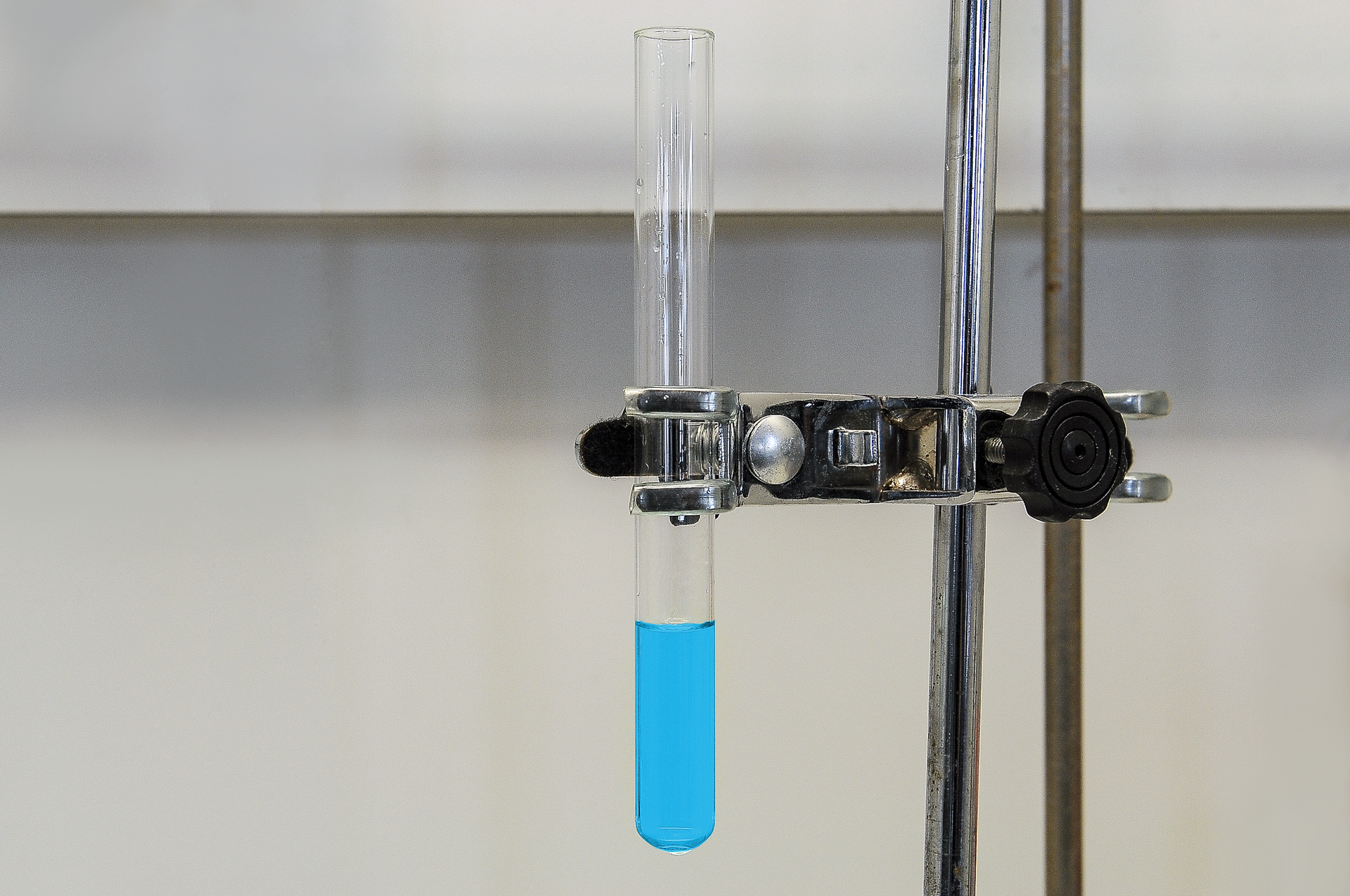
Ilustracja przedstawia probówkę z jasnoniebieską substancją. Efekt połączenia tlenku miedzi dwa z kwasem octowym.
Test tube with a light blue substance. The effect of combining copper oxide with acetic acid.
Source: Tomorrow Sp.z o.o., licencja: CC BY 3.0.
Summary
R1UIOtGk6F4ic
Write down your observations and conclusions. Observations (Uzupełnij). Conclusions (Uzupełnij).
Write down your observations and conclusions. Observations (Uzupełnij). Conclusions (Uzupełnij).
Write down your observations and conclusions.
Watch the video and look how the two experiments took place.
RKpH897KRnIcm
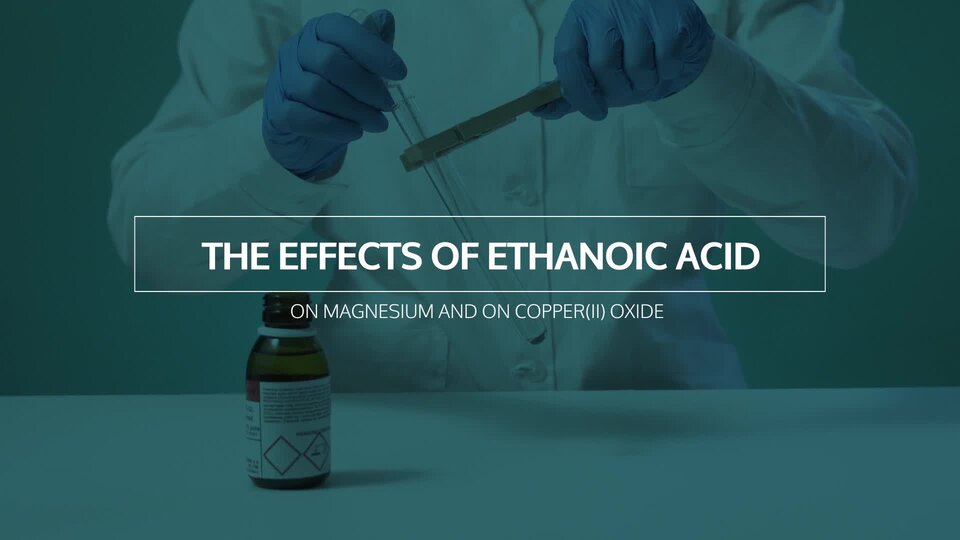
Film pokazuje eksperyment – działanie kwasu etanowego na metal i tlenek metalu, the effects of ethanoic acid on magnesium and on copper two oxide. Będziesz potrzebować: kwas etanowy, wiórki magnezu, tlenek miedzi dwa, probówki, pipetę. Do probówki dodajemy pipetą kilka kropli kwasu etanowego. Następnie dodajemy kilka wiórek magnezu. Wiórki zaczynają się roztwarzać, pojawiają się bąbelki. Do kolejnej probówki z kwasem etanowym dodajemy tlenek miedzi dwa. Rozwór zmienia barwę z przezroczystej na niebieską.
Film pokazuje eksperyment – działanie kwasu etanowego na metal i tlenek metalu, the effects of ethanoic acid on magnesium and on copper two oxide. Będziesz potrzebować: kwas etanowy, wiórki magnezu, tlenek miedzi dwa, probówki, pipetę. Do probówki dodajemy pipetą kilka kropli kwasu etanowego. Następnie dodajemy kilka wiórek magnezu. Wiórki zaczynają się roztwarzać, pojawiają się bąbelki. Do kolejnej probówki z kwasem etanowym dodajemy tlenek miedzi dwa. Rozwór zmienia barwę z przezroczystej na niebieską.
The effects of ethanoic acid
Source: GroMar Sp. z o.o., licencja: CC BY-SA 3.0.
Source: GroMar Sp. z o.o., licencja: CC BY-SA 3.0.
Film pokazuje eksperyment – działanie kwasu etanowego na metal i tlenek metalu, the effects of ethanoic acid on magnesium and on copper two oxide. Będziesz potrzebować: kwas etanowy, wiórki magnezu, tlenek miedzi dwa, probówki, pipetę. Do probówki dodajemy pipetą kilka kropli kwasu etanowego. Następnie dodajemy kilka wiórek magnezu. Wiórki zaczynają się roztwarzać, pojawiają się bąbelki. Do kolejnej probówki z kwasem etanowym dodajemy tlenek miedzi dwa. Rozwór zmienia barwę z przezroczystej na niebieską.
Properties of formic acid
Methanoic acid HCOOH, commonly known as formic acidformic acidformic acid, is a representative of carboxylic acids. The substance is liquid, colorless, has a strong odor and is well soluble in water.
What properties of formic acid can we read from the pictogram?
RKq3sxzmLQv5B
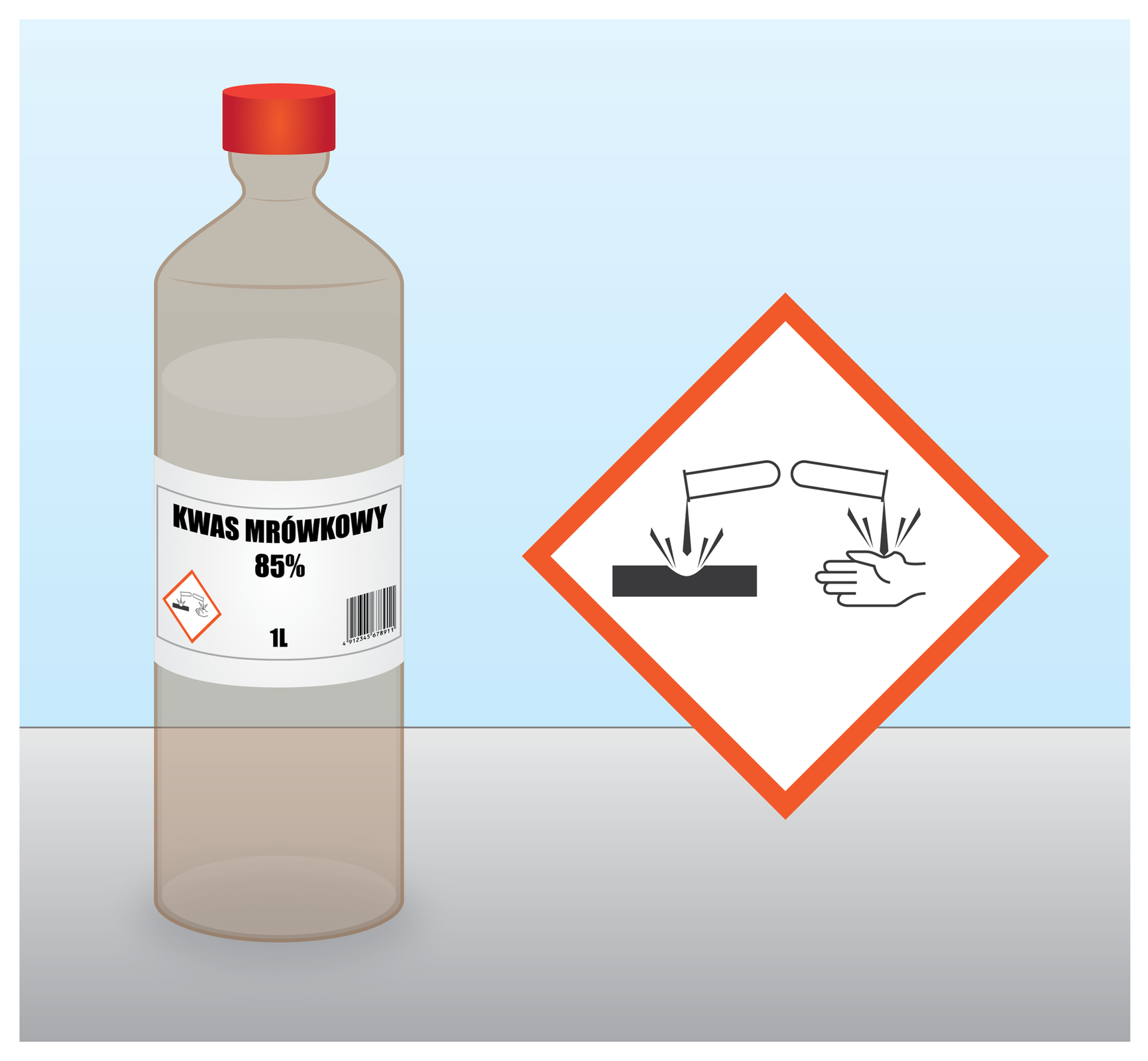
Ilustracja przedstawia litrową butelkę z kwasem mrówkowym 85-procentowym. Obok piktogram ostrzegający przed substancjami żrącymi.
Source: Dariusz Adryan, licencja: CC BY 3.0.
It causes severe skin burns and eye damage. It is volatile and its vapors irritate the mucous membranes.
Aqueous solutions of acetic and formic acids are electrically conductive and produce a red coloring of the red cabbage juice. Thus, the electrolytic dissociation reaction takes place:
The salts of formic acid are called formates. They are produced by the reaction of formic acid with metals, metal oxidesmetal oxidemetal oxides and hydroxides:
R1WFK7DUYhkrT
Exercise 1
Complete the chemical reaction. Dostępne opcje do wyboru: em gie, ha dwa, ce a o ha dwa razy wzięte, ha dwa o, a el dwa o trzy, 2. Pierwsza reakcja: ha ce o o ha dodać tu uzupełnij strzałka w prawo ha ce o o dwa em gie dodać tu uzupełnij. Druga reakcja: dwa ha ce o o ha dodać tu uzupełnij strzałka w prawo ha ce o o dwa ce a dodać tu uzupełnij. Trzecia reakcja: tu uzupełnij dodać sześć ha ce o o ha strzałka w prawo tu uzupełnij ha ce o o trzy a el dodać sześć ha dwa o
Complete the chemical reaction. Dostępne opcje do wyboru: em gie, ha dwa, ce a o ha dwa razy wzięte, ha dwa o, a el dwa o trzy, 2. Pierwsza reakcja: ha ce o o ha dodać tu uzupełnij strzałka w prawo ha ce o o dwa em gie dodać tu uzupełnij. Druga reakcja: dwa ha ce o o ha dodać tu uzupełnij strzałka w prawo ha ce o o dwa ce a dodać tu uzupełnij. Trzecia reakcja: tu uzupełnij dodać sześć ha ce o o ha strzałka w prawo tu uzupełnij ha ce o o trzy a el dodać sześć ha dwa o
Match the terms with definitions. vinegar Możliwe odpowiedzi: 1. aqueous solution of acetic acid – product of spirit's fermentation, 2. a. six percent or ten percent aqueous solution of acetic acid; on store shelves we can find several types of vinegar (apple, wine, spirit) spirit vinegar Możliwe odpowiedzi: 1. aqueous solution of acetic acid – product of spirit's fermentation, 2. a six percent or ten percent aqueous solution of acetic acid; on store shelves we can find several types of vinegar (apple, wine, spirit)
Match the terms with definitions. vinegar Możliwe odpowiedzi: 1. aqueous solution of acetic acid – product of spirit's fermentation, 2. a. six percent or ten percent aqueous solution of acetic acid; on store shelves we can find several types of vinegar (apple, wine, spirit) spirit vinegar Możliwe odpowiedzi: 1. aqueous solution of acetic acid – product of spirit's fermentation, 2. a six percent or ten percent aqueous solution of acetic acid; on store shelves we can find several types of vinegar (apple, wine, spirit)
Match the terms with definitions.
a 6% or 10% aqueous solution of acetic acid; on store shelves we can find several types of vinegar (apple, wine, spirit), aqueous solution of acetic acid – product of spirit's fermentation
vinegar
spirit vinegar
Summary
Pure acetic acid is a colourless, corrosive liquid. It is hygroscopic (it absorbs moisture from the air).
At temperatures below 16°C, it forms crystals that resemble ice in appearance. It is also called glacial acetic acid.
Acetic and formic acids dissolve well in water.
The reaction of aqueous solutions of carboxylic acids that have short carbon chains, and the electrical conductivity, are evidence of electrolytic dissociation.
Carboxylic acids react with hydroxides, metals and metal oxides, to form salts.
R18Tcfx8PL0qw1
Grafika przedstawiająca tablicę szkolną, na której znajdują się zdania do dokończenia. Finish selected sentences. 1 It was easy for me (uzupełnij). 2 It was difficult for me (uzupełnij). 3 Today I learned (uzupełnij). 4 I understood that (uzupełnij). 5 It surprised me (uzupełnij). 6. Today I found out (uzupełnij). 7. I was interested in (uzupełnij). 8. I still have to repeat (uzupełnij).
Grafika przedstawiająca tablicę szkolną, na której znajdują się zdania do dokończenia. Finish selected sentences. 1 It was easy for me (uzupełnij). 2 It was difficult for me (uzupełnij). 3 Today I learned (uzupełnij). 4 I understood that (uzupełnij). 5 It surprised me (uzupełnij). 6. Today I found out (uzupełnij). 7. I was interested in (uzupełnij). 8. I still have to repeat (uzupełnij).
Source: GroMar Sp. z o.o., licencja: CC BY-SA 3.0.
Homework
Task 1.1
Explain if you can distinguish acetic acid from ethyl alcohol based on the pH value of the aqueous solutions?
Keywords
carboxylic acid, acetic acid, ethanoic acid, metal oxide
ocet – 6‑procentowy lub 10‑procentowy wodny roztwór kwasu octowego; na półkach sklepowych możemy znaleźć kilka rodzajów octu (jabłkowy, winny, spirytusowy)