Language of value – evaluation in the language
you will discuss the today’s values and your system of valuessystem of values
you will recognise indirect and direct evaluationevaluation
you will search for examples of evaluation it texts
you will distinguish statements featuring positive or negative evaluation (judgements)
Before the lesson
What associations in different contexts cause such words as: home, mother, light, night?
Find in dictionaries as many as possible phrases (metaphors, idiomatic expressions) associated with these words. Can any information on judgements and values be obtained based on these contexts?
Evaluation in the language
We use language to describe the world and the properties of various things we see, use or encounter. Usually we are able to specify their value by means of simple adjectives: good – bad, positive – negative, satisfying – unsatisfyng. Consequently, we assign particular evaluations to particular phenomena (terms). They show our attitude thereto and substantiate our choices (approvalapproval or criticism of sth or sb). We evaluate the features of various actual phenomena (or even abstract terms), and in social and public life, we every day meet with different standards of behaviour. The science dealing with value is axiologyaxiology. It originates from philosophy and ethics, and applies to art, religion, culture and social life - i.e. various areas of humanistic thought. In this part, we will learn how we assess ourselves and the world that surrounds us using language.
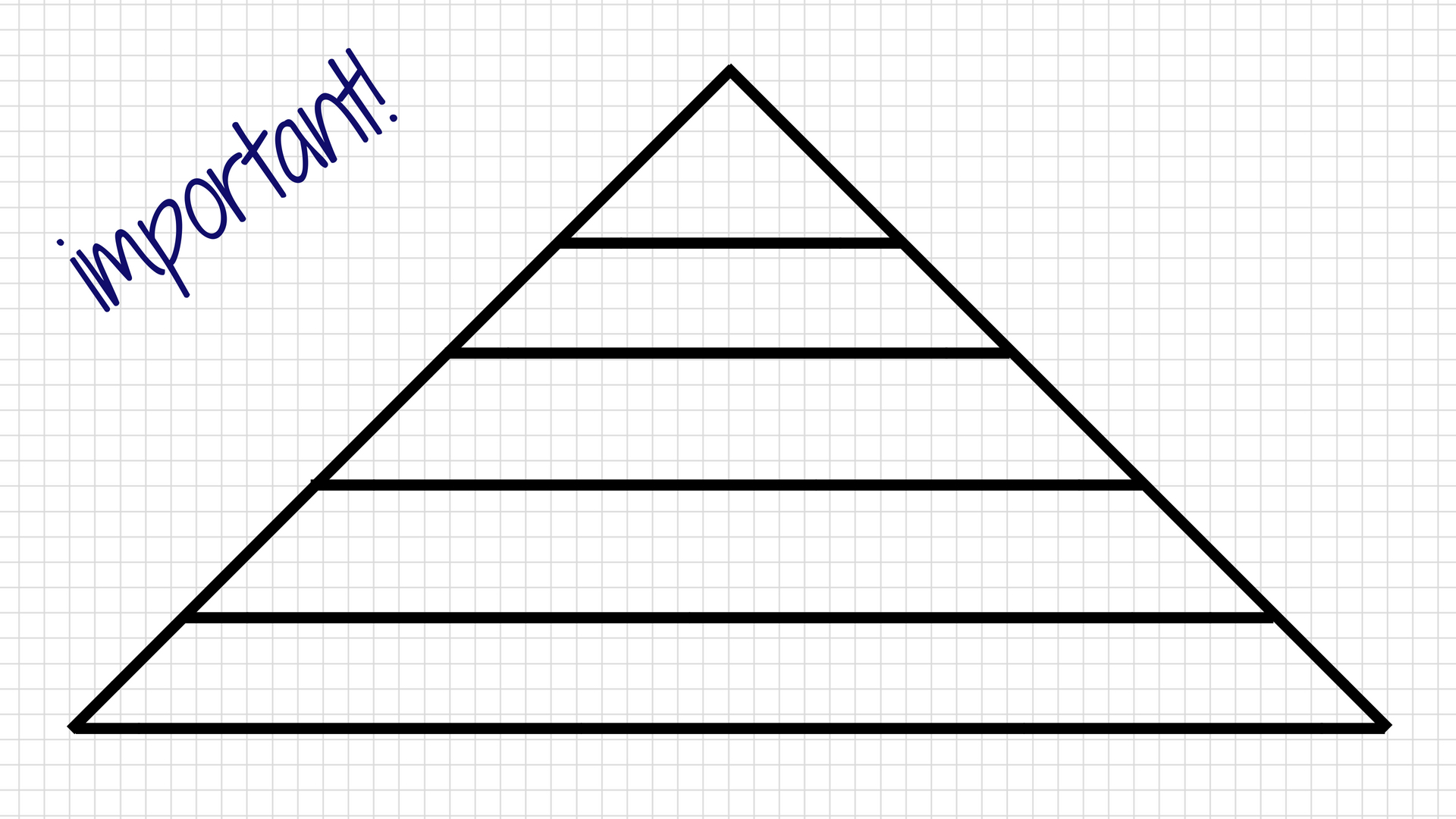
Place values important to you on the pyramid. You may have already done such exercise at earlier stages of your education, but your system of values might have changed with growing up and gaining of new experience - verify it. Place the most important at the top.
However, we more often evaluate things using words associated by us with “good or bad” occurrences, in the definitions of which the information on their assessments is missing. For example, the primary meaning of noun mother is “a woman who gave birth to a child”, but more frequently the meaning of this word resulting from the text (context) is much more important. The term mother is linked to such words as: love, care, protection, kindness. The word does not evaluate directly, but it causes positive associations and invokes the names of other values.
The meanings of some words appearing in the context are referred to as connotations (or indirect meanings, not straightforward meanings). They appear very often in the vocabulary we use to express judgements.
The words used to express associations concerning (positive or negative) assessments are referred to as words evaluating indirectly (not straightforward/connotatively).
Check whether you understand the text well. Complete the following fragment with appropriate words.
opinions, stylistic, praise, formal, criticise, images, assessing, emotions, words, describing, emotional, informal
When .................... things, we very often become very attached to our judgements and ..................... We defend our arguments (“it is better, because...”) or .................... things deserving worse judgement (“it is bad/worse, because...”). Such messages can be accompanied by ..................... They are reflected by words with .................... words connoting our judgements. For example: instead of neutral word quarrel, using .................... language, we will use the word massacre. It is worth to remember that words used to assess (judge) can cause emotions. Therefore, we call them assessing emotive vocabulary.
There are various classifications of words naming values. It is one of them. Having familiarised yourself with the graphics or listened to its description, discuss your observations in pairs. Can you point out the examples of attitudes combining different values? Try to give examples of opposed values, e.g. good – bad. Is such opposition always obvious?
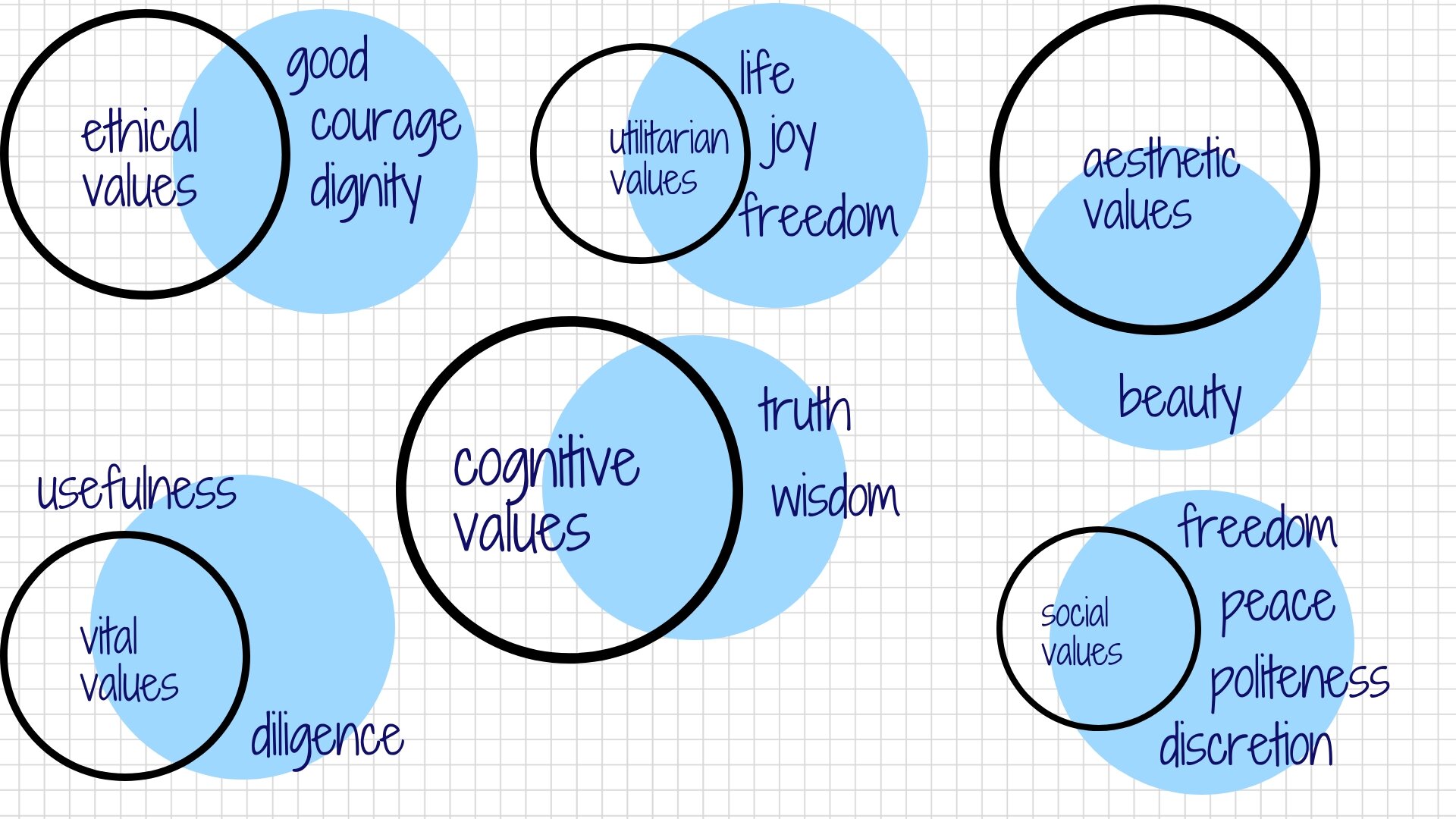
Discuss which values are particularly valued these days.
It should be said that one term is not always evaluated by people the same. What is more, the attitudes of different people to many things are different, and they perceive various circumstances differently. In other words, they get attached to some values, simultaneously rejecting others (they disagree with them). The evaluation can often be derived from the word context, not its meaning.
Search for texts (e.g. articles in the web) reflecting two opposing views on some term or phenomenon. Note down the words indicating the fact that two societies evaluate given phenomenon differently. The following schemes can be helpful:
1. For this group, the positive values are represented by words..., as the people using them, eagerly use sentences (texts) that may contain judgements Long live...!.
2. The representatives of this group do not approve..., as the their slogans (words) can be added to formula “Down with...!*.
Read the following text and do the exercises.
Światy za słowami. Wykłady z semantyki leksykalnejGdy chce się nazwać pozytywne właściwości człowieka, przedmiotu czy zdarzenia, można posłużyć się określeniami typu X jest pomnikową postacią, otrzymać królewski upominek bądź X wspiera kogoś w działaniach. Wszystkie te wyrażenia da się sparafrazować w postaci najprostszych formuł „człowiek lub przedmiot jest dobry (pod pewnym względem)”, „działanie X‑a jest dobre (pod pewnym względem)”. Analogicznie X jest rozbitkiem życiowym, książka okazała się niewypałem wydawniczym, X uzależnił się od kogoś lub czegoś oznacza, że „jakiś człowiek czy przedmiot jest zły (pod jakimś względem), a „stan uzależnienia jest zły (pod pewnym względem)”. Centralne w parafrazach przymiotniki dobry i zły traktowane są jako wyrazy schematyczne (jednoznaczne), które każdorazowo mogą ulegać uszczegółowieniu w zależności od kontekstów, w jakich występują. […] Antonimiczna opozycja dobry – zły tworzy podstawową i zarazem najogólniejszą oś wartościowania językowego. Z kolei leksykalne uszczegółowienie aspektu owego dobra i zła („pod pewnym względem”) rozbudowuje pary przeciwstawnych określeń wprowadzających informację o typie wartości.
Można więc mówić o pozytywnym bądź negatywnym bohaterze, o moralnym bądź niemoralnym człowieku, ładnym bądź brzydkim pomniku, smacznym bądź niesmacznym obiedzie, wygodnym bądź niewygodnym posłaniu, pożytecznym bądź bezużytecznym narzędziu itp. Wszystkie te słowa wprowadzają ocenę pozytywną bądź negatywną […]. Ich podstawową funkcją jest funkcja oceniająca, a sam sąd wartościujący wyrażony jest wprost. Tworzą w miarę wąską klasę leksykalną w odróżnieniu od praktycznie nieograniczonego zbioru jednostek, w których ocena może występować, ale jest pochodną, następstwem znaczenia leksykalnego. W takich wypadkach mówi się o wartościowaniu pośrednim, nie wprost. Żeby zrozumieć zasadność i jakość wartościowania występującego w pomnikowej postaci, rozbitku życiowym czy uzależnieniu się od kogoś lub czegoś, należy zinterpretować znaczenie leksykalne i konotacje słów rozbitek, pomnik, uzależnić się. We wszystkich tych wypadkach ocena formułowana jest nie wprost, pośrednio, często przez zabieg metaforyzacji.
Source: Ryszard Tokarski, Światy za słowami. Wykłady z semantyki leksykalnej, Lublin 2013, s. 143–144.
Read the text by Ryszard Tokarski, and then find metaphors in any available press articles. What values are connoted by these texts?
| Words creating metaphors | What is judged in these texts? |
|---|---|
Divide the following types of communication into two groups: the one associated with pejorative judgements, and one associated with positive judgements.
wishes, praise, complaint, joke, oath, doubt, advice, commitment, critics, manipulation, boasting, invective, counsel, gossip, congratulations, approval, promise, greetings, insult, slander, toast
| Communication associated with pejorative judgements. | |
|---|---|
| Communication associated with positive judgements. |
Keywords
axiology, evaluation, connotationsconnotations
Glossary
aksjologia
wartościowanie
konotacje
system wartośći
pochwała
inwektywa
aprobata
chwalenie się