How do we eat?
that the proper functioning of the body requires observing the principles of healthy nutrition.
discuss basic organs that build the digestive system and give their functions;
explain what digesting food is;
describe the path of food in the human body.
Why do we eat?
Every living organism needs to be nourished, that is, provide itself with the necessary nutrients: proteins, sugars, fats, vitamins and minerals, as well as water. Nutrients are found in food, such as vegetables, fruits, cereals, meat, fish, eggs, milk and dairy products. They are a source of materials for building the body. They enable its growthgrowth, developmentdevelopment and regenerationregeneration. They are also transformed into energy necessary for life.
Tasks of the digestive systemdigestive system are:
crushing food,
digestion of food,
absorption of nutrients found in food,
removing unnecessary food remains.
Crushing food
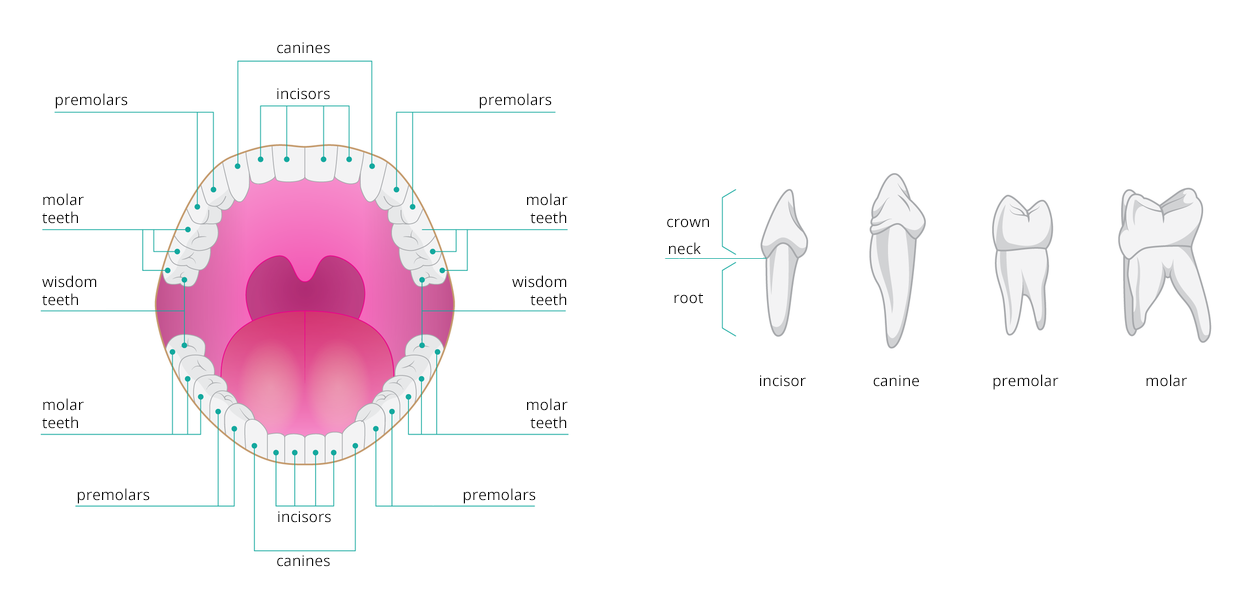
Before the food is digested, it is crushed in the mouth with the help of teeth. The incisors enable us to bite off pieces of food, the canines are used for tearing, and the premolars and molar teeth – for crushing it. During the first years of life, a person has milk teeth. At the age of 5 -12 years, they are gradually replaced by permanent teeth.
An important organ of the oral cavity is also the tonguetongue, which mixes shredded food with saliva. There are compounds in it that start digesting sugars. After mixing food with saliva it is easier to swallow it. The tongue is also the organ of the sense of taste.
Digestion of food
The food first goes to the mouth, where it is crushed. Then it is moved to the next parts of the digestive system. Here takes place the digestiondigestion,or breakdown of the compounds contained in it into simple substances, which can be absorbed and used by the body.
From the mouth, through the throat and esophagus, the food moves to the stomach, and from there to the small intestine. Here is the next stage of digestion and absorption,or the entering of nutrients into the blood that distributes them throughout the body. Further, the food goes to the large intestine, where water is absorbed. Undigested food remains are excreted through the rectum. Oral cavity, esophagus, stomach, small and large intestine form the digestive tract. The digestive system also includes the liver and pancreas.
Fiber – not digested, but still needed
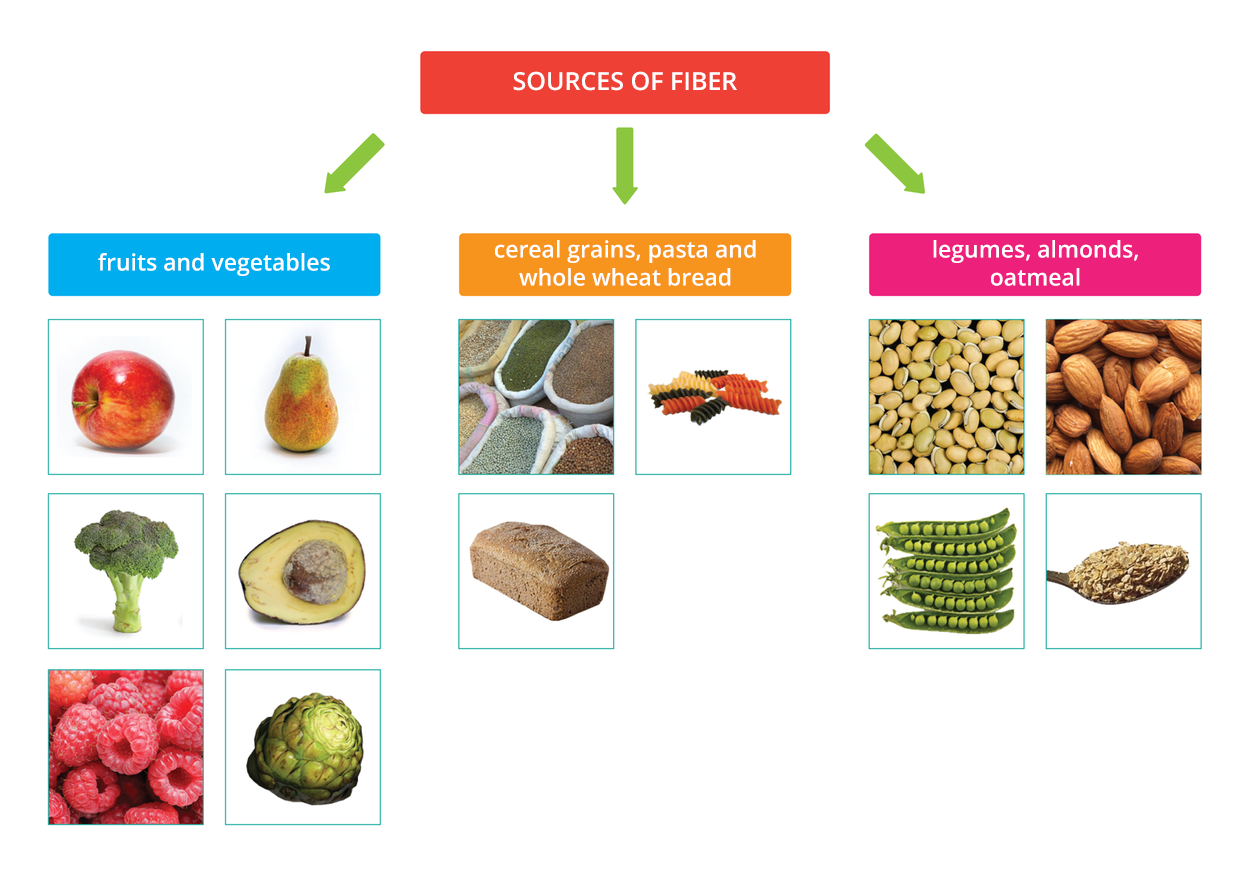
The human body is unable to digest some substances found in food. These include fiber. Although it is neither a source of energy nor a building material for us, it plays a very important role. It works like a broom: it cleanses our intestines of residual food and harmful substances, thus improving their work. In addition, fiber swells in the stomach, which gives a feeling of fullness and reduces hunger. At the same time, it helps in maintaining proper body mass.
Combine concepts with their definitions.
proces polegający na tym, że w organizmie zachodzą zmiany w jego budowie i funkcjonowaniu, zwiększanie się rozmiarów i masy organizmu, mięsisty narząd położony w jamie ustnej, służący głównie do mieszania pokarmu ze śliną i przesuwania go w jamie ustnej; ponadto narząd mowy i zmysłu smaku, zdolność organizmów do odtwarzania uszkodzonych komórek czy narządów, układ narządów służących do rozdrabniania, trawienia i wchłaniania pokarmu, rozkład pokarmów znajdujących się w przewodzie pokarmowym na związki proste
| tongue | |
| regeneration | |
| development | |
| digestive system | |
| growth | |
| digestion |
Summary
The task of the digestive system is to crush, digest and absorb food.
The digestive system consists of: mouth, throat, esophagus, stomach, small intestine and large intestine and rectum.
Digestion is the breakdown of complex nutrients into simple substances.
Explain why you should carefully bite food while eating.
Keywords
food, digestion, nutrition
Glossary
język – mięsisty narząd położony w jamie ustnej, służący głównie do mieszania pokarmu ze śliną i przesuwania go w jamie ustnej; ponadto narząd mowy i zmysłu smaku
regeneracja – zdolność organizmów do odtwarzania uszkodzonych komórek czy narządów
rozwój – proces polegający na tym, że w organizmie zachodzą zmiany w jego budowie i funkcjonowaniu
układ pokarmowy – układ narządów służących do rozdrabniania, trawienia i wchłaniania pokarmu
wzrost – zwiększanie się rozmiarów i masy organizmu
trawienie – rozkład pokarmów znajdujących się w przewodzie pokarmowym na związki proste