R16owTeqnjRza

The origins of the Second World War

Armed Republican civilians during the Battle of Irún
Source: 1936, Wikimedia Commons, licencja: CC 0.

Link to the lesson

You will learn
  • why and where the crisis of democracy had occurred;

  • what policy Japan pursued in the 1920s and 1930s.;

  • why the civil war in Spain broke out and how important it was;

  • the importance of the arms race for the situation in Europe;

  • what influence Adolf Hitler and the Nazis regime had on German politics;

  • what the Molotov‑Ribbentrop Pact was and why it was important for the outbreak of the war.

R13xo7ELaItu7
Nagranie dźwiękowe abstraktu.

The 1919 Versailles Conference did not take into account all the forces in Europe. This became one of the causes of a conflict, the first signs of which date back to the early 1930s. The crisis of democracy, authoritarianAuthoritarianismauthoritarian regimes and the development of totalitarianismTotalitarianismtotalitarianism became one of the threats to security in Europe and the entire world. The Third Reich's rejection of the Versailles arrangements turned out to be a threat to peace as well, along with the development of Japanese militarismMilitarismmilitarism which sought to solve economic problems by way of conquests.

Aggressive politics in the Far East and the development of countries in Europe naturally brought Japan, Italy and Germany closer together. They formed alliances against Western countries (the Pact of Steel) and activities of communistCommunismcommunist parties (Anti‑Comintern PactThe Anti‑Comintern PactAnti‑Comintern Pact).

The outbreak of the conflict in Spain (1936) was not without significance for the aggravation of the situation in Europe. The civil war between the left‑wing forces of the Popular Front and the right‑wing Falanga, led by General Francisco Franco, became a testing ground for the German army. Particularly famous for its bloodshed in this war was the Condor Legionthe Condor Legionthe Condor Legion, whose actions showed the brutality aimed not only at the forces of the opponent, but also at the civilians.

The successes of fascist Italy in Africa and the German army in Spain, as well as the conquest of China by Japan, clearly showed that the arms race that had started in the early 1930s would inevitably have to end in a European conflict.

1
Task 1

Familiarize yourself with the timeline and learn more about the origins of the Second World War. Which of the presented events were the most important and why?
RUmNQTER7EiY7
Calendar of events 1931 Occupation of Manchuria by Japan., 1932 Establishment of Manchukuo., 25.11.1936 Signature of the Anti-Comintern Pact by Germany and Japan., 1936 Start of the civil war in Spain., 1937 Italy joins the Anti-Comintern Pact., 10.1938 German demands toward Poland., 3.1939 German ultimatum addressed to Poland., 1939 End of the war in Spain.
Source: Francisco Franco, Mikhail Koltsov, NAC, domena publiczna.
Exercise 1
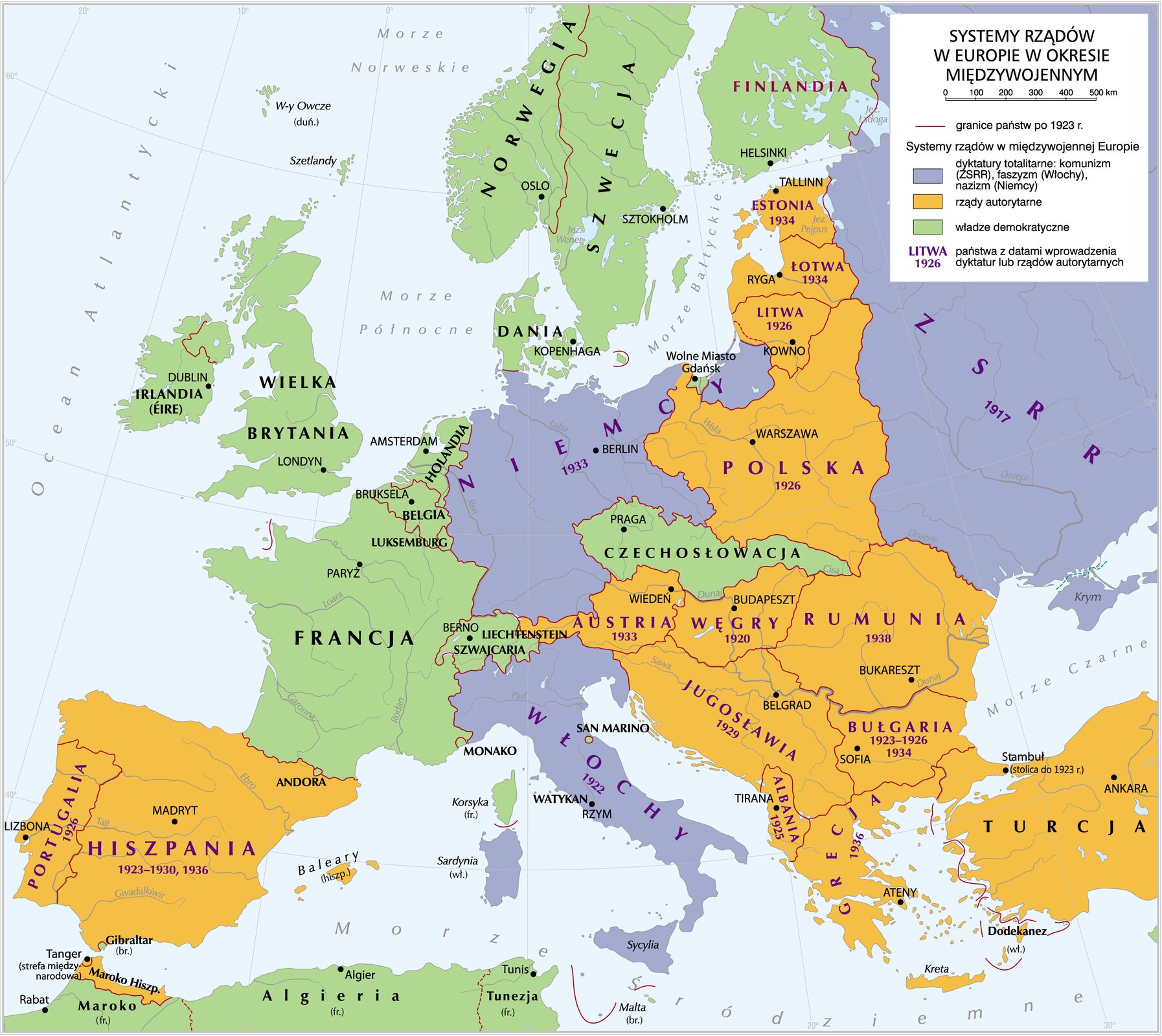
W jakich państwach w okresie międzywojennym panował ustrój totalitarny? Wymień przykładowe.
RmLVfJCU8lTVw
European government systems in the Interwar Period
R1JkeqrqSotKK
Match the states with their government systems in the Interwar Period. Democratic states Możliwe odpowiedzi: 1. Italy, 2. Spain, 3. Germany, 4. San Marino, 5. Poland, 6. Belgium, 7. Norway, 8. Yugoslavia, 9. Monaco, 10. Sweden, 11. Finland, 12. Czechoslovakia, 13. Estonia, 14. Turkey, 15. Albania, 16. Great Britain, 17. Romania, 18. France, 19. Luxembourg, 20. Austria, 21. Liechtenstein, 22. Netherlands, 23. Lithuania, 24. Switzerland, 25. Ireland, 26. Denmark, 27. Hungary, 28. Greece, 29. Portugal, 30. Latvia, 31. The Soviet Union, 32. Bulgaria Authoritarian states Możliwe odpowiedzi: 1. Italy, 2. Spain, 3. Germany, 4. San Marino, 5. Poland, 6. Belgium, 7. Norway, 8. Yugoslavia, 9. Monaco, 10. Sweden, 11. Finland, 12. Czechoslovakia, 13. Estonia, 14. Turkey, 15. Albania, 16. Great Britain, 17. Romania, 18. France, 19. Luxembourg, 20. Austria, 21. Liechtenstein, 22. Netherlands, 23. Lithuania, 24. Switzerland, 25. Ireland, 26. Denmark, 27. Hungary, 28. Greece, 29. Portugal, 30. Latvia, 31. The Soviet Union, 32. Bulgaria Totalitarian states Możliwe odpowiedzi: 1. Italy, 2. Spain, 3. Germany, 4. San Marino, 5. Poland, 6. Belgium, 7. Norway, 8. Yugoslavia, 9. Monaco, 10. Sweden, 11. Finland, 12. Czechoslovakia, 13. Estonia, 14. Turkey, 15. Albania, 16. Great Britain, 17. Romania, 18. France, 19. Luxembourg, 20. Austria, 21. Liechtenstein, 22. Netherlands, 23. Lithuania, 24. Switzerland, 25. Ireland, 26. Denmark, 27. Hungary, 28. Greece, 29. Portugal, 30. Latvia, 31. The Soviet Union, 32. Bulgaria
RxSirEeRxVVSm
Exercise 2
Fotografia barwna przedstawiająca portret Isoroku Yamamoto, głównego dowodzącego japońskiej marynarki. Jest to Azjata ubrany w wojskowy mundur oraz wojskową czapkę. Na zdjęciu widać popiersie mężczyzny. Wskaż poprawne zakończenie zdania: Before the Second World War, Isoroku Yamamoto.. Możliwe odpowiedzi: 1. was a supporter of an alliance with the USA and the development of Japan's economy with the help of American economic potential. 2. opposed Japanese militarism and tried to persuade the Emperor to pursue a peace policy. 3. started the expansion of naval aviation infrastructure and pressed for the expansion of heavy battleships; he developed a plan to attack Pearl Harbor.
Source: domena publiczna.
Rc1kW3TaFiqww
Exercise 3
The League of Nations' reaction to the Japanese aggression against Manchuria... Możliwe odpowiedzi: 1. confirmed the powerlessness of the League of Nations in resolving international conflicts., 2. proved Japan's compliance with international law., 3. proved the effectiveness of actions taken by the League of Nations.
Exercise 4
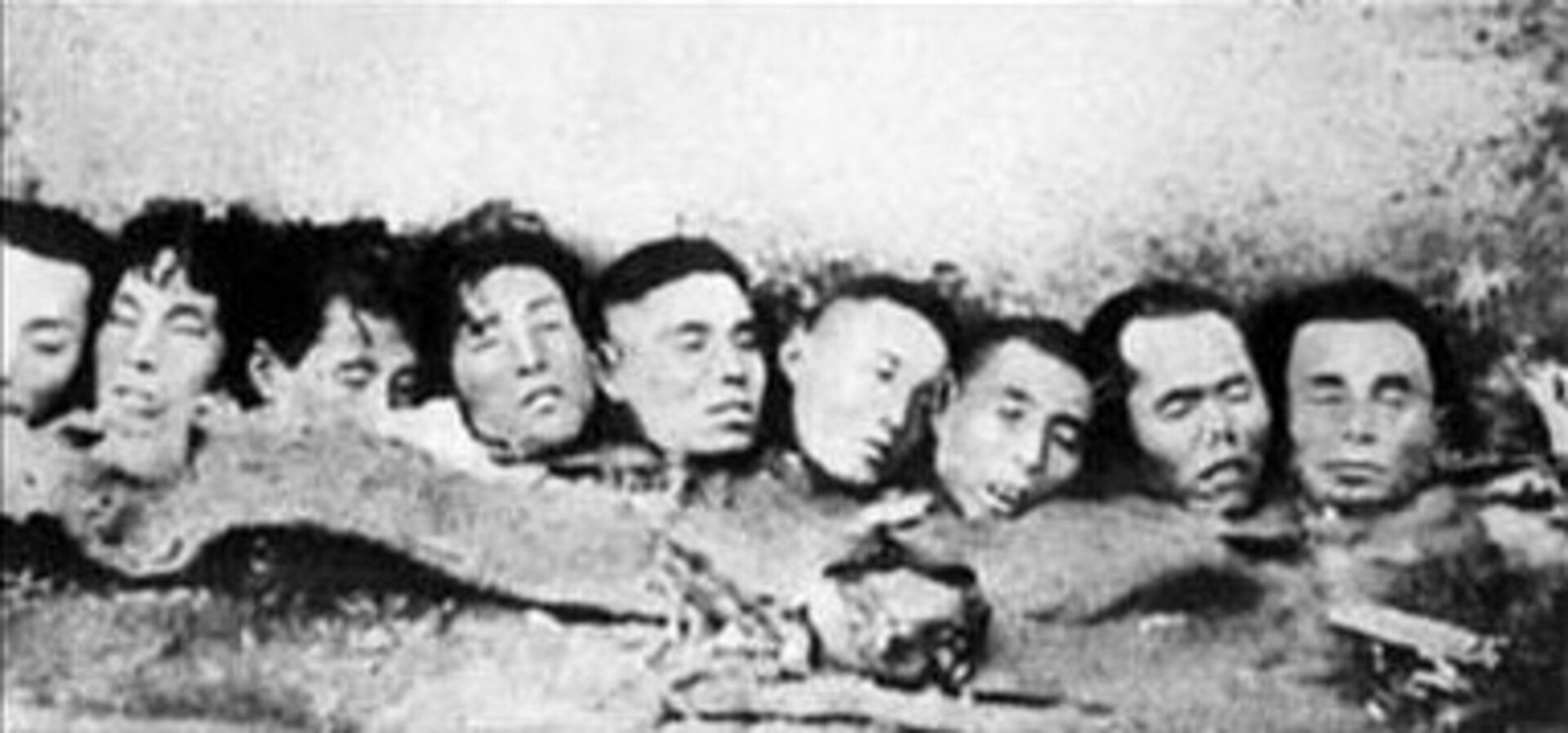
Jakie represje stosowane były wobec japończyków w czasie II wojny światowej?
RXcG3rJMYPUzY
During the war, the Japanese often organized "competitions", where they would cut off the heads of Chinese war prisoners or civilians with a Samurai sword.
Source: Army of Zhang Xueliang, licencja: CC 0.
RmhiQrN9fBAj9
Wersja alternatywna ćwiczenia: Which of the following two comments can be considered valid? Możliwe odpowiedzi: 1. The Japanese hoped that by acting this way, they would break the resistance of the Chinese people more quickly., 2. People die in every war conflict.
Exercise 5
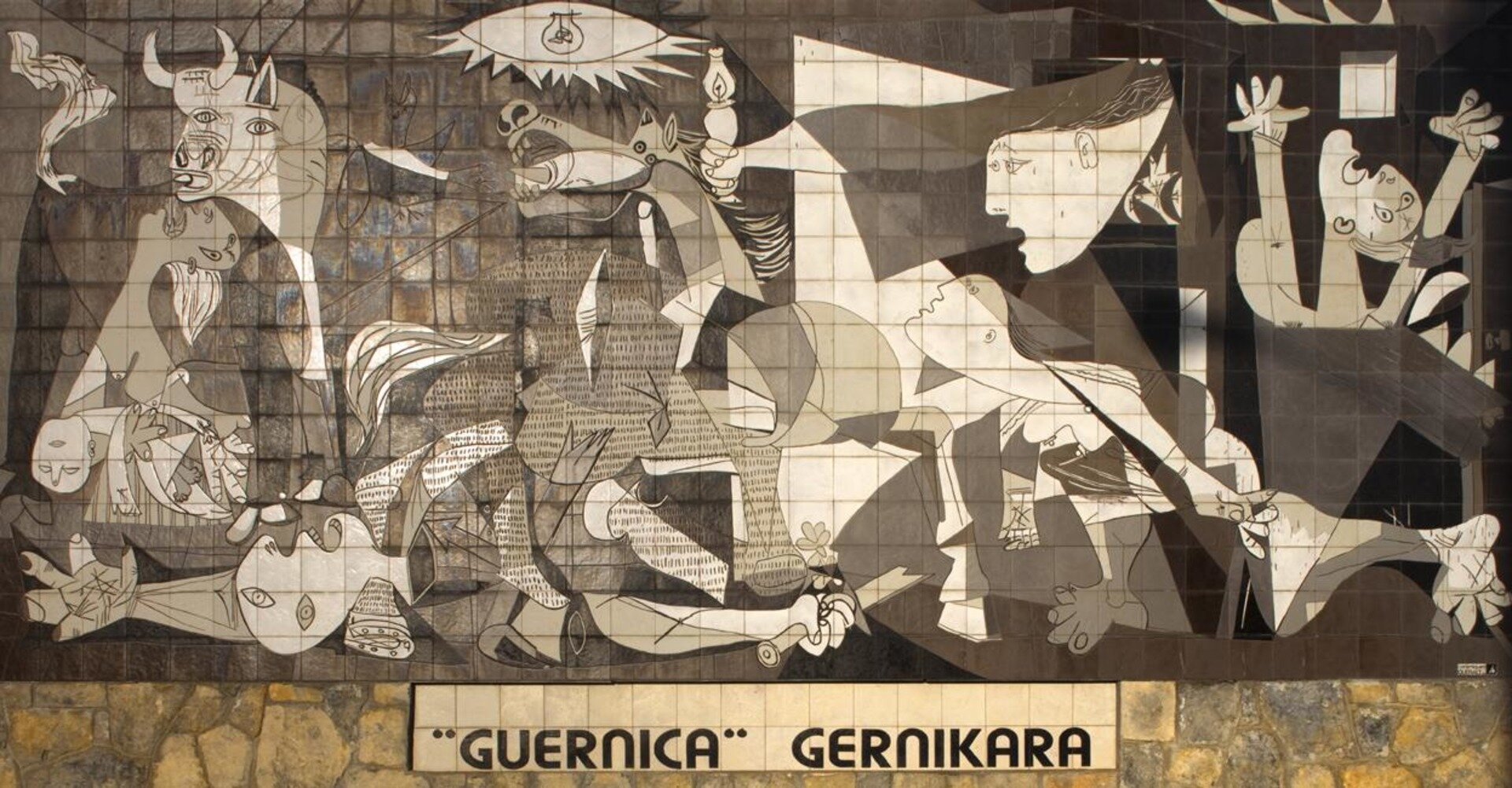
Czy sztuka użytkowa miała znaczenie w walce z represjami?
R1LPg94XukDat
Guernica
Source: Pablo Picasso, Guernica, licencja: CC BY-SA 3.0.
R1Rq4LXnOfp1t
The painting has become the symbol of... Możliwe odpowiedzi: 1. barbaric terror against civilians., 2. the success of aviation., 3. the military success of the Popular Front.
RTZhBNlfoPRaZ
Search in available sources in what style did Picasso paint? Możliwe odpowiedzi: 1. cubism, 2. socialist realism, 3. Dadaism
RxWLHPAdT1pv1
With the use of what elements the painter tried to show the tragedy of war? Możliwe odpowiedzi: 1. colours, 2. the presence of animals, 3. a heap of people, buildings, objects, distorted bodies, open mouths (silent screams).
R19XnJjhvLD4j
Search in available sources which animal depicted in the painting "Guernica" symbolizes fascism? Możliwe odpowiedzi: 1. horse, 2. dove, 3. bull
R16FP9NI8TpUJ
Exercise 6
Point out the term that can be used to characterise the Spanish system under general Franco's regime. Możliwe odpowiedzi: 1. authoritarian state, 2. monarchy, 3. parliamentary republic
RjyqUu4qQRLvO
Exercise 7
Why couldn't the development of the army and in the field of arms take place in Germany after the First World War? Możliwe odpowiedzi: 1. Germans had no means for armaments., 2. This was forbidden under the provisions of the Treaty of Versailles., 3. The war had caused such a shock that the German government decided to liquidate the army and arms industry.
Exercise 8

Analyze the data from the table and do the exercise.

State

National income (in billions of dollars)

Defence assigned revenue (in %)

USA

68

1,5

Great Britain

22

5,7

France

10

9,1

Germany

17

23,5

Italy

6

14,5

USSR

19

26,4

RCWbwFgMHzsQ4
Indicate the sentence that is false. Możliwe odpowiedzi: 1. France allocated the largest percent of national income to defence out of all countries included in the table., 2. Income allocated to defence amounted to more than a quarter of national income in Japan and the USSR, and less than a quarter in Germany., 3. Japan spent the least funds on armaments., 4. The largest amount of national income was spent on armaments by the USA.
R1FJHEotxDhDm1
Exercise 9
Match concepts with their definitions in pairs. Totalitarianism Możliwe odpowiedzi: 1. achieving goals through warfare in combination with the fact that the military has a decisive influence on politics, 2. ideology that proclaims the emergence of a single social class, the liquidation of private property and the need to distribute wealth evenly., 3. a political system of government combined with an ideology proclaiming total subordination of the individual and full control of the society by the state., 4. a system of government in which power is concentrated in the hands of an authoritative leader, who most often bases his rule on the army., 5. national socialist, racist, anti-democratic, anti-Semitic and anti-communist ideology created and proclaimed by the NSDAP, 6. a political and structural doctrine that emerged in Italy, proclaiming the cult of the state and social solidarity, opposing democracy, liberalism and political pluralism Authoritarianism Możliwe odpowiedzi: 1. achieving goals through warfare in combination with the fact that the military has a decisive influence on politics, 2. ideology that proclaims the emergence of a single social class, the liquidation of private property and the need to distribute wealth evenly., 3. a political system of government combined with an ideology proclaiming total subordination of the individual and full control of the society by the state., 4. a system of government in which power is concentrated in the hands of an authoritative leader, who most often bases his rule on the army., 5. national socialist, racist, anti-democratic, anti-Semitic and anti-communist ideology created and proclaimed by the NSDAP, 6. a political and structural doctrine that emerged in Italy, proclaiming the cult of the state and social solidarity, opposing democracy, liberalism and political pluralism Militarism Możliwe odpowiedzi: 1. achieving goals through warfare in combination with the fact that the military has a decisive influence on politics, 2. ideology that proclaims the emergence of a single social class, the liquidation of private property and the need to distribute wealth evenly., 3. a political system of government combined with an ideology proclaiming total subordination of the individual and full control of the society by the state., 4. a system of government in which power is concentrated in the hands of an authoritative leader, who most often bases his rule on the army., 5. national socialist, racist, anti-democratic, anti-Semitic and anti-communist ideology created and proclaimed by the NSDAP, 6. a political and structural doctrine that emerged in Italy, proclaiming the cult of the state and social solidarity, opposing democracy, liberalism and political pluralism Fascism Możliwe odpowiedzi: 1. achieving goals through warfare in combination with the fact that the military has a decisive influence on politics, 2. ideology that proclaims the emergence of a single social class, the liquidation of private property and the need to distribute wealth evenly., 3. a political system of government combined with an ideology proclaiming total subordination of the individual and full control of the society by the state., 4. a system of government in which power is concentrated in the hands of an authoritative leader, who most often bases his rule on the army., 5. national socialist, racist, anti-democratic, anti-Semitic and anti-communist ideology created and proclaimed by the NSDAP, 6. a political and structural doctrine that emerged in Italy, proclaiming the cult of the state and social solidarity, opposing democracy, liberalism and political pluralism Nazism Możliwe odpowiedzi: 1. achieving goals through warfare in combination with the fact that the military has a decisive influence on politics, 2. ideology that proclaims the emergence of a single social class, the liquidation of private property and the need to distribute wealth evenly., 3. a political system of government combined with an ideology proclaiming total subordination of the individual and full control of the society by the state., 4. a system of government in which power is concentrated in the hands of an authoritative leader, who most often bases his rule on the army., 5. national socialist, racist, anti-democratic, anti-Semitic and anti-communist ideology created and proclaimed by the NSDAP, 6. a political and structural doctrine that emerged in Italy, proclaiming the cult of the state and social solidarity, opposing democracy, liberalism and political pluralism Communism Możliwe odpowiedzi: 1. achieving goals through warfare in combination with the fact that the military has a decisive influence on politics, 2. ideology that proclaims the emergence of a single social class, the liquidation of private property and the need to distribute wealth evenly., 3. a political system of government combined with an ideology proclaiming total subordination of the individual and full control of the society by the state., 4. a system of government in which power is concentrated in the hands of an authoritative leader, who most often bases his rule on the army., 5. national socialist, racist, anti-democratic, anti-Semitic and anti-communist ideology created and proclaimed by the NSDAP, 6. a political and structural doctrine that emerged in Italy, proclaiming the cult of the state and social solidarity, opposing democracy, liberalism and political pluralism

Keywords

World War II, Japan, Manchuria, invasion, Far East

Glossary

Totalitarianism
Totalitarianism
R1KEDW9a5sLF4
Nagranie słówka: Totalitarianism

Totalitaryzm – system rządów politycznych połączony z uzasadniającą jego istnienie ideologią, która głosi całkowite podporządkowanie jednostki i pełną kontrolę przez państwo społeczeństwa.

Authoritarianism
Authoritarianism
R1f0jEWdIUwr8
Nagranie słówka: Authoritarianism

Autorytaryzm – system rządów, w którym władza skoncentrowana jest w ręku cieszącego się autorytetem przywódcy, najczęściej opierającego swoje rządy na wojsku. Decyzje są zatwierdzany przez kontrolowany przez władzę parlament. W odróżnieniu od totalitaryzmu, w państwa autorytarnych nie stosuje się terroru i kontroli na masową skalę.

Militarism
Militarism
R1EsfvfQls1EB
Nagranie słówka: Militarism

Militaryzm – dążenie do realizacji celów na drodze działań wojennych, w której wojsko wywiera decydujący wpływ na politykę.

The Great Depression
R1KD8XqZhQkw0
Nagranie słówka: The Great Depression

Wielki kryzys – największy kryzys gospodarczy w XX wieku. Rozpoczął się w USA w 1929 roku i trwał do 1933. Objął swym zasięgiem prawie cały świat.

Asia for Asiatics
Asia for Asiatics
R6Y2EbPD6MKlG
Nagranie słówka: Asia for Asiatics

Azja dla Azjatów – głoszone przez propagandę japońską hasło nieakceptowania obcokrajowców.

the Anti‑Comintern Pact
RMlX851Fggn1i
Nagranie słówka: the Anti‑Comintern Pact

Pakt antykominternowski – układ z 25.11.1936 zawarty między Niemcami i Japonią, którego celem było zwalczanie działań partii komunistycznych.

Living space (Lebensraum)
RDhigEHbYp2VR
Nagranie słówka: Living space (Lebensraum)

Przestrzeń życiowa (Lebensraum) – nacjonalistyczna i rasistowska niemiecka koncepcja polityczna zakładająca i usprawiedliwiająca ekspansję terytorialną Niemiec dla zdobycia niezbędnej przestrzeni do życia.

Annexation
Annexation
Ruzl0cjTD4Ars
Nagranie słówka: Annexation

Aneksja – zagarnięcie i przyłączenie, najczęściej siłą, przez jedno państwo części lub całości terytorium innego państwa. Dokonywana jest najczęściej w wyniku wygranej wojny.

Ribbentrop‑Molotow Pact
R4BwO7hBPyJJr
Nagranie słówka: Ribbentrop‑Molotow Pact

Pakt Ribbentrop‑Mołotow – porozumienie zawarte między ZSRS i III Rzeszą 23 sierpnia 1939 r., jego tajny protokół przewidywał m.in. podział ziem polskich.

Fascism
Fascism
R1IPYzjBBe6Ni
Nagranie słówka: Fascism

Faszyzm – doktryna polityczna i ustrojowa powstała na początku lat 20. XX we Włoszech. Głosiła kult państwa i solidaryzm społeczny, występując przeciwko demokracji, liberalizmowi i pluralizmowi politycznemu. Był ustrojem totalitarnym.

Nazism
Nazism
R1LfTX5HBfybR
Nagranie słówka: Nazism

Nazizm – narodowy socjalizm, rasistowska, antydemokratyczna, antysemicka i antykomunistyczna ideologia stworzona i głoszona przez NSDAP – partię Adolfa Hitlera. Głosiła hasła wyższości rasy germańskiej nad innymi ludźmi.

Communism
Communism
RMRzHeMZkldoy
Nagranie słówka: Communism

Komunizm – ideologia głosząca powstanie jednej klasy społecznej, likwidację własności prywatnej i wspólny podział dóbr. Miała obalić istniejące ustroje polityczne i wprowadzić utopijny model państwa pozbawionego ucisku i wyzysku innych.

Ultimatum
Ultimatum
RB7rxQQmYaLPZ
Nagranie słówka: Ultimatum

Ultimatum – żądanie wysunięte przez jedno państwo wobec drugiego wzywające do spełnienia określonych żądań pod groźbą wybuchu wojny lub innych sankcji. Stawiane jest przeważnie w sytuacji, gdy zawiodą inne formy dyplomatyczne.

the Condor Legion
the Condor Legion
Rf0f9y8qlsWOt
Nagranie słówka: the Condor Legion

Legion Condor – niemiecka jednostka wojskowa walcząca po stronie gen. Francisco Franco w wojnie domowej w Hiszpanii. Najbardziej znana jest z udziału w bombardowaniu Guerniki.

Caudillo
Caudillo
R1GNZ9FTYo8DO
Nagranie słówka: Caudillo

Caudillo – termin oznaczający przywódcę politycznego lub wojskowego używany przez dyktatora w Hiszpanii za czasów rządów gen. Francisco Franko.