Due to the growing political crisis of the Second Polish Republic, marshal Józef Piłsudski decided to take over the power. On May 12th, 1926, Piłsudski took command of the troops gathered in Rembertów and set out for the capital. He met with president Stanisław Wojciechowski on the Poniatowski bridge. Wojciechowski probably decided not to violate the constitution and not to give in to Piłsudski’s demands to dissolve the government and hand over the power to him. On May 12th, the fights between forces faithful to the government and Józef Piłsudski’s troops began. After three days of fighting, Piłsudski’s forces won and the government resigned. On May 31st, 1926, the parliament approved members of the new cabinet, thereby sanctioning the May Coup d'État. Piłsudski, however, declined to become president, and Ignacy Mościcki was elected for the office.
Exercise 1
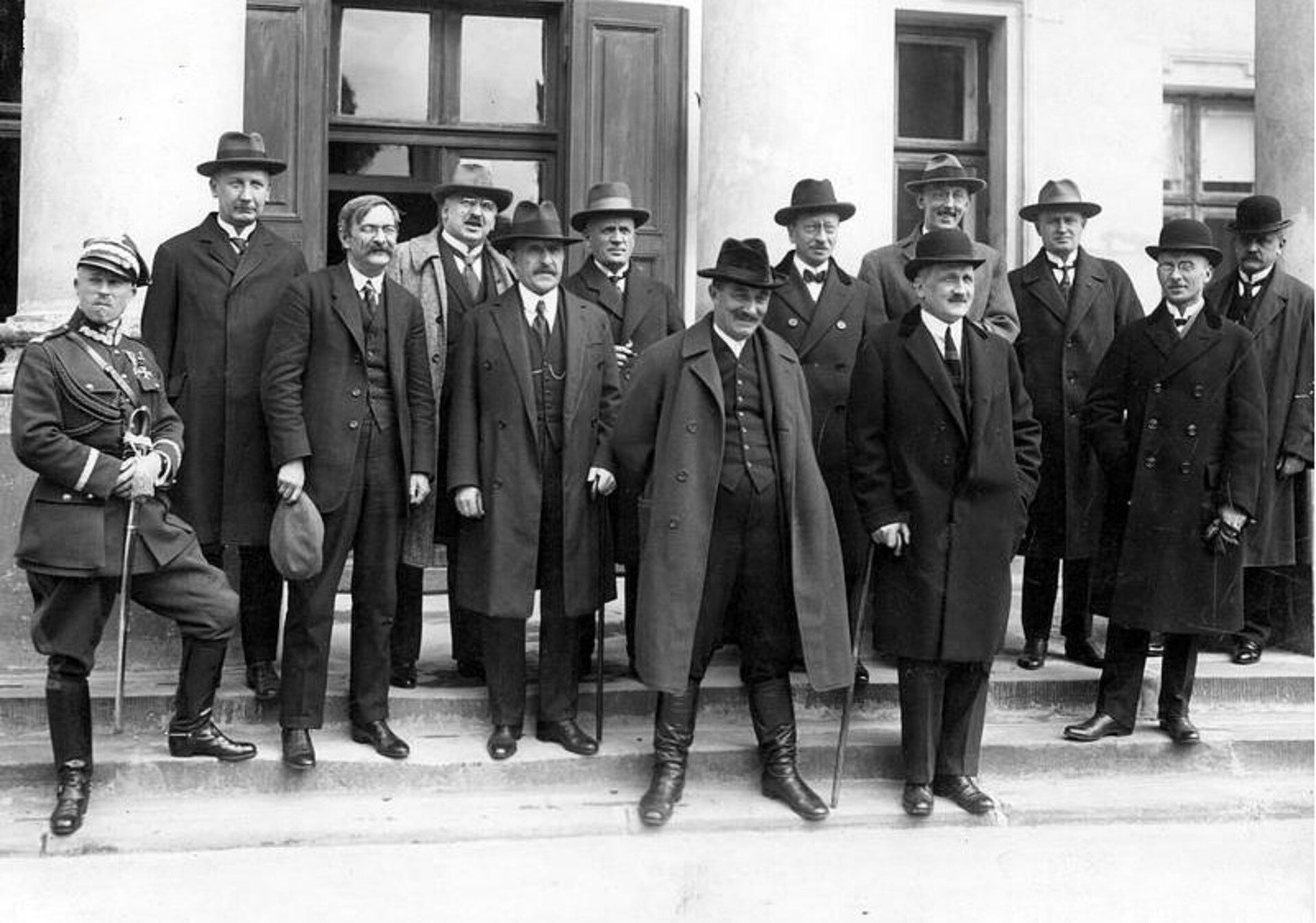
Tell who was the head of the government overthrown by Piłsudski. What were the political foundations of the cabinet mentioned above? Use the photo.
RRTTBKmUPmwwH
Fotografia czarno-biała przedstawiająca Rząd w 1926 r. Od lewej: J. Tarnawa-Malczewski, A. Chądzyński, S. Grabski, S. Piechocki, S. Smólski, S. Osiecki, W. Witos, W. Kiernik, J. Zdziechowski, K. Dzierżykraj- Morawski, J. Radwan, J. Jankowski, M. Rybczyński.
The government in 1926. From left: J. Tarnawa-Malczewski, A. Chądzyński, S. Grabski, S. Piechocki, S. Smólski, S. Osiecki, W. Witos, W. Kiernik, J. Zdziechowski, K. Dzierżykraj-Morawski, J. Radwan, J. Jankowski, M. Rybczyński
Source: domena publiczna.
R1Ti0rK0WmU7a
Select the correct answer. Możliwe odpowiedzi: 1. Wincenty Witos, center and the Polish People's Party "Piast"., 2. Wincenty Witos, center and right., 3. Wincenty Witos, center and left.
Select the correct answer. Możliwe odpowiedzi: 1. Wincenty Witos, center and the Polish People's Party "Piast"., 2. Wincenty Witos, center and right., 3. Wincenty Witos, center and left.
Select the correct answer.
Wincenty Witos, center and the Polish People's Party "Piast".
Wincenty Witos, center and right.
Wincenty Witos, center and left.
Task 1
Link the two facts below. Create a sentence that explains their dependence.
Fact 1
Fact 2
In 1926, there was another rapprochement between Germany and the USSR. In Berlin, both countries signed the treaty on friendship and neutrality.
The former Chief of State and hero of the struggle for independence started to be perceived as the “man of the moment” who will improve the situation of the country.
What other events have caused the decline of Poland's position on the international arena at that time?
R1SiZCMcVAGZR
Exercise 2
Why “We Are the First Brigade” was played in cafes in May of 1926? Możliwe odpowiedzi: 1. It's a coincidence, the cafes owners just agreed on it., 2. It was a composition clearly related to the Marshal’s past and his fight for independence., 3. It was a war song that encouraged aggressive behaviour.
Why “We Are the First Brigade” was played in cafes in May of 1926? Możliwe odpowiedzi: 1. It's a coincidence, the cafes owners just agreed on it., 2. It was a composition clearly related to the Marshal’s past and his fight for independence., 3. It was a war song that encouraged aggressive behaviour.
Why “We Are the First Brigade” was played in cafes in May of 1926?
It's a coincidence, the cafes owners just agreed on it.
It was a composition clearly related to the Marshal’s past and his fight for independence.
It was a war song that encouraged aggressive behaviour.
Task 2
On what „personal” grounds Piłsudski could base his hope that Wojciechowski would give him the power in a peaceful way? Look up for information related to the politicians’ past.
Task 3
Listen to a fragment of Journals by Maria Dąbrowska. How did the writer report the events of May 12th to 14th, 1926? What aspects of the May Coup drew her attention? What does this mean? Do you agree with her opinion? What could her annotation from 1943 mean?
I didn’t write. A great many things began to happen in my life and in life in general. I had my Mommy visiting for a month. Then, I drove her to the countryside to Hela. Once I’d returned, I asked Chmielewski to dismiss me from the office. I'm quitting this job. I have a chance for a scholarship. I will go to the countryside for three to four months and start writing a novel. I need to get my stuff together, I have to start, I have to try, or it's over.
In the midst of all my plans – a terrifying yet wonderful thing happened in Warsaw, like a chapter from a Greek play. A military revolution for a moral ideal. It was Piłsudski who did it, and he was supported by the entire army, the whole street and the lower classes. For three days, Warsaw a scene for a tragic struggle between few government troops and Piłsudski's units. A battle which took place while the fearless Warsaw audience “assisted”. They took control over the airport, then street after street, the Ministry of Defence, and finally the BelwederBelwederBelweder. Wojciechowski and the government of Witos were swept aside.
R1eTVeD9ETc6f
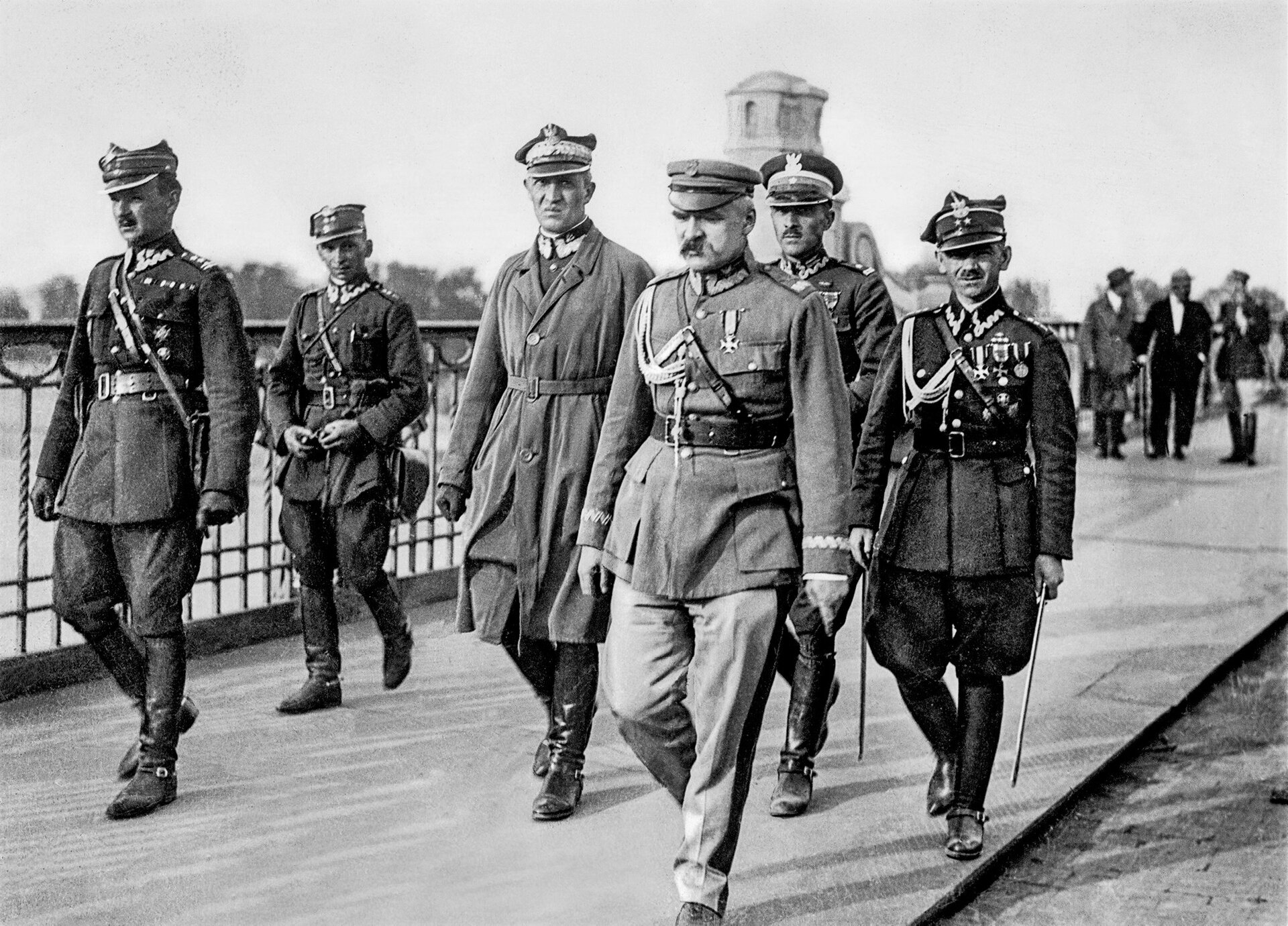
Fotografia czarno-biała przedstawiająca Józefa Piłsudskiego podczas majowego zamachu stanu.
Józef Piłsudski during the May Coup
Source: Marian Fuks, Józef Piłsudski w czasie zamachu majowego, 1926, domena publiczna.
For now, a purely moral demand has been set: one cannot play with the soldier's honour, steal the property of the nation, or live a life of pretence only for show. Two moral nations confronted each other in Poland. One is a nation of creativity and self‑improvement, reaching to the very essence of issues and the second nation – a nation of lies and conventions. (God, what a mistake this faith turned out to be, note from 1943). Conditions for a new life have been created. But what will we, the society, do with it? Piłsudski cannot do everything for us. It proves too difficult to even write about all this. Major tasks and issues are whirling, whirling…
maria Source: Maria Dąbrowska, Journals 1914-1965, Warszawa 2009.
Task 4
Przypomnij sobie tytuł abstraktu, wysłuchaj nagrania i spróbuj zaproponować własny temat dla dzisiejszej lekcji.
Przypomnij sobie tytuł abstraktu, wysłuchaj nagrania i spróbuj zaproponować własny temat dla dzisiejszej lekcji.
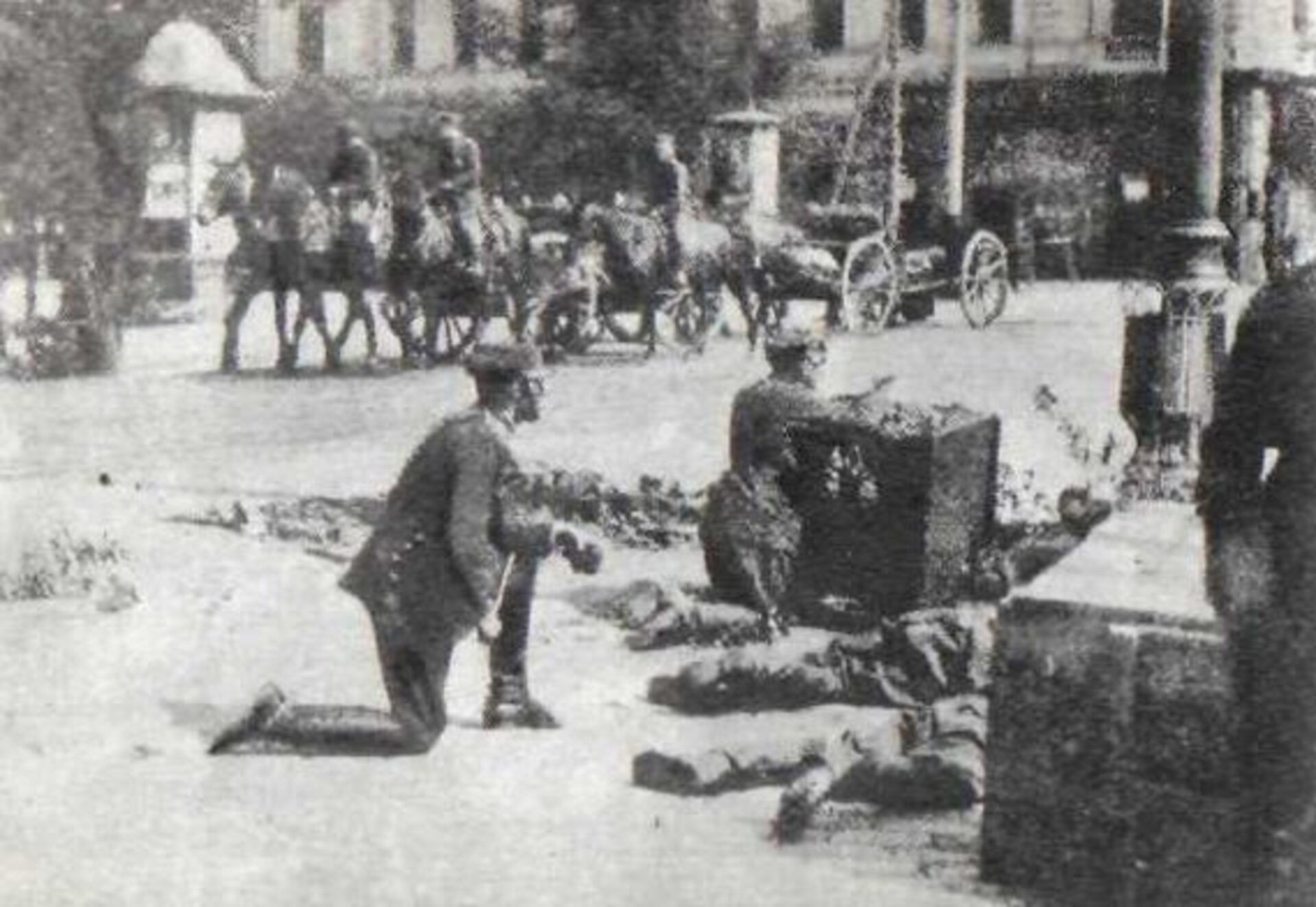
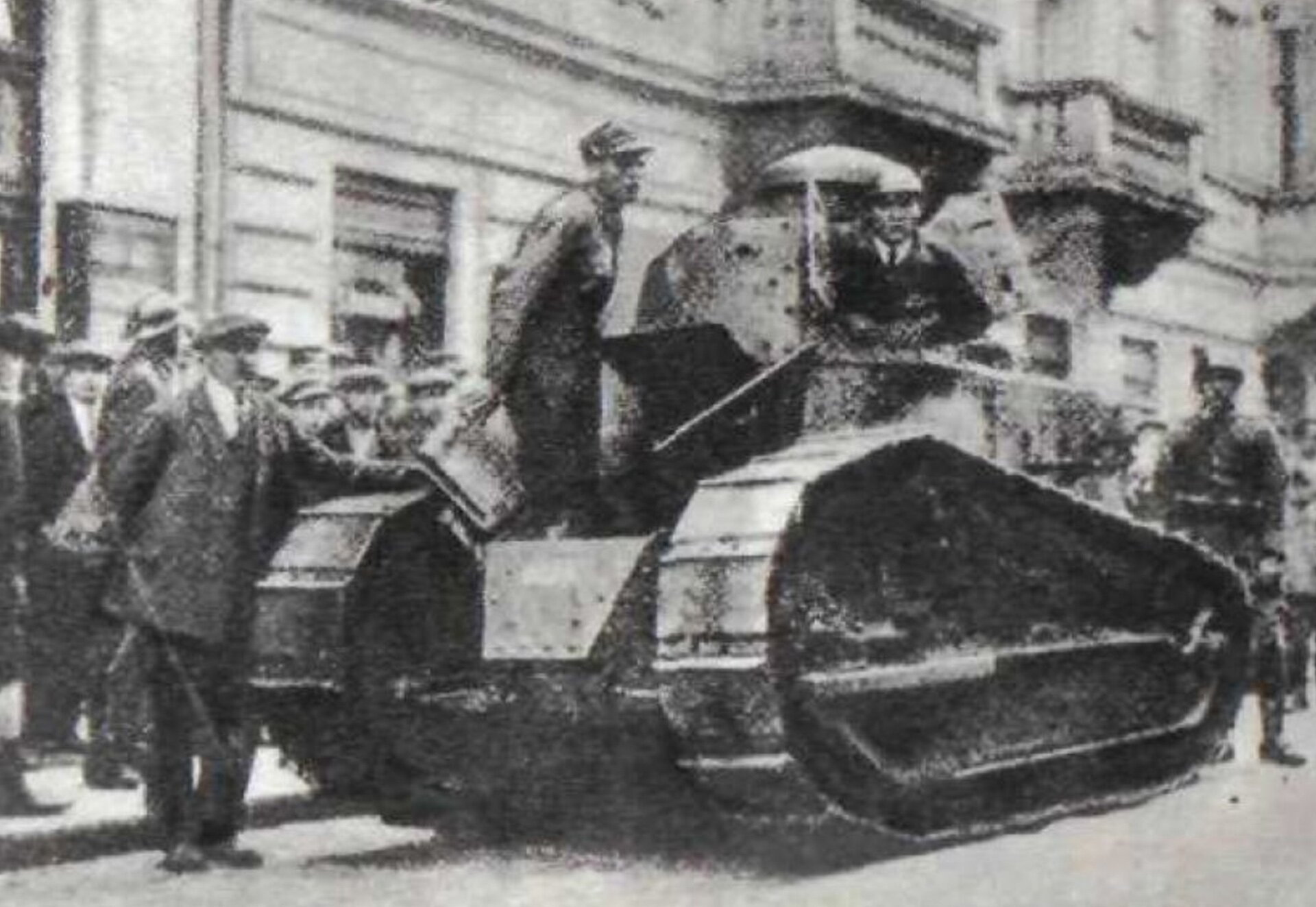
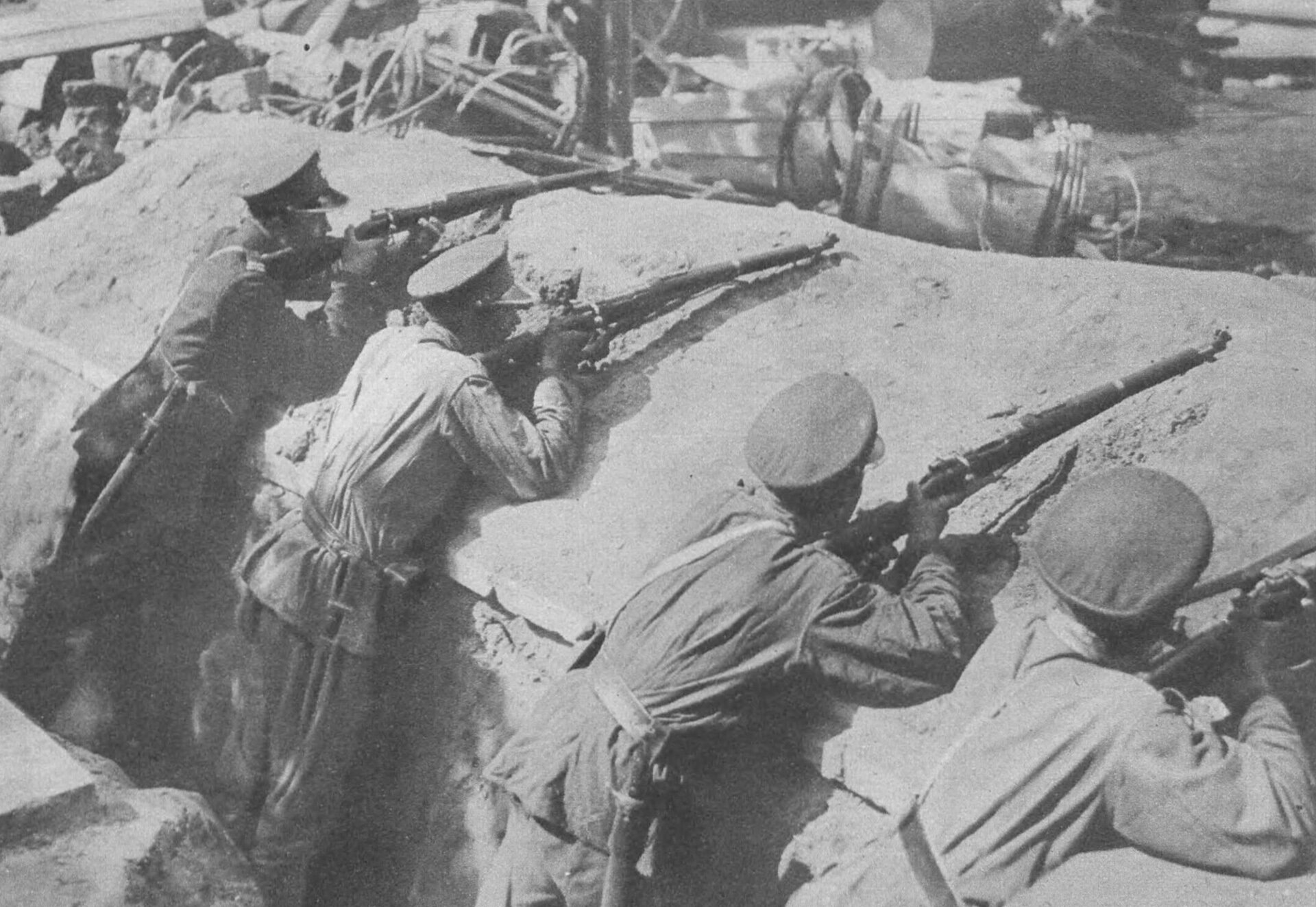
The following photographs were taken during Piłsudski's Coup. What conclusions can be drawn from them about the nature of the fighting in Warsaw? Confront them with Maria Dąbrowska's narrative. Did the writer accurately describe the May events?
RDgDbs1VG7665
Fotografia czarno-biała przedstawiająca walki podczas majowego zamachu stanu.
Fights during the May Coup
Source: licencja: CC 0.
R1q6dEo06MQKo
Fotografia czarno-biała przedstawiająca walki podczas majowego zamachu stanu.
Fights during the May Coup
R1KmvoeuddLIK
Fotografia czarno-biała przedstawiająca walki podczas majowego zamachu stanu.
Fights during the May Coup
Source: licencja: CC 0.
R1YtjhjWHMLpj
Exercise 3
In 1926 (during the Coup), Belweder served as seat for: Możliwe odpowiedzi: 1. Parliament of the Second Polish Republic, 2. President of the Second Polish Republic, 3. The Council of Ministers
In 1926 (during the Coup), Belweder served as seat for: Możliwe odpowiedzi: 1. Parliament of the Second Polish Republic, 2. President of the Second Polish Republic, 3. The Council of Ministers
In 1926 (during the Coup), Belweder served as seat for:
Parliament of the Second Polish Republic
President of the Second Polish Republic
The Council of Ministers
Exercise 4
Wymyśl pytanie na kartkówkę związane z tematem abstraktu.
Wymyśl pytanie na kartkówkę związane z tematem abstraktu.
RWHEt5piuZg4b
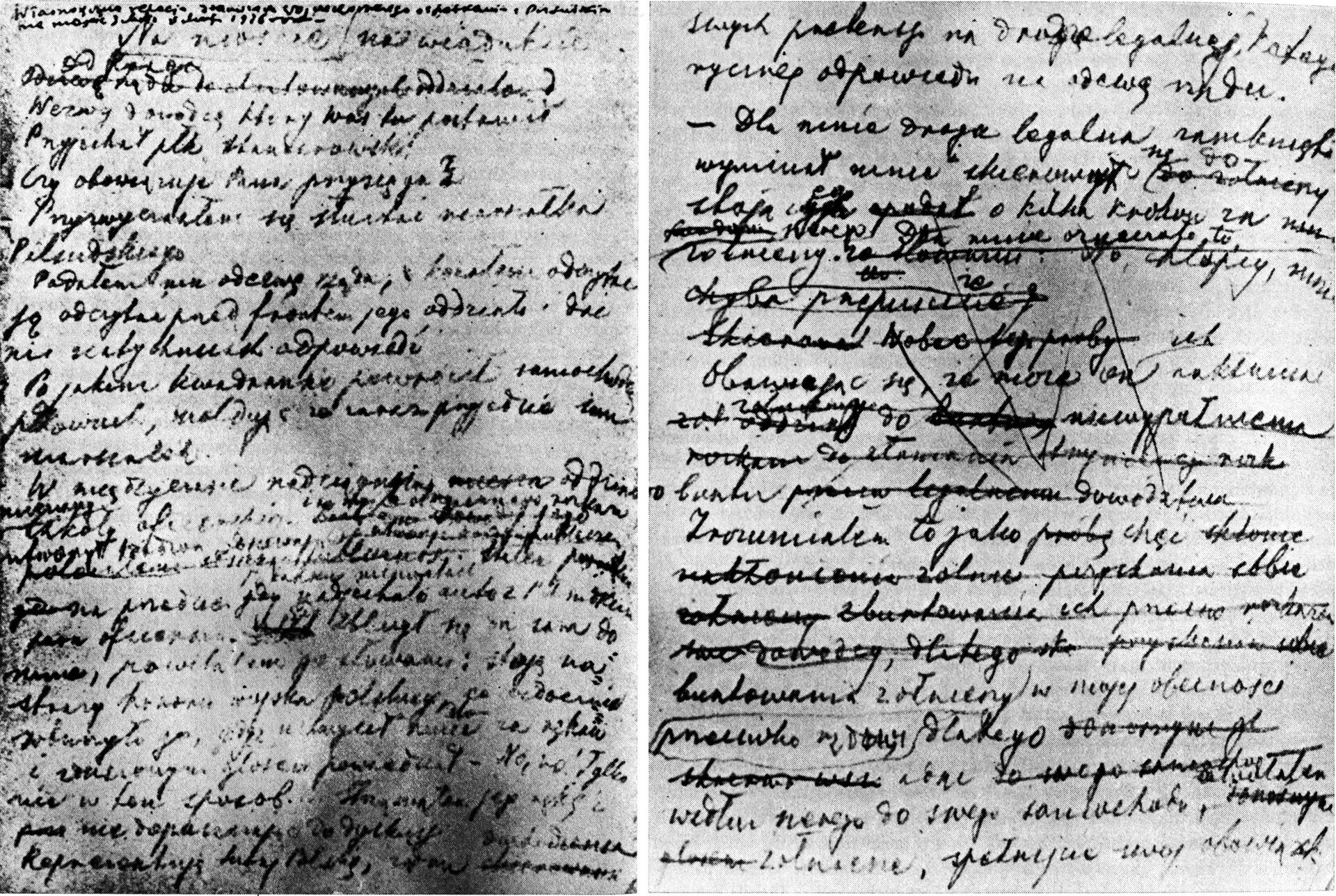
Fotografia czarno-biała przedstawiająca notatki Prezydenta Wojciechowskiego.
Notes made by President Wojciechowski during the Coup
Source: domena publiczna.
RKXfp6FRxpbSF
Zadaj swoje pytanie koledze. Czy potrafił na nie odpowiedzieć?
Zadaj swoje pytanie koledze. Czy potrafił na nie odpowiedzieć?
In the photo, there are notes made by President Stanisław Wojciechowski. Try to describe them. Please notice the text is crossed-out in many places. What can it mean?
He was writing them in hiding.
He was emotional and undecided.
He lacked writing skills.
Task 5
Comment on the data. Try to observe whether the principle that during war the soldiers fight but mostly the civilians die is confirmed. Why do you think Piłsudski proposed to organize joint funerals for the victims of the May Coup?
Detailed list
Fallen officers
Fallen privates
Wounded officers
Wounded privates
Piłsudski's troops
8
99
26
266
Government troops
17
81
40
274
Unknown fallen soldiers
0
10
-
-
Total losses of the Polish Army
25
190
66
540
Detailed list
Fallen
Wounded
Losses among civilians
164
314
Total losses
379
920
R1ZPX3ejVvgzS1
Exercise 5
Wybierz jedno nowe słowo poznane podczas dzisiejszej lekcji i ułóż z nim zdanie.
Wybierz jedno nowe słowo poznane podczas dzisiejszej lekcji i ułóż z nim zdanie.
Belweder – pałac przy ul. Belwederskiej; od 1767 własność króla Stanisława Augusta Poniatowskiego; własność ks. J. Poniatowskiego; później w latach 1818–30 rezydencja wielkiego ks. Konstantego; w latach 1918–22 siedziba J. Piłsudskiego, 1922–26 rezydencja prezydenta RP (G. Narutowicza, S. Wojciechowskiego), od 1926–35 ponownie J. Piłsudskiego.
„Pierwsza Brygada” – polska pieśń żołnierska autorstwa T. Biernackiego i A.T. Hałacińskiego, napisana w 1917 r. do melodii tzw. Marsza dziesiątego kieleckiej orkiestry legionowej; do wybuchu II wojny światowej była nieoficjalnym hymnem armii polskiej; dopiero u schyłku lat 80. XX w. powróciła do repertuaru orkiestr wojskowych
Traktaty lokarneńskie - podpisane w Locarno w grudniu 1925 r. międzynarodowe porozumienia opracowane i parafowane w pażdzierniku 1925 na konferencji w Locarno, z udziałem Belgii, Francji, Niemiec, Wielkiej Brytanii i Włoch; Czechosłowacja i Polska jedynie asystowały obradom