ROwe41LURTrv1

From the Battle of Warsaw to the Peace of Riga

Polish infantry marching towards the frontline before the Battle of Warsaw
Source: domena publiczna.

Link to the lesson

You will learn
  • to list the most important events of the Polish–Soviet War of 1920–1921;

  • to characterize the significance of the Battle of Warsaw;

  • to desctibe the likelihood of carrying out the federation concept;

  • to explain the process of expansion of Polish Army in years 1918–1920 and to evaluate the stance of Poles towards the challenges of the Fatherland.

ROXffGEDvWZjq
Nagranie dźwiękowe abstraktu.

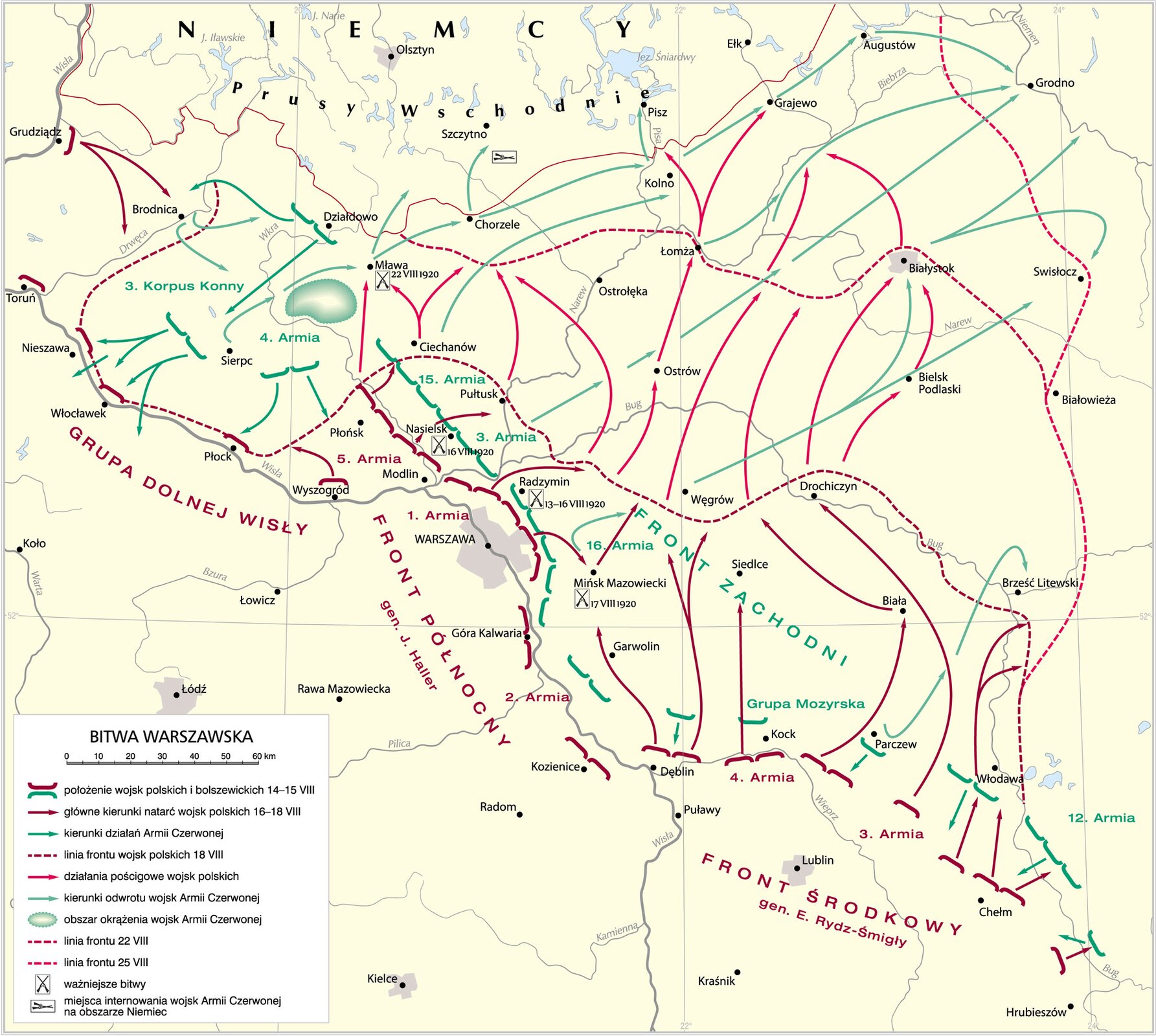
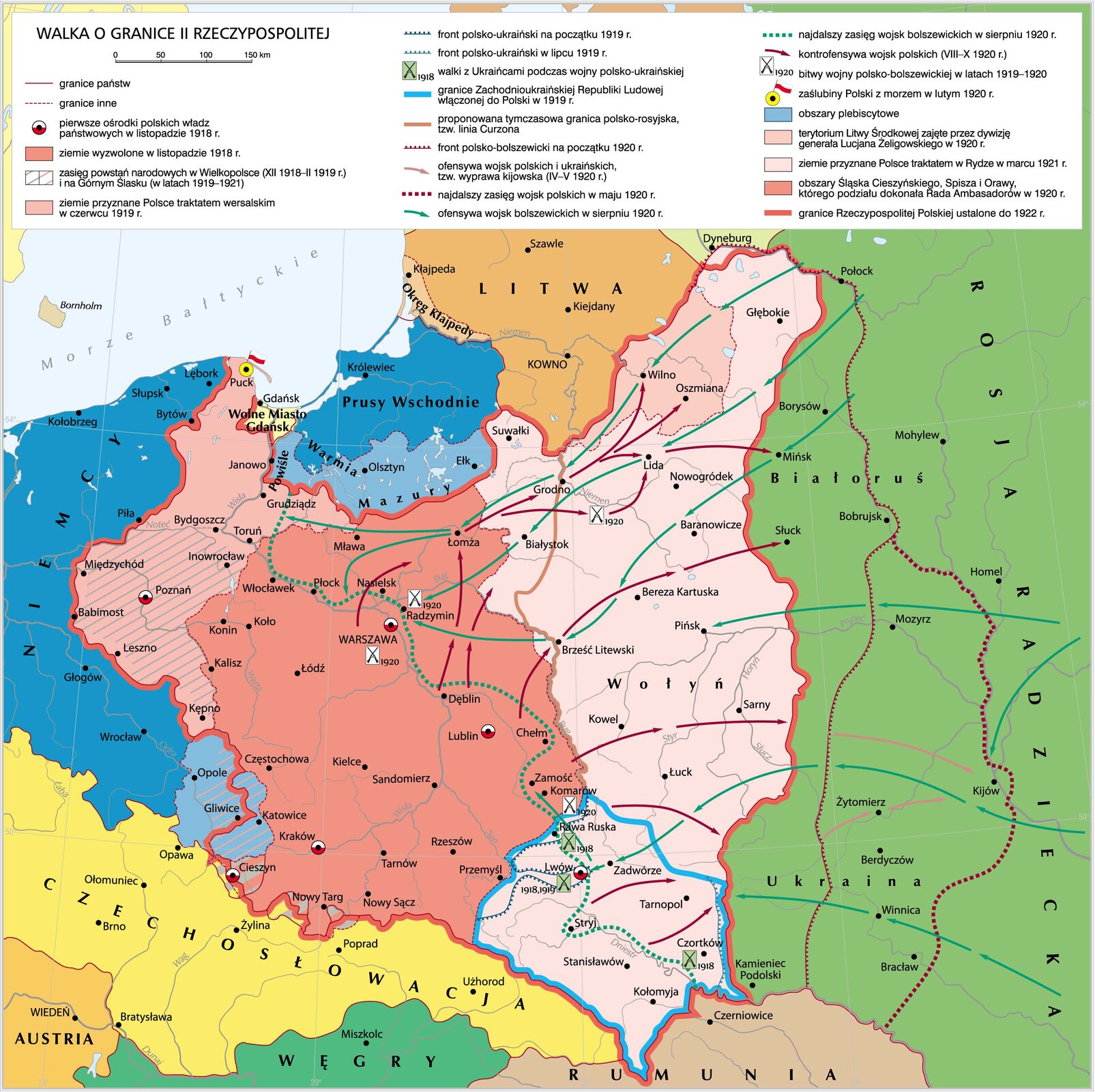
At the beginning of August 1920, the situation of the Polish state seemed hopeless. On 15 August 1920, the final and decisive Battle of Warsaw took place, and saw the defeat of the Red Army troops. The war was ended with the signing the Peace of RigaPeace of RigaPeace of Riga on 18 March 1921. Before that, the Vilnius dispute (the conflict between Poland and Lithuania over the Vilnius Region) was resolved. General Lucjan Żeligowski “rebelled”: he entered Vilnius and in an act of “controlled self‑determinationcontrolled self‑determinationcontrolled self‑determination” made this territory fall under the Polish rule. Thus the Vilnius Region was taken over (October 1920), and the Republic of Central Lithuania was created.

R1HQ4BT7RuMqZ
Exercise 1
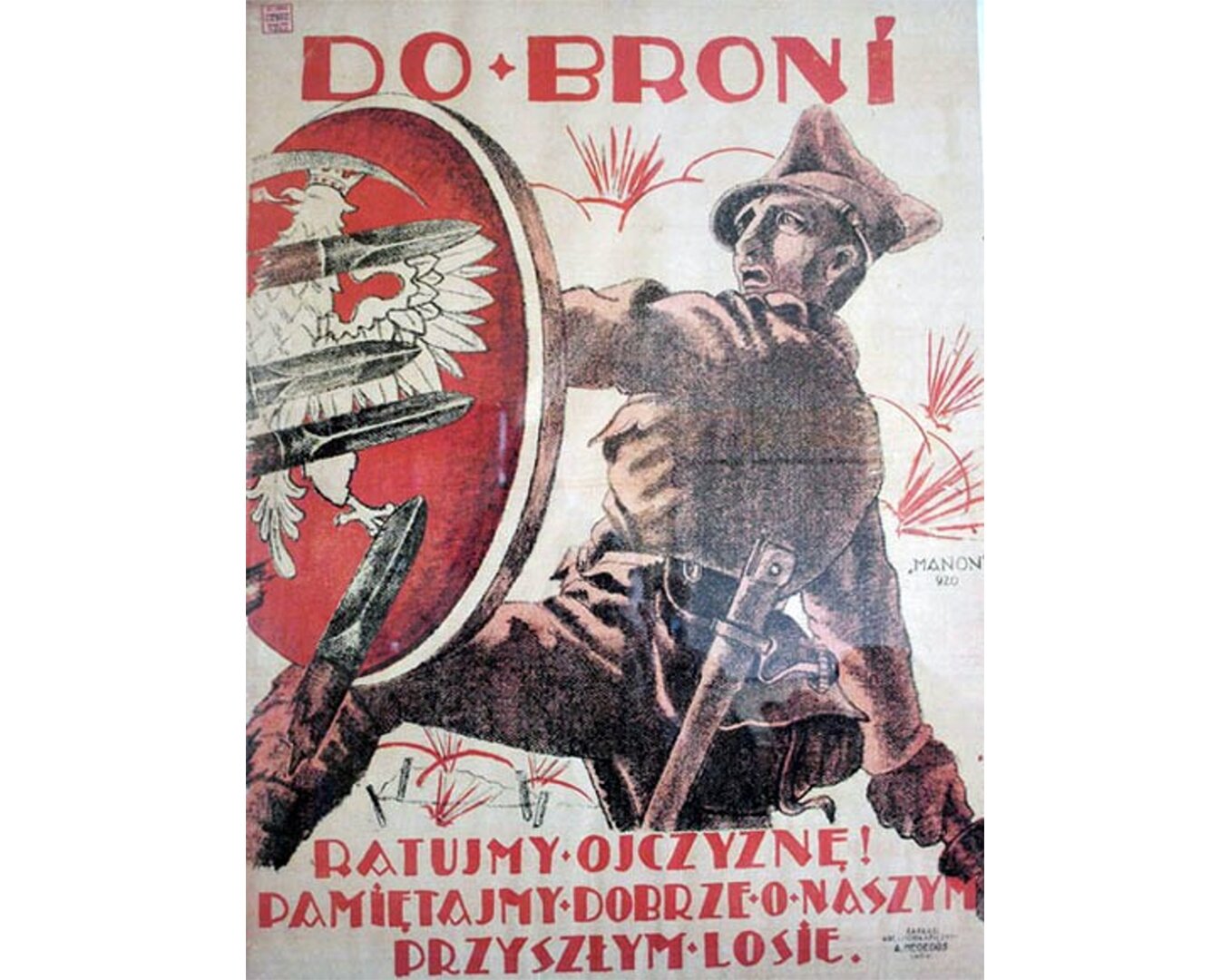
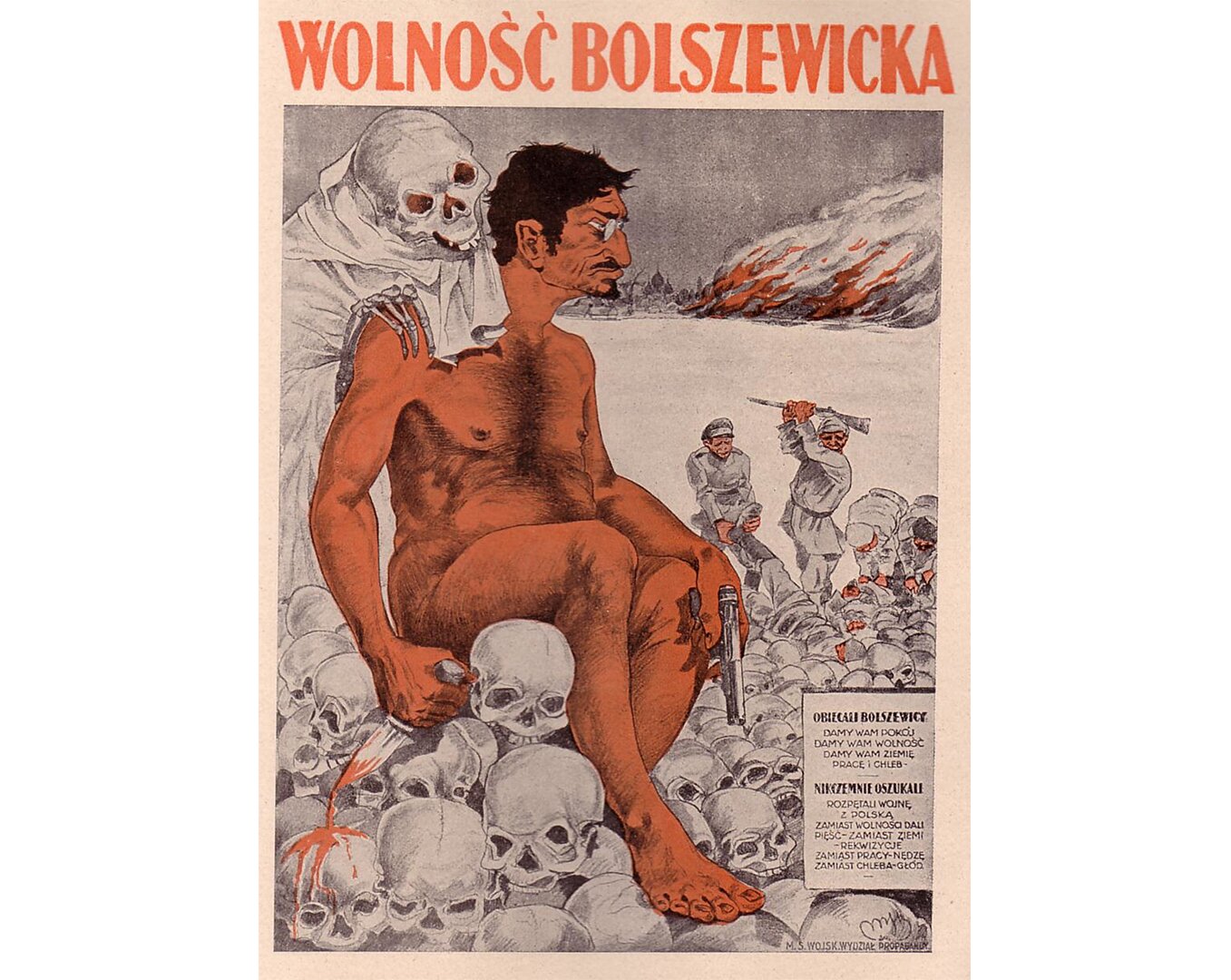
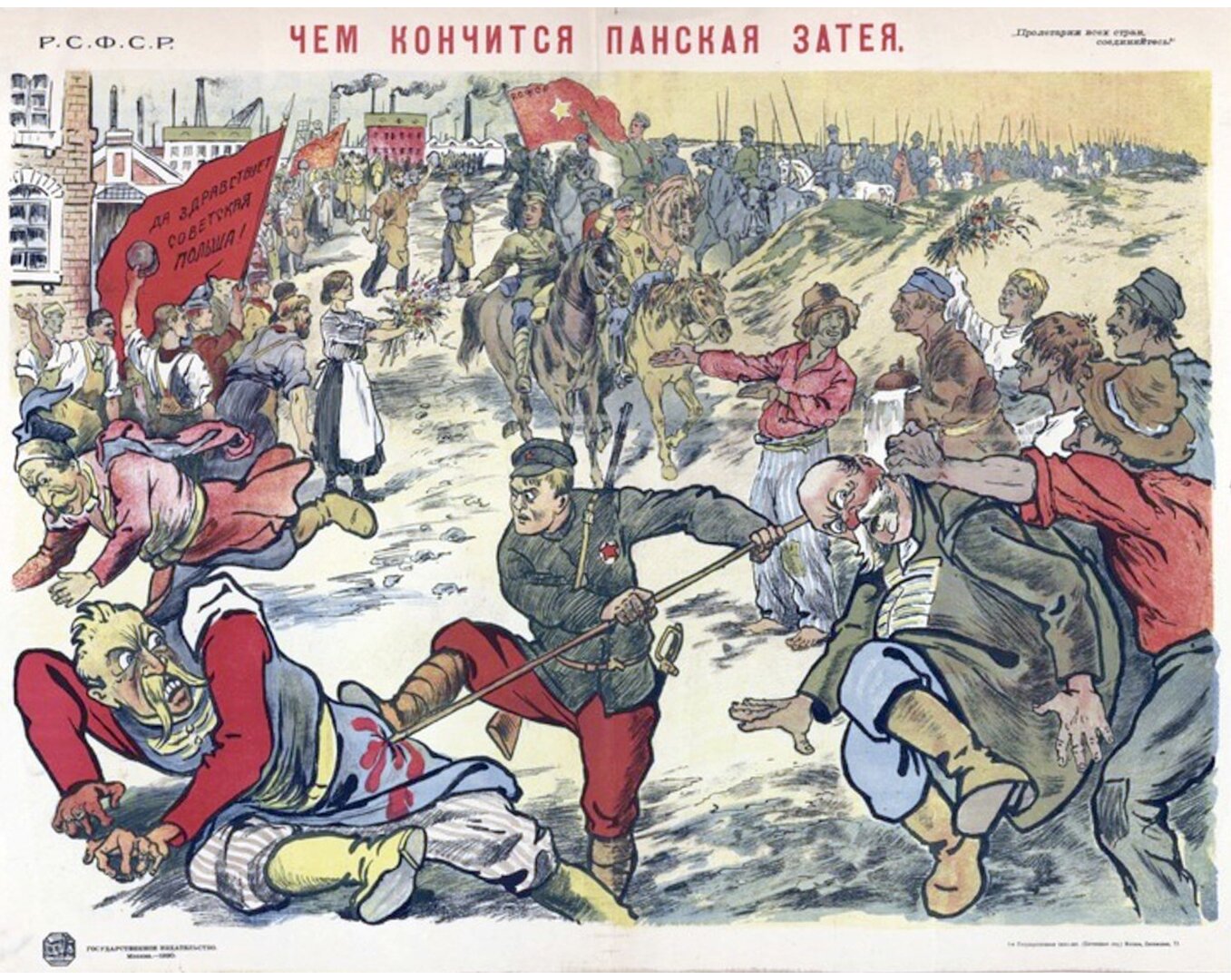
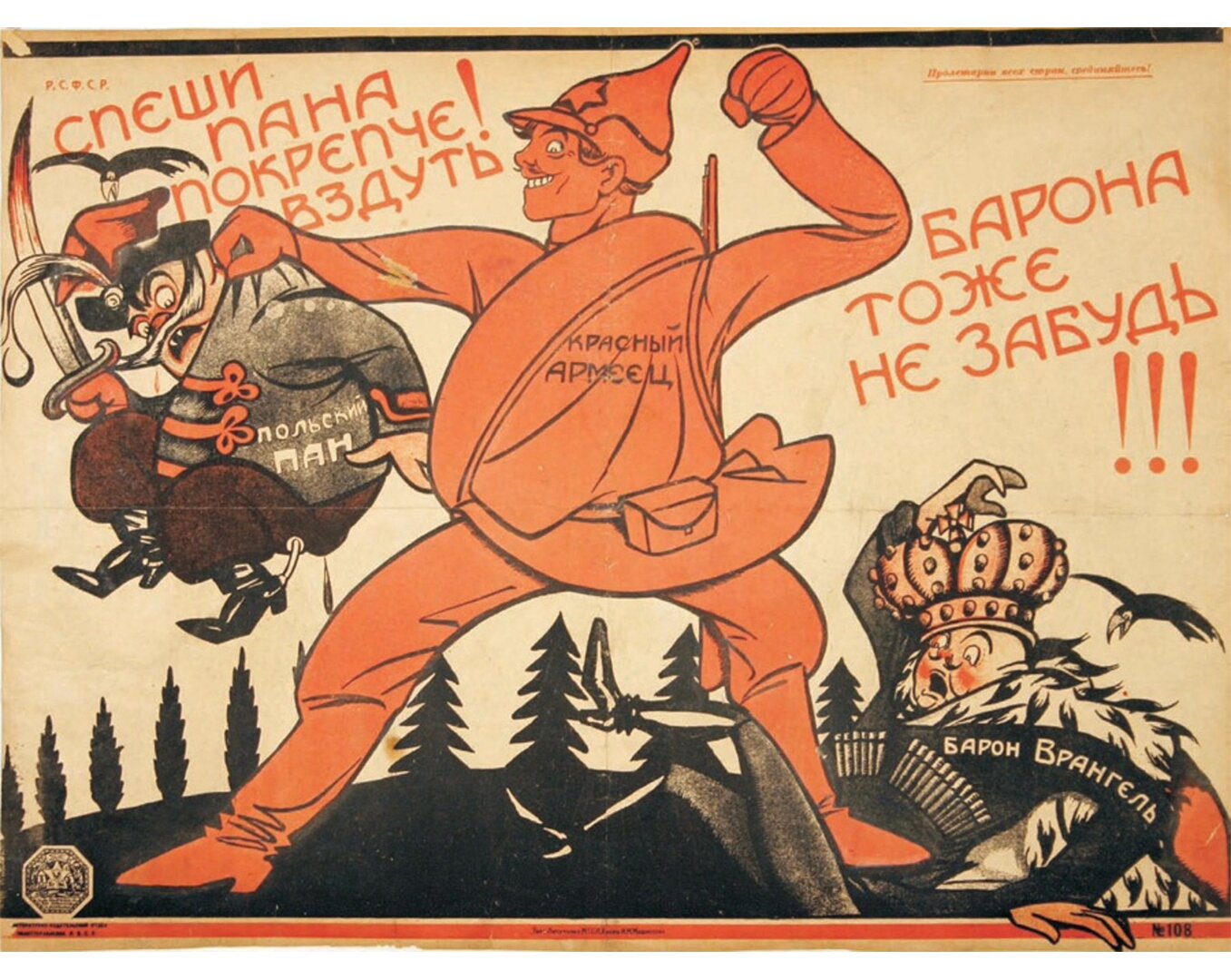
Analyse the following statement by Vladimir Lenin and the posters, and determine what both sides referred to in their propaganda. Take the text on the posters into consideration as well. Select the irrelevant sentence. Możliwe odpowiedzi: 1. The Bolsheviks called for a worldwide revolution., 2. The Bolsheviks presented Poles as a nation of lords and land-grabbers., 3. The posters of both sides called for peace., 4. The Poles emphasised that the war with Soviet Russia was a war for survival., 5. The Poles brought attention the discrepancies between what the Bolsheviks proclaimed and what they actually did., 6. The posters of both sides had aggressive wartime slogans.
Task 1
Jakie znaczenie odegrał plakat w Bitwie Warszawskiej?
Władimir Iljicz Lenin Dzieła

Prowadząc ofensywę przeciwko Polsce, prowadzimy jednocześnie ofensywę przeciwko entencie, rozbijając armię polską, rozbijamy pokój wersalski, na którym opiera się cały system stosunków międzyludzkich.

lenin Source: Władimir Iljicz Lenin, [w:] tegoż, Dzieła, s. 30.
Task 2
Wysłuchaj nagrania abstraktu, wyodrębnij jego części i nadaj im tytuły.
RVwnHDf2F8ktx
The Battle of Warsaw
Source: Krystian Chariza i zespół.
1
Task 3
Dowiedz się, jak zakończyła się współpraca między Józefem Piłsudskim a Symonem Petliurą. Czy Piłsudski porzucił koncepcję federacji i swojego ukraińskiego sojusznika? 1.       In April 1920, the Second Republic of Poland made an alliance with the Ukrainian People’s Republic led by ataman Symon Petliura, the leader of the Directorate, de facto president, and supreme commander of the Ukrainian army. This anti‑Soviet coalition with Ukraine was the most important step in carrying out Piłsudski’s federation concept. The army of the Ukrainian People’s Republic remained Poland’s vehement ally in the turbulent period of 1919–1920. It played a crucial part in the struggle for Eastern Galicia, defending  Zamość valiantly. It stopped the march of Budyonny's Cavalry Army, which came to aid Soviet troops defeated near Warsaw in July 1920. After the victorious Battle of the Niemen River, the Ukrainians expected that the Poles would continue a joint offensive against the Bolsheviks—but this never happened.2.       During the negotiations with the Bolsheviks in Riga, the Piłsudski’s plans lay in ruins. Poland immediately accepted the proxies of the façade authorities of the Soviet Ukraine, betraying its Ukrainian ally. In the end, Poland signed a separate peace with Soviet Russia. The reason for that was that Piłsudski believed further provocative actions were not viable anymore. Even though he should and wanted to shoot the talks down and regain control of Belarus and Ukraine territories, he realised that the Polish troops were exhausted. The least he expected were tough negotiations with the Soviets. However, as his representatives to the Polish peace delegation were marginalised, and the representatives of the Sejm majority (very reluctant to the Polish–Ukrainian Kiev offensive) took the lead, the talks did not go Piłsudski’s way.3.       Despite breaking the alliance with the Ukrainian People’s Republic, Poland attempted at least to support Petliura in his lone struggle. He was secretly provided with weapon and military equipment, and withdrawal behind the ceasefire line was delayed, which in a way protected his forces against the Soviets. When the Ukrainian forces were finally defeated in November 1920, about 40,000 Ukrainian civil and military refugees found shelter in Poland. The Ukrainian government‑in‑exile also operated unofficially here. After Poland withdrew its recognition of the Ukrainian People’s Republic, which was one of the conditions of the Peace of Riga, ataman Petliura remained in Poland. When Soviet officials demanded that he be deported, he was kept safe in hiding, which the Polish authorities tolerated. As the Chjeno‑Piast coalition came into power, Petliura was finally forced out of Poland. He left the country on 31 December 1923. In May 1926, in Paris, he was murdered by an assassin, most probably by the order of the Joint State Political Directorate, the Soviet secret police. Did Soviets fear that Piłsudski, who had come to power, would like to renew the alliance and support Petliura? 
R1PmTd6SPue7W
Fotografia czarno-biała przedstawiająca Józefa Piłsudskiego i Symona Petliura w Winnicy.
Józef Piłsudski and Symon Petliura in Vinnitsa, Kiev Offensive, April 1920
Source: domena publiczna.
Task 4
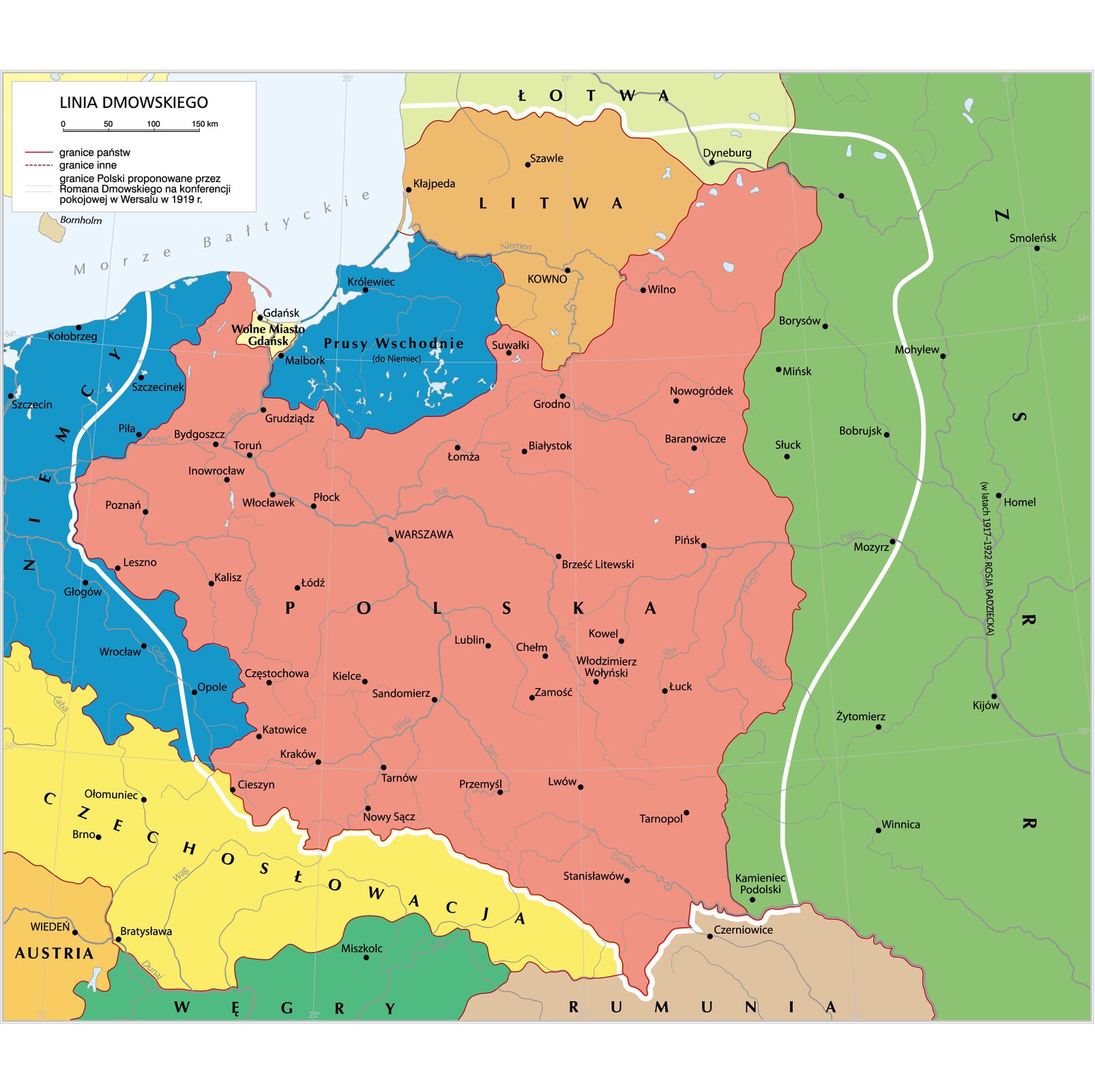
Wyjaśnij pojęcie linia Dmowskiego.

Which concept, Piłsudski’s or Dmowski’s, turned out more feasible?
R1Z9PkelNuZ81
Exercise 2
Wybierz jedno nowe słowo poznane podczas dzisiejszej lekcji i ułóż z nim zdanie.

Keywords

exclusionexclusionexclusion, Peace of Riga, federation concept

Glossary

exclusion
exclusion
R1AmryyfJ7Lt2
Nagranie dźwiękowe słówka.

ekspulsja – usuwanie kogoś z jakiegos terytorium

ataman
ataman
RhEaS2tySlc33
Nagranie dźwiękowe słówka.

ataman – historyczny tytuł dowódcy Kozaków.

federation concept
federation concept
R1UbU9IHAyMvd
Nagranie dźwiękowe słówka.

koncepcja federacyjna – koncepcja zakładająca niepodległość Litwy, Ukrainy i Białorusi jako antyrosyjskiego przedmurza Polski

incorporation concept
RSAflxpYpUakQ
Nagranie dźwiękowe słówka.

koncepcja inkorporacyjna – koncepcja utworzenia jednolitego etnicznie państwa narodowego

Curzon Line
Curzon Line
Rm4SRA7HiNdhM
Nagranie dźwiękowe słówka.

linia Curzona – termin powstał od nazwiska ministra spraw zagranicznych Wielkiej Brytanii, który w 1919 roku zaproponował jej kształt, pokrywający się z granicą zachodnią Rosji po III rozbiorze Polski na linii Bugu, natomiast na południu przecinająca ziemie Rzeczypospolitej, znajdujące się od 1772 roku pod zaborem austriackim; zaproponowana granica miała mieć charakter linii rozejmowej.

Peace of Riga
Peace of Riga
RcogWrjWsO5jX
Nagranie dźwiękowe słówka.

Traktat ryski – traktat podpisany w Rydze 18 III 1921 przez Polskę, sowiecką Rosję i sowiecką Ukrainę, kończący wojnę polsko‑bolszewicką.

OGPU
OGPU
R1aZHxwxN3BT6
Nagranie dźwiękowe słówka.

Zjednoczony Państwowy Zarząd Polityczny – służba specjalna, zajmująca się wywiadem i bezpieczeństwem wewnętrznym w latach 1923‑1934 w Związku Sowieckim.

controlled self‑determination
R1D7NLSEylpXy
Nagranie dźwiękowe słówka.

sterowane samookreślenie – nakłonienie miejscowej populacji do określenia się członkami wskazanego narodu. W tym przypadku chodziło o udzielenie Polakom zamieszkującym tereny Litwy Środkowej cichego wsparcia, którego nie można było oficjalnie powiązać z polskim rzadem, a następnie przyłączenie tych terenów do Polski. Działania były podejmowane w ten sposób, aby nie zrażać do Polski zachodnich aliantów.