The Crisis, Reform, and Collapse of the Nobles’ Republic (revision class)
to describe the most important historical events of the seventeenth and eighteenth centuries;
to list the crises that struck Poland in the eighteenth century and what attempts at reform were undertaken;
to explain the historical significance of the collapse of the Polish‑Lithuanian Commonwealth.
By the eighteenth century, the Polish‑Lithuanian political system became anachronistic. The state was becoming ever weaker. It did not pursue an active foreign policy; it was more of an object than a subject on the international stage. Due to the presence of the liberum vetoliberum veto, the nobility obstructed attempts at reform with ease. One deputy’s vote against a project was enough to dismiss the entire Sejm. The representatives of the nobility oftentimes accepted bribes from foreign powers that wished to keep Poland‑Lithuania weak. Russia had ever more say in the affairs of the country.
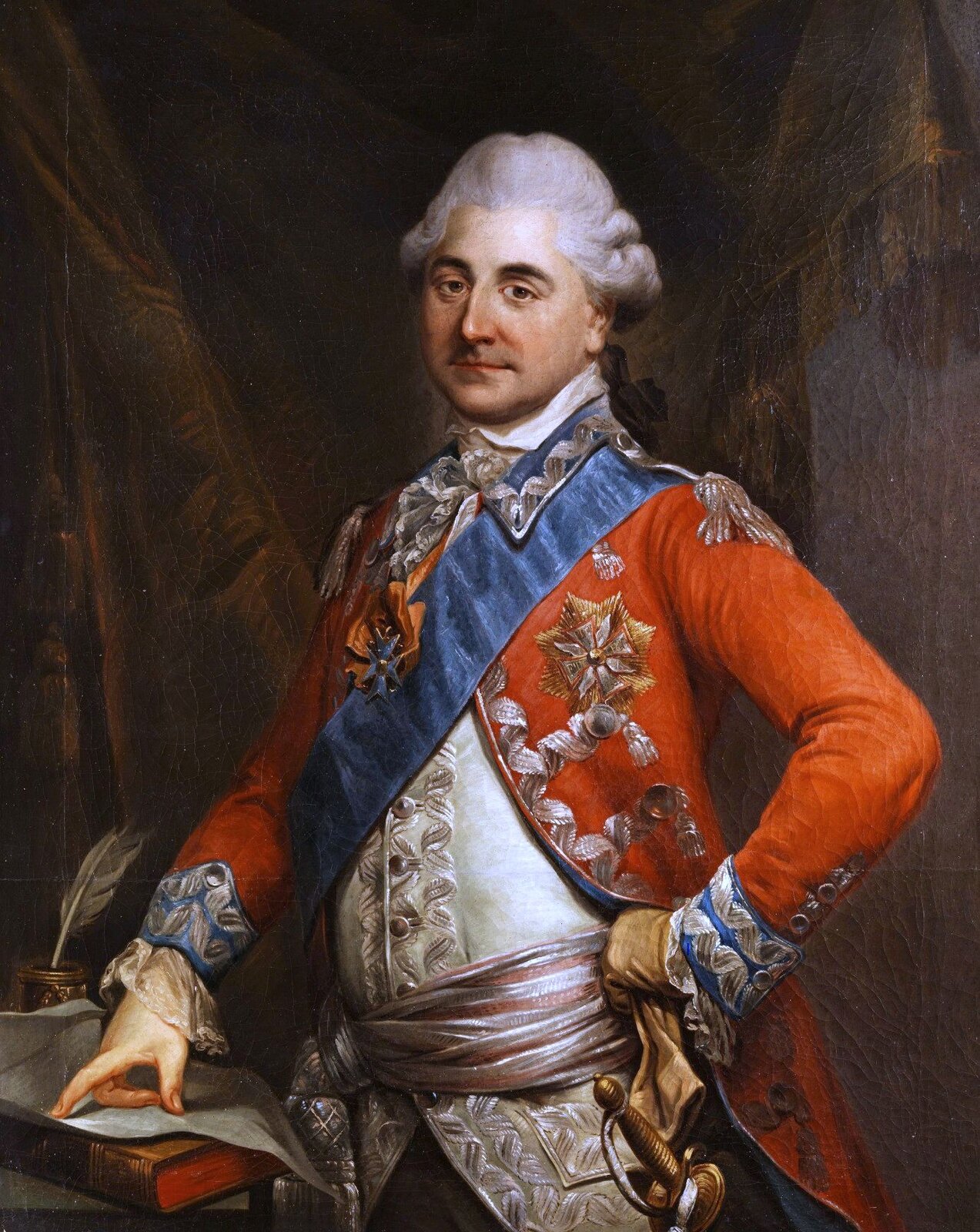
When Stanisław II Augustus was elected King, some of the patriotically inclined nobles rebelled against his rule and created the Bar ConfederationConfederation The part of the military that remained loyal to the King suppressed the rebellion with the aid of Russian forces. Capitalizing upon the opportunity, Russia, Austria, and Prussia conducted the First PartitionPartition of Poland in 1772. During the reign of Stanisław II Augustus, a series of reforms was implemented in order to strengthen the state. The ideas of the EnlightenmentEnlightenment, popular in the West at the time, started gaining traction. On 3 May 1791, Poland‑Lithuania adopted its ConstitutionConstitution, i.e. the law regulating the state’s political system. Free electionFree election and the liberum vetoliberum veto were abolished. The burgess class gained political rights. War against Russia in defense of the ConstitutionConstitution ensued; it resulted in Poland being defeated and the law being repealed, with Russia and Prussia conducting the Second PartitionPartition of Poland in 1793. This led to an uprising (insurrectioninsurrection) in 1794. The Polish military, joined by peasants wielding scythes (KosynierzyKosynierzy), was led by Tadeusz Kościuszko, a hero of the American War of Independence. Despite the initial success against the Russians, a series of defeats followed. Kościuszko, wounded, was taken prisoner. The Russians took over Warsaw. The insurrection failed. In the wake of it, Russia, Austria and Prussia conducted the Third PartitionPartition of Poland (1795). The Polish‑Lithuanian state ceased to exist. The Commonwealth was erased from the map of Europe. The last King of the state, Stanisław II Augustus, abdicated, passing his authority onto Catherine II of Russia, then subsequently moved to Russia and died soon afterwards.
Mark the countries Poland was at war with in the seventeenth century.
- Russia
- Turkey (Ottoman Empire)
- Bohemia
- Sweden
Read the text carefully and fill the blanks.
In the seventeenth century, wars were fought between Poland and Turkey. Both countries attempted to subdue .............., a small country situated on their shared border. The Poles suffered because of invasions of the ............ – a people inhabiting Crimea and dependent on Turkey. On the other hand, Turkey suffered because of invasions of the ................ – free people inhabiting Zaporizhia, i.e. Southern Ukraine. This caused wars between the two powers. Poland’s greatest success in those was the victory in the Battle of ............ in 1683. The Christian armies were led by the Polish King, ...................................
Indicate the countries that meddled in the weakened, defenseless Poland’s internal affairs.
- England
- France
- Russia
- Austria
- Spain
- Prussia
Mark the changes introduced by the Great Sejm.
- It introduced permanent taxes
- It granted noble privileges to the burgess class
- It introduced general election rights
- It abolished free election
- It expanded the army’s size
- It granted political rights to the peasants
- It abolished the liberum veto and introduced majority vote
- It granted the peasants the ownership of land
Mark the truthful ends to the sentence: The reform introduced by the 3rd May 1791 Constitution was not implemented, since:
- part of the Polish magnates did not want their introduction
- the reform was not necessary, therefore the Great Sejm limited it by itself
- an uprising led by Tadeusz Kościuszko erupted against further reform
- King Stanisław II Augustus protested against the reform
- Russia invaded Poland and led to the reform’s demise
Study the map carefully, reading the information it contains.
The final collapse of the Polish‑Lithuanian Commonwealth took place of 3 January 1795, when the representatives of Russia and Austria signed the PartitionPartition Treaty and a secret accord that stipulated the final division of the Polish‑Lithuanian soil between the three Partitioning states. For a long time, Poland disappeared from the maps. The Partitions were not only against the international law of the time, but against the pacts signed by Poland and the Partitioning states. This time, Poland’s neighbors did not even attempt to maintain a facade of legality.
Mark the truthful sentences.
- In the seventeenth century, Poland-Lithuania fought wars against Russia, Sweden, and Turkey.
- The ineptitude of the Wettin rulers was one of the causes of Poland-Lithuania’s demise.
- In 1764, Stanisław II Augustus rose to the throne.
- The Proclamation of Połaniec announced by Kościuszko limited socage.
- The 3rd May 1791 Constitution was the first European constitution in history.
- After the collapse of Poland-Lithuania, Warsaw found itself under Prussian rule.
- The Łazienki park in Warsaw was built during the times of Augustus III Wettin.
- Stanisław II Augustus was a protegee of the Prussian King.
- After the First Partition of Poland, Cracow found itself under Austrian rule.
- The Battle of Zieleńce resulted in the victory of the Russian army.
- The Kosynierzy were peasant cavalry units
- The main weapon of the Kosynierzy was the musket.
- Tadeusz Kościuszko was one of the authors of the 3rd May 1791 Constitution.
Keywords
Nobles’ Republic, crisis, reform
Glossary
Rozbiór – podział państwa między inne, najczęściej sąsiadujące z nim kraje. Najczęściej dokonany jest wbrew woli większości mieszkańców państwa podlegającego rozbiorowi, na drodze dyplomatycznej, bez użycia siły zbrojnej, ale jej grożącej.
Konstytucja – inaczej zwana ustawą zasadniczą. Jest to akt prawny, który najczęściej jest najważniejszym i najwyższym dokumentem stanowiącym prawo z państwie. Polska Konstytucja 3‑go Maja z 1791 roku była pierwszą w Europie i drugą, po amerykańskiej, na świecie.
Konfederacja – zawiązywany przez szlachtę, duchowieństwo lub miasta czasowy związek zbrojny (do osiągnięcia swoich celów), którego celem była realizacja własnych postulatów.
Insurekcja – dawniej powstanie zbrojne, np. insurekcja kościuszkowska.
kosynierzy – oddziały piechoty wywodzące się z chłopstwa, których bronią były postawione na sztorc kosy. Najbardziej znane oddziały kosynierów walczyły w powstaniu kościuszkowskim. Ich dewizą było hasło „żywią i bronią”.
Oświecenie – epoka w kulturze i sztuce, przypadająca na okres od połowy XVII do początku XVIII wieku, ceniąca rozum i głoszący, że ma być on drogą do poznania prawdy o świecie i człowieku.
Wolna elekcja – w Rzeczypospolitej Obojga Narodów był to wybór monarchy przez szlachtę, nieprzestrzegający zasad sukcesji dynastycznej. Pierwsza wolna elekcja miała miejsce w 1573 roku i wybrała na króla Polski Henryka Walezego.
Liberum veto – zasada panujące na sejmach w dawnej Rzeczypospolitej dająca prawo zrywania i unieważniania podjętych na nich uchwał każdemu posłowi – przedstawicielowi szlachty.