Non‑metallic elements in the 18th group or family of the periodic table – helium‑group gases also known as noble gases – exhibit the lowest activity. Under regular conditions helium‑group gases do not form molecules and only some of them may create chemical compounds that are relatively unstable. It turns out that the electron configuration of atoms of these noble gases is fixed. While bonding with each other, most atoms of chemical elements strive to attain electron configuration of the helium‑group gas which is closest to them in the period table. For example, hydrogen atoms aim at electron configuration of helium and chlorine atoms aim at configuration of argon.
Atoms and types of electrons
Atoms can bond both with atoms of the same chemical element and with atoms of other chemical elements. The interaction between atoms which makes them bond permanently is called a chemical bond. Valence electrons are involved in bond formation.
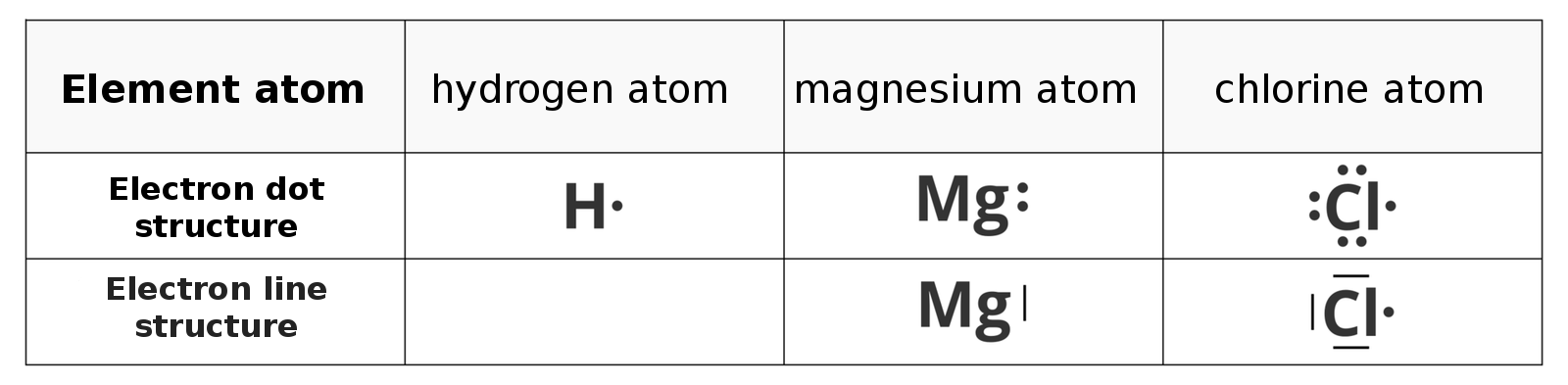
Electron dot diagrams are used while describing chemical bond. If there are pairs of electrons present, sometimes they are represented as lines. Such diagrams are known as electron dot diagrams. The table shows discussed electron formulas of certain atoms.
RvHZAuNdpctb9
Wzory elektronowe przykładowych atomów pierwiastków: ha, em gie, ce el. Atom wodoru (hydrogen atom), symbol H (ha), ma jeden elektron, brak electron line structure. Atom magnezu (magnesium atom), symbol Mg (em gie), ma dwa elektrony, przy electron line structure w miejscu kropek, czyli elektronów, kreska. Atom chloru, symbol CL (ce el), ma siedem elektronów - dwa nad symbolem pierwiastka, dwa pod, dwa po lewej stronie, po prawej stronie jeden elektron, czyli jedna kropka. We wzorze kreskowym w miejscu podwójnych kropek linie, pojedyncza kropka zostaje.
Electron formulas of exemplary atoms of elements
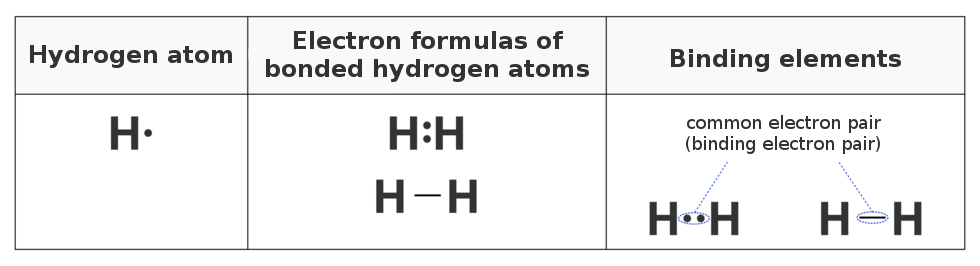
Hydrogen is a chemical element the atoms of which are not free but they are always bonded in pairs using a chemical bond. Hydrogen atoms share 1 electron. It is believed that they share electrons called shared pairs or bonding pairs. Using symbols a bond formed by 2 hydrogen atoms can be represented as . As the electrons are shared each hydrogen atom gains electron configuration (number of electron) of the noble gas closest in the period table. In this case it is the electron configuration of helium (2 electrons).
This bond between two hydrogen atoms formed using a shared pair of electrons is an example of a bond called covalent bondcovalent bond (atomic bond)covalent bond or atomic bondcovalent bond (atomic bond)atomic bond. This binding consists in sharing electrons and forming the so‑called bonding pairs of electrons which are equally shared by both atoms. Such covalent bonds are formed between atoms of the same non‑metallic element.
R1Q9z4ACEeOo3
Electron formulas showing covalent bond formed between hydrogen atoms. Hydrogen atom: atom wodoru z jedną kropką po prawej stronie. Electron formulas of bonded hydrogen atoms: między atomami wodoru dwa elektrony, wzór strukturalny z jednym wiązaniem pojedynczym. Binding elements: zakreślone dwa elektrony pomiędzy atomami i wiązanie pojedyncze - napis: common electron pair (binding electron pair).
Electron formulas showing covalent bond formed between hydrogen atoms
RPB2IQ4dyfB7i
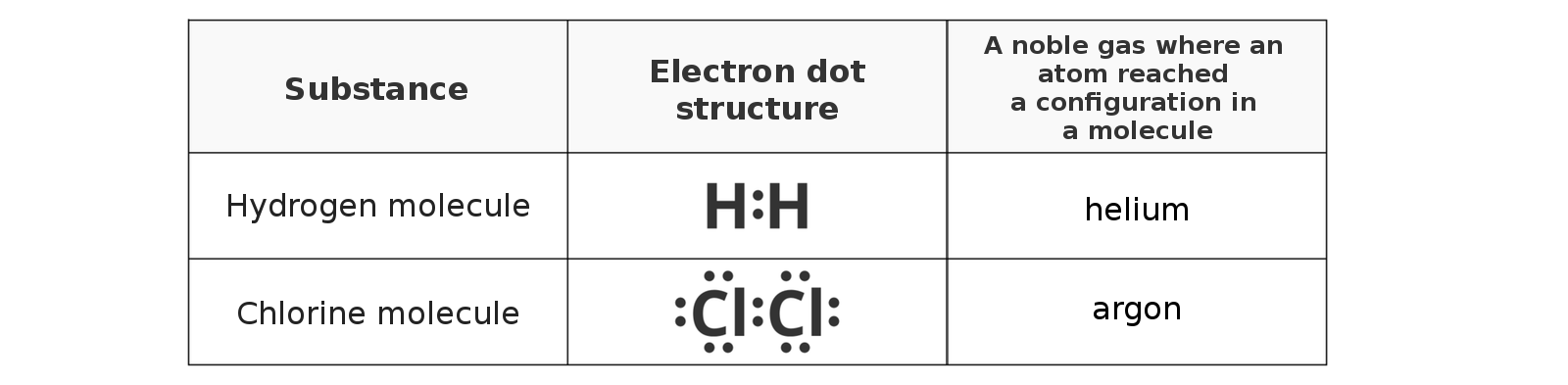
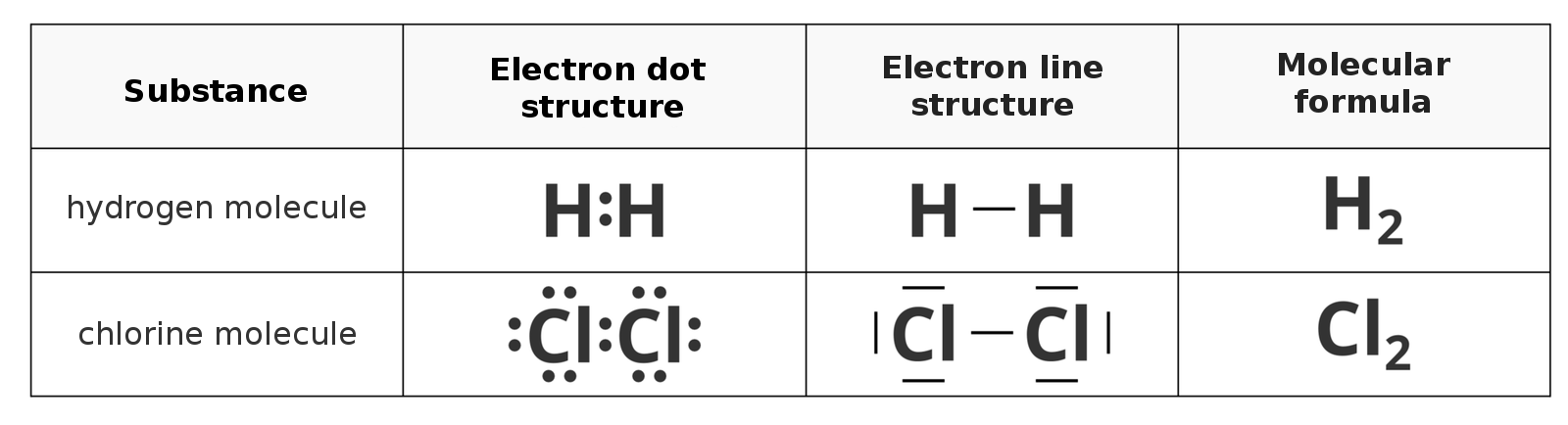
Covalent bond between hydrogen atoms and between chlorine atoms. Substance - hydrogen molecule. Electron dot structure - pomiędzy dwoma atomami wodoru dwa elektrony. A noble gas where an atom reached a configuration in a molecule: helium. Chlorine molecule: pomiędzy dwoma atomami chloru dwa elektrony, nad nimi, pod i z boku po dwa elektrony. A noble gas where an atom reached a configuration in a molecule: argon.
Covalent bond between hydrogen atoms and between chlorine atoms
Task 1
Watch the presentation and note the most important information. Then develop a definition of a “covalent bonds”.
R1WRMHxz9R60K
Ilustracja zawiera napis covalent bonds.
Source: GroMar Sp. z o.o., licencja: CC BY-SA 3.0.
R1HvAVpplQBh0
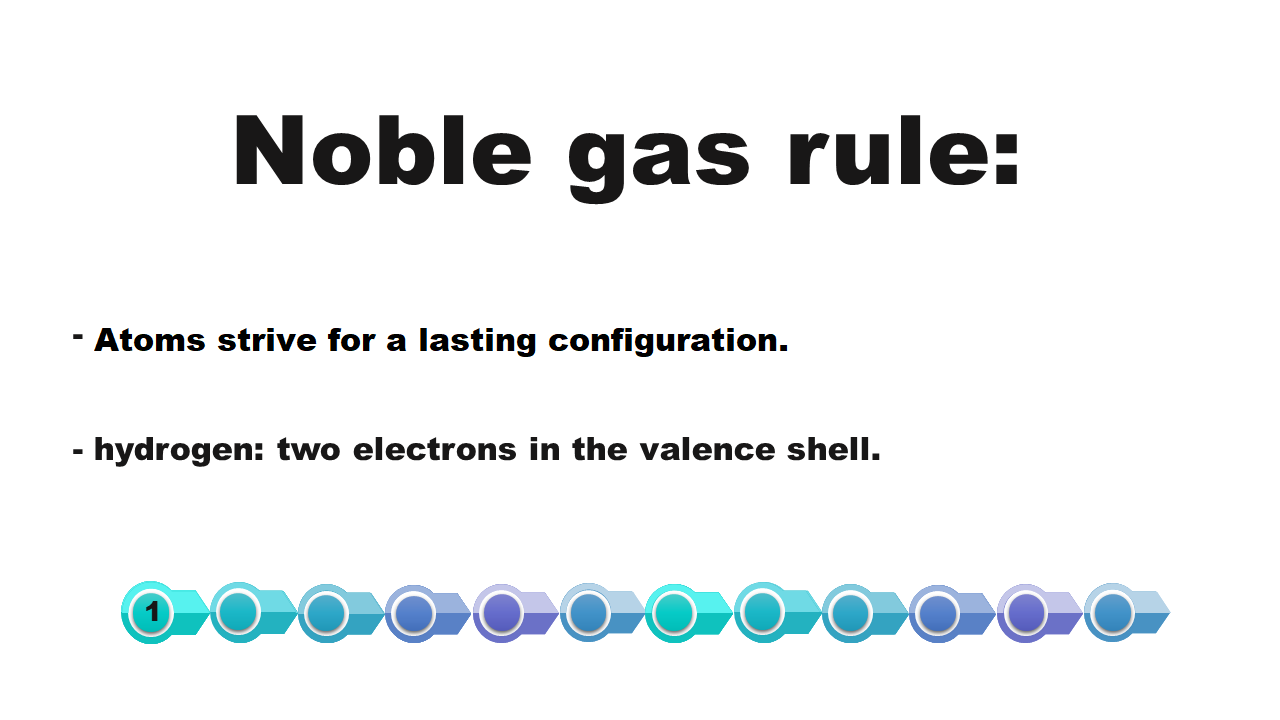
Ilustracja przedstawi napis: Noble gas rule: -atoms strive for a lasting configuration, - hygrogen two electrons in the valence shell. W przypadku wiązań chemicznych podstawowym prawem jest reguła helowca, według której każdy pierwiastek chemiczny dąży do uzyskania konfiguracji elektronowej najbliższego helowca – do ośmiu elektronów na swojej ostatniej powłoce elektronowej. Wyjątek stanowi tylko wodór, który dąży do uzyskania na swojej jedynej powłoce elektronowej, a zarazem powłoce walencyjnej, wspólnej pary elektronowej, czyli dwóch elektronów. A to dlatego, że jego najbliższym helowcem jest hel, który posiada dwa elektrony na powłoce walencyjnej.
In the case of chemical bonds is a fundamental right noble gas rule, according to which any chemical element seeks to obtain electron configuration of the nearest noble gas. The only exception is hydrogen, which strives to obtain on its only electron shell, and at the same time a valence shell, a common electron pair, or two electrons. And it is because of its closest noble gas is helium, which has two electrons in the valence shell.
Source: GroMar Sp. z o.o., licencja: CC BY-SA 3.0.
Rfvp4ooHcyCDg
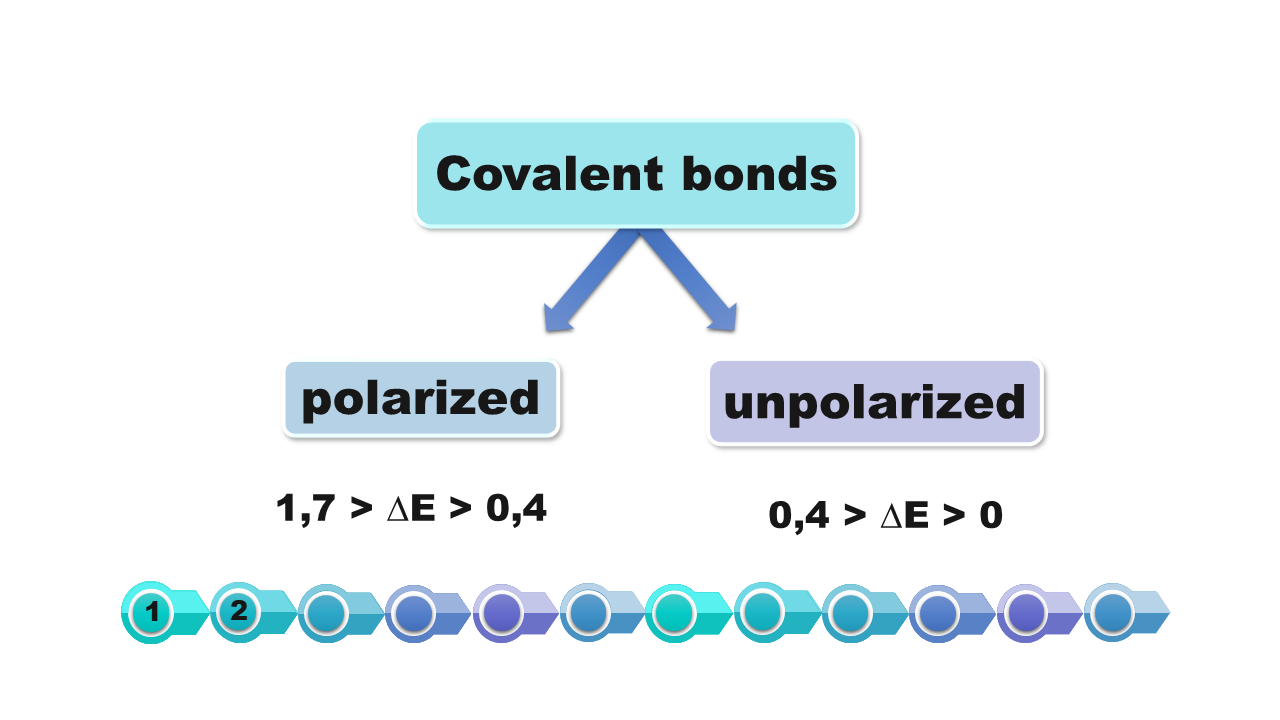
Ilustracja zawiera wykres elektroujemności. Covalent bonds: polarized, unpolarized. Polarized obliczenia: kiedy różnica energii jest mniejsza od 1,7 i większa od 0,4. Unpolarized: kiedy różnica energii jest mniejsza od 0,4 i większa od 0. W przypadku wiązań chemicznych można skorzystać z różnicy elektroujemności poszczególnych pierwiastków w skali Paulinga, po to, by móc określić, jaki rodzaj wiązania występuje między łączącymi się atomami danych pierwiastków. Wśród wiązań kowalencyjnych mamy wiązania kowalencyjne niespolaryzowane i spolaryzowane. Wiązania kowalencyjne niespolaryzowane odnoszą się do pierwszej ramy liczbowej, gdzie różnica elektroujemności mieści się w przedziale od 0,0 do 0,4.
In the case of chemical bonds, one can use the electronegativity difference of individual elements in the Pauling scale, in order to be able to determine what kind of bond occurs between the merging atoms of given elements. Among the covalent bonds we have polarized and unpolarized covalent bonds. Non-polar covalent bonds refer to the first numeric frame, where the electronegativity difference lies between 0.0 and 0.4.
Source: GroMar Sp. z o.o., licencja: CC BY-SA 3.0.
RcBRBEVWuYuCK
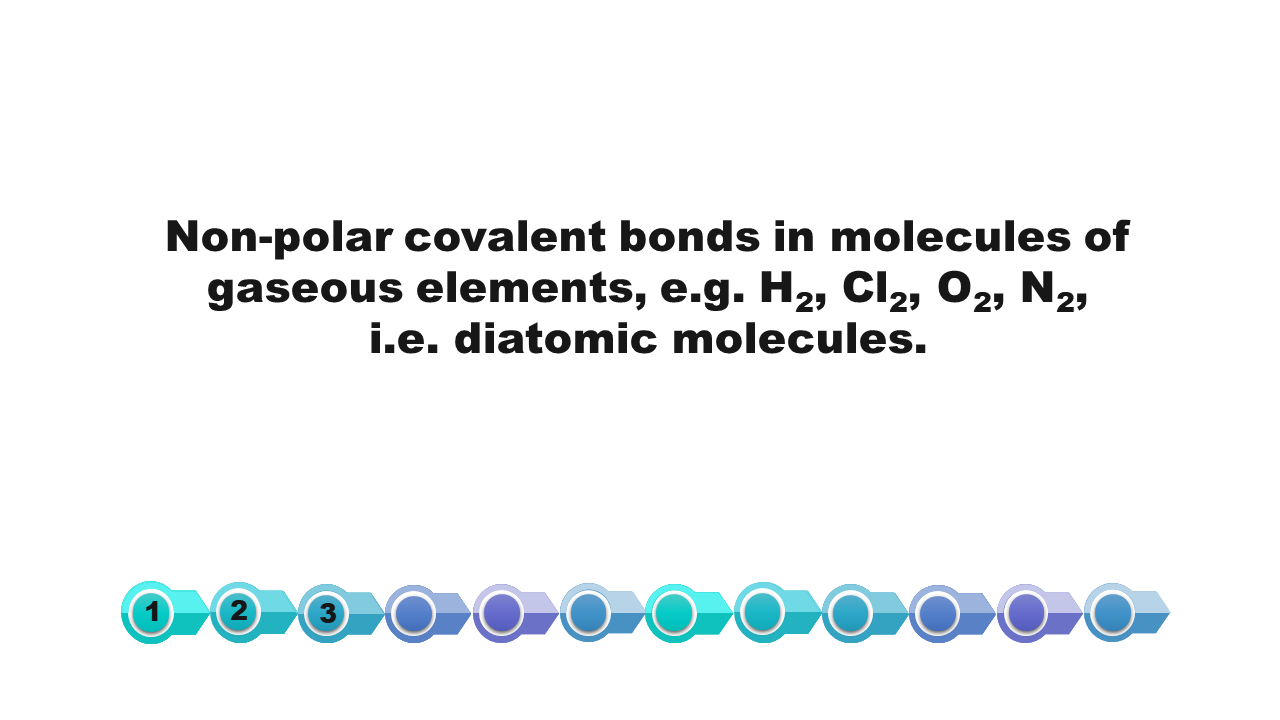
Napis: non-polar covalent bonds are molecules of gaseous elements, e.g. ha dwa, ce el dwa, o dwa, en dwa, i.e. diatomic molecules. Przykładem wiązań kowalencyjnych niespolaryzowanych są cząsteczki pierwiastków gazowych, czyli cząsteczek dwuatomowych.
An example of non-polar covalent bonds are molecules of gaseous elements, e.g. H2, Cl2, O2, N2, i.e. diatomic molecules.
Source: GroMar Sp. z o.o., licencja: CC BY-SA 3.0.
RKimFo8uSlh1V
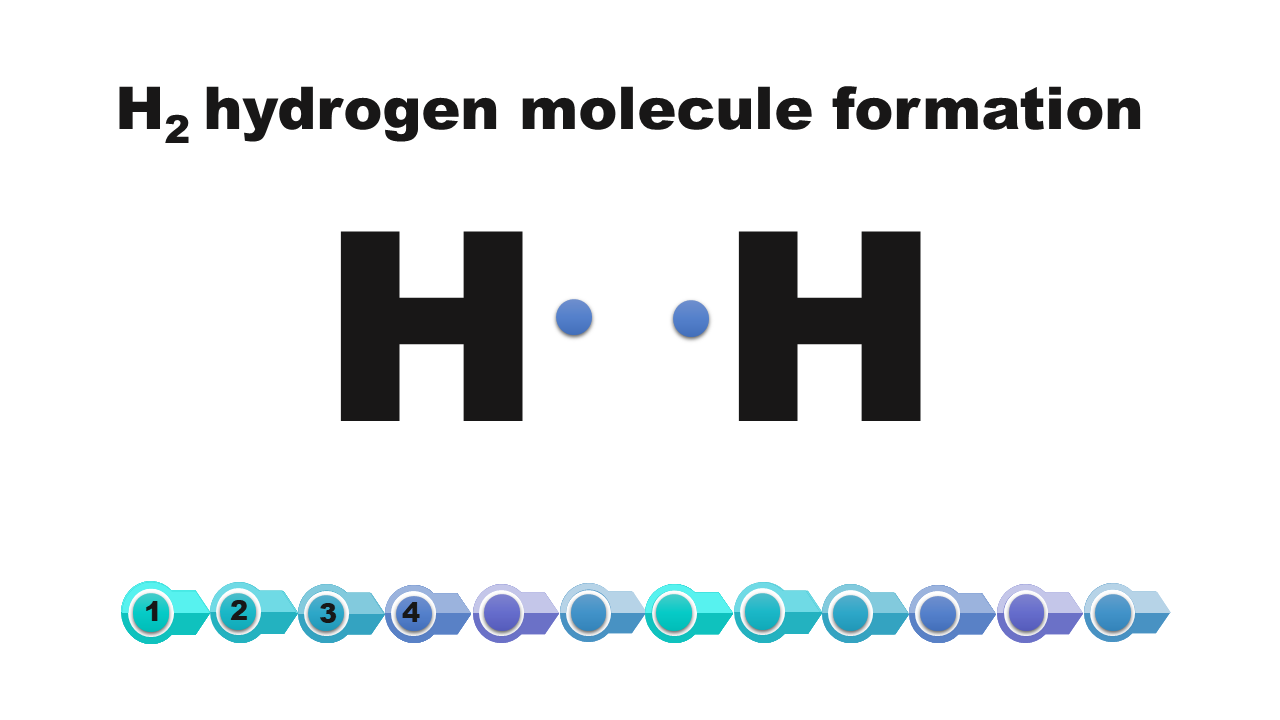
Ha dwa hydrogen molecule formation. Pomiędzy dwoma atomami wodoru dwie kropki, czyli dwa elektrony. Dwa atomy wodoru posiadają po jednym elektronie na swoich powłokach walencyjnym, ponieważ wodór leży w pierwszej grupie układu okresowego pierwiastków.
Example 1: H2 hydrogen molecule formation Two hydrogen atoms have one electron on their valence shell, because hydrogen is in the first group of the periodic table of elements.
Source: GroMar Sp. z o.o., licencja: CC BY-SA 3.0.
RAbJBikbTppzc
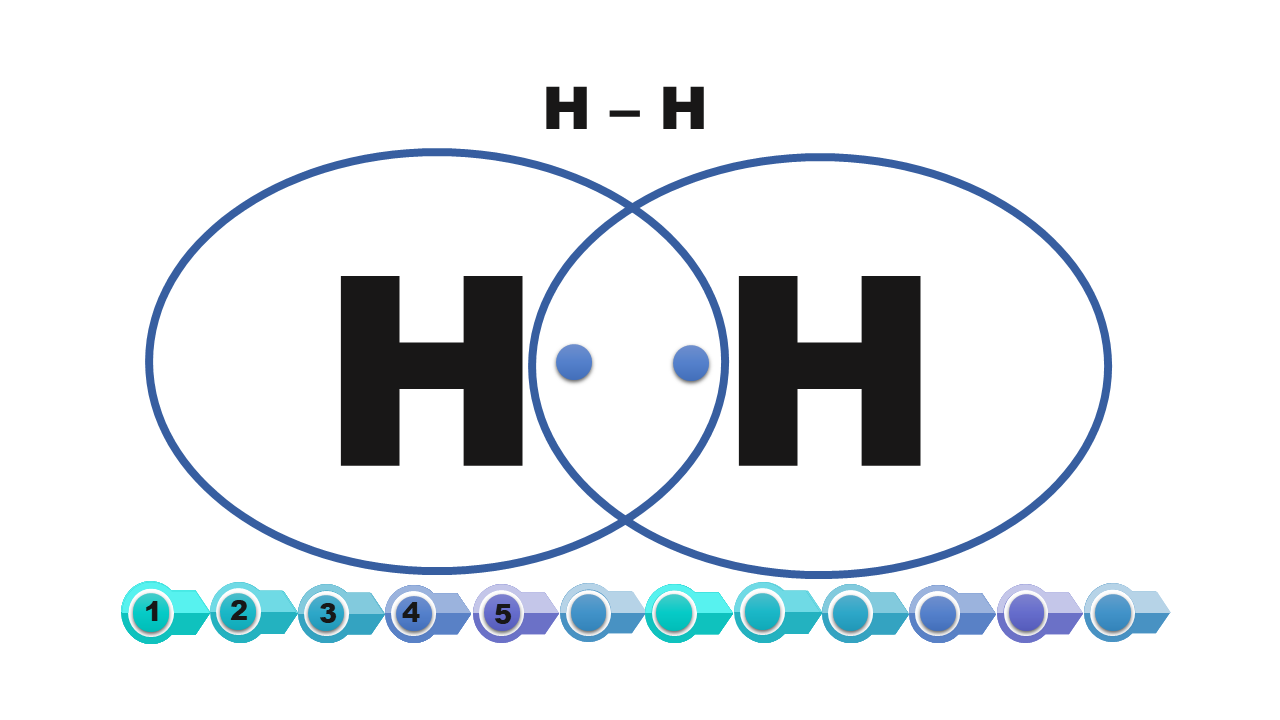
Pomiędzy atomami wodoru wiązanie pojedyncze. Pod tym wzorem wzór z dwoma elektronami, które są zakreślone jako część wspólna dla dwóch atomów wodoru. Każdy atom wodoru, łącząc się z innym atomem, dąży do utworzenia dwóch elektronów walencyjnych, ponieważ leży blisko helu. Po uwspólnieniu tych elektronów powstaje wiązanie kowalencyjne. Oba atomy swoją powłokę walencyjną mają zapełnioną.
Each hydrogen atom combines with another atom to create two valence electrons because it lies close to helium. After the mutualization of these electrons, a covalent bond is formed. Both atoms of their valence shell are full. And we can write it using the formula: H-H.
Source: GroMar Sp. z o.o., licencja: CC BY-SA 3.0.
R1IwuIAKhdwvO
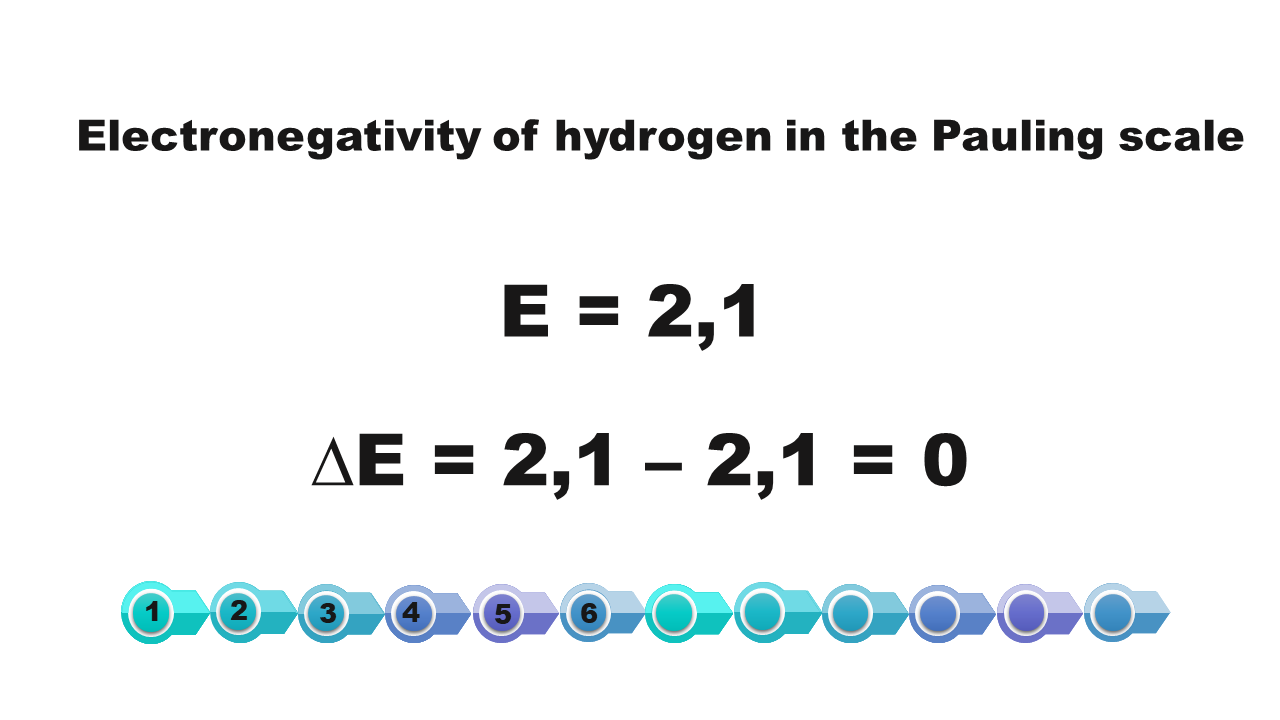
Electronegativity of hydrogen in the Pauling scale. E równa się 2,1, delta E równa się 2,1 minus 2,1 równa się 0. A zapisać możemy to za pomocą wzoru: ha kreska ha. Z układu okresowego odczytujemy elektroujemność wodoru w skali Paulinga i wynosi ona E równa się 2,1. Po czym obliczamy różnicę elektroujemności odejmując elektroujemność jednego atomu 2,1 od elektroujemności drugiego atomu 2,1, co daje nam wynik 0 (zero): delta E równa się 2,1 minus 2,1 równa się 0. Wynik 0 mieści się w przedziale liczbowym od 0,0 do 0,4, co świadczy, że między atomami wodoru występuje wiązanie kowalencyjne niespolaryzowane.
From the periodic table, we read the electronegativity of hydrogen in the Pauling scale and it is E = 2,1. Then we calculate the electronegativity difference subtracting the electronegativity of one atom 2,1 from electronegativity of the second atom 2,1, which gives us the result 0 (zero): The result 0 is in the numerical range from 0,0 to 0,4, which indicates that there is a non-polarized covalent bond between hydrogen atoms.
Source: GroMar Sp. z o.o., licencja: CC BY-SA 3.0.
RXROuhsJe9rST
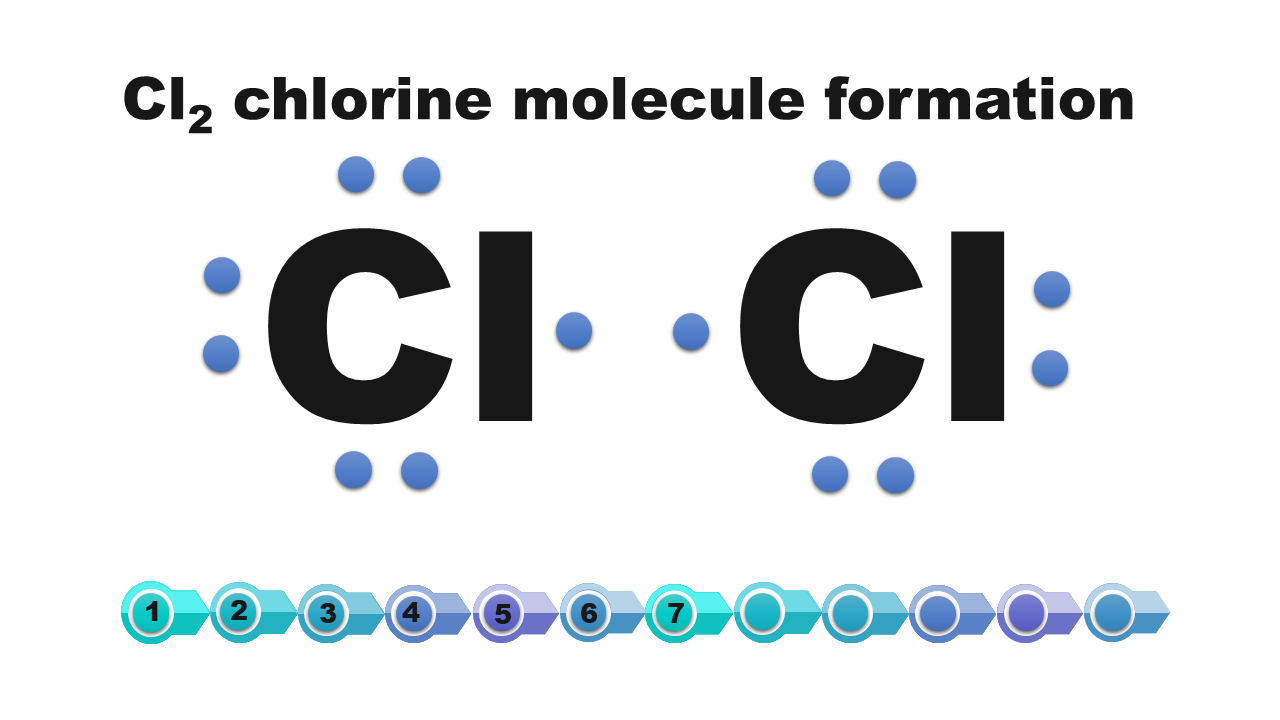
Cl2 chlorine molecule formation. Dwa atomy chloru, pomiędzy nimi dwa elektrony, nad nimi , pod nimi i po bokach po dwa elektrony. W sumie 14 elektronów. Przykład 2: Powstawanie cząsteczki chloru. Dwa atomy chloru posiadają po siedem elektronów na swoich powłokach walencyjnym, ponieważ chlor leży w siedemnastej grupie układu okresowego pierwiastków.
Example 2: Formation of Cl2 chlorine molecule Two atoms of chlorine have seven electrons on their valence shells, because chlorine lies in the seventeenth group of the periodic table of elements.
Source: GroMar Sp. z o.o., licencja: CC BY-SA 3.0.
R1WAJGPy5n6Oi
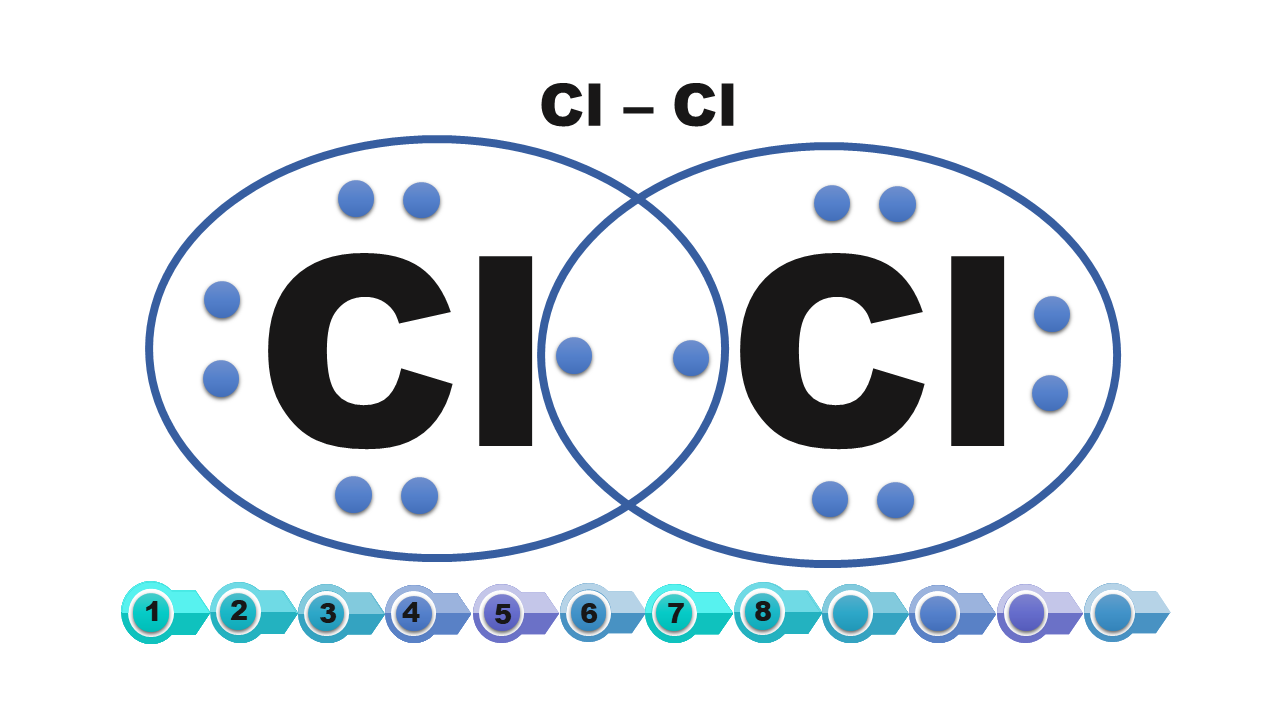
Wiązanie pojedyncze pomiędzy dwoma atomami chloru. Wzór elektronowy: dwa elektrony pomiędzy atomami chloru zakreślone jako wspólne. Każdy atom chloru, łącząc się z innym atomem, dąży do utworzenia ośmiu elektronów walencyjnych, upodabnia się do argonu. Po uwspólnieniu tych elektronów powstaje wiązanie kowalencyjne. Oba atomy swoją powłokę walencyjną mają zapełnioną.
Each atom of chlorine, joining with another atom, strives to create eight valence electrons, similar to argon. After the mutualization of these electrons, a covalent bond is formed. Both atoms of their valence shell are full. And we can save it using the formula: Cl-Cl.
Source: GroMar Sp. z o.o., licencja: CC BY-SA 3.0.
RJQvLG2GzplbE
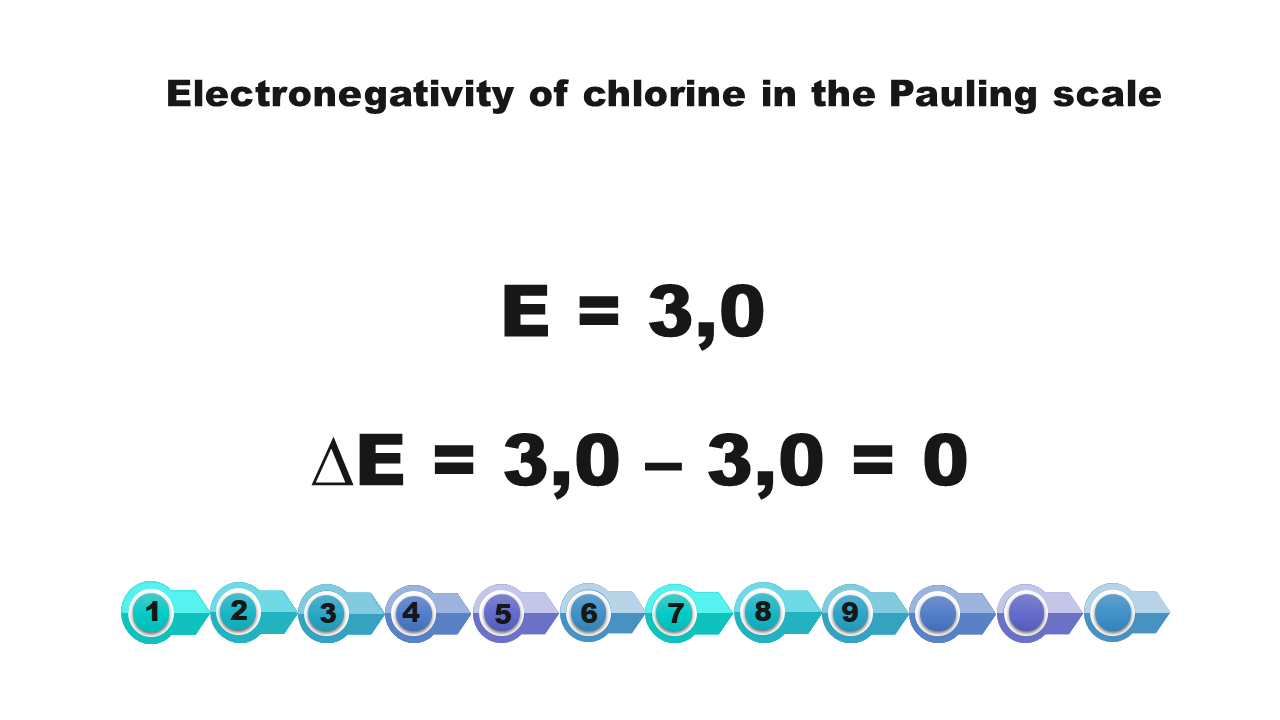
Napis: Electronegativity of the Pauling scale. Obliczenia: E równa się 3,0. Delta E równa się 3,0 minus 3, 0 równa się 0. Z układu okresowego odczytujemy elektroujemność chloru w skali Paulinga i wynosi ona E równa się 3,0. Po czym obliczamy różnicę elektroujemności odejmując elektroujemność jednego atomu 3,0 od elektroujemności drugiego atomu 3,0, co daje nam wynik 0 (zero): delta E równa się 3,0 minus 3,0 równa się 0. Wynik 0 mieści się w przedziale liczbowym od 0,0 do 0,4, co świadczy, że między atomami chloru występuje wiązanie kowalencyjne niespolaryzowane.
From the periodic table we read the electronegativity of the Pauling scale and it is E = 3,0. After which we calculate the electronegativity difference subtracting the electronegativity of one atom 3,0 from the electronegativity of the second atom 3,0, which gives us the result 0 (zero): The result 0 is in the numerical range from 0,0 to 0,4, which means that there is a non-polar covalent bond between the chlorine atoms.
Source: GroMar Sp. z o.o., licencja: CC BY-SA 3.0.
R1GuSq0DJsLei
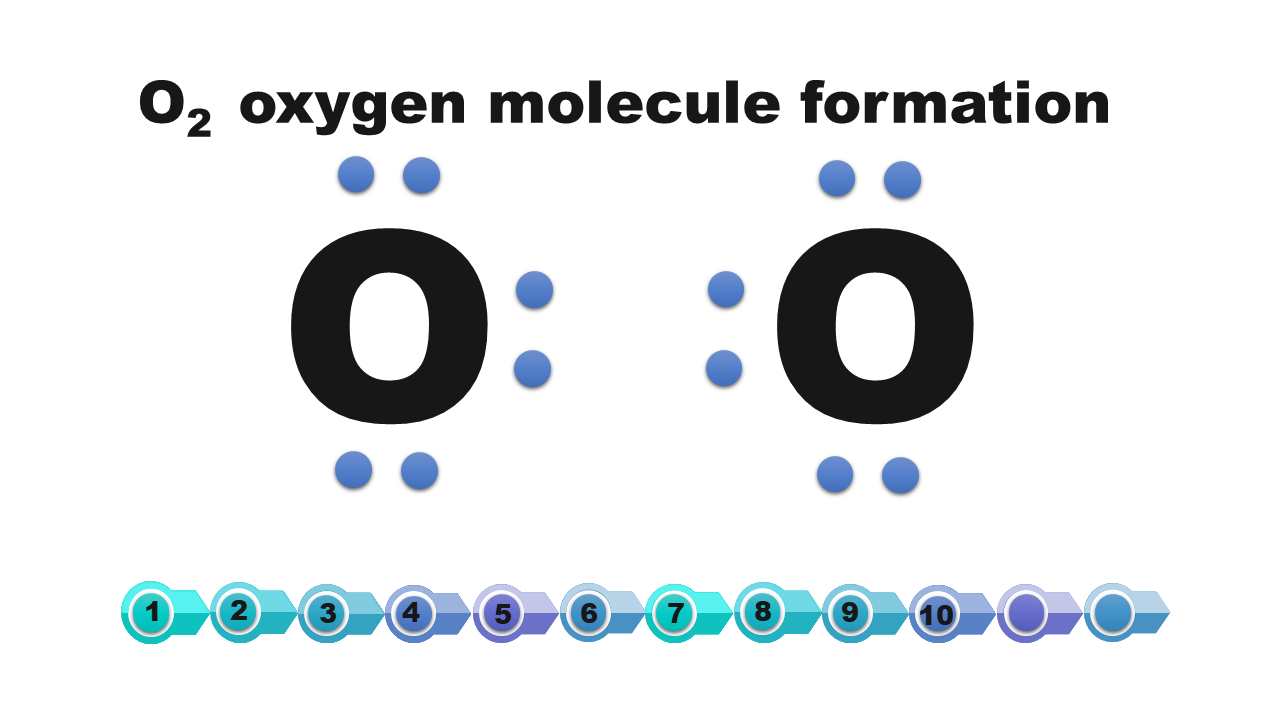
Napis: O2 oxygen molecule formation. Dwa atomy tlenu, pomiędzy nimi cztery elektrony, nad atomami I pod po dwa elektrony. W sumie 12 elektronów. Przykład 3: Powstawanie cząsteczki tlenu. Dwa atomy tlenu posiadają po sześć elektronów na swoich powłokach walencyjnym, ponieważ tlen leży w szesnastej grupie układu okresowego pierwiastków.
Example 3: Formation of O2 oxygen molecule Two oxygen atoms each have six electrons on their valence shells, because oxygen lies in the sixteenth group of the periodic table of elements.
Source: GroMar Sp. z o.o., licencja: CC BY-SA 3.0.
R1KoTKgGpRjch
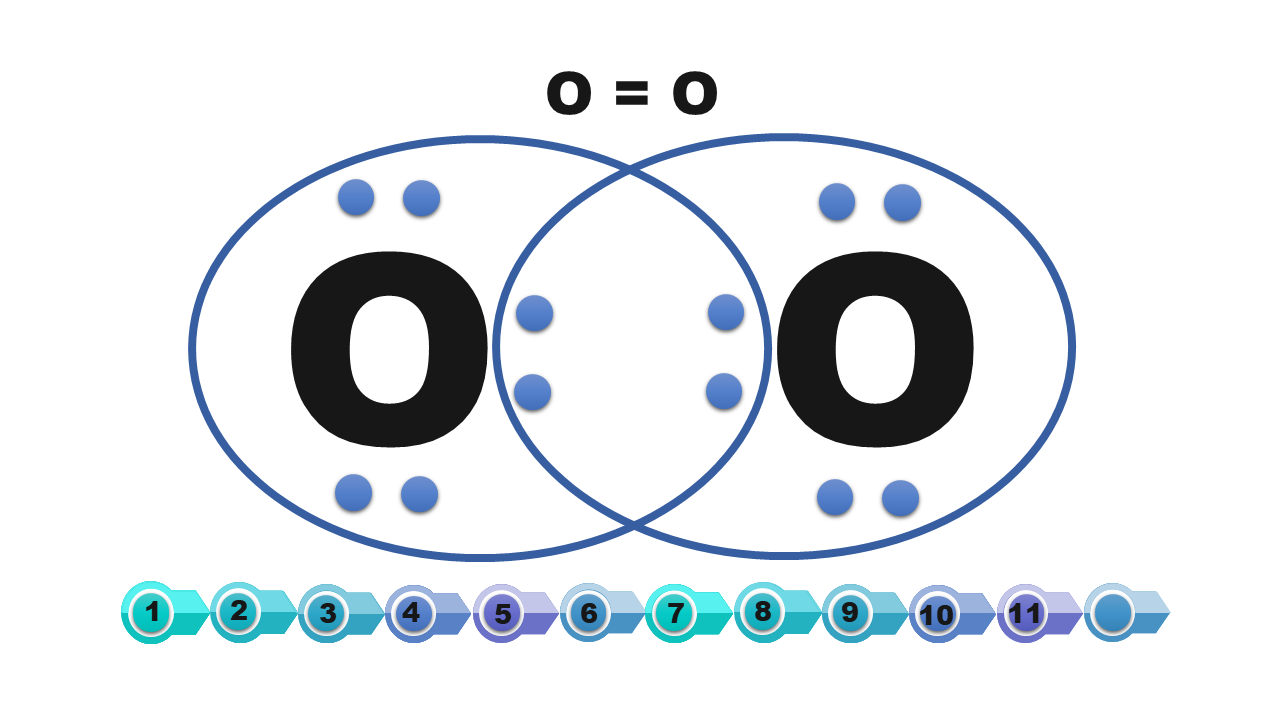
Dwa atomy tlenu połączone podwójnym wiązaniem. Pod nimi wzór elektronowy z zakreślonymi czterema elektronami pomiędzy atomami tlenu jako część wspólna. Każdy atom tlenu, łącząc się z innym atomem, dąży do utworzenia ośmiu elektronów walencyjnych, upodabnia się do neonu. Po uwspólnieniu tych elektronów powstają dwa wiązania kowalencyjne. Oba atomy swoją powłokę walencyjną mają zapełnioną.
Each atom of oxygen, by joining with another atom, strives to achieve a permanent configuration, similar to a neon. After the separation of these electrons, two covalent bonds are formed. Both atoms of their valence shell are full. And we can save it using the formula: O-O.
Source: GroMar Sp. z o.o., licencja: CC BY-SA 3.0.
R15zbO0ojbGYw
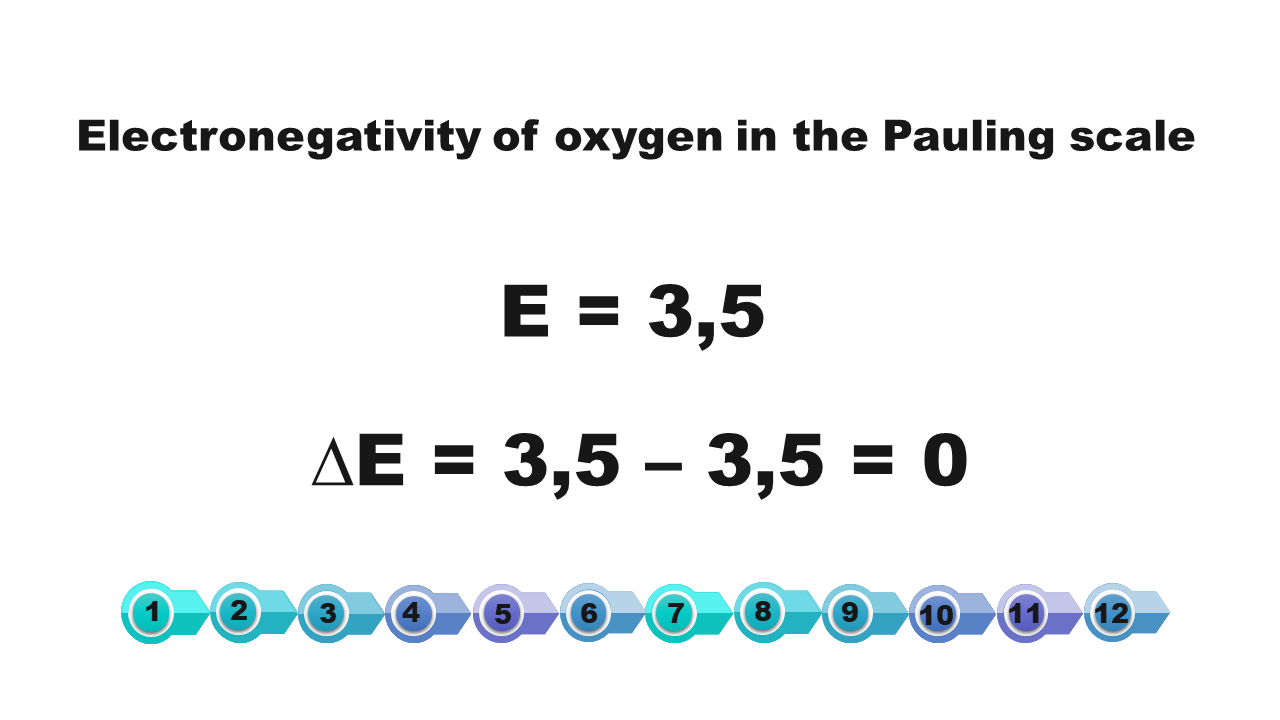
Electronegativity of oxygen in the Pauling scale. Obliczenia: E równa się 3,5. Defat E równa się 3,5 minus 3,5 równa się 0. Z układu okresowego odczytujemy elektroujemność tlenu w skali Paulinga i wynosi ona E równa się 3,5. Po czym obliczamy różnicę elektroujemności odejmując elektroujemność jednego atomu 3,5 od elektroujemności drugiego atomu 3,5, co daje nam wynik 0 (zero): delta E równa się 3,5 minus 3,5 równa się 0. Wynik 0 mieści się w przedziale liczbowym od 0,0 do 0,4, co świadczy, że między atomami tlenu występują wiązania kowalencyjne niespolaryzowane.
From the periodic table, we read the electronegativity of oxygen in the Pauling scale and it is E = 3,5. After which we calculate the electronegativity difference subtracting the electronegativity of one atom 3,5 from electronegativity of the second atom 3,5, which gives us the result 0 (zero): The result 0 is in the range of 0,0 to 0,4, which indicates that there are non-polar covalent bonds between oxygen atoms.
Source: GroMar Sp. z o.o., licencja: CC BY-SA 3.0.
Structures created when atoms bond with each other using covalent (atomic) bonds are called molecules. Two hydrogen atoms sharing one pair of electrons are called hydrogen molecules and two chlorine atoms bonded form a chlorine molecule.
The structure of each molecule can be described using a formula. A formula consists of symbols of elements the atoms making up a molecule and a number of atoms forming a molecule written after the symbol of the element (in the lower right index). Such formula created in line with these principles is called a molecular formulamolecular formulamolecular formula.
R1BzFobHgQc41
Description of hydrogen molecules and chloride molecules. Wzór elektronowy (electron dot structure) cząsteczki wodoru: dwa atomy wodoru, pomiędzy nimi dwa elektrony - dwie kropki. Wzór strukturalny (electron line structure) - wiązanie pojedyncze pomiędzy atomami wodoru. Wzór cząsteczki (molecular formula): H2 (ha dwa). Wzór elektronowy cząsteczki chloru: dwa atomy obok siebie, pomiędzy nimi dwa elektrony, nad nimi, pod nimi i z boku po dwa elektrony, w sumie 14 elektronów. Wzór sumaryczny: w miejscu kropek pojedyncze linie. Wzór cząsteczki: Cl2 (ce el dwa).
Description of hydrogen and chloride molecules
Hydrogen or chlorine are found in elemental state and they occur in form of diatomic molecules as gases. That is why in order to describe these gases using symbols we always use the following formulas: , .
What is the structure of a nitrogen molecule?
Atoms of non‑metallic elements can share more than 1 pair of electrons.
A nitrogen molecule made up of two atoms of nitrogen is a good example. The nitrogen atom has five valence electrons, and it needs three electrons to achieve a permanent configuration. That is why each atom shares three electrons. What will its electron formula look like?
R1UiXN8FClPGY
Write the electron formula for the nitrogen molecule.
Write the electron formula for the nitrogen molecule.
There are three bonding pairs of electrons between nitrogen atoms. Such bond is called a triple bondtriple bondtriple bond. Molecular formula of a nitrogen molecule is as follows: .
The triple bond contains a maximum number of bonds that can be formed between atoms. In nature, there are no chemical compounds with more than three bonds.
R1QweTPnVJDsj
Tabela opisująca nitrogen molecule. Electron dot structure: dwa atomy azotu, pomiędzy nimi sześć elektronów, po bokach na zewnątrz po dwa elektrony. Electron line structure: pomiędzy atomami azotu trzy linie, na zewnątrz po jednej linii. Type of chemical bonds: covalent. Number of atoms in the molecule: 2. Molecular firmula: N2 (en dwa). A noble gas where the atom reached a configuration in a molecule: neon.
Nitrogen molecule
R1V79C1S01BbD
Exercise 1
Match the terms and definitions. valence electrons Możliwe odpowiedzi: 1. electrons that participate in forming chemical bonds, 2. a formula that shows the number and type of atoms in given molecule of an element or chemical compound, 3. bonds in which 1, 2 or a maximally 3 pairs of electrons are shared by bonding atoms, 4. a formula in which pairs of electrons are represented with dots, 5. a bond that is formed by three shared pair of electrons covalent bonds Możliwe odpowiedzi: 1. electrons that participate in forming chemical bonds, 2. a formula that shows the number and type of atoms in given molecule of an element or chemical compound, 3. bonds in which 1, 2 or a maximally 3 pairs of electrons are shared by bonding atoms, 4. a formula in which pairs of electrons are represented with dots, 5. a bond that is formed by three shared pair of electrons molecular formula Możliwe odpowiedzi: 1. electrons that participate in forming chemical bonds, 2. a formula that shows the number and type of atoms in given molecule of an element or chemical compound, 3. bonds in which 1, 2 or a maximally 3 pairs of electrons are shared by bonding atoms, 4. a formula in which pairs of electrons are represented with dots, 5. a bond that is formed by three shared pair of electrons triple bond Możliwe odpowiedzi: 1. electrons that participate in forming chemical bonds, 2. a formula that shows the number and type of atoms in given molecule of an element or chemical compound, 3. bonds in which 1, 2 or a maximally 3 pairs of electrons are shared by bonding atoms, 4. a formula in which pairs of electrons are represented with dots, 5. a bond that is formed by three shared pair of electrons electron dot diagram Możliwe odpowiedzi: 1. electrons that participate in forming chemical bonds, 2. a formula that shows the number and type of atoms in given molecule of an element or chemical compound, 3. bonds in which 1, 2 or a maximally 3 pairs of electrons are shared by bonding atoms, 4. a formula in which pairs of electrons are represented with dots, 5. a bond that is formed by three shared pair of electrons
Match the terms and definitions. valence electrons Możliwe odpowiedzi: 1. electrons that participate in forming chemical bonds, 2. a formula that shows the number and type of atoms in given molecule of an element or chemical compound, 3. bonds in which 1, 2 or a maximally 3 pairs of electrons are shared by bonding atoms, 4. a formula in which pairs of electrons are represented with dots, 5. a bond that is formed by three shared pair of electrons covalent bonds Możliwe odpowiedzi: 1. electrons that participate in forming chemical bonds, 2. a formula that shows the number and type of atoms in given molecule of an element or chemical compound, 3. bonds in which 1, 2 or a maximally 3 pairs of electrons are shared by bonding atoms, 4. a formula in which pairs of electrons are represented with dots, 5. a bond that is formed by three shared pair of electrons molecular formula Możliwe odpowiedzi: 1. electrons that participate in forming chemical bonds, 2. a formula that shows the number and type of atoms in given molecule of an element or chemical compound, 3. bonds in which 1, 2 or a maximally 3 pairs of electrons are shared by bonding atoms, 4. a formula in which pairs of electrons are represented with dots, 5. a bond that is formed by three shared pair of electrons triple bond Możliwe odpowiedzi: 1. electrons that participate in forming chemical bonds, 2. a formula that shows the number and type of atoms in given molecule of an element or chemical compound, 3. bonds in which 1, 2 or a maximally 3 pairs of electrons are shared by bonding atoms, 4. a formula in which pairs of electrons are represented with dots, 5. a bond that is formed by three shared pair of electrons electron dot diagram Możliwe odpowiedzi: 1. electrons that participate in forming chemical bonds, 2. a formula that shows the number and type of atoms in given molecule of an element or chemical compound, 3. bonds in which 1, 2 or a maximally 3 pairs of electrons are shared by bonding atoms, 4. a formula in which pairs of electrons are represented with dots, 5. a bond that is formed by three shared pair of electrons
Summary
Atoms are bonded with each other with a chemical bond.
When atoms are bonded with a covalent (atomic) bond, they share 1, 2 or a maximally 3 pairs of electrons.
Each chemical element, if possible, strives to attain electron configuration of the noble gas closest in the periodic table.
Atoms of non‑metallic elements form covalent bonds.
Molecules are formed of atoms bonded with a covalent (atomic) bond.
Atoms of: form covalent (atomic) bonds and their bonding pairs of electrons are equally shared by both atoms in the molecule.
Rp0T02XSjmmpH1
Grafika przedstawiająca tablicę szkolną, na której znajdują się zdania do dokończenia. Finish selected sentences. 1 It was easy for me (uzupełnij). 2 It was difficult for me (uzupełnij). 3 Today I learned (uzupełnij). 4 I understood that (uzupełnij). 5 It surprised me (uzupełnij).
Grafika przedstawiająca tablicę szkolną, na której znajdują się zdania do dokończenia. Finish selected sentences. 1 It was easy for me (uzupełnij). 2 It was difficult for me (uzupełnij). 3 Today I learned (uzupełnij). 4 I understood that (uzupełnij). 5 It surprised me (uzupełnij).
Source: GroMar Sp. z o.o., licencja: CC BY-SA 3.0.
Keywords
covalent bond, atomic bond, molecule, atom, molecular formula, electron formula
wiązanie kowalencyjne spolaryzowane (wiązanie atomowe spolaryzowane) – wiązanie chemiczne polegające na tworzeniu wspólnych par elektronowych (maksymalnie trzech), które są przesunięte w kierunku atomu silniej przyciągającego elektrony
wzór sumaryczny – wzór przedstawiający liczbę i rodzaj atomów wchodzących w skład najmniejszej struktury zbudowanej z atomów połączonych ze sobą za pomocą wiązań chemicznych, np. wzór cząsteczki