Learning about the world of organisms
nature studies are carried out by means of observations and experiments;
the result of the experiment confirms or rejects the research hypothesis.
to specify sources of biological knowledge;
describe the stages of planning of biological observation and experiment;
plan, conduct and document biological observation;
formulate conclusions on the basis of the results of observations and experiments.
Nagranie dostępne na portalu epodreczniki.pl
Nagranie dźwiękowe dotyczące poznawania świata organizmów
Sources of biological knowledge
Biological knowledge has been gathered for generations, mainly thanks to researchers conducting observations and experiments. Researchers publish their findings in scientific works and journals. Knowledge, as it becomes more widespread, is included in books, encyclopaedias and dictionaries. Anatomical atlases and guides for marking plants, animals and fungi provide a wealth of information on the structure and occurrence of organisms. Nature documentaries are valuable sources of knowledge about creatures living in various regions of the world, their behaviour and customs. The basic knowledge can be gained from school textbooks and supplemented by studying popular science literature, reading articles in nature science magazines and browsing the resources of the Internet. Students, like scientists, can conduct experiments or observations themselves (also field ones) and, according to their own ideas, discover the laws that govern the world of living beings. A good way to learn about nature is to visit nature museums, botanical and zoological gardens. Biology is therefore a science based on the discovery, analysis and processing of information about living beings.
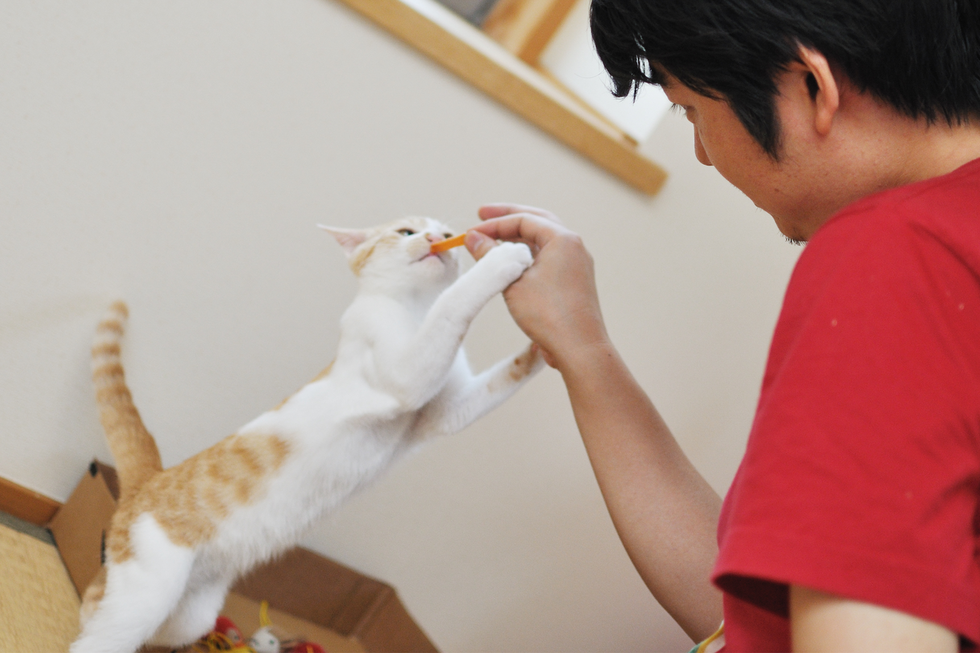
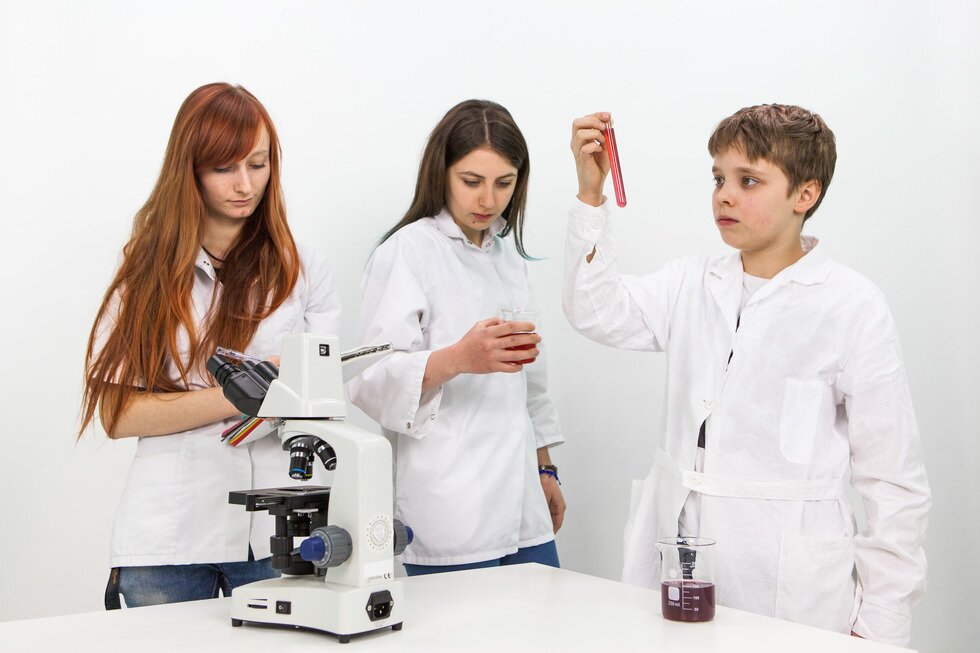
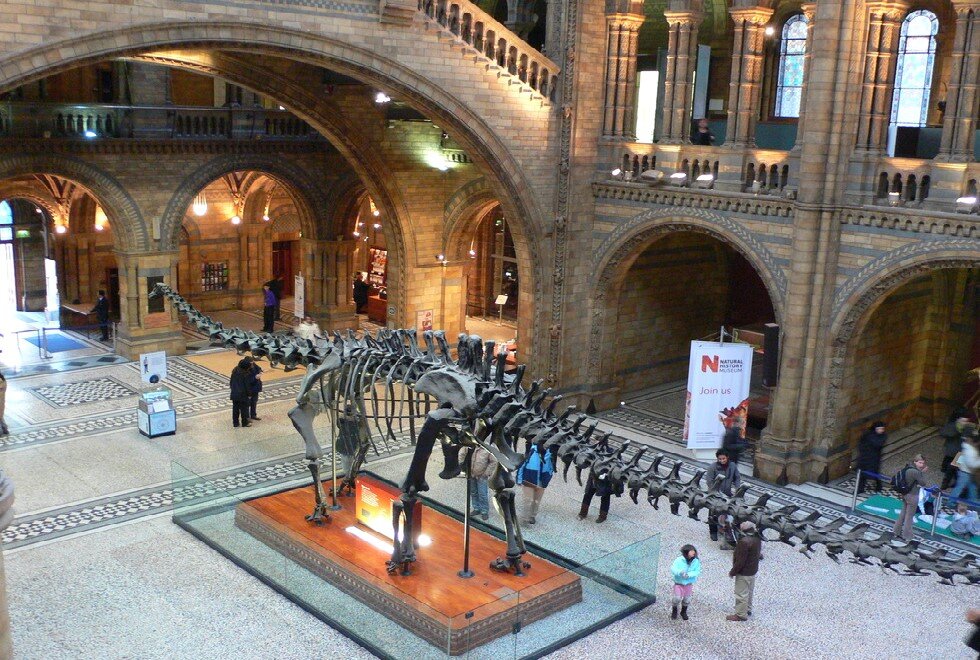
Gregory wants to breed stick insects at home. Advise him where he can find the needed information on how to breed these insects. Give him examples of relevant sources – titles of books or TV programmes, website addresses. Explain whether Gregory, by breeding stick insects, can learn about them by conducting his own experiments and observations.
Biological observations
In the scientific method, the observationobservation is a deliberate way of collecting information about organisms, phenomena and processes. The researcher conducting the observation should ensure that neither the course of the observed phenomenon or process nor the observed organism is affected.
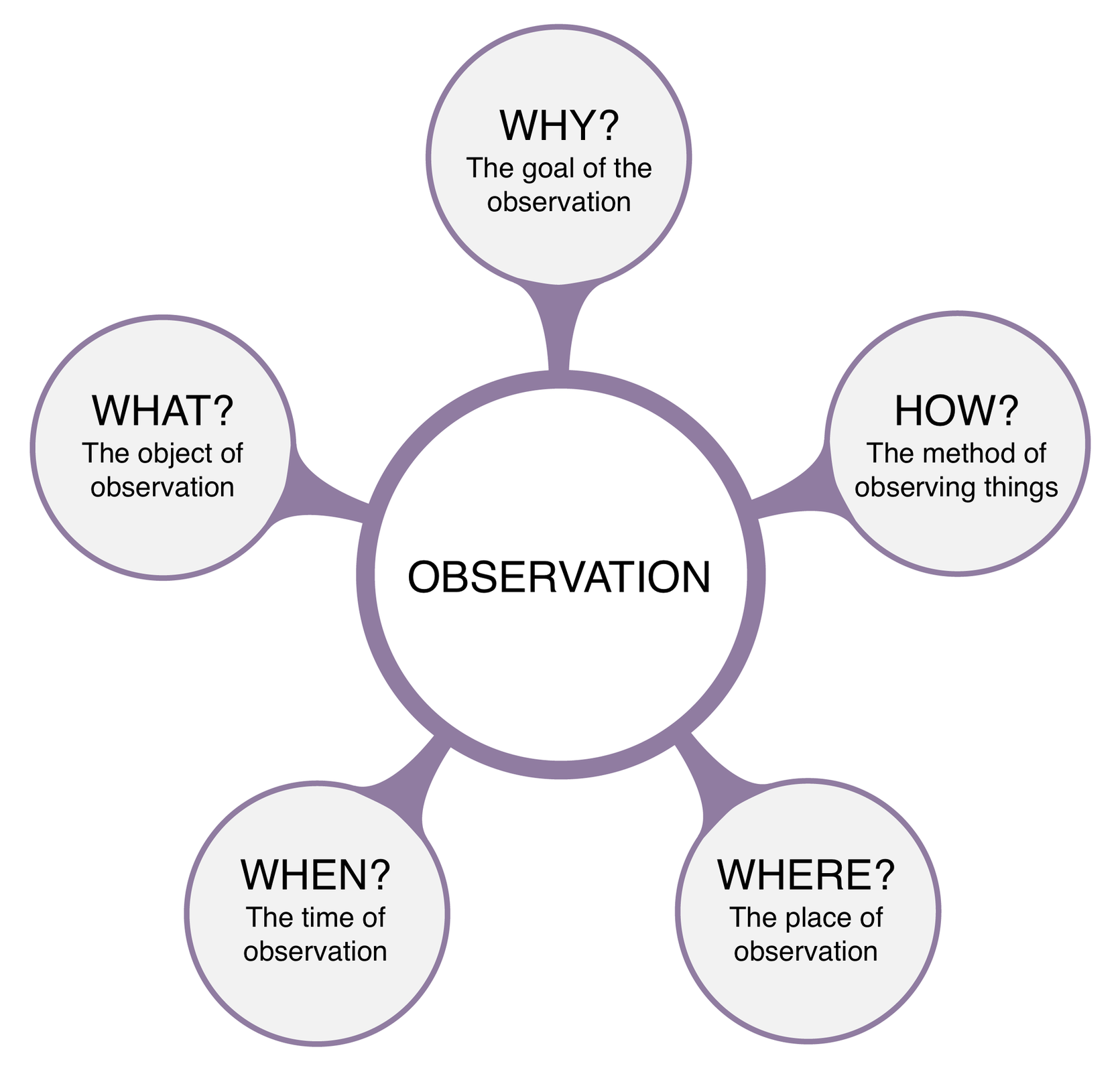
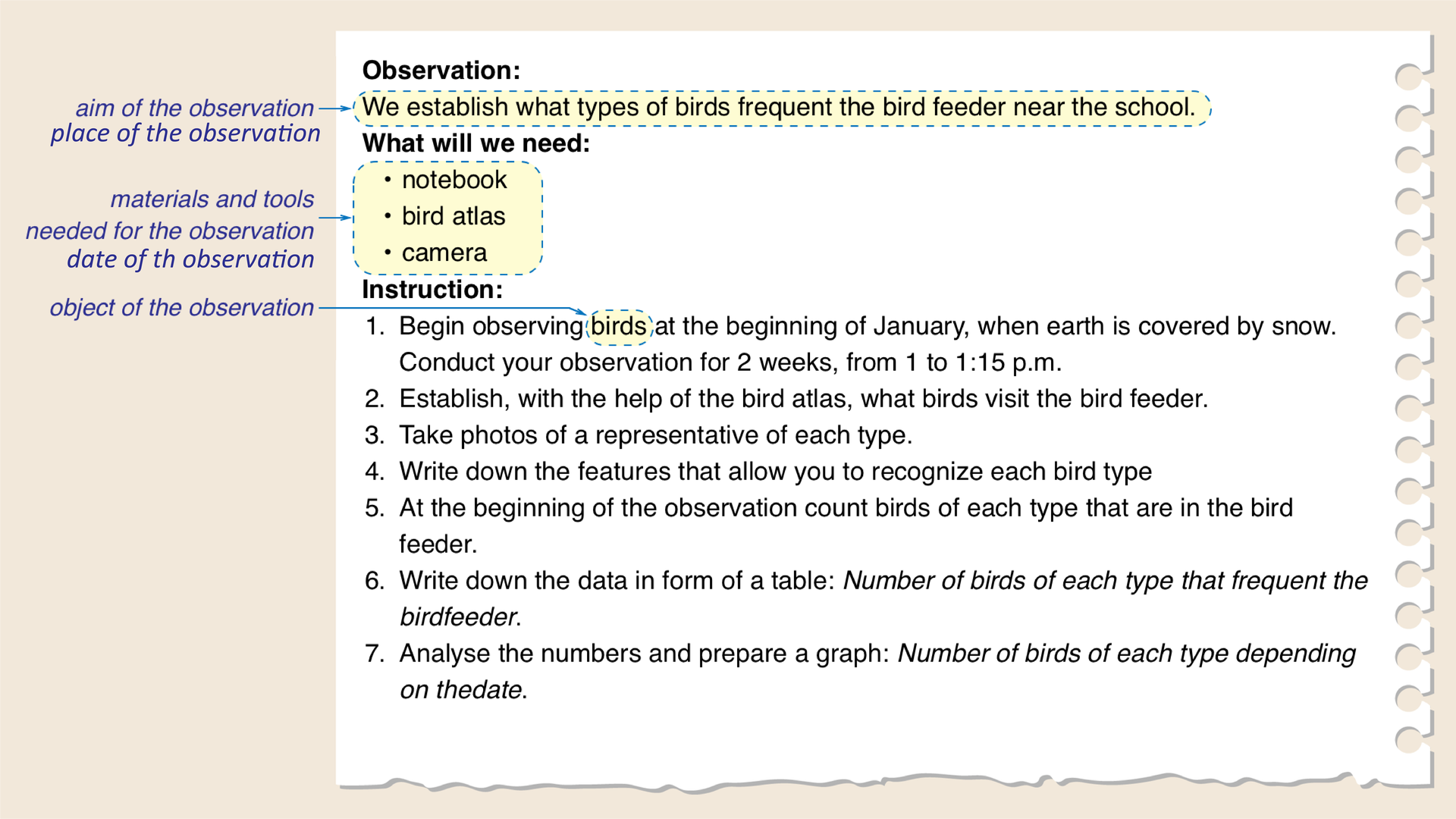
Observations can be conducted with the use of all senses. For example, sense of sight is used to identify tree species, sense of hearing – to distinguish bird species by their singing, sense of smell and taste – to check the taste of unknown food, sense of touch – to assess the freshness of bread. One can also use specialistic instruments: a microscope, a magnifier or binoculars. Observations may be conducted in the natural environment of organisms or under artificial conditions, e.g. in a laboratory. A well‑planned observation should have the specified purpose, time and place.
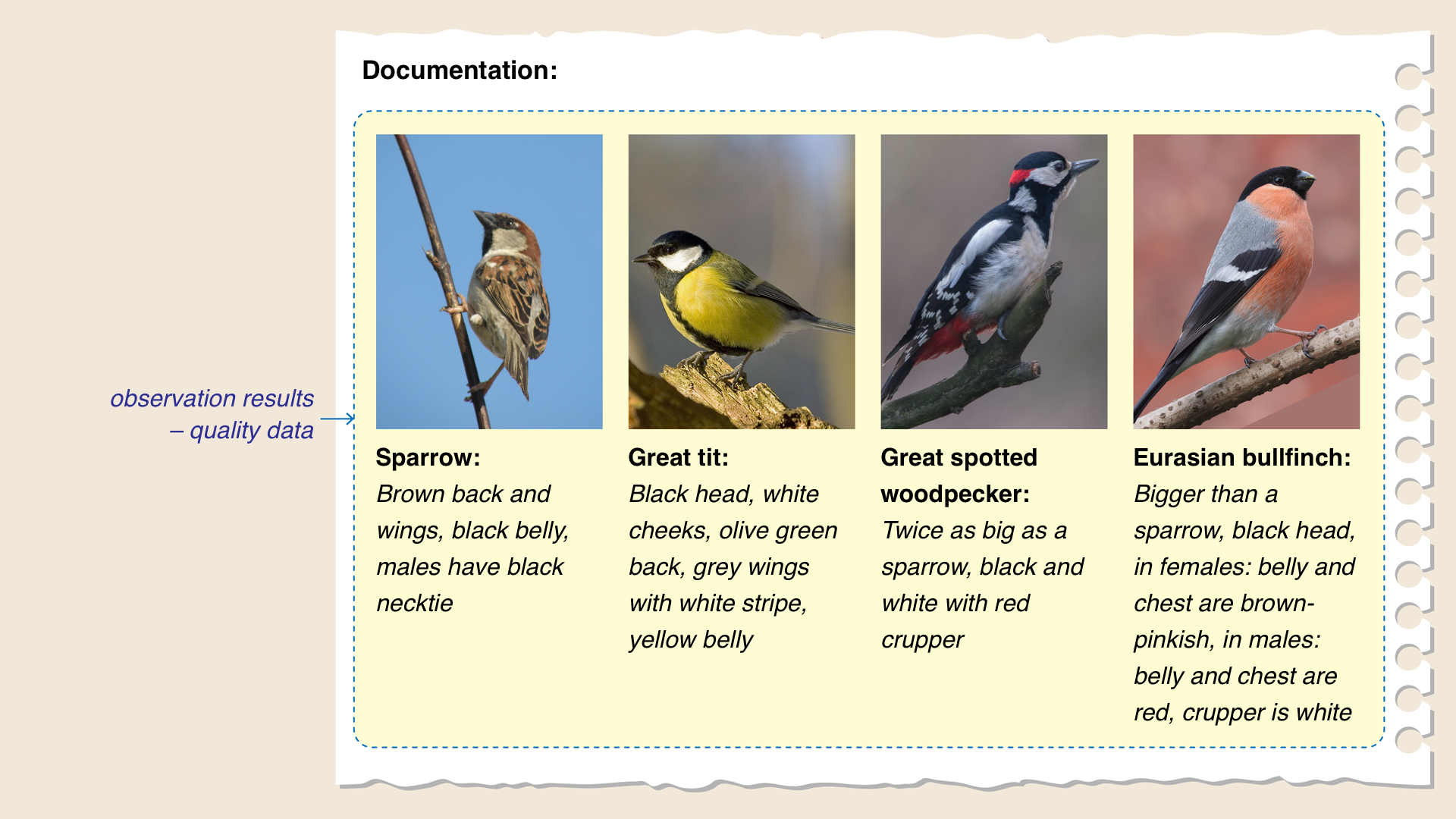
Observations may concern quantitative or qualitative factors. In the first case, measurements, for example, of the quantity, weight, height or length of the body, are taken. Environmental factors such as temperature, atmospheric pressure or air humidity can also be measured. Qualitative observations refer to features that can be described but cannot be measured – such as colour, shape or smell.
Observation results are documented in the form of descriptions, photographs, films or sound recordings. Such documentation should be produced during the course of the observation in order to avoid inaccuracies and omission of important details. Observation can be used as an independent research method or as an important element of natural experiments.
When you boil milk, you have to keep an eye on it, otherwise you will have to clean up your kitchen. Explain what is the purpose of this observation, how long it should last, and what senses you will use to conduct it.
Biological experiments
Sometimes observations alone are not enough to satisfy your curiosity. If we want to know why the phenomenon we are interested in takes place or what factors influence its course, we have to conduct an experiment.
It is a method which consists in conducting the research in strictly defined and controlled conditions in accordance with the rules of conduct developed in the natural sciences. In the experiment, one of the factors influencing the organism or process is intentionally changed (added or removed, strengthened or weakened). Then the effect of this change is observed.
Before starting the experiment, one should specify a research problemresearch problem, i.e. ask the scientific question one wants to answer. Research problem may be an affirmative statement or a question. Then, on the basis of own knowledge and intuition, one formulates a hypothesisa hypothesis, i.e. an assumption – „working” answer. The hypothesis is always an affirmative statement.
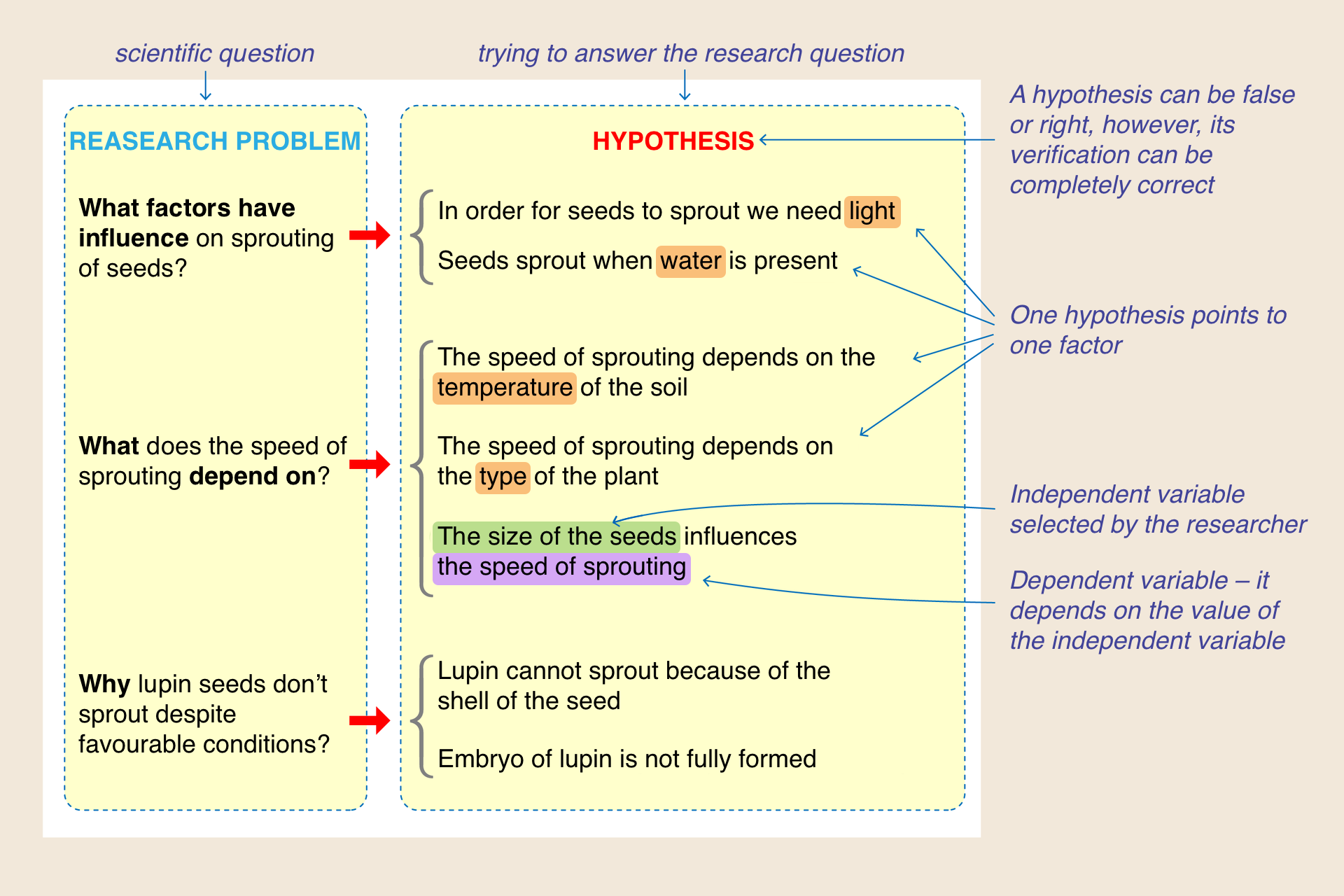
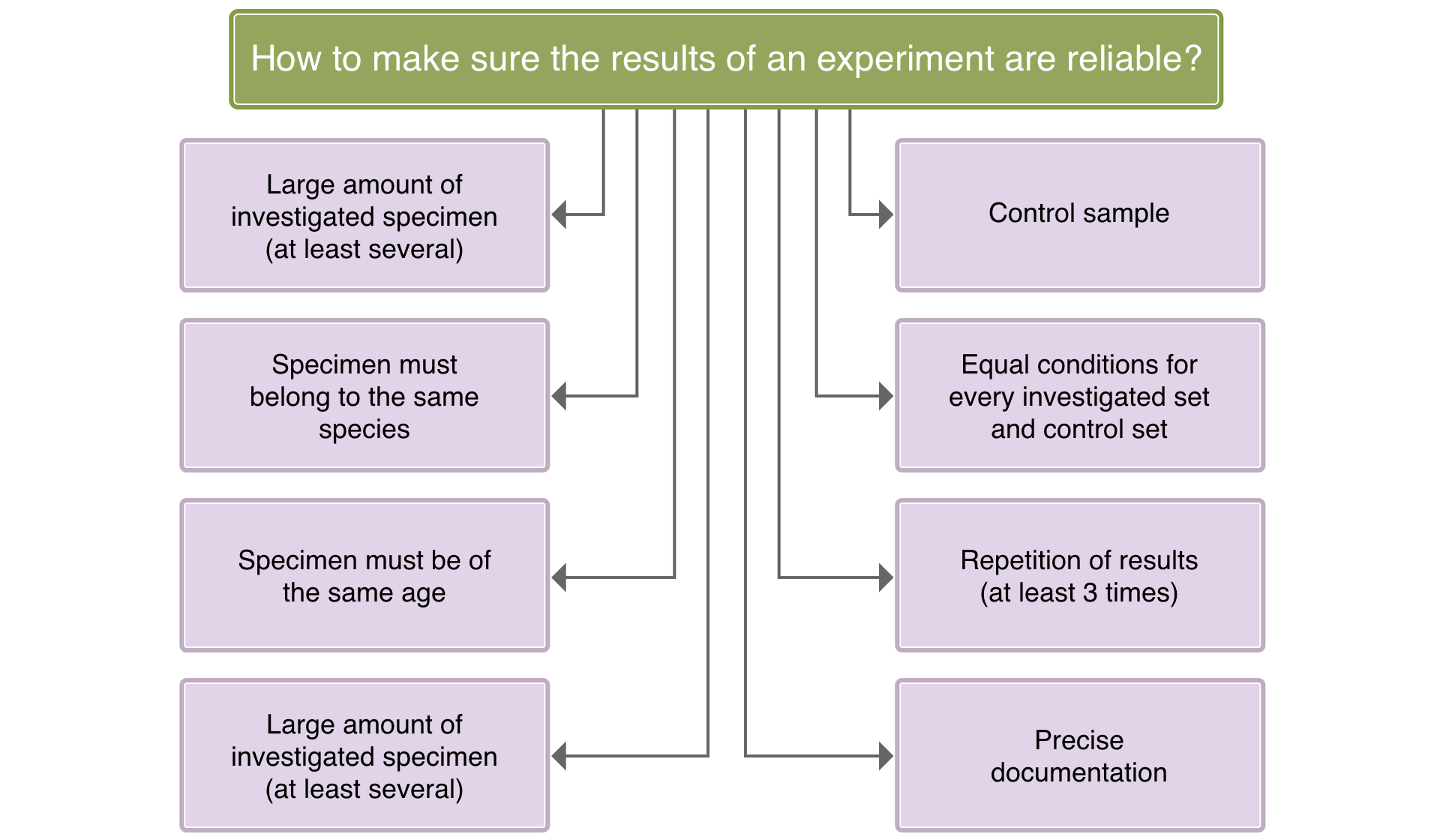
To check if the hypothesis is true, an appropriate experimentexperiment is planned and conducted. At the beginning, it is necessary to decide which object will be subjected to the experiment and the influence of which factor will be studied. The necessary instruments and reagents as well as the manner of their use are then selected. Two sets (samples) are planned: research and control. In the research set, the examined factor influences the observed object, and in the control set – it does not (or it influences, but its value is very low). Apart from the studied factor, the conditions are the same for both sets. With research sampleresearch sample and control samplecontrol sample, one can compare results and draw conclusions about the performance of a specific factor.
When planning the course of the experiment, it is also necessary to determine how many times the research will be repeated. Subsequent observations (measurements) will allow to avoid accidental errors. If the obtained results confirm the assumption, the hypothesis is considered to be correct. If not, another hypothesis is assumed and further experiment is planned until the causes of the phenomenon are explained.
Young children think that wind is evoked by trees waving their branches. Explain what a sentence in italics is in children's minds: conclusion, hypothesis, result of observation, research problem.
Documentation of biological observations and experiments
For observations and experiments to have a scientific value, their course must be carefully documented. The basic documentation should contain:
record of the purpose of the experiment or observation (possibly a record of the research problem, the scientific question and the examined hypothesis);
the manner of conducting the study, e.g. in the form of a diagram showing the control sample and the research sample;
the result (if a research problem is solved – also the conclusion).
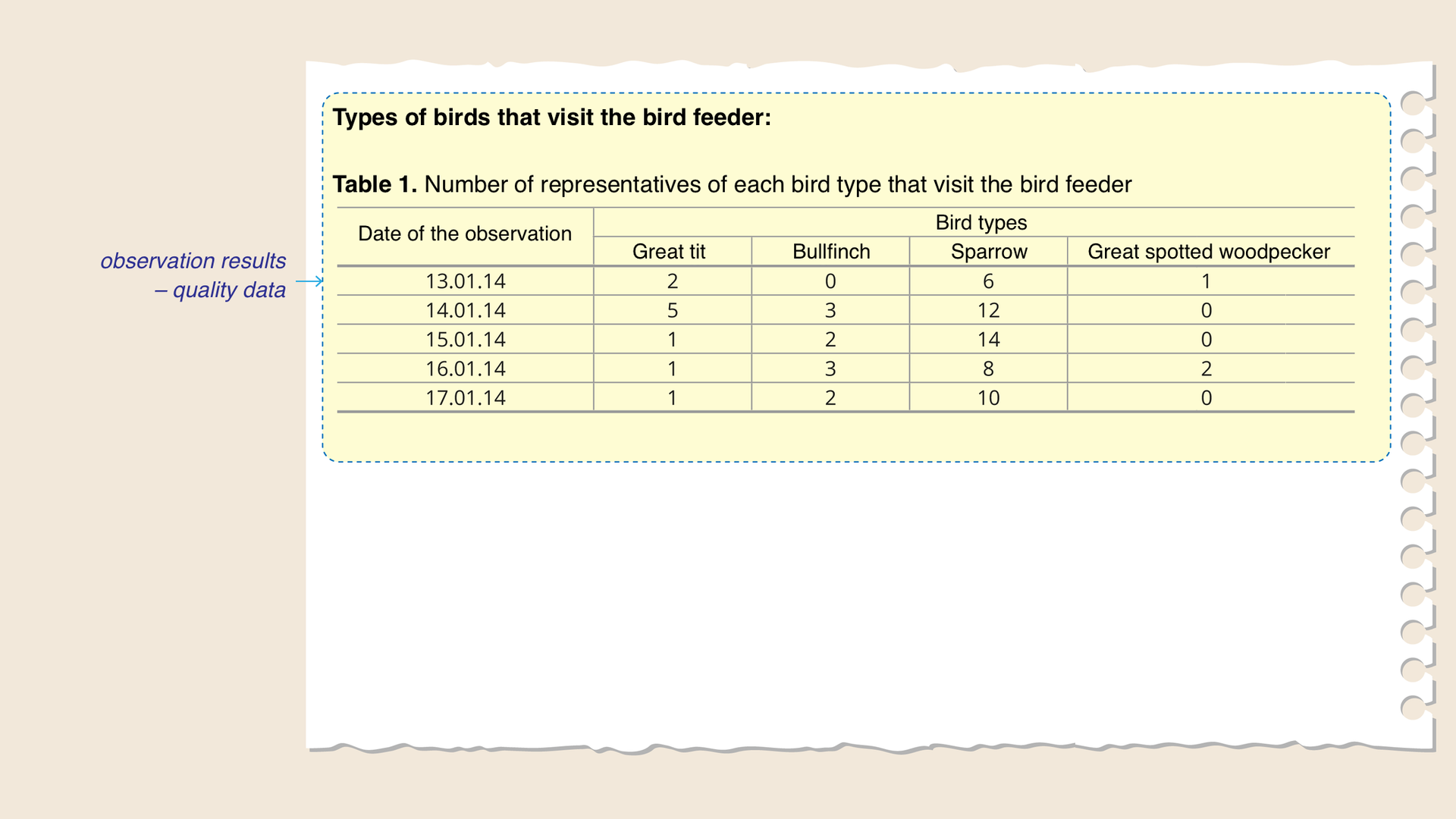
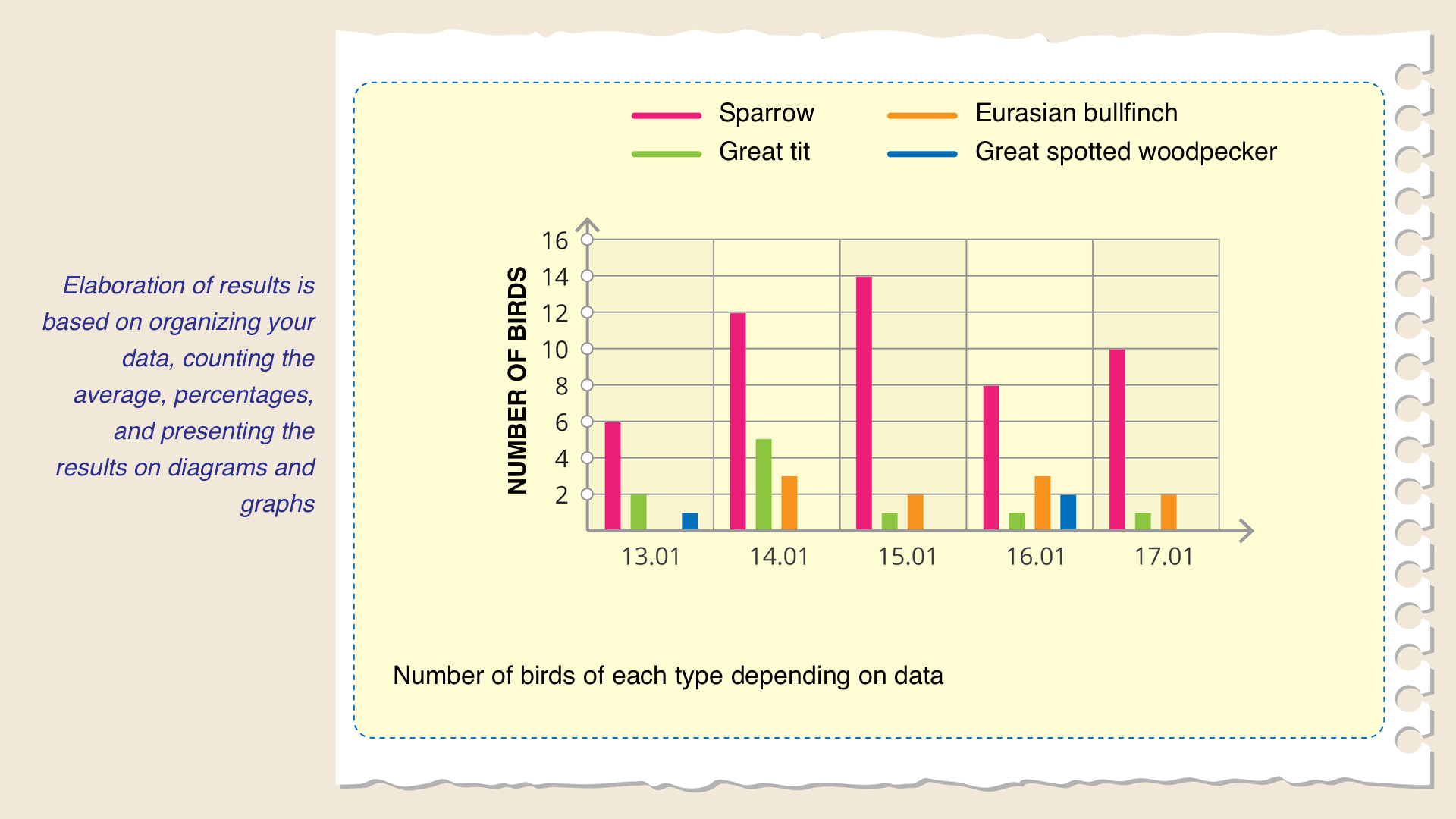
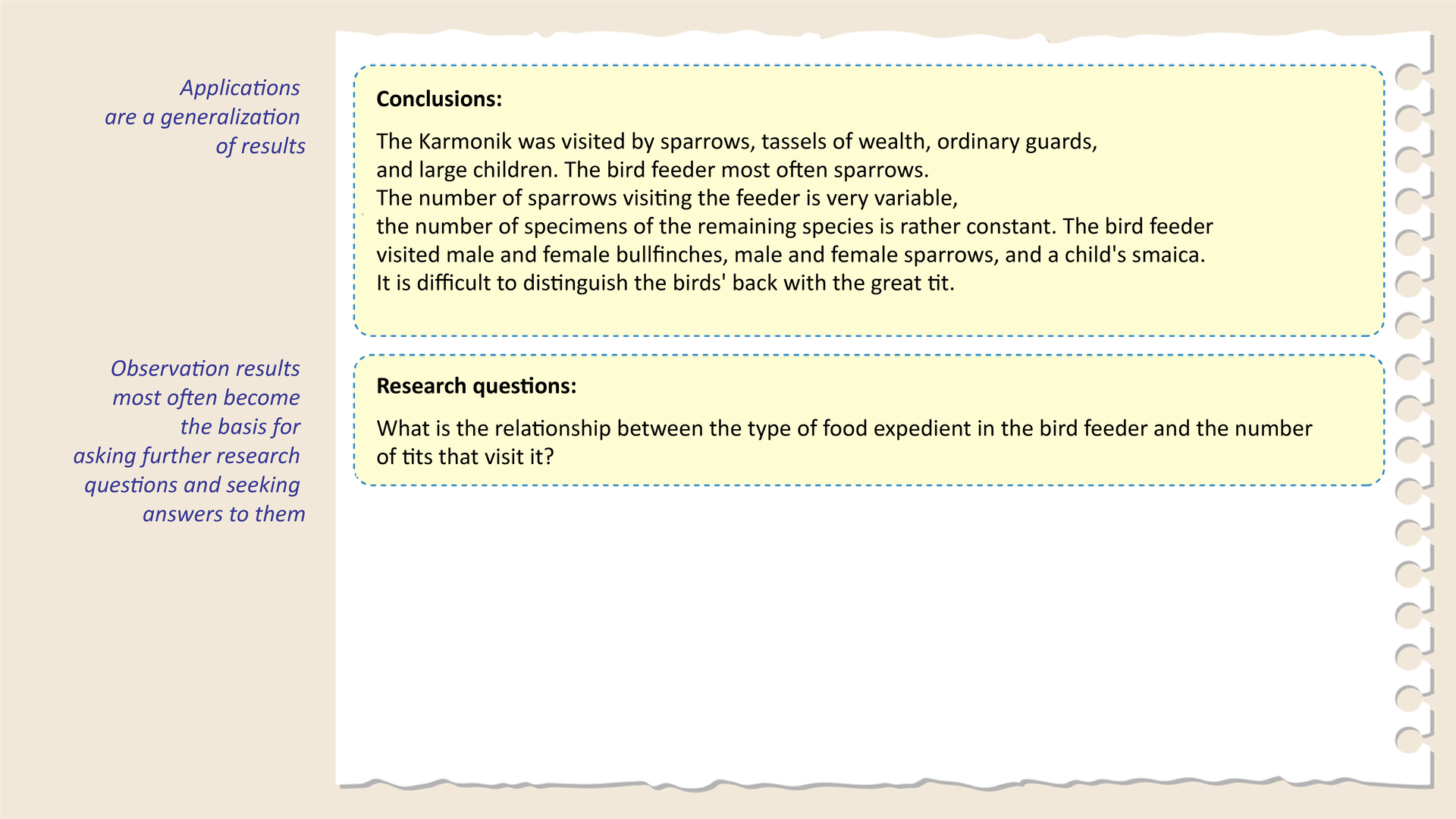
Observations may be documented by description, drawings, photographs, sound recordings or films with appropriate comments. Results of studies consisting in measurements are recorded in tables and illustrated by means of diagrams. Table helps to organize the data and makes it easier to capture dependencies while conducting a measurement. In addition to the figures, additional notes and observations on the conduct of the study may also be included in the table. On the basis of numerical data, diagrams are drawn up, allowing for comparison of results obtained in subsequent samples, and also for noticing relationships difficult to detect in the table. The diagrams facilitate the formulation of apt conclusions.
Date of observation:
Match the pairs: English words with Polish definition.
- jeden zestaw lub kilka zestawów użytych w doświadczeniu; w zestawie tym wybrany czynnik oddziałuje na badane zjawisko (organizm), metoda prowadzenia badań, zmierzająca do uzyskania szczegółowych informacji o zjawiskach lub procesach bez wpływania na ich przebieg, twierdzenie wyrażające przypuszczenie dotyczące wyniku eksperymentu, rzadziej obserwacji, metoda prowadzenia badań, w której celowo zmieniany jest jeden z czynników wpływających na dany proces lub na dane zjawisko, jeden z zestawów użytych w doświadczeniu; w zestawie tym wpływ wybranego czynnika na zjawisko (lub organizm) został wyłączony, cel doświadczenia, formułowany najczęściej jako pytanie
| experiment | |
| hypothesis | |
| observation | |
| research problem | |
| research sample | |
| control sample |
Keywords
biological observation, research problem, conclusions
Glossary
doświadczenie – metoda prowadzenia badań, w której celowo zmieniany jest jeden z czynników wpływających na dany proces lub na dane zjawisko
hipoteza – twierdzenie wyrażające przypuszczenie dotyczące wyniku eksperymentu, rzadziej obserwacji
obserwacja – metoda prowadzenia badań, zmierzająca do uzyskania szczegółowych informacji o zjawiskach lub procesach bez wpływania na ich przebieg
problem badawczy – cel doświadczenia, formułowany najczęściej jako pytanie
próba badawcza -- jeden zestaw lub kilka zestawów użytych w doświadczeniu; w zestawie tym wybrany czynnik oddziałuje na badane zjawisko (organizm)
próba kontrolna – jeden z zestawów użytych w doświadczeniu; w zestawie tym wpływ wybranego czynnika na zjawisko (lub organizm) został wyłączony