Do you ever get tired of all the rules set for you? Well, the author of the text below definitely is. Read it and check if the text speaks to you.
Czy czujesz czasami zmęczenie z powodu mnóstwa reguł, które cię obowiązują? No cóż, autor poniższego tekstu z całą pewnością doskonale zna to uczucie. Przeczytaj tekst i sprawdź, czy zgadzasz się z jego treścią.
R1AN1WLDAOwiS
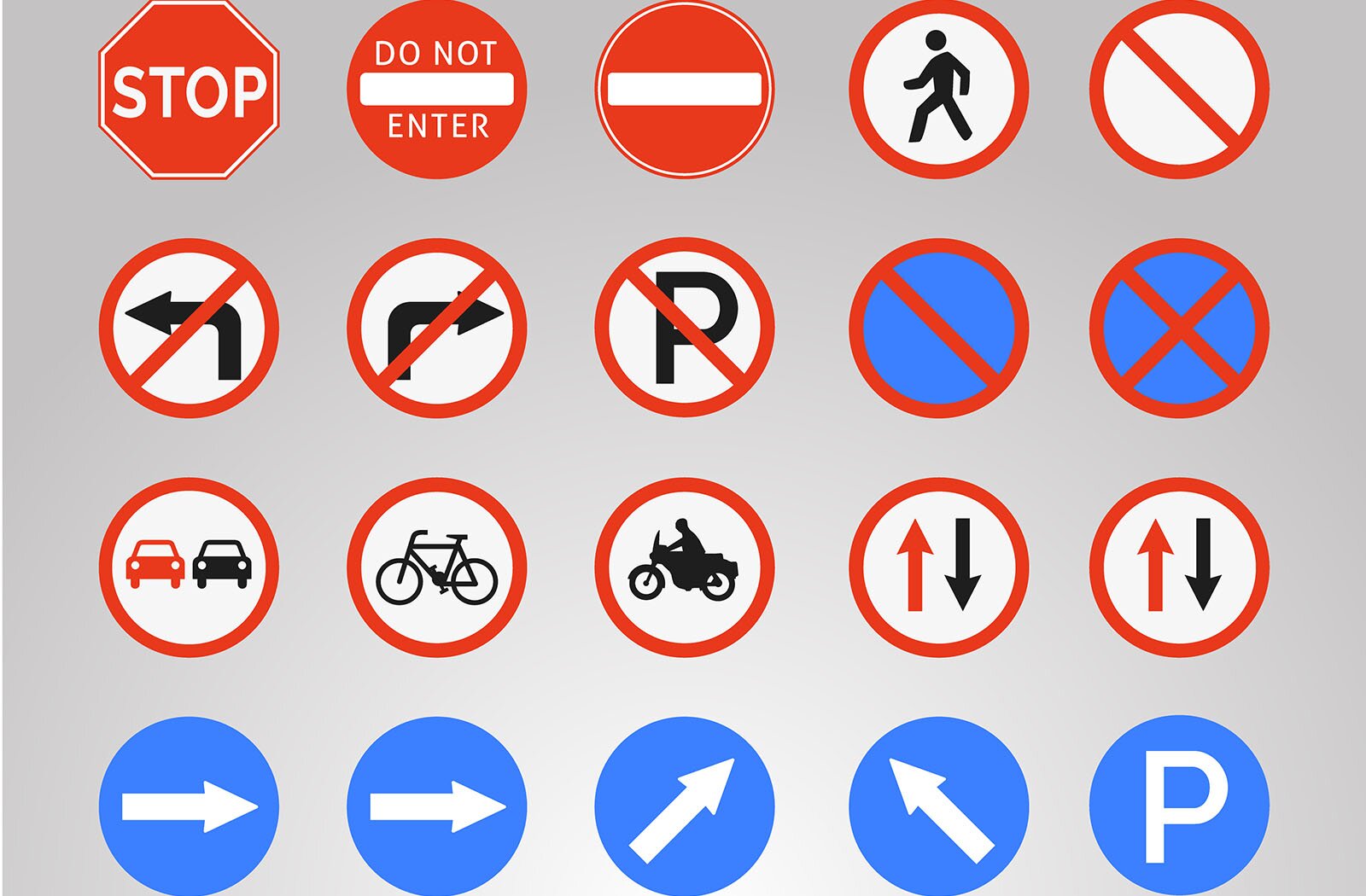
Grafika przedstawia dwadzieścia znaków drogowych, ułożonych po pięć w czterech rzędach. W pierwszym rzędzie od góry widoczne są znaki zakazu. Od lewej strony widoczny jest czerwony znak zakaz wjazdu na skrzyżowanie bez zatrzymania się przed drogą z pierwszeństwem z napisem STOP; znak zakazu wjazdu z napisem:DO NOT ENTER; znak zakazu wjazdu; znak zakazu ruchu pieszego; znak końca zakazu. W drugim rzędzie widoczne są znaki zakazu. Od lewej strony widoczny jest znak zakazu skręcania w lewo; znak zakazu skręcania w prawo; znak zakazu parkowania z literą P; znak strefy ograniczonego postoju; znak zakazu zatrzymywania się. W trzecim rzędzie widoczne są znaki zakazu. Od lewej strony widoczny jest znak zakazu wyprzedzania; znak zakazu wjazdu rowerów; znak zakazu wjazdów motorowerów; dwa znaki pierwszeństwa dla nadjeżdżających z przeciwka. W czwartym rzędzie widoczne są znaki nakazu. Od lewej strony widoczne są dwa znaki nakazu jazdy w prawo przed znakiem; znak nakazu jazdy z prawej strony znaku; znak nakazu jazdy z lewej strony znaku; znak strefy parkowania.
Rules, rules everywhere!
Wszędzie tylko te zasady!
Źródło: dostępny w internecie: www.freepki.pl [dostęp 16.08.2023], domena publiczna.
Exercise1
R14Dk8n06wOXj
Read the text below. What is it about? Choose the correct answer. Możliwe odpowiedzi: 1. Formalities at school, 2. Cultural norms for teens, 3. Social conduct for the elderly
Źródło: GroMar Sp. z o.o., licencja: CC BY-SA 3.0.
Rules, Rules, Rules...
Luiza KubalskaRules, Rules, Rules...
Hi guys! Lately, I've been thinking about all the dos and don'tsdos and don’tsdos and don'ts for us, teens.
To start with, there are many rules of social conductsocial conductsocial conduct that we should know and many things we must or mustn't do, and I have been wondering whether all of them make sense. For example, I have always been told I should say “good morning” first to people older than me. But I don't think it's true! Elderly people sometimes consider it your obligationobligationobligation to say “hello” first, no matter what, but sometimes you can be distracted withbe distracted withbe distracted with your own problems and not noticenoticenotice the person. Why would we always have to say it first?
Secondly, there're many things that we mustn't do, for instance, keep our hands in our pockets when talking to somebody. But what about when it's cold outside and our hands are freezing? The same applies to yawningyawning [yawn]yawning. It's considered rude to do this during a lesson or when talking to someone. However, it's a scientific fact that yawning is healthy. It brings more oxygen into our bodies and helps to keep our brains awake.
And don't get me started on school work and all the school‑connectedschool‑connectedschool‑connected things… You have to do your homework, you must get up early, you can't talk in class, you mustn't be rude to the teachers... Well, guess what! We're just people! We can have a worse day, we can be too tired to do our homework, especiallyespeciallyespecially if there's a lot of it from every subject...
The way I see it, there are exceptions to every ruleThere are exceptions to every rule.there are exceptions to every rule. It all depends on the situation… Of course we need to play by the rulesplay by the rulesplay by the rules if we want to get to university. It is necessary to meet the entry requirementsmeet entry requirementsmeet the entry requirements such as passing the exams and preparing the requiredrequired [require]required documents. But how about the field of studiesthe field of studiesthe field of studies? Should we choose this to make our parents happy or should we follow our instinctfollow your instinctfollow our instinct and choose something we really like? It is very important to make our own decisions because they are likely to affectaffectaffect the rest of our lives. For sure, it’s good to consider your innate skillsinnate skills [innate skill]innate skills and also look for something you have an affinity forhave an affinity for somethinghave an affinity for…
Well, enough of that from me. Tell me what you think. Am I the only one who thinks the rules for teenagers are crazy? Let me know in the comments!
1 Źródło: Luiza Kubalska, licencja: CC BY-SA 3.0.
Exercise2
Read the text above. Then, choose the correct options in each point. There is only one correct option for each point.
R1H22gAlVuDDN
1. Lately, the author’s been considering Możliwe odpowiedzi: 1. moving to another city., 2. her grandparents' behaviour., 3. social rules for teenagers.
Źródło: GroMar Sp. z o.o., licencja: CC BY-SA 3.0.
RRdLXtIt5MwEx
2. People have always told the author to Możliwe odpowiedzi: 1. initiate the greeting with the elderly., 2. stay quiet when there is a senior person present., 3. wait until an older person says good morning.
Źródło: GroMar Sp. z o.o., licencja: CC BY-SA 3.0.
R4TX6VlNzvnUC
3. The author believes it is Możliwe odpowiedzi: 1. important not to keep your hands in pockets., 2. necessary to follow every rule., 3. too much for teenagers to follow all the rules.
Źródło: GroMar Sp. z o.o., licencja: CC BY-SA 3.0.
R1FYdr3WfwbcG
4. According to the author, teenagers Możliwe odpowiedzi: 1. can have a bad day, too., 2. need to accept the norms., 3. should do their homework.
Źródło: GroMar Sp. z o.o., licencja: CC BY-SA 3.0.
R1aTEdU0dJhOJ
5. The author thinks that when choosing the field of studies, teenagers should:
Źródło: GroMar Sp. z o.o., licencja: CC BY-SA 3.0.
Exercise3
RW79Dj3rwTFU4
Complete the rule.
When you talk about things that are necessary to do, you use 1. mustn’t, 2. must or have to, 3. don’t have to.
When you talk about things that are not necessary to do, you use 1. mustn’t, 2. must or have to, 3. don’t have to.
When you talk about things that are prohibited, you use 1. mustn’t, 2. must or have to, 3. don’t have to.
Źródło: GroMar Sp. z o.o., licencja: CC BY-SA 3.0.
Exercise4
RLJCi5mVd1kQ8
Complete the sentences with the words below.
You mustn’tdon’t have to smoke here.
You have todon’t have to to do your homework or you’ll get a bad grade.
I mustmustn’t finish my tasks quickly.
I mustmustn’t get some qualifications.
She doesn’t have tomustn’t get a degree if she doesn’t want to.
Complete the sentences with the words below.
You mustn’tdon’t have to smoke here.
You have todon’t have to to do your homework or you’ll get a bad grade.
I mustmustn’t finish my tasks quickly.
I mustmustn’t get some qualifications.
She doesn’t have tomustn’t get a degree if she doesn’t want to.
Źródło: GroMar Sp. z o.o., licencja: CC BY-SA 3.0.
Źródło: GroMar Sp. z o.o., licencja: CC BY-SA 3.0.
R12m63cbLqrMI
2. 1. do, 2. you’ll, 3. or, 4. get, 5. have to, 6. your homework, 7. You, 8. a bad grade 1. do, 2. you’ll, 3. or, 4. get, 5. have to, 6. your homework, 7. You, 8. a bad grade 1. do, 2. you’ll, 3. or, 4. get, 5. have to, 6. your homework, 7. You, 8. a bad grade 1. do, 2. you’ll, 3. or, 4. get, 5. have to, 6. your homework, 7. You, 8. a bad grade 1. do, 2. you’ll, 3. or, 4. get, 5. have to, 6. your homework, 7. You, 8. a bad grade 1. do, 2. you’ll, 3. or, 4. get, 5. have to, 6. your homework, 7. You, 8. a bad grade 1. do, 2. you’ll, 3. or, 4. get, 5. have to, 6. your homework, 7. You, 8. a bad grade 1. do, 2. you’ll, 3. or, 4. get, 5. have to, 6. your homework, 7. You, 8. a bad grade.
2. 1. do, 2. you’ll, 3. or, 4. get, 5. have to, 6. your homework, 7. You, 8. a bad grade 1. do, 2. you’ll, 3. or, 4. get, 5. have to, 6. your homework, 7. You, 8. a bad grade 1. do, 2. you’ll, 3. or, 4. get, 5. have to, 6. your homework, 7. You, 8. a bad grade 1. do, 2. you’ll, 3. or, 4. get, 5. have to, 6. your homework, 7. You, 8. a bad grade 1. do, 2. you’ll, 3. or, 4. get, 5. have to, 6. your homework, 7. You, 8. a bad grade 1. do, 2. you’ll, 3. or, 4. get, 5. have to, 6. your homework, 7. You, 8. a bad grade 1. do, 2. you’ll, 3. or, 4. get, 5. have to, 6. your homework, 7. You, 8. a bad grade 1. do, 2. you’ll, 3. or, 4. get, 5. have to, 6. your homework, 7. You, 8. a bad grade.
Źródło: GroMar Sp. z o.o., licencja: CC BY-SA 3.0.
RrK5dQIrFXCjJ
3. 1. I, 2. my tasks, 3. quickly, 4. finish, 5. must 1. I, 2. my tasks, 3. quickly, 4. finish, 5. must 1. I, 2. my tasks, 3. quickly, 4. finish, 5. must 1. I, 2. my tasks, 3. quickly, 4. finish, 5. must 1. I, 2. my tasks, 3. quickly, 4. finish, 5. must.
3. 1. I, 2. my tasks, 3. quickly, 4. finish, 5. must 1. I, 2. my tasks, 3. quickly, 4. finish, 5. must 1. I, 2. my tasks, 3. quickly, 4. finish, 5. must 1. I, 2. my tasks, 3. quickly, 4. finish, 5. must 1. I, 2. my tasks, 3. quickly, 4. finish, 5. must.
Źródło: GroMar Sp. z o.o., licencja: CC BY-SA 3.0.
RdT4HB4NSiCKE
4. 1. on any, 2. cheat, 3. tests, 4. mustn’t, 5. I 1. on any, 2. cheat, 3. tests, 4. mustn’t, 5. I 1. on any, 2. cheat, 3. tests, 4. mustn’t, 5. I 1. on any, 2. cheat, 3. tests, 4. mustn’t, 5. I 1. on any, 2. cheat, 3. tests, 4. mustn’t, 5. I.
4. 1. on any, 2. cheat, 3. tests, 4. mustn’t, 5. I 1. on any, 2. cheat, 3. tests, 4. mustn’t, 5. I 1. on any, 2. cheat, 3. tests, 4. mustn’t, 5. I 1. on any, 2. cheat, 3. tests, 4. mustn’t, 5. I 1. on any, 2. cheat, 3. tests, 4. mustn’t, 5. I.
Źródło: GroMar Sp. z o.o., licencja: CC BY-SA 3.0.
RF7ZS2PI6xtxy
5. 1. swim, 2. We, 3. don’t, 4. to, 5. here, 6. have 1. swim, 2. We, 3. don’t, 4. to, 5. here, 6. have 1. swim, 2. We, 3. don’t, 4. to, 5. here, 6. have 1. swim, 2. We, 3. don’t, 4. to, 5. here, 6. have 1. swim, 2. We, 3. don’t, 4. to, 5. here, 6. have 1. swim, 2. We, 3. don’t, 4. to, 5. here, 6. have.
5. 1. swim, 2. We, 3. don’t, 4. to, 5. here, 6. have 1. swim, 2. We, 3. don’t, 4. to, 5. here, 6. have 1. swim, 2. We, 3. don’t, 4. to, 5. here, 6. have 1. swim, 2. We, 3. don’t, 4. to, 5. here, 6. have 1. swim, 2. We, 3. don’t, 4. to, 5. here, 6. have 1. swim, 2. We, 3. don’t, 4. to, 5. here, 6. have.
Źródło: GroMar Sp. z o.o., licencja: CC BY-SA 3.0.
Exercise6
RPVu7EYQDVImq
Are the following sentences correct or wrong? Choose "correct" or "wrong" accordingly.
She mustn’t swim if she doesn’t want to. correctwrong
We mustn’t lie because it’s wrong. correctwrong
I mustn’t take any notes if I remember the text without it. correctwrong
She don’t have to go — that is her choice. correctwrong
They don’t have to go out so they can stay home. correctwrong
Źródło: GroMar Sp. z o.o., licencja: CC BY-SA 3.0.
GRAMATYKA
CZASOWNIKImust, have to oraz can’t, mustn’t
W tej części materiału utrwalisz reguły używania czasowników modalnych do wyrażania nakazów i zakazów.
Czasownikówmust i havetoużywamy do wyrażenia, że coś trzeba zrobić, ponieważ zaistniała konieczność wykonania danego działania.
Przykłady:
I must finish this project by Monday. -Muszę skończyć ten projekt do poniedziałku.
You must clean your room right now! - Musisz natychmiast posprzątać swój pokój!
You have to buy a ticket if you want to go to a concert. - Musisz kupić bilet, żeby pójść na koncert.
Mandy has to study more if she wants to win the Physics competition. - Mandy musi więcej się uczyć, jeśli chce wygrać konkurs fizyczny.
Różnica między nimi jest taka, żemustwyraża wewnętrzne przekonanie mówiącego o istniejącej konieczności (jest też sygnałem, że to mówiący może decydować o tym, czy dana czynność rzeczywiście musi zostać wykonana), ahave toużyjemy, żeby wskazać, że konieczność wykonania danej czynności wynika z obiektywnych faktów, tzn. jest narzucona przez zewnętrzne okoliczności.
Przykłady:
You must do your homework. - Musicie zrobić swoją pracę domową. (w sytuacji, gdy nauczyciel każe uczniom odrobić pracę domową)
I have todo my homework. - Muszę odrobić moją pracę domową. (w sytuacji, gdy np. uczeń tłumaczy koledze, dlaczego nie może iść do kina)
Jeżeli chcemy powiedzieć, że nie ma konieczności, by coś robić, zdanie przeczące w obu przypadkach tworzymy, używająchave to.
Przykłady:
You do not have to (don’t have to) do your homework. - Nie musicie robić swojej pracy domowej. (nauczyciel do uczniów)
I don’t have to (do not have to) do my homework. - Nie muszę odrabiać pracy domowej. (uczeń do kolegi)
UWAGA: przeczenie odmust, czylimustn’t(must not)ma inne znaczenie - wyraża formalny zakaz, a nie brak konieczności zrobienia czegoś.
Przykład:
You mustn’t(must not) cheat in tests. - Nie możesz (nie wolno ci) ściągać na sprawdzianach. (reguła w szkole)
You mustn't (must not) leave your luggage unattended. - Nie wolno zostawiać bagażu bez nadzoru. (regulamin w środkach transportu publicznego)
Czasownikówcannot (can’t) i must not (mustn’t)używamy do wyrażenia, że czegoś nie wolno, nie można robić. Cannot (can't)oznacza brak pozwolenia i jest częściej używany w sytuacjach nieformalnych, amust not (mustn’t)ma zdecydowanie silniejszy wydźwięk i zazwyczaj wyraża zakaz, np. wyrażony w przepisach jakiegoś regulaminu lub prawa.
Przykłady:
We cannot (can’t)just stay home and skip lessons. - Nie możemy po prostu zostać w domu i opuścić lekcji. (wyrażone przez uczniów, którzy wiedzą, że nie powinni opuszczać lekcji)
You must not (mustn’t) cross the street when the light is red. - Nie wolno przechodzić przez ulicę na czerwonym świetle. (jest to zakaz przepisów ruchu drogowego, którego nie można negować)
Do not have to (don’t have to)używamy do wyrażenia, że czegoś nie trzeba robić, ponieważ nie ma takiej konieczności i nie jest to w żaden sposób narzucone. Porównaj must not (mustn’t) i do not have to (don’t have to).
Przykłady:
She must not (mustn’t) take my umbrella, I didn’t let her! - Nie wolno jej brać mojej parasolki, nie pozwoliłam jej! (nie zostało udzielone pozwolenie, więc nie może wziąć czyjejś własności)
Shedoes not have to (doesn’t have to) take an umbrella, as it's really sunny. - Nie musi brać parasolki, ponieważ świeci słońce. (brak konieczności ze względu na dobrą pogodę)