What do we need the Senate for?
The Sejm and the Senate exercise legislative power in the Republic of Poland.
You will understand the role of the Senate in the law‑making process.
You will know other responsibilities of the Senate, as well as the conditions required to become a senator.
You will be able to explain the pros and cons of the existence of the Senate in the Polish political system.
You will know the history and the reasons of the creation of the Senate after the fall of communism.
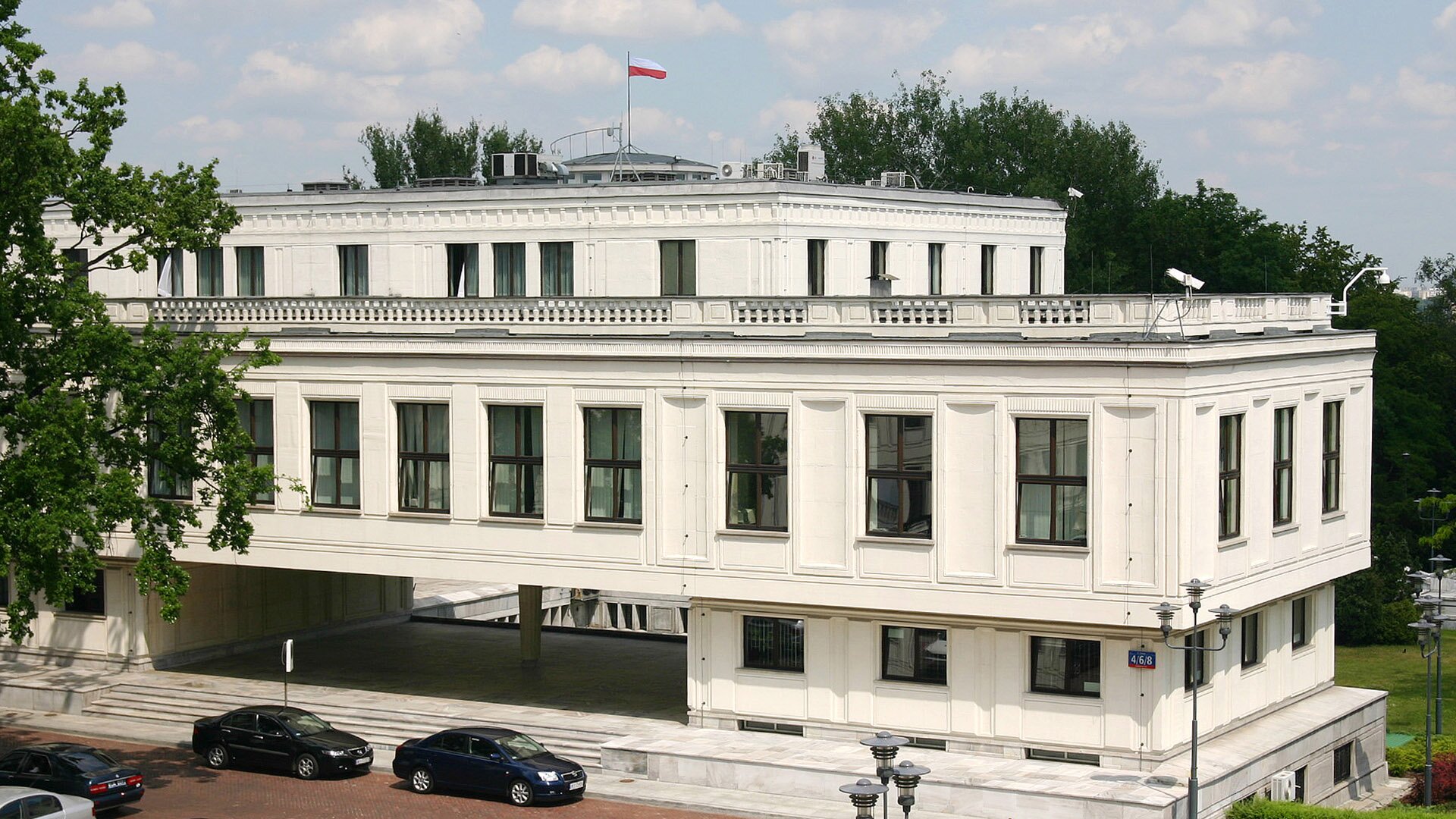
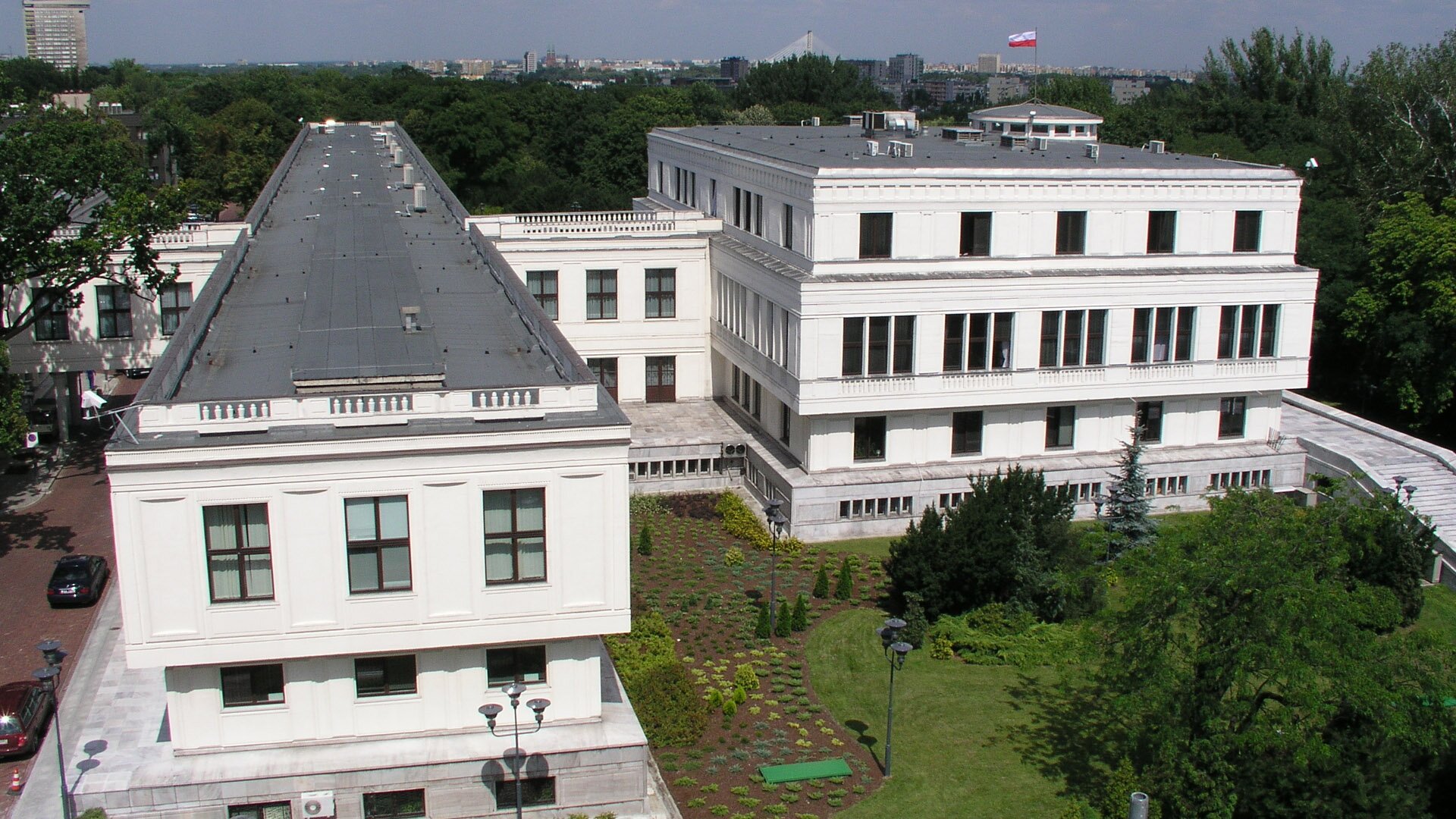
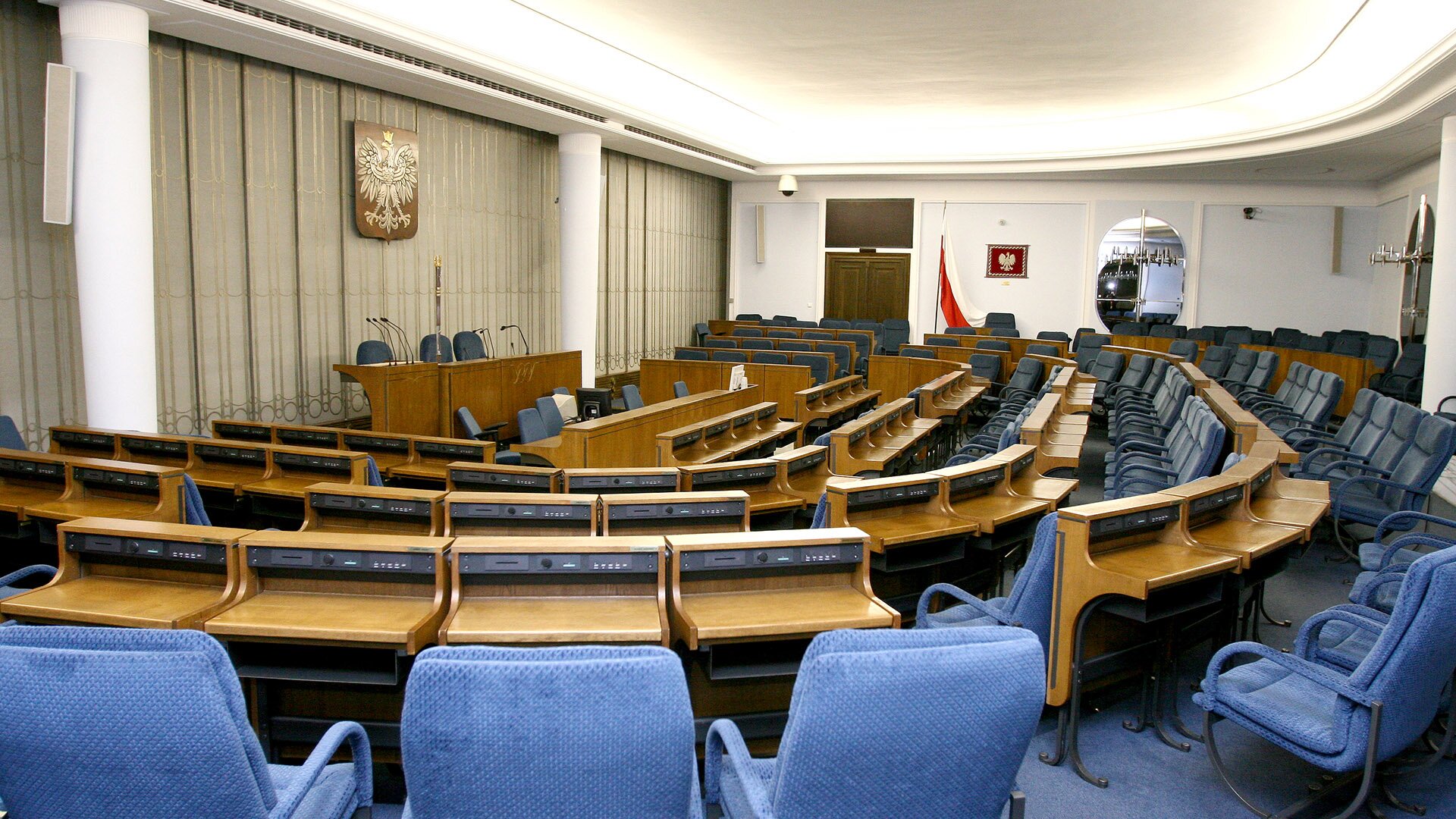
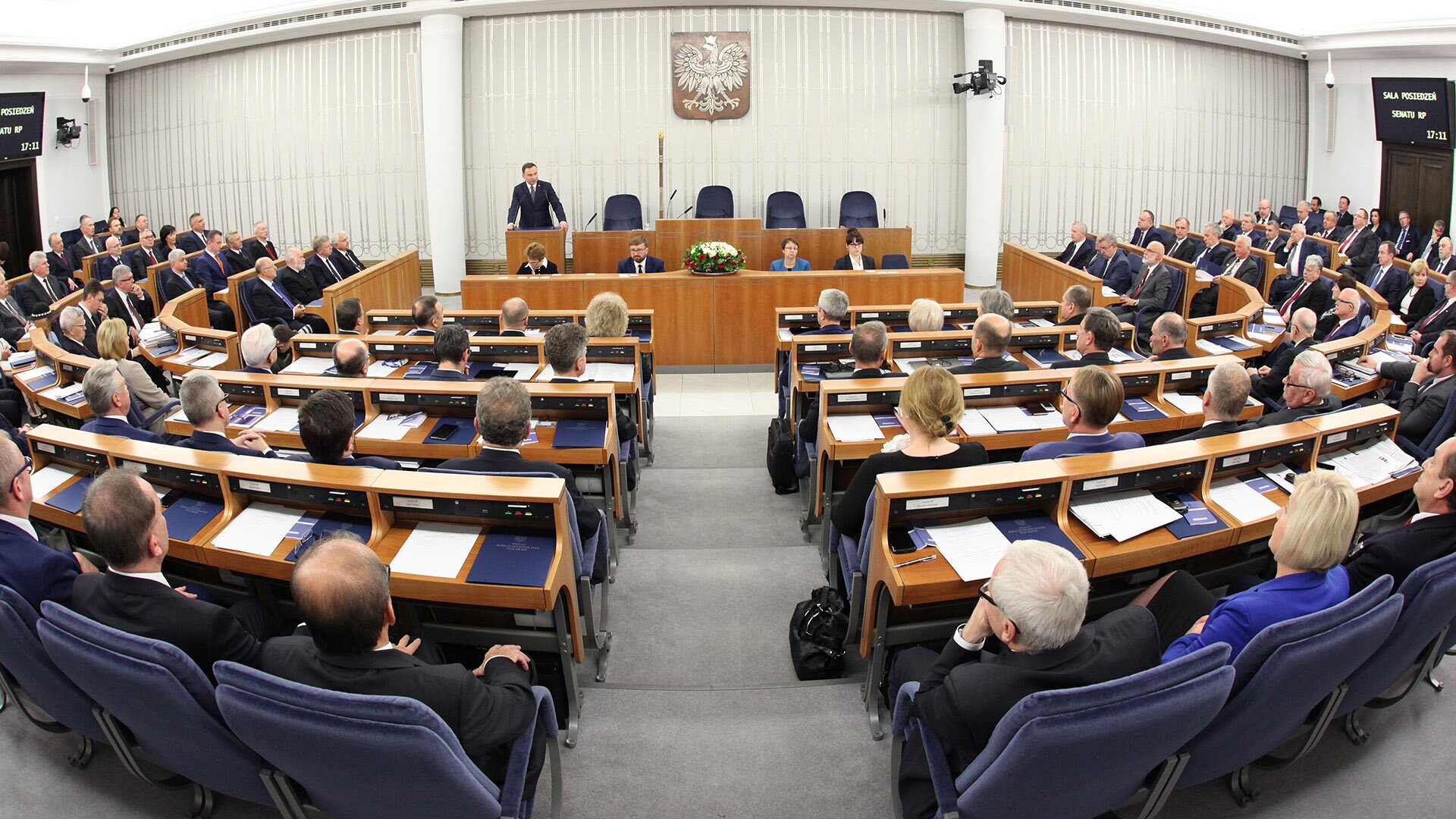
Do you know the seat of the Polish Senate? Before you go on to serious considerations about the role of the higher chamber of the Polish parliament, learn about the building it is housed in. View the gallery below.

The most important responsibility of the Senate is to approve bills passed by the Sejm. The Senate has 30 days to do so after the bill is submitted by the Sejm. If the Senate does not take any action within the time, the bill is considered to be adopted according to the wordingaccording to the wording submitted by the Sejm, and it is submitted to the President for signature. The Senate may also adopt the bill without amendment. In this case the bill is submitted to the President for signature as well. If the Senate adopts amendments, the bill returns to the Sejm. The Senate may also resolve upon a complete rejectionresolve upon a complete rejection of the bill. Then the bill is returned to the Sejm, too. Watch a presentation “The Senate in the law‑making process”, and carefully follow the path of a bill in the Senate.
Film dostępny na portalu epodreczniki.pl
Film infograficzny przedstawiający senat w procesie stanowienia prawa. Główną odpowiedzialnością senatu jest rozpatrywanie ustaw proponowanych przez sejm. Senat ma 30 dni na rozpatrzenie ustaw przesłanych przez sejm. Jeżeli senat nie naniesie poprawek ani nie zmieni to uznawane jest że ta ustawa sejmu jest zaaprobowana. Następnie zaaprobowana ustawa przesyłana jest do podpisu Prezydenta. Natomiast jeżeli senat coś poprawi ustawa przesyłana jest ponownie do sejmu. Sejm może przyjąć poprawki senatu lub je odrzucić. W sejmie ustawa może być ponownie głosowana i wówczas liczba głosów decyduje o tym czy ustawa będzie przyjęta czy nie.
For years now there has been a discussion in Poland, whether the Senate is actually necessary. Those opposing the Senate stress that the decision to create the chamberchamber was made during the Round Table Talks (Okrągły Stół) in 1989 in a specificspecific political situation. The communists only agreed to a partiallypartially free elections to the Sejm – 65% of the seats were supposed to be reserved for them. Elections to the Senate were to be completely free. The “Solidarity” movement won 99 out of 100 seats in the Senate. This came as a shock to the communists, and was a clear manifestation of the political will of the society. However, is any of this important today? To prepare for the discussion on the subject, solve the exercise.
Fill in the gaps in a text about the Senate.
approve the signature, universal, observe the treaty, single-member, President, their will, 100 thousand, whole territory, Ministers, introduce legislation, secret, popular vote, nationwide referendum, deputies, 30 years old, ratification
The Senate has the right to .........................................., which means it may propose new laws. In Poland the right belongs also to the .........................................., the Council of .........................................., a group of 15 .......................................... or a Sejm committee, and a group of .......................................... citizens.
Acting together, the Sejm and the Senate pass bills to .......................................... of an international agreement by the President. After signing the agreement Poland will be obliged to ........................................... The act of joining the treaty is called ...........................................
Elections to the Senate are .........................................., direct, and are conducted by .......................................... ballot. To be eligible for candidacy a citizen has to be ........................................... In each of the one hundred constituencies one senator is chosen in compliance with the majoritarian voting system. These are the so called .......................................... constituencies.
The Senate has the right to come forward with a proposal to the Marshal of the Sejm to decree a .........................................., a ........................................... In such a vote Polish citizens express .......................................... about a solution to a particular question. The vote is conducted on issues most important to the Polish citizens, in the .......................................... of Poland.
Split into two groups. One group will present the arguments to remove the Senate from the political system in Poland, the other to keep it. You may use the arguments from the table below as an inspiration.
Pros | Cons |
1. It has been a part of Polish parliamentary tradition. | 1. It is costly and unnecessary. |
2. It polishes and improves legal acts proposed by the Sejm. | 2. It relieves the deputies of their duty to create good laws. If there was no Senate the deputies would have to be more studious. |
3. In countries of long democratic traditions (the US, France, the UK) parliaments are bicameral. | 3. There is a number of democratic states with unicameral parliaments: Denmark, Sweden, Finland, Estonia. |
4. It guarantees stability, it is not policized. | 4. It is just a big travel agency for taxpayers’ money. The senators on the pretext of visiting the Poles living abroad just travel the world. |
5. The Senate takes care of the Poles living abroad. | 5. In the 21st century the Poles living abroad do not need the care of the Senate anymore. |
Listen to the abstract recording to review the material and new vocabulary. Then do the vocabulary exercise. Match the pairs: English and Polish words.
szczególna, w brzmieniu, częściowo, uchwalić odrzucenie w całości, izba
| according to the wording | |
| resolve upon a complete rejection | |
| chamber | |
| specific | |
| partially |
Keywords
approve bills, submit bills, pass bills, adopt bills, reject bills, amendment, Round Table Talks, unicameral/bicameral
Glossary
w brzmieniu
uchwalić odrzucenie w całości
izba
szczególna
częściowo