Detective’s deduction
you will recognise characteristic features of detectivedetective prose
you will get to know the art of deductiondeduction
you will differentiate factsfacts from presumptionspresumptions
you will express certainty and uncertainty
Give examples of detectives known to you from literature or films. Give their names, surnames, country of origin and the literary or film source that they come from.
What is a sensory thing? It is something that people experience through their senses: sight, hearing, touch, smell and taste. The sensual experience connects people with the world of matter and is one of the ways of knowing it. One of, but not the only one. For the human mind experiences of a different kind are also available. Such experiences that cannot be described with the language of senses. These are abstract concepts and ideas. Sensual impressions are not enough to explain what is truth and false, justice and injustice or good and evil. Truth, justice or good cannot be seen, touched or tasted. With our senses we can experience some objects or situations that we describe as good or evil, true or false – depending on our beliefs. The meaning of abstract ideas is created above all as a result of intellect effort and inquiries.
Curiosity is one of the features of a good detective. What other features should a good detective have? Do you know any detective characters (from books or TV series)? depending on the way of creating the main character image, building and solving the intrigueintrigue and the picture of reality in which the action is set. Detective novelDetective novel is one of this .... Conan Doyle's prose had many film adaptations, and is still very popular. It is evidenced by such productions as: Sherlock Holmes (2009) directed by Guy Ritchie or TV series Sherlock (2010) with Benedict Cumberbatch playing the title role. Although Sherlock Holmes is a fictional character, his creator has placed the hero's flat at the real address in London: 221B Baker Street, where currently the museum of Sherlock Holmes can be found.
Read the fragment of a short story by Arthur Conan Doyle. Pay attention to the Sherlock Holmes features and his way of thinking.
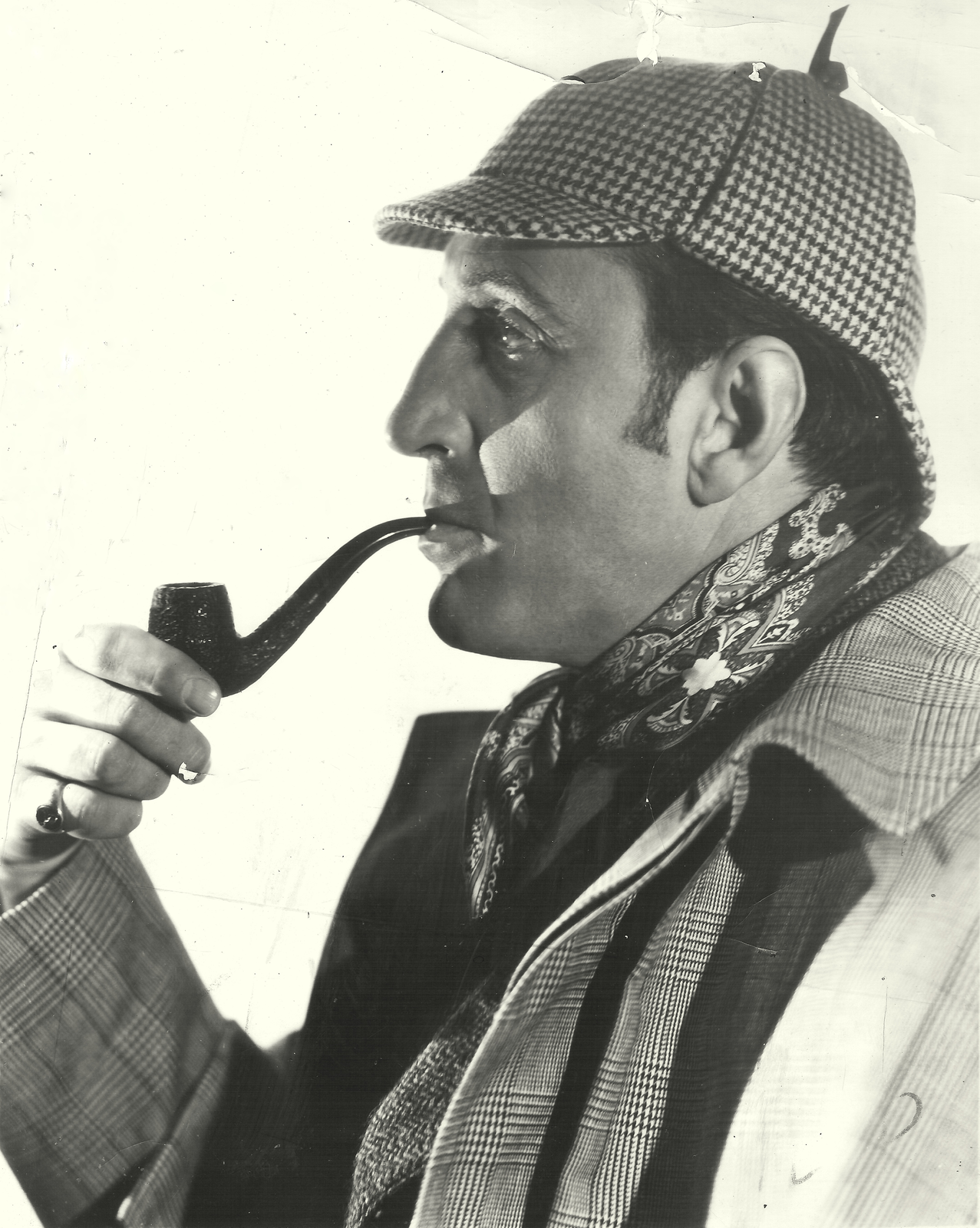
Tajemnica złotego pince-nez (fragment)Stanley Hopkins wyjął z kieszeni mały pakunek, owinięty w papier. Po rozwinięciu ukazało się naszym oczom złote pince‑nez z dwoma kawałkami czarnego, jedwabnego sznurka, zwieszającego się z obu końców.
– Willoughby Smith miał dobry wzrok – zauważył detektyw, wskazując na zawartość papieru. – Nie ulega wątpliwości, że należy to do mordercy. Holmes wziął szkła do ręki i badał je z wielką uwagą i żywym zainteresowaniem. Nasadził na nos i próbował czytać, potem podszedł do okna i wyjrzał na ulicę, następnie obejrzał pince‑nez w pełnym świetle lampy. W końcu zaśmiał się krótko pod nosem, usiadł przy stole i napisał kilka zdań na papierze, który wręczył inspektorowi Hopkinsowi ze słowami:
– To najlepsza rada, jakiej mogę panu udzielić. Może przyda się panu na coś.
Zdziwiony detektyw odczytał głośno, co następuje:
– „Poszukuje się kobiety o dobrych manierach i wykwintnie ubranej. Posiada ona szczególnie gruby nos i blisko siebie osadzone oczy. Czoło zmarszczone, ostry wyraz twarzy, plecy prawdopodobnie skrzywione. Pewne szczegóły wskazują na to, że w ostatnich dwóch miesiącach była dwa razy u optyka. Ponieważ używa szkieł bardzo silnych, a optyków jest niewielu, zatem nietrudno będzie odnaleźć jej ślad”.
Holmes zaśmiał się, widząc zdumienie Hopkinsa. Muszę się przyznać, że i ja byłem zdziwiony.
– Cała ta dedukcja jest niezwykle prosta – rzekł. – Według mnie nie ma przedmiotu bardziej nadającego się do badań niż pince‑nez, i to tak specjalne pince‑nez jak to. Jest własnością kobiety, to wynika z jego wykonania i ostatnich słów umierającego sekretarza. Ze złotej, kunsztownej oprawy wnoszę, że należy do kobiety o dobrych manierach, wytwornie ubranej. Kabłąki są silnie rozstawione, więc nos jej u nasady musi być bardzo gruby. Nosy tego gatunku są zazwyczaj krótkie, lecz zdarzają się wyjątki, więc przy tym twierdzeniu nie będę się zbytnio upierał. Ja sam mam wąską twarz, a jednak szkła są dla mnie ułożone za blisko. Wynika z tego, że oczy naszej damy muszą być blisko siebie osadzone. Możesz się przekonać, Watsonie, że szkła są wklęsłe i bardzo silne. Kobieta, która przez całe życie jest tak krótkowidząca, musi nosić ślady tej ułomności na czole w postaci zmarszczek i mieć skrzywione plecy.
– Tak – odparłem. – Twoje argumenty są niezwykle jasne. Przyznaję jednak, że nie wiem, z czego wnioskujesz o dwukrotnym odwiedzeniu optyka.
Holmes wziął ponownie pince‑nez do ręki.
– O ile ci wiadomo – wyjaśnił – kabłąki pokryte są pasemkami korka w celu złagodzenia ucisku na nos. Jedno pasemko jest brudne i zatłuszczone, drugie natomiast nowe. Widocznie niedawno zostało założone. Tamto zaś zostało zmienione nie dalej jak przed kilkoma miesiącami. Obydwa są takie same i wykonane identycznie, mogę więc założyć, że obie naprawy zostały wykonane w tym samym sklepie.
– Na Boga, to cudowne! – zawołał Hopkins z najwyższym podziwem. – Pomyśleć, że wszystko to miałem w ręku i nie wiedziałem o niczym! Ale w każdym razie chciałem obejść wszystkich londyńskich optyków.
– Oczywiście, mógł pan to zrobić. Czy ma pan jeszcze coś do powiedzenia w tej sprawie?
– Nie, panie Holmes. Myślę, że pan wie teraz tyle samo co ja, a prawdopodobnie nawet więcej. Wybadaliśmy też, czy nie widziano jakiejś obcej osoby na stacji kolejowej lub na drodze. Nie widziano nikogo. Najbardziej martwi mnie brak jakiegokolwiek motywu zbrodni; już skłonny jestem przypuścić, że maczał w tym palce jakiś duch!
– Niestety, w tym kierunku nie mogę służyć panu pomocą. Przypuszczam, że chce pan, abyśmy jutro udali się tam razem?
– Tak, jeśli nie odmówi pan mojej prośbie, Mr Holmes. O godzinie szóstej rano odchodzi pociąg z Charing Cross do Chatham. W Yoxley Old Place będziemy między dziewiątą a dziesiątą.
– Wobec tego pojedziemy tym pociągiem. Pańska sprawa zawiera wiele ciekawych punktów i z chęcią rozpatrzę ją bliżej. A teraz przydałoby się kilka godzin snu, jest już blisko pierwsza. Pan może położyć się na sofie koło kominka, tu jest lampka. Jutro rano dostanie pan filiżankę kawy.Source: [w:] Arthur Conan Doyle, Tajemnica złotego pince-nez (fragment), tłum. Witold Engel, Jan Stanisław Zaus, Poznań 1988, s. 11–13.
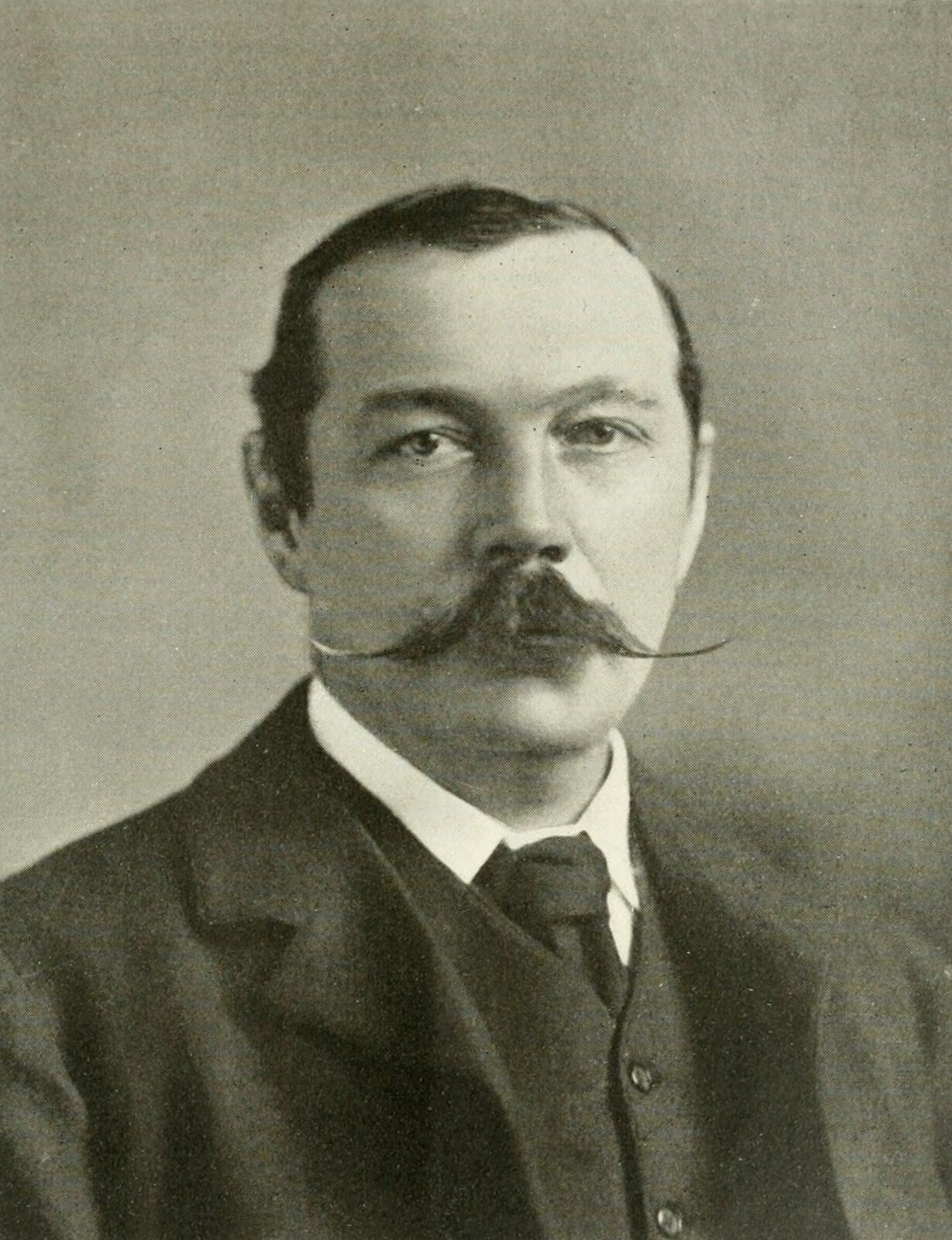
Arthur Conan Doyle (1859‑1930) was a Scottish writer and poet, known,above all, as the author of crimecrime stories about Sherlock Holmes and doctor John Watson. The first story – A Study in Scarlet – was published in 1887. Among Doyle’s literary achievements we can find also adventure, historical and science fiction works.
Using information from the story decide which of the sentences below are true and which are false. In the text mark the quotes that will justify your opinion.
Holmes watches the pince-nez vaguely and without interest., The conversation between Holmes, Watson and Hopkins takes place at night., Deduction took Holmes a lot of time and was very difficult for him., Holmes is not interested in further investigation of this case., Sherlock Holmes wrote all his conclusions on the piece of paper., Holmes is equally sure of all his conclusions., The real owner of the pince-nez is Stanley Hopkins who consults Holmes., In this fragment, dialogue dominates narration., The hint that let Holmes to conclude that pince-nez owner has a curved back was the woman’s very strong visual impairment., Every time the pince-nez was broken the woman used the services of the same optician., The murder victim in the story was a woman.
| True | |
|---|---|
| False |
What conclusions did Sherlock Holmes drew from watching the pince-nez? Characterise the person who owned the item. Write the informations below.

Discuss in pairs in what situations the ability of logical thinking can be useful.
Do you want to test your deduction skills?
Exchange with your colleague one item (i.e: notebook, pencil case etc.), then write down all the conclusionsconclusions about the item owner that you can come to after inspecting his/her property. Remember that your conclusions should be justified in a logical and convincing way. Try to use only information that are provided by the item you examine.
Can conclusions formulated by you in the previous exercise, and those deducted by Sherlock Holmes in a story, be considered to be facts? Or do they remain more or less convincingly justified assumptions, that should be additionally confirmed before we consider them to be completely reliable and true?
Determine if the sentences below are facts or presumptions.
Noses that are thick at the nasal bone are usually short., Mr Smith didn’t wear glasses., Judging by the golden, crafted frame I may say that they belong to an elegant woman., The owner might have forgotten her glasses in a hurry., These glasses have very strong lenses., Both repairs were probably done by the same optician., The train from Charing Cros to Chatham leaves at 6am.
| Facts | |
|---|---|
| Presumptions |
Think about words and constructions that are used to express presumptions or uncertainty.
Stories and novels by Arthur Conan Doyle in which the main character is Sherlock Holmes are classic example of crime prose (crime story or crime novelcrime novel) These compositions – just like the famous novels by Agatha Christie who brought to literary life fictional characters of Hercules Poirot and Miss Jane Marple – are sometimes called detective stories or detective novels.
Can you list the crime prose features? Who is the main character? What is the plot about? What can be its solution?

Keywords
detective novel, crime novel, deduction, Sherlock Holmes, detective
Glossary
detektyw
powieść detektywistyczna
powieść kryminalna
dedukcja
fakt
przypuszczenie
wnioskowanie
zagadka
morderstwo
intryga
zbrodnia