Skin
the human body consists of cells, tissues, organs and organ systems;
an organ's structure depends on its function.
explain and give examples that skin functions depend on its structure;
interpret the condition of the skin – causes of its paleness or redness;
assess whether it is worth sunbathing intensively;
explain whether sweating is an uncomfortable nuisance or a necessary function of the skin.
Protective function of the epidermis
SkinSkin consists of three layers of a different thickness – the epidermis, the dermis and the subcutaneous tissue. EpidermisEpidermis is made of the epithelial tissue. Its tightly arranged cells create a barrier for bacteria, fungi and other harmful factors. The cells of the epidermis are arranged in layers. In the deepest part there is the reproductive layer, on the outside there is the horny layer of the skin. The cells of the reproductive layer divide all the time, and the newly formed generations of cells move outside and die over time. They are filled with keratin, protein that is impermeable to water and pathogens.
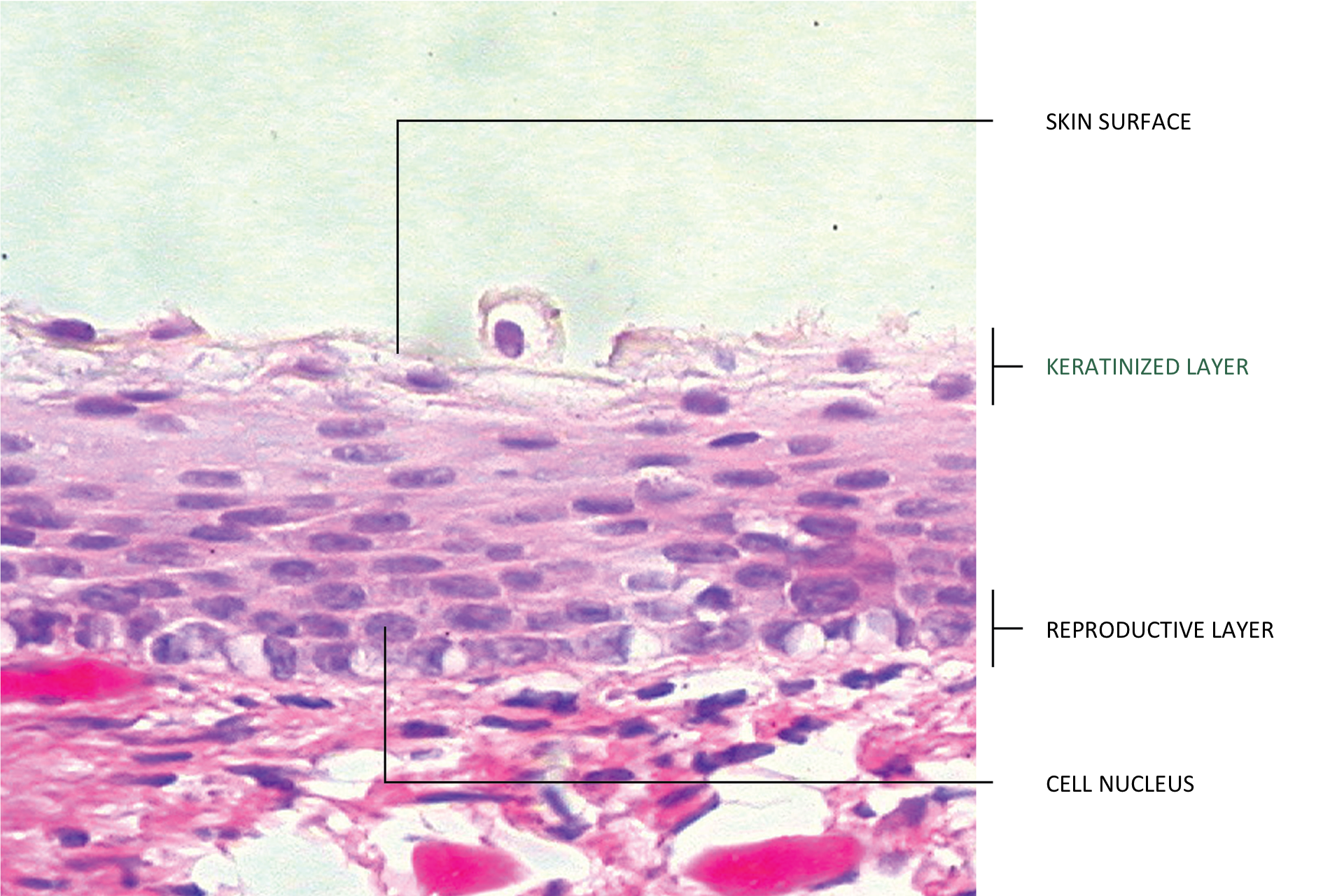
Dead epidermal cells constantly peel off, and microbes, sebum and dust are removed from the skin surface along with them. The thickness of the horny layer depends on its location. It is the thickest where it is more exposed to mechanical factors and greater friction, e.g. on the underside of the foot's surface.
The importance of melanin
Between the cells of the epidermis pigmented cells are located, which contain a brown dye – melaninmelanin. The greatest amount of this dye is found in indigenous people in environments where solar radiation is very intense. Its presence determines not only the colour of the skin, hair and eyes, but it also protects the genetic material of deeper cells against the harmful effects of UV radiation. However, complete skin isolation from sun is not recommended. Sunlight plays an important role in the synthesis of vitamin D3, which is responsible for calcium management of the body and a proper development of the skeletal system.
Explain why the skin of European people has a small amount of brown dye.
Dermis and subcutaneous tissue
The dermis contains protein fibres that give it elasticity and mechanical strength. Numerous blood vessels supply skin cells with nutrients, discharge cell metabolism products and participate in processes of thermoregulationthermoregulation.
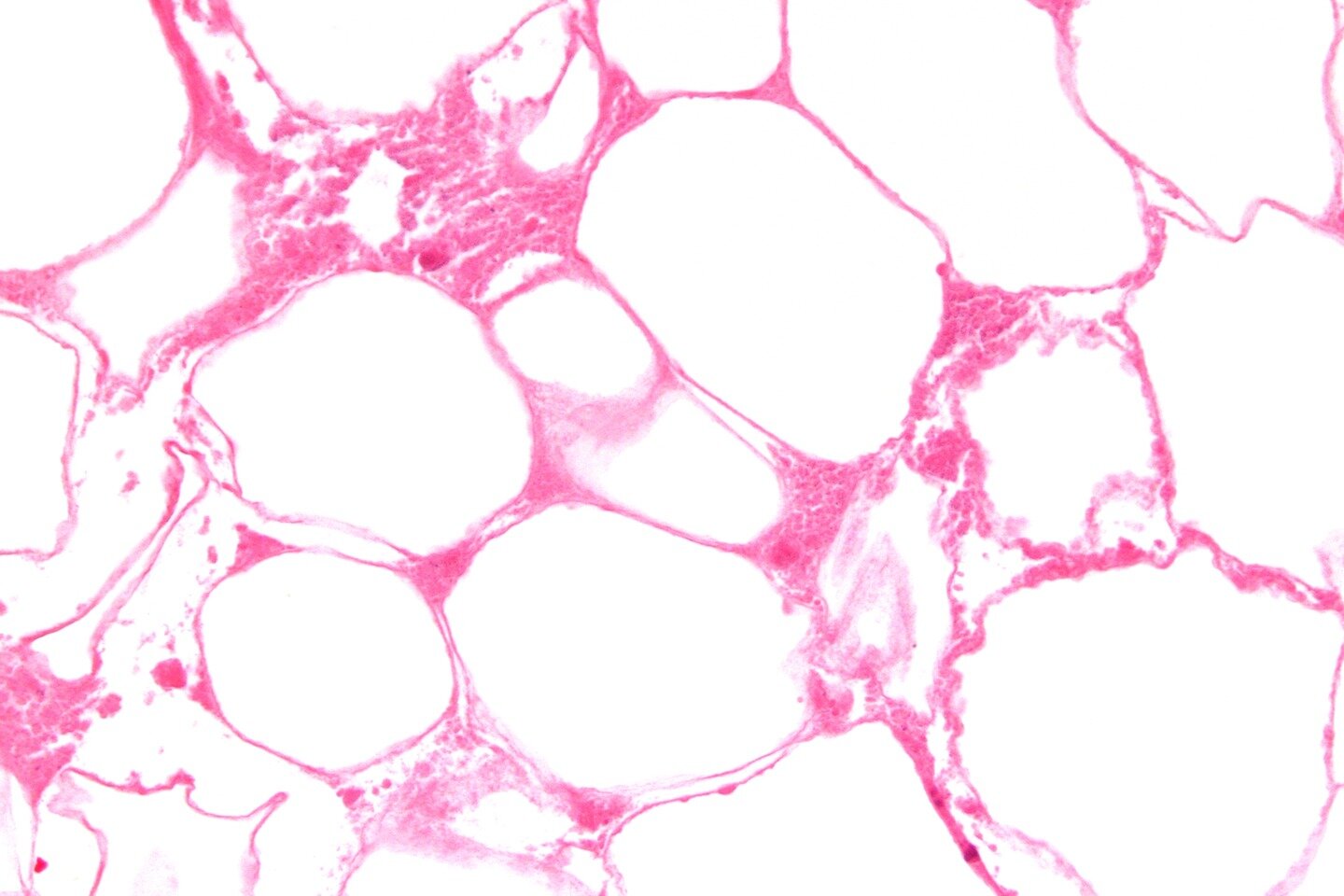
In this layer there are cells that receive the stimuli of pain, touch, pressure and temperature from the external environment. Their largest clusters are on the fingertips and on the lips. The subcutaneous layer is made of fat cells. Its thickness depends on the position in the body, the way of eating, lifestyle, gender. It protects deeply located tissues against mechanical injuries. It is also a thermal insulation layer, and a storage of chemical compounds.
How are the touch receptorsreceptors located in the skin?
The receptors are more dense on the finger than in other body parts.
a compass with an adjustable leg spacing,
ruler;
Cover your friend’s eyes and use the compass to check the sensitivity of the skin.
Simultaneously, use the compass which is spaced at 2, 4, 8, 12, 20 mm to touch the skin of the friend's fingertip, neck and forearm in the places chosen by you.
Ask if the examined person feels 1 or 2 touches.
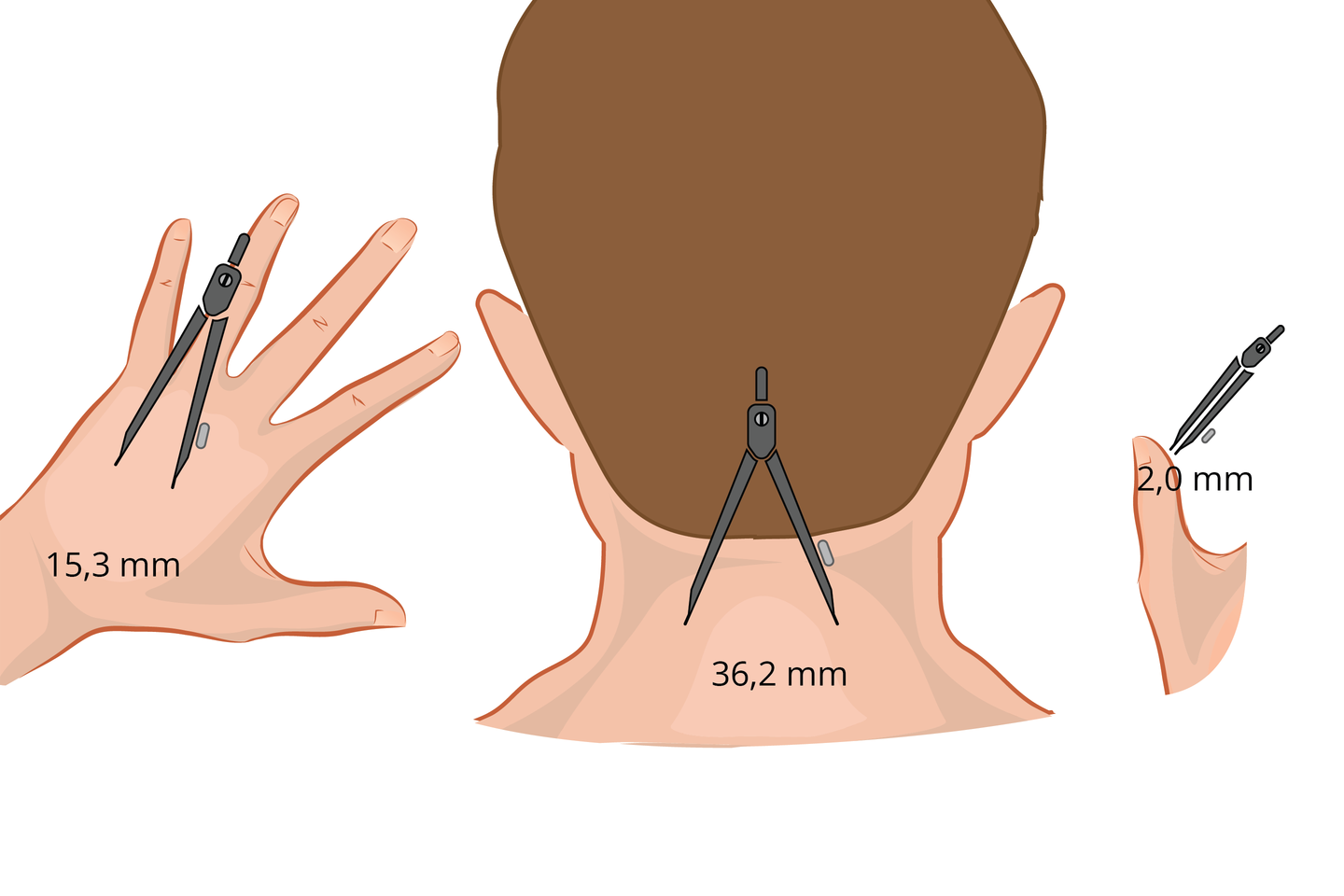
If the touch using the compasses spaced 8 mm apart was felt on the forearm as 1 sting, and on the fingertip as 2, the distance between the receptors is greater on the forearm.
Explain:
why the above experience cannot be carried out on yourself,
why the person who was touched by the compass was blindfolded.
Hair and nails
Products of the epidermis are, among others, hair and nails. The hair consists of two parts: a shaft protruding above the skin surface and a root immersed in the subcutaneous tissue. The shaft is formed of dead cells filled with keratin and water. In the root there are reproductive cells responsible for the growth of the hair and dye cells. The hair root adheres to the hair erector muscle, which, when contracting, causes goose bumps and stiffening (putting up) of hair. Raised hair together with the layer of air between them reduce the loss of heat from the body. The hair covers the scalp most abundantly protecting it against heat loss and overheating.
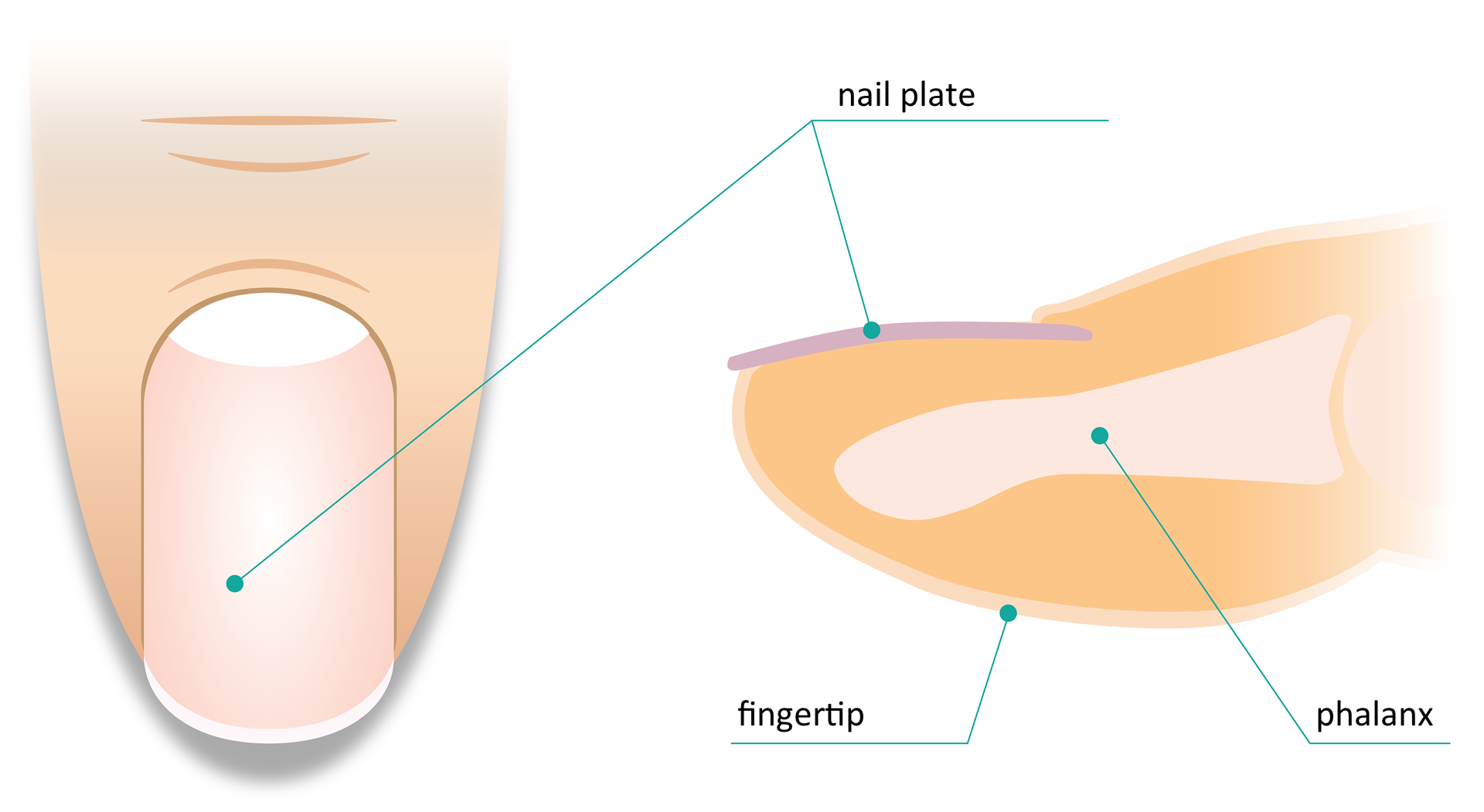
On the outer surface of the fingers the epidermis produces hard plates – nails that protect the fingertips against injury.
Skin glands
Sebaceous glands occur in the close vicinity of the hair. Sebum that is produced by the glands contains fatty substances that protect the hair against drying and breaking, provide elasticity of the skin and prevent the penetration of pathogenic microorganisms into the body.
Sweat glands give off sweat, which mainly contains water. This, having high evaporation heat, rises from the surface of the skin and cools it. Sodium chloride present in the secretion of sweat glands gives the skin a salty taste. Along with sweat, some unnecessary metabolic products, such as uric acid, are removed from the body, which gives the skin an acid reaction. Thanks to this, some pathogenic microorganisms for which such an environment is unfriendly do not pose a threat to humans.
Mammary glands are activated in women after childbirth. Their secretion is milk containing protein, sugars and fats, immune substances, vitamins and other ingredients necessary for a proper growth and development of a child in the first months of life.
Describing the excretion of sweat.
magnifier,
paper towel.
After intense physical exercise, when your body is covered with sweat, wipe the fingertip thoroughly.
Observe the fingerprints on the finger with the magnifying glass and the small cavities.
Observe the formation of sweat drops.
If drops of liquid appeared above the cavities on the ridge of the fingerprints, this means that the observed holes are the mouths of the sweat glands.
Supplementing the text with the given options.
Thermoregulation, pathogenic microorganisms, radiates, sebaceous glands, lower, pH, Hair, epidermis, not conducive, receptors, cells, shrunken, blood vessels
The .................................................. is a barrier against the penetration of .................................................. and water loss because it is made of several layers of .................................................. adjoining each other. .................................................. protects against heat and loss. The .................................................. secrete an oily substance that prevents the penetration of pathogenic microorganisms into the body. .................................................. is .................................................. to the development of pathogenic microorganisms.
.................................................. is a way of adapting to the environment. When the skin is hot, it radiates excess heat. This is done thanks to expanded .................................................. in the dermis. A lot of blood flows through it, which cools in the skin in contact with cool air. When it is cold, the skin .................................................. little heat. Then, thanks to .................................................. blood vessels, little blood reaches the skin, so the loss of heat is ................................................... There are .................................................. in the skin that are used to receive stimuli, pressure, pain, and heat and cold. They inform about what is happening in our environment.
Match the pairs: English words with Polish definition.
komórka odbierające informacje z otoczenia; przekształca energię bodźca w impuls nerwowy, zespół mechanizmów fizjologicznych oraz odpowiednich zachowań pozwalających utrzymać stałą temperaturę ciała, narząd pokrywający ciało kręgowców, chroniący przed wpływem środowiska zewnętrznego, zapewniający z nim kontakt, odpowiedzialny za wydalanie, termoregulację, wrażliwość, zewnętrzna warstwa skóry pełniąca funkcję ochronną, brunatny barwnik występujący u ludzi w skórze, włosach i tęczówce, chroniący przed promieniowaniem ultrafioletowym
| melanin | |
| epidermis | |
| receptor | |
| skin | |
| thermoregulation |
Summary
The skin is the body’s coating.
Cells of the external layer (epidermis) constantly exfoliate and help to remove dirt and pathogenic germs from the skin surface.
Melanin contained in epidermal cells forms a natural protective filter against harmful UV radiation.
Epidermis products – hair, nails and glands support the protective function of the skin
Explain how the secretion from excretion differs.
Keywords
skin, melanin, epidermis, dermis, skin glands
Glossary
melanina – brunatny barwnik występujący u ludzi w skórze, włosach i tęczówce, chroniący przed promieniowaniem ultrafioletowym
naskórek – zewnętrzna warstwa skóry pełniąca funkcję ochronną
receptor – komórka odbierające informacje z otoczenia; przekształca energię bodźca w impuls nerwowy
skóra – narząd pokrywający ciało kręgowców, chroniący przed wpływem środowiska zewnętrznego, zapewniający z nim kontakt, odpowiedzialny za wydalanie, termoregulację, wrażliwość
termoregulacja – zespół mechanizmów fizjologicznych oraz odpowiednich zachowań pozwalających utrzymać stałą temperaturę ciała