Przeczytaj
The picture below shows young people at an art gallery, contemplating some works of art. In this section, you are going to read a text introducing you to various art movements and outlining their characteristics. Did you know that the word “impressionism” was first used in a satiric review by a conservative art critic as an insult to Monet’s unconventional work? Now, it is associated with art which is admired by many art lovers all over the world.
Poniższe zdjęcie przedstawia młodych ludzi podziwiających obrazy w galerii sztuki. W tej sekcji przeczytasz tekst, który wprowadzi cię w zagadnienia dotyczące różnych kierunków artystycznych i w skrócie przybliży ich cechy charakterystyczne. Czy wiesz, że wyraz „impresjonizm” został po raz pierwszy użyty w satyrycznej recenzji konserwatywnego krytyka sztuki jako obelga dla niekonwencjonalnego dzieła Moneta? Obecnie nazwa ta kojarzy się z kierunkiem malarskim, który jest podziwiany przez wielu miłośników sztuki na całym świecie.
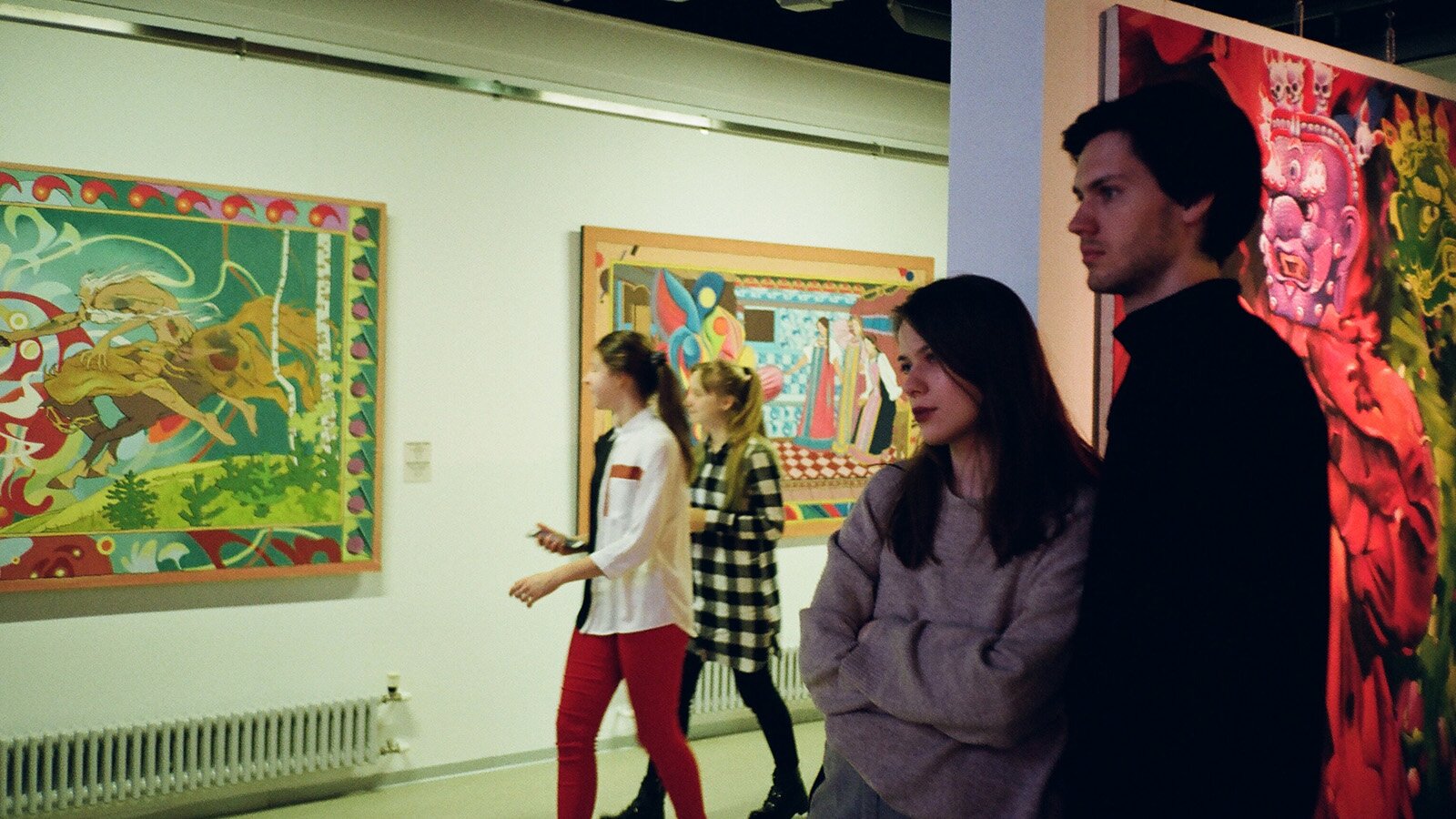
Read the text and find out what styles and art movements you can find in an art gallery.
Treasures of ArtWelcome to the Fine Arts Gallery. It is quite small when compared to huge national or royal galleries, but our collection of old mastersold masters and modern artmodern art will give you an insight into the world of art in a condensed, yet pleasant way. Since I dealt with curating the exhibitioncurating the exhibition, I will try to tell you a bit about the most important exhibitsexhibits. Let us begin our trip.
In the first room, there are works by Renaissance artists. They painted their subjects using a mix of accurateaccurate and believable proportions and spaces in order to create a very realistic representation of the world, which was something new in art. The oldest paintings here date fromdate from the 16th century. You can see the use of very interesting new techniques, like linear perspective,linear perspective, trompe l’oeiltrompe l’oeil or foreshorteningforeshortening, whose aim was to present people and objects as three‑dimensional and to create an optical illusion of depthillusion of depth. Artists of this epoch achieved great realismrealism in painting portraitsportraits and still lifestill life, in part due to the use of oil paintsoil paints, which allowed a richer colour palettecolour palette than temperatempera or frescofresco. Although most paintings showed religious or mythological scenes, you can also find non‑religious individual portraits, usually of people who were rich and famous or just interesting subjects to the painters, Mona Lisa by Leonardo da Vinci being the most well‑known example.
Here, in the second room, you can admire the works of Baroque artists. Their art appealed to the public because they identified with ordinary people, showing them with emotions and dramatic expressions visible on their faces. However, they also painted landscapeslandscapes and still lifes. Theatrical light and heavy contrast between light and dark is another characteristic feature often used in their paintings, making them look as if they had a spotlightspotlight, like in The Nightwatch by Rembrandt.
The next art movementart movement you can see is Rococo art, characterised by pastel colourspastel colours and playfulness. It focused on depicting lovey‑doveylovey‑dovey themes and aristocracy at home or at play, usually in pastoral landscapespastoral landscapes. This form of art was not intellectually deep or provocative, and you can see that even the size of paintings was much smaller, which made them ideal for decoration. This style contrasted with the next movements, here on the right: Neoclassical art with clear and sharp outlines and people draped in flowing Greek robes or Roman togas, looking like marble statues; and Romanticism, focusing on nature and often presenting mystical seascapesmystical seascapes painted not only as oil paintingsoil paintings, but also as watercolourswatercolours.
This room is all about modern art, not to be confused with contemporary artcontemporary art, and houses masterpiecesmasterpieces by Impressionists, characterised by visible brushstrokesbrushstrokes on the canvascanvas, which give a texturetexture to the painting. The paintings depictdepict outdoor scenes, including rivers, railroads, factories, cityscapescityscapes, seascapes and landscapes. The artists were fascinated with the effects of colour and light in nature and tried to capturecapture them in their paintings. Next to the Impressionists’ works, we also have some representatives of SymbolismSymbolism, which used objects as symbols representing abstract ideas. Most of them show death, monsters, demons or angels, which are present even in artists’ self‑portraitsself‑portraits. You can also see the only abstract paintingabstract painting we have, which is our latest treasuretreasure.
We finish our tour in this last room, where you can see some exhibits of tools typically used by artists: an easeleasel, canvas, coloured pencilscoloured pencils, some paints and brushesbrushes, charcoalcharcoal and different types of paper for creating sketchessketches, palettepalette and palette knivespalette knives for mixing colours and two optical devices used by old masters, that is the camera obscuracamera obscura and the camera lucida.camera lucida. Our gallery doesn’t exhibit any sculptures, carvingscarvings or etchingsetchings, but if you are interested in these forms of art, I can recommend a few places. I hope you have enjoyed this walk.
Źródło: Agnieszka Sękiewicz‑Magoń, licencja: CC BY-SA 3.0.
a) their paintings referred to religion and mythology.
b) they created individual portraits.
c) their paintings were true-to-life and proportional.
2. Which sentence is true about Baroque painters?
a) They used drama and light and dark shadows in portraits and other
artistic forms.
b) Their paintings are very light.
c) They only painted portraits of common people.
3. How did Rococo art differ from Baroque art?
a) It depicted landscapes.
b) It showed only home scenes.
c) It focused on a different social group.
4. How does Impressionism stand out from other art movements?
a) It concentrates on different types of landscapes.
b) It shows artists' brushwork.
c) It accentuates light.
5. What kind of text is this?
a) An article in an art magazine.
b) A speech by an art curator.
c) A podcast about art.
2. The gallery exhibits the works of both modern artists and 1. self-portrait, 2. pastoral landscapes, 3. watercolours, 4. palette, 5. texture, 6. frescos, 7. old masters, 8. seascapes, 9. depth.
3. I like the works of Turner, whose 1. self-portrait, 2. pastoral landscapes, 3. watercolours, 4. palette, 5. texture, 6. frescos, 7. old masters, 8. seascapes, 9. depth often depict a rough sea or rivers.
4. Shouldn’t you wash the 1. self-portrait, 2. pastoral landscapes, 3. watercolours, 4. palette, 5. texture, 6. frescos, 7. old masters, 8. seascapes, 9. depth before you start painting another picture?
5. These old Italian 1. self-portrait, 2. pastoral landscapes, 3. watercolours, 4. palette, 5. texture, 6. frescos, 7. old masters, 8. seascapes, 9. depth painted on the walls of the church are beautiful.
6. The artist probably painted this 1. self-portrait, 2. pastoral landscapes, 3. watercolours, 4. palette, 5. texture, 6. frescos, 7. old masters, 8. seascapes, 9. depth using a mirror.
7. The shadows in the painting help to achieve the effect of 1. self-portrait, 2. pastoral landscapes, 3. watercolours, 4. palette, 5. texture, 6. frescos, 7. old masters, 8. seascapes, 9. depth.
8. When you come closer, you will be able to see the 1. self-portrait, 2. pastoral landscapes, 3. watercolours, 4. palette, 5. texture, 6. frescos, 7. old masters, 8. seascapes, 9. depth of the painting and some details of the brushwork.
Type your answers to each question in 2–3 sentences.
Which of the art movements is the most interesting to you and why?
Do you go to art galleries? Why? Why not?
Is interpreting works of art difficult for you? Why? Why not?
Słownik
/ ˈæbstrækt ˈpeɪntɪŋ /
obraz abstrakcyjny
/ ˈækjərət /
dokładnych [dokładny/dokładna], wiernych [wierny/wierna]
/ ɑ:t kjʊəˈreɪtə /
kurator/kuratorka wystawy
/ ɑ:t ˈmuːvmənt /
ruch artystyczny
/ ˈbrʌʃɪz / / brʌʃ /
pędzle [pędzel]
/ ˈbrʌʃstrəʊk / / ˈbrʌʃstrəʊk /
pociągnięcia pędzlem [pociągnięcie pędzlem]
/ ˈkæmərə luːˈtʃiːdə /
widnia optyczna (przyrząd optyczny, dzięki któremu rysowany obiekt jest widoczny na pulpicie)
/ ˌkæmərə əbˈskjʊərə /
camera obscura (pierwowzór aparatu fotograficznego; prosty przyrząd optyczny pozwalający uzyskać rzeczywisty obraz)
/ ˈkænvəs /
płótno
/ ˈkɑːvɪŋz / / ˈkɑːvɪŋ /
rzeźby [rzeźba]
/ ˈkæptʃə /
uchwycić
/ ˈtʃɑːkəʊl /
węgiel do rysowania
/ ˈsɪtiskeɪps / / ˈsɪtiskeɪp /
pejzaże miejskie [pejzaż miejski]
/ ˈkʌlə ˈpælɪt /
paletę kolorów [paleta kolorów]
/ ˈkʌləd ˈpensl̩z / / ˈkʌləd ˈpensl̩ /
kredki [kredka]
/ kənˈtemprəri ɑːt /
sztuka współczesna
/ ˈkjʊərɪtɪŋ ði ˌeksɪˈbɪʃn̩ / / ˈkjʊərət ən ˌeksɪˈbɪʃn̩ /
organizowanie wystawy [organizować wystawę], bycie kuratorem/kuratorką wystawy [być kuratorem/kuratorką wystawy]
/ deɪt frɒm /
sięgają, datują się od [sięgać, datować się od]
/ dɪˈpɪkt /
przedstawiają [przedstawiać]
/ ˈiːzl̩ /
sztaluga
/ ˈetʃɪŋz / / ˈetʃɪŋ /
akwaforty [akwaforta], kwasoryty [kwasoryt]
/ ɪɡˈzɪbɪts / / ɪɡˈzɪbɪt /
eksponatach [eksponat]
/ fɔːˈʃɔːtn̩ɪŋ /
skrót perspektywiczny
/ ˈfreskəʊ /
fresk
/ ɪˈluːʒn̩ əv deptheta /
złudzenie głębi
/ ˈlændskeɪps / / ˈlændskeɪp /
pejzaże [pejzaż]
/ ˈlɪnɪə pəˈspektɪv /
perspektywa linearna
/ ˌlʌvi ˈdʌvi /
przesłodzone, ckliwe
/ ˈmɑːstəpiːsɪz / / ˈmɑːstəpiːs /
arcydzieła [arcydzieło]
/ ˈmɒdn̩ ɑːt /
sztuka nowoczesna
/ ˈmɪstɪkl̩ ˈsiːskeɪps / / ˈmɪstɪkl̩ ˈsiːskeɪp /
mistyczne pejzaże morskie [mistyczny pejzaż morski]
/ ˈoɪl peɪntɪŋz / / ˈoɪl peɪntɪŋ /
obrazy olejne [obraz olejny]
/ ˈoɪl peɪnts / / ˈoɪl peɪnt /
farby olejne [farba olejna]
/ əʊld ˈmɑːstəz / / əʊld ˈmɑːstə /
starych mistrzów [stary mistrz]
/ ˈpælɪt /
paleta
/ ˈpælɪt naɪvz / / ˈpælɪt naɪf /
szpachle [szpachla]
/ ˈpæstl̩ ˈkʌləz / / ˈpæstl̩ ˈkʌlə /
pastelowe kolory [pastelowy kolor]
/ ˈpɑːstərəl ˈlændskeɪps / / ˈpɑːstərəl ˈlændskeɪp /
sielankowe, idylliczne pejzaże [sielankowy, idylliczny pejzaż]
/ ˈpɔːtrɪts / / ˈpɔːtrɪt /
portretów [portret]
/ ˈrɪəlɪzəm /
realizm (wierne odtworzenie rzeczywistości)
/ self ˈpɔːtrɪts / / self ˈpɔːtrɪt /
autoportrety [autoportret]
/ ˈsketʃɪz / / sketʃ /
szkiców, szkice [szkic]
/ ˈspɒtlaɪt /
światło reflektora punktowego (np. w teatrze)
/ ˈstɪl laɪf /
martwej natury [martwa natura]
/ ˈsɪmbəlɪzəm /
symbolizm
/ ˈtempərə /
tempera (rodzaj farby plakatowej)
/ ˈtekstʃə /
tekstura, faktura
/ ˈtreʒə /
skarb
/ trɒmp ˈdɔɪ, /
złudzenie optyczne
/ ˈwɔːtəkʌləz / / ˈwɔːtəkʌlə /
akwarele [akwarela]
Źródło: GroMar Sp. z o.o., licencja: CC BY‑SA 3.0