Przeczytaj
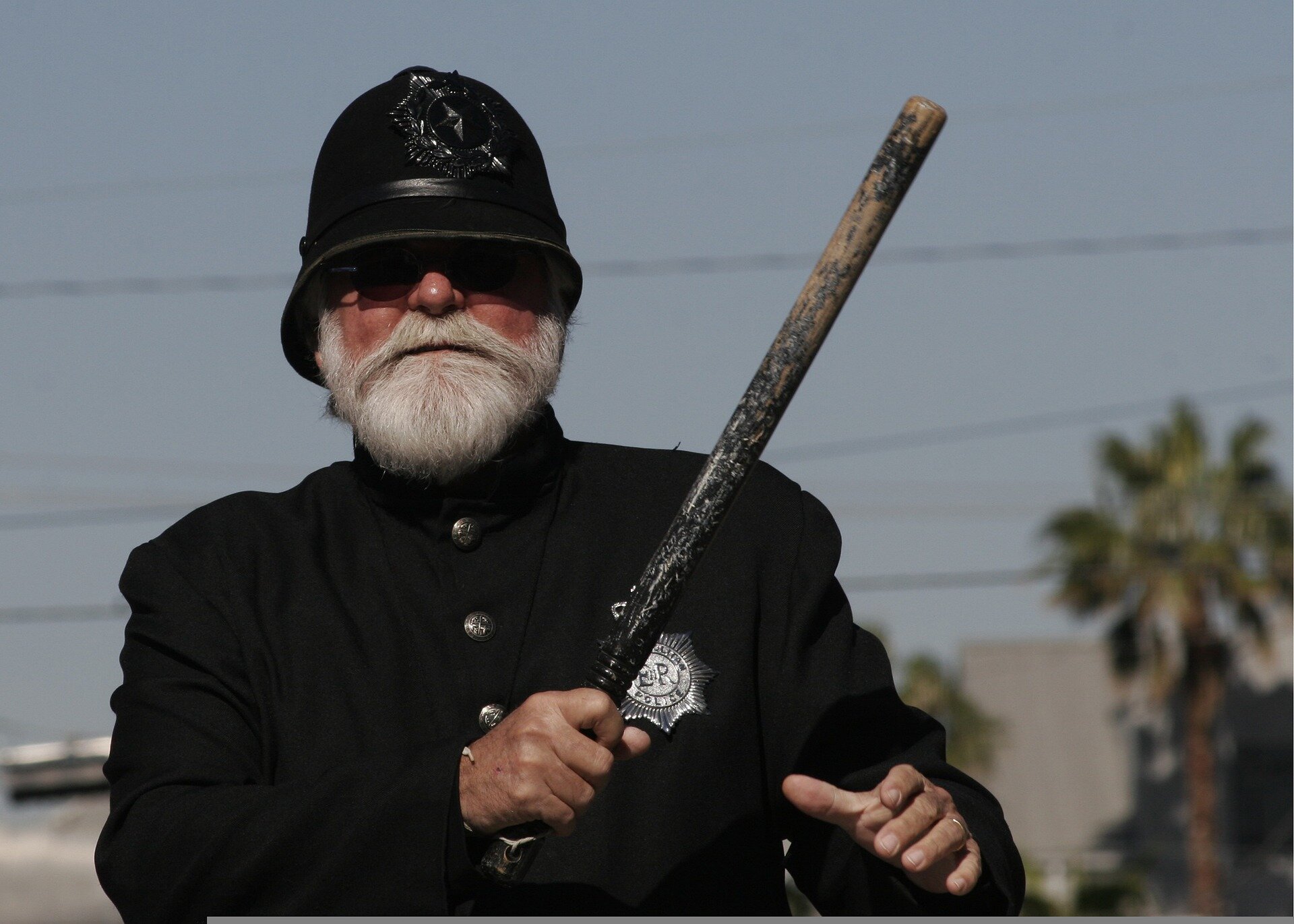
The picture below shows a typical British police officer, but he doesn't have a gun. Did you know that the majority of police officers in the UK are unarmed? Why? Is it safe? Read the text to find out.
Poniższe zdjęcie przedstawia typowego brytyjskiego policjanta. Czy wiesz, że większość policjantów w Wielkiej Brytanii nie jest uzbrojona? Dlaczego? Czy to bezpieczne? Przeczytaj tekst, aby się tego dowiedzieć.
Match the following words with their translations.
Match the words to the pictures to guess their meanings.
Police Without Guns - Does It Work?A.
A police officer chasingchasing criminals with a stickstick and putting them in handcuffshandcuffs is a common picture of the British police. Did you know that all policemen and policewomen are called “Bobbies”? It is after Sir Robert (Bobby) Peel, who establishedestablished the country's Metropolitan Police Force in 1829. In Great Britain it is difficult to see a British Bobby who is as heavily equipped as, for instance, police forcespolice forces in the United States. Nowadays, in the UK a growing part of the police force is armed to preventprevent terrorism. DespiteDespite that fact, over 90% of police officers are still without guns. Why?
B.
The great majoritymajority of UK police officers who respond to surveyssurveys say they want it to stay that way. There is a possibility to discuss the issue of arming UK police. Still, most members of the police force do not want to be armedarmed. They say that they didn't sign up forsign up for that. If not guns, what equipment do they have to protect people? Most police officers use such weapons as sticks, handcuffs, pepper spraypepper spray or firearmsfirearms. They also use other equipment that helps them at work, for example, bullet‑proof vestbullet‑proof vest or walkie‑talkiewalkie‑talkie. The chief police commanderchief police commander of the Greater Manchester Police, Sir Peter Fahy, claims that a police officer's „greatest weapon is their mouth.” This would include attempting to calm down a furiousfurious crowd, talking to a suicide jumpersuicide jumper from a cliff, or negotiating with an armed criminal.
C.
Generally, the debate about arming police officers is getting more attention. It is due to the increase in terrorist attacks, both globally and in the UK. The British police may become fully armed, although it is not certain. Only seven bullets were fired by police in England and Wales in the twelve months before March 2016. However, these official statistics do not include unplanned shootingsshootings, shooting at tyres, or killing ill or injured animals. Maybe words of the unarmedunarmed character of the British police, C. L. Dowbiggin, can best express the issue - “A notebook is to the policeman what a gun is to the soldier.”
Źródło: Dorota Giżyńska, licencja: CC BY-SA 3.0.
Read the text and match the titles with the correct paragraphs. There is one title that you don’t need to use.
Read the text again and choose the correct answer.
a) was one of the Bobbies.
b) started the London Police.
c) was an American police officer.
2. “Policing by consent” means that
a) every police activity must be successful.
b) every police officer agrees to serve the public.
c) citizens support the actions of the police forces.
3. “They say that they didn't sign up for that.” What does the word “that” refer to?
a) Carrying firearms
b) Answering questions
c) Not carrying guns
4. According to the text a police officer's "greatest weapon is their mouth." What does it involve?
a) Communicating with people
b) Shouting at criminals
c) Being silent in a dangerous situation
5. Which sentence is TRUE about the number of shootings by UK police?
a) There were less than ten.
b) Their exact number is not known.
c) There were seven until 2016.
6. Why does the author use a quote at the end of the text?
a) To say that police officers can use different equipment to protect people.
b) To express an opinion that police officers shouldn’t be allowed to have guns.
c) To encourage police officers to carry guns just like soldiers.
Read the text and choose the correct answer.
2. Police officers in the UK don’t carry guns, but they can put people in handcuffs truncheons.
3. The attacker was very aggressive, so the police officer had to use a stun gun pepper spray to send a shock wave to his nervous system.
4. The majority of police officers in the UK are armed gunless. It will probably stay like this in the future.
5. Official statistics don’t include unintentional batons shootings such as killing injured animals
Read the sentences and decide if they are true or false.
2. If there is an approval for something, people agree with it. True False
3. An example of a firearm is a gun. True False
4. Civilians are people who work for the police forces and the army. True False
5. An enraged mob is a crowd of angry people, usually on the street. True False
6. A suicide jumper is a policeman or a policewoman who saves people’s lives. True False
Answer the questions with 2‑3 sentences.
Who is a “Bobby” in the UK?
Why are most police officers in the UK unarmed?
Do you think it’s a good idea for police officers not to carry guns? Why? Why not?
Słownik
/ ɑːmd /
uzbrojony/uzbrojona
/ ˈbʊlɪtpruːf vest /
kamizelka kuloodporna
/ ˈtʃeɪsɪŋ / / tʃeɪs /
goniący/goniąca za kimś [gonić za kimś]
/ ˌʃef pəˈli:s kəˈmɑːndə /
główny komendant policji
/ dɪˈspaɪt /
pomimo
/ ɪˈstæblɪʃt /
założony/założona [zakładać]
/ ˈfaɪərɑːmz / / ˈfaɪərɑːm /
broń palna
/ ˈfjʊərɪəs /
wściekły, rozwścieczony
/ ˈhændkʌfs /
kajdanki
/ məˈdʒɒrɪti /
większość
/ ˈpepə spreɪ /
gaz pieprzowy
/ pəˈli:s ˈfɔːsɪz /
siły policyjne
/ prɪˈvent /
zapobiegać
/ ˈʃuːtɪŋz / / ˈʃuːtɪŋ /
postrzelenia, zastrzelenia [postrzelenie, zastrzelenie]
/ ˈsaɪn ˈʌp fɔː /
pisać się na coś
/ stɪk /
pałka
/ ˈsjuːɪsaɪd ˈdʒʌmpə /
osoba planująca samobójczy skok, np. z okna, dachu
/ səˈveɪz / / səˈveɪ /
badania [badanie], sondaże [sondaż]
/ ˌʌnˈɑːmd /
nieuzbrojony, nieuzbrojona
/ ˌwɔːkɪ ˈtɔːki /
krótkofalówka
Źródło: GroMar Sp. z o.o., licencja: CC BY‑SA 3.0