A tyrant or a genius. Napoleon's Empire
to indicate on the map the countries of the Napoleon’s Empire and its allies;
to describe the course of Napoleon's carrier, you will evaluate his political achievements;
to explain the reasons for Napoleon's fall.
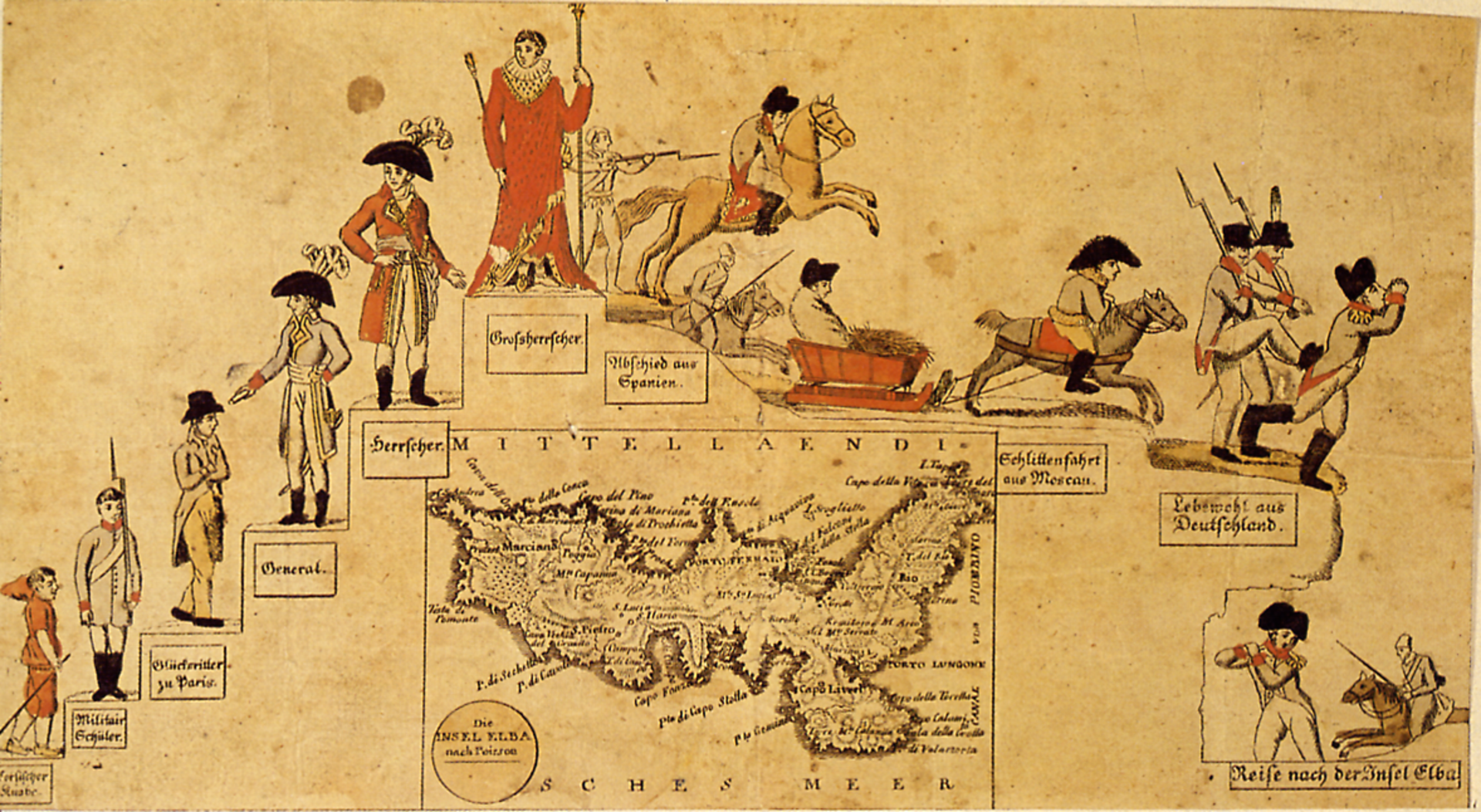
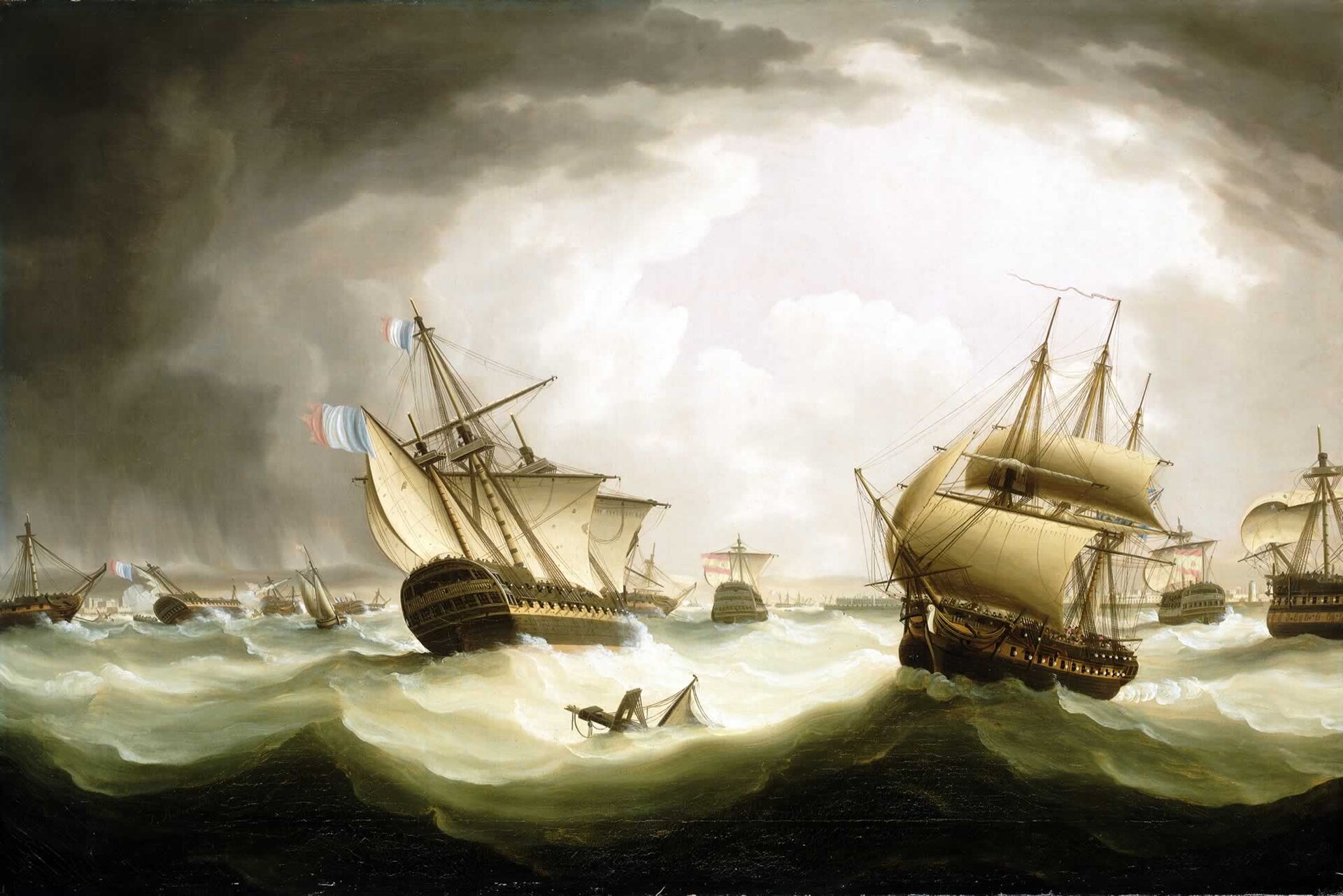
In 1796, Napoleon Bonaparte received the supreme command of the French army in Italy. He soon broke up the Austrian army stationed there and gave France control of this area. His popularity allowed him to take over power and remove the disgraced politicians of the Directory. During his reign, Napoleon waged wars against further anti‑French coalitions. He won at Austerlitz (1805) and Jena and Auertstedt (1806), among others. After losing the Battle of Trafalgar (1805), he announced a continental blockadecontinental blockade to weaken the position of England. In 1812, the French emperor went to war against Russia. The Great Napoleon's Army was completely crushed. After the defeat, Napoleon was sent to the island of Elba. He tried to regain the throne of France, returning in the spring of 1815 to the country. This event was named „one hundred days of Napoleon” in history. In June 1815 he lost the battle of Waterloo, during which he had Prussia and England as his opponents. After the defeat, he was interned for life on the Helena island.
Basing on the information from the lesson, sort the given moments of Napoleon's life in chronological order. You can find helpful the popular German caricature from 1814, which can be seen above.
- Napoleon I loses political influence in Germany.
- Napoleon is imprisoned on Elba.
- Napoleon Bonaparte takes over the office of a consul.
- Napoleon Bonaparte is crowned as the Emperor of France.
- Napoleon leaves Russia and the survivors of the Great Army.
- General Bonaparte is sent to the Italian front.
Familiarize yourself with the most important battles and treatises of the Napoleonic era. Pay attention to the consequences thereof.
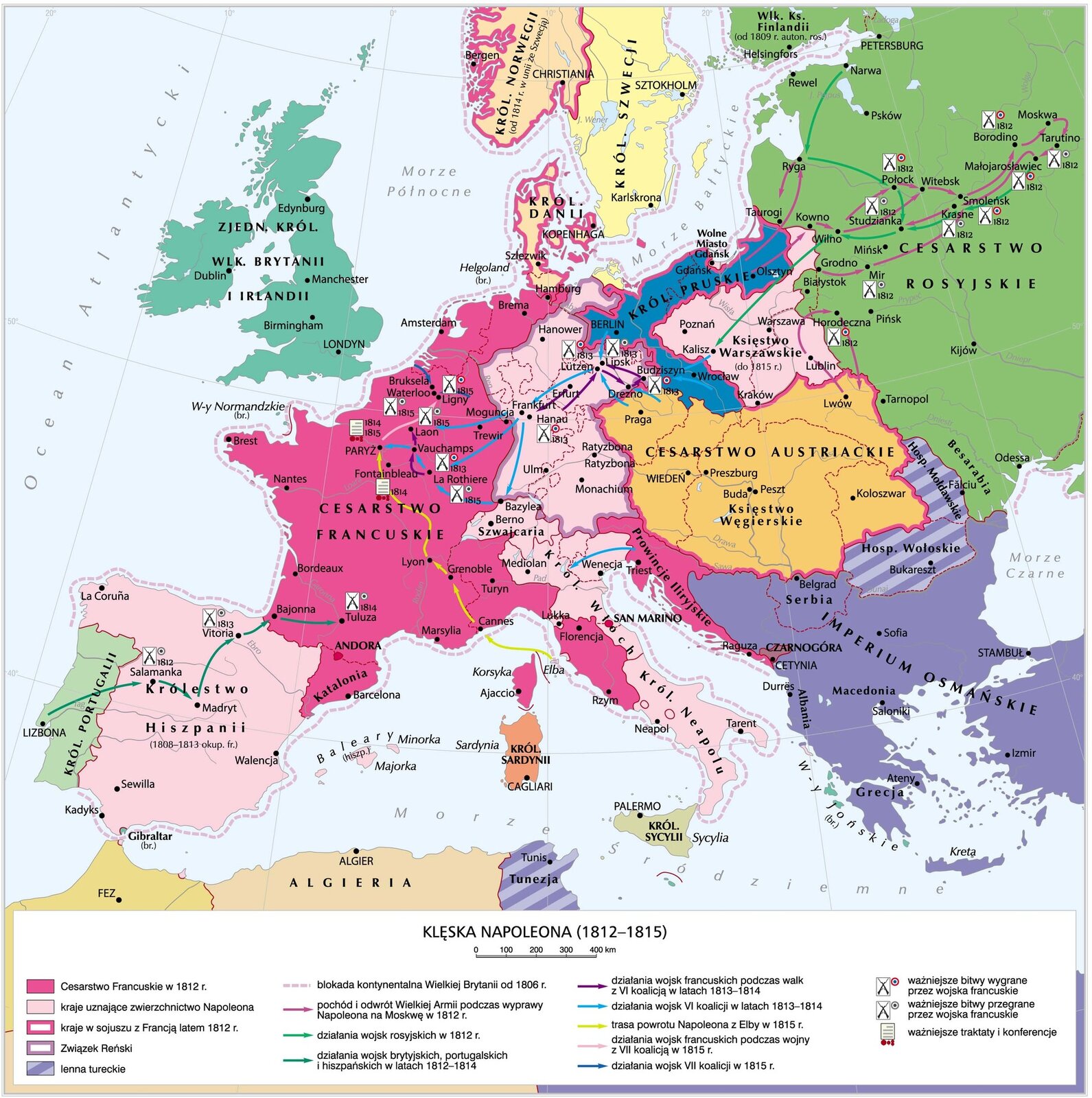
Using the legend of the above map, find among the names given below countries that were dependent on Napoleon in political terms.
- Kingdom of Spain
- Confederation of the Rhine
- Kingdom of Italy
- Kingdom of Naples
- Austrian Empire
- Russian Empire
- Kingdom of Prussia
- Duchy of Warsaw
Read the text below. Note down the information showing that Napoleon united Europe under his reign.
Napoleon's coronation as the emperor opened a new era in the history of Europe. This politician assumed imperial attitude, and all his political actions were conformed to it. Under his reign, France became a powerful power in the western and central part of the continent. At the beginning of 1812, the French Empire stretched from Lübeck in the north‑east of the continent to Rome in the south. Its easternmost foothold was the Duchy of Warsaw, inhabited by Poles. At that time, Europe had approximately 168 million inhabitants, 44 million of whom lived within the administrative borders of the French Empire, and 38 million - countries that recognized Napoleon's power. More than 80 million people, or half the population of Europe, were therefore under his rule.
Read the text below. Note down the differences between the French end English empire according to the historian cited below.
Mocarstwa świata: narodziny, rozkwit, upadekKażdy z tych krajów – jak wieloryb i słoń – był największym stworzeniem na swoim obszarze działania. Panowanie Brytyjczyków nad szlakami morskimi nie mogło jednak samo przez się zlikwidować hegemonii Francji w Europie, podobnie jak mistrzostwo wojenne Napoleona nie mogło zmusić wyspiarzy do kapitulacji. Co więcej, Francja swymi zdobyczami terytorialnymi i zmuszaniem do uległości sąsiadów wywołała znaczną do siebie niechęć. Rząd paryski nigdy nie miał pewności, czy inne państwa kontynentu będą się wiecznie godzić z istnieniem francuskiego imperium, skoro istnieje niezależna Wielka Brytania, mogąca dostarczyć subsydiów, broni, a nawet żołnierzy. Taki był najwyraźniej punkt widzenia Napoleona, kiedy w 1797 roku argumentował: „Skoncentrujmy nasze siły na budowie floty i zniszczeniu Anglii. Jeśli tego dokonamy, będziemy mieli Europę u swych stóp”. Francuzi mogli to jednak osiągnąć jedynie, stosując przeciwko Wielkiej Brytanii skuteczną strategię morską i handlową, ponieważ sukcesy militarne na lądzie do tego nie wystarczały. Dopóki jedna ze stron miała przewagę na lądzie, a druga na morzu, dopóty każda z nich czuła się zagrożona i niepewna, a więc każda rozglądała się za nowymi środkami i nowymi sojusznikami, by przechylić szalę na swoją stronę.
Source: Paul Kennedy, Mocarstwa świata: narodziny, rozkwit, upadek, Warszawa 1994, s. 132.
For the following legal and political decisions of Napoleon, match their socio-economic effects.
a pattern for other European countries, children are subject only to paternal authority, the possibility of civil marriages, loss of a key sales market by Russia, guarantee of individual's personal freedom, equalization of citizens before the law, the dominant role of a man in the family, women are subject to the husband's authority, the need to develop new branches of the economy, freedom of contracts, significant economic difficulties on the European continent, the high price of grain in Great Britain, increase in the importance of land trade routes in Europe, admissibility of divorces, development of contraband (smuggling)
| Continental blockade of 1806 | |
|---|---|
| The Napoleonic Code of 1804 |
Assess Napoleon's policy. Who did you think the French ruler was? What were his goals? Justify your choice: from the facts below select 3-5 that you think are the most important ones and place them on the board. Select one of three illustrations. Give your work a proper title.
Keywords
Bonapartism, Continental Blockade, Coup d'état
Glossary
zamach stanu – przejęcie władzy w państwie z użyciem siły, nielegalnie.
bonapartyzm – nazwa systemu politycznego, zaprowadzonego przez Napoleona Bonaparte; rodzaj władzy opartej na autorytecie władcy odnoszącego sukcesy militarne i wprowadzającego rewolucyjne zmiany ustrojowe (konstytucje).
blokada kontynentalna – zakaz utrzymywania kontaktów handlowych z Brytyjczykami, w celu ekonomicznego wyniszczenia ich wyspiarskiego państwa, które było uzależnione od zagranicznych rynków.