In the initial period of establishment of the plantationPlantationplantation system, sugarcane cultivation and sugar production were the most successful. An important element of the system was its strict subordination to the central authority that supervised trade. In the 15th century, it was difficult to recruit colonists to work in the plantationplantationplantation system, because the experience of European farmers had no application in the production of sugarcane and, in addition, the need to work hard in difficult conditions resulted in a very high mortality rate. The situation changed with the employment of captured slaves, most often bought in Africa. Mass import of labour from Africa began over time. This became even more cost‑effective when it turned out that black Africans were immune to malaria that was decimating Europeans. A specific so‑called Atlantic slave trade had emerged. Industrial products were imported from Europe and exchanged for slaves who were then brought to plantationsPlantationplantations in America to collect plantationplantationplantation products: sugar, cotton and tobacco. Ocean trade, in particular with plantationplantationplantation colonies, led to significant changes in the economics of the home countries. As a result of changes in the economy, artisanal enterprises were replaced by manufactoriesManufactorymanufactories. The work in manufactories was shared between specialised staff. All these processes were accompanied by the growing importance of the state as the element that stimulates and protects the economy.
1
Task 1
Familiarise yourself with the timeline presenting the most important events of the colonization of the New World. Which of the events were the most important and why?
RxxblcEuknTpY
Important events 1492 The first expedition by Columbus The illustration shows an alleged portrait of Christopher Columbus by Sebastiano del Piombo., 1585 Founding of an English colony on the island of Roanoke The illustration shows a map of the surroundings of the island of Roanoke., 1587 The second expedition of English settlers to Roanoke The illustration shows the reconstructed fortifications in the Fort National Historic Site Raleigh., 1607 Founding of Jamestown colony The photograph shows the view of the James River and the monument of Captain John Smith., 1612 Establishment of the first tobacco plantation in North America The photograph shows a modern tobacco plantation., 1620 The Pilgrim Fathers come to Plymouth, New England, on a ship called "Mayflower" "Mayflower" in Plymouth Harbor - painting by William Halsall, 1882., 1651 The first navigation act (trade with England only on English ships or on the ones of the country of the origin of goods) , 1652 - 1654 The Anglo-Dutch War The illustration shows Jan Abrahamsz Beerstraaten, Battle of Scheveningen (1654)., 1660 The second navigation act - trade with colonies on English ships only , 1664 Renaming of New Amsterdam, which was taken from the Dutch, to New York The illustration shows New Amsterdam in 1664, i.e. when England took control over the city and renamed it., 1665 - 1667 The Second Anglo-Dutch War began after the occupation of New Holland The illustration shows Abraham Storck's "Four Day Battle" painting.
Important events 1492 The first expedition by Columbus The illustration shows an alleged portrait of Christopher Columbus by Sebastiano del Piombo., 1585 Founding of an English colony on the island of Roanoke The illustration shows a map of the surroundings of the island of Roanoke., 1587 The second expedition of English settlers to Roanoke The illustration shows the reconstructed fortifications in the Fort National Historic Site Raleigh., 1607 Founding of Jamestown colony The photograph shows the view of the James River and the monument of Captain John Smith., 1612 Establishment of the first tobacco plantation in North America The photograph shows a modern tobacco plantation., 1620 The Pilgrim Fathers come to Plymouth, New England, on a ship called "Mayflower" "Mayflower" in Plymouth Harbor - painting by William Halsall, 1882., 1651 The first navigation act (trade with England only on English ships or on the ones of the country of the origin of goods) , 1652 - 1654 The Anglo-Dutch War The illustration shows Jan Abrahamsz Beerstraaten, Battle of Scheveningen (1654)., 1660 The second navigation act - trade with colonies on English ships only , 1664 Renaming of New Amsterdam, which was taken from the Dutch, to New York The illustration shows New Amsterdam in 1664, i.e. when England took control over the city and renamed it., 1665 - 1667 The Second Anglo-Dutch War began after the occupation of New Holland The illustration shows Abraham Storck's "Four Day Battle" painting.
Source: Sebastiano del Piombo, domena publiczna.
Task 2
Wysłuchaj nagrania abstraktu, wyodrębnij jego części i nadaj im tytuły.
Wysłuchaj nagrania abstraktu, wyodrębnij jego części i nadaj im tytuły.
What were the reasons for building the economy of American colonies areas on the work of a black slave population brought over from Africa?
RjUqGFacodU4K
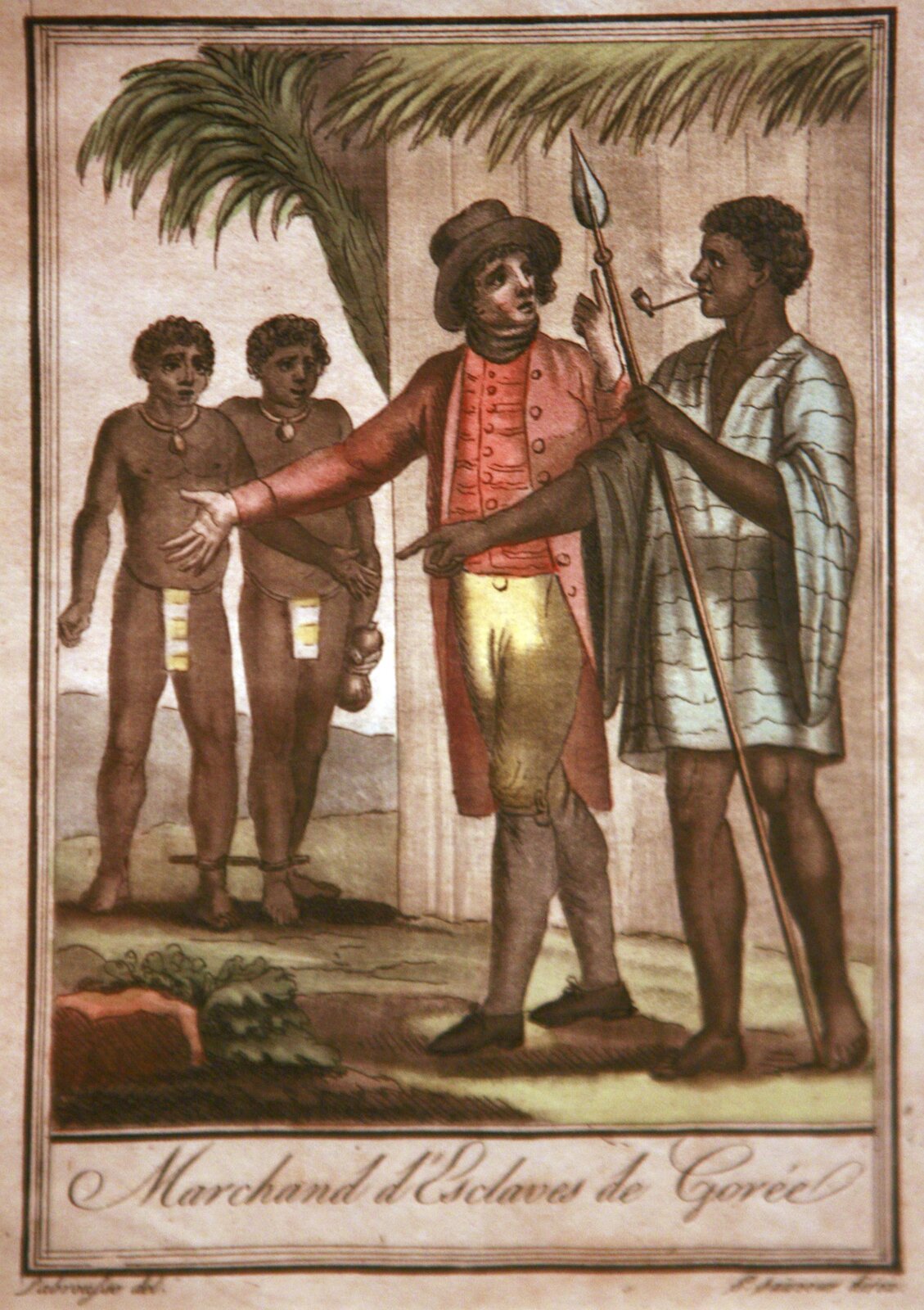
Ilustracja przedstawiająca handlarzy niewolnikami w Gorés.
Slave trader in Gorés
Source: acques Grasset de Saint-Sauveur, Wikimedia Commons, licencja: CC BY 3.0.
Task 3
Wysłuchaj nagrania abstraktu i zastanów się, czego jeszcze chciałbyś się dowiedzieć w związku z tematem lekcji.
Wysłuchaj nagrania abstraktu i zastanów się, czego jeszcze chciałbyś się dowiedzieć w związku z tematem lekcji.
For which areas and what state was Gdańsk a „window on the world”?
RdgMYyp34fofm
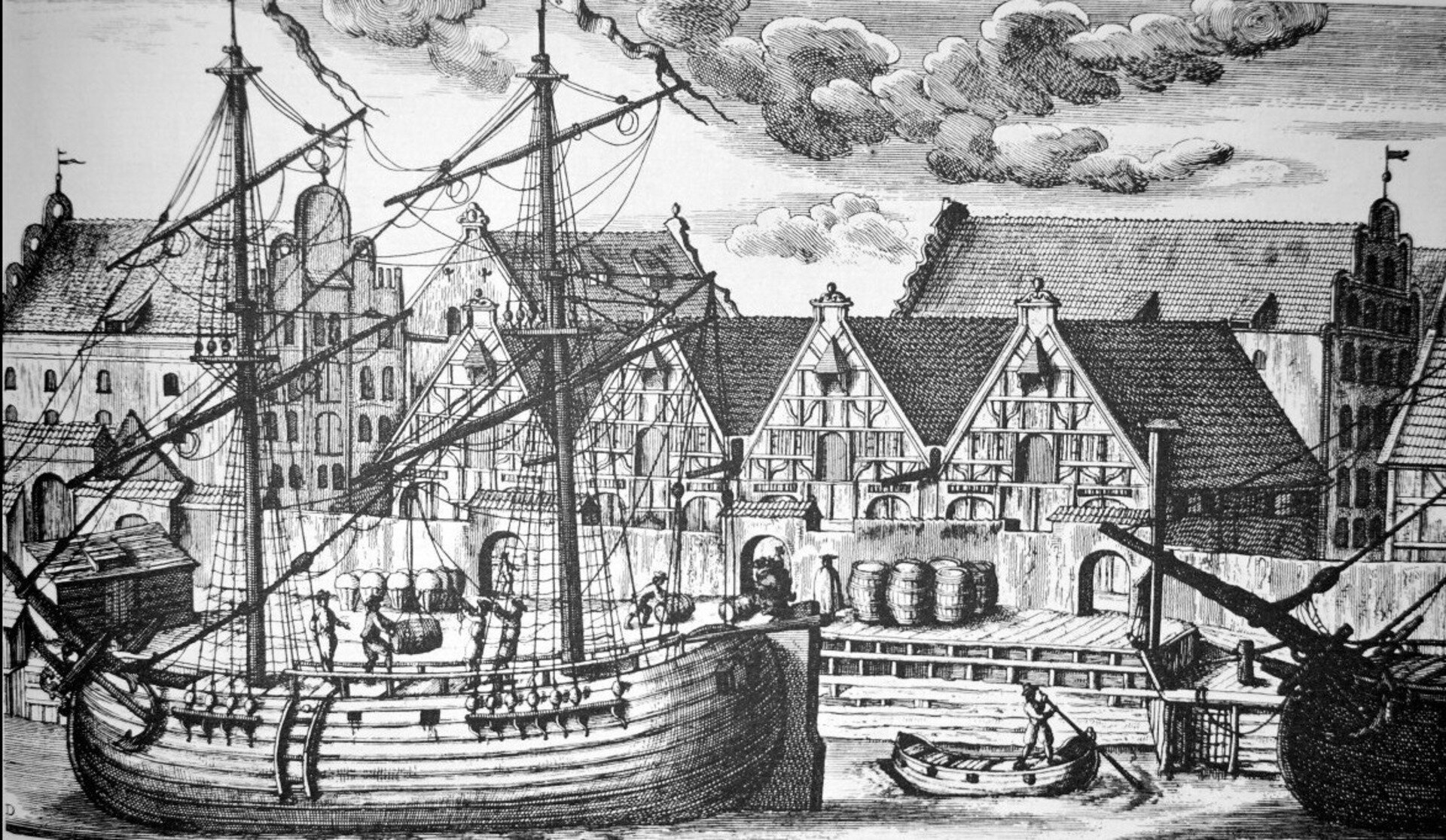
Ilustracja przedstawiająca Spichlerze Gdańskie - jeden z pierwszych symboli nowoczesnej infrastruktury portowej.
Gdańsk Granaries - one of the first symbols of modern port infrastructure
Source: Matthäus Deisch, domena publiczna.
R1Nq9ncFkxNxT
Exercise 1
Match the terms with their definitions. Conquistador Możliwe odpowiedzi: 1. name given to the majority of Earth's Western Hemisphere, specifically the Americas, at the time of great geographical discoveries, 2. name given to continents known to Europeans (Europe, Asia, Africa) at the time of great geographical discoveries, 3. a title given to the conquerors of South and Central America by the Spanish and Portuguese kings in the 16th century., 4. indigenous peoples of America, 5. a production plant based on division of labour in agricultural production, 6. large area on which only one type of plant is cultivated, 7. an epidemic covering a very large area Manufacture Możliwe odpowiedzi: 1. name given to the majority of Earth's Western Hemisphere, specifically the Americas, at the time of great geographical discoveries, 2. name given to continents known to Europeans (Europe, Asia, Africa) at the time of great geographical discoveries, 3. a title given to the conquerors of South and Central America by the Spanish and Portuguese kings in the 16th century., 4. indigenous peoples of America, 5. a production plant based on division of labour in agricultural production, 6. large area on which only one type of plant is cultivated, 7. an epidemic covering a very large area Pandemic Możliwe odpowiedzi: 1. name given to the majority of Earth's Western Hemisphere, specifically the Americas, at the time of great geographical discoveries, 2. name given to continents known to Europeans (Europe, Asia, Africa) at the time of great geographical discoveries, 3. a title given to the conquerors of South and Central America by the Spanish and Portuguese kings in the 16th century., 4. indigenous peoples of America, 5. a production plant based on division of labour in agricultural production, 6. large area on which only one type of plant is cultivated, 7. an epidemic covering a very large area Indians Możliwe odpowiedzi: 1. name given to the majority of Earth's Western Hemisphere, specifically the Americas, at the time of great geographical discoveries, 2. name given to continents known to Europeans (Europe, Asia, Africa) at the time of great geographical discoveries, 3. a title given to the conquerors of South and Central America by the Spanish and Portuguese kings in the 16th century., 4. indigenous peoples of America, 5. a production plant based on division of labour in agricultural production, 6. large area on which only one type of plant is cultivated, 7. an epidemic covering a very large area New World Możliwe odpowiedzi: 1. name given to the majority of Earth's Western Hemisphere, specifically the Americas, at the time of great geographical discoveries, 2. name given to continents known to Europeans (Europe, Asia, Africa) at the time of great geographical discoveries, 3. a title given to the conquerors of South and Central America by the Spanish and Portuguese kings in the 16th century., 4. indigenous peoples of America, 5. a production plant based on division of labour in agricultural production, 6. large area on which only one type of plant is cultivated, 7. an epidemic covering a very large area Old World Możliwe odpowiedzi: 1. name given to the majority of Earth's Western Hemisphere, specifically the Americas, at the time of great geographical discoveries, 2. name given to continents known to Europeans (Europe, Asia, Africa) at the time of great geographical discoveries, 3. a title given to the conquerors of South and Central America by the Spanish and Portuguese kings in the 16th century., 4. indigenous peoples of America, 5. a production plant based on division of labour in agricultural production, 6. large area on which only one type of plant is cultivated, 7. an epidemic covering a very large area Plantation Możliwe odpowiedzi: 1. name given to the majority of Earth's Western Hemisphere, specifically the Americas, at the time of great geographical discoveries, 2. name given to continents known to Europeans (Europe, Asia, Africa) at the time of great geographical discoveries, 3. a title given to the conquerors of South and Central America by the Spanish and Portuguese kings in the 16th century., 4. indigenous peoples of America, 5. a production plant based on division of labour in agricultural production, 6. large area on which only one type of plant is cultivated, 7. an epidemic covering a very large area
Match the terms with their definitions. Conquistador Możliwe odpowiedzi: 1. name given to the majority of Earth's Western Hemisphere, specifically the Americas, at the time of great geographical discoveries, 2. name given to continents known to Europeans (Europe, Asia, Africa) at the time of great geographical discoveries, 3. a title given to the conquerors of South and Central America by the Spanish and Portuguese kings in the 16th century., 4. indigenous peoples of America, 5. a production plant based on division of labour in agricultural production, 6. large area on which only one type of plant is cultivated, 7. an epidemic covering a very large area Manufacture Możliwe odpowiedzi: 1. name given to the majority of Earth's Western Hemisphere, specifically the Americas, at the time of great geographical discoveries, 2. name given to continents known to Europeans (Europe, Asia, Africa) at the time of great geographical discoveries, 3. a title given to the conquerors of South and Central America by the Spanish and Portuguese kings in the 16th century., 4. indigenous peoples of America, 5. a production plant based on division of labour in agricultural production, 6. large area on which only one type of plant is cultivated, 7. an epidemic covering a very large area Pandemic Możliwe odpowiedzi: 1. name given to the majority of Earth's Western Hemisphere, specifically the Americas, at the time of great geographical discoveries, 2. name given to continents known to Europeans (Europe, Asia, Africa) at the time of great geographical discoveries, 3. a title given to the conquerors of South and Central America by the Spanish and Portuguese kings in the 16th century., 4. indigenous peoples of America, 5. a production plant based on division of labour in agricultural production, 6. large area on which only one type of plant is cultivated, 7. an epidemic covering a very large area Indians Możliwe odpowiedzi: 1. name given to the majority of Earth's Western Hemisphere, specifically the Americas, at the time of great geographical discoveries, 2. name given to continents known to Europeans (Europe, Asia, Africa) at the time of great geographical discoveries, 3. a title given to the conquerors of South and Central America by the Spanish and Portuguese kings in the 16th century., 4. indigenous peoples of America, 5. a production plant based on division of labour in agricultural production, 6. large area on which only one type of plant is cultivated, 7. an epidemic covering a very large area New World Możliwe odpowiedzi: 1. name given to the majority of Earth's Western Hemisphere, specifically the Americas, at the time of great geographical discoveries, 2. name given to continents known to Europeans (Europe, Asia, Africa) at the time of great geographical discoveries, 3. a title given to the conquerors of South and Central America by the Spanish and Portuguese kings in the 16th century., 4. indigenous peoples of America, 5. a production plant based on division of labour in agricultural production, 6. large area on which only one type of plant is cultivated, 7. an epidemic covering a very large area Old World Możliwe odpowiedzi: 1. name given to the majority of Earth's Western Hemisphere, specifically the Americas, at the time of great geographical discoveries, 2. name given to continents known to Europeans (Europe, Asia, Africa) at the time of great geographical discoveries, 3. a title given to the conquerors of South and Central America by the Spanish and Portuguese kings in the 16th century., 4. indigenous peoples of America, 5. a production plant based on division of labour in agricultural production, 6. large area on which only one type of plant is cultivated, 7. an epidemic covering a very large area Plantation Możliwe odpowiedzi: 1. name given to the majority of Earth's Western Hemisphere, specifically the Americas, at the time of great geographical discoveries, 2. name given to continents known to Europeans (Europe, Asia, Africa) at the time of great geographical discoveries, 3. a title given to the conquerors of South and Central America by the Spanish and Portuguese kings in the 16th century., 4. indigenous peoples of America, 5. a production plant based on division of labour in agricultural production, 6. large area on which only one type of plant is cultivated, 7. an epidemic covering a very large area
Match the terms with their definitions.
indigenous peoples of America, a production plant based on division of labour in agricultural production, name given to the majority of Earth's Western Hemisphere, specifically the Americas, at the time of great geographical discoveries, an epidemic covering a very large area, large area on which only one type of plant is cultivated, name given to continents known to Europeans (Europe, Asia, Africa) at the time of great geographical discoveries, a title given to the conquerors of South and Central America by the Spanish and Portuguese kings in the 16th century.
Nowy Świat – określenie wprowadzone w czasie wielkich odkryć geograficznych dla dwóch kontynentów półkuli zachodniej: Ameryki Północnej i Ameryki Południowej.
Stary Świat – określenie wprowadzone przez Europejczyków w czasie wielkich odkryć geograficznych dla kontynentów znanych już w starożytności (Europy, Azji, Afryki)