Przeczytaj
How many people live in the biggest city in your country? What do you know about this city? Here are some of the biggest cities in the world. Read the text to find out interesting facts about them.
Ilu ludzi mieszka w największym mieście w twoim kraju? Co wiesz o tym mieście? Oto kilka z największych miast. Przeczytaj tekst, aby poznać interesujące fakty o nich.

Match the words with their Polish meanings.
Dopasuj wyrazy do ich polskich odpowiedników.
Read the text below and do the exercises.
Przeczytaj tekst i wykonaj poniższe ćwiczenia.
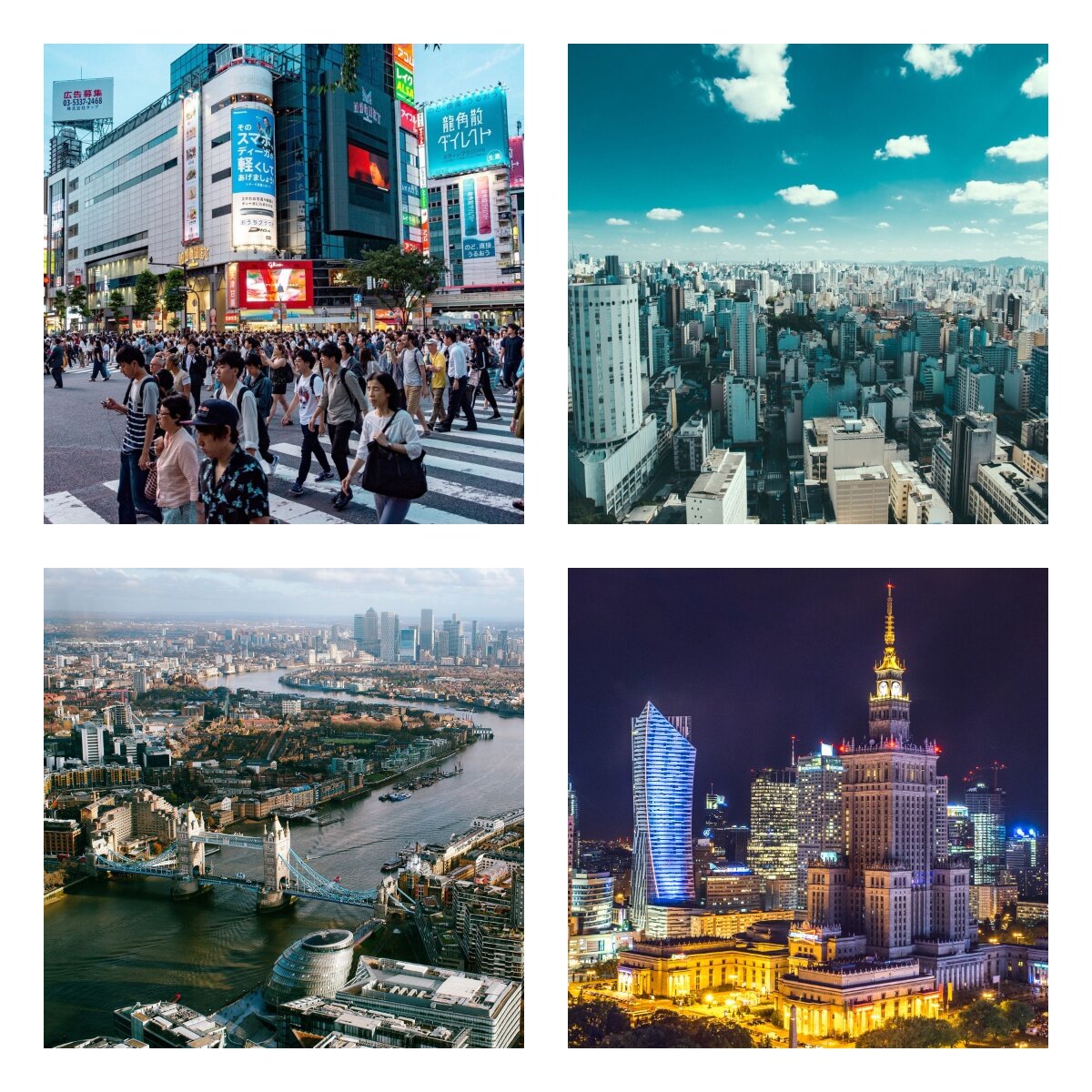
Interesting Facts About Big CitiesTokyo, Japan
Tokyo is the biggestthe biggest city in the world. There are over 39 million peoplepeople! It is also one of the cleanestthe cleanest cities in the world. The streets are clean and people usually take their rubbishrubbish home. Public transport is impressiveimpressive. The buses, the trains and the underground are the most punctualthe most punctual in the world. Tokyo is also one of the safestthe safest cities in the world. It is safer thanthan typical cities in Europe or the USA.
São Paulo, Brazil
Sao Paulo is one of the biggest cities in the world. 22 million people live there. It is also the biggest city in South America. Many people think that Rio de Janeiro is the biggest city in Brazil but it is not true. Perhaps the beaches are prettierprettier in Rio but Sao Paulo is more popularmore popular. It is a business centrebusiness centre and it is easiereasier to find a good job there. In Sao Paulo the traffictraffic is the heaviestthe heaviest. There are more cars here thanthan there are people in Rio de Janeiro. That is why there are over 500 helicopters that you can use as taxis.
London, England
London is the biggest city in Europe. There are over 9 million people. You can hear over 300 different languagesdifferent languages in London. Why? It is because so many people from all over the worldfrom all over the world come to live here. London is one of the busiestthe busiest cities in the world. There are famous red double deckersdouble deckers and black taxis. What’s interesting, London has the oldestthe oldest undergroundunderground in the world. There are also many famous buildings. The Houses of ParliamentHouses of Parliament with the famous Big BenBig Ben is actually the biggest palace in the United Kingdom.
Warsaw, Poland
Warsaw is the biggest city in Poland. It is also the capitalcapital of Poland. There are over 2 million people here. There is the Vistula RiverVistula River which is the longestthe longest river in Poland. The Old TownOld Town is the oldest part of the city. The NazisNazis destroyeddestroyed 85% of the city in 1944 but after the warafter the war the Polish rebuiltrebuilt it. Now it looks fantastic. The Palace of Culture and SciencePalace of Culture and Science is a very famous building here. It was the tallestthe tallest in Warsaw for a very long time. But today the Varso Tower is taller thantaller than it. Warsaw is not the most popularthe most popular city in Poland. Cracow is more popular.
Źródło: Zuzanna Kościuk, licencja: CC BY-SA 3.0.
Match the following words with their translations.
Połącz poniższe wyrazy z ich odpowiednikiem w języku polskim.
Match the names to the pictures.
Dopasuj nazwy do obrazków.
Read the text again and decide if the following sentences are true or false.
Przeczytaj tekst ponownie. Następnie zdecyduj, czy podane zdania są prawdziwe, czy fałszywe.
Read the text and choose the correct answer.
Przeczytaj tekst, a następnie wybierz prawidłową odpowiedź.
Read the text again. Then write the missing words in Polish to complete the gaps in the text below.
Przeczytaj ponownie tekst. Następnie uzupełnij luki w poniższych zdaniach wyrazami w języku polskim.
GRAMATYKA:
Stopniowanie przymiotników (comparatives and superlatives)
Gdy chcemy porównać cechy rzeczy lub osób, możemy do tego wykorzystać stopniowanie przymiotników. Wyróżniamy stopień równy (tall), wyższy (comparative - taller) i najwyższy (superlative - the tallest). Do porównywania przymiotników używamy wyrazu than („niż”).
1. Przymiotniki tzw. krótkie (jedno- i dwusylabowe) stopniujemy poprzez dodanie końcówki -er dla stopnia wyższego i -est dla stopnia najwyższego. Należy też pamiętać, że w języku angielskim stopień najwyższy przymiotnika jest najczęściej poprzedzony przedimkiem the.
a) Większość przymiotników krótkich (np. tall, short, long, big)
tall – taller – the tallest
wysoki - wyższy - najwyższy
Przykłady:
The Varso Tower is taller than The Palace of Science and Culture. – Wieża Varso jest wyższa od Pałacu Kultury i Nauki.
The Varso Tower is the tallest building in Warsaw. – Wieża Varso jest najwyższym budynkiem w Warszawie.
b) Przymiotniki krótkie zakończone na samogłoskę e (np. late, brave, rude)
safe – safer – the safest
bezpieczny - bezpieczniejszy - najbezpieczniejszy
Przykłady:
Tokio is safer than most cities in Europe. – Tokio jest bezpieczniejsze od większości miast w Europie.
Tokio is the safest city in Asia. – Tokio to najbezpieczniejsze miasto w Azji.
c) Przymiotniki jednosylabowe zakończone na spółgłoskę i poprzedzone samogłoską podwajają tę spółgłoskę (np. big, thin)
big – bigger – the biggest
duży - większy - największy
Przykłady:
Sao Paulo is the biggest city in South America. – Sao Paulo jest największym miastem w Ameryce Południowej.
São Paulo is bigger than Rio de Janeiro. – Sao Paulo jest większe od Rio de Janeiro.
d) Przymiotniki krótkie zakończone na y zmieniają y na i (np. pretty, funny)
pretty – prettier – the prettiest
piękny – piękniejszy – najpiękniejszy
Przykłady:
The beaches in Rio are prettier than in Sao Paulo. – Plaże w Rio są piękniejsze od plaż w Sao Paulo.
The prettiest beaches are in Rio. – Najpiękniejsze plaże są w Rio.
2. Przymiotniki długie (dwu- i więcej sylabowe) stopniujemy inaczej. Zamiast dodawać do nich końcówki -er oraz -est, używamy takich wyrażeń, jak more („bardziej”) oraz the most („najbardziej”), które stawiamy przed przymiotnikiem.
puntual – more punctual – the most punctual
punktualny - bardziej punktualny – najbardziej punktualny
popular – more popular – the most popular
popularny - popularniejszy - najpopularniejszy
Przykłady:
Transport in Japan is the most punctual in the world. – Transport w Japonii jest najbardziej punktualny na świecie.
Cracow is more popular than Warsaw. – Kraków jest popularniejszy od Warszawy.
Cracow is the most popular city in Poland. – Kraków to najpopularniejsze miasto w Polsce.
Read the sentences and choose the correct form of the adjective.
Przeczytaj zdania i wybierz poprawną formę przymiotnika.
2. Sao Paulo is more popularthe most popular than Rio.
3. Tokyo is saferthe safest than London.
4. London is biggerthe biggest than Warsaw.
5. Cracow is more popularthe most popular city in Poland.
Słownik
/ ˈɑːftə ðə wɔː /
po wojnie
/ ˈbiːtʃɪz / / biːtʃ /
plaże [plaża]
/ bɪg ben /
Big Ben (nazwa słynnego zegara w wieży należącej do Siedziby Parlamentu)
/ ˈbɪznəs ˈsentə /
centrum biznesu
/ ˈkæpɪtəl /
stolica
/ dɪˈstrɔɪd / / dɪˈstroɪ /
zniszczyli/zniszczyły [niszczyć]
/ ˈdɪfrənt ˈlæŋɡwɪdʒɪz /
różne języki
/ ˌdʌbl ˈdekəz / / ˌdʌbl ˈdekə /
autobusy piętrowe [autobus piętrowy]
/ ˈiːzɪə /
łatwiejszy/łatwiejsza
/ frəm ɔ:l ˈəʊvə ðə wɜːld /
z całego świata
/ ˈhaʊzɪz əv ˈpɑːləmənt /
Siedziba Parlamentu w Londynie
/ ɪmˈpresɪv /
imponujący/imponująca
/ mɔː ˈpɒpjʊlə /
popularniejszy/popularniejsza
/ ˈnɑːtsɪz /
naziści/nazistki [nazista/nazistka]
/ əʊld taʊn /
Stare Miasto
/ ˈəʊvə /
ponad
/ ˈpælɪs əv ˈsaɪəns ənd ˈkʌltʃə /
Pałac Kultury i Nauki
/ ˈpiːpl̩ / / ˈpɜːsn̩ /
ludzie [osoba]
/ ˈprɪtɪə /
ładniejszy/ładniejsza
/ ˌriːˈbɪlt / / ˌriːˈbɪld /
odbudowali/odbudowały [odbudować]
/ ˈrʌbɪʃ /
śmieci [śmieć]
/ ˈtɔːlə ðæn /
wyższy/wyższa od
/ ðæn /
niż, od
/ ðə ˈbɪɡɪst /
największy/największa
/ ðə ˈbɪzɪɪst /
najbardziej ruchliwe/ruchliwa
/ ðə ˈkliːnɪst /
najczystszy/najczystsza
/ ðə ˈhevɪɪst /
najcięższy/najcięższa (tu: największy ruch uliczny)
/ ðə ˈlɒŋɡɪst /
najdłuższy/najdłuższa
/ ði ˈəʊldɪst /
najstarszy/najstarsza
/ ðə ˈseɪfɪst /
najbezpieczniejszy/najbezpieczniejsza
/ ðə ˈtɔːləst /
najwyższy/najwyższa
/ ðə məʊst ˈpɒpjʊlə /
najpopularniejszy/najpopularniejsza
/ ðə məʊst ˈpʌŋktʃʊəl /
najbardziej punktualny/punktualna
/ ˈtræfɪk /
ruch uliczny
/ ˈʌndəɡraʊnd /
metro
/ ˈvɪstʃələ ˈrɪvə /
rzeka Wisła
Źródło: GroMar Sp. z o.o., licencja: CC BY‑SA 3.0