Przeczytaj
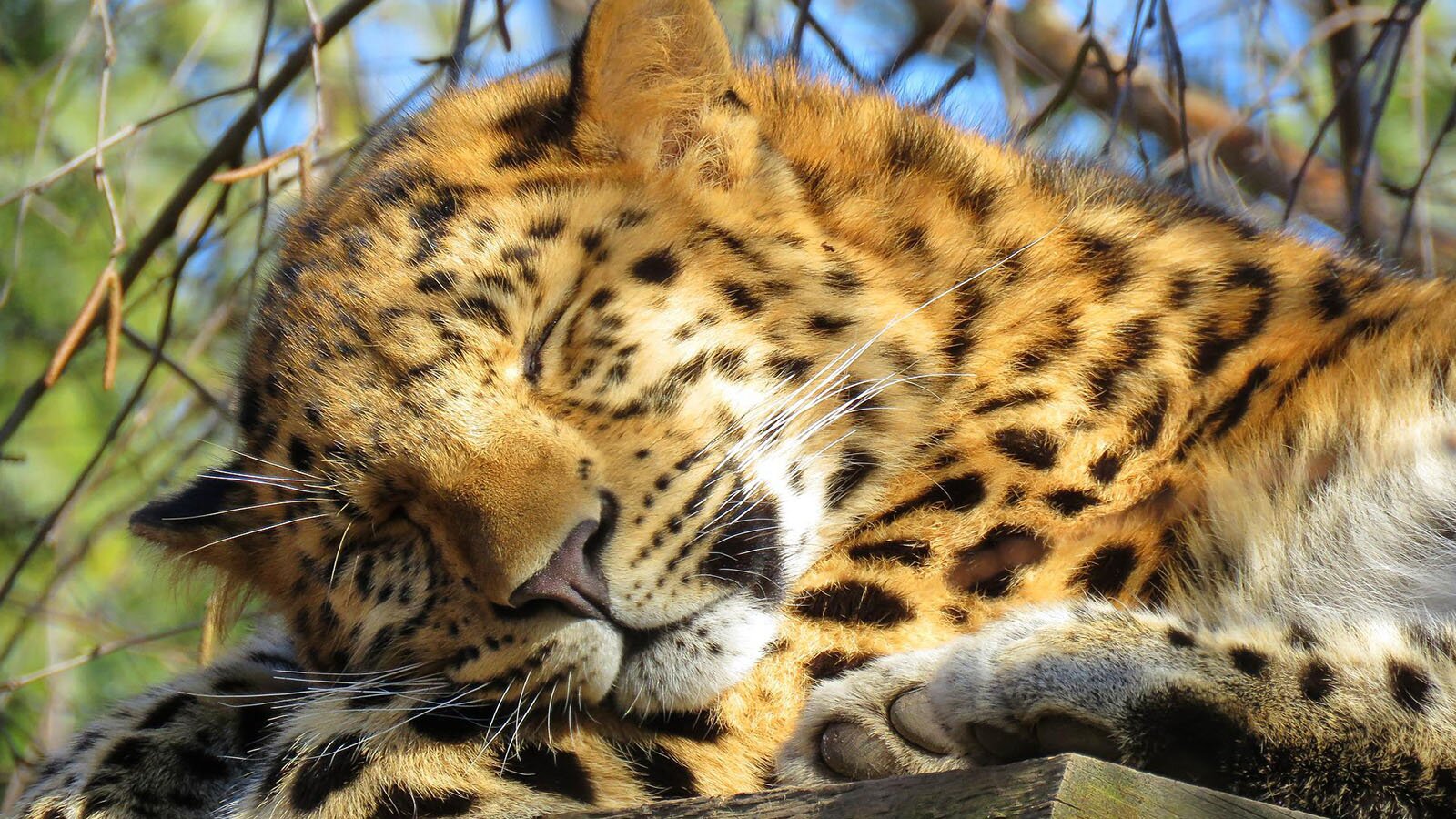
The picture below shows an Amur leopard. It may soon become extinct. Why? Read the text below to find out why animal species become endangered.
Poniższe zdjęcie przedstawia lamparta amurskiego. Może on wkrótce wyginąć. Dlaczego? Przeczytaj poniższy tekst, aby dowiedzieć się, dlaczego niektóre gatunki zwierząt są zagrożone wyginięciem.
Read the text to learn more about endangered species and the dangers they face from human activity.
Why Do Animals Face Extinction?Every year, on the third Friday in May, we celebrate Endangered Species Day. An animal is regarded as endangeredendangered when its numbers in the wild have plummetedplummeted so low that it may face extinctionface extinction. The IUCN’s (International Union for Conservation of Nature) Red List gives a gruesomegruesome number of species which are currently endangered. It’s 41,415.
Endangered speciesEndangered species are living things which are on the verge of extinctionon the verge of extinction. Species become endangered due to many factors. Natural disasters can result in the destruction of animal habitats. Dinosaurs, for example, became extinctbecame extinct 65 million years ago as a result of an asteroid which hit the Earth. As a consequence, debrisdebris was thrown into the atmosphere, decreasing the quantity of heat and light reaching Earth's surface. The dinosaurs couldn't adjust toadjust to their new, cooler environment. Undoubtedly, it is now human activity that contributes tocontributes to species extinction on a global scale.
One of the biggest threats for animals is plastic pollution. It mainly affects marinemarine animals that digest plastic thrown into water by people. Deforestation poses another threat. Forests provide habitats for species, so when trees are cut down, animals lose their places to live and reproducereproduce. This may be especially witnessed in the Amazon rainforests where logging and cattle ranching pose one of the biggest dangers for many species. As a result, whole ecosystemsecosystems are disturbed and food chainsfood chains are broken.
Habitat loss may also occuroccur as a result of human development. During the twentieth century, cities such as Los Angeles, California, and Vancouver, British Columbia, Canada, expanded significantlyexpanded significantly. The habitat of the mountain lion shrankshrank as human regions spread into the wilderness. Polar bears, mountain lions, and alligators are among the predatorspredators that have come into close contact with humans as their natural habitat has been encroachedencroached upon by homes, farms, and enterprises. In turn, more and more such contacts lead to animal and human conflicts, which contribute to dwindlingdwindling animal populations. In some countries, like Zambia, elephants are being killed as a punishment for attacking and killing people or destroying their crops.
The illicitillicit trade and slaughter of wildlife is known as poaching. Animals or their parts are occasionally sold as trophiestrophies, jewellery, food or „folk medicine,” and other times as pets. Native species may also become endangered as a result of people killing animals with pesticidespesticides, traffic accidents, or hunting.
Natural selectionNatural selection is also to blame for the fact that some species are endangered. For example, cheetahs are a threatenedthreatened African and Asian species because there is virtuallyvirtually little genetic variationgenetic variation among these large cats. It means that they are more vulnerablevulnerable and prone toprone to diseases and they are not able to adapt to the changes in the environment. PreservationPreservation programmes are also difficult to incorporateincorporate because cheetahs are considerably harder to procreate in captivityin captivity than other big cats like lions. Human activity such as overfishing and overhunting can also lead to a loss of genetic variation. EnvironmentalistsEnvironmentalists are trying to make people aware of the harm which is being done to animals by humans. Laws may be introduced to limit hunting and large fines may be imposed on people who break the law. Let’s hope it’s not too late.
Źródło: Dorota Giżyńska, licencja: CC BY-SA 3.0.
Read the text and choose the correct answer.
- The numbers of animals in the wild have plummetedexpanded so drastically that most of them may face extinction in a few years.
- Different wildlife organisations give dwindlinggruesome numbers of endangered species.
- People are encroachingexpanding on animals’ natural habitats.
- Animals are becoming more threatenedvulnerable to climate change and rising levels of pollution.
- Poaching is an example of illicitendangered human activity.
- Generally speaking, animals find it difficult to live in preservationcaptivity.
Drag the words to complete the sentences.
- 1. reproduce, 2. endangered, 3. Environemntalists, 4. significantly, 5. virtually, 6. extinction are doing what they can to inform the public about the animals'
- tuation.
- There are over 40,000 1. reproduce, 2. endangered, 3. Environemntalists, 4. significantly, 5. virtually, 6. extinction species of animals around the world.
- It’s difficult for animals to 1. reproduce, 2. endangered, 3. Environemntalists, 4. significantly, 5. virtually, 6. extinction in captivity.
- If we don’t act soon, a lot of animals will face 1. reproduce, 2. endangered, 3. Environemntalists, 4. significantly, 5. virtually, 6. extinction in a few years.
- There is 1. reproduce, 2. endangered, 3. Environemntalists, 4. significantly, 5. virtually, 6. extinction little genetic variation among some species, which may be dangerous for their survival.
- People have expanded their areas 1. reproduce, 2. endangered, 3. Environemntalists, 4. significantly, 5. virtually, 6. extinction, taking over animals’ habitats.
Answer the questions. Write 2–3 sentences to each question.
Which information from the text surprised you the most? How does it make you feel?
Which human activity is the biggest threat to animals? Why?
Słownik
/ əˈdʒʌst tuː /
przystosować się do
/ bɪˈkʌm ɪkˈstɪŋt /
wyginąć, wymierać
/ kənˈtrɪbjuːts tuː / / kənˈtrɪbjuːt tuː /
przyczynia się do [przyczyniać się do]
/ˈdeb.riː/
odłamki, pozostałości
/ ˈdwɪndl̩ɪŋ /
zmniejszający/zmniejszająca się
/ ˈiːkəʊsɪstəmz / / ˈiːkəʊsɪstəm /
ekosystemy [ekosystem]
/ ɪnˈkrəʊtʃt / / ɪnˈkrəʊtʃ /
naruszyli/naruszyły granicę, wdarli/wdarły się [naruszać granicę, wdzierać się]
/ ɪnˈdeɪndʒəd /
zagrożony/zagrożona
/ ɪnˈdeɪndʒəd ˈspiːʃiːz / / ɪnˈdeɪndʒəd ˈspiːʃiː /
zagrożone gatunki [zagrożony gatunek]
/ ɪnˌvaɪrənˈmentəlɪsts / / ɪnˌvaɪrənˈmentəlɪst /
ekologowie, ekolodzy/ekolożki [ekolog/ekolożka]
/ ɪkˈspændɪd sɪɡˈnɪfɪkəntli / / ɪkˈspænd sɪɡˈnɪfɪkəntli /
rozbudowali/rozbudowały się znacząco [rozbudować się znacząco]
/ feɪs ɪkˈstɪŋkʃn̩ /
stawać w obliczu wyginięcia
/ fuːd tʃeɪnz / / fuːd tʃeɪn /
łańcuchy pokarmowe [łańcuch pokarmowy]
/ dʒɪˈnetɪk ˌveərɪˈeɪʃn̩ /
zmienność genetyczna
/ ˈɡruːsəm /
przerażający/przerażająca
/ ɪˈlɪsɪt /
nielegalny/nielegalna
/ ɪn kæpˈtɪvɪti /
w niewoli
/ ɪnˈkɔːpəreɪt /
tu: wcielać w życie
/ məˈriːn /
morski/morska
/ ˈnætʃərəl sɪˈlekʃn̩ /
selekcja naturalna
/ əˈkɜː /
występować, pojawiać się
/ ˈɒn ðə vɜːdʒ əv ɪkˈstɪŋkʃn̩ /
na skraju wyginięcia
/ ˈpestɪsaɪdz / / ˈpestɪsaɪd /
pestycydy [pestycyd]
/ ˈplʌmɪtɪd / / ˈplʌmɪt /
obniżyły się gwałtownie [obniżyć się gwałtownie]
/ ˈpredətəz / / ˈpredətə /
drapieżniki [drapieżnik]
/ ˌprezəˈveɪʃn̩ /
ochrona
/ prəʊn tuː /
podatny/podatna na
/ ˌriːprəˈdjuːs /
rozmnażać się
/ ʃræŋk / / ʃrɪŋk /
skurczyły się [kurczyć się]
/ ˈthetaretn̩d / / ˈthetaretn̩ /
zagrożony/zagrożona [zagrażać]
/ ˈtrəʊfɪz / / ˈtrəʊfi /
trofea [trofeum]
/ ˈvɜːtʃʊəli /
tu: prawie
/ ˈvʌlnərəbl̩ /
narażony/narażona na niebezpieczeństwo
Źródło: GroMar Sp. z o.o., licencja: CC BY‑SA 3.0