Przeczytaj
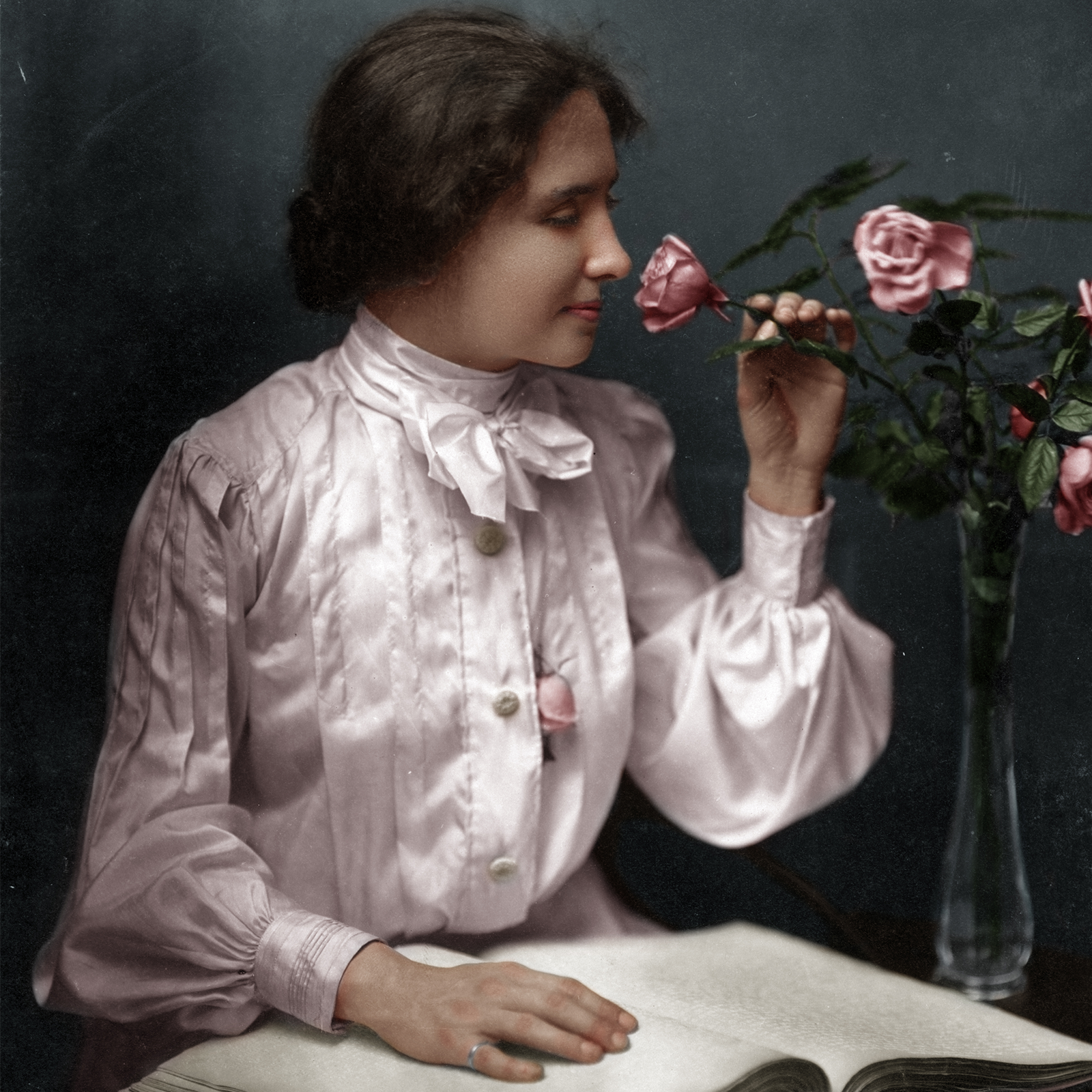
Some people stay in the collective memory due to their Herculean efforts and achievements that were once deemed impossible. One such figure is Helen Keller, an American disability rights advocate who lost her sight and hearing at a young age and despite that learned to write, speak, and became the first deafblind person to earn a Bachelor of Arts degree. Her life is a lesson in humility, perseverance, and selfless service. To learn more about her journey as well as her achievements, read the text in this section.
Niektórzy ludzie pozostają w pamięci zbiorowej dzięki swoim herkulesowym wysiłkom i osiągnięciom, które kiedyś uważano za niemożliwe. Jedną z takich postaci jest Hellen Keller – amerykańska rzeczniczka praw osób z niepełnosprawnościami. Kobieta w młodym wieku straciła wzrok i słuch, a mimo to nauczyła się pisać i mówić. Została pierwszą osobą niewidomą i niesłyszącą, która uzyskała tytuł Bachelor of Arts. Jej życie jest lekcją pokory, wytrwałości i bezinteresownej służby. Jeśli chcesz dowiedzieć się więcej o jej podróży i osiągnięciach, przeczytaj tekst w tej sekcji.
Read the text below and do the exercises.
The Life of Hellen KellerIn the late 19Indeks górny thth century, at the age of barely 19 months, Helen Keller fell victim tofell victim to an unspecified illness (today believed to be meningitismeningitis which left her deaf and blind. The new life of silence and darkness proved to be difficultproved to be difficult for young Helen who, according to testimoniestestimonies of her family members, became an unrulyunruly if not downright aggressivedownright aggressive child. Some of the family friends suggested she become institutionalisedbecome institutionalised but Keller’s mother refused and instead, decided to aid her daughter on the journey of becoming a fully‑functioning member of societyfully‑functioning member of society.
During one of the visits to an eye doctor in Baltimore, the Kellers were instructed to contact Alexander Graham Bell, a famous American inventor whose mother and wife were deaf, which prompted him to devote his lifeprompted him to devote his life to helping those struggling with deafness. Bell, in turn, suggested the Kellers contact the Perkins Institute for the Blind which the family did. That marked the breakthroughmarked the breakthrough in Helen’s life.
Soon, the family welcomed Anne Sullivan – a teacher proficient inproficient in braille and manual alphabetmanual alphabet (a system of hand signs used by the deaf). At first, the teacher and student didn’t get on well due to Helen’s behavioural issues but Anne perseveredpersevered. She and her young student lived together on the Keller’s estate (though not in the family house), and young Helen soon becamebecame cooperativecooperative which made her more perceptive toperceptive to study.
The study consisted ofconsisted of Anne teaching Hellen the names of objects by spelling the words into the young girl’s hand. Once Helen conceptualisedconceptualised language, she became devoted to learning it and persistent inpersistent in her attempts at obtaining higher education. The process was gruellinggruelling since at the time, few textbooks were available in braille and the issue becamebecame even more pronouncedpronounced once Helen started attending lectures. Anne had to translate all information using the manual alphabet which put a strain on her health.
Nevertheless, Helen obtained her Bachelor’s degreeobtained her Bachelor’s degree and devoted herself to writing as well as spreading awareness ofspreading awareness of her condition and life with Anne during a series of toursseries of tours. This could be achieved thanks to Keller’s never‑ending attempts at mastering speech. Despite the limitations in her verbal communication, she was always eager to go out in the open and talk about her experiences.
This effort paid off later in life when Helen was approached by the American Foundation for the Blind to become their spokespersonspokesperson. Due to her inspirational journey as well as the skills she had developed, she attracted audiences who financially supported the Foundation and even allowed Keller to petition Congresspetition Congress for more funding for books printed in braille.
Throughout her life, Keller wrote many books which illustratedillustrated different steps of her journey and became prominent enough for her life to be turned into an award‑winning 1962 movie The Miracle Worker.
Źródło: Zuzanna Kościuk, dostępny w internecie: Helen Keller, The Story of My Life, https://www.gutenberg.org/ebooks/2397 [dostęp 31.08.2022], John Donovan, Deaf, Blind and Determined: How Helen Keller Learned to Communicate, https://people.howstuffworks.com/helen-keller.htm [dostęp 31.08.2022], Patricia E. Daniels, Biography of Helen Keller, Deaf and Blind Spokesperson and Activist, https://www.thoughtco.com/helen-keller-1779811 [dostęp 31.08.2022], Teaching Helen Keller How to Speak, https://www.afb.org/about-afb/history/online-museums/anne-sullivan-miracle-worker/anne-teacher/teaching-helen-speak [dostęp 31.08.2022], licencja: CC BY-SA 3.0.
a) the way it had been before becoming deafblind.
b) rocky due to deafblindness and the resulting behavioural issues.
c) difficult since she became institutionalised.
d) full of small and big breakthroughs relating to her situation.
2. Anne Sullivan became Helen’s teacher right after
a) the Kellers consulted an eye doctor in Baltimore.
b) Helen’s family got acquainted with Alexander Graham Bell.
c) the girl’s family had reached out to the Perkins Institute for the Blind.
d) Keller lost her sight and hearing as a baby.
3. When Anne met Helen, it was clear that the girl was
a) not well-adjusted and required work to become a good student.
b) cooperative, all things considered, and willing to work.
c) extremely perceptive to study and excited to learn.
d) virtually hopeless and making Anne think again about her position.
4. Helen was trying to get higher education despite the difficulties such as
a) Anne’s inability to aid the woman.
b) her lack of willingness to work.
c) being unable to conceptualise a language.
d) the lack of proper educational materials.
5. Helen learned to speak because
a) her tours with Anne required long-winded speeches.
b) she desired to share her experiences in other ways than writing.
c) that’s what was required of her when obtaining her bachelor’s degree.
d) she could not achieve her political goals without it.
6. Thanks to her work for the American Foundation for the Blind, Helen
a) could devote more time to writing and delivering speeches.
b) raised a sizable amount of money for her personal needs.
c) could focus on developing textbooks in braille.
d) had enough standing to lobby the American government.
7. Helen’s life as presented through her books
a) led to changes within Congress.
b) prompted people to raise money for the deafblind.
c) inspired an acclaimed motion picture.
d) encouraged a foundation to print more braille textbooks.
8. Overall, Helen can be described as
a) devoted and determined.
b) indifferent and determined.
c) careless and devoted.
d) sly and decisive.
In your opinion, what makes Helen Keller inspirational? Write 5‑6 sentences in which you explain your reasoning i
Słownik
/ bɪˈkeɪm kəʊˈɒpərətɪv / / bɪˈkʌm kəʊˈɒpərətɪv /
stał się skłonny/stała się skłonna do współpracy [stać się skłonnym do współpracy] (willing to work with someone)
/ bɪˈkʌm ˌɪnstɪˈtjuːʃənəlaɪzd /
zostać umieszczonym/umieszczoną w zakładzie, np. szpitalu psychiatrycznym (to send someone, especially someone who is not able to live independently, to live in an institution e. g. a psychiatric hospital)
/ bɪˈkʌm prəˈnaʊnst /
stać się wyraźnym/wyraźną (become very noticeable)
/ kənˈseptʃuəlaɪzt / / kənˈseptʃuəlaɪz /
zrozumiał/zrozumiała koncept czegoś [zrozumieć koncept czegoś] (form a concept or idea of sth)
/ kənˈsɪstɪd ɒv / / kənˈsɪst ɒv /
składał się/składała się z [składać się z] (to be formed or made up of)
/ ˈdefblaɪnd ˈpɜːsn̩ /
osoba niesłysząca i niewidząca (having a severe impairment of both hearing and vision)
/ ˈdaʊnraɪt əˈɡresɪv /
wręcz agresywny/agresywna (truly aggressive)
/ fel ˈvɪktɪm tuː / / fɔːl ˈvɪktɪm tu ˈsʌmthetaɪŋ /
stał się/stała się ofiarą [stać się ofiarą czegoś] (become a victim of)
/ ˌfʊli ˈfʌŋkʃn̩ɪŋ ˈmembər əv ðə səˈsaɪəti /
wysokofunkcjonujący członek społeczeństwa (a person who does not cause any trouble and does not behave poorly)
/ ˈɡruːəlɪŋ /
wyczerpujący/wyczerpująca, wymagający/wymagająca wysiłku (extremely tiring and demanding)
/ ˈɪləstreɪtɪd / / ˈɪləstreɪtɪd /
tu: wyjaśnił/wyjaśniła [wyjaśniać] (serve as an example of)
/ ˈleɡəsi ɒv /
spuścizna, dziedzictwo (a situation that has developed as a result of past actions and decisions)
/ ˈmænjʊəl ˈælfəbet /
alfabet głuchoniemych (a special alphabet used by deaf people)
/ mɑːkt ðə ˈbreɪkthetaruː / / ˈmɑ:k ðə ˈbreɪkthetaruː /
upamiętniło przełom [upamiętniać przełom] (to represent a breakthrough that has happened in the past)
/ ˌmenɪnˈdʒaɪtɪs /
zapalenie opon mózgowych (an infection of the protective membranes that surround the brain and spinal cord)
/ əbˈteɪnd hə ˈbætʃələz dɪˌgri: / / əbˈteɪn wʌnz ˈbætʃələz dɪˌgri: /
uzyskał/uzyskała tytuł licencjata [uzyskać tytuł licencjata] (get one’s bachelor’s degree)
/ pəˈseptɪv tuː /
wrażliwy/wrażliwa na, wnikliwy/wnikliwa (noticing or understanding things quickly and easily)
/ ˌpɜːsɪˈvɪəd / / ˌpɜːsɪˈvɪə /
wytrwały/wytrwała w (continue in a course of action even in the face of difficulty or with little or no indication of success)
/ pəˈsɪstənt ɪn /
wytrwały/wytrwała w (continuing firmly or obstinately in an opinion or course of action in spite of difficulty or opposition)
/ pɪˈtɪʃn̩ ˈkɒŋɡres /
składać petycję do Kongresu (a formal written request to the Congress)
/ prəˈfɪʃnt ɪn /
biegły/biegła w [być biegłym w] (competent or skilled in)
/ ˈprɒmptɪd ɪm tu dɪˈvəʊt ɪz laɪf / / ˈprɒmpt wʌn tu du: ˈsʌmthetaɪŋ /
skłoniło go do poświęcenia swojego życia [skłaniać kogoś, aby coś zrobić] (cause or bring about an action)
/ pruːvd tu bi ˈdɪfɪkəlt / / pruːv tu bi ˈdɪfɪkəlt /
okazało się być trudne [okazać się trudnym] (turn out to be difficult)
/ ˈsɪəriːz əv tʊəz /
seria tournée (a series of journeys made by people of note to e.g. perform)
/ ˈspəʊkspɜːsn̩ /
rzecznik/rzeczniczka (a person who speaks as the representative of a group or organisation)
/ ˈspredɪŋ əˈweənəs / / ˈspred əˈweənəs /
zwiększać świadomość (make others aware of)
/ ˈtestɪmənɪz / / ˈtestɪməni /
świadectwa [świadectwo] (a recounting of experience)
/ ʌnˈruːli /
niesforny/niesforna (disorderly and disruptive and not amenable to discipline or control)
Źródło: GroMar Sp. z o.o., licencja: CC BY‑SA 3.0