Przeczytaj
The history of the Black Lives Matter movement is paved with human tragedy. One would think that in the 21st‑century people should know better, and racism and discrimination would be no more than a dishonourable part of the past. It’s horrifying that movements still need to be created to protect and fight for such basic rights as equal treatment of citizens by state agencies and institutions. Have you heard of any cases of discrimination against ethnic minorities?
Historia ruchu Black Lives Matter pisana jest ludzkimi tragediami. Można by oczekiwać, że w XXI wieku rasizm i dyskryminacja będą jedynie niechlubną przeszłością. Przerażający jest fakt, że wciąż konieczne jest powoływanie do życia ruchów, których celem jest walka o tak podstawowe prawa, jak równe traktowanie ludzi przez służby i instytucje państwowe. Czy słyszałeś/słyszałaś o przypadkach dyskryminacji wobec mniejszości etnicznych?
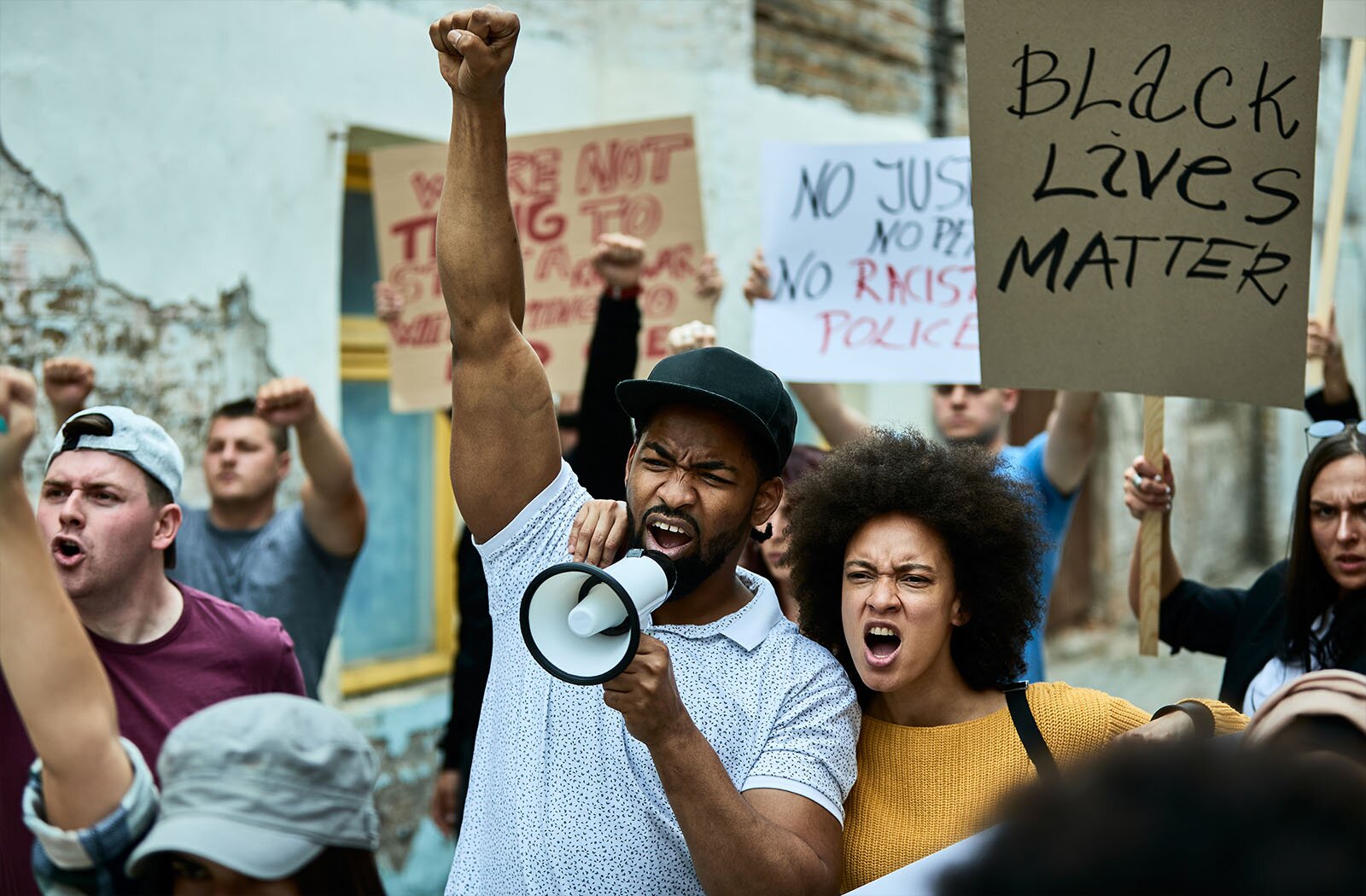
Study the text and do the exercises below.
Every Life MattersGeorge Floyd was a 46‑year‑old African‑American murdered by a police officer in Minneapolis, Minnesota on May 25, 2020. A shop assistant called the police suspecting that Mr Floyd had used a counterfeit twenty‑dollar billcounterfeit twenty‑dollar bill during a transaction in the shop. Four police officers arrived at the scene and arrested Mr Floyd. During the arrest, one of the officers kneltknelt on Mr Floyd’s neck and back for nearly 9 and a half minutes. The detainee’s crydetainee’s cry that he couldn’t breathe remained without officers’ reaction, which resulted in Mr Floyd’s death.
People took to the streetstook to the streets to protest against police brutality and ill‑treatmentill‑treatment of citizens of non‑white ethnic backgrounds. A series of protests, which in many places turned into riotsturned into riots, spread across the United States and all over the world. The police officer responsible for the death of George Floyd was arrested and put on trialput on trial. He was found guilty ofwas found guilty of murder and sentenced tosentenced to 22 and a half years imprisonmentimprisonment. For many Black Lives Matter (BLM) proponentsproponents it was not enough. They keep fighting to eradicate racismeradicate racism and violence against the black community.
George Floyd’s was neither the first nor the last case of a person of colourperson of colour being an object of brutal ill‑treatment by law enforcementlaw enforcement or other authorities who should be paradigmsparadigms of how to fight systemic racismsystemic racism instead of becoming part of it. The tensions and anger had been building up for years. Unfair treatment and abuse of powerabuse of power used against people of colour often made the headlinesmade the headlines. The BLM (Black Lives Matter) activists demand that it change and that the lives of black people are valued on a par withon a par with all other citizens.
The BLM movement originated fromoriginated from an event as dramatic as George Floyd’s case. It was the death of Trayvon Martin who was killed by an armed vigilantearmed vigilante in 2012. Trayvon was 17 at the time and he was shot dead by a neighbourhood watch volunteerneighbourhood watch volunteer who found Trayvon’s behaviour suspicious as the boy was walking the streets alone in the rain. The shooter was acquittedwas acquitted. It caused a nationwide outragecaused a nationwide outrage. Alicia Garza, one of the activists, posted a comment on social media, part of which, namely Black Lives Matter, was further shared as a hashtag and soon started to live a life of its ownlive a life of its own. Online platforms were created where activists from all over the country connected to exchange information and support one another’s actions. People of all ethnic origins came together to express their disapproval, sometimes in silence and often in vocalvocal protests.
Almost 10 years separate the cases of Trayvon and George and although numerous protests were held and some steps were undertaken to curb the unjustified use of forcecurb the unjustified use of force and to end the lack of accountabilityend the lack of accountability among police officers, the situation does not seem to have improved much. People of colour are still wrongfully accused ofwrongfully accused of crimes more often than white citizens. Dishonourable statisticsDishonourable statistics clearly show that black people are far more likely to be killed by police than white people in the United States. BLM is still a call to actioncall to action. Paying tributes to victims, manifesting support for the case or even exerting social pressure on legislators are not enough. People’s thinking about racial equality has to change in order for reality to become a safe place for everyone.
Źródło: Anna Posyniak-Dutka, licencja: CC BY-SA 3.0.
TRUEFALSE
2. George Floyd was stopped by police when he was trying to sell fake products.
TRUEFALSE
3. George Floyd’s death caused violent demonstrations.
TRUEFALSE
4. No criminal charges were pressed against the police officer responsible for George Floyd’s death.
TRUEFALSE
5. The BLM movement’s goal is to create a world free from racial discrimination.
TRUEFALSE
6. A situation similar to the one in which George Floyd was involved had happened before.
TRUEFALSE
7. Cases of prejudiced practices against people of racial minorities were discussed in the media.
TRUEFALSE
8. Trayvon Martin was a member of a neighbourhood watch when he was shot dead.
TRUEFALSE
9. The person who killed Trayvon Martin was found not guilty.
TRUEFALSE
10. The Black Lives Matter slogan was originally a part of a social media post.
TRUEFALSE
11. Official figures show that black people are treated unfairly or brutally more often than white people in the United States.
TRUEFALSE
a) forged
b) stolen
c) damaged
2. People took to the streets to protest against police brutality.
a) started to like being on the streets
b) went outside on the streets
c) left the streets
3. The police officer was put on trial .
a) taken to court
b) tested
c) given probation
4. The BLM activists fight for curbing the unjustified use of force by police.
a) investigating
b) legitimising
c) restraining
5. The lack of accountability among police officers must be put to an end.
a) training
b) responsibility
c) empathy
Type your answers to the questions in 3–4 sentences in each case.
What event led to the formation of the Black Lives Matter movement?
What is the BLM (Black Lives Matter) movement fighting for?
Słownik
/ əˈbjuːs əv ˈpaʊə /
nadużycie władzy (unlawful use of one’s authority)
/ ɑːmd ˌvɪdʒɪˈlænti /
uzbrojony członek samozwańczej straży obywatelskiej (a member of a self‑appointed group of citizens who decide to enforce law in their community without legal authority)
/ kɔːl tu ˈækʃn̩ /
wezwanie do działania (an appeal to do something)
/ kɔːzd ə ˈneɪʃnwaɪd ˈaʊtreɪdʒ / / kɔːz ə ˈneɪʃnwaɪd ˈaʊtreɪdʒ /
wywołało ogólnokrajowe oburzenie [wywołać ogólnokrajowe oburzenie] (to make people in the whole country very angry)
/ ˈkaʊntəfɪt ˈtwenti ˈdɒlə bɪl /
fałszywy banknot dwudziestodolarowy (a forged twenty‑dollar banknote)
/ kɜːb ði ʌnˈdʒʌstɪfaɪd ˈjuːz əv fɔːs /
ukrócić nieuzasadnione użycie siły (to reduce the number or cases or stop the instances when power is used without an apparent reason)
/ ˌdiːteɪˈniːs kraɪ /
wołanie zatrzymanego (a shout given out by an arrested person)
/ dɪsˈɒnərəbl̩ stəˈtɪstɪks /
niechlubne statystyki (numbers which represent shameful information)
/ end ˈlæk əv əˌkaʊntəˈbɪləti /
zakończyć bezkarność (to bring impunity to an end)
/ ɪˈrædɪkeɪt ˈreɪsɪzəm /
wykorzenić rasizm (to eliminate discrimination based on race)
/ ɪl ˈtriːtmənt /
złe traktowanie (unfair or wrong approach to something or someone)
/ ɪmˈprɪznmənt /
kara więzienia (the penalty of putting somebody in prison)
/ nelt / / niːl /
uklęknął [uklęknąć] (to take a position in which one bends one’s knees and supports the whole body on them)
/ ˌlɔ: ɪnˈfɔːsmənt /
organy ochrony porządku publicznego (all kinds of agencies, such as police or national guard, whose job is to protect citizens and make sure the law is not broken)
/ ˈlaɪv ə ˈlaɪf əv ɪts əʊn /
żyć własnym życiem (to start to exist or develop independently of other things)
/ ˈmeɪd ðə ˈhedlaɪnz / / ˈmeɪk ðə ˈhedlaɪnz /
trafiały na pierwsze strony gazet [trafiać na pierwsze strony gazet] (to be widely discussed in the media)
/ ˈneɪbəhʊd ˈwɒtʃ ˌvɒlənˈtɪə /
wolontariusz/wolontariuszka straży sąsiedzkiej (a member of a self‑organised group of people living in the same community who patrol their area to protect it)
/ ˈɒn ə ˌpɑ:r wɪð /
na równi z (at the same level as, equally)
/ əˈrɪdʒəneɪtɪd frɒm / / əˈrɪdʒəneɪt frɒm /
wziął się z [wziąć się z] (to come from)
/ ˈpærədaɪmz / / ˈpærədaɪm /
modele [model] (an example, a role model to follow)
/ ˈpɜːsn̩ əv ˈkʌlə /
osoba o innym niż biały kolorze skóry (a person of different than white ethnic origin)
/ prəˈpəʊnənts / / prəˈpəʊnənt /
orędownicy [orędownik/orędowniczka] (a supporter)
/ ˈpʊt ˈɒn ˈtraɪəl / / ˈpʊt ˈsʌmbədi ˈɒn ˈtraɪəl /
postawiony przed sądem [postawić kogoś przed sądem] (to take somebody to court, to sue somebody)
/ sɪˈstemɪk ˈreɪsɪzəm /
rasizm systemowy (racist behaviours embedded in the law and institutions)
/ ˈtʊk tu ðə striːts / / ˈteɪk tu ðə striːts /
wyszli na ulice [wyjść na ulice] (to go outside on the streets, usually to protest)
/ tɜːnd ˈɪntə ˈraɪəts / / ˈtɜ:n ˈɪntə ˈraɪəts /
zamieniły się w zamieszki [zamienić się w zamieszki] (to change into violent protests)
/ ˈvəʊkl̩ /
głośne, hałaśliwe (loud)
/ wəz əˈkwɪtɪd / / bi əˈkwɪtɪd /
został uniewinniony [zostać uniewinnionym/uniewinnioną] (to be found not guilty)
/ wəz faʊnd ˈɡɪlti ɒv / / bi faʊnd ˈɡɪlti ɒv /
został uznany za winnego [zostać uznanym za winnego/winną](to be convicted by the jury)
/ wəz ˈsentənst tuː / / bi ˈsentənst tuː /
został skazany na [zostać skazanym na] (to receive a penalty)
/ ˈrɒŋfəli əˈkjuːzd ɒv /
bezpodstawnie oskarżani o [bezpodstawnie oskarżony/oskarżona o] (charged with doing something that one didn’t do)
Źródło: GroMar Sp. z o.o., licencja: CC BY‑SA 3.0