Contemporary political ideologies. Part II
You know what the differences between a democratic and a non‑democratic state are.
You understand the various types of party systems in democratic states.
You are able to explain the ideological differences between “the left” and “the right”.
You will be able to distinguish the relationship between an individual and the government in various political ideologies.
You will be able to justify the importance of the historical context in the shaping of political ideologies.
You will understand what changes influenced the perception of relations between individuals and the state, and how the scope of individual freedom has changed.
You will be able to compare the views of different ideologies regarding the same problems in state policies.
Catholic social teaching
In the nineteenth century, there was a rapid development of new social classes – the more and more internally diversified working class, and in Central Europe – the intelligentsia. The intelligentsia was a social group that was characterized by high education, often a significant cultural capital, but did not have property. The social stratum of intelligentsia came from impoverishedimpoverished gentry, less often from the bourgeoisie, sometimes from the more well offwell off and educated peasantrypeasantry. Regardless of which social group the intelligentsia came from, they were connected by the fact that their standard of living was dependent on employers, the state or owners of factories, hospitals, schools. Recognizing the social significance and the growing number of employees, Pope Leo XIII published in 1891 his encyclical “Rerum Novarum”. It became the basis of the so‑called Catholic social teaching (Catholic social doctrine). As the title of the papalpapal document indicates, it includes a new view of the Church on the role of work in human life - work is no longer treated as punishment for original sin, but the value of work in shaping the personality of an individual begins to be recognized. That is how the political movement called the Christian Democracy was shaped. The content of the encyclical Rerum Novarum, and especially the Pope’s idea of social solidarity, which not only placed the principle of common good in the center of consideration, but also recognized the right of workers to organize in trade unions resulted in Leo XIII being called the „worker’s pope”.
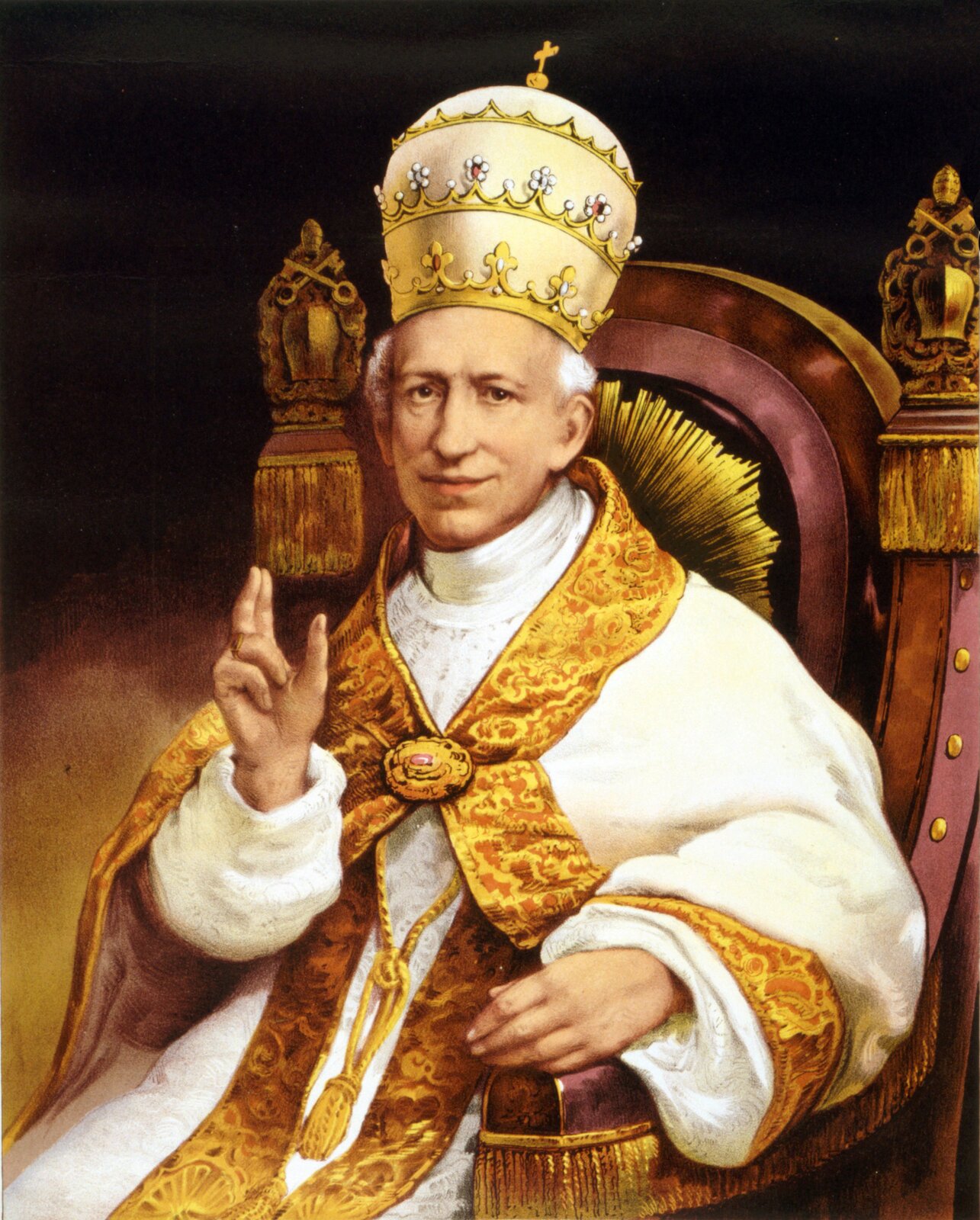
The Christian Democrats' program assumes that a man is the most important, hence it is based on the principle of personalism, that is respect for man and a holisticholistic view of the individual in the physical, spiritual and cultural dimensions. Christian Democrats expressed the view that work is part of the self‑development of an individual and should be chosen in accordance with the interests and abilities of each individual. The society should help each individual to make the right decision. In contrast to social democrats, Christian Democrats put the individual and the individual’s needs higher than the society, which was left with an auxiliaryauxiliary role. The state and society, according to Christian Democrats, should support the individual, but not impose anything on the individual.
Contemporary Christian Democrats support free market economy and protection of private property. At the same time, they see the necessity of introducing a progressive tax, state intervention in the economy and fair pay for decent work. An important element of the Christian Democratic views is the separation of church and state. After the Second Vatican Council, the Church forbade the members of the clergyclergy to hold state offices. At the same time, responsibility for the state and society as well as active participation in public life was added to the responsibilities of the believer. Christian Democrats are also advocates of solidarity between people and are opposed to the exploitation of workers in poorer countries. The term „social teaching of the Church” (Catholic social teaching) is connected with the fact that the views characteristic of Christian Democrats can be found in the papal encyclicals. This does not mean, however, that the followers of this doctrine or members of Christian Democratic parties are exclusively Catholics.
Fascism
In the twentieth century, political thought has developed in many different directions, resulting in the emergence of new political ideologies, often characterized by extremeextreme concepts.
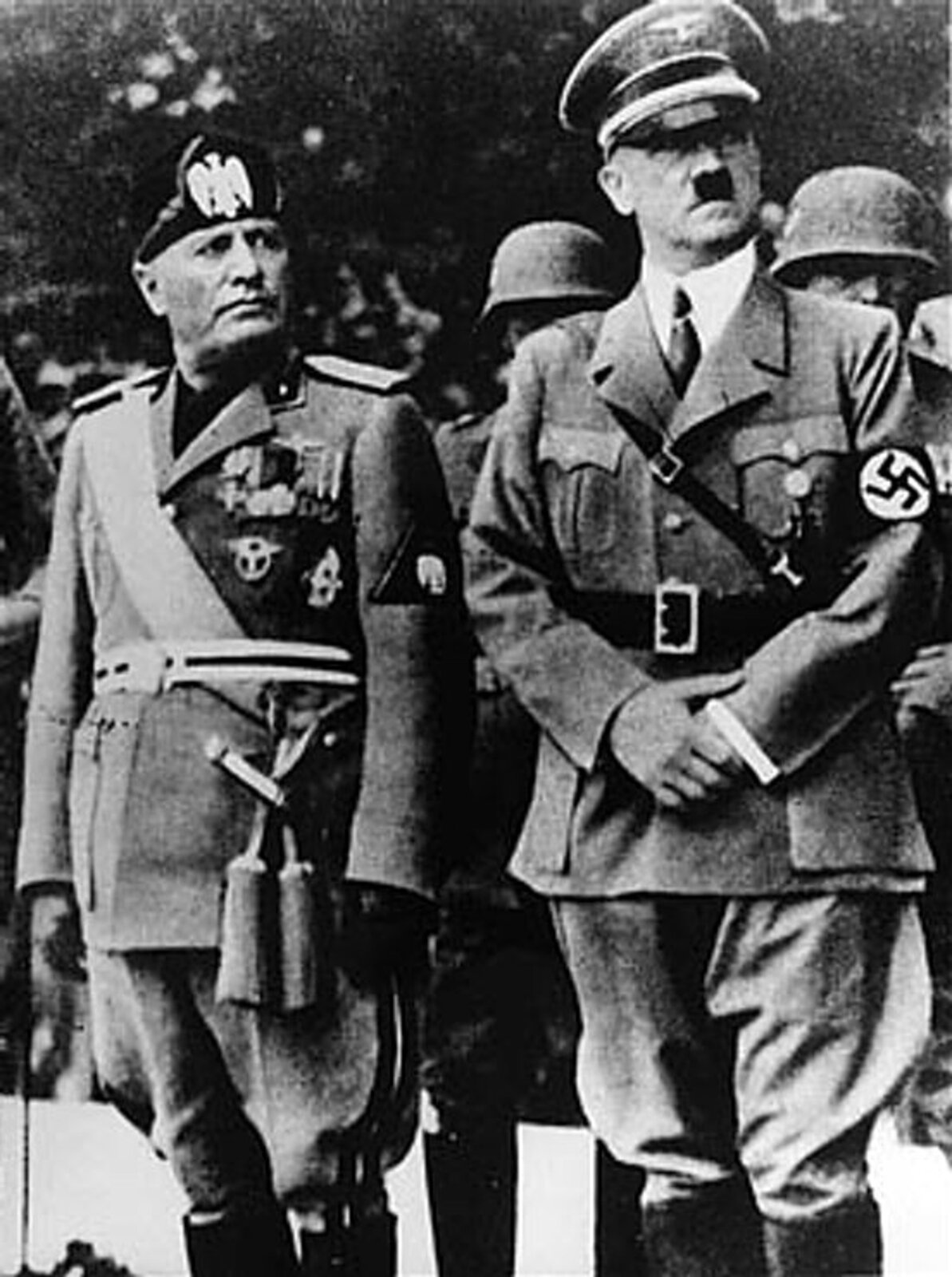
One of such ideologies is certainly fascism. Fascism was born in Italy during the rule of Benito Mussolini. Fascism can be treated as a rebellionrebellion against ideas and values that have dominated political thought since the French Revolution. In place of rationalism, progress of freedom and equality, the fascists proposed ideas of leadership, power, heroism and war. Fascism is anti‑capitalist, anti‑democratic, anti‑liberal and anti‑individualistic. The most important value of fascism is belief in the slogan „in unity, there is strength.” The individual's needs are nothing. The individual’s identity must be completely absorbedabsorbed by the identity of a community or a social group. The fascist ideal is a „new man” guided by duty and honor, who desires and is able to devote his life and personal needs for the good of the state, nation, race or a leader representing this nation.
There were no racist elements in Italian fascism. The activity of the state was based on the charisma of the leader. Society functioned in corporations, thanks to which the interests of social groups were subordinated to the interests and the good of the state. Civic activities were to show support for the authority that pursued national interests.
In Germany, apart from the cult of the leader and the introduction of the principles of a totalitarian state, there has been a radicalization of ideology. Racist theories introduced by Adolf Hitler transformed fascist ideology into Nazism.
Feminism
Feminism is a political ideology and a social movement, whose supporters believe that women's equal rights are one of the basic elements of functioning of societies. It was born in the nineteenth century in Anglo‑Saxon countries. The American and English suffragettes were the first to fight for women's rights. The main objective of their actions was the equality of women's and men's rights, improvement of the economic situation of women, especially the single ones, access to education and the opportunity to study. They also demanded changes in family law, which was unfavorableunfavorable to women, subordinating them to the decisions of the male „head of the family.” They also sought to obtain electoral rights, seeing in the access to parliament the path to changes in other areas of life.
The granting of electoral rights to women in most democratic countries after the first world war weakened the feminist movements for some time. However, since the end of the 1980s, we can speak about the revivalrevival of feminism. CurrentlyCurrently the movement has a couple of different facesfaces. Liberal feminists notice the complexitycomplexity of women's problems in various countries around the world. They are fighting, in particular, for the right of access to education for women in third world countries and equal wages for women and men in highly developed countries. Radical feminists strivestrive to drastically reduce men's participation in political life. They advocate profoundprofound social change towards increasing individual freedom. Certainly, the value of the feminist movement was to bring equality in access to electoral law and help women emancipate themselves in the social sphere.
Anarchism
For supporters of the anarchist ideology, the most important thing is freedom of an individual, not limited by a state, power of capital or religion. Anarchists believe that people are inherently good, and that is why state structures are not necessary, because citizens will create a community of stateless, exploitation‑free form of cooperation, based on moral principles, understanding and harmonious interpersonal relations.
The supporters of anarchism are individuals with extremely anti‑state views, assuming that an individual operating in a social group only has positive instincts and state institutions are not needed to perform integration and regulatory functions. The individuals will manage themselves. For the supporters of this ideology, the state was above all a form of oppression and guaranteed the advantage of privileged classes. The creation of a classless societyclassless society was to justify the worthlessnessworthlessness of state institutions.
Political ideologies have been and are an important element of the life of democratic societies. They allow political parties to shape recognizable programs, in which sometimes slogans define a political programme. Ideologies determine the place of political parties in the electoral market. Due to including the name of an ideology into the name of the party, it is easier for a citizen to accept or reject its ideas. Thanks to ideology, we can establish the attitudeattitude of its supporters to individual freedom, the state‑church relationship, or the level of state intervention in the economy. Knowing the theoretical foundations of ideology, it is easier for the citizen to find representatives with similar view of the world to his own.
Listen to the abstract recording to review the material and new vocabulary. Then do the vocabulary exercise. Match the pairs: English and Polish words.
nadzorować, papieski, negować, odrzucać, społeczeństwo bezklasowe, chłopstwo, zostać zastąpionym, odrzucić, zwolnić, zakazywać, zabraniać
| to forbid | |
| to be replaced by | |
| classless society | |
| to negate | |
| to supervise | |
| to dismiss | |
| peasantry | |
| papal |
Keywords
Catholic social teaching, Christian democracy, fascism, feminism, individualist/collectivist/ communist/syndicalist anarchism
Glossary
zubożały
szlachta
bogaty
chłopstwo
papieski
całościowy
pomocniczy
zakazywać, zabraniać
kler, duchowieństwo
ekstremalny, radykalny
pogląd
bunt, powstanie
wchłonięty
niekorzystny
odrodzenie
oblicze (również w przenośni)
złożoność
starać się
głęboki, poważny
prąd, nurt
negować, odrzucać
nadzorować
odrzucić, zwolnić
zbrodniczy aparat
spontaniczny
zostać zastąpionym
społeczeństwo bezklasowe
bezwartościowość
podejście, stosunek