Artists in the service of advertising
you will analyse and describe postersposters as an artistic form of expression
you will define poster's purpose
you will tell the difference between a poster, a placard and an advertisement
you will get to know the names and personalities of the creators of the modernist poster
Nagranie dostępne na portalu epodreczniki.pl
Wysłuchaj nagrania abstraktu i zastanów się, czego jeszcze chciałbyś się dowiedzieć w związku z tematem lekcji.
Illustrated posters have started to be created in the second half of the 19th century along with the development of chromolithographychromolithography that not only allowed the colour to be introduced to placards but also to combine illustration with a text. Posters appeared in big cities during the Industrial Revolution. A need to inform the society about cultural events (plays, concerts, exhibitions and charity events) arose as well as to advertise fashionable goods and services.
Match the terms with their dictionary definitions. Pay attention to the shared features and differences of the listed texts.
billboard, advertisment, placard, poster
| a poster informing about a public event or happening | |
| a type of graphic that inform, advertize and agitate | |
| an inscription, drawing, poster, film etc. that aim is to encourage the pottential customers to purchase certain items or services | |
| a large-sized advertising poster placed on special board |
Look for information on the „Polska Szkoła Plakatu” (Polish School of Poster) on the Internet resources. Pay attention to the date of the trend's birth, its representatives, determinants of the style and the function of the characteristic means of expression (rhetorical figures).
Decide whether the following statements are true or false.
| True | False | |
| The Polish School of Posters was founded in the second half of the 20th century. | □ | □ |
| The Polish artists have continued the tradition of designing posters. | □ | □ |
| The posters were created according to the principles of socialist Realism. | □ | □ |
| A poster has started to have the same value as a painting. | □ | □ |
| The artists have willingly used metaphors and hyperboles as a form of expression. | □ | □ |
| The need of using rhetorical figures was enshrined in the declaration of the Polish school of Posters principles. | □ | □ |
| The artists belonging to the Polish School of Posters share their framework. | □ | □ |
Art Nouveau poster
Alfons Mucha (1860‑1939) was a Czech painter, illustrator and designer of posters, advertisements, calendars, magazine covers, sculptures and jewellery. The creator of an innovative and admired le style Mucha that embodied the principles of the French Art NouveauArt Nouveau. In the years 1893‑1903, he worked in Paris and achieved a remarkable success. In 1902 he published a book of design for artists and craftsmen. Mucha was deeply interested in symbolism, mysticism and theosophy. He also belonged to Masonry. Decorative panneaux: The Seasons (1896), Zodiac (1896), The Arts (1898), The Times of the Day (1899), The Precious Stones (1900) as well as a monumental oil painting series The Slav Epic (1912‑1926) are some of his most famous works. The artist used chromolithography technique.
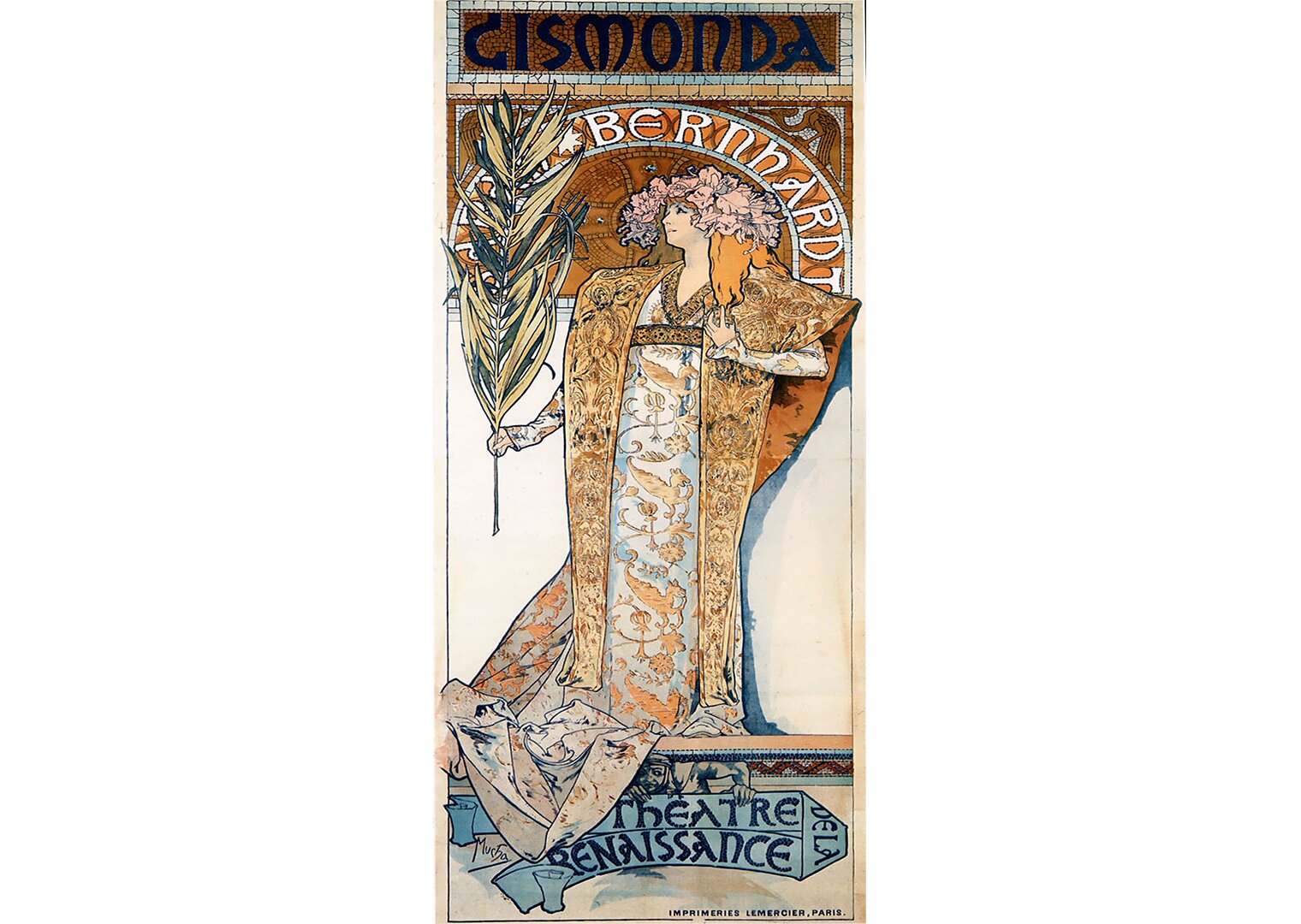
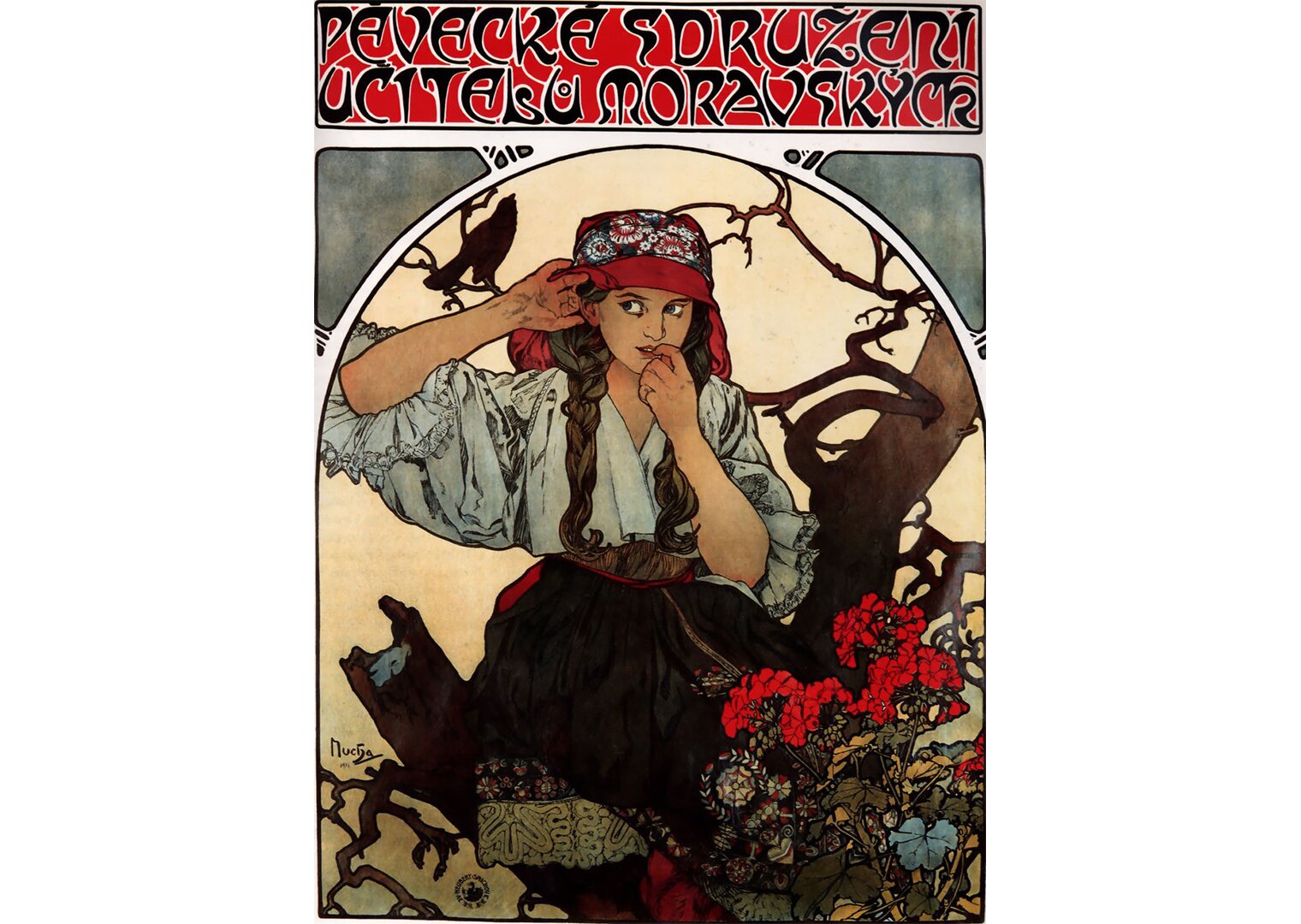
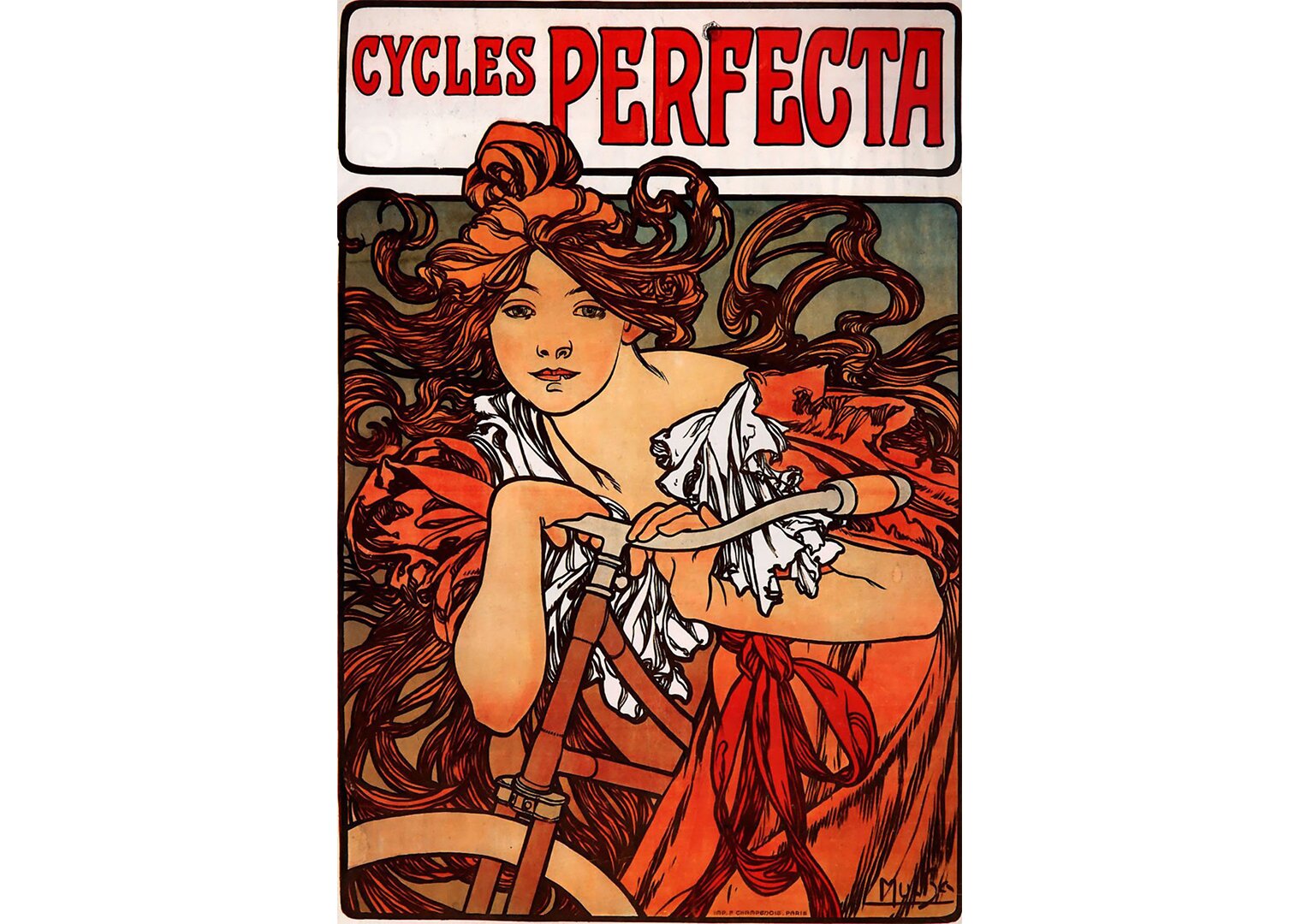
The poster of the play Gismonda (picture no.1) ordered by Sarah Bernhardt - the queen of the Parisian theatre, was essential for Mucha's career. It resulted in a long‑standing lucrative contract with the actress, in fame and financial reward. It was a ground‑breaking project, totally different from the previous placards because of its original narrow, vertical shape. The artist drew an idealized portrait of the actress on a scale 1:1. Instead of using vivid contrastive colours he chose refined pastel colour scheme.
Pictures no.2 and no.3 show the images of beautiful sensual women with long flowing hair and dreamy eyes, typical for Mucha style, that attract the viewer's attention. The women's heads were usually encircled with a semicircle filled with flowery ornamentsornaments, their apparel was decorated with an arabesquearabesque. He drew his inspirations from ByzantineByzantine, Celtic, Japanese and Slavic art as well as from Rococo.
A great number of Mucha's works are reproduced and used as decorative motifs of calendars, china, notes, bags and boxes nowadays. Decide whether it is a good tool for art promotion or whether it makes art more trivial.
Masters of the poster: Teodor Axentowicz and Jan Bulas
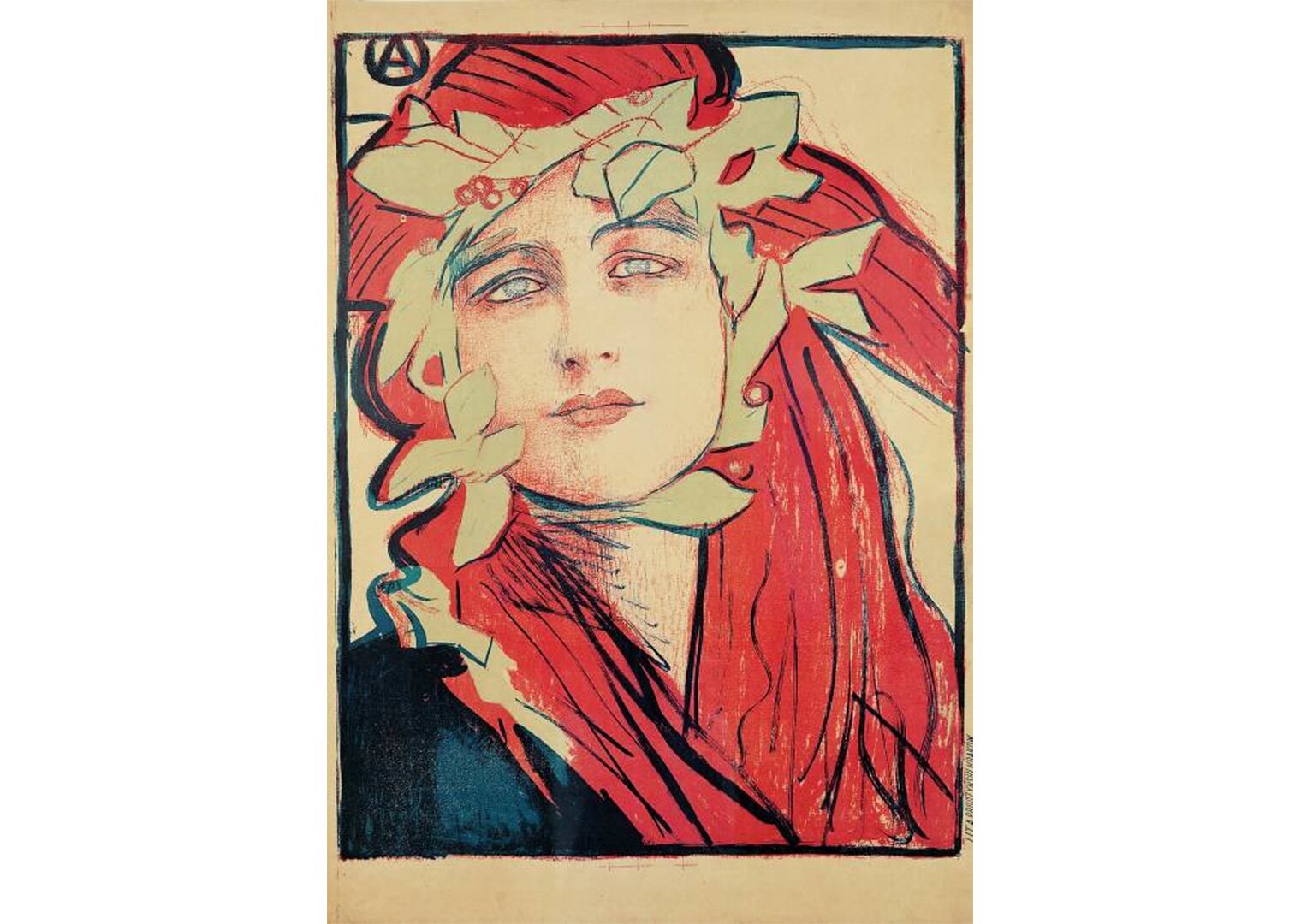
The 1st International Poster Exhibition took place in Cracow in 1898. A year before, in the same place, The Society of Polish Artists „Sztuka” was established. The exquisite artists Józef Chełmoński, Teodor Axentowicz and Józef Mehoffer were some of its members. Picture no.1 shows one of the most recognizable Modernist placards created by Teodor Axentowicz, the author of subtle, pastel female portraits and folklore paintings. In the poster there is a beautiful ginger‑haired muse with a laurel on her head. The artist used a black bold line to paint it which brings out the woman beauty.
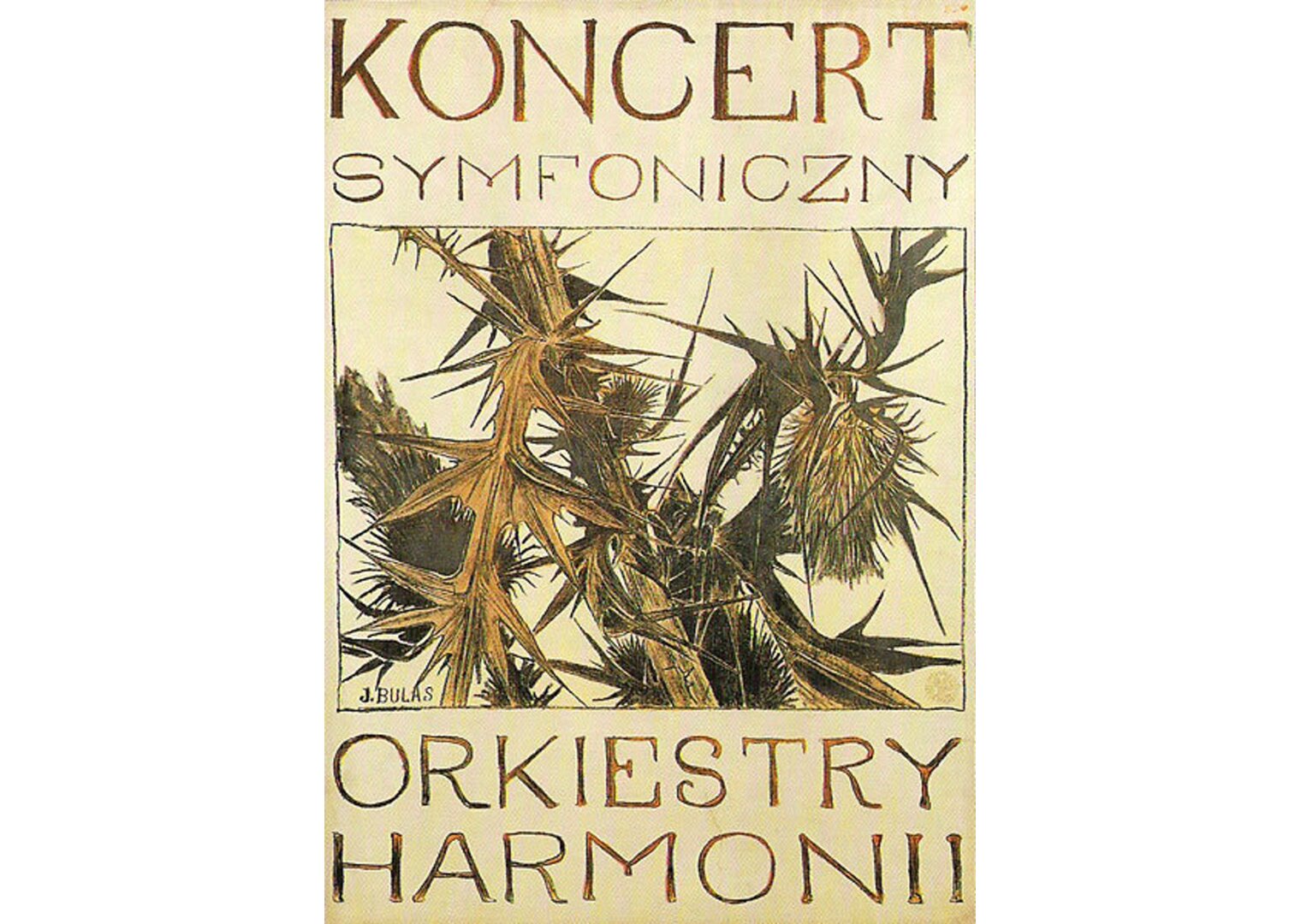
Picture no.2 shows a placard designed by Jan Bulas, a painter, printmaker and book illustrator. The decorative motif used here comprises dry thistles that make it expressive and graphic. The similar style of vegetal ornaments in the shape of vignettes or decorative initials was used by the most comprehensive Modernist artist - Stanisław Wyspiański. He drew his inspiration from the acknowledged French illustrator and poster designer – Eugene Grasset.
Prepare a multiple-choice question that will help your classmates to check their knowledge gained during the lesson.
Question: ...
- ...
- ...
- ...
- ...
- ...
Listen to the abstract recording to review the material and new vocabulary. Then do the vocabulary exercise. Match the pairs: English and Polish words.
arabeska, grafika użytkowa, ornament, koneser, odbitka, chromolitografia, secesja, litografia
| Art Nouveau | |
| chromolithograph | |
| lithograph | |
| connoisseur | |
| ornament | |
| applied graphic | |
| arabesque |
Keywords
poster, Art Nouveau, applied graphics
Glossary
plakat
odbitka
secesja
chromolitografia
litografia
rozrywka
ornament
grafika użytkowa
arabeska
motyw bizantyjski
koneser