The anti-Hitler coalition
when the USA and the USSR joined the anti‑Hitler coalition;
what the Atlantic Charter and the Declaration by United Nations were and what was their significance;
where and for what purpose the major anti‑Hitler coalition conferences were held;
what the Big Three was;
about the significance of the Tehran, Yalta and Potsdam Conferences.
The first stage of the formation of the anti‑Nazi coalition can be considered to be the declaration of war on Germany by Great Britain and France on 3 September 1939. However, after the defeat of European states in 1940, the burden of the fight rested mostly on Great Britain. This fight was supported by the American Lend‑Lease Act, but it was mainly dealing with economic and moral matters. The United States and Great Britain tightened their cooperation in the summer of 1941 with the signing of the Atlantic CharterAtlantic Charter, which defined the goals of the British–American politics during World War II.
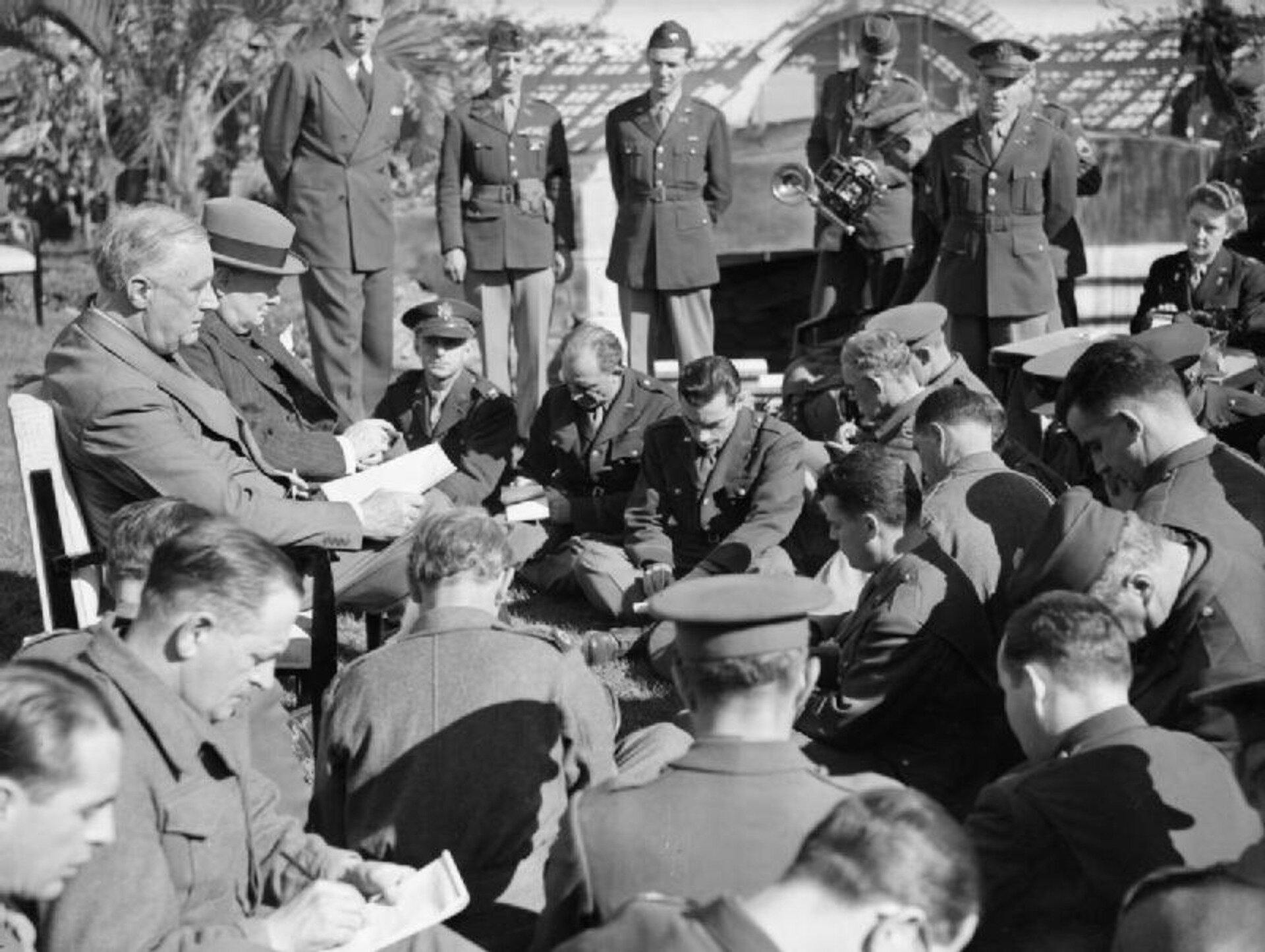
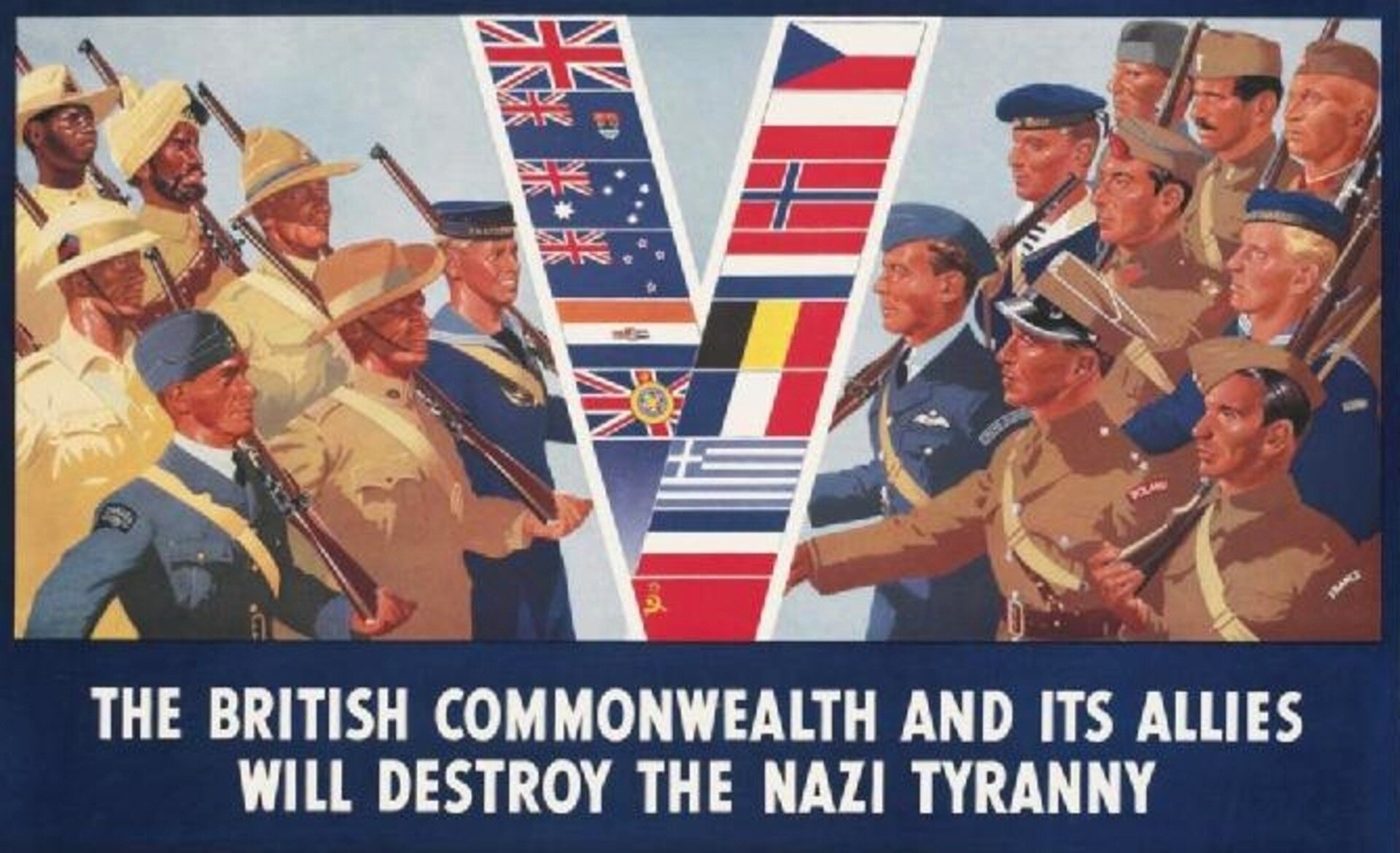
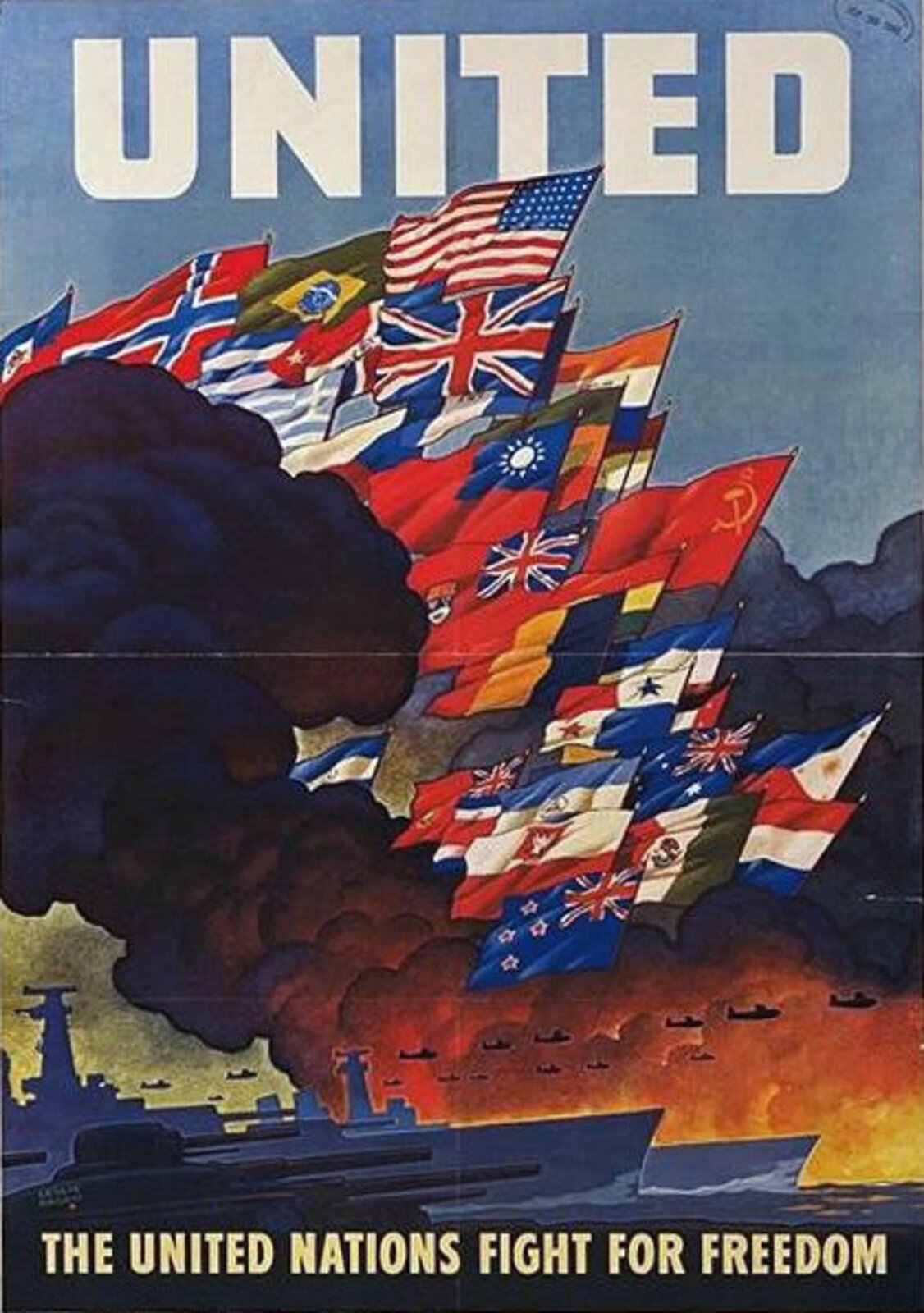
However, the two major pushes towards establishing the anti‑Nazi coalition were the outbreak of the German–Soviet war on 22 June 1941 and the renunciation of the isolationism policy by the United States, which joined the war after the attack on Pearl Harbor on 7 December 1941. The large anti‑Hitler coalition that was created then played a decisive role in further armed operations. The leaders of the great powers—Great Britain, the United States and the Soviet Union, called the Big ThreeBig Three—held regular international conferences between themselves and representatives of the other AlliesAllies, where they made decisions regarding the current armed operations and political affairs.
Especially important were the major conferences in Tehran in 1943 and in Yalta in 1945, during which Josef Stalin, Franklin Roosevelt and Winston Churchill discussed the most important military actions (e.g. the opening of the second front or the USSR joining the war against Japan) and the shape of the post‑war world (such as the division of Germany or the zones of influence). The last major conference took place after the surrender of the Third Reich. In the summer of 1945 in Potsdam, the representatives of the Big ThreeBig Three met again, but in a slightly different composition (Franklin Roosevelt was replaced by Harry Truman, and Winston Churchill, when it was already being held, by Clement Atlee). The conference confirmed and determined in detail the shape of the post‑war world and the fate of the occupied Germany, which was to be decided by the international Allied Control CouncilAllied Control Council.
Read about the most important events concerning the anti‑Hitler coalition. Which of the events were the most important and why?
Read the source text and do the exercise.
The Atlantic CharterThe President of the United States of America and the Prime Minister, Mr. Churchill, representing His Majesty’s Government in the United Kingdom, being met together, deem it right to make known certain common principles in the national policies of their respective countries on which they base their hopes for a better future of the world.
First, their countries seek no aggrandizement, territorial or other;
Second, they desire to see no territorial changes that do not accord with the freely expressed wishes of the peoples concerned;
Third, they respect the right of all peoples to choose the form of government under which they will live; and they wish to see sovereign rights and self‑government restored to those who have been forcibly deprived of them;
Fourth, they will endeavor, with due respect for their existing obligations, to further the enjoyment by all states, great or small, victor or vanquished, of access, on equal terms, to the trade and to the raw materials of the world which are needed for their economic prosperity;
Fifth, they desire to bring about the fullest collaboration between all nations in the economic field with the object of securing, for all, improved labor standards, economic advancement, and social security;
Sixth, after the final destruction of the Nazi tyranny, they hope to see established a peace which will afford to all nations the means of dwelling in safety within their own boundaries, and which will afford assurance that all the men in all the lands may live out their lives in freedom from fear and want;
Seventh, such a peace should enable all men to traverse the high seas and oceans without hindrance;
Eighth, they believe that all of the nations of the world, for realistic as well as spiritual reasons, must come to the abandonment of the use of force. Since no future peace can be maintained if land, sea, or air armaments continue to be employed by nations which threaten, or may threaten, aggression outside of their frontiers, they believe, pending the establishment of a wider and permanent system of general security, that the disarmament of such nations is essential. They will likewise aid and encourage all other practicable measures which will lighten for peace‑loving peoples the crushing burden of armaments.
Source: Franklin D. Roosevelt, Winston S. Churchill, The Atlantic Charter.
Which important principles of conducting military operations and shaping the post-war world were to be introduced with the Atlantic Charter? Mark the false statement.
- Free access to raw materials, freedom of economic development.
- Ensuring international peace.
- The right of all peoples to choose the form of government
- The right to self-determination.
- Restoration of sovereign rights and self-government to nations forcibly deprived of them.
- Restoring freedom and sovereignty to the nations which had these values taken away from them.
- Renunciation of force by states.
- Inviolability of borders.
- Four Freedoms: freedom of worship, freedom of speech, freedom from want and freedom from fear.
- Granting control of the future political map of the world to the leaders of Great Britain and USA.
- Disarmament if needed.
Match each term with its definition.
policy of non-involvement in the affairs of other states, and instead focusing on protecting the country’s own interests, institution created after the surrender of Germany in May 1945, composed of representatives of the victorious powers, the name for the leaders of the Allied powers during the Second World War (United States: Roosevelt, Great Britain: Churchill, USSR: Stalin), member states of the alliance of the Third Reich, Italy and Japan, fighting against the Allies during World War II, states fighting against Germany and its allies during World War II, an arrangement of two or more countries or organisations meant to help achieve a common objective
| Axis powers | |
| Allies | |
| Isolationism | |
| Alliance | |
| The Big Three | |
| The Allied Control Council |
Keywords
alliance, anti‑Hitler coalition, Big Three, Atlantic Charter
Glossary
Lend‑Lease Act – dosłownie umowa pożyczki‑dzierżawy, ustawa z 1941 r. pozwalająca prezydentowi Stanów Zjednoczonych sprzedawać i udostępniać rządom innych państw broni, amunicji i innych towarów z obszaru obronności.
Państwa Osi – państwa należące do obozu sojuszu III Rzeszy, Włoch i Japonii, walczące przeciw aliantom podczas II wojny światowej.
Alianci – państwa walczące przeciwko Niemcom i ich sojusznikom podczas II wojny światowej
Karta Atlantycka – deklaracja z 14 sierpnia 1941 r. podpisana przez premiera Wielkiej Brytanii Winstona Churchilla i prezydenta Stanów Zjednoczonych Franklina D. Roosevelta określająca cele polityki brytyjsko‑amerykańskiej w czasie II wojny światowej i po jej zakończeniu. Zakładała m.in. prawo narodów do samostanowienia się i pokojowe rozstrzyganie sporów międzynarodowych. Poprzedzała utworzenie ONZ.
Deklaracja Narodów Zjednoczonych – deklaracja z 1 stycznia 1942 r. podpisana przez przedstawicieli 26 państw (w tym Polskę), w której zobowiązały się one do walki z państwami faszystowskimi i niezawierania z nimi porozumień ani pokoju. Była jednym z dokumentów poprzedzających utworzenie ONZ.
Izolacjonizm – strategia polityczna polegająca na nieangażowaniu się w sprawy innych państw i skupieniu się na obronie własnych interesów. Był jednym z fundamentów polityki Stanów Zjednoczonych na przełomie XIX i XX wieku.
Sojusz – układ dwóch lub więcej państw lub organizacji, który ma doprowadzić do wspólnego zamierzonego celu.
Wielka Trójka – określenie przywódców mocarstw alianckich podczas II wojny światowej (Stanów Zjednoczonych – Roosevelt; Wielkiej Brytanii – Churchill; ZSRS - Stalin), którzy omawiali sprawy wojenne i kształt przyszłego świata na konferencjach międzynarodowych w Teheranie (1943), Jałcie i Poczdamie (obie 1945).
Sojusznicza Rada Kontroli – urząd powołany do życia po kapitulacji Niemiec w maju 1945 r., w skład którego wchodzili przedstawiciele zwycięskich mocarstw – Wielkiej Brytanii, USA, ZSRS oraz Francji. Był najwyższym organem prawodawczym i administracyjnym działającym na terenie okupowanych Niemiec. Jego powołanie przewidziano na konferencji w Jałcie w lutym 1945 r.