Development of Gdynia, and other economic achievements of the Second Polish Republic
what difficulties the reborn Poland struggled with;
the most important economic successes of the Second Polish Republic;
the reasons for creating, and the importance of the portport in Gdynia;
who Eugeniusz Kwiatkowski and Władysław Grabski were;
what the following terms mean: hyperinflation, Central Industrial DistrictIndustrial District;
the location, on a map, of industrial centers in interwar Poland.
Reborn after 123 years, Poland was a country made up of lands from three partitions, which differed significantly from each other. The Polish authorities were faced with the task of their rapid integration and unification.
One of the biggest problems shortly after regaining independence was hyperinflation. Thanks to the actions of the government of experts led by Prime Minister Władysław Grabski, the crisis was defused and the financial system was reformed. In 1924, the new Polish currency became the Polish złoty. Also, construction of the port in Gdynia was commenced (after the war, Poland gained access to the sea), which developed from a small fishing village into a modern city. This had been due to the unstable situation in the Free City of Danzig (Gdańsk), whose authorities had not been favorably disposed towards Poland. In just a few years, Gdynia became the largest and the most modern port on the Baltic Sea (1934) with over 83 thousand inhabitants. The initiator and creator of this undertaking was Eugeniusz Kwiatkowski.
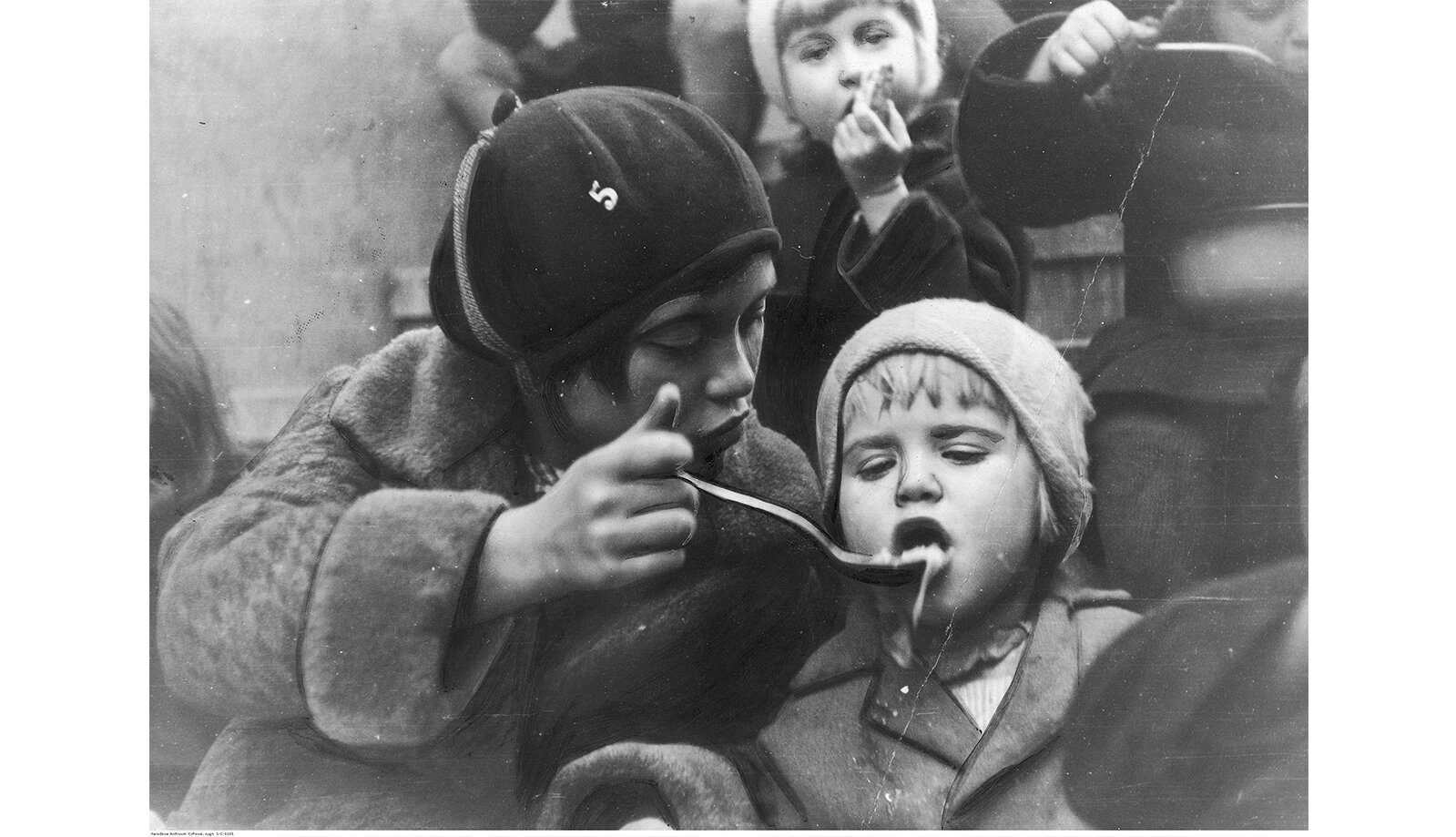
In the 1930s, the Great Depression left its mark on Poland (it had begun in the United States in 1929). Industrial production fell sharply and unemployment increased. The authorities made an attempt to combat the crisis. The economy was entrusted to Eugeniusz Kwiatkowski, who became Vice Prime Minister and Minister of the Treasury. He began implementing a great plan supposed to develop the economy and modernize the Polish armed forces. In 1937, construction of the Central Industrial District in southern Poland began. Numerous factories and industrial plants were opened. These were undertakings on an unprecedented scale. The strong revival of the economy that they brought was interrupted by the outbreak of World War II in September 1939.
What were the causes of Poland’s difficult economic development after World War I?
Previously, Polish lands had belonged to {#three}{seven} different countries. World War I took place on Polish lands and caused their {development}{#destruction}. Germany was {satisfied}{#unsatisfied} with the outcome of the war, and hindered Poland’s economic development. Poland had {wide}{#narrow} access to the sea and {#no ports}{many ports}.
Arrange the sentences to show the vicious circle. Start with “Factories go bankrupt”.
- Factories do not have anyone to sell their products to.
- Factories go bankrupt.
- People cannot afford to shop.
- People have no income.
- People lose their jobs.

Complete the description of the banknote below.
The banknote presents:
- the likeness of Doubravka of Bohemia,
- denomination (value of the banknote) written in words: what is the value? ....................
- denomination written as a number: what is the number? ............
- date on which the banknote was issued: what is the date? ..................................
- place of issue: where? ............
- name of the institution that issued the banknote: what is the name? ............................
- abbreviated name of the institution that issued the banknote: what is it ............
- signatures of the persons who issued the banknote: whose? ..........................................................




Select the correct answers.
What are the main rivers flowing through the Central Industrial District?
{#Vistula}{Oder}{Warta}{#San}
What major cities are located there?
{Warsaw}{#Kielce}{Cracow}{Sanok}{#Przemyśl}
What types of industry were being developed?
{#machines}{#munitions}{pharmaceutics}{#aviation}
Select the names of the cities in which the following were located:
The FSC Automotive Factory:
{#Lublin}{Radom}{Dębica}
The ‘Stomil’ Tire Company:
{Jasło}{#Dębica}{Zamość}
The Cellulose Factory:
{Tarnobrzeg}{#Niedomice}{Ostrowiec}
The State Aviation Works:
{#Mielec}{Radom}{Starachowice}
The Steelworks:
{Rzeszów}{Mielec}{#Stalowa Wola}
The State Gunpowder and Explosives Factory:
{Puławy}{Opoczno}{#Pionki}
Look for information about the Polish culture of the interwar period and its successes, and then complete the text.
illiteracy, Nobel, the partitioners, “The Peasants”, Maria Dąbrowska, “The Coming Spring”, Stefan Żeromski, Władysław Reymont, poetry, Julian Tuwim
In the reborn Poland, there was development not only of the economy, but also culture and education. Thanks to common education, .............................................., i.e., inability to read and write, decreased significantly. Polish artists, after years of prohibitions from the authorities .............................................., could finally create without any obstacles. It was especially literature that flourished, and eminent Polish writers greatly contributed to promotion of Poland in the world: .............................................. (author of the novel “Nights and Days”), .............................................. (best known for his books “The Labors of Sisyphus”, “Homeless People” and ..............................................), as well as .............................................. (in 1924, he received the .............................................. Prize in Literature for his novel ..............................................). Apart from literature, .............................................. was also very popular. It was a very fruitful period for poets such as Antoni Słonimski, Jarosław Iwaszkiewicz, and the well-known .............................................. – author of “The Locomotive”.
Keywords
Gdynia, Second Polish Republic, economy, crisis, inflation, Central Industrial District
Glossary
Port – miejsce postoju, rozładunku i obsługi statków pasażerskich i handlowych.
Prezydent – w republice, głowa państwa – osoba stojąca na jego czele.
Premier – osoba stojąca na czele rządu, pierwszy z ministrów.
Hiperinflacja – bardzo wysoka inflacja, gwałtowny spadek wartości pieniądza.
Waluta – jednostka monetarna, która jest używana w danym kraju. Inaczej nazwa pieniądza.
Wielki kryzys – największy kryzys gospodarczy w XX wieku. Rozpoczął się w USA w 1929 roku i trwał do 1933. Objął swym zasięgiem prawie cały świat.
Giełda – instytucja za pośrednictwem której kupuje się, sprzedaje lub wymienia papiery wartościowe i walutę.
Inwestycja – środki finansowe przeznaczone na powiększenie kapitału lub uzyskanie zysków w przyszłości
Okręg przemysłowy – skupisko zakładów przemysłowych na wybranym, niewielkim obszarze.