Przeczytaj
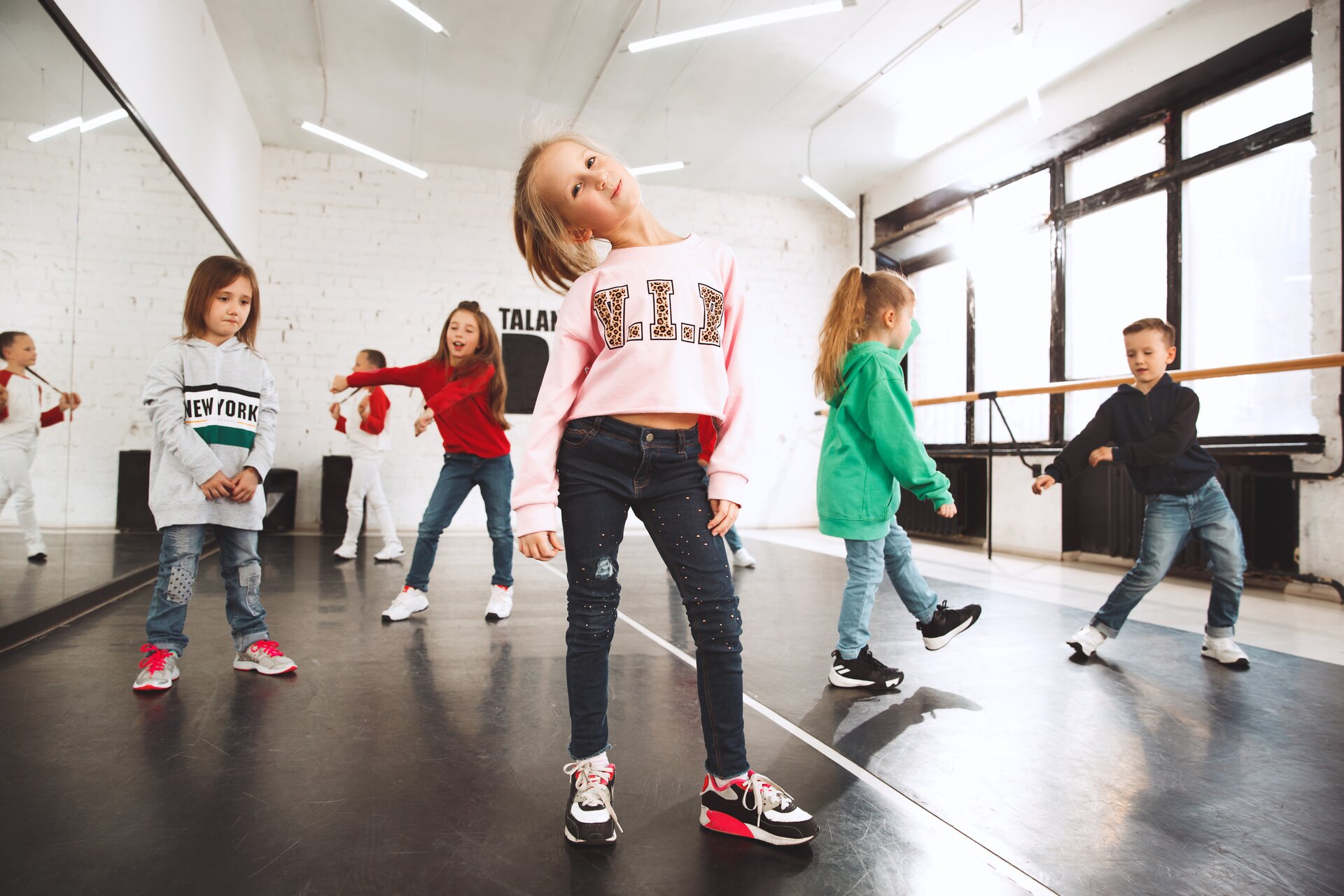
Some people want to become professional dancers. That’s why they take dance classes. What are dance classes like? What do the students hope for? Study the text in this section to find out.
Są osoby, które chcą zostać zawodowymi tancerzami/tancerkami i dlatego biorą lekcje tańca. Jak takie zajęcia wyglądają? Na co liczą osoby, które na nie chodzą? Przeczytaj tekst, żeby się tego dowiedzieć.
Match words with their definitions.
Połącz wyrazy z ich definicjami.
Study the text about dance classes. Then, do the tasks below.
Przeczytaj tekst o lekcjach tańca, a następnie wykonaj zadania.
What Are Dance Classes Like?Dancing is a very popular activityactivity. We often dance at partiesparties or festivalsfestivals. Some people do more than that. They take dance classes. Some do it for fun, but many want to become professional dancersdancers. What are their dance classes like?
Claire, 9
My mum says I have a natural sense of rhythmsense of rhythm. That’s why I take dance classes twice a week! My dance instructordance instructor, Mrs. Smith, is great. When she hears a melodymelody, she steps forwardsteps forward and dances. Then, she asks students to copy her movementscopy her movements. It’s difficultdifficult but I do my best. One day, I’ll becomeI’ll become a dance instructor like Mrs. Smith!
Elizabeth, 10
I want to be a ballet dancerballet dancer. I take dance classes three times a week. BalletBallet is very difficult. My instructor always tells me to keep my balancekeep my balance. I stand on my toes and move to the leftmove to the left and to the rightto the right. I’m not great yet, but I want to get betterget better. In the future, I’ll beI’ll be a famous ballerinaballerina!
Julie, 9
Dancing is my passion! I take dance classes twice a week. A lot of people dance alonealone. I dance with a partner. Partner dancesPartner dances are hard! You and your partner need to keep the same rhythmkeep the same rhythm. One wrong stepstep and you need to start again! When my partner steps forward, I step backwardsstep backwards. We always dance to the same tunetune. In the future, we’ll take part in a dance tournamentdance tournament.
Źródło: Zuzanna Kościuk, licencja: CC BY-SA 3.0.
Study the text and choose the correct answer.
Przeczytaj tekst i wybierz prawidłowe odpowiedzi.
Search for the information in the text and decide if the following sentences are true or false.
Po przeczytaniu tekstu zdecyduj, czy podane zdania są prawdziwe, czy fałszywe.
- People only take dance classes for fun.
TRUEFALSE
- Claire plans to have the same job as Mrs. Smith.
TRUEFALSE
- Elizabeth thinks that the most important thing about ballet is balance.
TRUEFALSE
- Julie dances with a partner that she likes.
TRUEFALSE
- Claire and Julie have the same number of dance classes a week.
TRUEFALSE
Drag the words to fill in the gaps. All the words appear in the text.
Przeciągnij wyrazy we właściwe miejsca. Wszystkie wyrazy pojawiają się w tekście.
3.1. tournament, 2. ballet, 3. move, 4. movements, 5. rhythm, 6. partner dancer. Her teacher asks her to 4.1. tournament, 2. ballet, 3. move, 4. movements, 5. rhythm, 6. partner to the left and to the right. Julie has a dance 5.1. tournament, 2. ballet, 3. move, 4. movements, 5. rhythm, 6. partner. They want to take part in a dance
6.1. tournament, 2. ballet, 3. move, 4. movements, 5. rhythm, 6. partner.
Słownik
/ ækˈtɪvɪti /
działanie, zajęcie
/ əˈləʊn /
sam/sama, samotny/samotna
/ ˌbæləˈriːnə /
baletnica
/ ˈbæleɪ /
balet
/ ˈbæleɪ ˈdɑːnsə /
tancerz baletowy/tancerka baletowa
/ ˈkɒpi hɜː ˈmuːvmənts /
naśladować jej ruchy
/ ˈkʌplz / / ˈkʌpl /
pary [para]
/ dɑːns ɪnˈstrʌktə /
nauczyciel/nauczycielka tańca
/ dɑːns ˈpɑːtnə /
partner/partnerka do tańca
/ dɑːns ˈtʊənəmənt /
konkurs taneczny
/ ˈdɑːnsəz / / ˈdɑːnsə /
tancerze/tancerki [tancerz/tancerka]
/ ˈdɪfɪkəlt /
trudne [trudny/trudna], ciężkie [ciężki/ciężka]
/ ˈfɛstəvəlz / / ˈfɛstəvəl /
festiwale [festiwal]
/ fɔː fʌn /
dla zabawy
/ gɛt ˈbɛtə /
poczuć się lepiej, stać się lepszym
/ ˈhɛlpfʊl /
pomocne [pomocny/pomocna], przydatne [przydatny/przydatna]
/ aɪl bɪ / / bɪ /
stanę się [stać się]
/ aɪl bɪˈkʌm / / bɪˈkʌm /
stanę się [stać się]
/ kiːp maɪ ˈbæləns /
utrzymuję równowagę
/ kiːp ðə seɪm ˈrɪðəm /
utrzymywać ten sam rytm
/ ˈmɛlədi /
melodia
/ mɔː ðæn ðæt /
więcej niż to
/ muːv tuː ðə lɛft /
ruszyć się w lewo
/ muːv tuː ðə raɪt /
ruszyć się w prawo
/ ˈpɑːtiz / / ˈpɑːti /
przyjęcia [przyjęcie]
/ ˈpɑːtnə ˈdɑːnsɪz / / ˈpɑːtnə ˈdɑːns /
taniec partnerski (z drugą osobą)
/ sɛns ɒv ˈrɪðəm /
poczucie rytmu
/ stɛp /
krok
/ stɛp ˈbækwədz /
krok w tył
/ stɛpz ˈfɔːwəd / / stɛp ˈfɔːwəd /
stawia krok w przód [stawiać krok w przód]
/ teɪk dɑːns ˈklɑːsɪz /
uczestniczenie w zajęciach tanecznych
/ tjuːn /
melodia
/ wil ˈteɪk pɑ:t ɪn / / ˈteɪk pɑ:t ɪn /
weźmiemy udział w [wziąć udział w]
Źródło: GroMar Sp. z o.o., licencja: CC BY‑SA 3.0