Exergonic and endoenergetic reactions – oxidation and combustion
that the substances involved in the chemical reaction are substrates and the substances obtained as a result thereof are products;
the course of chemical reactions is recorded using equations, symbols of elements and formulas of chemical compounds;
digits placed in front of symbols of elements and formulas of chemical compounds in the equations of chemical reaction are stoichiometric coefficients;
chemical reactions can be divided into synthesis, analysis and exchange reactions.
what kind of effects may accompany chemical reactions;
differences between combustion and oxidation;
to list examples of combustion and oxidation from everyday life and the human environment;
What effects can accompany chemical reactions?
All chemical reactions are accompanied by an energy effect. Under this concept, we mean the emission of energy into the environment or its uptake by reacting substances. During the conversion of substrates into products, the system may give energy in various forms to the environment – in the form of heat, light, work or even electricity. The same type of energy during other chemical changes can be absorbed by reacting substrates. Whether energy will be released during the reaction or whether energy is consumed depends on the substances reacting with each other.
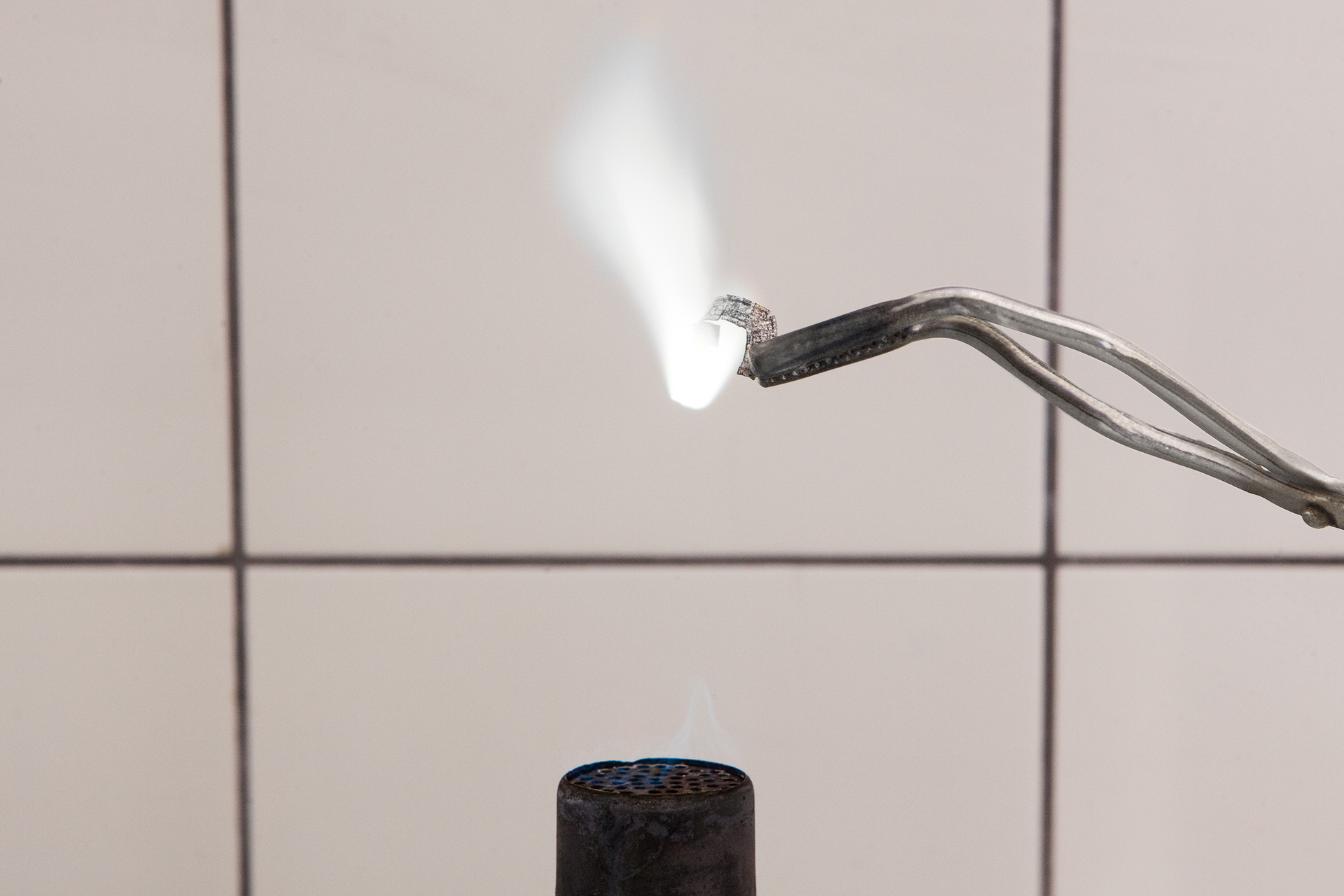




Before you watch the movie „Combustion of magnesium in oxygen”, formulate a research question and a hypothesis. Write down the observations and conclusions.
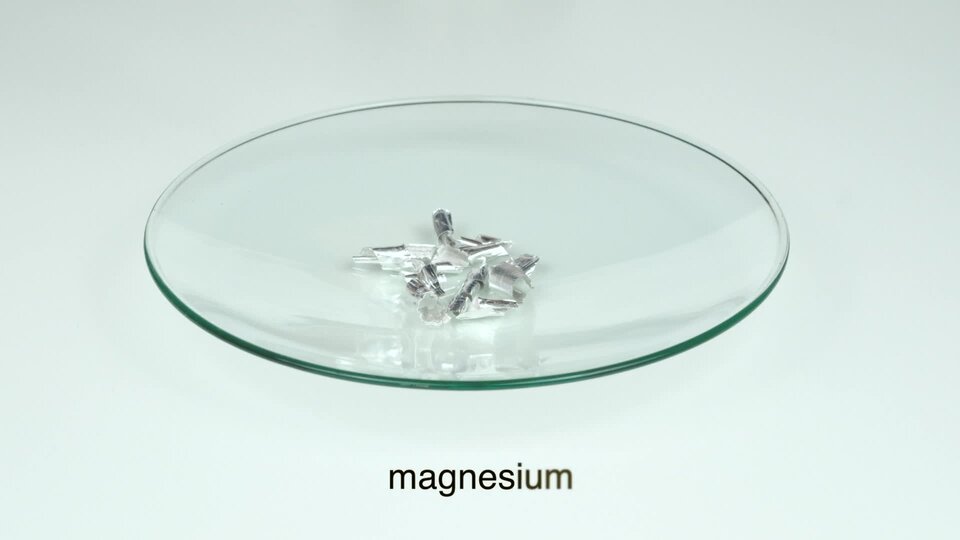
Film dostępny na portalu epodreczniki.pl
Nagranie filmowe przedstawia doświadczenie - spalanie magnezu w powietrzu. Użytkownik pobiera próbkę magnezu i podstawia ją pod płomień palnika kuchenki gazowej. Magnez zaczyna płonąć jasnym mocnym płomieniem.
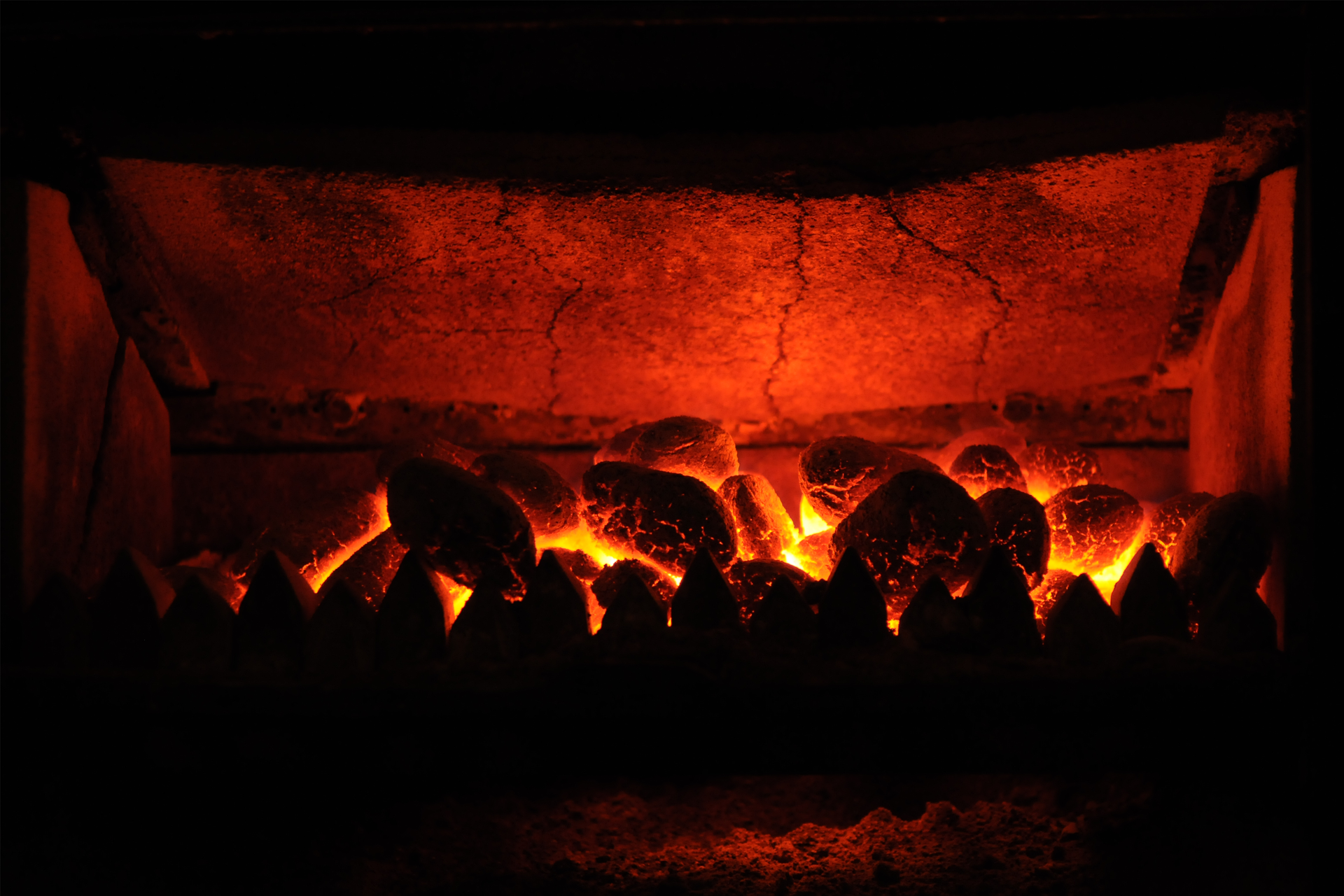
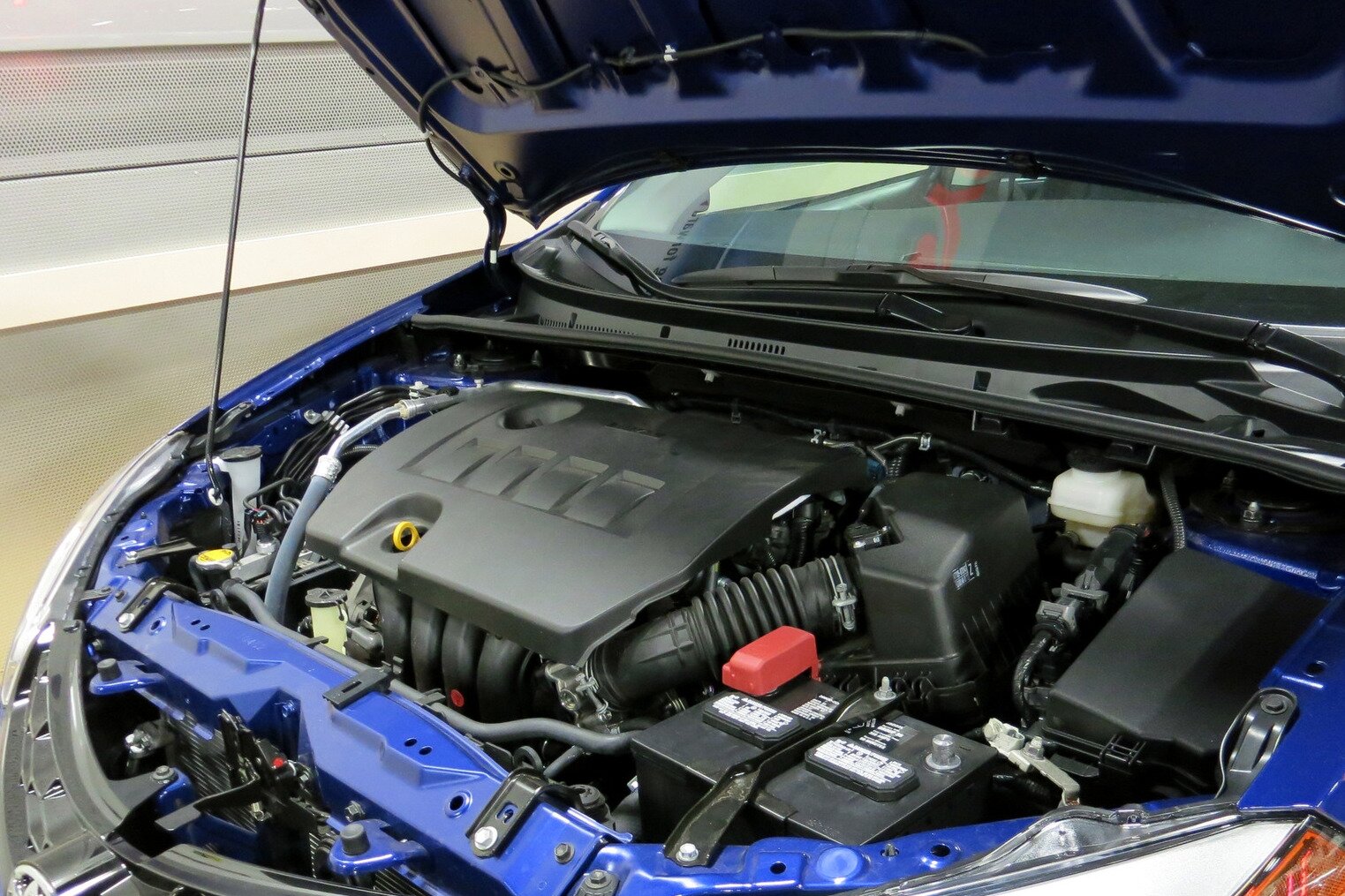
It may be surprising that regardless of whether substances react with one another or emit energy, each chemical conversion requires a certain amount of energy, without which it cannot be initiated. Before using the heat released during the reaction of carbon with oxygen (coal burning), you need to provide the substrate with the right amount of energy. After initiation, the reaction (combustion) proceeds spontaneously. This is also the case when motor vehicles move. Neither petrol nor diesel fuel is immediately ignited in the presence of oxygen from the air. What is needed is an additional factor (energy) that would initiate this reaction. In gasoline engines it is an electric spark, while in diesel engines – compression (volume reduction) and fuel heating. These impulses initiate the reaction of fuel with oxygen, which occurs with the release of energy.

All reactions differ in the amount of energy required to initiate them. There are changes that only a small amount of energy is needed to initiate, such as a slight shock, as in the case of substances contained in explosives. Some, however, need more energy to initiate the conversion of substrates into products.
What is the difference between oxidation and combustion?
During oxidation, the atom passes from a lower level of oxidation to a higher one (which is equivalent to electron donation). In practice, a given reaction is called oxidation when the increase in the oxidation state concerns a compound or chemical element being the main subject of the reaction. This name is contractual since each oxidation reaction must be accompanied by a reduction reaction. In total, this process is called the redox reaction. As a electron acceptor, a chemical compound (oxidizer) or a positive electrode (anode) may be used. The process of combining substances with oxygen can occur slowly. An example of such a process is the oxidation of iron to iron(III) oxide, which is the main component of rust: steel or iron parts of various objects rust gradually, with no visible energy effects.
Combining the substance with oxygen can also take place very quickly, with the release of energy in the form of a large amount of heat and light. In this case, combustion occurs. The Combustion reactionCombustion reaction is a reaction with oxygen, that proceeds relatively quickly, in a rapid manner; it is accompanied by thermal, light and sometimes even sound effects. Combustion takes place when the entire mass of the combusted substance is oxidized. It occurs when not only there is no smoke or inflammable substances in the ash, but also some of the fuel in the form of steam does not escape.
Conclusion: combustion is also oxidation, while not every oxidation is combustion.
Analyse the reactions below. Mark the combustion reactions in green. The others reactions mark in red.
{green}S + O2 → SO2{/green}
{red}4Fe + 3O2 → 2Fe2O3{/red}
{green}P4 + 5O2 → P4O10{/green}
{red}2SO2 + O2 → 2SO3{/red}
{red}2Cu + O2 → 2CuO{/red}
{green}2H2 + O2 → 2H2O{/green}
Create a multiple-choice test based on today's lesson. Then exchange your questions with a friend or classmate.
Question: ...
- ...
- ...
- ...
- ...
Type of oxidation reaction, which consists in the rapid connection of the substance with oxygen, which is often accompanied by effects: light, thermal, and sometimes sound is called:
- combustion reaction
- evaporation
- analysis reaction
Complete the reaction equation:
MgO, 3, O3, 2, H2O
Mg + O2 → 2
Complete the reaction equation:
3, 4, 2, 6
Al + 3O2 → Al2O3
Complete the reaction equation:
CO, 2, 3, CO2, 4
C + O2 → 2
Complete the reaction:
2, 2, 4, 3
CO + O2 → CO2
Complete the reaction equation:
3, 2, 5
P4 + O2 → P4 O10
Complete the reaction equation:
5, 2, 3, 4
Fe + O2 → Fe2 O3
Complete the reaction equation:
4, SO2, 2, S
2 + O2 → SO3
Complete the reaction equation:
3, 5, 4, 2
2N2 + O2 → N2O5
Complete the reaction:
3, 2, 4, 2
Ba + O2 → BaO
Summary
All chemical reactions, in order to start, require a certain amount of energy. Every chemical change needs a different amount of this energy.
Due to energy effects, we divide chemical reactions into exergonic and endoenergetic.
Exergonic reactions are chemical changes during which energy from the reaction system is released into the environment in the form of heat, light or work.
Conversion of food in the human body are endoenergetic reactions. Find information on the amount of energy that can be obtained from combustion of specific weight (100 g) of nutrients: carbohydrates, proteins and fats. Evaluate which food provides the largest amount of energy?
Keywords
Combustion reaction
Glossary
reakcja spalania – rodzaj reakcji utleniania, która polega na gwałtownym łączeniu się substancji z tlenem, czemu często towarzyszą efekty: świetlny, cieplny, a czasem dźwiękowy