Conflicts in the People’s Republic of Poland
Conflicts are natural and cannot be avoided.
They occur in every society because there are always groups of people with conflicting interests.
Sometimes conflicts are necessary to bring the desired changes to a society.
You will know all the most important conflicts between the society and the communist authorities in the People’s Republic of Poland.
You will understand the reasons of the protests and demonstrations.
You will be able to explain how the subsequentsubsequent protests and events led to a fall of communism in Poland.
Do you remember what the political situation in Poland before 1989 was? Read the text carefully and fill in the gaps.
the citizens' opinion, democracy, Polish People's Republic, communist, voters, the people, deaths, Greek
In 1989, in Poland, there was a political transformation – the ................................................ system gave way to ................................................. In democratic states, the authorities must take ................................................ into account. This is a fundamental principle of democracy – from ................................................ the name of the political system means "power of ................................................". The rulers must remember that citizens are ................................................ and if their opinions are not considered, they can withdraw their support for the government at the earliest opportunity. However, this was not always the case in Poland. Before the ................................................ was replaced by the Republic of Poland in 1989, the communist authorities repeatedly suppressed by force the protests and demonstrations of the society dissatisfied with the government. The use of force against citizens often led to dramatic consequences, including ................................................ of the protesters.
Before 1989 Poland was not a democratic state, and in undemocratic states conflicts are not solved, but suppressed by forcesuppressed by force. The authorities sent militia and army against defencelessdefenceless people.
June 1956
The first big social rebellion in the times of the Polish People’s Republic was the protest of workers at the Cegielski Factories (then named “Joseph Stalin Metal Works”) in Poznań. The workers were dissatisfied with their low incomes, high production standards, increasing food prices, and huge expenditure on arms. On 28 June, 1956 they began their march towards the city centre, and workers of other factories joined in on the way. A parade of around 100 000 people sang religious songs and chanted “We demand bread”, “Down with communism”, “We want God”, etc.
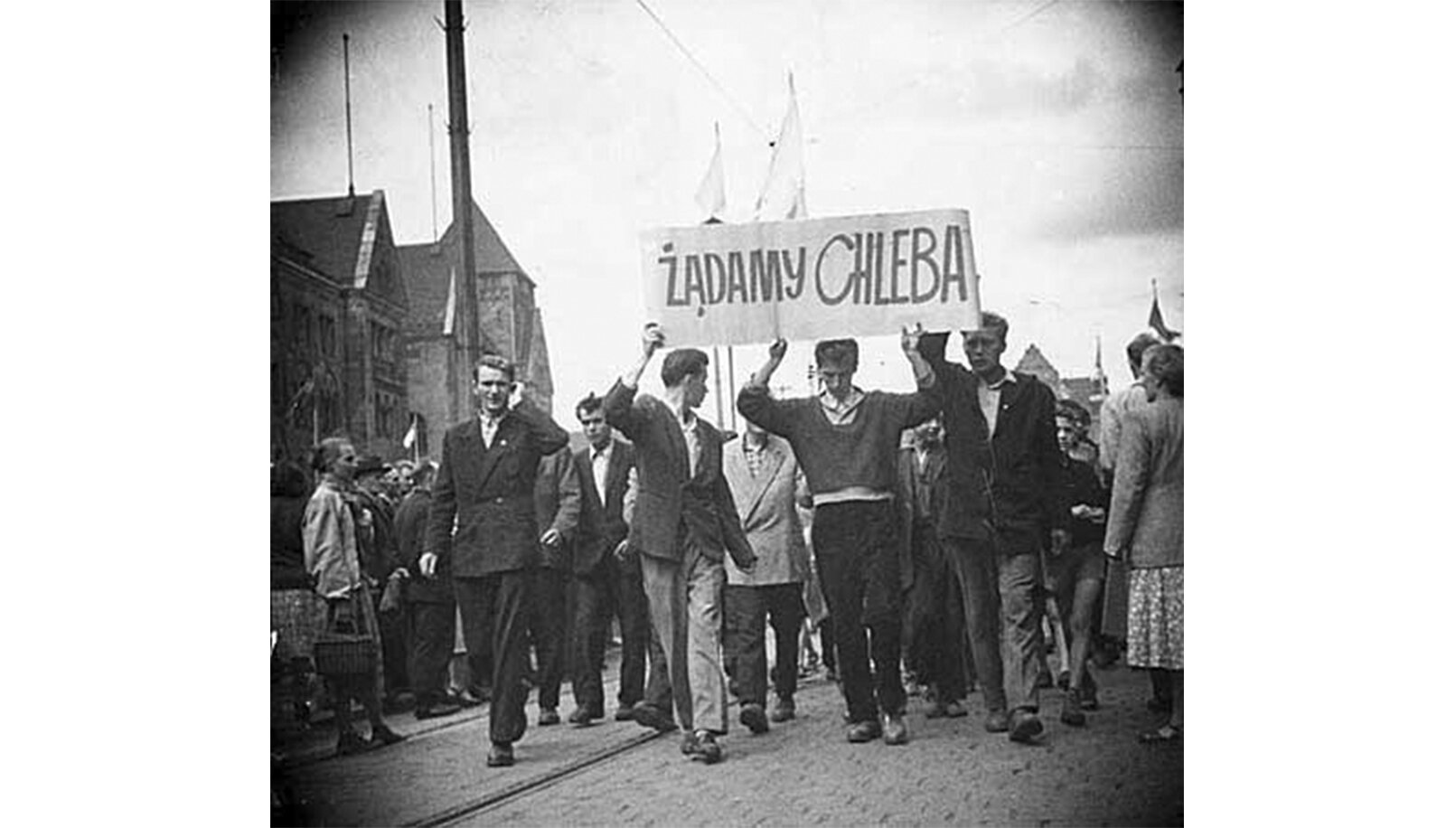
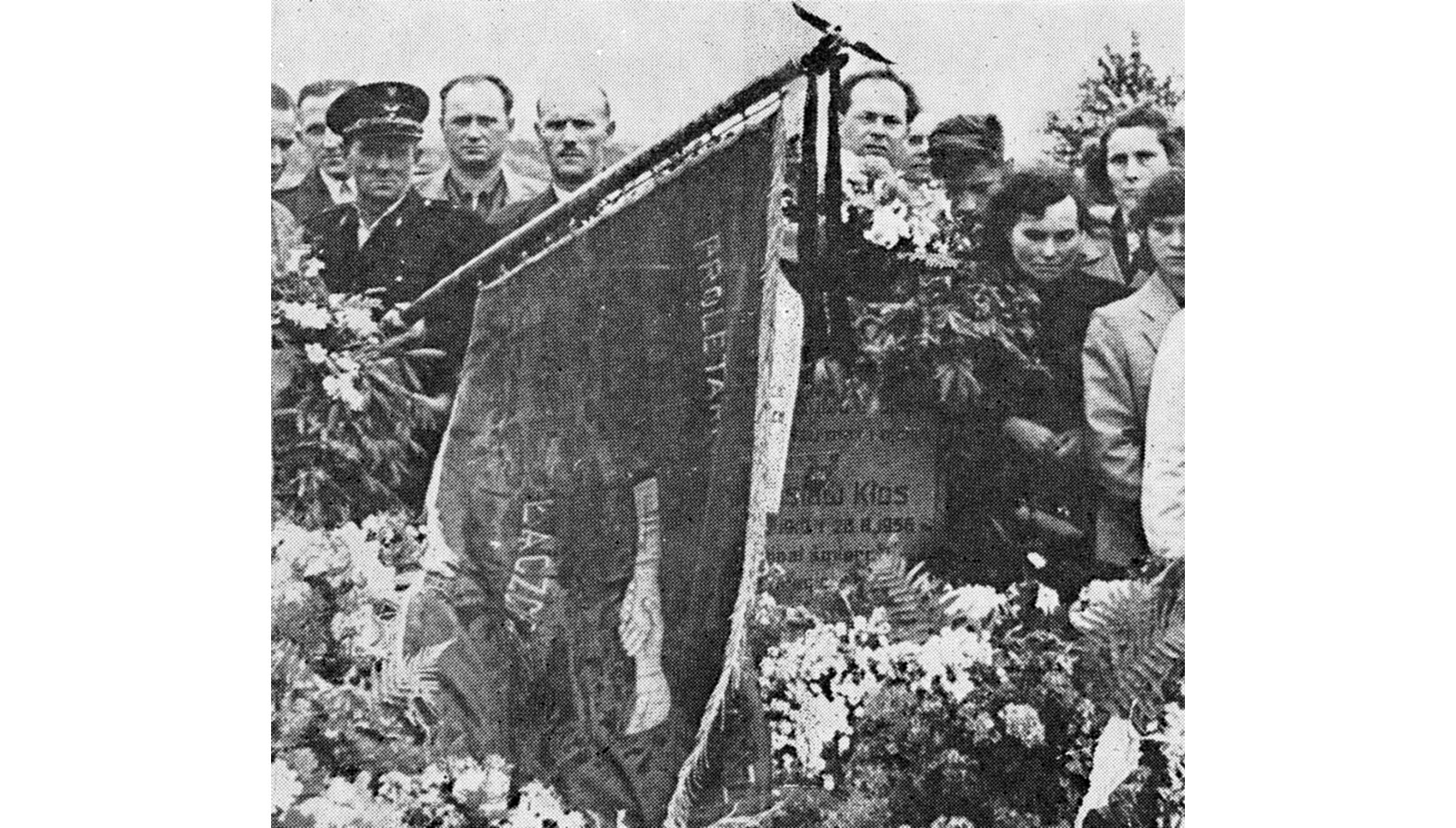
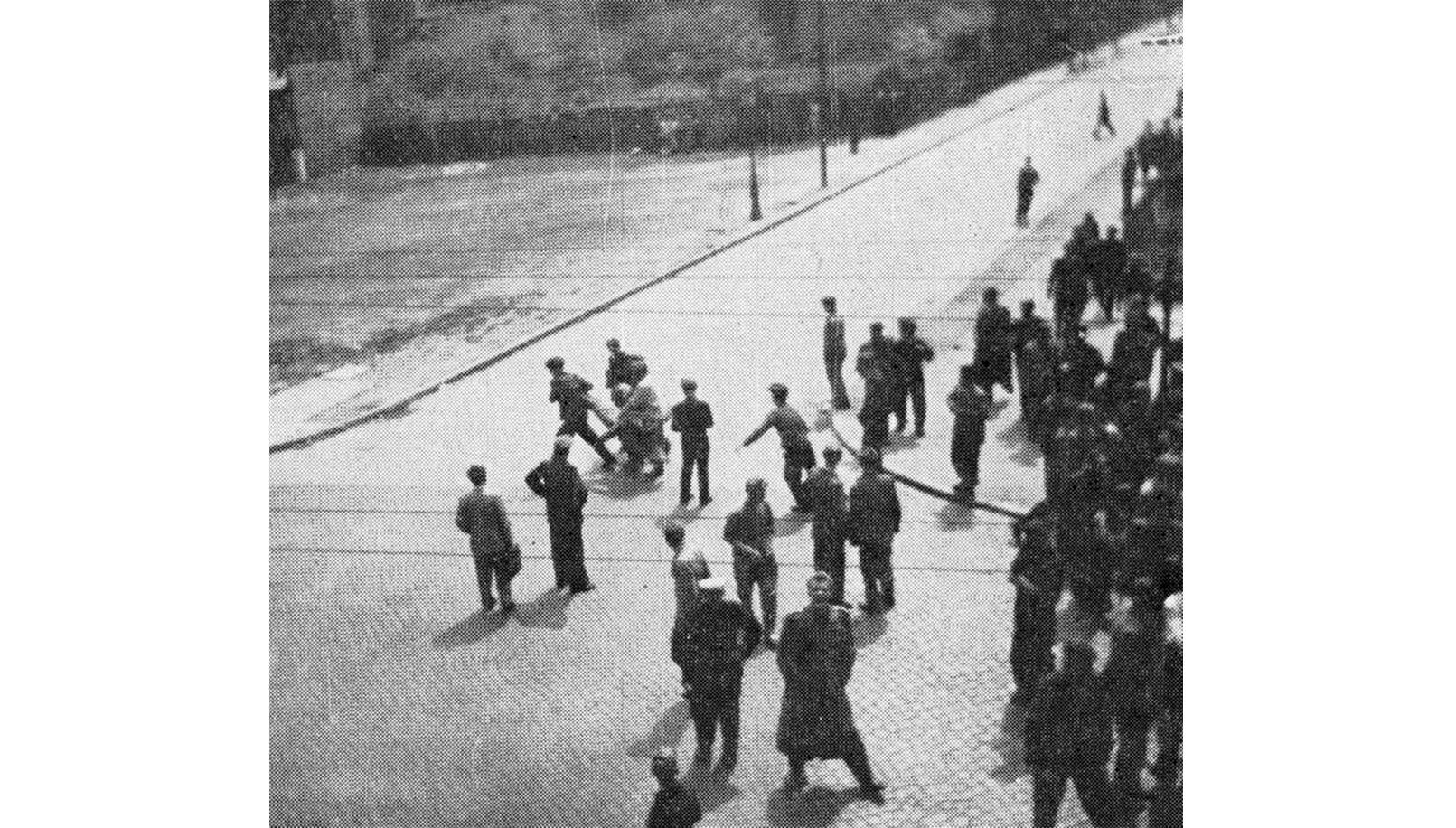
The demonstrators took over the buildings of the municipal authorities and the Communist Party’s local headquarters, as well as the prison – this was where the protesters found some weapons. A bloody battle began. Initially the workers gained advantage – they were shooting at the Ministry of Public Security building, and burned down several dozen tanks (by throwing gasoline bottles at the tanks), but they were quickly pacified by over 10 000 soldiers, who reached Poznań, assisted by 300 tanks, armored cars, and other sorts of weapons. During the street fighting and the pacification around 75 people died (the exact number has not been determined to this today), and, depending on the source, 500 to 800 people were injuredinjured.
The next day, Prime Minister Józef Cyrankiewicz gave a radio speech, in which he threatenedthreatened: “any provocateur or a madman, who dares to raise his hand on people’s government can be assured that the people’s government will chop that hand off”chop that hand off”. Historians claim that “Pozań June” led to political changes in Poland. In October 1956 – Władysław Gomułka was chosen to be a new leader of the communist party, a lot of political prisoners were released, including Cardinal Stefan Wyszyński.
March 1968
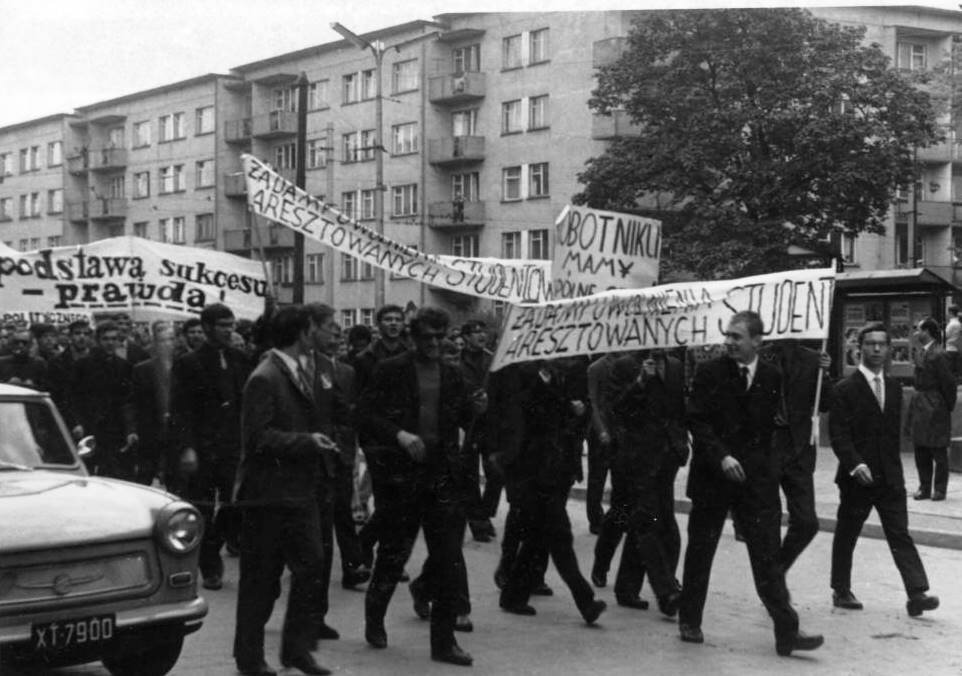
In March 1968 the authorities banned the performance of “Dziady” by Adam Mickiewicz (written in 1824) directed by Kazimierz Dejmek at the National Theatre in Warsaw on the grounds thaton the grounds that it contained Russophobic and “anti‑Soviet” references, which were received with applause by the audience. After the last performance, students marched from the theatre to the monument of Mickiewicz demanding more performances and the abolitionabolition of censorship.
In many Polish cities, students began to collect signatures on a petition to the Sejm, protesting against the ban. After a few days, some of the participants of the demonstration were detained, and two students were expelled fromexpelled from the university. When on 8 March 1968 the students organised a rallyrally in the courtyard of the University of Warsaw to defend the repressed and their colleagues the militia brutally disperseddispersed the protesters and another several dozen young people, including Jacek Kuroń and Karol Modzelewski were arrested. In the following days, similar rallies took place at many universities throughout Poland. Everywhere the protesters demanded the same: responsibility for the brutal militia actions, restrictions of censorship, and respect for freedom of speech. At the University of Warsaw and the Technical University of Warsaw an occupation strike began, but after threats of dissolution of the universities, it ended after only three days.
The rebels, however, remained lonely, failed to persuadepersuade the workers of large factories to join them in protests. The authorities brutally cracked down oncracked down on the protesters – on several campuses, entire facultiesfaculties were closed, thousands of students were sent to military service. The authorities of the Polish United Workers’ Party (PUWP, the communist party, which was effectively in power at the time) claimed it was people of Jewish origin who inspired the incidents. A lot of people had to leave the country as a result of the anti‑Semitic campaign.
The experience of March 1968 was one of the most important factors shaping the opposition of the 1980s.
December 1970
On 14 December 1970, a strike broke out in the Gdańsk Shipyard, triggered by increases in prices of basic necessity goods, especially food, that were announced two days earlier. The strike inspired a wave of protests and demonstrations in the streets, which covered most of the Coast.
The most tragic events took place in Gdynia, where on 17 December the army, without any kind of warning opened fire on workers going to work. Dozens of them died. There were violentviolent clashes between several thousand workers and militia and army units. There were also riotsriots in Szczecin, where the shipyard workers burned the communist party’s local headquarters building down. On 18 December all the largest production plants in Gdańsk, Gdynia, Słupsk, Elbląg and Szczecin were already on strike.
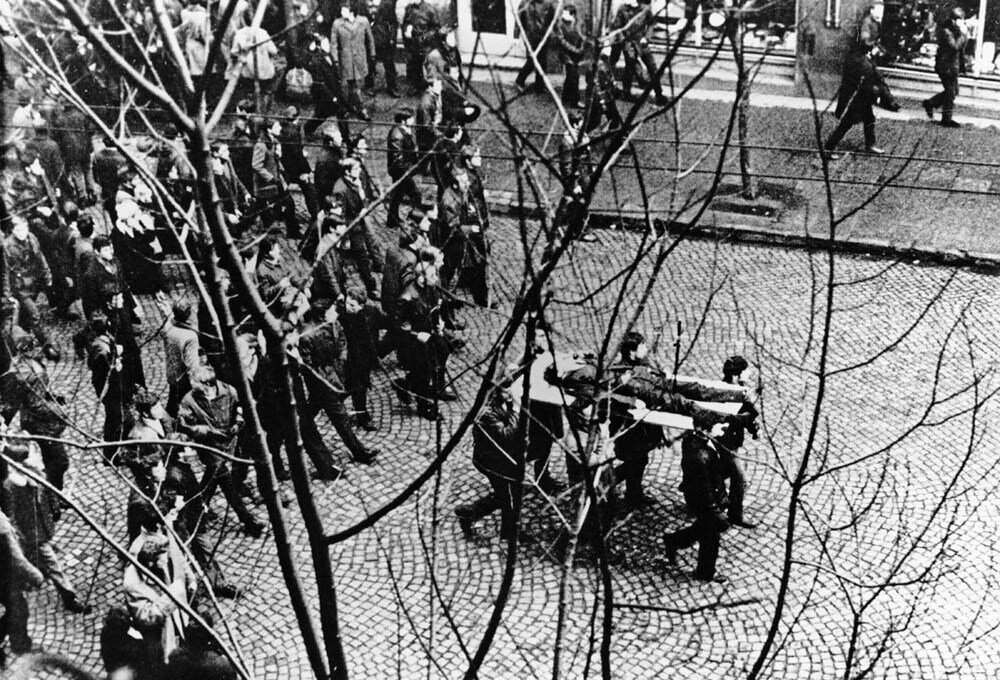
The symbol of these events was the death of a young worker – Zbyszek Godlewski, who died shot with a machine gun. His friends laid his body on a door and carried it to the building of the Municipal National Council. Soon after the massacre, an engineer Krzysztof Dowgiałło wrote “Ballad of Janek Wiśniewski”. He did not know the real name of the fallen man, so he chose a popular first and last name in Poland. The poem turned into a song by Kazik Staszewski, became the theme of the movie “Black Thursday” directed by Antoni Krauze. The movie tells the story of the tragic events of December 1970.
This time the workers’ protests led to the change of the leadership, and Edward Gierek became the first secretary of the PUWP. In his tv speech, he promised to improve the material situation of society. He blamed the protests on the “enemies of socialism” (not the workers!), and thus, he explained, the decisive response was needed from the authorities. Historians call the next ten years (until the creation of the “Solidarity” movement) “Gierek’s decade”.
June 1976
On 25 June 1976, tens of thousands of people in almost a hundred workplaces began strikes and street demonstrations. The direct cause of the protests was a drastic price increase of food products announced in the Sejm by Prime Minister Piotr Jaroszewicz (meat and fish – 69%, dairy products – 64%, rice – 150%, sugar – 90%). The following day in Radom, Ursus and Płock the demonstrations ended with clashesclashes with the militia and ZOMO (Motorized Reserves of the Citizens’ Militia). The authorities withdrew from the price hikes but decided to intimidateintimidate the protesters, and brutal repressions began. The detained workers were passed through the so‑called “healing paths”, i.e. a row of militia officers beating them with their clubsclubs. In show trialsshow trials, people were sentenced tosentenced to long‑term imprisonment and heavy finesheavy fines.
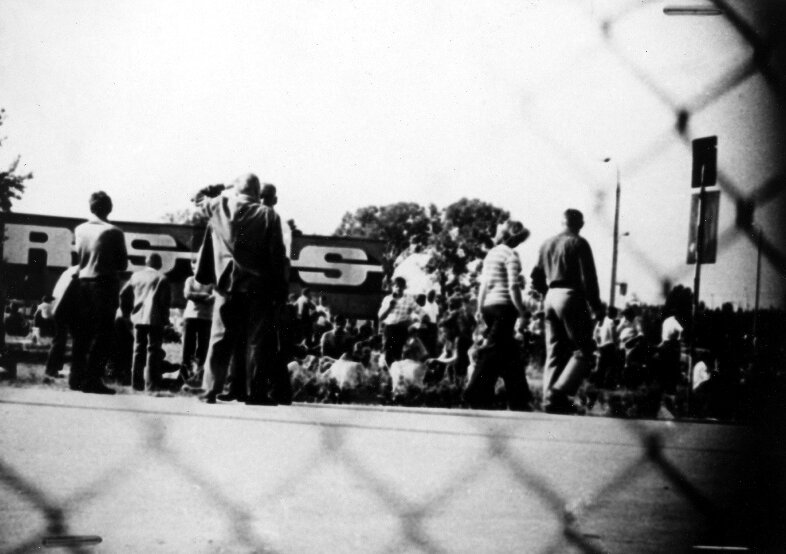
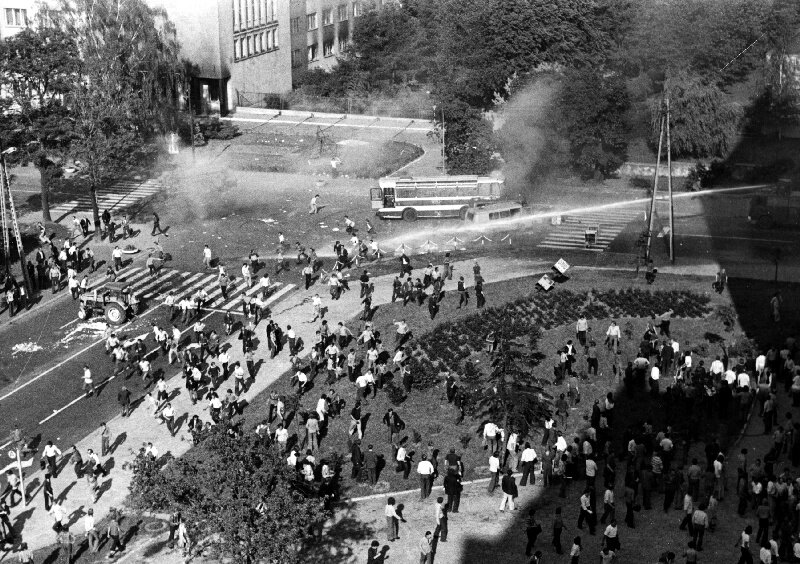
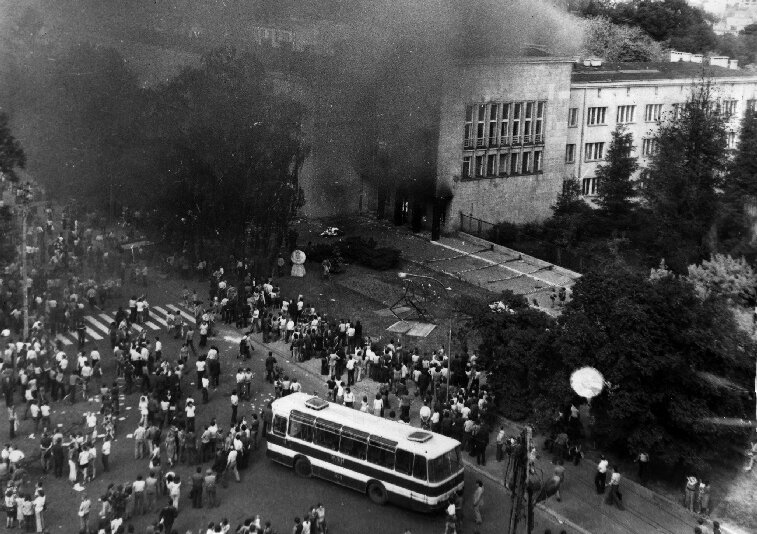
After these events the Workers’ Defense Committee was formed, a public opposition organisation that provided legal and financial assistance to the oppressed participants of the protests in Ursus, Radom, and Płock. The activities of the Workers’ Defense Committee made the changes in 1980 possible.
August 1980
The Economic crisis and public dissatisfaction with the realities of the communist state kept growing in the second half of the seventies.
The election of a Pole, Cardinal Karol Wojtyła, as a Pope in October 1978, and his pilgrimage to his homeland in June 1979 awakened the public’s hopes for change. A year later strikes broke out, which changed the course of history and were the beginning of the end of communism in Europe.
The direct cause of the protests in August 1980 was again the price rises that triggered strikes in the largest production plants in Poland. On 14 August, work at the Gdańsk Shipyard was discontinued. Apart from economic postulates, the workers demanded the reinstatement of Anna Walentynowicz and Lech Wałęsa, who had been dismissed for their activity in trade unions.
At that time, the Inter‑Enterprise Strike Committee was formed, headed by Wałęsa. The Committee formulated 21 demands regarding, among others, the consent to the establishment of trade unions independent of the party, guaranteeing the right to strike, and the release of political prisoners.
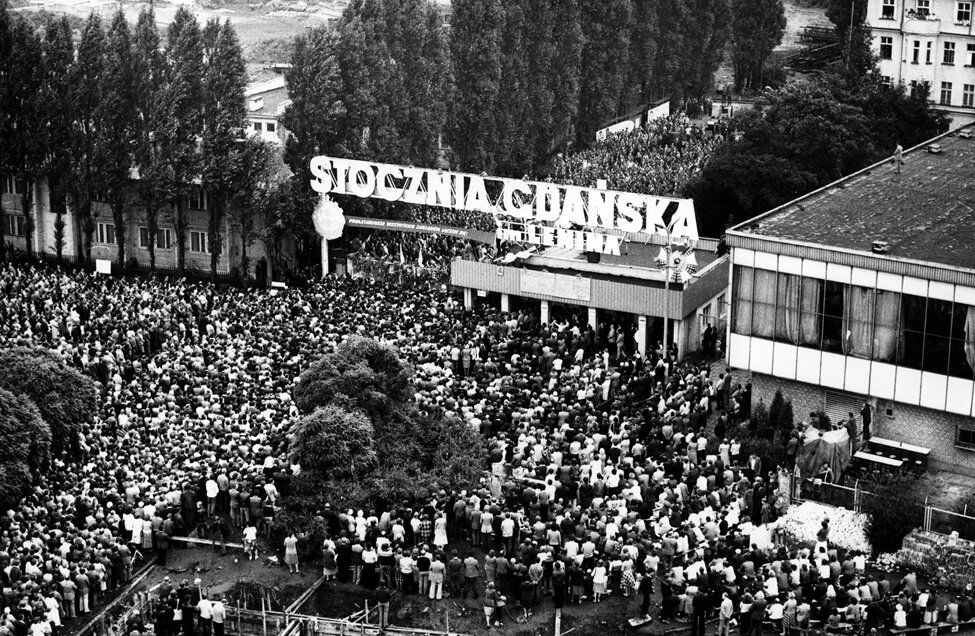
On 18 August a strike began in Szczecin, where an Inter‑Enterprise Strike Committee of several dozen production plants was also created.
The authorities withdrew the price increases but did not want to agree to political demands. Therefore, a general strike began throughout the entire Coast. Workers were supported by intellectuals, including Tadeusz Mazowiecki, Bronisław Geremek, Andrzej Wielowieyski. They advised the protesters on legal and economic issues but the striking workers made all the important decisions. 31 August 1980 was a historic moment – Lech Wałęsa, on behalf of all the protesters, signed the agreement with the authorities. The authorities agreed to implement the 21 postulates, including the registration of the nationwide Independent Self‑Governing Trade Union “Solidarity” (NSZZ “Solidarność”). The other postulates were also of a political nature – the workers demanded that the right to freedom of expression guaranteed by the Constitution of the People’s Republic of Poland and access to media (in practice controlled by the party) were respected. They also demanded the authorities stop persecuting people for their beliefs. The authorities promised to comply withto comply with those postulates. The next day, the workers returned to work.
August 1980 was the first social conflict in the communist era, in which the communists did not use force. One of the reasons was the fact that ten million Poles were active in the “Solidarity” movement at that time.
However, the agreement with the authorities turned out to be fragilefragile. The “Solidarity Carnival” lasted only sixteen months. On 13 December 1981, the authorities cracked down on “Solidarity”, proclaiming martial lawmartial law. “A man of Iron” – a movie directed by Andrzej Wajda – depicts the events of that time.
December 1981
After the signing of the August Agreements in 1980 and the registration of the Independent Self‑Governing Trade Union “Solidarity”, the conflicts did not ceasecease. There was a shortageshortage of food, hygienic articles, footwear, gasoline. Rationing did not improve the situation. Throughout 1981 protests broke out, various workplaces were out, as well as higher education institutions and public transport companies.
The most important functions in the state were taken by General Wojciech Jaruzelski, who became the first secretary of the PUWP, the prime minister, and minister of national defence. The communist authorities prepared martial law in the greatest secrecy. On 12 December 1981, arrests of “Solidarity” activists began before midnight. Within a few days, more than six thousand people were internedinterned in prisons and special centres. It was a military coupmilitary coup.
The activity of social organisations was suspendedsuspended, the freedom of movement was limited, a curfewcurfew was introduced, telephone conversations and correspondence were controlled, organisation of demonstrations and strikes was forbidden, industrial plants were militarized. Over 120 thousand soldiers, militia and other armed men were directed to conduct this operation. For the first time since the second world war, such great forces were used to suppress the opposition. Historians often call these events the Polish‑Jaruzelian war.
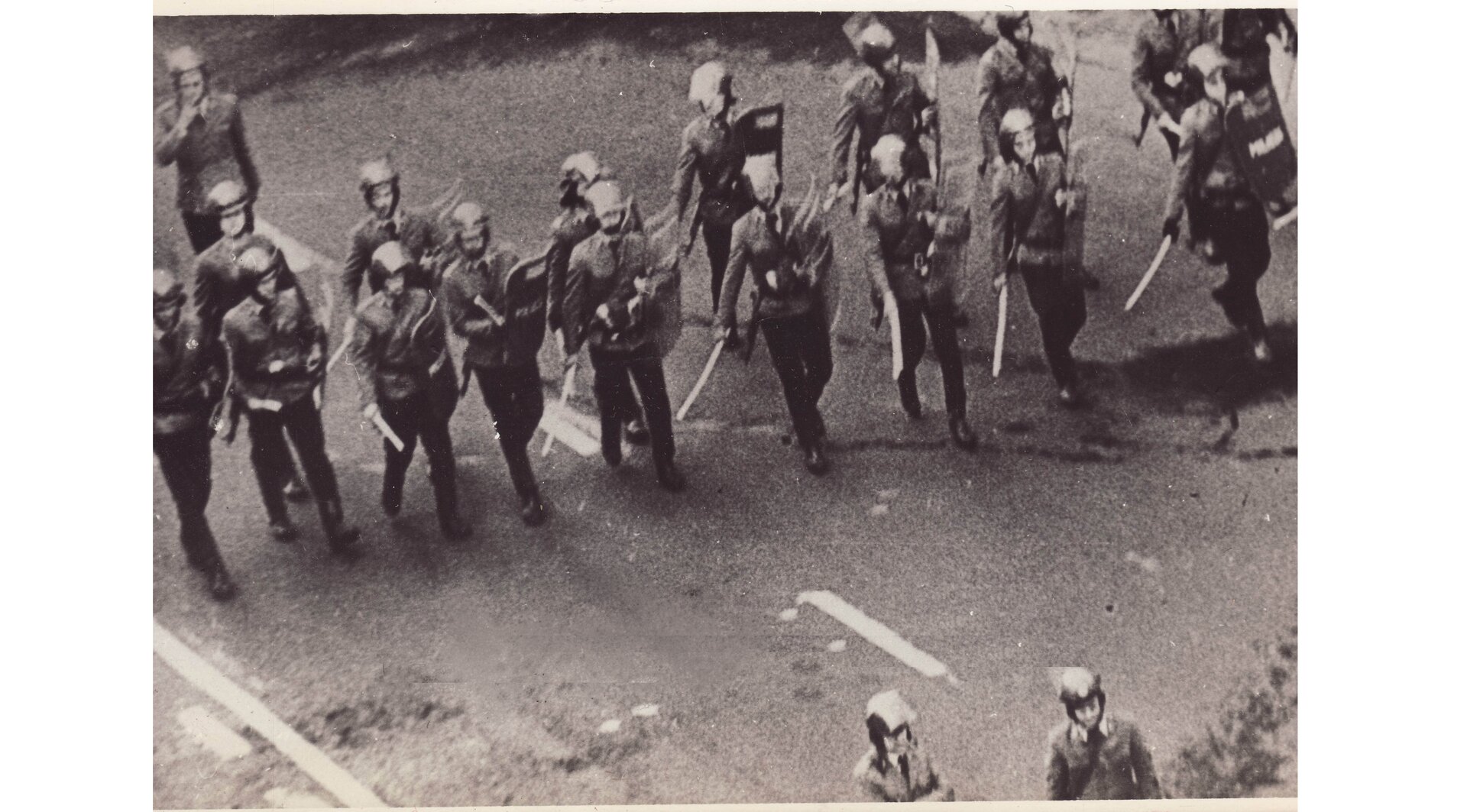
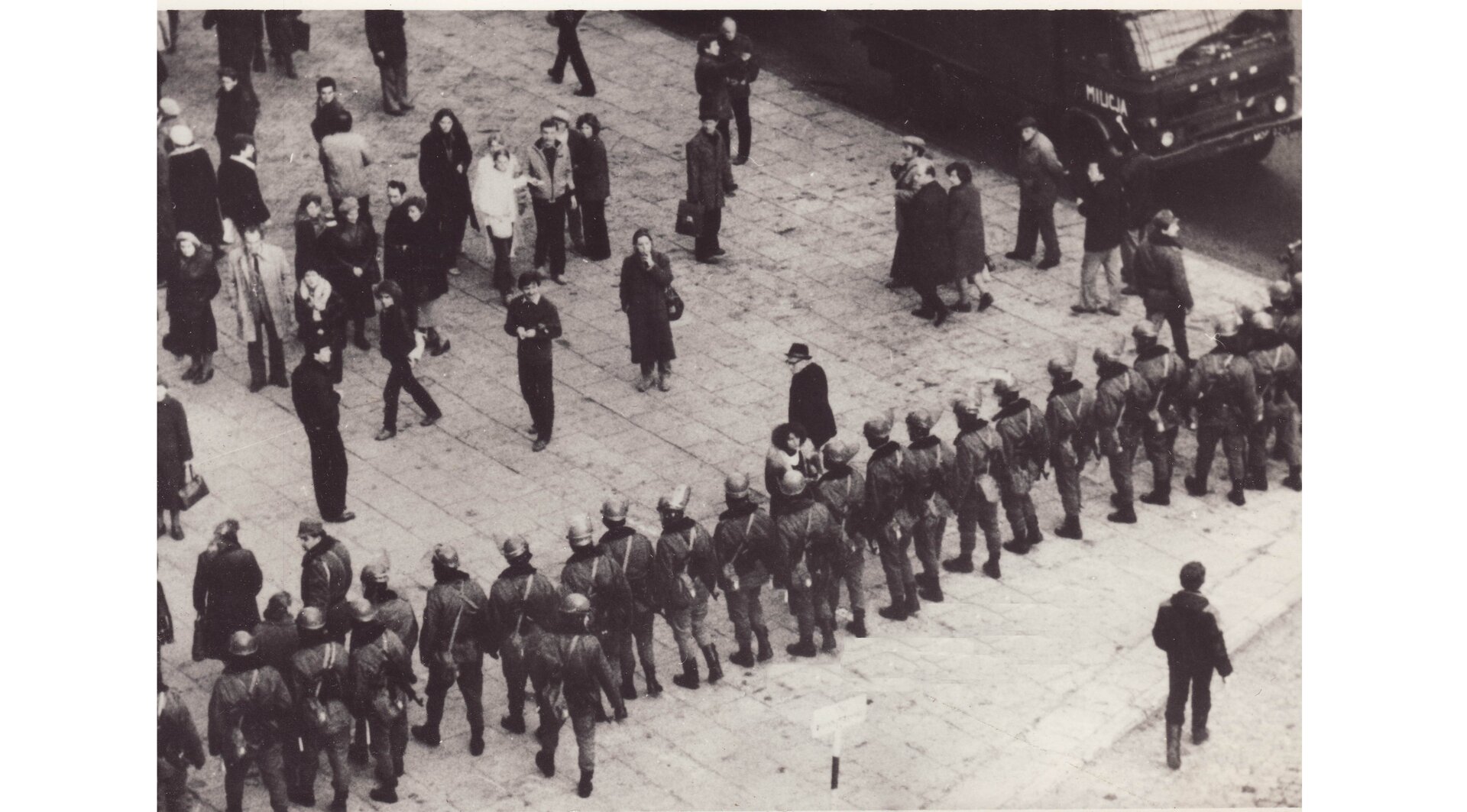
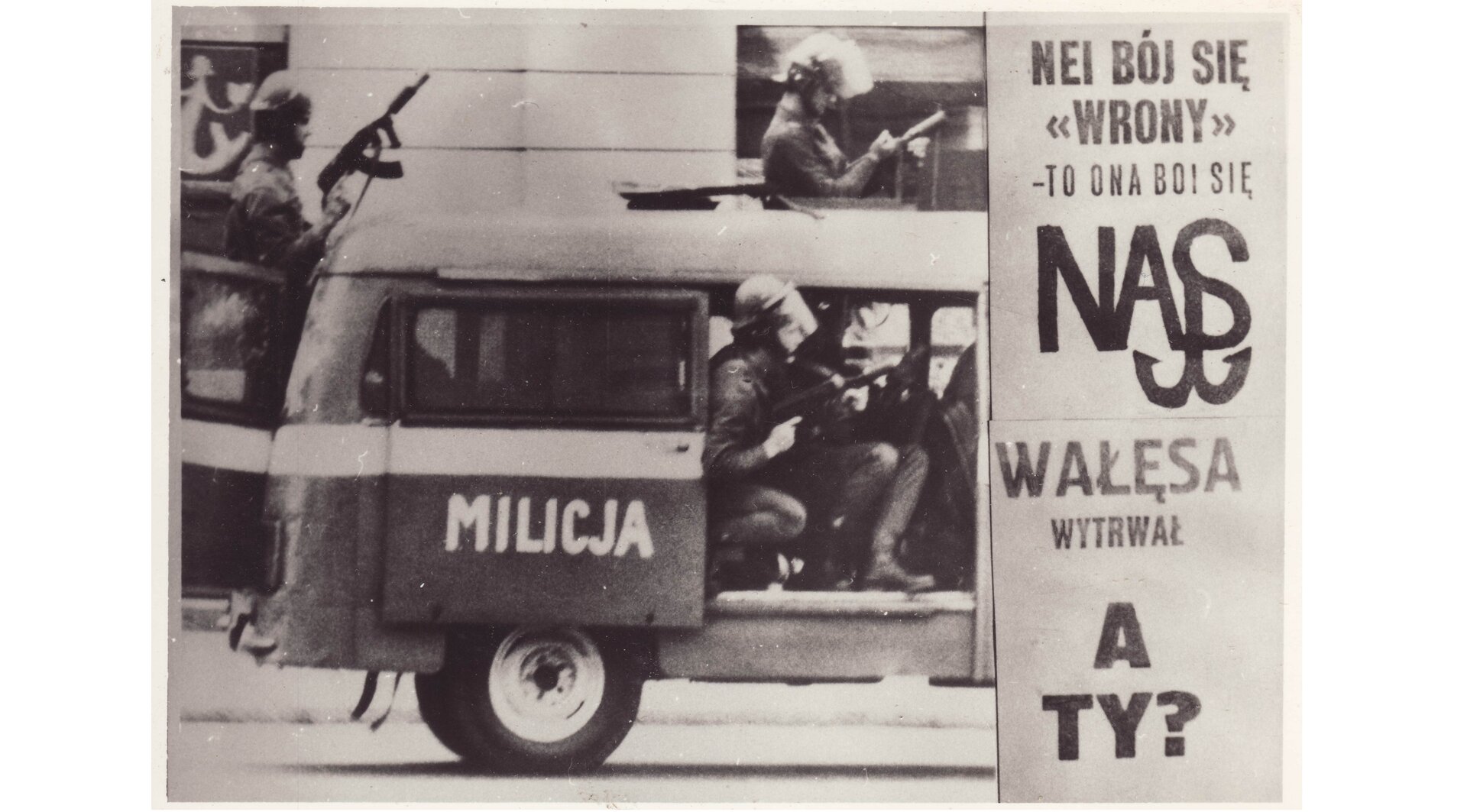
On 13 December, in the morning, instead of a program for children on television, Poles could watch the speech of General Wojciech Jaruzelski, playing the role of a defender of „the fatherland that was over the abyssabyss”.
The general presented the activities of the opposition and „Solidarity” as „an open attempt to partition the socialist Polish statehood completely”. The remaining members of “Solidarity” responded to the introduction of martial law with strikes, but they were broken down by special units of militia and the army.
The most tragic events occurred on 16 December 1981 in the „Wujek” mine, where the protesters were being shot at. Nine miners were killed, several dozen woundedwounded.
Despite their determination, the communist authorities failed to defeat the “Solidarity” people. Many activists organised underground resistanceunderground resistance. Thousands of independent publications were published, there was a secret “Solidarity” radio, there were independent theatres, help for families of the interned activists was organized. Martial law was abolished on 22 July 1983. The leader of “Solidarity” – Lech Wałęsa – received the Nobel Peace Prize in the autumn of 1983 and became a symbol of the struggle for a free Poland and human rights.
One could say that in December 1981 “Solidarity” lost the battle, to win the war eight years later.
Round Table Talks 1989
In 1988 another wave of protests began – Upper Silesia mines, the port in Szczecin, the Gdańsk Shipyard. They demanded “Solidarity” to be re‑legalised. The conflict was growing, the economic situation of the country was extremely dramatic. For the first time in the history of the People's Republic of Poland, it was decided to resolve social conflict not by force, but by negotiation. Both sides: the authorities of the Polish People's Republic, and on the other side, the „Solidarity” opposition and representatives of the Church, began a roundtable meeting on 6 February 1989.
Among others, the re‑registration of “Solidarity” was agreed on, free elections to the Senate, and partially (35%) open to the Sejm, as well as the creation of the President's office.
The Round Table Agreement initiated democratic changes not only in Poland but also the entire block of countries controlled by the Union of Soviet Socialist Republics. The communist party believed that by regulating freedom, it would manage to maintain its power. The election of 4 June 1989 and the following months showed how wrong they were.
Check if you know, which year the following events took place. Place them onto the timeline.
Połącz wydarzenia z datami
1981,
1970,
1980,
1976,
1968,
1956
| workers' protests in Poznań | |
| students’ protests in defense of freedom of speech | |
| workers' protests on the Coast | |
| workers' strike in Radom, Ursus and Płock | |
| nationwide strike, NSZZ Solidarność uprising | |
| introduction of martial law in Poland |
Choose one of the „Polish months”, analyse the events and archival photographs. Then create three short statements depicting them from different points of view:
an objective shortcut of events (in the style of a news agency),
statement of the communist government,
declaration of representatives of demonstrators (if they had access to the media).
Write them in the notebook below.
Listen to the abstract recording to review the material and new vocabulary. Then do the vocabulary exercise. Match the pairs: English and Polish words.
podziemny opór, zamieszki, przewrót wojskowy, zastraszać, stan wojenny, zdławione siłą, wydalony, proces pokazowy, godzina policyjna
| suppressed by force | |
| expelled from | |
| riot | |
| intimidate | |
| show trial | |
| martial law | |
| military coup | |
| curfew | |
| underground resistance |
Keywords
Polish People’s Republic, Cegielski Factories, Ministry of Public Security, “Dziady” by Adam Mickiewicz, low incomes, high production standards, increasing food prices, abolition of censorship, occupation strike, Polish United Workers’ Party, anti‑Semitic campaign, Gdańsk Shipyard, “Ballad of Janek Wiśniewski”, “Black Thursday”, “Gierek’s decade”, ZOMO (Motorized Reserves of the Citizens’ Militia), “healing paths”, Workers’ Defense Committee, Ursus, Radom, and Płock, the Coast, Inter‑Enterprise Strike Committee, 21 postulates, Independent Self‑Governing Trade Union “Solidarity” (NSZZ “Solidarność”), “Solidarity Carnival”, “A man of Iron”, shortage, regimentation, martial law, military coup, persecution, interned people, limitations of human rights, curfew, Polish‑Jaruzelian war, „Wujek” mine, Round Table Talks
Glossary
kolejno następujące po sobie
zdławione siłą
bezbronni
skandować
ranni
straszyć
odrąbać (coś)
na tej podstawie, że
zniesienie
wydalony
więc
rozpraszać
przekonywać
rozprawiać się z
wydział
gwałtowny, brutalny
stracie
zamieszki
zastraszać
pałka (np. policyjna)
proces pokazowy
skazany na
wysoka grzywna
przestrzegać
kruchy
stan wojenny
zakończyć się
niedobór
internowany
przewrót wojskowy
zawieszony
godzina policyjna
przepaść
ranny
podziemny opór