Non‑renewable energy sources and the effects of their use
Electricity is traditionally obtained during the process of burning fossil fuelfossil fuelsfossil fuel, such as black coal, lignite, crude oil and natural gas. These fuels contain carbon and carbon compounds and are of organic origin. They are called conventional and non‑renewable natural resources.
R1WV2atemX72W
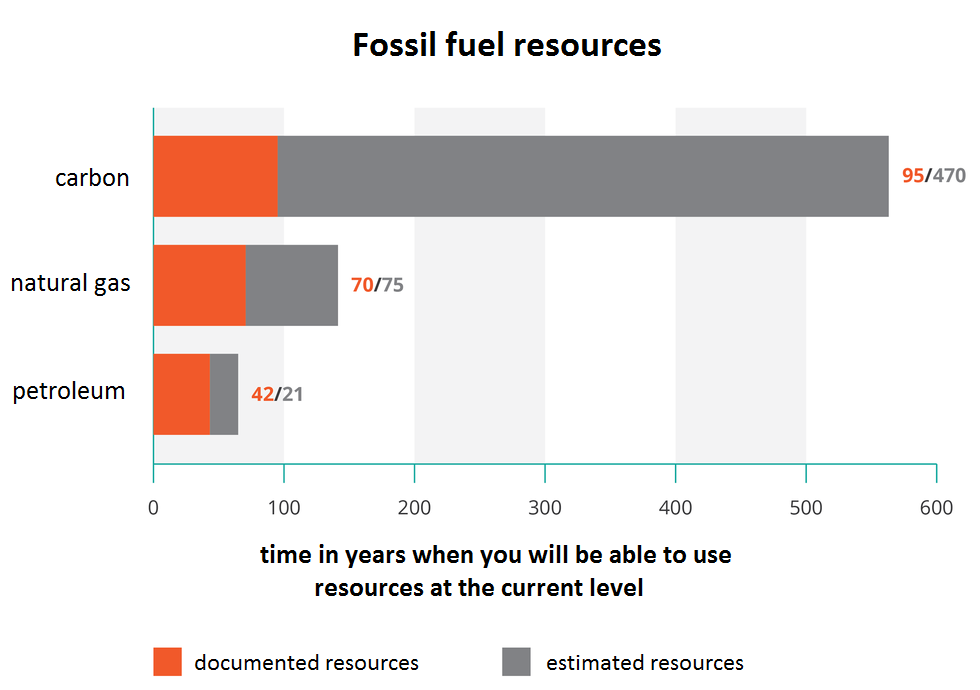
Diagram przedstawia zasoby paliw na świecie. Udokumentowanych zasobów węgla starczy na 95 lat, szacowanych na 470 więcej. Udokumentowanych zasobów gazu starczy na 70 lat, szacowanych na 75 lat więcej. Udokumentowanych zasobów ropy naftowej starczy na 42 lata, szacowanych na 21 lat więcej. Na diagramie zamieszczono napisy: Fossil fuel resources; carbon; natural gas; Petroleum; time in years when you will be able to use resources at the current level; documented resources; estimated resources.
The world's fossil fuel resources
Source: Dariusz Adryan, licencja: CC BY 3.0.
Acquiring electricity from fossil fuels is relatively efficient, but its impact on the environment is not neutral. Both the mining and burning of fossil fuels have a negative impact on nature. In the case of opencast lignite mines, whole landscapes are destroyed. It also generates a lot of waste: rocks extracted with coal as well as dusts and ashes – products of burning. In addition, during the production of energy from coal, huge amounts of carbon dioxide, sulfur oxides and other pollutants that have an adverse effect on the environment and our health are released into the atmosphere. Coal and other fuels will eventually run out. In Poland, for example, we are running out of shallow coal seams and the exploitation of deeper seams is too expensive.
R1RXrdYuJd3ac
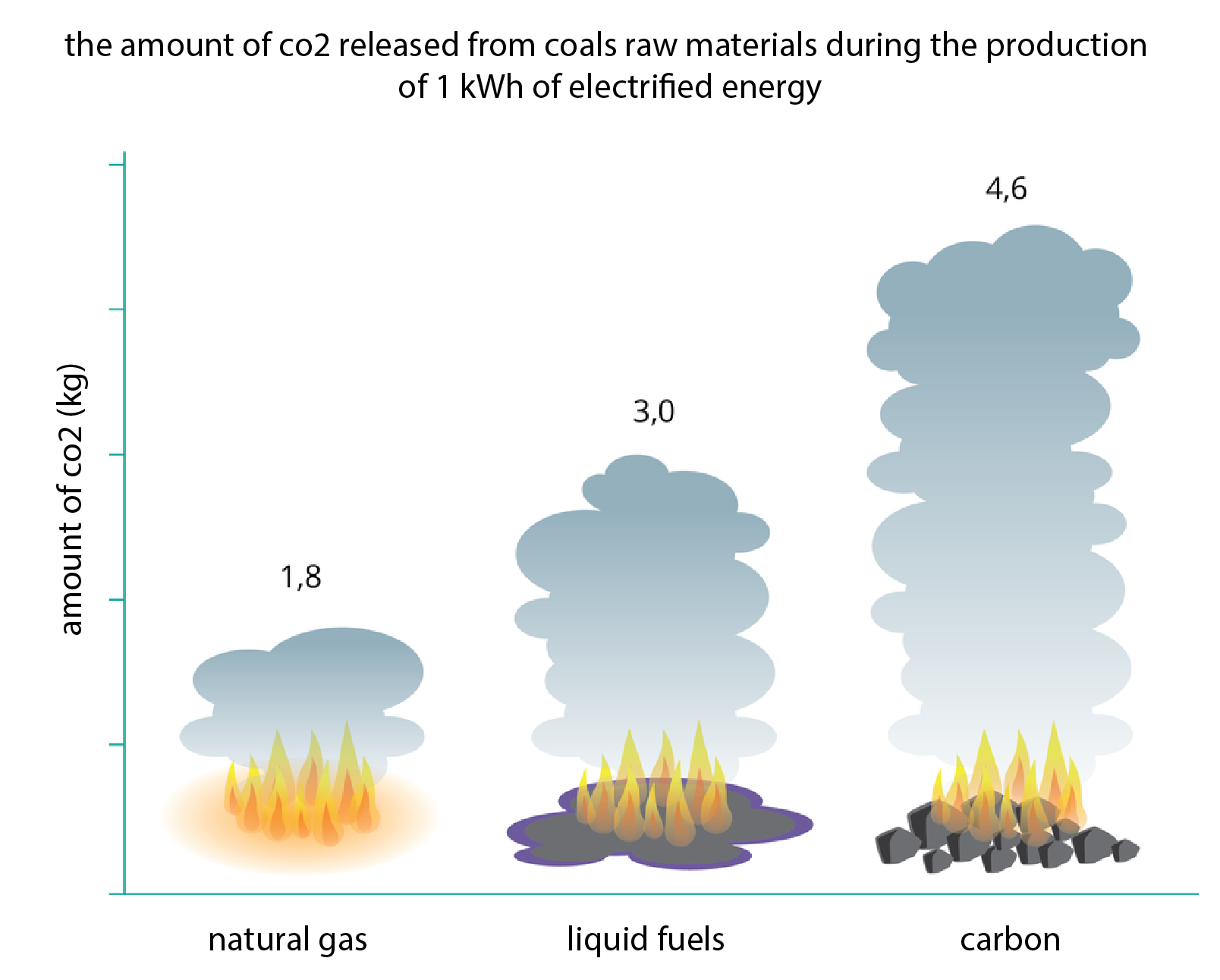
Diagram przedstawia ilość paliw potrzebnych do uzyskania 1 kWh energii. W przypadku gazu jest to 1,8 kg, paliw ciekłych 3,0 kg, a węgla 4,6 kg.
The amount of carbon dioxide released from fossil fuels
Source: Dariusz Adryan, licencja: CC BY 3.0.
Another raw material for the production of electricity is the uranium, used in nuclear power plants. It is estimated that the world resources are sufficient for the next 300 years. Acquiring energy from uranium is safe thanks to very restrictive regulations regarding technological processes and constantly improved production methods. The problem is the radioactive waste, which is usually put in steel barrels, covered with concrete and then placed in the deepest drifts of inactive salt mines. Waste from nuclear power plants must be safely stored for tens of thousands of years before they stop emitting harmful radiation.
Task 1
In Poland, energy is produced mainly from coal. Basing on the information provided above, explain what are the effects of saving electricity.
Renewable energy sources – advantages and disadvantages
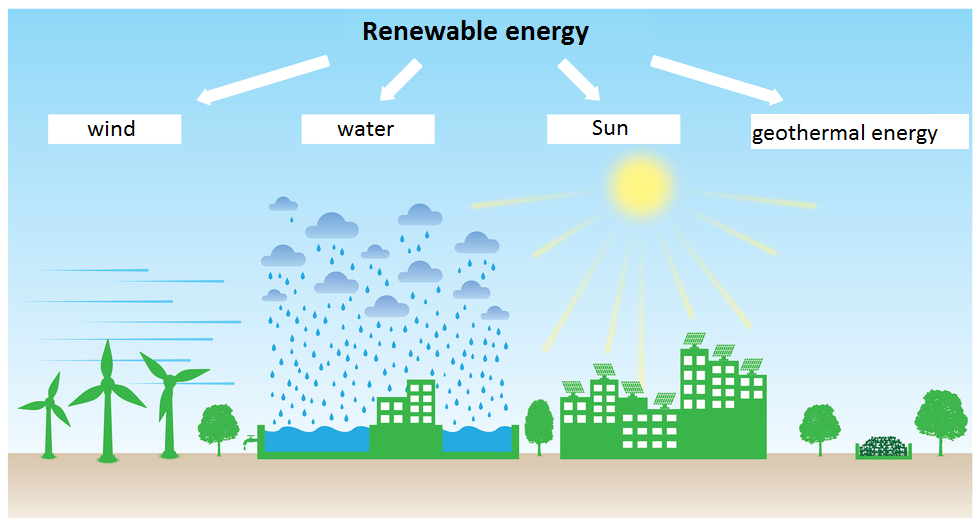
Renewable energy sources include among others wind, solar energy, water energy or geothermal energygeothermal energygeothermal energy coming from inside the Earth. These sources cannot be exhausted and the power stations that generate such energy do not pollute the environment. However, the energy from these sources has its disadvantages. In the case of wind farms, the amount of obtained energy depends on the strength of the wind, so they work only when it blows, and are profitable in countries where the winds are constant and strong. In addition, wind turbines occupy large areas, change the landscape and relatively often require expensive repairs.
One of the disadvantages of hydroelectric power plants is that they are often built on dams that change the natural course of rivers and form a barrier for aquatic organisms. The amount of energy produced by hydroelectric plants depends on the water level, which, in the conditions of the observed climate change, is very variable. Still, their construction, apart from acquiring energy, may bring other benefits such as creating retention reservoirs that can be used during a drought.
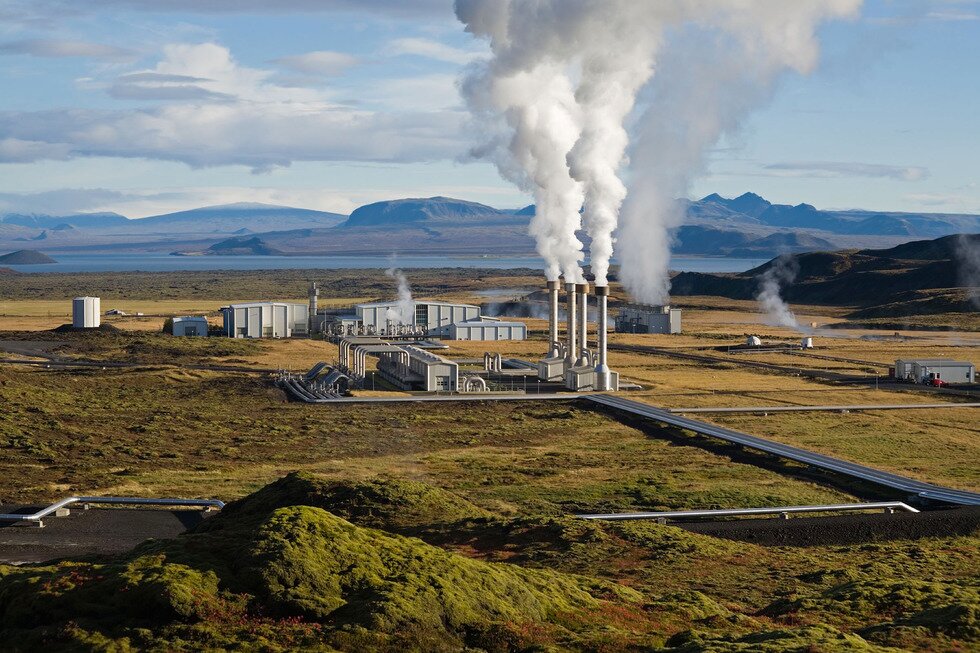
The solar and geothermal power plants are the least harmful to the environment. Solar cells, however, are profitable only in strong sunlight, and the energy of the Earth's interior can be used only in those areas where the rocks or water that accumulate heat are located relatively shallow (up to 10 km underground).
Natural conditions in Poland allow primarily for the acquisition of water and geothermal energy. However, it must be remembered that the production of energy from renewable sources is still much more expensive than acquiring it from non‑renewable sources.
R32Mr21hLQXyD
Fotografia przedstawia geotermalną elektrownię, z daleka widać zabudowania przemysłowe w górzystym krajobrazie. Za nimi zbiornik wodny, na pierwszym planie zwały ziemi. Wokół zakładu jest pusto. Z trzech wysokich, białych kominów ulatniają się kłęby pary wodnej. Z mniejszych kominów unosi się biały dym.
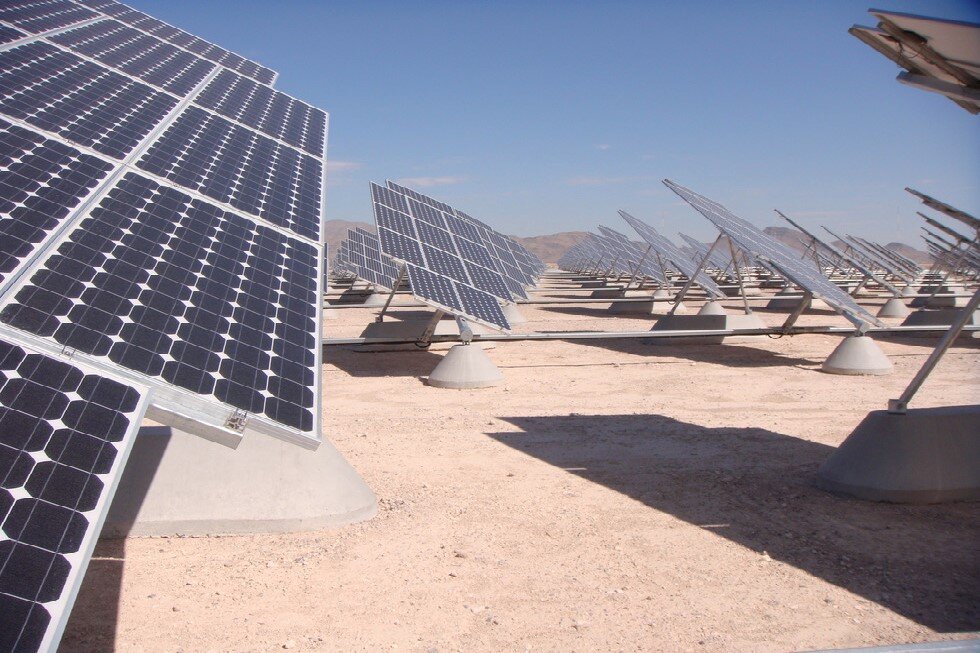
Fotografia przestawia rzędy baterii słonecznych na piasku. Baterie ustawione są pod kątem ku słońcu. Stoją w oddaleniu, żeby cień jednych nie padał na inne. Ogniwa są ciemne, błyszczące, tworzą kratkowany wzór.
Solar power plant
Source: theregeneration, www.flickr.com, licencja: CC BY-SA 2.0.
RYJZFxlrYFPho
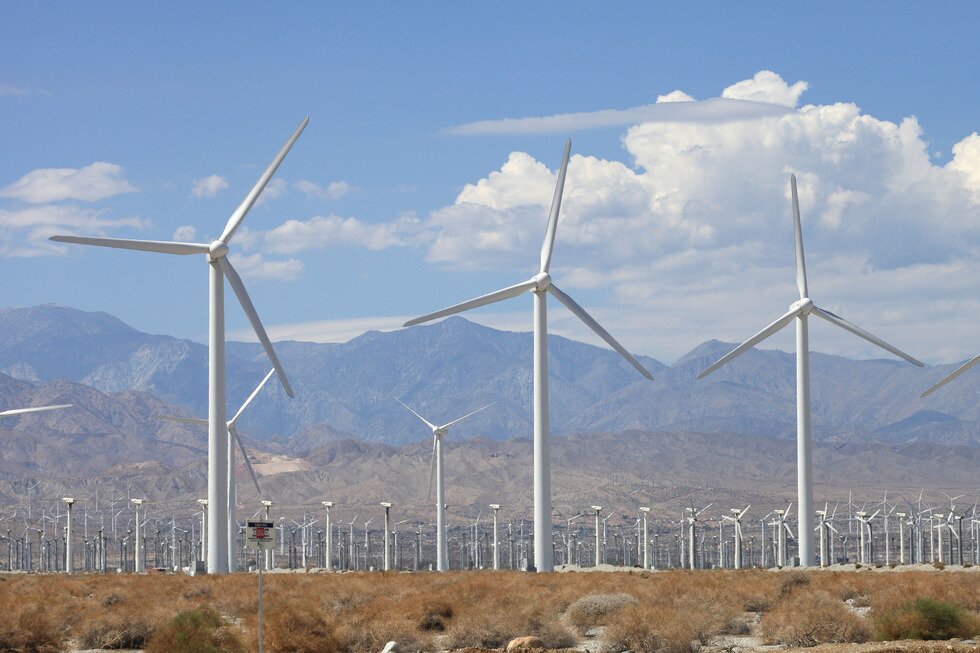
Fotografia przestawia kilkadziesiąt jasnych elektrowni wiatrowych na tle gór. Stoją gęsto ustawione, wśród rudej trawy. Jest słoneczny dzień, błękitne niebo z obłokami.
Wind power plant
Source: Sam Howzit, www.flickr.com, licencja: CC BY 2.0.
R1EEoTlGGDUFb
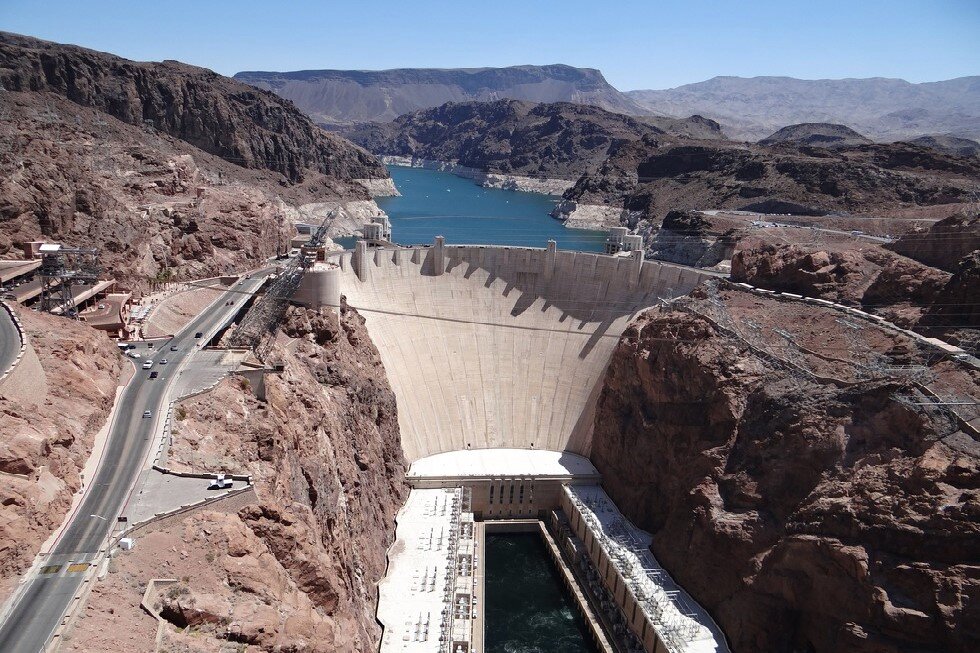
Fotografia przedstawia widok z góry na zaporę wodną w górach. Na pierwszym planie spod tamy wypływa woda, ujęta w betonowe koryto. Po obu stronach słupy i linie wysokiego napięcia. Za tamą błękitna rzeka, z obudowanymi brzegami. Nad nimi wznoszą się brązowo – fioletowe górskie stoki.
Water power plant
Source: MrUweS, http://pixabay.com, licencja: CC 0.
Thanks to the multitude of the sources of renewable energyrenewable energyrenewable energy, almost every place on earth can be adapted for electricity acquisition. For example, desert areas with high sun exposure are excellent for solar plant construction, Iceland can use the geothermal energy of its hot springs, and Scotland can benefit from wind energy.
Rg2XSo80bmIPm
Ilustracja przedstawia rodzaje energii odnawialnej: energię wody, wiatru, słońca, geotermii oraz ilustrujące je obrazki. Na ilustracji znajdują się napisy: renewable energy; wind; water; biomass; sun.
Renewable energy sources
Source: Dariusz Adryan, licencja: CC BY 3.0.
Task 2
Before you watch the animation / slideshow „Is coal really the Black Gold?”, write down the research question and the hypothesis. While watching, write down your observations and finally – conclusions.
R1DkCw4eejK4L
Wyjaśnij kluczowe pojęcia związane z tematem abstraktu.
Wyjaśnij kluczowe pojęcia związane z tematem abstraktu.
Analysis of the show:
RAzWxaCtJcfsb
Nagranie filmowe poruszające zagadnienie: czy węgiel naprawdę jest czarnym złotem? Pojawia się plansza z tytułem Is coal really the Black Gold?, w tle żarzący się węgiel. Kolejno pojawiają się ujęcia ukazujące: wywrotka na tle hałd węgla, do której ładowany jest węgiel, wielka koparka na tle zdegradowanego środowiska, szyb kopalniany, zalany szyb kopalniany, zdegradowane środowisko po działalności kopalni odkrywkowej, zdegradowane środowisko kopalni odkrywkowej na tle fabryki z wielkimi kominami, zdegradowane środowisko po działalności kopalni odkrywkowej, industrialna część miasta z licznymi kominami produkującymi zanieczyszczenia, elektrownia z wielkimi kominami, palący się węgiel, zagaszony, dymiący węgiel, brudny dym z komina domu.
Nagranie filmowe poruszające zagadnienie: czy węgiel naprawdę jest czarnym złotem? Pojawia się plansza z tytułem Is coal really the Black Gold?, w tle żarzący się węgiel. Kolejno pojawiają się ujęcia ukazujące: wywrotka na tle hałd węgla, do której ładowany jest węgiel, wielka koparka na tle zdegradowanego środowiska, szyb kopalniany, zalany szyb kopalniany, zdegradowane środowisko po działalności kopalni odkrywkowej, zdegradowane środowisko kopalni odkrywkowej na tle fabryki z wielkimi kominami, zdegradowane środowisko po działalności kopalni odkrywkowej, industrialna część miasta z licznymi kominami produkującymi zanieczyszczenia, elektrownia z wielkimi kominami, palący się węgiel, zagaszony, dymiący węgiel, brudny dym z komina domu.
Nagranie filmowe poruszające zagadnienie: czy węgiel naprawdę jest czarnym złotem? Pojawia się plansza z tytułem Is coal really the Black Gold?, w tle żarzący się węgiel. Kolejno pojawiają się ujęcia ukazujące: wywrotka na tle hałd węgla, do której ładowany jest węgiel, wielka koparka na tle zdegradowanego środowiska, szyb kopalniany, zalany szyb kopalniany, zdegradowane środowisko po działalności kopalni odkrywkowej, zdegradowane środowisko kopalni odkrywkowej na tle fabryki z wielkimi kominami, zdegradowane środowisko po działalności kopalni odkrywkowej, industrialna część miasta z licznymi kominami produkującymi zanieczyszczenia, elektrownia z wielkimi kominami, palący się węgiel, zagaszony, dymiący węgiel, brudny dym z komina domu.
RMm5pI9OdwZnj
Exercise 1
Ćwiczenie połącz w pary. Move the name of energy source to the appropriate group: non-renewable energy sources Możliwe odpowiedzi: 1. solar energy, 2. biomass, 3. natural gas, 4. water energy, 5. uranium, 6. geothermal energy, 7. coal, 8. wind, 9. lignite, 10. oil. renewable energy sources Możliwe odpowiedzi: 1. solar energy, 2. biomass, 3. natural gas, 4. water energy, 5. uranium, 6. geothermal energy, 7. coal, 8. wind, 9. lignite, 10. oil
Ćwiczenie połącz w pary. Move the name of energy source to the appropriate group: non-renewable energy sources Możliwe odpowiedzi: 1. solar energy, 2. biomass, 3. natural gas, 4. water energy, 5. uranium, 6. geothermal energy, 7. coal, 8. wind, 9. lignite, 10. oil. renewable energy sources Możliwe odpowiedzi: 1. solar energy, 2. biomass, 3. natural gas, 4. water energy, 5. uranium, 6. geothermal energy, 7. coal, 8. wind, 9. lignite, 10. oil
Move the name of energy source to the appropriate group
lignite, natural gas, solar energy, wind, water energy, uranium, oil, geothermal energy, biomass, coal
non-renewable energy sources
renewable energy sources
RN7hHXB60yNGJ
Exercise 2
Ćwiczenie wskaż prawidłowe odpowiedzi. What are the negative effects of energy based on fossil fuels combustion? Identify all the correct answers. Możliwe odpowiedzi: 1. emission of huge amounts of carbon dioxide and other gases into the atmosphere, 2. generation of waste in the form of excavated rocks, as well as combustion dusts and ashes, 3. destruction of nature in the areas of open-pit mines and landfills, 4. generation of radioactive waste, which has to be adequately protected
Ćwiczenie wskaż prawidłowe odpowiedzi. What are the negative effects of energy based on fossil fuels combustion? Identify all the correct answers. Możliwe odpowiedzi: 1. emission of huge amounts of carbon dioxide and other gases into the atmosphere, 2. generation of waste in the form of excavated rocks, as well as combustion dusts and ashes, 3. destruction of nature in the areas of open-pit mines and landfills, 4. generation of radioactive waste, which has to be adequately protected
What are the negative effects of energy based on fossil fuels combustion? Identify all the correct answers.
emission of huge amounts of carbon dioxide and other gases into the atmosphere
generation of waste in the form of excavated rocks, as well as combustion dusts and ashes
destruction of nature in the areas of open-pit mines and landfills
generation of radioactive waste, which has to be adequately protected
RCWO5U6UsfMMR
Exercise 3
Ćwiczenie wskaż prawidłową odpowiedź. What does the term "renewable energy sources" mean? Możliwe odpowiedzi: 1. Sources of energy produced by man and exchanged when the previous ones are depleted (e.g. batteries, accumulators)., 2. Natural resources that are either inexhaustible or can undergo rapid renewal (e.g. solar energy, biomass)., 3. All substances that can be reused as fuel (e.g. waste paper, PET bottles)., 4. Natural resources that were created in the distant past and under favorable conditions could renew themselves the future (e.g. oil, coal).
Ćwiczenie wskaż prawidłową odpowiedź. What does the term "renewable energy sources" mean? Możliwe odpowiedzi: 1. Sources of energy produced by man and exchanged when the previous ones are depleted (e.g. batteries, accumulators)., 2. Natural resources that are either inexhaustible or can undergo rapid renewal (e.g. solar energy, biomass)., 3. All substances that can be reused as fuel (e.g. waste paper, PET bottles)., 4. Natural resources that were created in the distant past and under favorable conditions could renew themselves the future (e.g. oil, coal).
What does the term "renewable energy sources" mean?
Sources of energy produced by man and exchanged when the previous ones are depleted (e.g. batteries, accumulators).
Natural resources that are either inexhaustible or can undergo rapid renewal (e.g. solar energy, biomass).
All substances that can be reused as fuel (e.g. waste paper, PET bottles).
Natural resources that were created in the distant past and under favorable conditions could renew themselves the future (e.g. oil, coal).
R1LYwCTw28juY
Exercise 4
Ćwiczenie wybierz prawidłową odpowiedź. Enter the appropriate words in the gaps in the text. The use of Możliwe odpowiedzi 1. renewable, 2. non-renewable, 3. fossil fuels, 4. natural, 5. electricity, energy sources should be treated as a priority by all countries. Contrary to Możliwe odpowiedzi 1. renewable, 2. non-renewable, 3. fossil fuels, 4. natural, 5. electricity sources, based on 1. renewable, 2. non-renewable, 3. fossil fuels, 4. natural, 5. electricity, their acquisition and processing does not lead to Możliwe odpowiedzi 1. renewable, 2. non-renewable, 3. fossil fuels, 4. natural, 5. electricity, contamination. In addition, each country has at least one natural resource that can be used to produce Możliwe odpowiedzi 1. renewable, 2. non-renewable, 3. fossil fuels, 4. natural, 5. electricity.
Ćwiczenie wybierz prawidłową odpowiedź. Enter the appropriate words in the gaps in the text. The use of Możliwe odpowiedzi 1. renewable, 2. non-renewable, 3. fossil fuels, 4. natural, 5. electricity, energy sources should be treated as a priority by all countries. Contrary to Możliwe odpowiedzi 1. renewable, 2. non-renewable, 3. fossil fuels, 4. natural, 5. electricity sources, based on 1. renewable, 2. non-renewable, 3. fossil fuels, 4. natural, 5. electricity, their acquisition and processing does not lead to Możliwe odpowiedzi 1. renewable, 2. non-renewable, 3. fossil fuels, 4. natural, 5. electricity, contamination. In addition, each country has at least one natural resource that can be used to produce Możliwe odpowiedzi 1. renewable, 2. non-renewable, 3. fossil fuels, 4. natural, 5. electricity.
Enter the appropriate words in the gaps in the text.
The use of .......................... energy sources should be treated as a priority by all countries. Contrary to .......................... sources, based on .........................., their acquisition and processing does not lead to .......................... contamination. In addition, each country has at least one natural resource that can be used to produce ...........................
Summary
Coal, oil, natural gas and uranium are non‑renewable sources of electricity; obtaining energy from them is cheap.
Renewable energy sources include solar radiation, wind, geothermal energy and energy coming from the flow of water; they do not pollute the environment, they won’t run out, but obtaining energy from them is expensive.
In Poland, most of the energy comes from burning coal.
In Poland, there are good conditions for the use of the energy of flowing water and geothermal energy.
Keywords
non‑renewable energy sources, renewable energy sources, coal, energy saving
energia odnawialna – energia, do uzyskania której wykorzystano zasoby przyrody, które nie ulegają wyczerpaniu, np. promieniowanie słoneczne, wiatr, energię geotermalną czy pływy morskie
paliwa kopalne – paliwa powstałe w wyniku beztlenowych procesów zachodzących pod ogromnym ciśnieniem we wnętrzu Ziemi; zaliczamy do nich m.in. węgiel kamienny, węgiel brunatny, ropę naftową oraz gaz ziemny