Stages of human life
that reproduction is achieved by the reproductive system;
that every person was created from the combination of sperm and egg.
describe changes that occur in the embryonic and fetal stages of life;
recognize in the illustrations and describe the characteristic features of the stages of human development, namely the periods: neonatal, infant, toddler, school, adolescence, adulthood, old age.
Nagranie dostępne na portalu epodreczniki.pl
Wysłuchaj nagrania abstraktu i zastanów się, czego jeszcze chciałbyś się dowiedzieć w związku z tematem lekcji.
Conception
On average, every 4 weeks, during ovulationovulation, a woman's egg is released from one of the woman's ovaries. When the egg connects with the sperm (usually as a result of sex), a new life begins. Fertilization and implantation of a fertilized egg in the uterus is defined as conception.
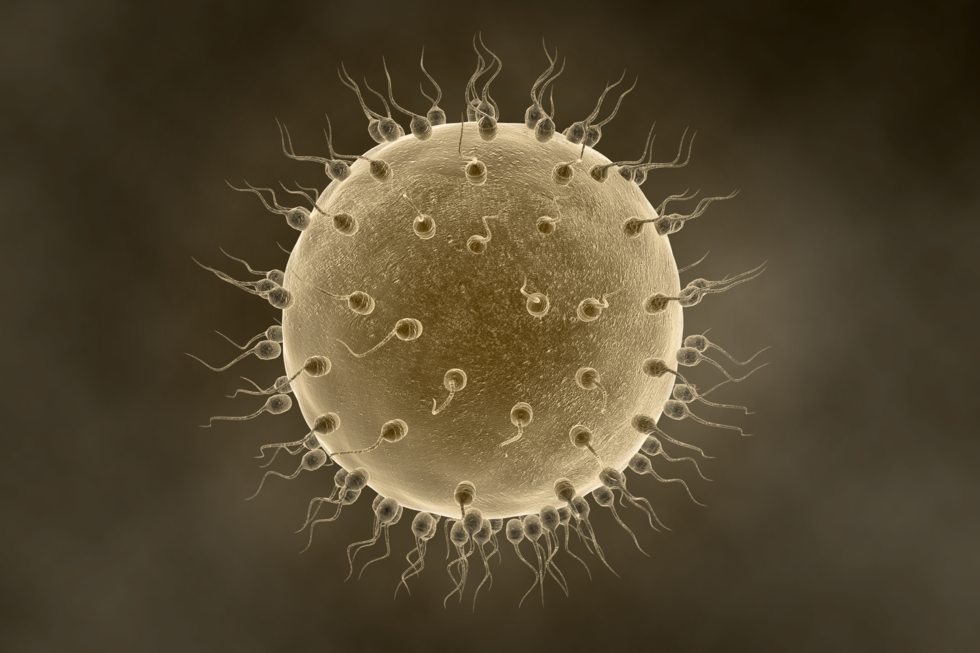
From conception to birth
From the moment of fertilization, the egg cell begins pregnancypregnancy lasting 9 months. During this time, a child develops from a fertilized egg. Pregnancy ends with his birth.
The egg cell divides very quickly, forming an embryo. After a week, as a result of the ongoing divisions, the embryo already has about 100 cells. During this time, it nestles in the wall of the uterus. From that moment on, it begins to be nourished by substances supplied by the mother's body through the placentaplacenta,which it is connected to by the umbilical cordumbilical cord. After about 8 weeks of pregnancy, the embryonic periodembryonic period ends and the fetal periodfetal period begins. The young body developing in the mother's body is now called a fetus. It is already reminiscent of a miniature man. It grows intensively, and its organs develop until the end of pregnancy. After 9 months, the fetus is ready to come into the world, during birth. During delivery, the child leaves the uterus and exits the womb through the vagina. From that moment on, it breathes by itself and receives food in the form of milk.
Human life after birth
Birth begins the human life and it starts with the neonatal period, lasting until the end of the first month of life. The child is then called a newborn baby. It weighs on average 3 - 3.5 kg and is 50 - 55 cm long. It is not capable of independent living and requires careful parental care. It sleeps most of the day, waking up only at feeding times. It’s only food is it’s mother's milk.
Between the second and twelfth month of life, is the infant period. The baby grows very fast and develops: trying to sit down, begin to crawl, and then stand and walk by itself, taste different foods, say the first words. At this time, children grow their first teeth, called milk teeth.
Between the first and the third year of life comes the toddler period. The child is then very busy and curious. He learns to speak with short sentences, he also begins to ask questions. He tries to eat, wash and dress himself.
When the child turns 3, the pre‑school period starts in his life. He spends a lot of time playing with his peers, asks many questions and in this way he discovers the world. The school period begins after the child has reached 6 years. The most important challenge then is learning at school. During the school period, children gain efficiency, and the precision of their movements is significantly increased.
In the school period, when the child is over 12 years old, it begins to enter the period of adolescence. Achieving full maturity is a feature of adulthood – the longest period in a person's life. At that time, people make their own lives, work professionally, set up families and pursue different passions. They also take full responsibility for their decisions and actions.
Adults gradually enter the old age period, in which the physical fitness and immunity of the body are reduced. It is a time of well‑deserved rest after many years of work, when people can devote themselves to their interests. They often help in raising their grandchildren by sharing knowledge and experience.
Match the concept to the definition.
etap rozwoju człowieka rozpoczynający się od około 9. tygodnia i trwający aż do porodu; czas intensywnego wzrostu i rozwoju płodu, przewód łączący organizm dziecka rozwijającego się w macicy z łożyskiem, inaczej jajeczkowanie; proces uwolnienia komórki jajowej z jajnika do jajowodu, mający miejsce średnio co 28 dni (4 tygodnie), trwający 9 miesięcy (od zapłodnienia do porodu) okres zmian w organizmie kobiety spowodowany rozwojem dziecka, wczesny okres rozwoju człowieka rozpoczynający się od zapłodnienia i trwający do końca 8. tygodnia ciąży; podczas tego okresu powstają tkanki i narządy nowego organizmu, narząd, za pomocą którego dziecko otrzymuje substancje pokarmowe i tlen z organizmu matki
| pregnancy | |
| placenta | |
| fetal period | |
| embryonic period | |
| ovulation | |
| umbilical cord |
Summary
A conceived child develops from the fertilized egg in the uterus of the woman. The period from fertilization to delivery is called pregnancy.
The life of a young organism during pregnancy is divided into embryonic and fetal periods, ending in childbirth.
After birth, the human life is divided into periods: neonatal, infant, pre‑school, school, puberty, adulthood and old age.
Keywords
pregnancy, fetus, stages of development
Glossary
ciąża – trwający 9 miesięcy (od zapłodnienia do porodu) okres zmian w organizmie kobiety spowodowany rozwojem dziecka
łożysko – narząd, za pomocą którego dziecko otrzymuje substancje pokarmowe i tlen z organizmu matki
okres płodowy – etap rozwoju człowieka rozpoczynający się od około 9. tygodnia i trwający aż do porodu; czas intensywnego wzrostu i rozwoju płodu
okres zarodkowy – wczesny okres rozwoju człowieka rozpoczynający się od zapłodnienia i trwający do końca 8. tygodnia ciąży; podczas tego okresu powstają tkanki i narządy nowego organizmu
owulacja – inaczej jajeczkowanie; proces uwolnienia komórki jajowej z jajnika do jajowodu, mający miejsce średnio co 28 dni (4 tygodnie)
pępowina – przewód łączący organizm dziecka rozwijającego się w macicy z łożyskiem