Reading official documents
you will speak about the features of official language
you will distinguish between types of official documentsofficial documents
you will describe the structure of such documents
Take notes on any official documents you can find on the Internet which you consider are most typical of this kind of communication. Write them down in your notebook.
Official documents are difficult to read and write! However, you need to be aware of the most important of these in order to work efficiently in an office (social institutionsinstitutions and public bodies) and more easily access important information. Official language is one of the most difficult styles for a number of reasons:
Firstly – they are very formal, meaning that administrative documents have their own templates that need to be read and, most of all, followed if you want to record important legal informatiom.
Secondly – the verbal and stylistic design is quite standardised. Dominant here are professional legal terms, long sentences and, above all, constructions which express commands or prohibitions (eg „permitted” – „not permitted”, „allowed” – „forbidden”).
Thirdly – in many sentences, there are no personal formsforms of verbs to be found. The things most commonly referred to are things, issues and circumstances – less about people. So it is a style of writing that is different from everyday language or the language of the media, where people and their actions are central, and things, issues and circumstances are secondary.
What features of official style have you noticed in documents you have seen at home? What were these documents?
Arrange using your knowledge of scientific features. Try to keep them separate from each other. Drag the items to the appropriate places.
preface, wedding speech, paper, protocol, CV, welcome, decision, congratulations, wishes, presentation, greetings, toast, announcement, thanks, discussion, application, obituary, polemic, bibliography, regulation
| Official terms | |
|---|---|
| Scientific terms | |
| Circumstantial terms |
The most common official document is a requestrequest/application. To whom can these be directed? What can they be about? Do you know the elements that should be in such a document?
1. Title Application - this is the formal name, so it should be the title of the document. Each offical document has its own name, eg citation, justification, authorisation.
2. Address details Official communications are not anonymous - address details must be supplied and information about the recipient should be included (this should be the full name of the department or institution).
3. Polite language Applications are often left with a secrtary or sent by mail, so polite forms should be used (eg "I would like to request....", "I am requesting...", "Yours faithfully").
4. Substantiation We are usually asking for something in an application, so you have to justify your request and present the circumstances (for example, using a formula like: "My motivation is...").
5. Formatting An application can br written or edited using a text editor. It is worth remembering that there are special fonts for administrative texts (eg Arial) - so decorative text or letters specific to specialised texts should not be used.
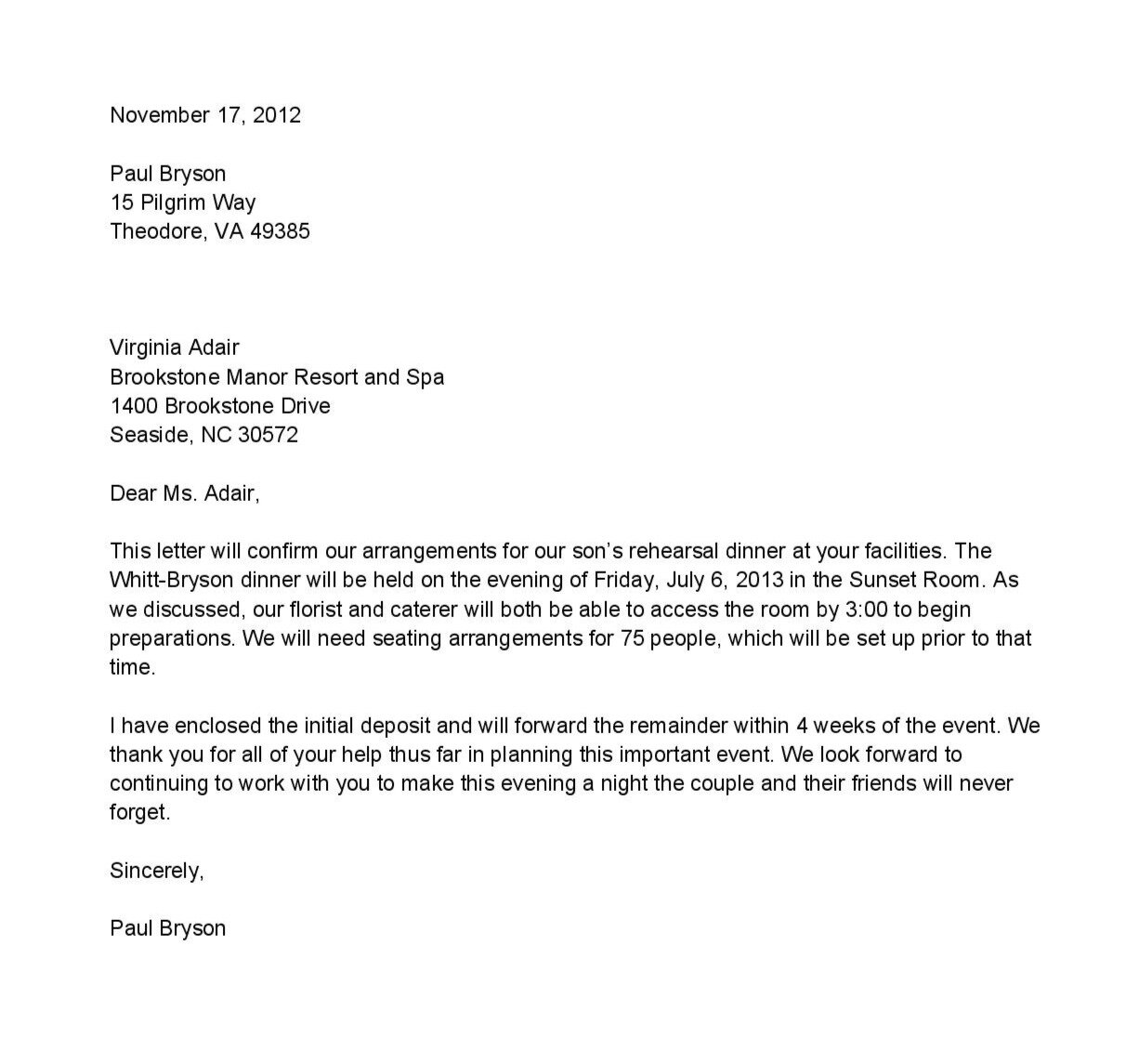
Now take a look at the two examples of official letters: in Polish and in English. What differences do you notice?
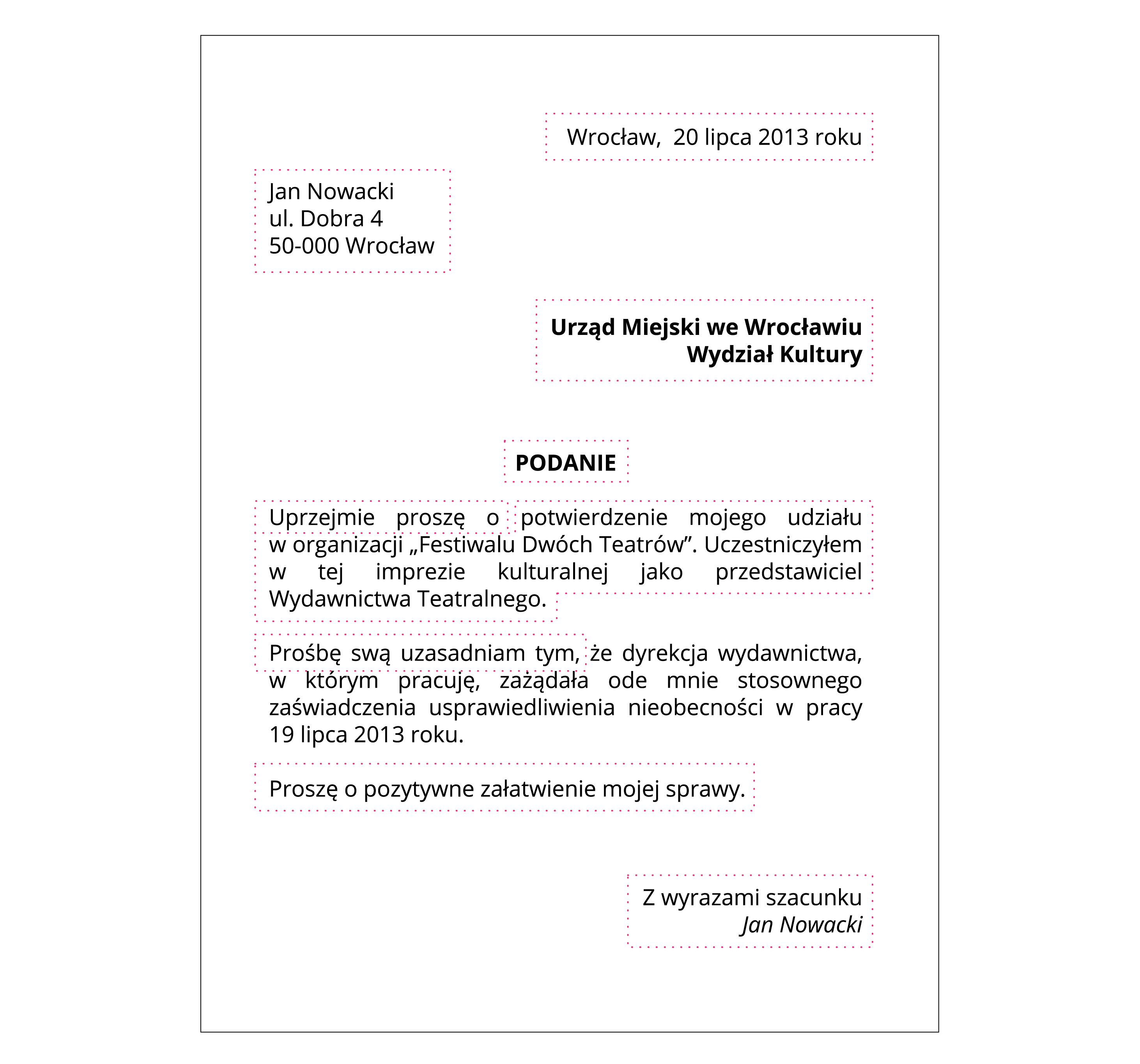
1. Locality + date
2. Sender: full name
3. Recipient: full name
4. Text genre
Decide who you would refer the following matter to.
housing council/local authorities, management of public transport organisation, local road management, headmaster, director of a local community centre
| change in class profile | |
| building an outdoor gym | |
| waiving a fine for non-possession of a ticket | |
| installation of traffic lights at a dangerous intersection | |
| provision of a stage for a theatre group |
Write a request to:
your local authority, in which you make a request for the construction/repair of bicycle paths or
your school head, where you ask for the gymnasium to be made available for a cultural event (eg. exhibition, show).
Keywords
official style, official document, request
Glossary
styl urzędowy
tekst urzędowy
Curriculum Vitae
podanie
zawiadomienie
protokół
odwołanie
usprawiedliwienie
upoważnienie
regulamin
formularz
formuła grzecznościowa
urząd, również: instytucja