Contrasts of Baroque
to explain the concept of contrastcontrast in baroque artbaroque art;
to explain the concepts of pathospathos, theatricalisation, the sacredthe sacred, the profanethe profane, asceticismasceticism, and joie de vivre;
to describe and interpret pieces of baroque art.
Baroque art was dominated by contrasts. Reality overlapped with appearances, the sacred with the profane, asceticism with joie de vivre, zealous religiosity with splendour and lavishnesslavishness. The principles of the Counter‑Reformation influenced the themes, diversity and richness of forms. Commissioned by the Church and courts, artists employed pathos, theatricalisation and illusionism to create pieces that amazes with their size and strongly arouse the senses of the spectators. Conversely, in the Protestant Netherlands, art tended to be more intimate, and was meant to calm the emotions of the recipient. Expressive and symbolic light were particularly important, permeating paintings, animating sculptures, and highlighting the architecture.
Pathos and theatricalitytheatricality
We will first focus on pathos and theatricality. Take a close look at the portrait of Louis XIV and name the elements that reflect those characteristics.
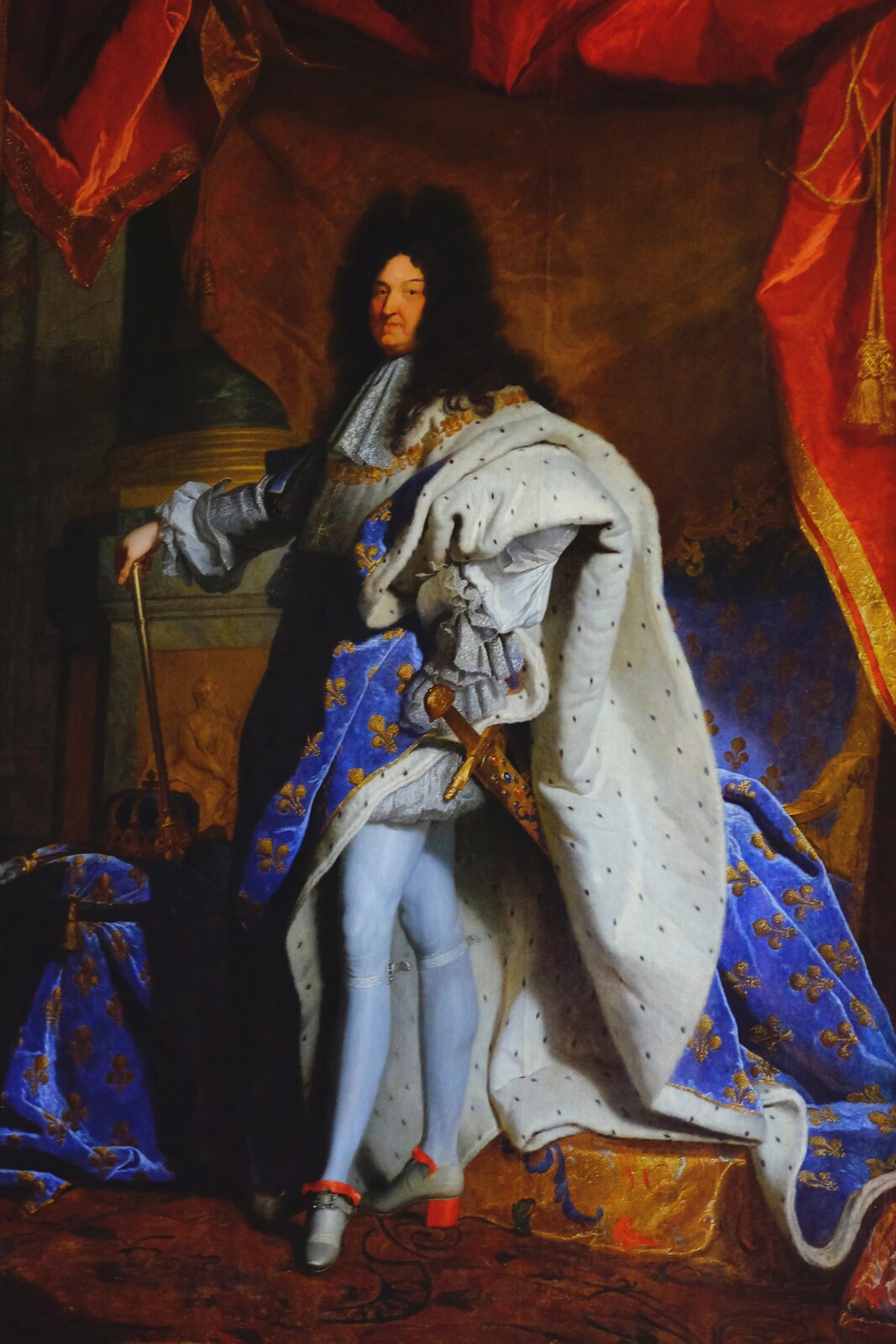
Read the following text by Krystyna Secomska that describes the portrait of the so‑called Sun King. What did you miss? Name the qualities you did not notice the first time around. Describe the portrait again in terms of theatricality and pathos.
Malarstwo francuskie XVII wiekuWizerunek „Króla Słońce” [...] przeszedł do historii jako symbol „Grand Siècle” i jako „emblemat monarchii francuskiej”. Rigaud ukazał w mocnym blasku imponującą postać monarchy (odzianego w gronostaje i ciemnoszafirowy płaszcz, zdobny w burbońskie lilie, na tle purpurowej zasłony) i jego postarzałą, nieco zmęczoną, obrzmiałą twarz; hieratyczna postawa nie jest pozbawiona kokieterii (efektowny układ dłoni i taneczne ustawienie nóg). Obraz Rigauda z barokową „oprawą scenograficzną” (kolumny i udrapowana kotara) stał się pierwowzorem ikonograficznym dla wielu portretów królewskich i książęcych po roku 1700. Liczne elementy baroku w stylu Rigauda – kaskady bezładnie gnących się fałd, ostentacyjne gesty, zaskakujące kontrasty materii i barw – zrównoważone zostały przez ostrość rysunku i zmysł obserwacji.
Source: [w:] Krystyna Secomska, Malarstwo francuskie XVII wieku, Warszawa 1985, s. 118.
The sacred and the profane
Think about the meaning of the sacred and the profane? Why are they in stark contrast to each other? Complete the definition.
holiness, sphere of the Church, beliefs, humans, animals, beggar, practices, holy, secularity, time, the sacred, everyday, king, secularity
The profane, from Latin ( “before” and “temple”): things that are secular and related to ........................................, the opposite of ......................................... The profane consists of all ........................................ events in human life. The profane comes from Latin word for .........................................
The sacred (Latin), from Latin : the sphere of ........................................, encompassing all ........................................, rituals, and religious ......................................... It is a characteristic of various religious tools such as utensils, ........................................ tomes, garments, figures (e.g. ........................................ or priest) spaces (e.g. temples), and periods (e.g. Sunday, fasting ........................................, Easter).
Take a close look at Caravaggio’s “Crucifixion of St. Peter”. Why do you think that the sacred and the profane clash here? Compare you answer with the interpretation below the painting.
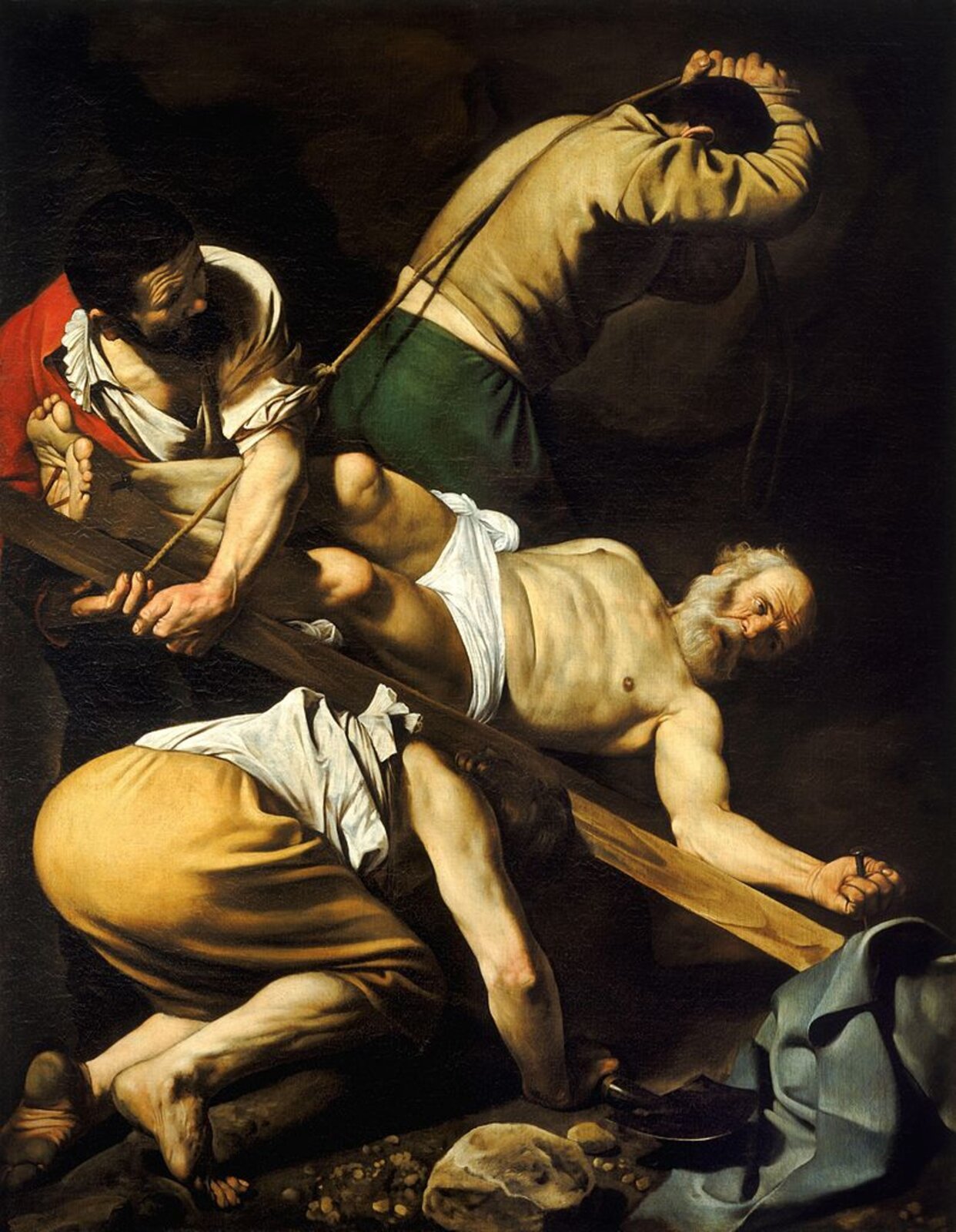
Lustro świata. Nowa historia sztukiCaravaggio chciał zobaczyć, jak to będzie wyglądało, gdy trzech robotników uniesie dwie deski z przywiązanym do nich głową na dół starcem w przepasce na biodrach. Opłacił więc kilku ludzi z ulicy, aby zainscenizowali tę scenę w jego pracowni. Sam obserwował z bliska ich wysiłek i zarejestrował na płótnie układ ciał w tej zadziwiającej kompozycji niemal tak, jak zrobiłby to fotograf. Dzięki temu parafianie z kościoła S. Maria del Popolo, gdzie obraz wisi do dziś, spoglądają na wypięte w ich stronę pośladki robotnika i jego brudne stopy. [...] W zasadzie dzieło to spełniało oczekiwania kontrreformacyjnego Kościoła, przywołując wspomnienia o męczeństwie. Był jednak pewien problem – wierni w Rzymie znienawidzili ów obraz. Przedstawiciele parafian, nie życząc sobie oglądania w ich kościołach brudnych stóp robotników, którzy stali na ulicy, odrzucili wykonane przez Caravaggia obrazy ołtarzowe, zamówione przez jego przyjaciół z elity. Ci z kolei byli przekonani, że dokonali właściwego wyboru, widząc zachwyt, jaki prace tego malarza wywoływały wśród innych artystów. Ludzie ze świata sztuki kontra oburzona miejska publiczność – czyli pierwszy przedsmak klasycznego skandalu i nieporozumienia, jakie zagoszczą w sztuce XIX i XX wieku.
Source: [w:] Julian Bell, Lustro świata. Nowa historia sztuki, tłum. Ewa Gorządek, Warszawa 2009, s. 226.
Take a look at two paintings: “St. Paul the Hermit” by Jusepe de Ribera and “The Three Graces” by Peter Paul Rubens or listen to their descriptions. Explain why these pieces are good examples of contrast characteristic of baroque art. You can make use of the information below the paintings.
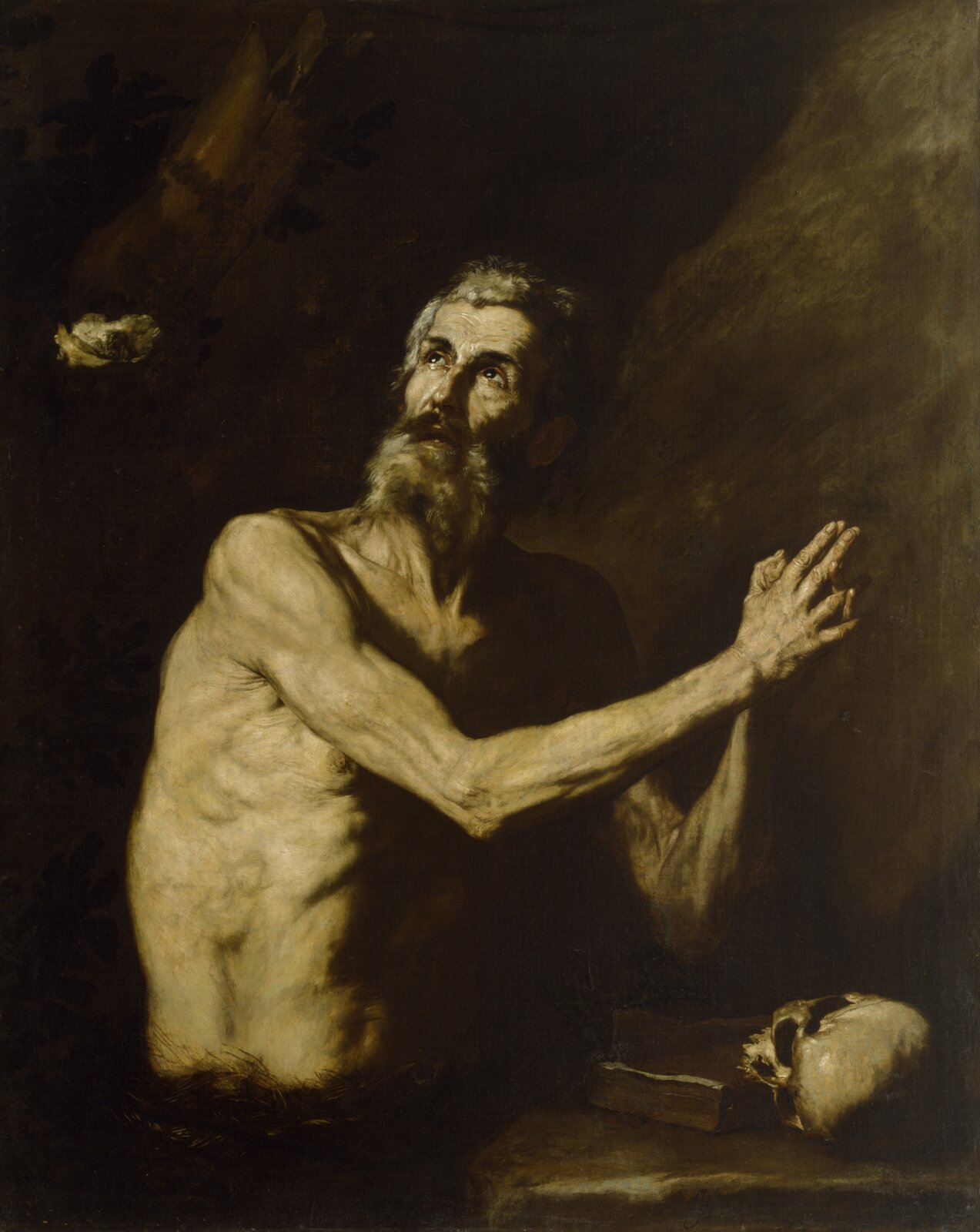
Jusepe de Rivera was a painter who combined two schools of art in his works, Spanish and Italian. The former made him more inclined towards naturalistic forms, with deep zealous religiosity imbued with mysticism; the latter, to diversity of colors and strong contrasts of light and shadow (Caravaggio’s influence). In line with contemporary trends, Ribera’s paintings were realistic and religious in theme (mostly acts of atonement and torture). He depicted anchorites and martyrs, their bodies emaciated and deformed by pain, suffering and ascesis, marked by the passage of time. The art of Peter Paul Rubens is the polar opposite: this Flemish artist took delight in sensual, soft‑bodied, full‑figured personages, perceived as an apotheosis of vitality and joie de vivre.
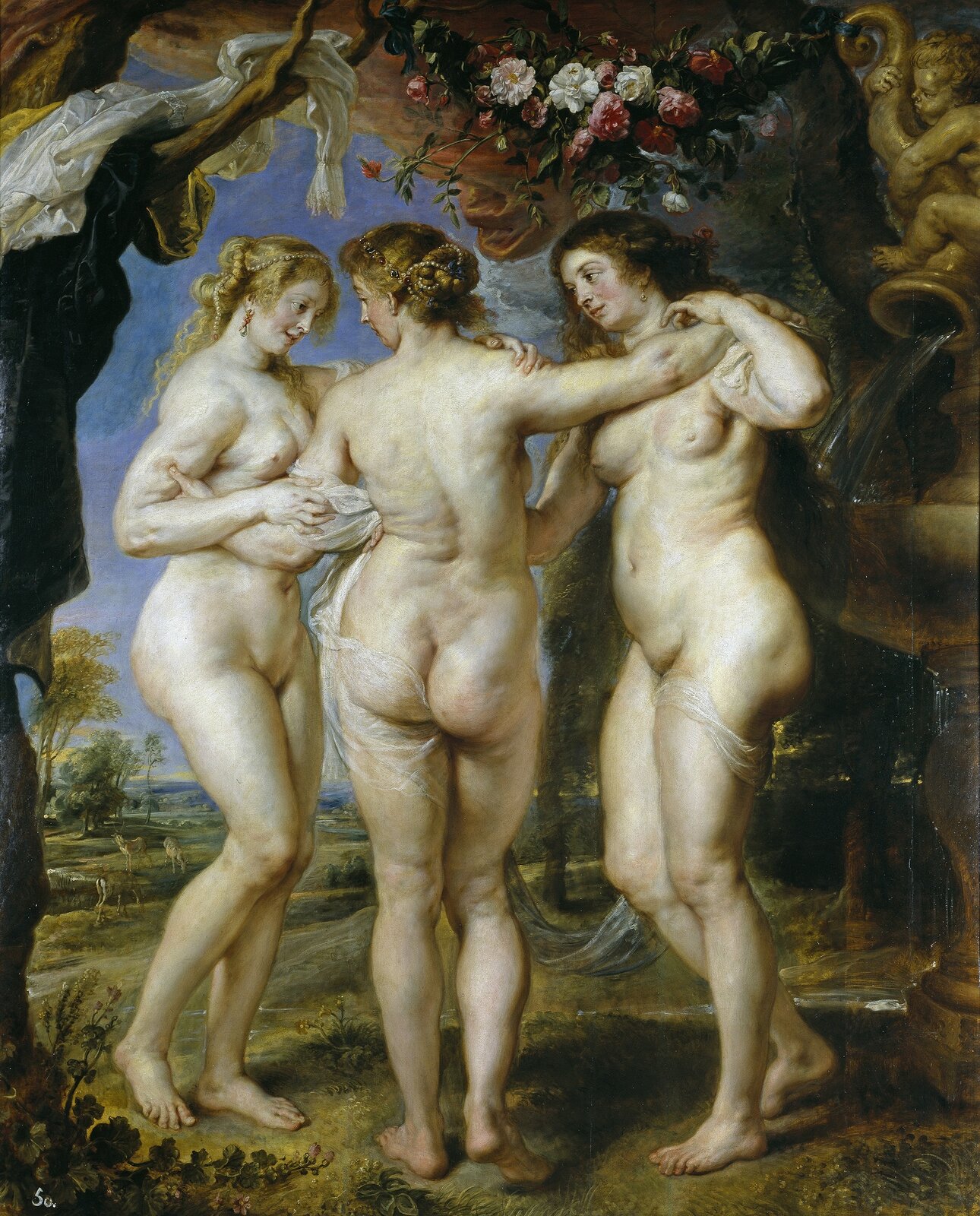
Siedem wieków malarstwa europejskiegoW sztuce Rubensa wszystkie cechy barokowe występują w komplecie [...]. Jesteśmy pewni, że to artysta naprawdę wielki, a równocześnie typowy reprezentant i współtwórca baroku, tak jak Rafael jest reprezentantem renesansu. Mamy u Rubensa i dynamizm, i witalność, i emocjonalizm, i teatralność, i retorykę, i panegiryzm, i emfazę, i namiętność, i gwałtowne ruchy, i grę światłocienia, i bujne kształty, i układy diagonalne, i „malarskość” koloru – słowem wszystkie elementy stylu, postawy i środków wyrazu, uznanych za charakterystyczne dla stylu barokowego. [...] Rubens był dzieckiem szczęścia. Posiadał wszystko: talent, zdrowie, urodę, sławę, powodzenie, kolejno dwie piękne, kochające żony, udane dzieci. Uznanie i podziw dla jego dzieł przetrwały wieki następne. Dopiero w naszym wieku XX estetyka sztuki Rubensa znajduje niekiedy przeciwników. Ale nawet ci, którzy Rubensa „nie lubią”, gdy staną przed jego najlepszymi płótnami, ulegają tej triumfalnej malarskości, tej wielkiej fanfarze optymizmu, nieznającej przeszkód i wahań swobodzie wypowiedzi.
Source: [w:] Maria Rzepińska, Siedem wieków malarstwa europejskiego, Wrocław 1991, s. 230.
Match the opposite concepts.
intimacy, the profane, splendour and lavishness, , calming the emotions
| the sacred | |
| asceticism | |
| mortification | |
| theatricalisation of life | |
| arousing the senses |
Analyze Caravaggio's painting Crucifixion of Saint Peter. Take notes on all the qualities of this piece that are characteristic of baroque art.
Hold a class discussion about the controversial nature of baroque art.
Based on what you have learnt, prepare a multiple choice question for your classmate to test their knowledge.
Question: ...
- ...
- ...
- ...
- ...
- ...
Listen to the abstract recording to review the material and new vocabulary. Then do the vocabulary exercise. Match the pairs: English and Polish words.
sacrum, przepych, profanum, teatralność, patos, asceza, sztuka barokowa, kontrast
| asceticism | |
| baroque art | |
| contrast | |
| lavishness | |
| pathos | |
| the profane | |
| the sacred | |
| theatricality |
Keywords
baroque art, lavishness, theatricality, pathos, asceticism, the sacred, the profane, contrast
Glossary
asceza
sztuka barokowa
kontrast
przepych
patos
profanum
sacrum
teatralność