We already know that weather has a substantial impact on the environment. It’s worth to think about whether the surrounding landscape always was and will be the same as it is now. And if it’s changing, what are the reasons for these changes. The landscape is changed, for instance, by inanimate factors that share the surface of the Earth: the Sun, water and wind. Their destructive effect on the Earth’s surface is called erosionerosionerosion.
As far as Poland is concerned, the form of erosion that’s of greatest importance is erosion caused by river flows, sea water and rainfall. Rivers deepen and widen their valleys. Rock fragments are carried to their more remote parts. Waves have a significant impact on the coasts. They gradually erode land and often carry fragmented rocks over large distances. Rainwater contributes to the erosion of ploughed fields, canyons and steep embankments. One the effects of erosion is the formation of unusually shaped rocks. Sometimes water‑soaked soil sinks causing landslides. In addition, changes in temperature caused by the Sun and frost can lead to water getting into the rock crevices and freezing, causing rocks to fragment as a result.
RKzsUb0Gdcde8
Fotografia przedstawia zakole rzeki, powstałe na skutek podmywania brzegów przez wodę. Zakola mają wysokość około jednego metra. Na podmytych brzegach widoczna jest ziemia oraz korzenie drzew i traw. Nad zakolem rzeki rośnie trawa i drzewa iglaste. W tle widać pasmo górskie oraz niebo.
River erosion. Erosion caused by the river - pay attention to the banks washed away by flowing water
Source: Cowirrie, www.flickr.com, licencja: CC BY-SA 2.0.
RBzqC6T07vmyA
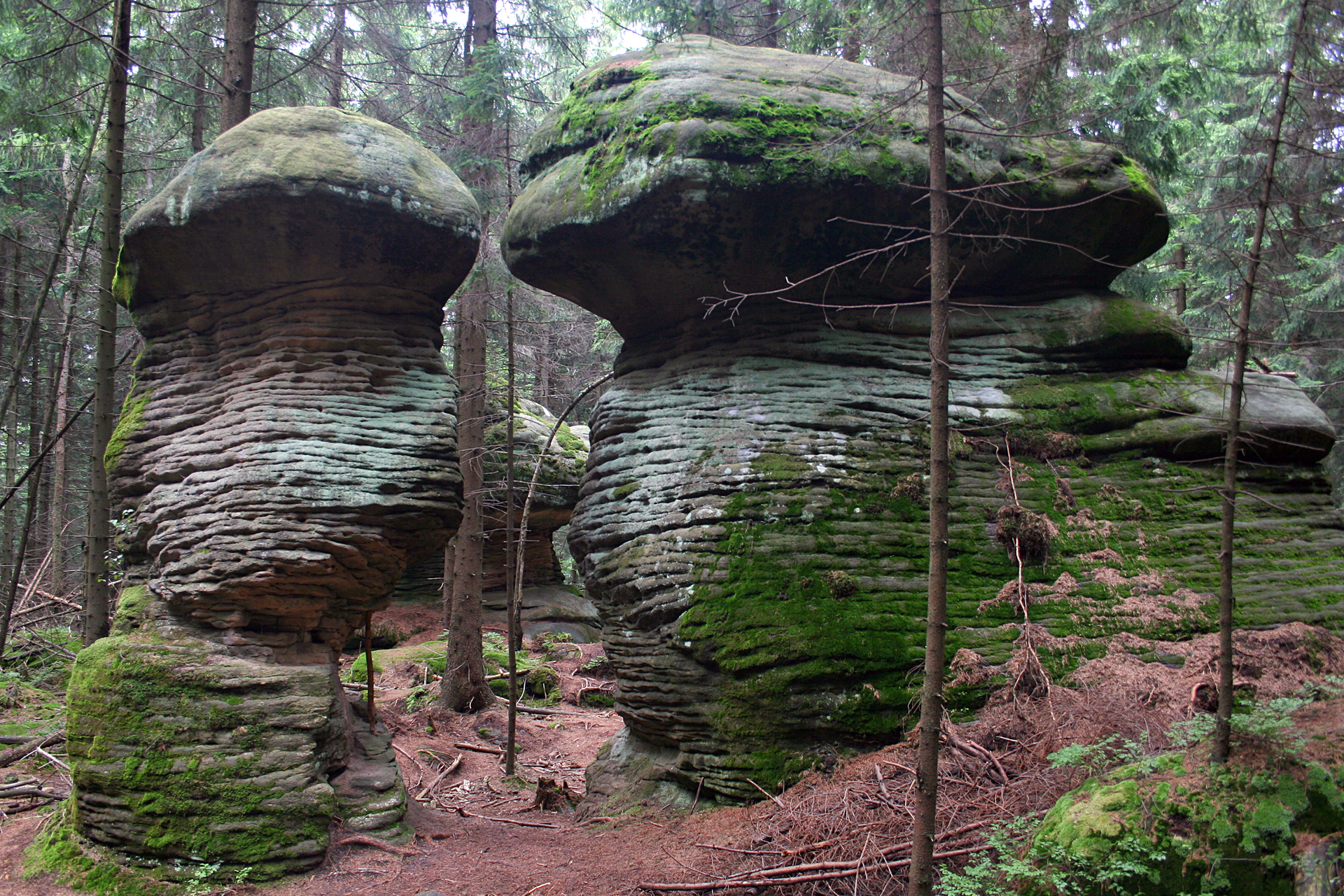
Fotografia prezentuje dwie stojące obok siebie skały kształtem przypominające grzyby, będące skutkiem erozji wiatrowej. Grzyby skalne uformowane są w lesie. Wznoszą się na pagórku pokrytym suchymi igłami i mchem. Otaczają je iglaste drzewa.
Mushroom rocks. Erosion caused by wind is of great importance in the formation of rock fungi in the Stołowe Mountains.
Source: Przykuta, http://commons.wikimedia.org, licencja: CC BY-SA 3.0.
Important!
Forests have a significant impact on the rate of erosion. Even a single row of trees reduces the effect of wind on erosion. That’s why trees growing along baulks that separate fields should not be felled. Without them wind and rainfall blow and wash away soil as well as nutrients required by plants.
Task 1
Before you watch the film titled “The impact of water and wind on the landscape”, write down a research question and a hypothesis. While watching the film, write down your observations and, at the end, your conclusions.
RVE59oXMBhaWb
Przed zapoznaniem się treścią poniższego filmu sformułuj pytanie badawcze i hipotezę. Na końcu wypowiedz wnioski.
Przed zapoznaniem się treścią poniższego filmu sformułuj pytanie badawcze i hipotezę. Na końcu wypowiedz wnioski.
Analysis of the experiment
RajOts6L3dOjp
Film przedstawia eksperyment pokazujący wpływ wody i wiatru na krajobraz. Do eksperymentu zostały użyte: plastikowe pudełko, kasztany, gliniana podstawka, żwirek i suszarka. Kasztany i glinianą miseczkę kładziemy do pudełka. Następnie wsypujemy żwirek. Włączamy suszarkę symulującą wiatr i kierujemy strumień powietrza na zawartość pudełka. Obserwujemy jak przemieszcza się żwirek.
Film przedstawia eksperyment pokazujący wpływ wody i wiatru na krajobraz. Do eksperymentu zostały użyte: plastikowe pudełko, kasztany, gliniana podstawka, żwirek i suszarka. Kasztany i glinianą miseczkę kładziemy do pudełka. Następnie wsypujemy żwirek. Włączamy suszarkę symulującą wiatr i kierujemy strumień powietrza na zawartość pudełka. Obserwujemy jak przemieszcza się żwirek.
The impact of water and wind on the landscape
Source: GroMar Sp. z o.o., licencja: CC BY-SA 3.0.
Source: GroMar Sp. z o.o., licencja: CC BY-SA 3.0.
Film przedstawia eksperyment pokazujący wpływ wody i wiatru na krajobraz. Do eksperymentu zostały użyte: plastikowe pudełko, kasztany, gliniana podstawka, żwirek i suszarka. Kasztany i glinianą miseczkę kładziemy do pudełka. Następnie wsypujemy żwirek. Włączamy suszarkę symulującą wiatr i kierujemy strumień powietrza na zawartość pudełka. Obserwujemy jak przemieszcza się żwirek.
Since water and wind erode rocks and carry their particles, what happens with them next? Their particulates are deposited in other locations. This process is called accumulation. This process also affects the landscape. We will prove it by performing an observation.
Erozja i akumulacja
Observation 1
You will need
water,
sand,
a watering can.
Instruction
Create a several centimetre high mound out of sand. Press it into shape so that it doesn’t fall apart.
Pour water from the watering can over on the mound. Observe what happens with the sand.
Summary
A small amount of water changed the sand mound’s appearance. Rain and wind have a similar effect on rocks.
Examples of accumulation
Examples of accumulation
RLlZpjYkO3k3U
Fotografia prezentuje szeroką dolinę rzeczną z łachami piasku utworzonymi przez płynącą wodę. Łachy porośnięte są niskimi przysadzsitymi drzewami.
Settlement of sediments on the river bed
Source: Pko, http://commons.wikimedia.org, licencja: CC BY-SA 3.0.
RLuHBgN0S9nEa
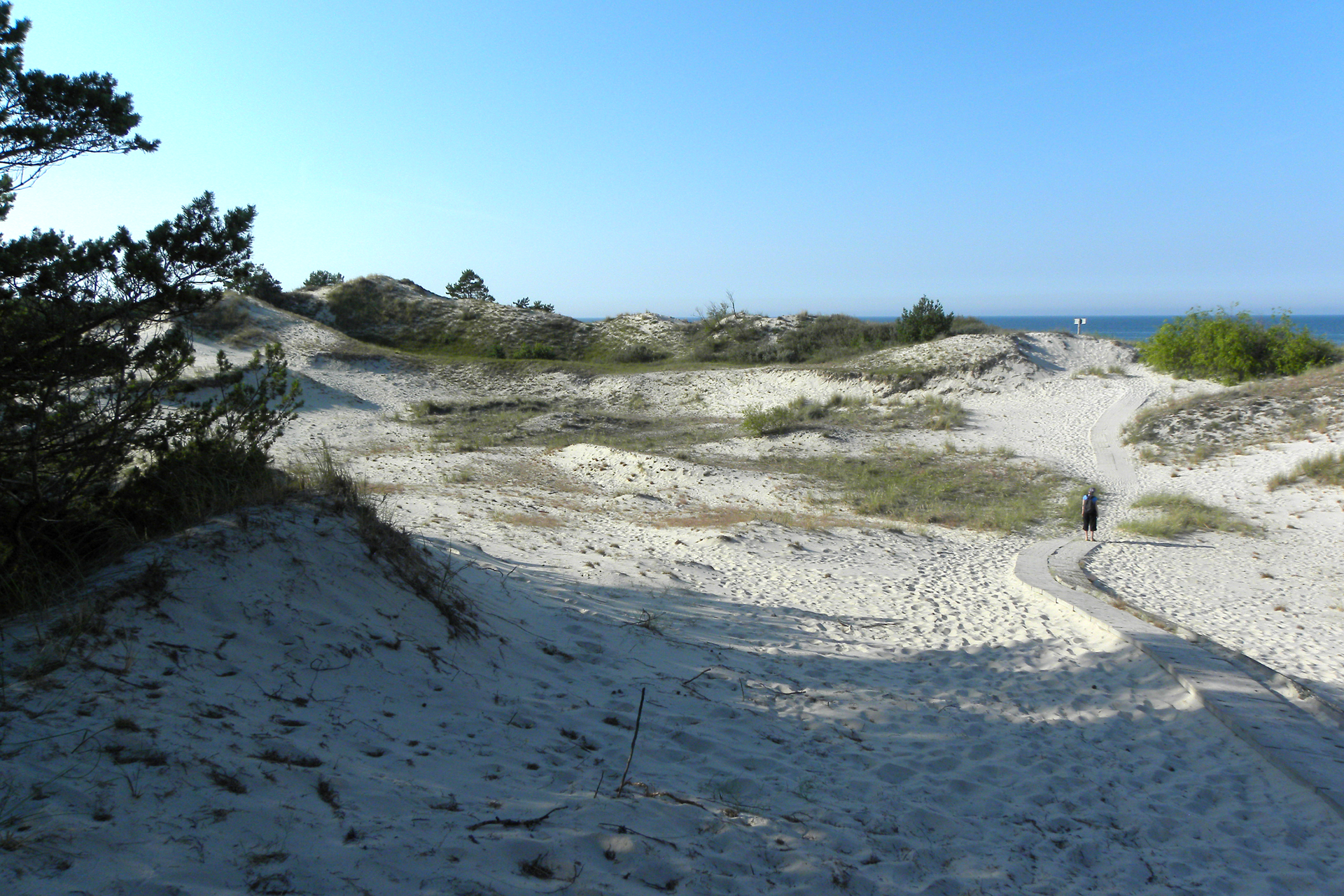
Fotografia prezentuje wydmy nadmorskie, powstałe na skutek działalności wiatru. Na horyzoncie widać morze. Wydmy porośnięte są trawami, krzakami, niskimi krzakami. Przez wydmy prowadzi droga po której idzie osoba.
Dunes
Source: Bartłomiej Bulicz, http://commons.wikimedia.org, licencja: CC BY-SA 3.0.
RYCOrokeCuUT2
Fotografia prezentuje piargi - usypiska fragmenty skalne powstałe u podnóża góry stojącej nad Morskim Okiem.
Landslides
Source: zokarko, www.flickr.com, licencja: CC BY 2.0.
How organisms affect the landscape?
Plants and animals also affect the landscape. For instance, a forest landscape is dominated by trees and other plants that live in a symbiotic or dependent relationship with the trees. A meadow, on the other hand, is dominated by grass and other herbaceous plants that co‑create the landscape. The plant life limits the effects of wind on the landscape and vice versa. For instance on deserts, where there are no plants, wind plays an extremely important role in shaping the landscape, whereas in forests it has barely any effect. The impact of animals on the landscape can be seen more rarely. However, they can built structures that significantly affect the appearance of the surrounding environment. By building dams on small rivers, beavers create expansive marshes. Ants build anthills that can be higher than 1 metre above ground level (and which extend much deeper into the ground). Termites, which live in a warmer climate, build colonies that can reach even up several metres in height. Stork nests are an example of the impact that birds have on the landscape, but there are birds that build much bigger nests. Large herds of animals can trod paths and destroy plant life by eating or trampling it.
R1MbJjW4eVuHL
Fotografia przedstawia pionowe termitiery na otwartej przestrzeni. Usytuowane są na polu, porośniętym trawami w tle znajdują się niskie drzewka liściaste.
Termite mound. In the tropics live small insects - termites that form groups of millions of individuals. They build shelters - termites - measuring up to 3 m in height
Source: Bmdavll, http://commons.wikimedia.org, licencja: CC BY-SA 3.0.
R7xrqfQSlKotF
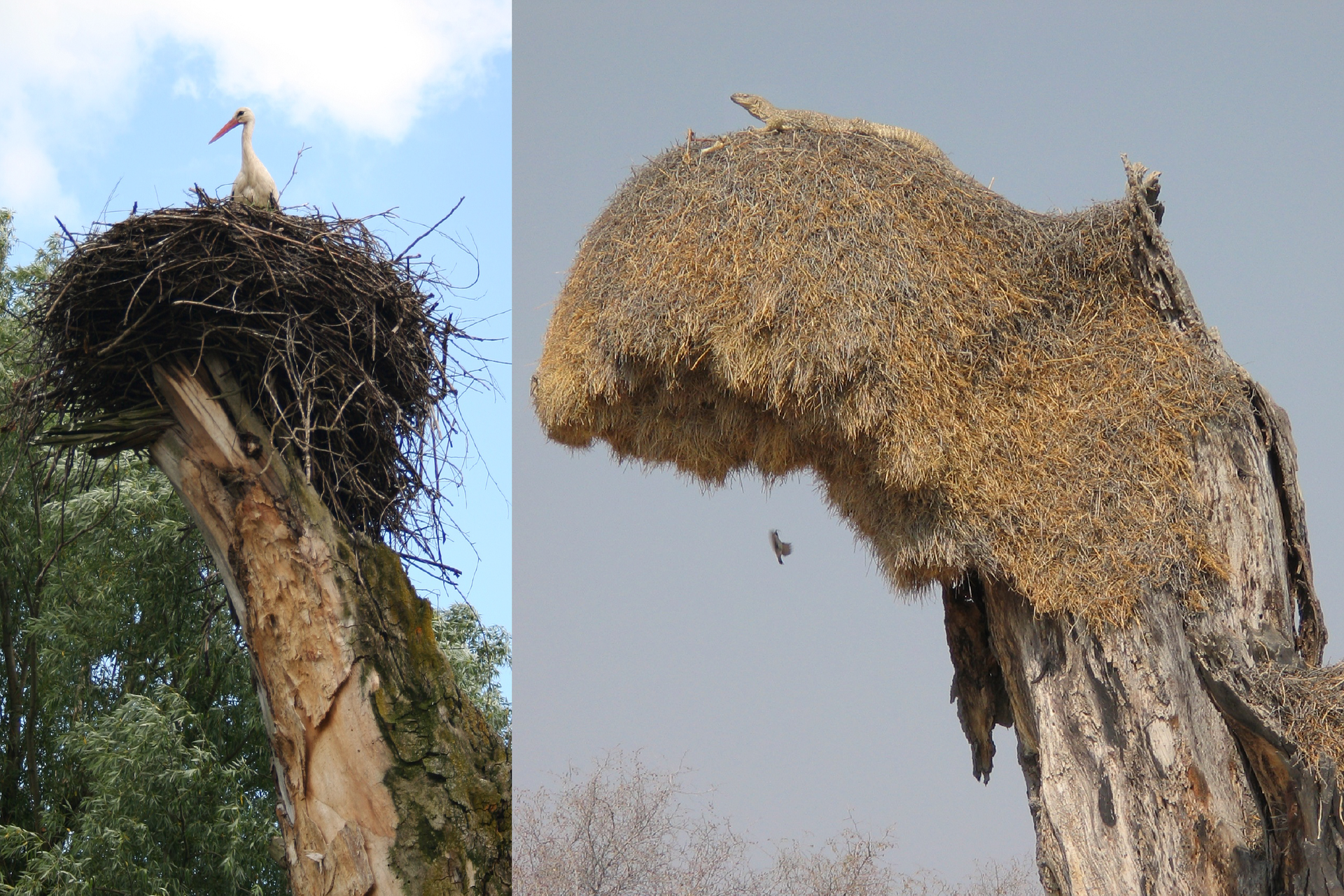
Fotografia przedstawia dwa różne gniazda, z lewej strony gniazdo bociana na pniu wysokiego drzewa. Obok zwisające z drzewa duże gniazdo ptaka – tkacza towarzyskiego
Nest. Some bird nests reach such sizes that they can be considered as a landscape element. For example, this nest built by hundreds of small birds on a tree in southern Africa. Similarly, some stork nests appear beautifully
Source: Harald Süpfle, Przykuta, Tomorrow Sp. z o.o., http://commons.wikimedia.org, licencja: CC BY-SA 2.5.
R1c9LQypIIvsP
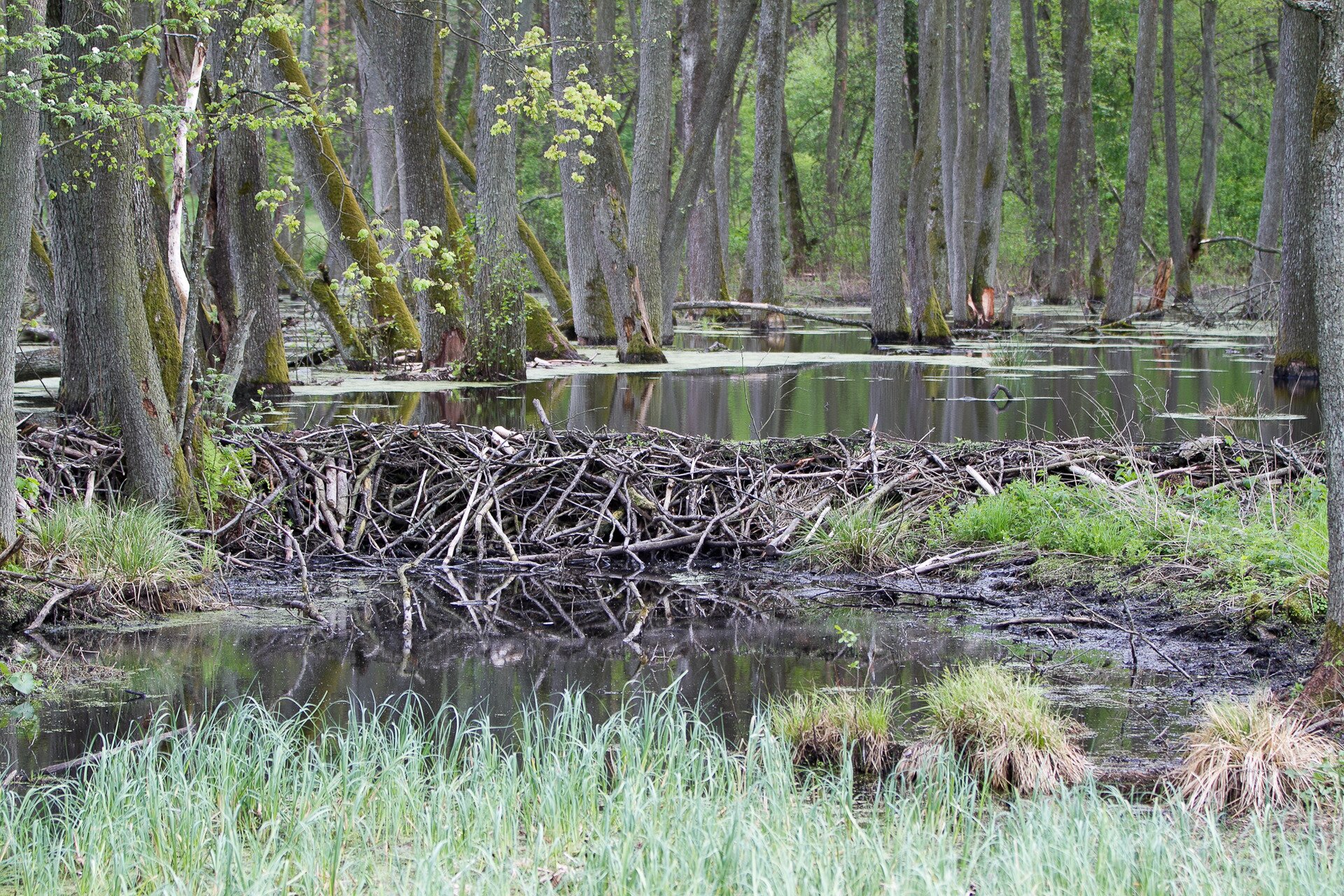
Na zdjęciu przedstawiona jest tama bobrów. Tama znajduje się na rzece, z przodu przed tamą znajdują się trawy, z tyłu drzewa wyrastające z wody, gdzieniegdzie widać liściaste gałęzie opadające z drzew.
Beaver dam. Beavers often build in the middle of the river a shelter, called beaver, having the form of a mound of branches. If the river is too shallow, they raise its level, building a dam. In this way, even on small rivers large spillways are formed
Source: Czonek, http://commons.wikimedia.org, licencja: CC BY 3.0.
R9R6VCy9oeuVA
Exercise 1
Determine whether the following statements concerning erosion are true or false.. erosion is the destruction of earth’s surface, e.g. by flowing water.. Możliwe odpowiedzi: True, False. Erosion is a process caused by river water only.. Możliwe odpowiedzi: True, False. Gravity may cause erosion.. Możliwe odpowiedzi: True, False. Erosion cannot be caused by river water.. Możliwe odpowiedzi: True, False
Determine whether the following statements concerning erosion are true or false.. erosion is the destruction of earth’s surface, e.g. by flowing water.. Możliwe odpowiedzi: True, False. Erosion is a process caused by river water only.. Możliwe odpowiedzi: True, False. Gravity may cause erosion.. Możliwe odpowiedzi: True, False. Erosion cannot be caused by river water.. Możliwe odpowiedzi: True, False
Determine whether the following statements concerning erosion are true or false.
True
False
erosion is the destruction of earth’s surface, e.g. by flowing water.
□
□
Erosion is a process caused by river water only.
□
□
Gravity may cause erosion.
□
□
Erosion cannot be caused by river water.
□
□
RNNuzmIwzZBhu
Exercise 2
Determine whether the following statements concerning the impact of organisms on landscape are true or false.. Trees do not have any impact on the landscape.. Możliwe odpowiedzi: True, False. Plants form part of the landscape and can shape it.. Możliwe odpowiedzi: True, False. Dams change the landscape.. Możliwe odpowiedzi: True, False. Animals can change the landscape.. Możliwe odpowiedzi: True, False
Determine whether the following statements concerning the impact of organisms on landscape are true or false.. Trees do not have any impact on the landscape.. Możliwe odpowiedzi: True, False. Plants form part of the landscape and can shape it.. Możliwe odpowiedzi: True, False. Dams change the landscape.. Możliwe odpowiedzi: True, False. Animals can change the landscape.. Możliwe odpowiedzi: True, False
Determine whether the following statements concerning the impact of organisms on landscape are true or false.
True
False
Trees do not have any impact on the landscape.
□
□
Plants form part of the landscape and can shape it.
□
□
Dams change the landscape.
□
□
Animals can change the landscape.
□
□
R12Th2FNnxPIY
Exercise 3
Wymyśl pytanie na kartkówkę związane z tematem abstraktu.
Wymyśl pytanie na kartkówkę związane z tematem abstraktu.
Source: Czonek, Przykuta, Robin Stott, zokarko, licencja: CC BY-SA 3.0.
R1YV87zycWLsS
Exercise 4
Jednokrotny wybór. The process of destroying the earth's surface by abiotic factors, i.e. solar radiation, water and wind, is called... Możliwe odpowiedzi: 1. erosion, 2. eruption, 3. equation, 4. expansion
Jednokrotny wybór. The process of destroying the earth's surface by abiotic factors, i.e. solar radiation, water and wind, is called... Możliwe odpowiedzi: 1. erosion, 2. eruption, 3. equation, 4. expansion
The process of destroying the earth's surface by abiotic factors, i.e. solar radiation, water and wind, is called...
erosion
eruption
equation
expansion
Summary
One of the elements that affect the landscape is erosion, i.e. the destruction of earth surface by inanimate factors.
Plants and animals form part of the landscape, but they can also change it.
Homework
Wymień elementy krajobrazu ukształtowane przez wodę, wiatr, rośliny i zwierzęta. Uzasadnij odpowiedź.
Wymień elementy krajobrazu ukształtowane przez wodę, wiatr, rośliny i zwierzęta. Uzasadnij odpowiedź.
Task 2
Try to find elements of the landscape shaped by water, wind, plants and animals in your own surrounding environment. Task performance is to be confirmed by presenting photographs.