Historical views on the Earth’s shape
what celestial objects are located in close vicinity of the Earth;
that the Earth’s shape is close to a sphere.
that the Earth goes around the Sun during a single year although it seems that the Sun circles the Earth each day.
how to present the history of changes in views on the Earth’s shape and its place in the Universe;
to provide the most important information about the Earth’s shape and size;
to indicate the Earth’s location and to describe its meaning in relation to the Solar System, the Galaxy and the Universe.
Earth is one of the right planets circling the Sun – our closest star. In the galaxygalaxy, called the Milky Way, where our Solar SystemSolar System is located, a few hundred of billions of other star have been observed. Many of them are encircled by planets. Most probably, that part of the Univers which we are able to observe contains a few hundred of billions of other galaxies.
For years people have bothered with questions related to the world around and above. They kept wondering: what is Earth? what is its shape and size? In the beginning, they found their answers not by scientific research, but using their own senses to observe what more often than not led them to incorrect conclusions. They would claim that the surface of the Earth is flat or almost flat, being unable to perceive the spherical shape of our planet. People were under impression that the Sun is much smaller in size than the Earth. They were not able to evaluate the distance between the Sun and our planet, thus erring in determining its actual size. What our ancestors saw over their heads during day and night was perceived by them to be a section of a sphere, namely half a sphere, seen from the inside, from a flat surface of the Earth.
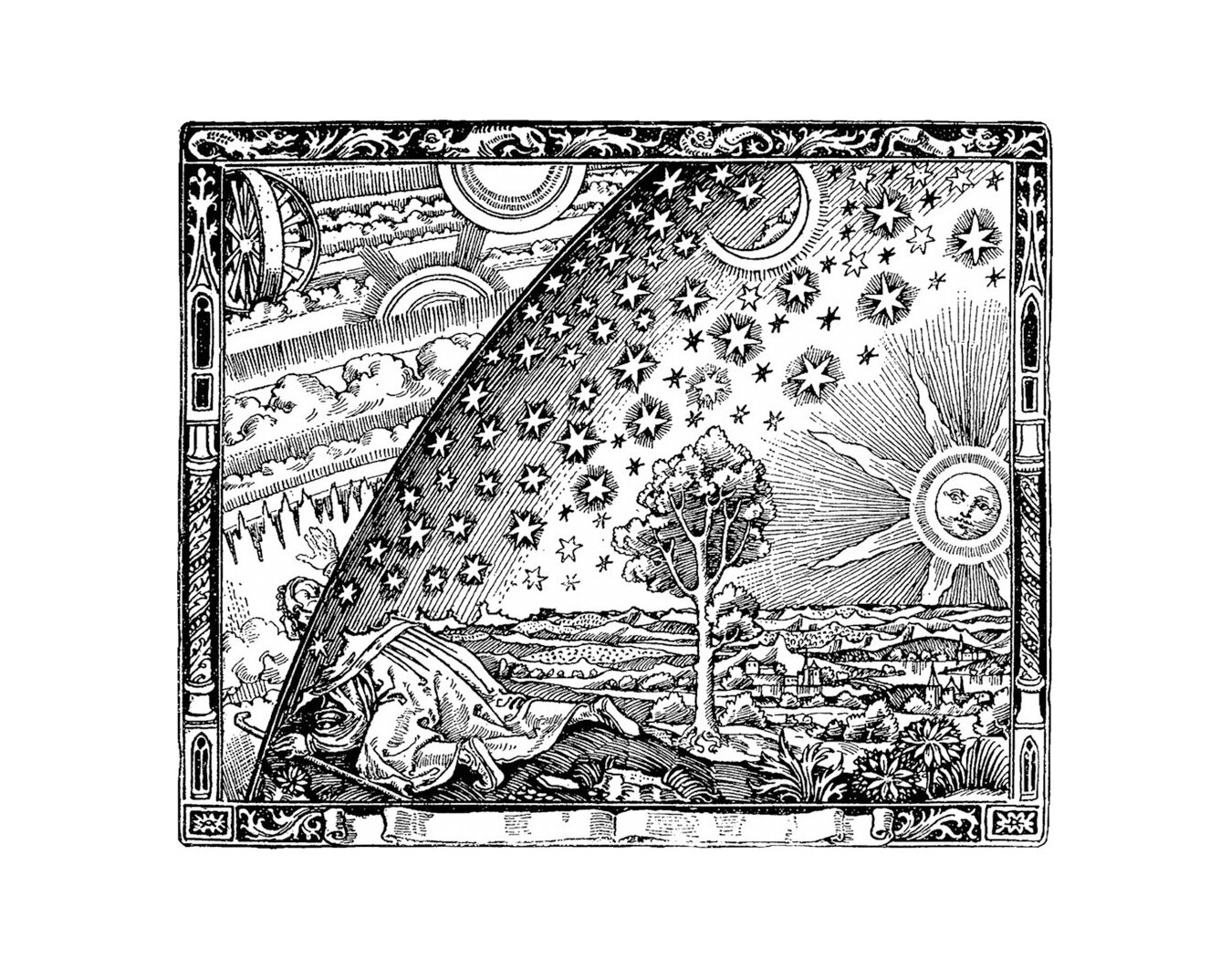
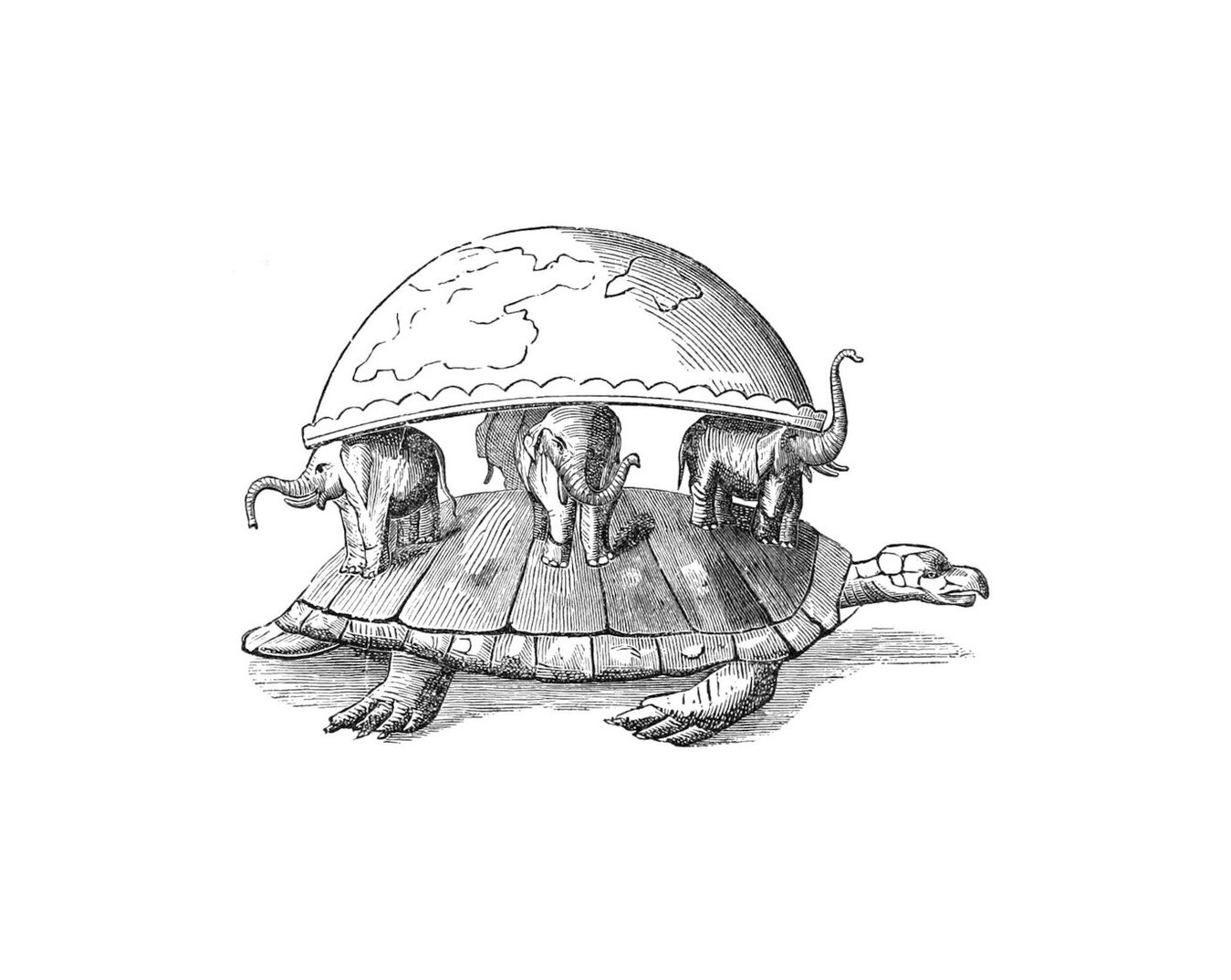
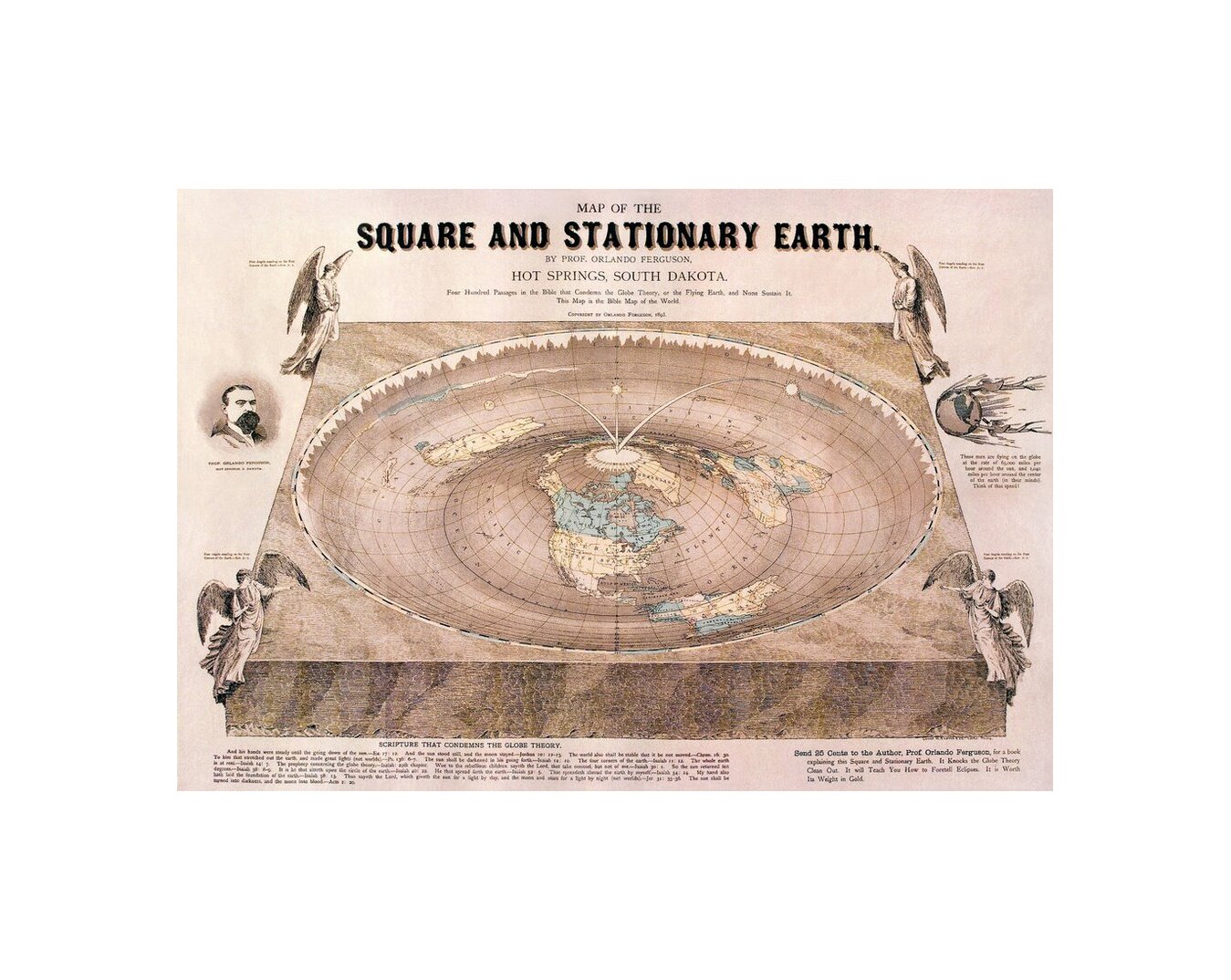
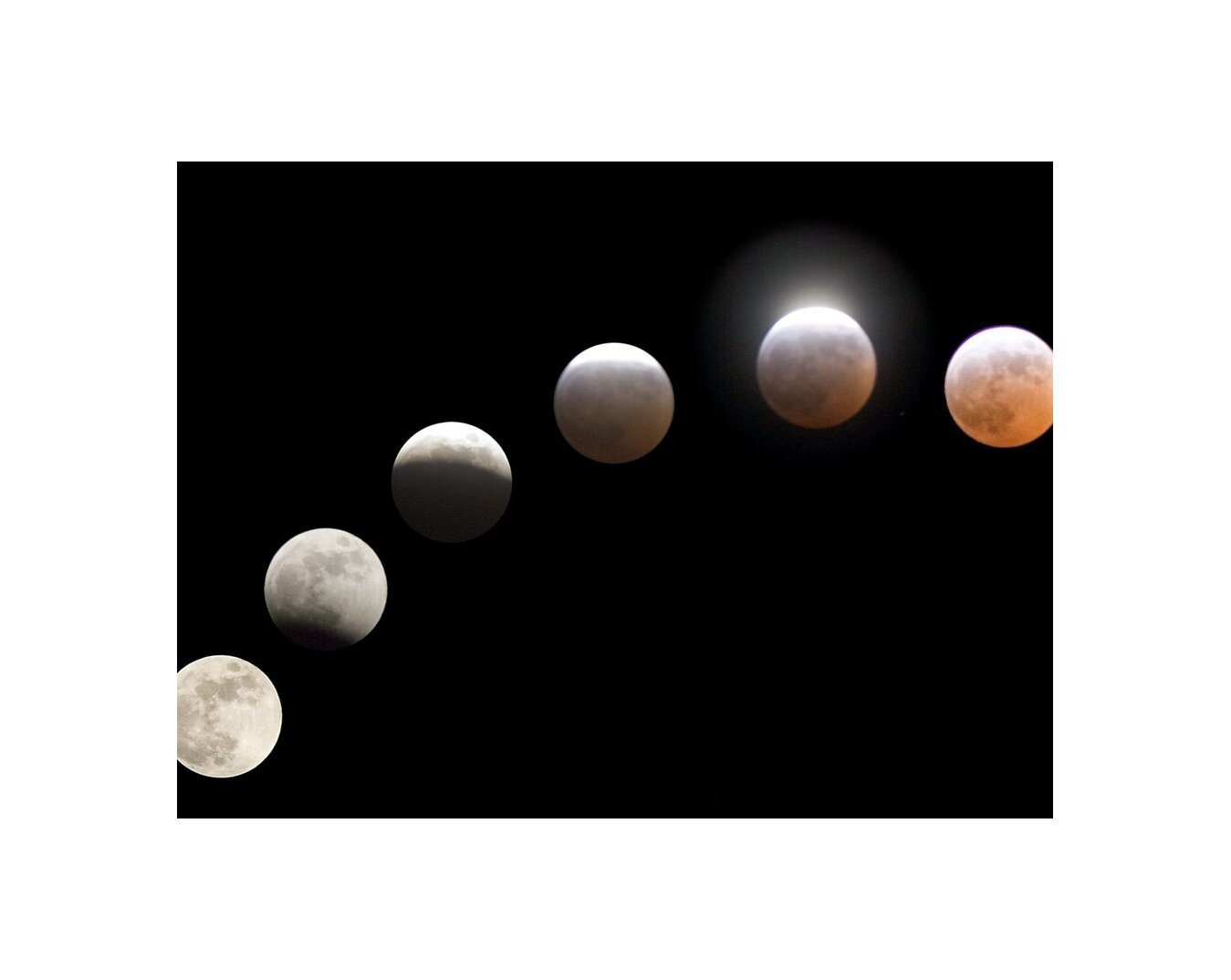
Not so long ago, people could not imagine that the Earth looks like a sphere. This changed with some specific observations, such as observation of the horizon, Moon eclipses, vessels coming away from a harbour with calm sea, observation of an angle of the North StarNorth Star over the horizon and, finally, journeys around the world and space travel proved that the Earth is a sphere or at least its shape closely resembles a sphere.

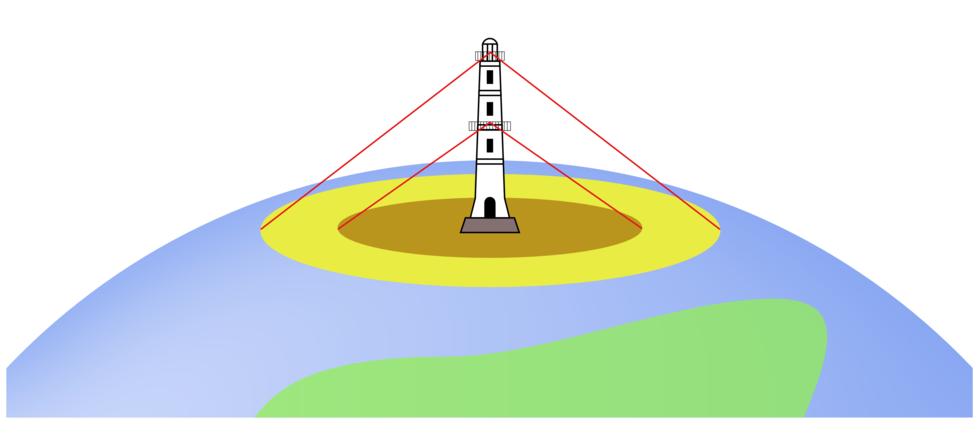
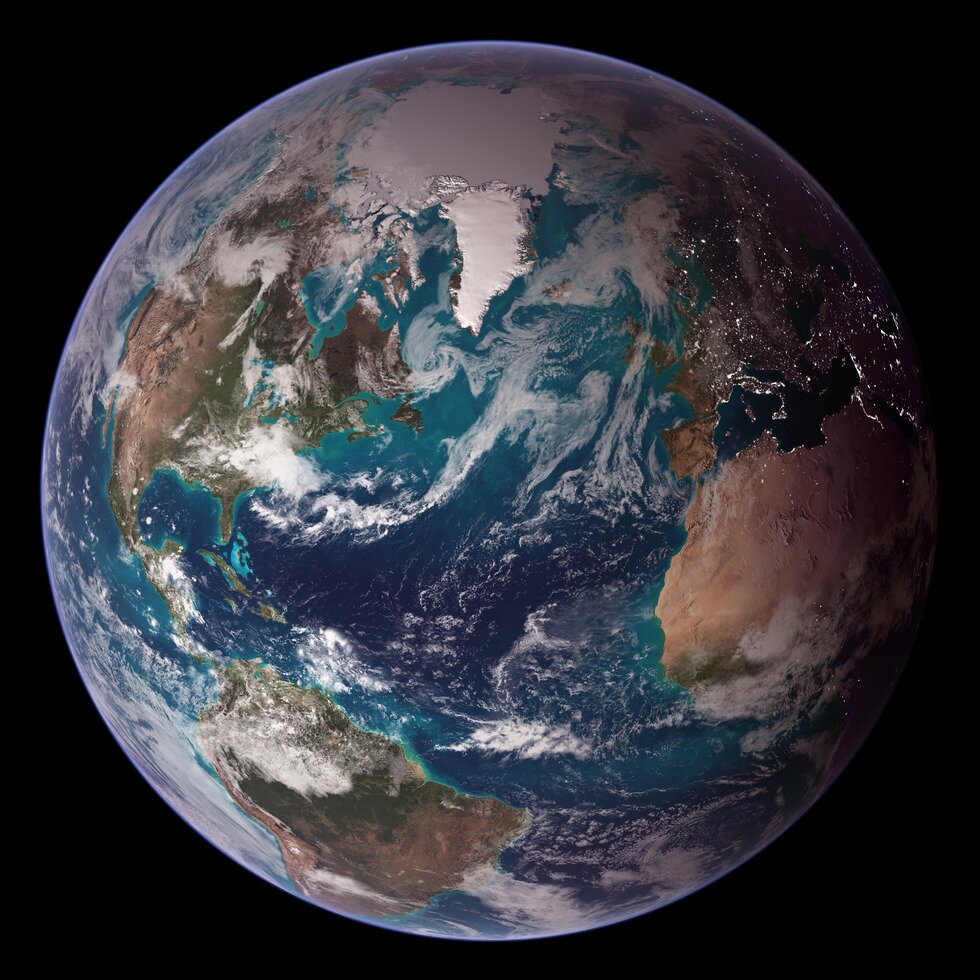
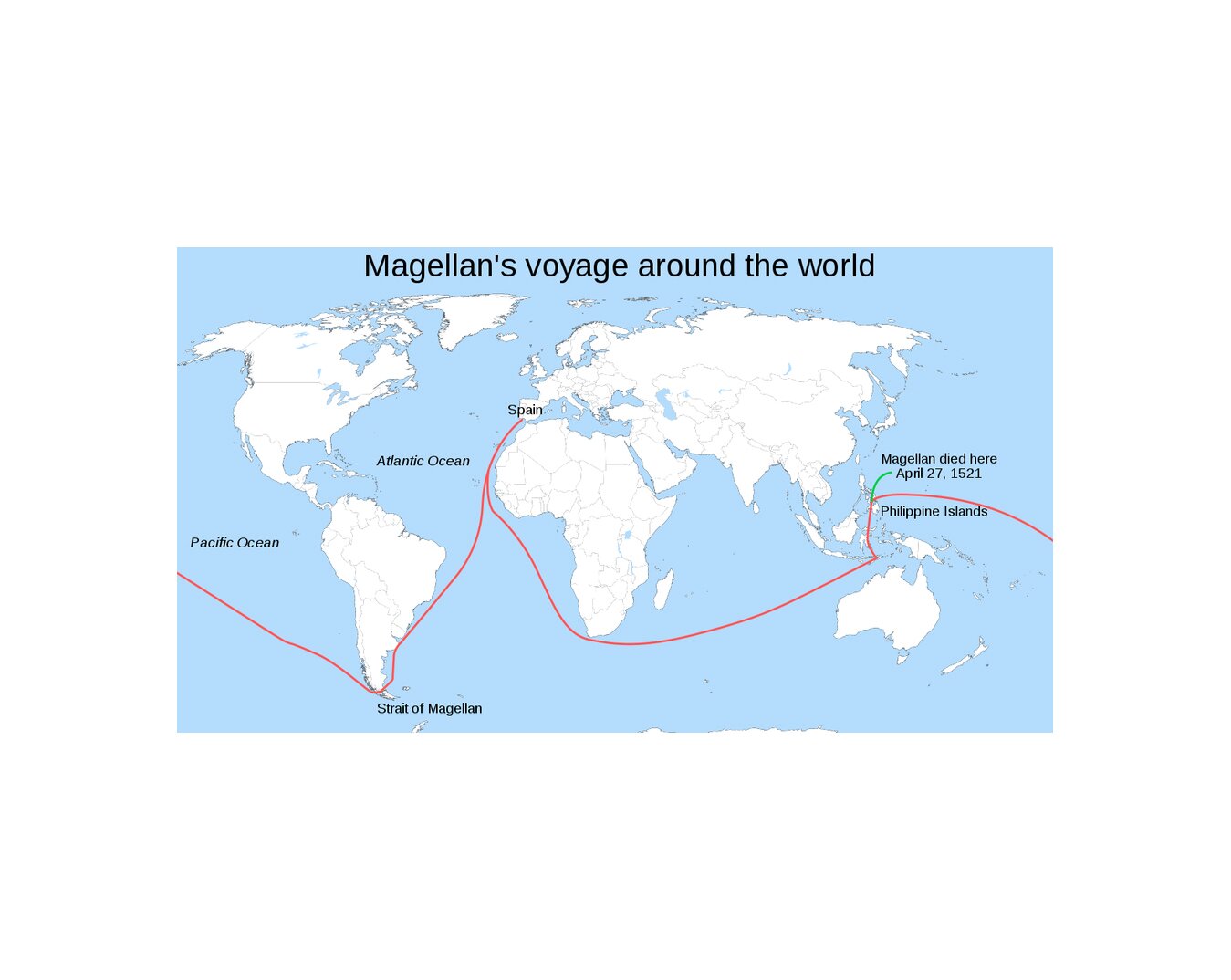
The globe perimeter
The first one to determine the Earth’s circumference was Eratosthenes who did it in 230 BC. He published the results of his measurements in his work “On the measurement of the Earth” which was subsequently lost but became know through some other writers. It is believed that Eratosthenes determined the Earth’s circumference in the range from 39,690 km (24,662 mi) to 46,620 km (28,968 mi). Until now, the method Eratosthenes applied has been used for accurate measurements of the Earth. He completes measurements during the summer solstice. He compared lengths of shadows cast at noon in Syene (modern Aswan, Egypt) and in Alexandria. Consequently, he observed that sun rays in Syene reached the bottom of a deep well, i.e. their direction was vertical which meant the Sun was directly overhead. At the same time in Alexandria, located on the very same meridian, according to Eratosthenes, sun rays fell at an angle of 7.2 degrees (which makes 1/50 of a full angle). Eratosthenes also knew that the distance between Syene and Alexandria was about 5000 stadia (about 800 km / 497 mi). He concluded that the Earth’s circumference should be 50 times that which was about 40,000 km (24,855 mi). In reality, the Earth’s circumference measures about 40,025 km (24,870 mi), and its average radius is 6,371 km (3,959 mi).
The Angle of the North Star in the sky
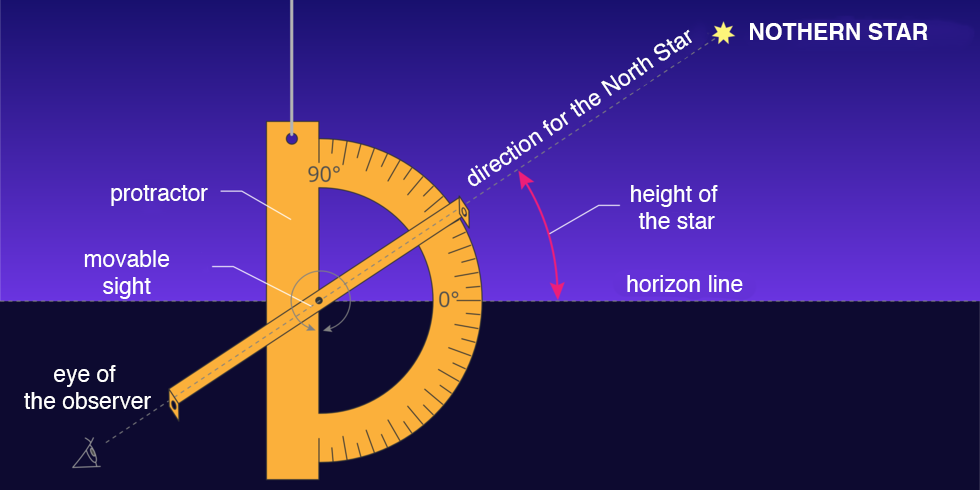
Travelling northward or southward one may observe that angle of the North Star over the horizon alters. The closer we are to the equator, the closer to the horizon is the North Star. As we arrive at the equator, the North Star hides itself beyond the horizon. If we travel towards the North Pole, the North Star approaches zenith. Observation of the North Star’s location proves that the Earth is a sphere.
Find the North Star in the sky.
Determine an angle between the line coming from your eye to the North Star and a horizontal plane.
The result is an angle of the North Star location.
To complete this exercise, use the attached picture.
Remember that if we stood up precisely on the North Pole, the North Star would be directly overhead. This means that the North Star’s angle over a horizontal plane would be 90°.
Stellarium
Film dostępny na portalu epodreczniki.pl
Film "Położenie Gwiazdy Polarnej. Obserwacja nieba w programie Stellarium". W pierwszych ujęciach film przedstawia historyczne wyobrażenia na temat kształtu Ziemi. Widzimy drzeworyt z 1888 roku oddający średniowieczne wyobrażenie na temat kształtu Ziemi z wędrowcem, który dotarł do krawędzi nieboskłonu i wyciągnął rękę w kierunku gwiazd. Kolejne ujęcie pokazuje starożytną hinduską wizję Ziemi jako spłaszczonego dysku podtrzymywanego przez cztery słonie stojące na skorupie ogromnego żółwia pływającego w bezkresnym oceanie. Ostatnim z historycznych wyobrażeń jest mapa płaskiej, kwadratowej Ziemi podtrzymywanej w rogach przez anioły. Autorem mapy z 1893 r. jest Orlando Ferguson. W kolejnym ujęciu podane są podstawowe informacje na temat programu Stellarium. Stellarium to darmowe, otwarte komputerowe planetarium. Dzięki niemu można oglądać realistyczne niebo w 3D, zupełnie tak, jakby patrzeć gołym okiem, przez lornetkę lub teleskop. Używany jest do projekcji w planetariach. Wystarczy ustawić współrzędne i można zaczynać! Podstawowy katalog programu obejmuje ponad 600 tysięcy gwiazd. Zaczynając pracę w programie, w menu widocznym z prawej strony ekranu należy wybrać ikonę Okna lokalizacji. W otwartym oknie można wybrać lokalizację z rozwijanej listy. Aktualne położenie obserwatora, długość i szerokość geograficzną można obserwować w oknie lokalizacji. Po wybraniu lokalizacji, widoczne jest rozgwieżdżone niebo dokładnie odpowiadające temu, jak wygląda ono w wybranym miejscu. Horyzont w programie można przesuwać obserwując niebo z wybranego miejsca. Po kliknięciu na gwiazdę pojawiają się informacje o niej. Zmieniając w programie położenie obserwatora można zaobserwować, w których miejscach nieba widoczna jest Gwiazda Polarna z różnych miejsc Ziemi.
Location of the North Star on the horizon
In the night sky, find a part of the Great Bear (Ursa Major) constellation, named the Big Dipper or the Wagon.
Draw a straight line between rear wheels of the Wagon, next, determine its length, and extend it by 5 times its length. The drawing below shows how to do it.
Extension of this section leads to a very bright star. This is the North Star, the brightest star which finds itself at the tip of the Little Dipper’s drawbar, in the Little Bear constellation.
Check whether you have mastered the knowledge from today’s lesson. Mark sentences which are true.
- The Earth’s shape resembles an apple.
- If the Earth is a sphere, then, moving for a some time in the same direction we would have arrived at the point of origin.
- Eratosthenes was the first to measure the Earth’s circumference.
- The Earth’s radius is about 3500 km.
- The Earth’s shape resembles a rotational ellipsoid.
Match the pairs: English words with Polish definition.
bryła obrazująca kształt Ziemi, niemająca odpowiednika w bryłach geometrycznych; jej powierzchnia w każdym miejscu jest prostopadła do kierunku działania siły ciężkości; kształt geoidy jest zbliżony do rzeczywistego kształtu Ziemi, teoria budowy Wszechświata zakładająca, że centrum naszej części kosmosu, czyli Układu Słonecznego, jest Słońce, a planety (w tym także Ziemia) okrążają je po eliptycznych orbitach, układ setek miliardów gwiazd, okrążających je planet, księżyców, planetoid, komet, pyłu i niedostatecznie jeszcze poznanych innych obiektów kosmicznych; Ziemia znajduje się w galaktyce zwanej w wielu językach, także po polsku, Drogą Mleczną lub (rzadziej) Mlecznym Kręgiem (gr. galaxías kýklos, ang. Milky Way, łac. via lactea); określa się ją też po prostu Galaktyką; tylko w tym przypadku słowo galaktyka musi być pisane wielką literą, ponieważ jest nazwą własną, bryła powstająca przez obrót elipsy wokół jednej z jej osi; elipsoida Ziemi powstaje w wyniku obrotu elipsy wokół krótszej osi, jaką jest oś ziemska, gwiazda, która znajduje się najbliżej północnego bieguna niebieskiego, czyli miejsca, gdzie oś obrotu Ziemi „przebija” sferę niebieską; obecnie Gwiazda Polarna jest najjaśniejszą gwiazdą gwiazdozbioru Małej Niedźwiedzicy; prawie nie zmienia swego położenia w ciągu nocy, dzięki temu od wieków była wykorzystywana do precyzyjnego określania kierunków świata na półkuli północnej, teoria budowy Wszechświata zakładająca, że nieruchoma Ziemia znajduje się w centrum układu, a wokół niej krążą inne ciała niebieskie, takie jak Słońce, pozostałe planety, Księżyc i gwiazdy
| rotational ellipsoid | |
| galaxy | |
| geoid | |
| North Star | |
| geocentric theory | |
| heliocentric theory |
Keywords
North Star, Solar System, Earth
Glossary
obrotowa elipsoida - bryła powstająca przez obrót elipsy wokół jednej z jej osi; elipsoida Ziemi powstaje w wyniku obrotu elipsy wokół krótszej osi, jaką jest oś ziemska
galaktyka - układ setek miliardów gwiazd, okrążających je planet, księżyców, planetoid, komet, pyłu i niedostatecznie jeszcze poznanych innych obiektów kosmicznych; Ziemia znajduje się w galaktyce zwanej w wielu językach, także po polsku, Drogą Mleczną lub (rzadziej) Mlecznym Kręgiem (gr. galaxías kýklos, ang. Milky Way, łac. via lactea); określa się ją też po prostu Galaktyką; tylko w tym przypadku słowo galaktyka musi być pisane wielką literą, ponieważ jest nazwą własną
geoida - bryła obrazująca kształt Ziemi, niemająca odpowiednika w bryłach geometrycznych; jej powierzchnia w każdym miejscu jest prostopadła do kierunku działania siły ciężkości; kształt geoidy jest zbliżony do rzeczywistego kształtu Ziemi
Gwiazda Północna - gwiazda, która znajduje się najbliżej północnego bieguna niebieskiego, czyli miejsca, gdzie oś obrotu Ziemi „przebija” sferę niebieską; obecnie Gwiazda Polarna jest najjaśniejszą gwiazdą gwiazdozbioru Małej Niedźwiedzicy; prawie nie zmienia swego położenia w ciągu nocy, dzięki temu od wieków była wykorzystywana do precyzyjnego określania kierunków świata na półkuli północnej
teoria geocentryczna - teoria budowy Wszechświata zakładająca, że nieruchoma Ziemia znajduje się w centrum układu, a wokół niej krążą inne ciała niebieskie, takie jak Słońce, pozostałe planety, Księżyc i gwiazdy
teroia heliocentryczna - teoria budowy Wszechświata zakładająca, że centrum naszej części kosmosu, czyli Układu Słonecznego, jest Słońce, a planety (w tym także Ziemia) okrążają je po eliptycznych orbitach
Układ Słoneczny - układ składający się ze Słońca i okrążających go ośmiu planet, przynajmniej kilku planet karłowatych, tysięcy planetoid, komet oraz pyłu i okruchów skalnych krążących w przestrzeni międzyplanetarnej