Proteins, carbohydrates, fats
human is a heterotrophic organism;
nourishment means absorbing nutrients which are a building material, an energy source and a reserve supply.
to talk about types, significance and sources of nutrients;
to present the functions of fiber;
to describe the functions of complete and incomplete proteins in the correct functioning of our organism;
to justify the necessity for eating fruit and vegetables regularly;
to plan and conduct experiments that allow to detect proteins, sugars, fats that are in food and interpret the results of these experiments.
Proteins
For organisms to be able to fulfill all vital functions, maintain (or increase) their mass and reproduce, they need various substances. The most important are organic compounds: proteins, sugars, fats, vitamins, and inorganic compounds – water and mineral salts.
Proteins are absorbed with food and used mainly to build the organism. They constantly renew used cell elements, they are an ingredient of various secretions of the cells, and in childhood and puberty they create new cells, allowing our organism to grow and develop. In addition, they may be used as an energy ingredient, but this happens rarely (e.g. in periods of hunger) and leads to, e.g. muscle atrophy. Other functions of proteins are presented in the table.
Functions of proteins | Examples of proteins and their functions |
building | actin, myosin – ingredients of muscle cells |
ingredients of cell membranes, hair, nails, bones | keratin, collagen – ingredients of skin |
enzymatic | pepsin – digesting proteins |
digestion of other ingredients of food | other digestive enzyms |
immunological | antibodies – fight against bacteria and viruses |
transport | hemoglobin – it transports oxygen and carbon dioxide |
hormonal | insulin – it increases the transport of sugar from the blood to the cells |
receptive | rhodopsin – reacting to light |
receiving other stimuli | other receptive proteins |
In the digestive tract, plant proteins and animal proteins are digested into amino acids, from which our body constructs proteins as needed. Part of the 20 amino acids included in proteins can be produced by our body as a result of the digestion of proteins, sugars and fats. These are endogenous amino acidsendogenous amino acids. Other amino acids must be taken from food, as our body cannot create them. These are exogenous amino acidsexogenous amino acids.
Valuable proteins that include all the necessary amino acids are present in animal products, such as milk and dairy, in meat and in fish. They are defined as a standard. Seeds of legumes are characterized by high amount of plant proteins, called sub‑standard proteins. In case of a plant based diet (vegetarian diet), only a combination of selected plant products that underwent a specific preparation is able to provide our body with all necessary amino acids. Giving up on eating meat may lead to deficiencies of some of them. Without them, specific proteins will not be created, which may cause to inhibit growth, can lead to dystrophy of muscles and of other tissues, to anaemia and decalcification of bones.
The daily amount of protein for an adult is around 1 gram per 1 kilogram of body weight. In people who work physically, pregnant women, children and teenagers who are still growing, the amount is twice as high.
Explain why pregnant women should increase the amount of proteins they consume.
Carbohydrates (sugars)
The main source of carbohydrates are mainly products of plant origin and, to smaller extent, products of animal origin. By eating them, we provide our body mainly with:
polysaccharides, like starchstarch – plant spare sugar, glycogenglycogen – animal spare sugar;
disaccharides, like sucrose – sugar in fruit, cereals, available in crystal sugar form or powdered form; lactose – sugar in milk and dairy;
monosaccharides, such as fructose – fruit sugar.
Polysaccharides and disaccharides in the digestive tract are digested by digestive enzymes until they become monosaccharides, from which glucose has the most important role. It is the main source of energy used by cells. Some time after eating, its concentration in blood increases, and as the digestion progresses, it is maintained at a rather even level. It gives us the sense of satiety.
Glucose present, for example, in sweets, malt sugar and jams does not require digestion, meaning it enters the bloodstream really quick. Glucose is the product of digestion of starch, e.g. in wholemeal bread, is gradually released into the blood and, for some time, it stays at a certain level. When glucose level in the blood drops, we feel the urge to eat. In case of eating sweets, we start feeling hungry shortly after we finish eating. This may be the cause of eating more portions of food and can lead to obesity.
If monosaccharides are not used as a source of energy (e.g. during physical exercises or intense mental work), their excess is partially stored in the liver and muscles as a spare sugar glycogen. The rest is transformed into fat and, in that form, is stored in fat cells, e.g. in the subcutaneous fat tissue.
The most popular source of polysaccharides of plant origins are potatoes and cereals: wheat, rye, barley, oat, corn and rice. Flour used to bake bread and make pasta (as well as rice) is very often purified, that is made from grains that lack tegument. Such flour is white, just like the bread we get from it. Bleaching flour deprives it of B group vitamins, calcium, phosphorus, iron and fiber. FiberFiber includes cellulose (polysaccharide constructing cell walls in plants), which is not digested by human digestive tract. Fiber does not have any nutrients or energy values. However, it has a great health significance, because it speeds up the movement of the food content in the intestine, prevents constipation and colon cancer. It expands inside the stomach and gives you the feeling of satiety, it binds the surplus of hydrochloric acid and lowers the level of cholesterol. It is present in large amounts in cereals, fruit and vegetables. This is why we should eat wholemeal bread and pasta, dark rice and fruit with peel on (which is rich in fiber).
The type and amount of carbohydrates we eat has an important influence on our health. Too much of them can lead to caries, obesity and diabetes. Caring for the correct condition of our body, we should limit the use of sucrose available mainly in form of sugar and sweets. Young people and adults should consume carbohydrates in the amount of 3‑4 grams per kilogram of body weight a day, depending on their activity. In addition, they should consume 30‑50 grams of fibers.
Prove and give 2 arguments why eating food rich in fiber prevents obesity.
Detecting starch in food.
iodine,
dropping pipette,
potato starch, a slice of raw potato, a slice of raw cucumber, apple, a piece of cottage cheese, a slice of banana, a hot dog sausage,
1 big plate with separated samples.
Check the result of the reaction between iodine and starch. Add a drop of iodine to potato starch (substance which we know for sure that consists mainly of starch). As a result of the reaction with starch, brown‑reddish iodine turns dark blue.
Put a drop of iodine into each of the remaining products and observe the colour.
If iodine changes colour from brown to dark blue, this means the product we are testing has starch in it.
To assess how bran behaves in contact with water.
water at 37°C,
50 ml of rye bran, wheat bran and oat bran,
3 beakers with the capacity of 200 ml,
3 dishes with water, with the capacity of 50 ml.
Put bran into the beakers. Mark the level where the bran reaches to.
Pour equal amount of warm water (50 ml) into all the bran beakers at the same time.
Put the beakers aside for 20 minutes.
After this time, mark the level where the bran reaches to.
Observe, which beaker absorbed most water.
The main ingredient of bran is fiber, which soaks water and swells.
Fats
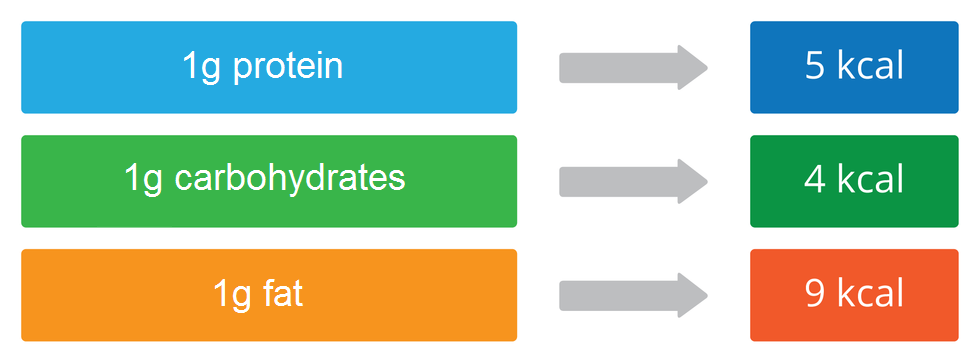
Fats provide twice as much energy than sugars, which is why they are the energy reserve of our body used mainly during an intense physical effort. Besides this, they are the ingredient of biological membranes, hormones (e.g. sex hormones) and facilitate the absorption of vitamins A, D, E and K. They are also stored in the subcutaneous fat tissue where they form insulating layer, and by covering certain internal organs (e.g. kidneys), they protect them from injuries and impact. We eat fats in form of fats defined as hard fats (butter, margarine), oils (e.g. sunflower seed oil, rape seed oil), and together with fried foods, e.g. scrambled eggs, fries and chips.
Simplifying it, we can say that a fat particle consists of glycerolglycerol and 3 molecules of fatty acidsfatty acids. The nutrient value of fats is decided by the amount and type of fatty acids. The most beneficial fats for our health found in seawater fish and plants are rich in fatty acids defined as unsaturated. Unsaturated fatty acids lower the level of cholesterolcholesterol in the blood, lessening the risk of arteriosclerosis. The most important are the unsaturated fatty acids omega‑6, present in plant oils, as well as omega‑3, present in fish. Those acids help the nervous system to develop, which is why they should be an important element of a child's diet. They also facilitate wound healing and lower blood pressure.
Pork, mutton and beef fats contain saturated fatty acids, which can increase the level of cholesterol. You need to remember that cholesterol has also beneficial functions in our body – it is the component of the casing of neural protrusions, bile, vitamin D and some hormones. Surplus of this compound is stored in the walls of the blood vessels, which makes them more and more narrow and restrict blood flow.
Trans fatty acids are dangerous for our health. They can be found in hardened fats (e.g. margarine) used in frying and baking. Those acids cause the arteriosclerosis to develop, they are the cause of embolisms in blood vessels and heart attacks. Even beneficial vegetable oils, after undergoing incorrect or too long (sometimes repeated) heat treatment, are transformed and release harmful fatty acids. Because of that, we should eliminate from our daily diet fast food (chips, fries, fried food) and substitute them with boiled or steamed products. An adult human being needs around 1 gram of fat per 1 kilogram of body weight. This amount is smaller in children and elderly people and higher in people who have physically demanding jobs.
Detecting fats in food.
tissue paper discs or paper tissues,
potato masher or hammer,
vegetable oil, sunflower seeds, nuts, flaxseed,
dropping pipette.
Check, whether the fat leaves an oily stain on the tissue paper (a stain that does not dry). Put a drop of oil onto the paper and observe the stain that is created.
Between pieces of tissue paper put separately: sunflower seeds, flax seed, a piece of a nut without a shell. Crush them in a way that does not damage the tissue paper.
After 2‑3 minutes throw away the crushed samples and observe how the tissue paper looks like. Compare this tissue paper with the one with oil on it.
If they leave fat stains, this means they included fats.
Comestible products (100 g) | Protein | Carbohydrates | Fats | Fibres |
soy | 35,9 | 15,8 | 18,3 | 15,7 |
Pasmesan cheese | 35,6 | 25,8 | ||
Emmentaler cheese | 28,7 | 0,2 | 29,7 | 4,6 |
lean pork | 21,8 | 2,4 | ||
tuna | 21,5 | 15,5 | ||
beef | 20,6 | 8,1 | ||
turkey | 20,6 | 6,9 | ||
trout | 19,5 | 2,7 | ||
chicken | 18 | 18,8 | ||
cream cheese | 16,8 | 13 | 4,2 | |
semi‑skimmed curd cheese | 13,5 | 4 | 0,2 | |
wholemeal pasta | 12,6 | 59,9 | 3,6 | 3,5 |
buckwheat | 12,6 | 70,1 | 3,1 | 5,9 |
chicken eggs | 12,5 | 1 | 10,5 | |
prunes | 4,9 | 70,8 | 0,9 | 16 |
mushroom | 2,7 | 0,7 | 0,3 | 1,9 |
spinach | 2,5 | 0,6 | 0,3 | 1,8 |
Select the nutrients that can be found in seawater fish meat in high amounts.
- protein
- carbohydrates
- unsaturated fatty acids
- saturated fatty acids
Select the nutrients that provide most energy to the body.
- proteins
- carbohydrates
- fats
- fibre
Nutrients introduced into the body
- must be divided into smaller particles
- should connect with each other before digestion
- immediately reach the cells
Proteins
- are ingredients of muscle cells
- are digesting proteins (pepsin)
- are composed of glycerol and fatty acids
- are a component of ATP
Backup sugar in our body is
- amino acid
- fatty acid
- glucose
- glycogen
Summary
Nutrients are organic compounds: proteins, sugars, fats, vitamins, and inorganic compounds – water and mineral salts.
Elements that provide energy are: sugars, fats and proteins (in extreme situations).
Building elements are: proteins, fats, mineral salts and water.
A healthy diet should be balanced and it should include, among other things, vegetable fats which are rich in unsaturated fatty acids.
Food that comes from animals provides us with exogenic amino acids.
Present 3 arguments that confirm the thesis that every day diet should be rich in vegetables and fruit.
Keywords
proteins, carbohydrates, fats
Glossary
aminokwasy egzogenne – aminokwasy, których organizm nie potrafi wytworzyć i musi je przyjmować z pokarmem w postaci gotowej do wykorzystania
aminokwasy endogenne – aminokwasy, które organizm wytwarza z dostarczonych mu składników pokarmowych
błonnik – zespół substancji pochodzenia roślinnego, zawierający m.in. celulozę, regulujący procesy trawienne
cholesterol – składnik błon komórkowych, osłonek mielinowych nerwów; powstają z niego niektóre hormony; może odkładać się w naczyniach krwionośnych i wywoływać miażdżycę
glicerol – związek organiczny, który może przyłączyć kwasy tłuszczowe i wraz z nimi utworzyć cząsteczkę tłuszczu; jego popularna nazwa to gliceryna
glikogen – wielocukier zapasowy zwierząt; jest gromadzony w wątrobie i mięśniach
kwasy tłuszczowe – związki organiczne, w skład których wchodzą m.in. łańcuchy węglowodorów; w reakcji z glicerolem tworzą tłuszcze; w komórkach pełnią funkcję energetyczną i zapasową
skrobia – wielocukier zapasowy gromadzony przez rośliny
witaminy – związki organiczne, które pełnią w organizmie funkcję regulacyjną