Przeczytaj
A film is a product of the effort of numerous people completing many different tasks. Some of these people are named in the opening credits, receive great salaries and become famous. Many more remain relatively unknown, but films could not be created without them. You are going to read a text about different crew members involved in filmmaking and how they contribute to the final effect we enjoy watching in the cinema or on our sofas.
Film jest efektem wysiłku wielu ludzi wykonujących różne zadania. Niektórzy z nich są wymienieni w napisach początkowych, otrzymują wysokie gaże i są sławni. Jednak znacznie więcej osób pozostaje w cieniu, choć bez ich udziału filmy nie mogłyby powstać. Przeczytasz tekst o różnych członkach ekipy filmowej i o tym, jak przyczyniają się do efektu końcowego, który cieszy nas, kiedy siedzimy w kinie lub na kanapie przed telewizorem.
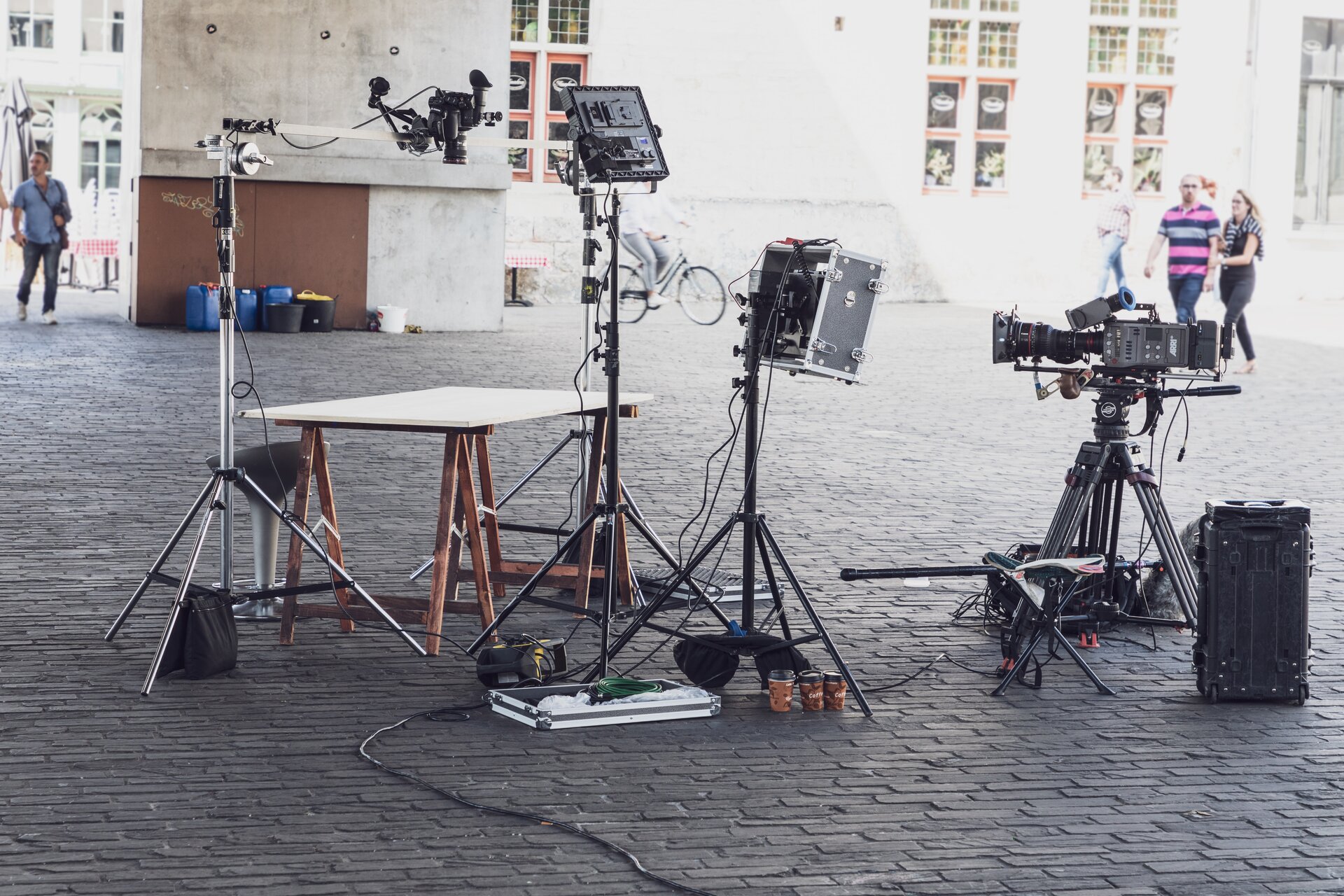
Read the text about different people involved in the process of producing a film and do the exercises below.
The Amazing Film IndustryHave you ever been on a film setfilm set? Motion picturesMotion pictures are a particularly attractive form of art and many people love watching films for leisure or because they want to learn about a particular topic. But who are the people involved in the process of making a movie?
Most of us will immediately think of actors and actresses who play in films. The job of an actor is a very rewarding, but also challenging one. Actors and actresses perform various roles in films of different genresgenres. It is a job for any age: from child actors to elderly people. Everyone has a chance, provided they have some talent and a lot of luck. Acting jobs are often very well‑paid, so many people imagine they could easily become a top actor or actress earning plenty of money. The reality is that there are hundreds of candidates for these jobs and only the most outstanding ones receive top roles in blockbusterblockbuster films. Others must earn their living playing in C‑class movies, TV advertisements or other, less reputable productions. Still, they have the chance to experience the job and often enjoy it a lot.
There are also roles that involve extrasextras: background performing actors who don’t usually have speaking roles. Some films require hundreds or thousands of extras to create the effect of crowds of people, armies or other large gatherings. More dangerous roles frequently involve stuntsstunts. These may include horse‑riding, jumping from heights, fight scenes or car chases. Although the job of a stuntmanstuntman seems risky, there are many safety measures in place to protect these people from injuries.
Actors often depend heavily on a prop departmentprop department. This team of people takes responsibility for creating propsprops required in films, which range from weapons and furniture to large vehicles, planes or even spaceships, depending on the genre. People responsible for planning all the necessary props, decorations and film set surroundings are art directorsart directors.
If you are enchantedenchanted by the camera rollingcamera rolling, you could consider a different role in the film industry and become a cameramancameraman. Operating film cameras has become an art and it requires extensive knowledge of equipment, shootingshooting techniques and other important aspects of image recording. If you have ever tried recording a video on your mobile phone, you will agree that choosing the right scene, doing close‑upsclose‑ups and including everything you have planned for in your video is not an easy task. However, there are hundreds of successful cameramen winning important film awards for their jobs and this role can be extremely interesting.
Usually, cameramen work under the guidance of the directors of photographydirectors of photography, whose job is to plan for the entire shooting process, coordinate all cameras used in the production and take part in post‑productionpost‑production. That stage of the film making consists of editing audio and video, and adding special effects. Most films require very complex and careful planning by the director of photography before the “Action!Action!” signal is given and the cameras start rolling.
But what about the texts that actors learn and perform on set? These are crafted even before the main production begins. The so‑called screenplaysscreenplays consist of film scriptsscripts, the lines that actors say and scene descriptions. They are sometimes based on books and their creation is carried out by screenwritersscreenwriters. Some larger movie productions require numerous writers to work on screenplays.
Undoubtedly, the most important person on set is the directordirector. A director’s job is to pull all the strings together in order to create the amazing effect of the film. Usually, we picture them as sitting on designated chairs marked with the “director” sign and shouting “and cut!cut!” to end a shotshot. However, the role is much more complex. It requires outstanding management skills to keep control over numerous crew members and the film cast to create their vision of the story that is soon to be enjoyed by the audience in cinemas.
Directors must also depend on appropriate funding for a film to be completed. The money is provided by producersproducers and often reaches enormous amounts. The most expensive films often cost millions of dollars! Still, the film industry is extremely lucrative and producers investing funds in a film can expect large returns from ticket sales all over the world. Producers are usually responsible for finding and hiring the right crew and cast for their films.
Films are a truly amazing art. Their creation requires not only large funding, but also involves many talented crewcrew and castcast members, huge effort and often takes a very long time. If you are ready for the challenge, take a closer look at film job opportunities available and take the first step to a film career. However, if filmmaking isn’t your cup of tea, you may still enjoy watching them in the cinema or from your sofa!
Źródło: Marcin Legeżyński, licencja: CC BY-SA 3.0.
a) receive job offers in top films.
b) get jobs in less popular productions.
c) work in television.
2. Large groups of people on set
a) are formed by stuntmen.
b) are formed by asking volunteers to take part.
c) are formed by extras.
3. Objects needed for the films
a) are made in post-production.
b) are made by the special effects department.
c) are made by the props department.
4. Post-production
a) is the stage where special effects are added.
b) is the stage where a film is funded.
c) is the stage where a director is hired.
5. The funding of a film
a) is managed by its director.
b) is managed by a sponsor.
c) is managed by its producer.
2. Action films are only one of many film 1. genres, 2. producers, 3. stuntmen, 4. blockbuster, 5. pictures, 6. stunt, 7. extras available to the audience.
3. Auditioning for a role in a 1. genres, 2. producers, 3. stuntmen, 4. blockbuster, 5. pictures, 6. stunt, 7. extras film can be very challenging as the competition is fierce.
4. Many contemporary films featuring armies and large crowds of people rely on 1. genres, 2. producers, 3. stuntmen, 4. blockbuster, 5. pictures, 6. stunt, 7. extras performing the non-speaking roles.
5. Dangerous actions aren’t usually performed by actors themselves, but feature 1. genres, 2. producers, 3. stuntmen, 4. blockbuster, 5. pictures, 6. stunt, 7. extras who are highly skilled and experienced.
6. Before the filming begins, the 1. genres, 2. producers, 3. stuntmen, 4. blockbuster, 5. pictures, 6. stunt, 7. extras have to find and hire all the cast and crew.
7. Some actors want to participate in the 1. genres, 2. producers, 3. stuntmen, 4. blockbuster, 5. pictures, 6. stunt, 7. extras scenes themselves, even though it can be very risky.
5.1 cTu uzupełnij mTu uzupełnij.
Working in a
5.2 pTu uzupełnij dTu uzupełnij
and creating all the amazing objects needed for a film seemed interesting. In my first job, I worked for a very inspiring
5.3 aTu uzupełnij dTu uzupełnij
who showed me how to design objects used in
5.4 cTu uzupełnij,
where the camera is very close to an object and every detail is visible. Creating items for these
5.5 sTu uzupełnij
gives me a lot of satisfaction and makes me proud of my job. Still, my favourite genre is science fiction - once I had to build some cool gadgets for several
5.6 eTu uzupełnij
who appeared in crowd scenes and never said a word. I had a lot of fun with that. Currently, I'm working with a very famous director who's making a war movie. Our
5.7 fTu uzupełnij sTu uzupełnij
needs a number of vehicles and some weaponry, so I have plenty of tasks.
Słownik
/ ˈækʃn̩ /
akcja!
/ ɑ:t daɪˈrektəz / / ɑ:t daɪˈrektə /
dyrektorzy artystyczni [dyrektor artystyczny / dyrektorka artystyczna]
/ ˈblɒkbʌstə /
przebój kinowy, film bijący rekordy popularności i przynoszący duże wpływy z biletów
/ ˈkæmrəmæn /
kamerzysta
/ ˈkæmrə ˈrəʊlɪŋ /
kręcenie (filmu)
/ kɑːst /
obsada
/ ˈkləʊs ʌps / / ˈkləʊs ʌp /
zbliżenia [zbliżenie]
/ kruː /
tu: ekipa filmowa
/ ˈkru: ˈmembə /
tu: członek/członkini ekipy filmowej
/ kʌt /
cięcie!
/ daɪˈrektə /
reżyser/reżyserka
/ daɪˈrektəz əv fəˈtɒɡrəfi / / daɪˈrektər əv fəˈtɒɡrəfi /
operatorzy filmowi [operator filmowy / operatorka filmowa]
/ ɪnˈtʃɑːntɪd /
zauroczony/zauroczona
/ ˈekstrəz / / ˈekstrə /
statyści [statysta/statystka]
/ fɪlm set /
plan filmowy
/ ˈʒɑːnrəz / / ˈʒɑːnrə /
gatunki (np.filmowe, literackie) [gatunek (np. filmowy, literacki]
/ ˈməʊʃn̩ ˈpɪktʃəz / / ˈməʊʃn̩ ˈpɪktʃə /
filmy [film] AmE
/ pəʊst prəˈdʌkʃn̩ /
postprodukcja
/ prəˈdjuːsəz / / prəˈdjuːsə /
producenci [producent/producentka]
/ prɒp dɪˈpɑːtmənt /
departament rekwizytów
/ prɒps / / prɒp /
rekwizyty [rekwizyt]
/ ˈskriːnpleɪz / / ˈskriːnpleɪ /
scenopisy, scenariusze [scenopis, scenariusz]
/ ˈskriːnˌraɪtərz / / ˈskriːnraɪtə /
scenarzyści [scenarzysta/scenarzystka]
/ skrɪpts / / skrɪpt /
scenariusze [scenariusz]
/ ˈʃuːtɪŋ /
kręcenie filmu
/ ʃɒt /
ujęcie
/ ˈstʌntmæn /
kasader/kaskaderka
/ stʌnts / / stʌnt /
wyczyny kaskaderskie [wyczyn kaskaderski]
Źródło: GroMar Sp. z o.o., licencja: CC BY‑SA 3.0