Mysteries of the journey in search for yourself
you will explain what egotismegotism and orientalismorientalism are
you will recognise stylistic devices in a poem
you will identify the lyrical subject in a poem
you will describe the mood of a poem
Romanticism depicted man as a travelling, lost and wandering, but at the same time seeking individual. Romantics tried not only to reach the destination of their journey but, above all, they tried to find the sense of life and their own identity. A wandering man became an eternal wanderer and pilgrimpilgrim. During the later stages of their journey, they experienced a spiritual initiation. During Romanticism, people travelled around their own country – they used to go on „national pilgrimages” and immerse themselves in their own history and tradition, and describe the land, the climate and the landscapes. They wandered around Europe as well and they even – because of their fascination with the Orient – travelled to the countries in the East.
Fill in the gaps with correct words.
Sindbad, a glove, 18th, of existence, wanderer, a remedy, Romantics', the world, adventures, tourist, educative, Gulliver
The Theme of the Journey in the Literature
Journeys, both real and literary, have always been enriching the vision of ......................... They had an entertaining character (they were a source of ........................), but also an ........................ function. In our culture, there are famous figures such as Ulysses, ........................ the Sailor, ......................... We also shouldn't forget the real journeys of geographers, zoologists, treasure hunters.
At the end of the ........................ century, "A Sentimental Journey" by Laurence Stern was published. Here, the source of sentimental feelings are seemingly unimportant events, such as a puddle or ........................ in a shop. Equally interesting and very diverse were ........................ excursions. For them, an excursion was ........................ for the pain ........................, for loneliness and for snakepit that resides in human. A Romantic ........................ did not resemble today's ........................ in any way.
Romantics' Journeys
Journeys were described in different ways. Some were realistic accounts of real journeys, and some were just literary descriptions of imaginary excursions. Diaries, chronicles and letters were some of the more personal forms of expressions. The author could focus on the description of a concrete route, some events that occurred during the journey, portraits of people and landscapes or on presenting themselves as the narrator and participant of the events. Most often, the journey was presented in the context of sociocultural, socio‑political, geographical, ethnographical, scientific or historical knowledge of the author.
Romanticism is strongly connected with two concepts: egotism and orientalism. Egotism resulted from people's interest in culture, lifestyle and nature of countries outside of Europe. Orientalism is a kind of egotism that involves fascination with the culture of the East. One of the first works of European literature which was set in the Middle Eastern reality was The Giaour (1813) by Lord Byron. In Polish literature, Adam Mickiewicz showed the best of his fascination with the Orient in The Crimean Sonnets (1826).
Read the poem and do the tasks below.
Droga nad przepaścią w Czufut-KalePIELGRZYM I MIRZA
MIRZA
Zmów pacierz, opuść wodze, odwróć na bok lica,
Tu jeździec końskim nogom swój rozum powierza
Dzielny koń! patrz, jak staje, głąb okiem rozmierza,
Uklęka, brzeg wiszaru kopytem pochwyca,I zawisnął. – Tam nie patrz! tam spadła źrenica,
Jak w studni Al–Kahiru o dno nie uderza.
I ręką tam nie wskazuj – nie masz u rąk pierza;
I myśli tam nie puszczaj, bo myśl, jak kotwicaZ łodzi drobnej ciśniona, w niezmierność głębiny
Piorunem spadnie, morza do dna nie przewierci,
I łódź z sobą przechyli w otchłanie chaosu.PIELGRZYM
Mirzo! a ja spojrzałem! Przez świata szczeliny
Tam widziałem… com widział, opowiem – po śmierci,
Bo w żyjących języku nie ma na to głosu.Source: Adam Mickiewicz, Droga nad przepaścią w Czufut-Kale, [w:] tegoż, Wybór poezji, t. 2, oprac. Czesław Zgorzelski, Wrocław 1997, s. 106–109.
After reading the poem Droga nad przepaścią w Czufut‑Kale, do the following tasks and answer the questions.
Describe the behaviour of Mirza during the pass across the precipice in Tschufut‑Kale.
Describe the behaviour of the Pilgrim.
Why are their behaviours different?
Explain why does the Pilgrim believe that, when it comes to describing the precipice in Chufut‑Kale, „what I saw my tongue no more can tell”.
In what way does Orientalism manifest itself in the poem?
Read the text and do the tasks below.
Złe wychowanieWschód to tajemnica [...], romantycy wierzyli, że można (trzeba!) ją odkryć, że można złamać bosko‑orientalny szyfr – jak hieroglify. [...] Romantyczny Wschód bywał więc rozmaity. Także geograficznie. Czasem leżał w Hiszpanii, czasem w Indiach, czasem na Krymie, także w Niemczech, choć modelowany był w zasadzie na krajach arabskich. Gdziekolwiek jednak leżały te krainy, jechało się do nich na Wschód, grzesznie i symbolicznie. [...]
Wschody były różne, ale sama podróż była wspólna romantykom. Nawet jeśli niektórych napawała lękiem i obrzydzeniem.
Kraj młodości był najbardziej własny, „osobisty”. Wschód jest najbardziej obcy, zagadkowy, inny. W podróży chodzi właśnie o to, żeby się w tę obcość udać i nią najdokładniej zarazić. Grecja wydobywała to, co uniwersalne, ludzkie. Północ – to, co tragiczne w człowieku. Wschód leżał jak sfinks i mówił zagadki. Była to może najdziwniejsza, najbardziej romantyczna podróż, bo była podróżą w samą dziwność.
[…]
Podróż na Wschód to romantyczne „poznaj samego siebie” [...]. Poznaj samego siebie, wychodząc z siebie, poznaj się, jakim nie jesteś. Poznaj w tym, w czym się nie znasz, w najdalszej obcości, we wszystkim, co ci nieznane, odpychające nawet, inne. Poznaj się w obcych bogach, pejzażu, w niepojętych prawach, poznaj się wreszcie poza wszelkim prawem. Poznać się w egzotyce to niejako przekroczyć granice własnej osobowości, nie tylko moralności i estetyki. Romantyczny Wschód każe się poznać człowiekowi, jak gdyby w jego niesamowitości, cudowności, fantastyce.
[...]
Podróżując na Wchód czy do Szkocji, czy w głąb samego siebie, romantyk chciał się stać do końca inny.Source: Marta Piwińska, Złe wychowanie, Gdańsk 2005, s. 311–331.
After reading the fragment of Złe wychowanie by Marta Piwińska, do the following tasks.
Explain why romantic journeys to the East had mainly a cognitive function.
Explain what was specific about the East according to the Romantics.
Interpret the following phrase: Know yourself by coming out of yourself.
Pilgrim belongs to the basic repertoire of key words connected with the Romantic literature. The literary model was created by Lord Byron in his Childe Harold's Pilgrimage (1822). The protagonist is a melancholic man, in conflict with the world, who experiences taedium vitae (literally 'weariness of life') and wanders ineffectively across the world, seeking the sense of life.
Polish Romantic literature used only a few traits of the wandering hero... Literary connotations with Polish pilgrimages underlined different problems than presented in Lord Byron's works. Apart from the lonely hero, unsatisfied with his life, the themes that were also highlighted were the Polish emigrants, the nostalgia for the lost homeland, pictures of feelings and emotions of the wanderer, however, often only after his contact with the sublime nature. The hero could then experience the beauty of nature, along with its fearsome face. Such an image of a „pilgrim”, a „wanderer” appears for example in The Crimean Sonnets by Adam Mickiewicz.
PielgrzymU stóp moich kraina dostatków i krasy,
Nad głową niebo jasne, obok piękne lice;
Dlaczegoż stąd ucieka serce w okolice
Dalekie i – niestety! jeszcze dalsze czasy?Litwo! piały mi wdzięczniéj twe szumiące lasy,
Niż słowiki Bajdaru, Salhiry dziewice;
I weselszy deptałem twoje trzęsawice,
Niż rubinowe morwy, złote ananasy.Tak daleki, tak różna wabi mię ponęta;
Dlaczegoż roztargniony wzdycham bez ustanku
Do tej, którą kochałem w dni moich poranku?Ona w lubej dziedzinie, która mi odjęta,
Gdzie jej wszystko o wiernym powiada kochanku,
Depcąc świeże me ślady czyż o mnie pamięta?Source: Adam Mickiewicz, Pielgrzym, [w:] tegoż, Wybór poezyj, t. 2, Wrocław 1997, s. 104–105.
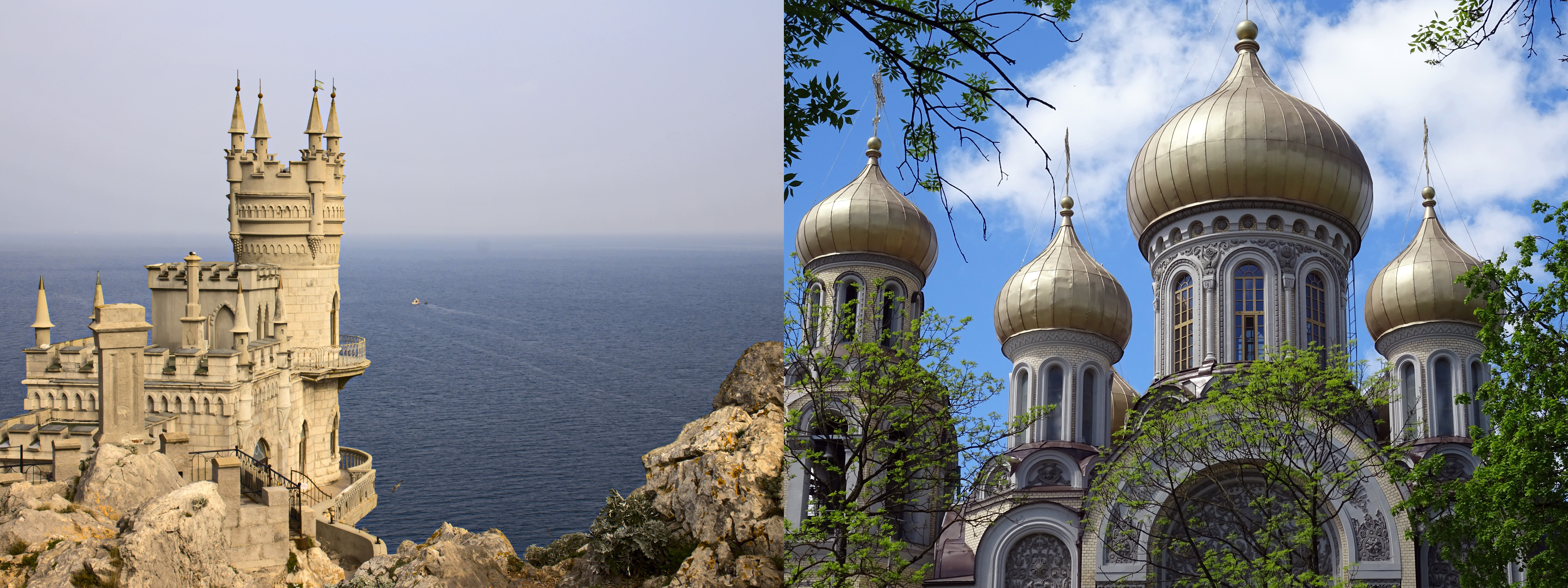
Compare the picture of the Crimea with the lyrical vision of Lithuania – the lost, mythical homeland. Choose the correct quotations from the sonnet.
What function in the sonnet do love memories have?
Create a single choice question for your friends, so that they can check what they have learnt during the lesson.
Question: ...
- ...
- ...
- ...
- ...
Match the pairs: English words with Polish definition.
egotyzm, przepaść, otchłań, orientalizm, hieroglify, podróż romantyczna, pielgrzym, morwy
| egotism | |
| orientalism | |
| pilgrim | |
| Romantic journey | |
| mulberry | |
| hieroglyphs | |
| abyss |
Keywords
orientalism, pilgrim, nature, Romantic journey, nostalgia
Glossary
egotyzm
orientalizm
pielgrzym
podróż romantyczna
lico
dziewica
trzęsawica (bagno)
morwa
hieroglify
przepaść, otchłań