Hitler and Stalin’s Conquest of Europe
what were the most important events of World War II in Europe;
which states fought against the Third Reich;
what policy the Soviet Union pursued during World War II;
what was the significance of the Battle of BritainBattle of Britain;
where the puppet governments were created by the Third Reich;
what was the significance of the opening of the Western Front in Europe;
about the most important war operations of World War II;
when and where Germany’s surrendersurrender took place.
The war that erupted on 1 September 1939 turned into a worldwide conflict very quickly. Despite having declared war on Germany, France and Great Britain initially did not conduct military operations against Hitler’s armed forces. On the Western Front, the so‑called “Phoney WarPhoney War” began; notwithstanding the state of war, no battles took place there.
Poland’s surrendersurrender under the German and Soviet pressure in October 1939 was the beginning of the two states’ aggression in Europe. After having conquered Poland’s Eastern territories, Stalin started making moves against the Baltic states. Their takeover and subsequent annexation into the Soviet Union, legitimized by rigged elections, took place in 1940. Having achieved this success, Stalin decided to make Finland dependent on the Soviet Union as well. The rejection of the Soviet ultimatumultimatum led to the beginning of a war; the Finns, notwithstanding their numerous victories, had to acknowledge Russia’s superiority.
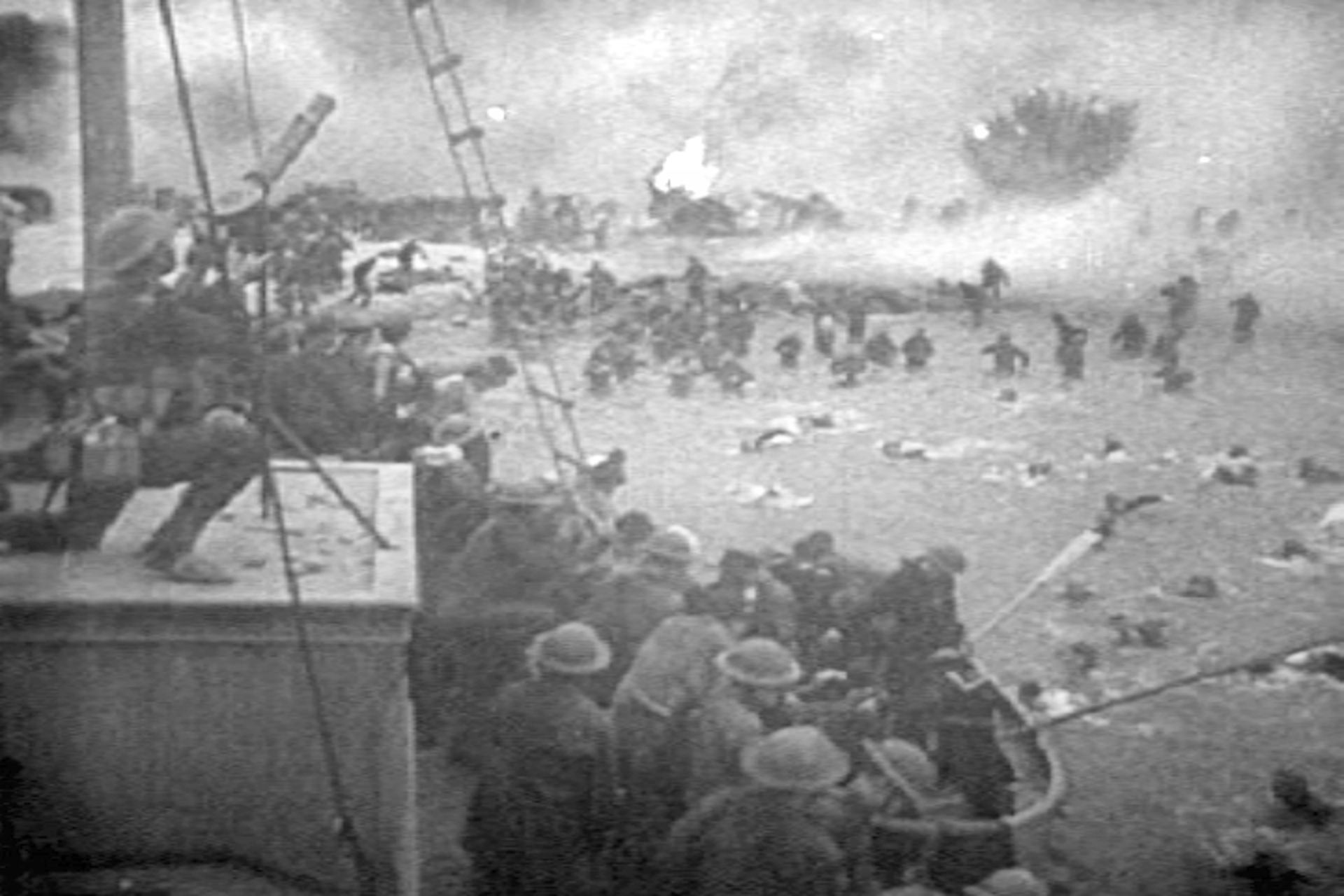
The situation in the West changed dramatically in April 1940. The Third Reich occupied Denmark within one day, then, after tough fighting, the collaborationistcollaborationist government of Vidkun Quisling was created in Norway. During the Norwegian Campaign, Hitler’s army attacked the Benelux states and France as well. Passing through the Ardennes and circumventing the main fortification lines, the Germans quickly defeated the French and British forces, pushing them back to the beaches of Normandy. Only thanks to the swift action of the civilian units and Hitler’s passivity the evacuation of over 300 thousand soldiers to Britain was possible. After one month of fighting and the surrendersurrender of Paris, the surrendersurrender of France was signed; as a result, the French territory was divided, and the puppet state of VichyVichy was created with Marshal Petain at the head of its government. Part of the French society and the soldiers of the French army were against this; the soldiers, under gen. De Gaulle, emigrated to Great Britain.
After the defeat of France, the only remaining independent power to fight against Hitler was Great Britain. In July 1940, the Germans started preparations for the air invasion and sea landing operation against Britain. The defense of the country against the Luftwaffe raids, known as the Battle of BritainBattle of Britain, resulted in the Nazis’ first defeat. This led to the Germans intesifying their operations on the Atlantic, aiming to cut Britain off the supplies coming from the United States.
The war in the Balkans began in 1940 as well. After Italy’s failed attack in October 1940, Greece, much like Yugoslavia, was defeated with German assistance in April 1941. After the occupationoccupation forces took over, the resistance movementresistance movement began its partisan activities.
The German aggression against its ally, the Soviet Union (Operation Barbarossa), turned out to be a turning point in the war. This caused a shift in the alliancesalliances – Stalin joined the anti‑Hitler coalition, changing the progress and the outcome of the war.
The Western Allies’Allies’ success in Africa, then in Italy (1943‑1944), as well as the Soviet victories in the East starting in 1943, pushed the German army into defense. The creation of the Western Front and the AlliedAllied forces’ landing on the beaches of Normandy (Operation Overlord) on 6 June 1944 paved the way to Germany’s final defeat. Entering the areas occupiedoccupied by Germany in the East and in the West, the AlliedAllied forces kept liberating further countries and nations. In March 1945, the American and British forces forced their way through the Rhine and entered Germany. Hitler’s defeat was inevitable. On 7 May 1945 Germany was forced to sign its surrendersurrender (which was repeated on 8 May). After nearly six years, the war in Europe ended.
Recall the most important war operations of World War II and organize your knowledge. Which of the events were the most important and why?
When Stalin decided to take control of the Baltic states, he did so in accordance with the arrangements signed with Germany on ...
- 17 and 19 September 1939.
- 20 and 28 September 1939.
- 23 August and 28 September 1939.
The aggression of the USSR against Finland became the subject of the discussion of the League of Nations. As a result, the organization excluded the Soviets from its ranks. Recall whether there was any other state excluded from the League of Nations due to its noncompliance with the rules.
- Japan was excluded as well.
- It was the only case.
- Italy and Germany were excluded.
Using the Internet as a source of knowledge, answer the following question: what could have influenced the USSR’s problems in defeating Finland?
- The fortification line on the USSR border (the so-called “Mannerheim Line”)
- The Finns’ better knowledge of the terrain on which the fighting took place.
- The fact that the fighting took place during a harsh winter.
- The modern military equipment possessed by the Finnish army.
- The greater numbers and better training of the Finnish army.
- No experienced commanders on the Soviet side.
Write a comment for the photograph below, conveying the atmosphere present during the evacuation.
Could it be said that the armored forces played the most important role during the war operations of 1940?
- No, Hitler owed his success to his airforce.
- No, the artillery played a much more significant role.
- Yes, as the success was decided by the quick strikes of the motorized and armored divisions.
Read the source text and complete the exercise.
Wytyczne nr 17 Głównej Kwatery Hitlera do prowadzenia wojny lotniczej, morskiej przeciw Anglii – 1 sierpnia 1940Celem stworzenia warunków do ostatecznego powalenia Anglii zamierzam kontynuować wojnę w powietrzu i na morzu przeciwko angielskiej metropolii w ostrzejszej formie niż dotychczas.W związku z tym rozkazuję:
Jednostki lotnictwa niemieckiego zwalczą możliwie szybko wszystkimi będącymi w ich dyspozycji siłami lotnictwo angielskie. Naloty należy kierować przede wszystkim przeciwko jednostkom latającym, ich organizacjom naziemnym i zaopatrzeniowym, poza tym przeciwko przemysłowi lotniczemu łącznie z przemysłem wytwarzającym sprzęt przeciwlotniczy.
Po uzyskaniu pewnej czasowej względnie lokalnej przewagi powietrznej należy wojnę powietrzną kontynuować przeciwko portom, ze szczególnym uwzględnieniem magazynów z zapasami w głębi kraju. Naloty na porty południowego wybrzeża należy prowadzić ze względu na zamierzone własne operacje możliwie w ograniczonych rozmiarach.
Walka z powietrza przeciwko nieprzyjacielskim okrętom wojennym i handlowym może ustąpić na drugi plan na korzyść walk wyżej podanych. [...]
Zaostrzenie wojny w powietrzu może się rozpocząć 5 sierpnia. Ścisły termin lotnictwo wyznaczy samo zależnie od ukończenia przygotowań i warunków atmosferycznych.
Marynarce wojennej pozostawia się równocześnie wolną rękę odnośnie do przewidzianego zaostrzenia wojny na morzu.
Source: Wytyczne nr 17 Głównej Kwatery Hitlera do prowadzenia wojny lotniczej, morskiej przeciw Anglii – 1 sierpnia 1940, [w:] Krzysztof Juszczyk, Teresa Maresz, Historia w tekstach źródłowych, t. 4, Rzeszów 1996.
What were the main aims of Hitler’s strategy in the war against Great Britain?
- To destroy the English airforce, aircraft-producing facilities, airports, hangars, etc.
- To destroy England’s biggest cities and ports.
- To destroy the English navy.
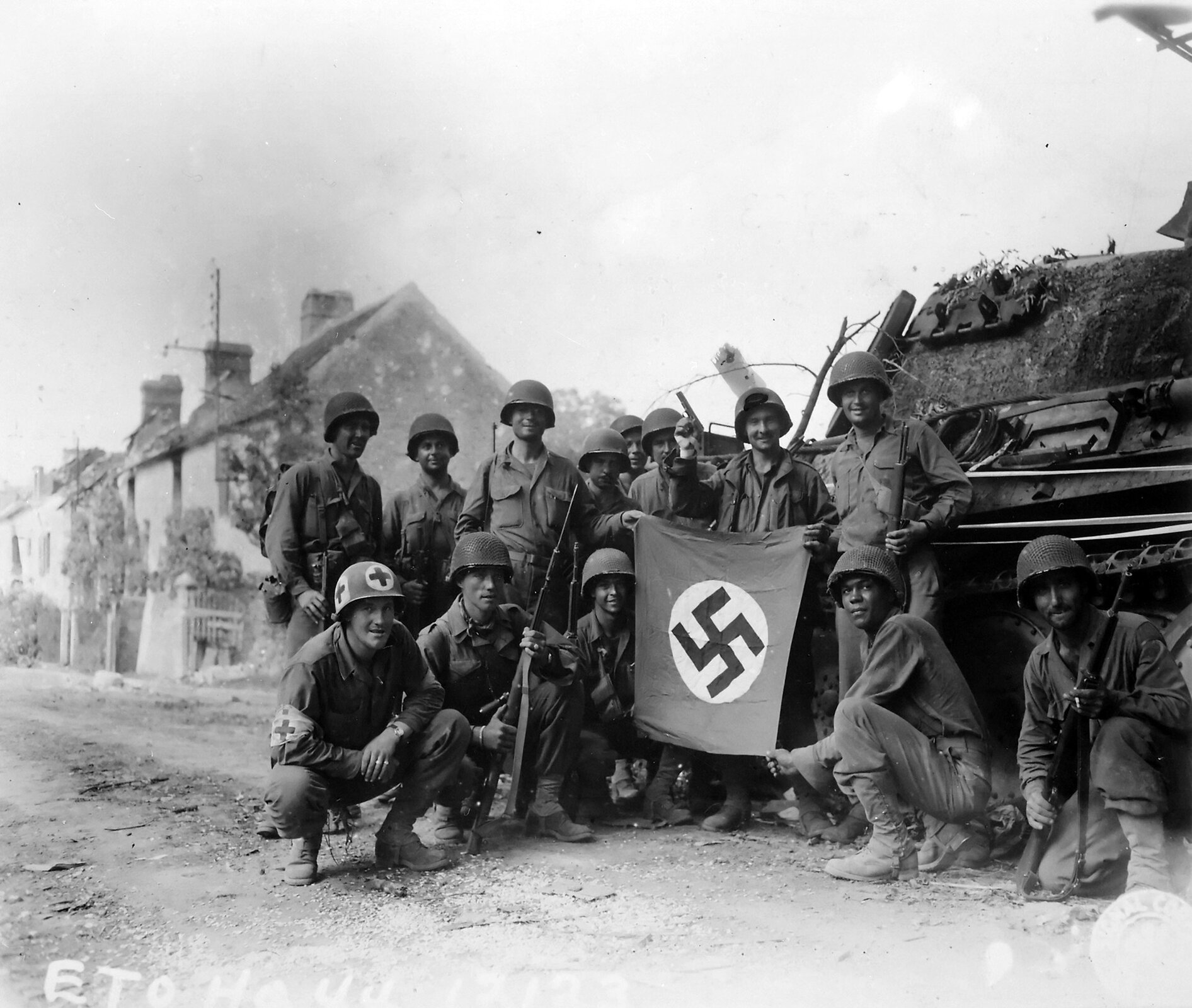
Write a brief comment for the photograph. Above all else, take into account the moods of the soldiers.
Read the text carefully and fill the blanks.
Paris, Lille, Quisling, Petain, Terboven, de Gaulle, Vichy
During World War II, the phenomenon of collaboration with the occupational forces was born. The head of the Norwegian puppet government, Vidkun .................., became its symbol. There was a collaborationist government in France that acknowledged the authority of the Third Reich as well. It was headed by ................... That government had its seat in ...................
Match the terms with their definitions.
divisions that fight against the occupants, most commonly using partisan methods., the states fighting against Germany and the states allied with her during World War II, partisan divisions fighting in the Yugoslavian territory in 1942-1944., the organization of Croatian fascists headed by Ante Pavelic, guilty of bloody repressions against other nations, mainly the Serbs and the Jews., the air campaign fought between the German and British airforces., the French puppet state that existed in 1940-1944., forced displacement of people, usually somewhere remote, accompanied by limitation of freedom., collaboration with an enemy, partitioner or occupant.
| Deportation | |
| Collaborationism | |
| Vichy France | |
| Battle of Britain | |
| Ustashe | |
| Chetniks | |
| Resistance movement | |
| Allies |
Match the terms with their definitions.
the French puppet state that existed in 1940-1944., the air campaign fought between the German and British airforces., the organization of Croatian fascists headed by Ante Pavelic, guilty of bloody repressions against other nations, mainly the Serbs and the Jews., collaboration with an enemy, partitioner or occupant., the states fighting against Germany and the states allied with her during World War II, forced displacement of people, usually somewhere remote, accompanied by limitation of freedom., partisan divisions fighting in the Yugoslavian territory in 1942-1944., divisions that fight against the occupants, most commonly using partisan methods.
| Deportation | |
| Collaborationism | |
| Vichy France | |
| Battle of Britain | |
| Ustashe | |
| Chetniks | |
| Resistance movement | |
| Allies |
Keywords
World War II, Battle of England, resistance movement, Phoney War
Glossary
Dziwna wojna – określenie sytuacji trwającej od września 1939 do maja 1940 r. wojny na froncie zachodnim. Gdzie po formalnym wypowiedzeniu wojny przez Wielką Brytanię i Francję nie nastąpiły działania zbrojne.
Ofensywa – gwałtowne uderzenie w przeciwnika, mające na celu przełamanie jego obrony i wdarcie się w głąb jego wojska lub terenu.
Ultimatum – żądanie wysunięte przez jedno państwo wobec drugiego wzywające do spełnienia określonych żądań pod groźbą wybuchu wojny lub innych sankcji. Stawiane jest przeważnie w sytuacji, gdy zawiodą inne formy dyplomatyczne.
Sojusz – układ dwóch lub więcej państw lub organizacji, który ma doprowadzić do wspólnego zamierzonego celu.
Deportacja – przymusowe przesiedlenie (wywózka), najczęściej do odległego miejsca, połączone z ograniczeniem wolności.
Liga Narodów – organizacja międzynarodowa utworzona po I wojnie światowej z inicjatywy USA, której celem miało być utrzymanie pokoju na świecie i współpraca między krajami.
Propaganda – celowe działania, które mają doprowadzić do określonych zachować i poglądów. Służy ona do upowszechnienia dogodnych informacji dla nadawcy. W języku potocznym synonim kłamstwa i manipulacji.
Kolaboracja – współpraca z wrogiem, zaborcą lub okupantem.
Kapitulacja – poddanie się części lub całości wojska przeciwnikowi. Może być bezwarunkowa lub pod pewnymi wcześniej ustalonymi warunkami. Najczęściej kończy konflikt zbrojny.
Okupacja – czasowe zajęcie jakiegoś terenu (np. państwa) przez wrogie siły i wprowadzenie tam swojej władzy.
Francja Vichy – określenie francuskiego, marionetkowego państwa istniejącego w latach 1940‑1944.
Bitwa o Anglię – kampania lotnicza toczona między lotnictwem niemieckim i brytyjskim od lipca do października 1941 r. Jej celem była obrona Anglii przed atakami niemieckimi i planowanym desantem morskim. Zakończyła się zwycięstwem wojsk alianckich, co uniemożliwiło III Rzeszy desant na Wyspy Brytyjskie.
Ustasze – organizacja chorwackich faszystów na czele z Ante Paveliciem, dokonująca krwawych represji na innych narodowościach, przede wszystkim Serbach i Żydach.
Czetnicy – partyzanckie oddziały walczące w latach 1942‑1944 na terenie Jugosławii. Ich celem było utrzymanie monarchii jugosłowiańskiej i zapewnienie bezpieczeństwa ludności Serbskiej. Realizując te cele podejmowali się kolaboracji z okupantem i prowadzili czystki etniczne.
Ruch oporu – oddziały, których celem jest walka z okupantem kraju najczęściej sposobami partyzanckimi. Swoją działalność rozpoczynają najczęściej po zaprzestaniu regularnych działań wojennych.
Alianci – państwa walczące przeciwko Niemcom i ich sojusznikom podczas II wojny światowej