bg‑azure

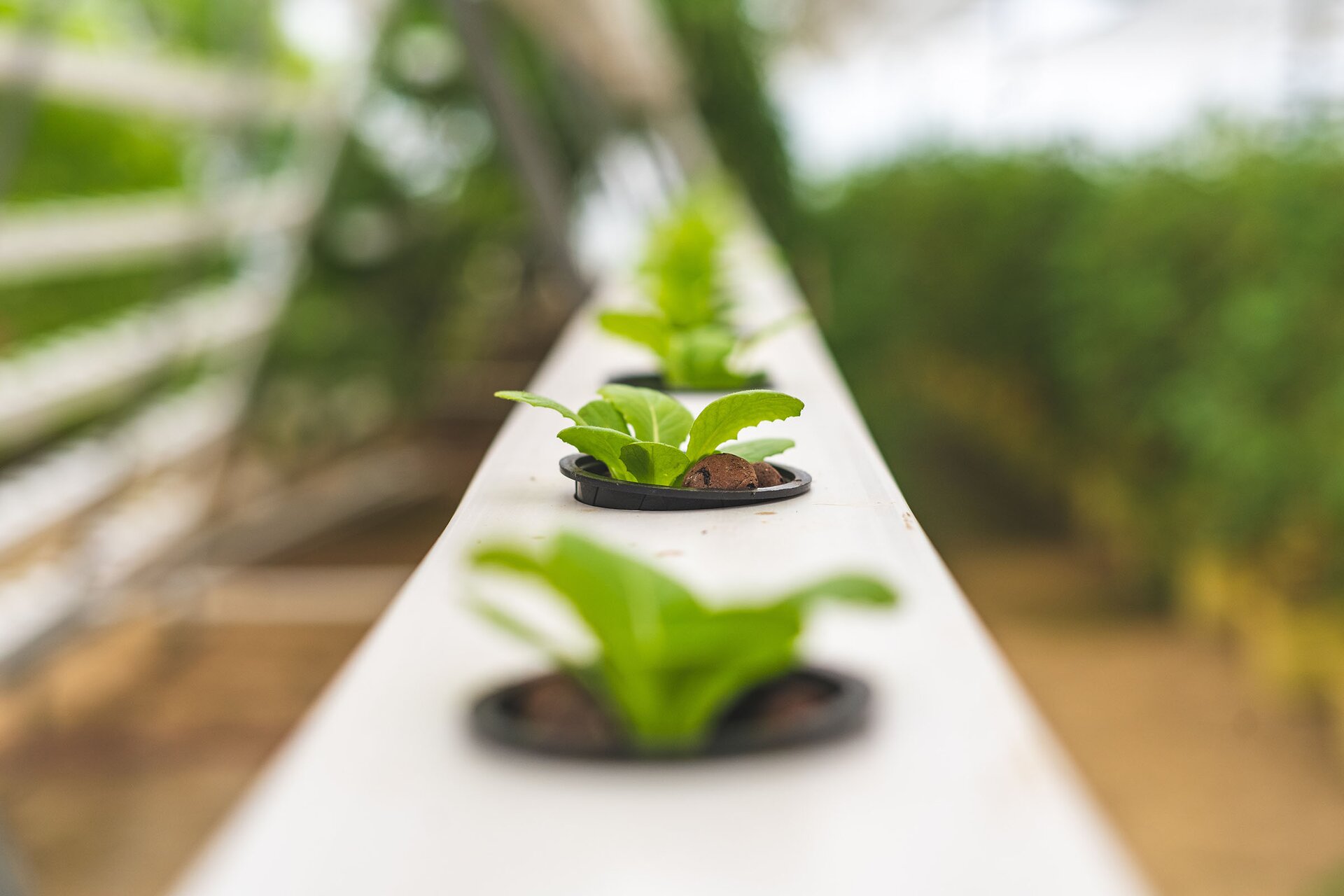
Look at the seedlings in the photo below. They all have equal access to water, feed and light and they are growing without soil. This arrangement is typical for hydroponics, an alternative to traditional plant cultivation. Study the text to learn more about it.

Popatrz na sadzonki ze zdjęcia. Wszystkie mają równy dostęp do wody, pokarmu i światła a na dodatek rosną bez ziemi. Taka kompozycja jest typowa dla hydroponiki, która jest alternatywą dla tradycyjnej uprawy roślin. Zapoznaj się z tekstem, żeby dowiedzieć się o niej czegoś więcej.
R1MUMNHw4H85d
An exemplary arrangement of seedlings in a hydroponic agricultural model
Przykładowy układ sadzonek w hydroponicznym modelu uprawy
Źródło: dostępny w internecie: https://www.pexels.com/pl-pl/ [dostęp 12.07.2022], domena publiczna.
Exercise 1

Drag the following halves of sentences to learn fascinating facts abouts hydroponics.

R1RdzQyfojdIF
Not everyone knows that hydroponics is complex, Możliwe odpowiedzi: 1. because they don’t have to search for water., 2. you can do it at home on a smaller scale., 3. in fact there are more than 6 types of it., 4. because plants grow much bigger, but this is a myth. Some say that hydroponics makes plants lazy, Możliwe odpowiedzi: 1. because they don’t have to search for water., 2. you can do it at home on a smaller scale., 3. in fact there are more than 6 types of it., 4. because plants grow much bigger, but this is a myth. Although hydroponics is mostly connected with commercial farming, Możliwe odpowiedzi: 1. because they don’t have to search for water., 2. you can do it at home on a smaller scale., 3. in fact there are more than 6 types of it., 4. because plants grow much bigger, but this is a myth. Some people may say that hydroponics is not really healthy, Możliwe odpowiedzi: 1. because they don’t have to search for water., 2. you can do it at home on a smaller scale., 3. in fact there are more than 6 types of it., 4. because plants grow much bigger, but this is a myth.
Źródło: GroMar Sp. z o.o., licencja: CC BY-SA 3.0.
Exercise 2

Analyse the text and do the exercises below.

Hydroponics: Sci‑Fi or the Farming of the Future?
Katarzyna Piotrowska Hydroponics: Sci‑Fi or the Farming of the Future?

In the age of increased pollution and its negative consequences on our health, we are gradually focusing on our natural environment. People are becoming interested in maintaining biodiversitybiodiversitybiodiversity and are choosing ecologically sustainablesustainablesustainable products. It seems that human beings have finally taken responsibility for retainingretaining [retain]retaining future generation’s access toaccess toaccess to water, food, land, and natural resourcesnatural resources [natural resource]natural resources.

With the passage of time, we will require an increasing amount of food, land, and water. However, maximising food production ought to be on a par withbe on a par withbe on a par with keeping its nutritious valuesnutritious valuesnutritious values and quality. SustainabilitysustainabilitySustainability is the key to our existence. This, in turn, means that the usage of pesticidespesticides [pesticide]pesticides and herbicidesherbicides [herbicide]herbicides is to be reduced, if not eliminated altogether. How can it be done? There is already a functioning solution - hydroponicshydroponicshydroponics, the modern method of plant cultivationcultivationcultivation.

Its name derives fromderives [derive] fromderives from the connection of hydro – standing for water and ponos – referring to labour. Hydroponics is leading to systematisedsystematisedsystematised methods in agriculture that are more environmentally‑friendly, being much more predictable and efficientefficientefficient.

Despite a wide array ofa wide array ofa wide array of advantages, are there any drawbacks to hydroponic farming? Firstly, the cost of LED lighting is high and must be tackled bytackled [tackle] bytackled by investing in renewable energyrenewable energyrenewable energy sources. Solar panels, which allow for accumulating energy, aidaidaid in catering for energy demand, yet their prices might overwhelmoverwhelmoverwhelm many people. Secondly, there are the costs of constant watering and monitoring the plants and their development. In a hydroponic agricultural modelhydroponic agricultural modelhydroponic agricultural model, plants require continual access to fertilisersfertilisers [fertiliser]fertilisers and this ought to be supervisedsupervisedsupervised and adjusted toadjusted [adjust] toadjusted to the plants' stadium of growth. Thirdly, the process of establishing such a farm is exorbitantexorbitantexorbitant and requires the farmer’s experience, skills, and ingenuityingenuityingenuity in raising money or applying for financial aid from the European Agricultural Guarantee Fund (EAFG) or the European Agricultural Fund for Rural Development (EAFRD).

Regardless of potential hindranceshindrances [hindrance]hindrances, soillesssoillesssoilless food production on a mass scale seems to be the direction in the future of commercial food production. Not using the soil allows to prevent both the occurrence of verminverminvermin and the spread of diseasesdiseasesdiseases. Because of the constant supervision of plants’ development, the amount of water is precisely monitored and is, in fact, nearly 90% lower than in field farming. In addition, hydroponics does not require massive areas of land and this constitutesconstitutes [constitute]constitutes its unrivalledunrivalledunrivalled potential. Plants are grown indoors with the use of artificial lightingartificial lightingartificial lighting, and the seedlingsseedlings [seedling]seedlings are grown in soilless conditions on racksracks [rack]racks or traystrays [tray]trays that might be rearrangedrearrangedrearranged should such a necessity arise.

To conclude, the hydroponic model can be established anywhere in the world. It is tailored totailored [tailor] totailored to plants’ needs and facilitatesfacilitates [facilitate]facilitates continual growth in areas where field farming might be deemed tobe deemed tobe deemed to fail. Owing to its smaller potential for sustainability, field farming might be prone to subsidesubsidesubside. In the foreseeable futureforeseeable futureforeseeable future hydroponics might ensure our survival. Therefore, by raising our awareness and advancingadvancing [advance]advancing the knowledge of hydroponics, we might support its development and in that way, care for the survival of future generations – our children and their offspringoffspringoffspring.

1 Źródło: Katarzyna Piotrowska, licencja: CC BY-SA 3.0.
Exercise 3

Analyse the sentences below and decide whether the sentences are true or false. Choose the correct answer TRUE or FALSE in accordance with the text.

Rr0JOIF4lwHL8
  1. Hydroponics requires the farmer to apply for European funding. TRUEFALSE
  2. In hydroponic farming, seedlings can be placed in a different order. TRUEFALSE
  3. The word ‘hydroponics’ comes from water and air. TRUEFALSE
  4. High quality soil helps in eliminating zoonotic diseases. TRUEFALSE
  5. Hydroponics lets all seedlings grow equally well. TRUEFALSE
  6. Hydroponics appears in movies popularising agriculture among people in rural areas. TRUEFALSE
  7. Sustainability is connected with hydroponics. TRUEFALSE
Źródło: GroMar Sp. z o.o., licencja: CC BY-SA 3.0.
Exercise 4

Complete the gaps with English translations of the words in brackets.

R1WIpWdxRxCL6
1. Maintaining bTu uzupełnij is essential to keeping the balance in agriculture. 2. Constant monitoring helps to eliminate the use of pTu uzupełnij and other harmful substances. 3. Farmers often need iTu uzupełnij when raising funds for setting up their hydroponic farms. 4. Due to the high costs of electricity and equally immense demand for it, the hydroponic agricultural model often relies upon rTu uzupełnij energy. 5. The use of technology ensures that plants are provided with the correct amount of fertilizers which makes them nTu uzupełnij. 6. Hydroponics is highly sTu uzupełnij and this improves productivity.
Źródło: GroMar Sp. z o.o., licencja: CC BY-SA 3.0.
Exercise 5

Answer the questions in 3–4 sentences. Use the information in the text and your own ideas.

RAy34LLgWvZEW
(Uzupełnij).
Źródło: GroMar Sp. z o.o., licencja: CC BY-SA 3.0.
  1. According to the text, what is hydroponics?

  2. What differentiates hydroponics from field farming?

  3. Do you think that hydroponics should be popularised in Poland? Why? Why not?

Słownik

a wide array of
a wide array of

/ ə ˌwaɪd əˈreɪ ɒv /

R1SBHXRAFY4hy1
Nagranie dźwiękowe

szeroki wachlarz czegoś

RXsbAlrqCoVJE1
Nagranie dźwiękowe
access to
access to

/ ˈækses tuː /

RUKm1VuN71Aas1
Nagranie dźwiękowe

dostęp do

R1Jo5nb9CB1yF1
Nagranie dźwiękowe
adjusted [adjust] to

/ əˈdʒʌstɪd əˈdʒʌst tuː /

RhObkRIeDw4gb1
Nagranie dźwiękowe

dostosowany/dostosowana [dostosowywać] do

R16kdF0B4bl9Z1
Nagranie dźwiękowe
advancing [advance]
advancing [advance]

/ ədˈvɑːnsɪŋ / / ədˈvɑːns /

RUrxMlbhez0Ze1
Nagranie dźwiękowe

rozwijający/rozwijająca [rozwijać] się

R1LNRC7sg6Rnv1
Nagranie dźwiękowe
aid
aid

/ eɪd /

R9Fl06ssCiKsH1
Nagranie dźwiękowe

pomagać, wspierać

RmhzpipewEGHh1
Nagranie dźwiękowe
artificial lighting
artificial lighting

/ ˌɑ:tɪˌfɪʃl ˈlaɪtɪŋ /

R1JL2gqNsoCNX1
Nagranie dźwiękowe

sztuczne oświetlenie

RW49hUYTnlk3F1
Nagranie dźwiękowe
be deemed to
be deemed to

/ bi diːmd tuː /

R1HTqBELoLVAM1
Nagranie dźwiękowe

być skazanym/skazaną na

RJJSB2VKxwAHJ1
Nagranie dźwiękowe
be on a par with
be on a par with

/ bi ˈɒn ə ˌpɑ:r wɪð /

R1btTuTPt0Esu1
Nagranie dźwiękowe

być na równi z

RuK0BYbpXow8b1
Nagranie dźwiękowe
biodiversity
biodiversity

/ ˌbaɪəʊdaɪˈvɜːsəti /

RScBGMqKM2vcr1
Nagranie dźwiękowe

zróżnicowanie biologiczne

RDnXz0Y6HD3K51
Nagranie dźwiękowe
caters [cater] for
caters [cater] for

/ ˈkeɪtəz / / ˈkeɪtə fɔː /

RfbdQ7cHyHP3Q1
Nagranie dźwiękowe

zaspokaja [zaspokajać] czyjeś potrzeby

RzFByfcVjKGhH1
Nagranie dźwiękowe
coexistence with
coexistence with

/ ˌkəʊɪɡˈzɪstəns wɪð /

RyEo20YsfG7ho1
Nagranie dźwiękowe

współistnienie z

R1UX2yV18a4Hl1
Nagranie dźwiękowe
constitutes [constitute]

/ ˈkɒnstɪtjuːts / / ˈkɒnstɪtjuːt /

Rv5PwblgYa9nk1
Nagranie dźwiękowe

stanowi [stanowić]

RRgKH2pDmTkaq1
Nagranie dźwiękowe
cultivation
cultivation

/  kʌltɪˈveɪʃ(ə)n /

RV50OKeRWod5j1
Nagranie dźwiękowe

uprawa

RujPCDS4Ar1mv1
Nagranie dźwiękowe
derives [derive] from

/ dɪˈraɪvz / / dɪˈraɪv frɒm /

RT6G87IuuhjhM1
Nagranie dźwiękowe

wywodzi [wywodzić] się z

R10AZj8erPFHl1
Nagranie dźwiękowe
disadvantageous
disadvantageous

/ ˌdɪsˌædvənˈteɪdʒəs /

RLKuEdjaAr5xQ1
Nagranie dźwiękowe

niekorzystny/niekorzystna

R1F3d639cOhUH1
Nagranie dźwiękowe
diseases
diseases

/ dɪˈziːzɪz /

RDnjLC0uawQV91
Nagranie dźwiękowe

choroby

R1OAjlbrrc7v61
Nagranie dźwiękowe
efficient
efficient

/  ɪˈfɪʃ(ə)nt /

R1ZNchxIUTxPS1
Nagranie dźwiękowe

wydajny/wydajna

R1C4TzvkKyb4j1
Nagranie dźwiękowe
exorbitant
exorbitant

/ ɪɡˈzɔːbɪtənt /

R1YFdw1H83BpL1
Nagranie dźwiękowe

wygórowany/wygórowana, bardzo kosztowny/kosztowna

R10hCFW7hhnpj1
Nagranie dźwiękowe
facilitates [facilitate]

/ fəˈsɪlɪteɪts / / fəˈsɪlɪteɪt /

RJ8h6xxgcdrrM1
Nagranie dźwiękowe

zapewnia [zapewniać], umożliwia [umożliwiać]

Rgdix8X5rcUe41
Nagranie dźwiękowe
fertilisers [fertiliser]

/ ˈfɜːtəlaɪzəz / / ˈfɜːtəlaɪzə /

R1HFifctzegmF1
Nagranie dźwiękowe

nawozy [nawóz]

RJn01mOxgNWjf1
Nagranie dźwiękowe
foreseeable future
foreseeable future

/ fɔːˈsiːəbl̩ ˈfjuːtʃə /

R1FX1QX6n0pXI1
Nagranie dźwiękowe

przyszłość dająca się przewidzieć/możliwa do przewidzenia

R1dDyidZ4b8gM1
Nagranie dźwiękowe
herbicides [herbicide]

/ ˈhɜːbɪsaɪdz / / ˈhɜːbɪsaɪd /

R12xUpZsC053M1
Nagranie dźwiękowe

środki [środek] ochrony roślin

R14WL6ffovWow1
Nagranie dźwiękowe
hindrances [hindrance]

/ ˈhɪndrənsɪz / / ˈhɪndrəns /

Rw571mQZJQgDr1
Nagranie dźwiękowe

przeszkody [przeszkoda]

R2nNjvNYOKxPv1
Nagranie dźwiękowe
hydroponic agricultural model

/ ˌhaɪdrəˈpɑːnɪk ˌæɡrɪˈkʌltʃrəl ˈmɒdl̩ /

R1QUKS8vcN4r51
Nagranie dźwiękowe

hydroponiczny model uprawy roślin

RM93YC6ZxE1wN1
Nagranie dźwiękowe
hydroponics
hydroponics

/ ˌhaɪdrəˈpɒnɪks /

Rng0m6bblURW31
Nagranie dźwiękowe

hydroponika, bezglebowa uprawa roślin na pożywkach wodnych

RJj97FbiCFFh21
Nagranie dźwiękowe
ingenuity
ingenuity

/ ˌɪndʒɪˈnjuːɪti /

RM65e2hNYPrpR1
Nagranie dźwiękowe

pomysłowość

R11vrq4mtl9QA1
Nagranie dźwiękowe
natural resources [natural resource]

/ ˌnætʃ.ər.əl rɪˈzɔː.sɪz / /  ˌnætʃ.ər.əl rɪˈzɔː.s / 

R1drU9dfLJ9LC1
Nagranie dźwiękowe

zasoby naturalne [zasób naturalny]

Rc0bZ3vEOZpm51
Nagranie dźwiękowe
nutritious values
nutritious values

/ njuːˈtrɪʃəs ˈvæljuːz /

R1PXSZhD386PJ1
Nagranie dźwiękowe

wartości odżywcze

R12oaCzpRC3x71
Nagranie dźwiękowe
offspring
offspring

/ ˈɒfsprɪŋ /

Reju9eRDPYwB71
Nagranie dźwiękowe

potomstwo

RW3JCXRKZSCPI1
Nagranie dźwiękowe
overwhelm
overwhelm

/ ˌəʊ.vəˈwelm /

R6FpxzYm0NRd31
Nagranie dźwiękowe

przytłoczyć

Rb9nxc5um82AW1
Nagranie dźwiękowe
pesticides [pesticide]

/ ˈpestɪsaɪdz / / ˈpestɪsaɪd /

R1LBjw420OHWV1
Nagranie dźwiękowe

środki [środek] owadobójczy

R6IguOOO0ojXc1
Nagranie dźwiękowe
plentiful
plentiful

/ ˈplentɪfəl /

R1KRnJHKVa8951
Nagranie dźwiękowe

obfity/obfita

RDI2MAIeP6X6b1
Nagranie dźwiękowe
racks [rack]
racks [rack]

/ ræks / / ræk /

Rj0V1ry5vXEvt1
Nagranie dźwiękowe

stojaki [stojak]

R1SfkppZHhs5l1
Nagranie dźwiękowe
rearranged
rearranged

/ ˌriːəˈreɪndʒ /

R1bti0Pr5nzRw1
Nagranie dźwiękowe

poprzestawiane

Rw69RpZizYtDW1
Nagranie dźwiękowe
recurrent
recurrent

/ rɪˈkʌrənt /

RWhSCkfDsDX3G1
Nagranie dźwiękowe

powtarzający/powtarzająca się, nawracający/nawracająca

RZRODLYcIq0j51
Nagranie dźwiękowe
renewable energy
renewable energy

/ rɪˈnjuːəbl̩ ˈenədʒi /

R1M5LFcw8Q7mZ1
Nagranie dźwiękowe

energia odnawialna

R1N5I0noHqnvL1
Nagranie dźwiękowe
retaining [retain]
retaining [retain]

/ rɪˈteɪnɪŋ / / rɪˈteɪn /

R8b7XJbK3Hx2O1
Nagranie dźwiękowe

zachowujący/zachowująca [zachowywać], zatrzymujący/zatrzymująca [zatrzymywać]

RfzU49W1wNagC1
Nagranie dźwiękowe
seedlings [seedling]

/ ˈsiːdlɪŋz / / ˈsiːdl̩ɪŋ /

Rb6Ldl0qAQG8O1
Nagranie dźwiękowe

sadzonki [sadzonka]

R19fVd6JvbXfp1
Nagranie dźwiękowe
soilless
soilless

/ ˈsɔɪllɪs /

RMFQZTqZb1ZLs1
Nagranie dźwiękowe

bezglebowy/bezglebowa

R10QOMqfdoe8a1
Nagranie dźwiękowe
subside
subside

/ səbˈsaɪd /

R1FNjDNKd5LFQ1
Nagranie dźwiękowe

osiadać, osuwać się

RMjQAtRQETlsM1
Nagranie dźwiękowe
supervised
supervised

/ ˈsuːpəvaɪzd /

R18ynsrXa3QWj1
Nagranie dźwiękowe

nadzorowany/nadzorowana

RKnjtHywYepBP1
Nagranie dźwiękowe
sustainability
sustainability

/ səˈsteɪnəbl̩ /

R1c9OHqxTKZr31
Nagranie dźwiękowe

zrównoważony rozwój

R1Bsji2nD7PvN1
Nagranie dźwiękowe
sustainable
sustainable

/ səˈsteɪnəbl̩ /

R1UZKTOl4BfGC1
Nagranie dźwiękowe

zrównoważony/zrównoważona, długofalowy/długofalowa

RzG5M5Z6B0Rjh1
Nagranie dźwiękowe
systematised
systematised

/ ˈsɪstəmətaɪzd /

R1C1itgOXqJTn1
Nagranie dźwiękowe

usystematyzowany/usystematyzowana

R31VGLyt5NvlA1
Nagranie dźwiękowe
tackled [tackle] by
tackled [tackle] by

/ ˈtækl̩d / / ˈtækl̩ baɪ /

RCByDtTzCE7yV1
Nagranie dźwiękowe

rozwiązany/rozwiązana [rozwiązywać] za pomocą

R40Alq1mcPmDz1
Nagranie dźwiękowe
tailored [tailor] to

/ ˈteɪləd / / ˈteɪlə tuː /

R14vMFscsa0TO1
Nagranie dźwiękowe

dostosowany/dostosowana [dostosowywać] do

Rym24bzOdwSPv1
Nagranie dźwiękowe
trays [tray]
trays [tray]

/ treɪz / / treɪ /

RKSxDa1eI9EUS1
Nagranie dźwiękowe

tacki [tacka]

R2ibYSqvLdgz11
Nagranie dźwiękowe
unrivalled
unrivalled

/ ənˈraɪvəld /

R1IefOcKqWACS1
Nagranie dźwiękowe

niezrównany/niezrównana

R1MzjrkM9AymA1
Nagranie dźwiękowe
vermin
vermin

/ ˈvɜːmɪn /

RfkdnFU4LqCdF1
Nagranie dźwiękowe

szkodniki [szkodnik]

RJjeffQ0GQVpf1
Nagranie dźwiękowe

Źródło: GroMar Sp. z o.o., licencja: CC BY‑SA 3.0

R7AeBBB8JogRP
(Uzupełnij).
Źródło: GroMar Sp. z o.o., licencja: CC BY-SA 3.0.