In the shadow of the Avant-garde
you will get to know the works of the most important representatives of surrealistic and dadaistic painting
you will try to to interpret avant‑gardeavant‑garde paintings
you will present artistic techniques applied by avant‑garde painters
With what do you associate the word "Avant-garde"? Write your associations, even the most distant ones.

The art of the first decades of the 20th century deviated from the tradition in both its form and content in search of a new vision of the world. Avant‑garde artists took the reins. The need for originality prevailed; experimentalexperimental, rebellious and even iconoclasticiconoclastic activities were of paramount importance. A number of new trends were created: expressionismexpressionism, FauvismFauvism, cubismcubism, futurismfuturism, constructivismconstructivism, suprematismsuprematism, neoplasticismneoplasticism, dadaismdadaism and surrealismsurrealism. Most of them contravened contemporary aesthetics based on the value of objective beauty and propounded an extension of artistic boundaries. The creators were fascinated by the achievements of science and technology. Some people worshipped machines while others were fascinated by geometry, theosophy or psychoanalysispsychoanalysis. Artistic and moral freedom prevailed.
In pairs, discuss your experiences with experimental art, and then get acquainted with the lives and works of some avant‑garde artists.
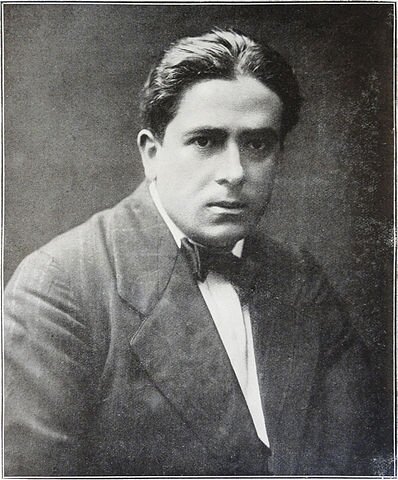
Francis Picabia (1879–1953) – A Frenchman of Cuban descent, a painter, poet, one of the most important representatives of Dadaism and was considered the author of the first abstract painting (Caotchouc, 1909). During World War I he stayed in New York, where he co‑edited the literary magazine „291”, and then published magazine „391”, which gathered the majority of the participants of the Dada movement. Works like poems, cartoons of Marcel Duchamp and Man Ray as well as Picabia's sarcastic and ironic remarks on the art of writing were published therein. Picabia's work cannot be subjected to simple classification. He was an independent artist, full of invention with considerable intelligence and an unbridled temperament; at the same time he became a precursor of the anti‑art movement, propounding the destruction of all “funny” values. His most famous works include: Match Woman (1920), Trois Clowns (c. 1925) and Hera (1928).
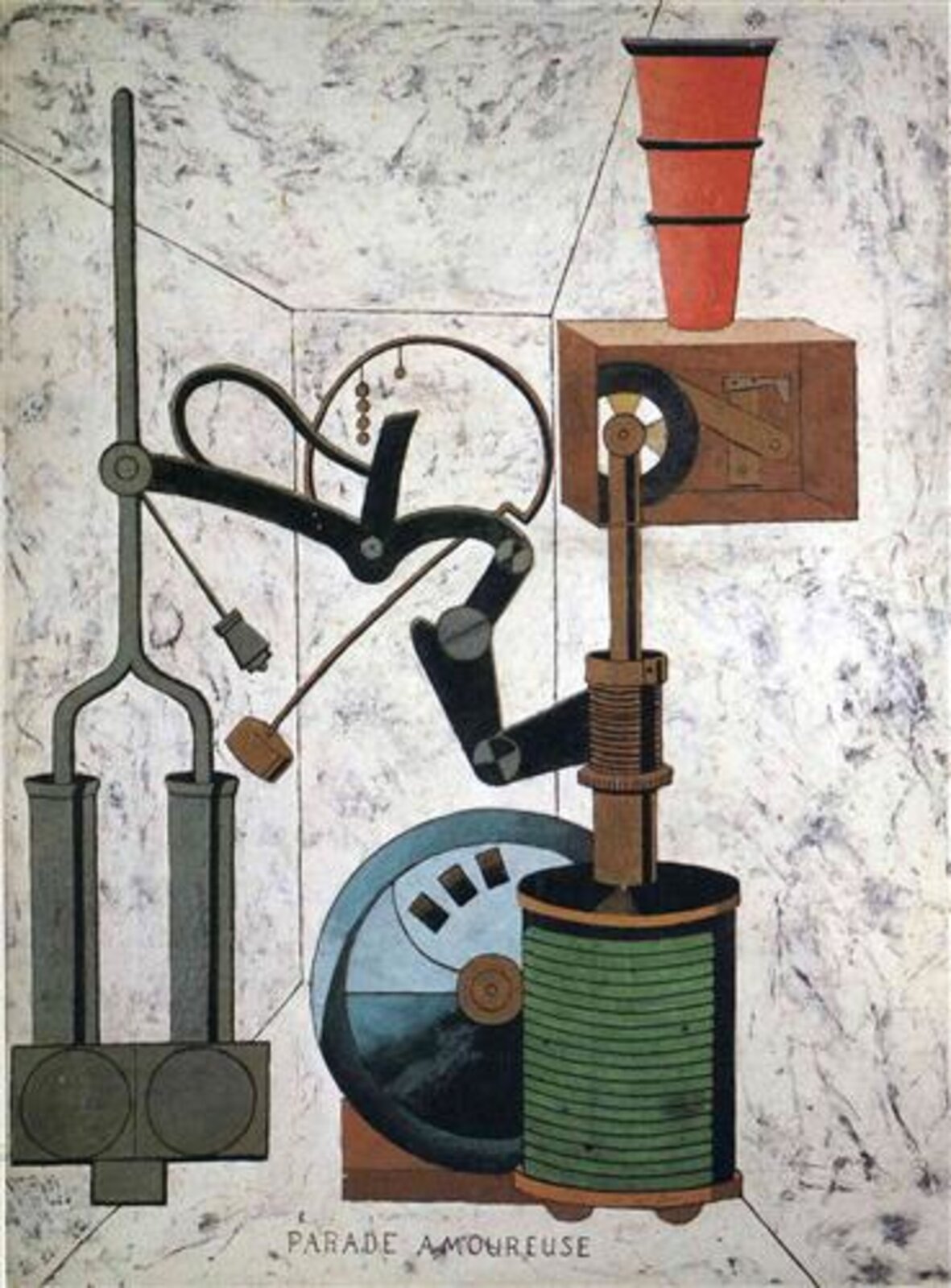
Love parade is a so‑called mechanistic picture, ironically referring to the idea of technical progress and the machine as its symbol. It was glorified by Italian futurists but for Picabia, however, it was not at all a measure of modernity. A complicated construction composed of pistons, pumps and gears, placed in an empty abstract space is therefore deliberately inoperative and absurd in its uselessness. The strange machine, in which you can find erotic allusions, says more about the hidden instincts and drives of a human than about the development of civilization. The artist, probably against all his instincts, created a beautiful painting whose aesthetics has its source in precise, technical drawing and economical, refined, cool colours.
Read the passage from André Breton’s text and follow the instructions:
Indicate in which countries the Dadaistic movement was developing simultaneously.
Enumerate the materials used to create new art.
Determine the essence of Dada movement postulates.
Geneza i perspektywa nadrealizmu (1941)„Antytradycja”, której manifest w stylu frywolnym ułożył dla futurystów Apollinaire, przybiera wraz z ruchem Dada charakter o wiele mniej platoniczny. „Lekceważenie” dochodzi do paroksyzmu, następuje zupełna negacja wartości powszechnie uznanych: naprawdę myśli się o tabula rasa. Rozpacz staje się bezgraniczna i tylko humour noir pomaga ją przezwyciężyć: w Nowym Jorku Duchamp podpisuje swoim nazwiskiem reprodukcję Mony Lizy z domalowanymi wąsami, w Kolonii na wystawę Maxa Ernsta wchodzi się i wychodzi przez klozet, w Zurychu Hans Arp przedstawia jako struktury (organisations) przedmioty zgromadzone zgodnie z „prawem przypadku”, w Paryżu Picabia tworzy „obraz”, przybijając do podłogi pustą ramę z naciągniętymi sznurkami, do której ma być przywiązana żywa małpa, w Hanowerze Schwitters zaczął systemem „collagecollage’u” wznosić w swojej pracowni nieokreślony i niemożliwy do skończenia pomnik, na który składał dzień po dniu wszelkiego rodzaju niepotrzebne przedmioty, do odpadków kuchennych włącznie. Skąd się jednak bierze ta szaleńcza negacja, to bezlitosne obrazoburstwo, co się za nimi ukrywa? Niezależnie od historycznych, zewnętrznych dla sztuki przyczyn obrzydzenia, punktem newralgicznym jest to, że w oczach artysty świat zewnętrzny stał się nagle pustynią, a przedmiot zewnętrzny, zdyskredytowany, odarty z wszelkiej wagi w swym konwencjonalnym kształcie, po prostu nagle przestaje istnieć.
Source: André Breton, Geneza i perspektywa nadrealizmu (1941), [w:] tegoż, Artyści o sztuce. Od van Gogha do Picassa, oprac. Elżbieta Grabska, Hanna Morawska, tłum. Zbigniew Bieńkowski, Warszawa 1963, s. 484–485.
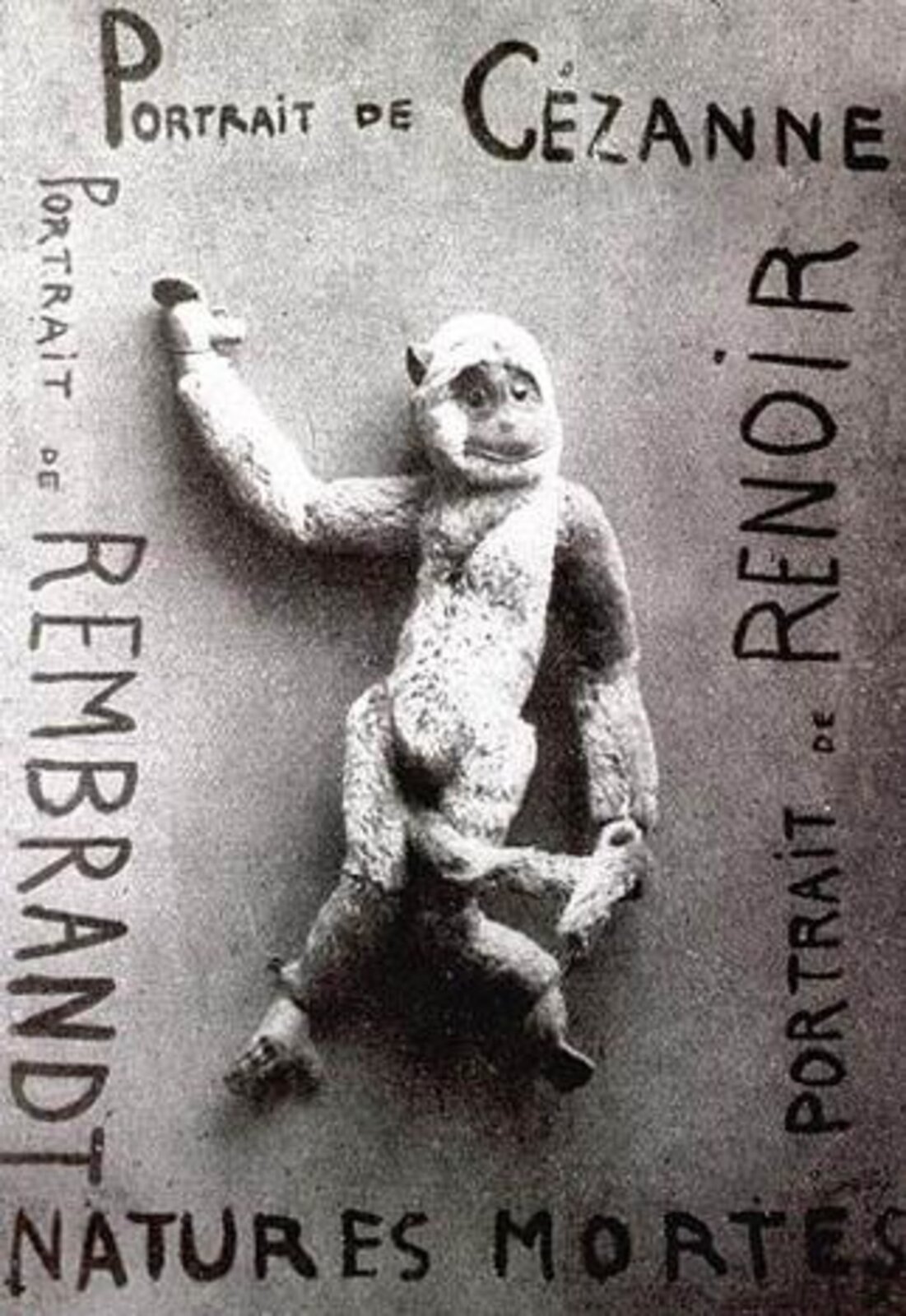
Portrait of Cézanne is a mockery of works dedicated to the great masters of the past. Described usually as Hommage à ... („Tribute to ...”), they expressed admiration of and deference towards the geniuses or virtuosos of art, often referring to the forms of expression and applied techniques developed by them. In Portrait of Cézanne, Picabia violated all the rules of such performance. Creating his assemblage, he used trivial and cheap materials – a cardboard box on which, in the form of irregular circumscription he „hand‑wrote” the inscription with an ink, and a plush toy playing the role of an ambiguous symbol. It constitutes a dadaistic „ready object” (so‑called * ready made*), and at the same time a mocking figure of traditional painting – figurative art, representing and mimetic, and thus imitating nature. In colloquial language, however, „aping” is a pejorative expression, meaning a mindless, malicious or caricatural repetition of a pattern, face or behaviour. The artist therefore mocked the styles and authority of eminent painters. The „still life” he created is a virulent attack on the traditional painting genre.
Determine what exactly Portrait of Cézanne is. Justify your answer.
tomfoolery
the discrediting of a recognised artist
a ruthless attack of the tradition of painting
incomprehensible provocationprovocation
innovative installation
an iconoclastic manifestomanifesto
anti‑painting
something else?
Match the artistic techniques used by dadaists with their definitions.
a combination of several (dozens) of photos., forming compositions from various materials and substances (newspapers, fabrics, photos, small everyday objects, etc.)., a work composed by an artist of ready-made objects.
| assemblage | |
| collage | |
| photomontage |
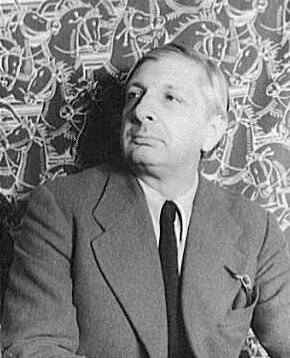
Giorgio de Chirico (1888–1978) – An Italian painter, writer and author of theoretical and critical texts about art. An expert and admirer of Friedrich Nietzsche. A supporter of traditional painting craft. His mysterious works, which belonged to the pittura metafisica movement, full of quotations from Mediterranean culture and antiquity, captured the imagination of the surrealists. His works influenced such artists like Salvador Dali, Max Ernst and René Magritte. The most famous works of de Chirico include: The Enigma of the Oracle (1910), The Uncertainty of the Poet (1913), Red Tower (1913), The Anxious Journey (1913), The MysteryMystery and Melancholy of the Street (1914) and Hector and Andromache (1917).
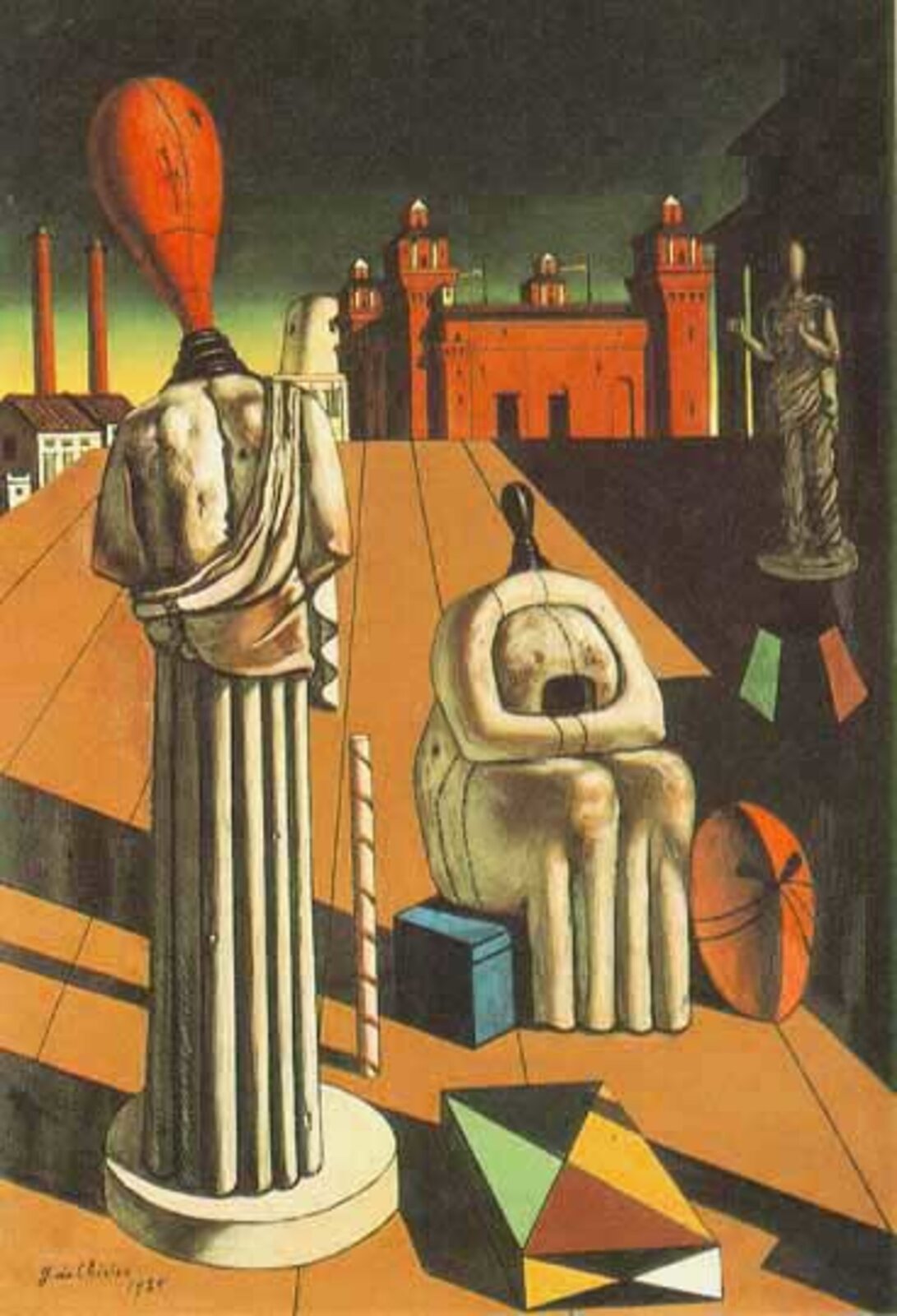
Giorgio de Chirico created non‑existent worlds: he placed known forms and ostensibly ordinary objects in peculiar contexts. The unnatural state of the suspension emanating from the picture The Disquieting Muses is the effect of the perception of space disturbance due to the application of a number of movements and the lack of logical convergence points in the composition. Here we are dealing with a mysterious situation which does not refer to an everyday experience of a man. Although individual elements of the performance can easily be recognized and described, they create a vision beyond physical reality. Expression and anxiety are intensified by multiple disturbances in the proportions and sizes of forms, especially monuments or sculptures that are substitutes for people. The whole image is penetrated by contrasting light creating visible shadows. The colours are saturated and applied as a flat stain within the shapes depicted in the black contour.
Have a closer look at the painting “The Disquieting Muses” and enumerate five features of metaphysical art.
- Mysteriousness and esoterism
- Soft, diffused light
- Visible narration
- Proportion and form size disturbance
- A fondness of the extraordinary
- Realistic reproduction of reality
- A disturbance of perspective
- The poetics of a dream
- A peaceful and balanced composition
- Blurred and unclear contours
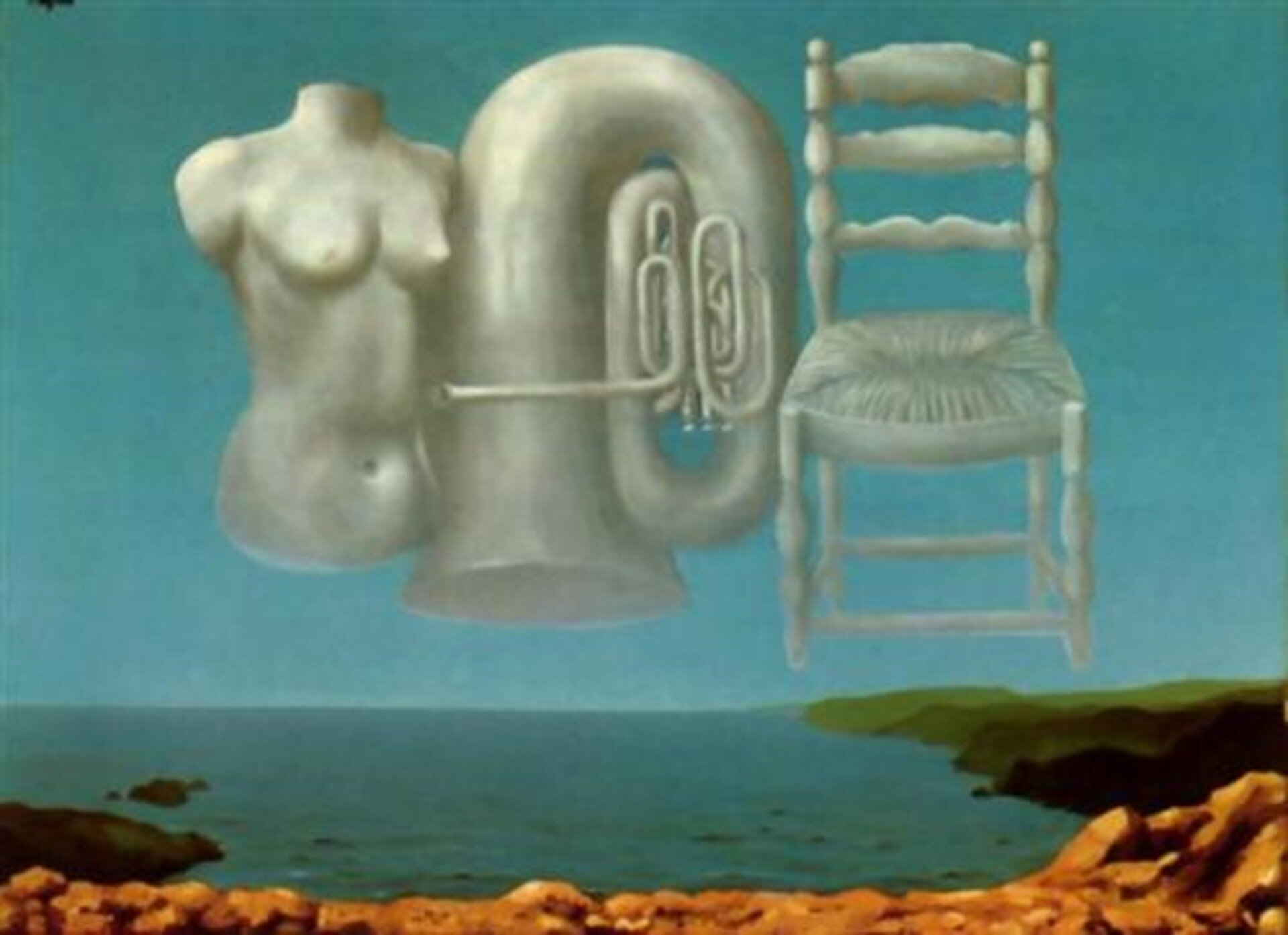
René Magritte (1898–1967) – a Belgian surrealist painter, creating in the convention of onirismonirism (captivating reality in the shape of a dream or a nightmare). Author of brilliant and mysterious works, depicting realistically painted, ostensibly ordinary objects arranged in unusual, often absurd or paradoxical compositions. Distinguishing features of Magritte's creativity are: intellectual provocation, resentment of logic, humour and effective baffling through enigmatic or metaphorical titles as well the application of the painting within a painting effect. His most famous works include: The Human Condition (1935), The Therapist (1937), The Rape (1945), The Philosophy in the Bedroom (1947), Golconda (1953), The Castle of the Pyrenees (1957) and The Son of Man (1964).
Read the excerpt of an interpretation of René Magritte's picture. Pay attention to the effect the artist achieved by placing real objects in the air.
Surrealizm„René Magritte w obrazie [...] Groźna pogoda ukazuje nad nisko leżącym horyzontem morskiego wybrzeża, w rozległej przestrzeni błękitnego nieba unoszące się trzy przedmioty: tors kobiecy, trąbę i krzesło. I chociaż na obrazie tym wszystkie rzeczy zachowują podobieństwo do rzeczywistych, to jednak rzeczywistość potoczna zostaje zakwestionowana. Dzieje się to przez znane z baśni i marzeń sennych, przeczące prawu ciążenia umieszczenie realnych przedmiotów w powietrzu. Przez odwrócenie lub po prostu zmianę skali realnej wielkości przedmiotów: tors, trąba i krzesło w obrazie Magritte’a, w porównaniu z linią wybrzeża, są w stosunku do niego nieproporcjonalnie wielkie, wręcz gigantyczne. I oczywiście przez niezwykłość samego zestawienia obok siebie tych trzech przedmiotów, prowokując doszukiwanie się jakiegoś utajonego sensu”.
Source: Krystyna Janicka, Surrealizm, Warszawa 1985, s. 34.
Interpret the title of the painting Threatening Weather. Use the following propositions:
vision
hallucination
imagination
allusion
revelation
phantasmagoria
delusion
illusion
deception
apparition
impression
mirage
phantom
phantasm
ghost
Keywords
dadaism, surrealism, metaphysical artmetaphysical art, assemblage, collage, photomontage
Glossary
dadaizm
surrealizm
malarstwo metafizyczne
awangarda
fowizm
eksperyment
bunt
obrazoburstwo
ekspresjonizm
kubizm
futuryzm
konstruktywizm
suprematyzm
neoplastycyzm
psychoanaliza
kolaż
fotomontaż
asamblaż
oniryzm
tajemnica
ezoteryzm
manifest
prowokacja