Przeczytaj
The pictures below show a person working from home and people working in the office. In this section you are going to read a text introducing you to the idea of a home office. Before you read it, think, what kind of people are predisposed to working in such environments?
Poniższe zdjęcia pokazują osoby pracujące w biurze oraz we własnym domu. W tej sekcji przeczytasz tekst, który przybliży ci ideę home office. Zanim się z nim zapoznasz, zastanów się, jacy ludzie mogą mieć predyspozycje do pracy w takich warunkach.
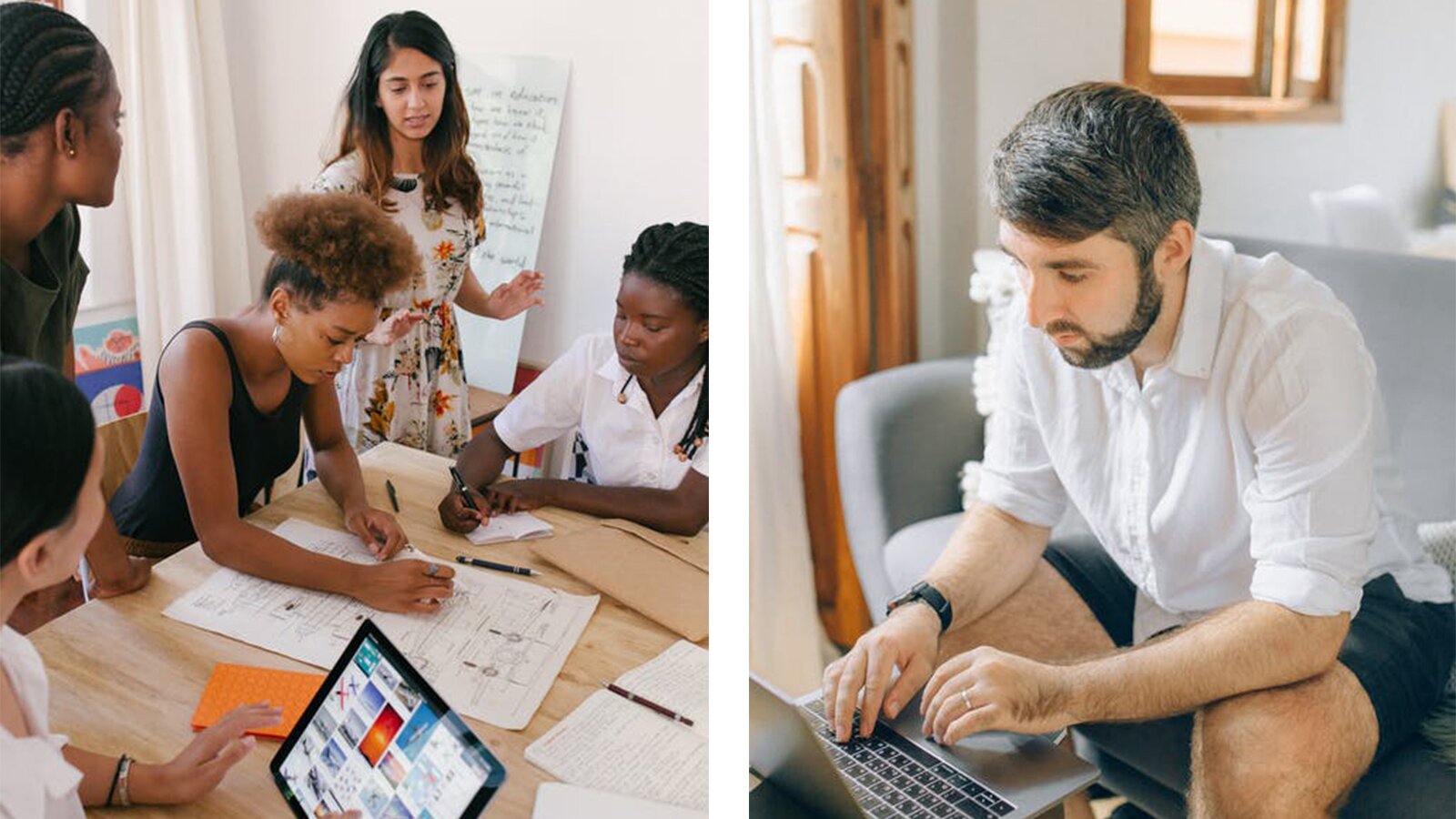
Would you be able to have your bed office and work like that?
In the rapidlyrapidly developing world, most businesses rely onrely on online work and access to the internet. Thanks to variousvarious applications, computer programs, or remote collaboration toolsremote collaboration tools the idea of working from home has become very popular. When we add to it the Covid‑19 pandemic, which imposeimpose people the necessity of isolation, employees all over the world convertedconverted their bedrooms or living rooms into offices that became an extensionextension of their workplaces. Thanks to this experience, most workers may be temptedmay be tempted to keep working remotelyworking remotely.
So what type of people does this work benefit the most? TelecommutingTelecommuting seems to be the perfect option for those who value peace and quiet and the comfort of their own home. Friendly surroundings and a comfortable sofa are the essentialsessentials to boostboost productivity. There are no people who will interruptinterrupt you with meaningless conversations or typical office noises, so you can easily focus on your tasks and meet deadlinesmeet deadlines due to very few distractionsdistractions.
Another kind of person who might consider remote work are those who like getting up at the last minute and still not be late for a video call. When your work is on your computer, it’s not necessary to dress up. Comfy clothes add to your efficiencyefficiency, so whenever a person feels like it, they can put on sweatpants and a hoodie.
Does virtual workvirtual work benefit everyone? Obviously not. There are social typessocial types who simply thrivethrive in a classic office environment. Although they still spend long hours in front of their computers in their cubiclescubicles, they still rely on another living person as a source of comfort and emotional support. And these are best provided in the form of face‑to‑face contact with someone behind a dividing walldividing wall not with a person on a computer screen. If you need a quick consult or to simply tell a joke, it’s the fastest means of communication. Having your co‑worker one phone or video call away doesn’t do the trick. Social animals are in need of fast chit‑chatschit‑chats in a canteen or kitchen, otherwise they witherwither and are much less effective in what they do professionally.
Even when most work‑related activities have been transferred to the virtual world, there are certain jobs that will never be able to be done online fully. We will always depend on healthcare workers and doctors performing surgery in hospitals. Although much teaching is possible via teleconferencingteleconferencing, there are those who need direct contact with educators and fellow‑students to achieve the best academic results. The police and army will always rely, at least partly, on working in the field, not to mention the fact that the majority of scientists conduct research in a laboratory. So no matter how digitiseddigitised our world becomes, there will always be a need for those who come to the office on a daily basison a daily basis.
Źródło: Marta Hilgier, licencja: CC BY-SA 3.0.
Based on the text, answer each question with one sentence.
Why has working remotely grown in popularity recently?
Who can take advantage of the home office?
What kind of people find the idea of a virtual office unappealing?
What jobs can never be done by computers and why?
Słownik
/ buːst /
zwiększyć, zmaksymalizować (to maximise something, to increase something)
/ ˈtʃɪt tʃæts / / ˈtʃɪt tʃæt /
pogaduszki [pogaduszka] (an informal conversation about unimportant things)
/ ˈkʌmfi /
wygodne (wyrażenie potoczne) (comfortable)
/ kənˈvɜːtɪd / / kənˈvɜːt /
przekształcili [przekształcić] (transformed)
/ ˈkjuːbɪkl̩z / / ˈkjuːbɪkl̩ /
boksy [boks biurowy, część sali oddzielona ścianką działową] (a partitioned part of a room)
/ ˈdɪdʒəˌtaɪzd / / ˈdɪdʒəˌtaɪz /
zdigitalizowany [digitalizować], zamieniony na formę cyfrową [zamienić na formę cyfrową] (to change data into a digital form)
/ dɪˈstrækʃn̩z / / dɪˈstrækʃn̩ /
tu: rzeczy rozpraszające uwagę [rzecz rozpraszająca uwagę] (something that takes your attention away from the thing you should focus on)
/ dɪˈvaɪdɪŋ wɔːl /
ścianka działowa (a partition)
/ du: ðə trɪk /
załatwić sprawę (to achieve a desired result)
/ ɪˈfɪʃnsi /
wydajność (a parametre which shows how well something or someone works)
/ ɪˈsenʃl̩z / / ɪˈsenʃl̩ /
niezbędne rzeczy [niezbędna rzecz] (a basic and necessary element)
/ ɪkˈstenʃn̩ /
przedłużenie (an addition that makes something longer or bigger)
/ ɪmˈpəʊzd / / ɪmˈpəʊz /
narzuciła [narzucić] (to force something on someone)
/ meɪ bi ˈtemptɪd /
mogą być nakłaniani, mogą ulec pokusie (may give in to something that is nice but not necessarily good)
/ miːt ˈdedlaɪnz /
dotrzymać terminów (to finish work by a date that has been previously agreed)
/ ˈɒn ə ˈdeɪli ˈbeɪsɪs /
codziennie, każdego dnia (every day)
/ rɪˈlaɪ ɒn /
polegają na [polegać na] (to count on)
/ rɪˈməʊt kəˌlæbəˈreɪʃn̩ tuːlz / / rɪˈməʊt kəˌlæbəˈreɪʃn̩ tuːl /
narzędzia do pracy zdalnej [narzędzie do pracy zdalnej] (tools that enable remote teamwork)
/ ˈsəʊʃl ˈænɪml̩ /
zwierzę towarzyskie (przenośnie) (someone who enjoys social life and meeting other people)
/ ˈsəʊʃl taɪps / / ˈsəʊʃl taɪp /
typy osobowości [typ osobowości] (a set of characteristic features that a person has got)
/ ˈswetˌpænts / / ˈtræksuːt ˈbɒtəmz /
spodnie dresowe (trousers worn while doing sports or to be comfortable)
/ ˌtelikəˈmjuːtɪŋ /
praca zdalna (doing work outside the traditional workplace by using telecommunications tools)
/ ˌteləˈkɑːnfrənsɪŋ /
tu: organizowanie telekonferencji, udział w telekonferencji (organising or taking part in live audio or audiovisual meetings)
/ thetaraɪv /
odnosić sukcesy (o osobie), cieszyć się powodzeniem, kwitnąć (to do well)
/ ˈvɜːtʃʊəl ˈwɜːk /
praca wirtualna (work from home offices using modern technology)
/ ˈwɪðə /
więdnąć, usychać, zamierać (również w znaczeniu przenośnym) (to decay, become weaker and weaker and slowly disappear)
/ ˈwɜ:k rɪˈməʊtli / / ˈwɜ:kɪŋ rɪˈməʊtli /
pracować zdalnie (to work outside of a traditional office environment)
Źródło: GroMar Sp. z o.o., licencja: CC BY‑SA 3.0