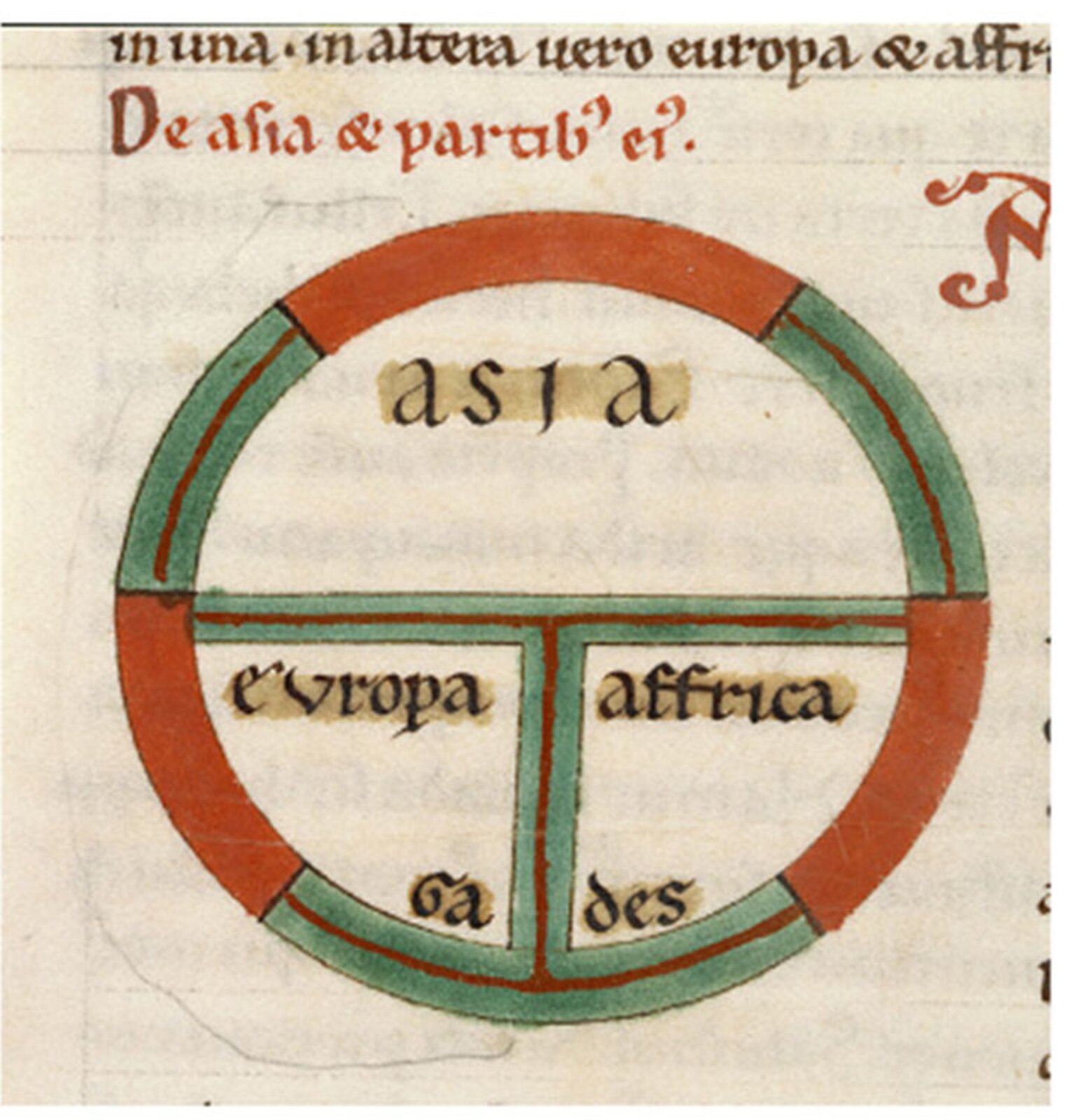
The vast majority of Europeans did not know anything beside their nearest surroundings. Only a few merchants went on further journeys. Knowledge about lands located outside Europe for a long time was limited to the information acquired from the ancients, which acknowledged the existence of only three continents – Europe, Africa and Asia.
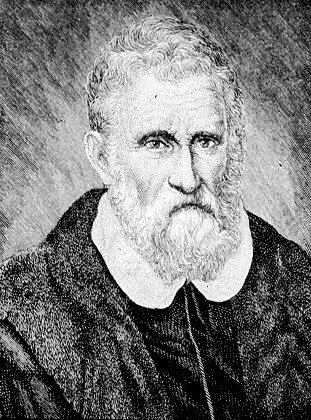
One of the merchants who brought the East and the West closer was Marco Polo, a Venetian living at the turn of the 13th and 14th centuries. His stories about Persia, India or the Middle Kingdom not only stimulated the imagination of the rich, but also became one of the first sources of information about the life and character of the societies located there since antiquity.
China was one of the most important goals of trade expeditions in the Middle Ages. Yet, cultural gaps between China and Europe were enormous, and not just because of the distance. The largest Chinese cities at that time had more than a million inhabitants, when in Europe only a few of them reached 100,000. Paper money, which spread on our continent only in the 19th century, was widely used in commercial operations. The emperor's policy was based on trade and protection of the country, which supported its development.
Rje4Ezo6XINWS1
Ilustracja przedstawiająca portret Marco Polo. Brodaty, ubrany w odświętny strój mężczyzna w dojrzałym wieku pozuje do portretu.
Marco Polo
Source: Wikimedia Commons, domena publiczna.
The European’s next target was India, seen as a land full of treasures and colorful spices. In some respects, it was a world similar to the European one. The biggest difference in relation to the mostly Christian Europe was the multitude of religions and faiths found on the Indian Peninsula.
Africa has always been associated with Europe and its history. Its northern coast for centuries was a part of European culture, becoming a granary during the times of the Roman Empire. The high level of agriculture persisted there throughout the Middle Ages, and the occupation of these areas by the Muslims in the seventh century led to even greater economic development. The eastern part of the continent was connected with the Arab world and indirectly also with Europe. At the beginning of our era, the first Ethiopian state with the capital in Aksum was established, which accepted Christianity in the fourth century.
Exercise 1
Wysłuchaj nagrania abstraktu i zastanów się, czego jeszcze chciałbyś się dowiedzieć w związku z tematem lekcji.
Wysłuchaj nagrania abstraktu i zastanów się, czego jeszcze chciałbyś się dowiedzieć w związku z tematem lekcji.
Look at the diagram of the Earth, a representation typical for the Middle Ages but taken from antiquity. (The word Ga des, divided between Europe and Africa, means the port of Cadiz (Cadiz), near the Strait of Gibraltar where Europe and Africa are the closest to each other). Which continents did people find the most interesting during the Middle Ages?
R2TzQJRqINRxK
Ilustracja przedstawiająca typowy dla średniowiecza, zaczerpnięty ze starożytności, schemat budowy Ziemi. W pierwszej połowie okręgu wpisano nazwę kontynentu AZJA. W drugiej połowie okręgu wpisano słowo Ga des, rozdzielone między Europę i Afrykę, oznacza port Kadyks (Cadiz); leży on w pobliżu Cieśniny Gibraltarskiej, to jest w miejscu, gdzie Europa i Afryka są najbliżej siebie.
A diagram of the earth, derived from antiquity
Source: a. nn., Wikimedia Commons, licencja: CC 0 1.0.
Ro4XhAmt2pLy1
Indicate which continents were known to the people of the Middle Ages. Możliwe odpowiedzi: 1. Three continents - Asia, Europe and Africa., 2. Five continents - Europe, Asia, Africa, Ga and Des., 3. Two continents - Europe and Asia.
Indicate which continents were known to the people of the Middle Ages. Możliwe odpowiedzi: 1. Three continents - Asia, Europe and Africa., 2. Five continents - Europe, Asia, Africa, Ga and Des., 3. Two continents - Europe and Asia.
Indicate which continents were known to the people of the Middle Ages.
Three continents - Asia, Europe and Africa.
Five continents - Europe, Asia, Africa, Ga and Des.
Two continents - Europe and Asia.
Exercise 2
Look for information in the sources available to you (e.g. on the internet, encyclopedia or specialized publications) about the Silk Road and other trade routes in the Middle Ages. What countries shared trade routes?
Look for information in the sources available to you (e.g. on the internet, encyclopedia or specialized publications) about the Silk Road and other trade routes in the Middle Ages. What countries shared trade routes?
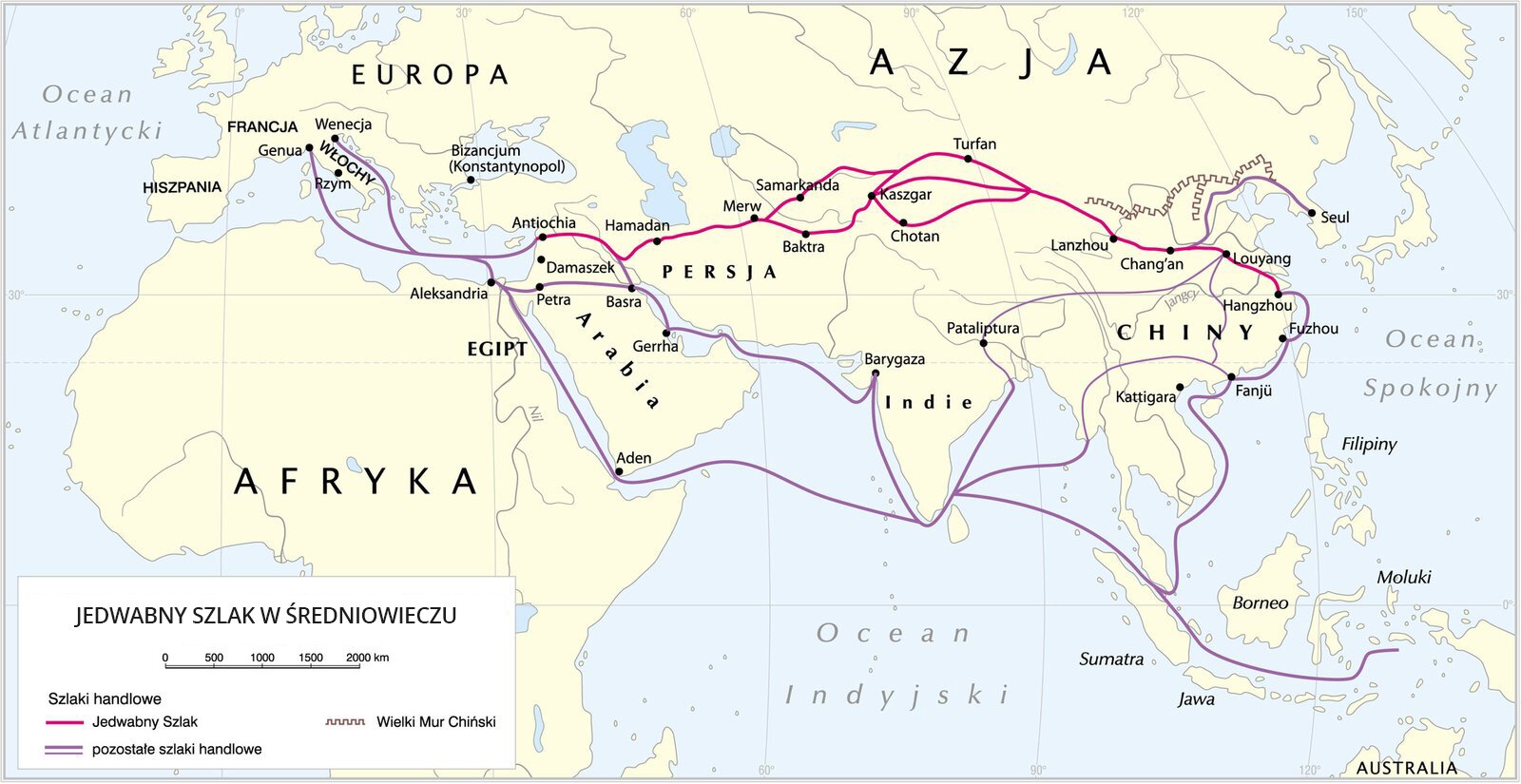
Look at the map of the trade routesTrade routetrade routess of medieval Europe. Use the contemporary political map and indicate which lands Europe was connected with.
RkVIx25aDQ5Uk
Grafika mapy przedstawiającej Jedwabny Szlak - dawny szlak handlowy łączący Chiny z Europą i Bliskim Wschodem. Trasa liczyła około 12 000 kilometrów. Kolorem różowym oznaczono jedwabny szlak. Fioletową linią oznaczono pozostałe szlaki handlowe. Wyróżniono również na mapie szlak Wielkiego Muru chińskiego.
Silk Road - a former trade route connecting China with Europe and the Middle East. The trail was about 12,000 kilometers long.
Source: Krystian Chariza i zespół, Wikimedia Commons, licencja: CC BY 3.0.
R5y3545YtpLUC
What countries was Europe connected with via trade routes? Możliwe odpowiedzi: 1. Mexico and Tunisia., 2. Ethiopia and Canada., 3. China and India.
What countries was Europe connected with via trade routes? Możliwe odpowiedzi: 1. Mexico and Tunisia., 2. Ethiopia and Canada., 3. China and India.
Select the correct answer.
Mexico and Tunisia.
Ethiopia and Canada.
China and India.
Exercise 3
Wymyśl trzy pytania na kartkówkę związane z tematem abstraktu.
Wymyśl trzy pytania na kartkówkę związane z tematem abstraktu.
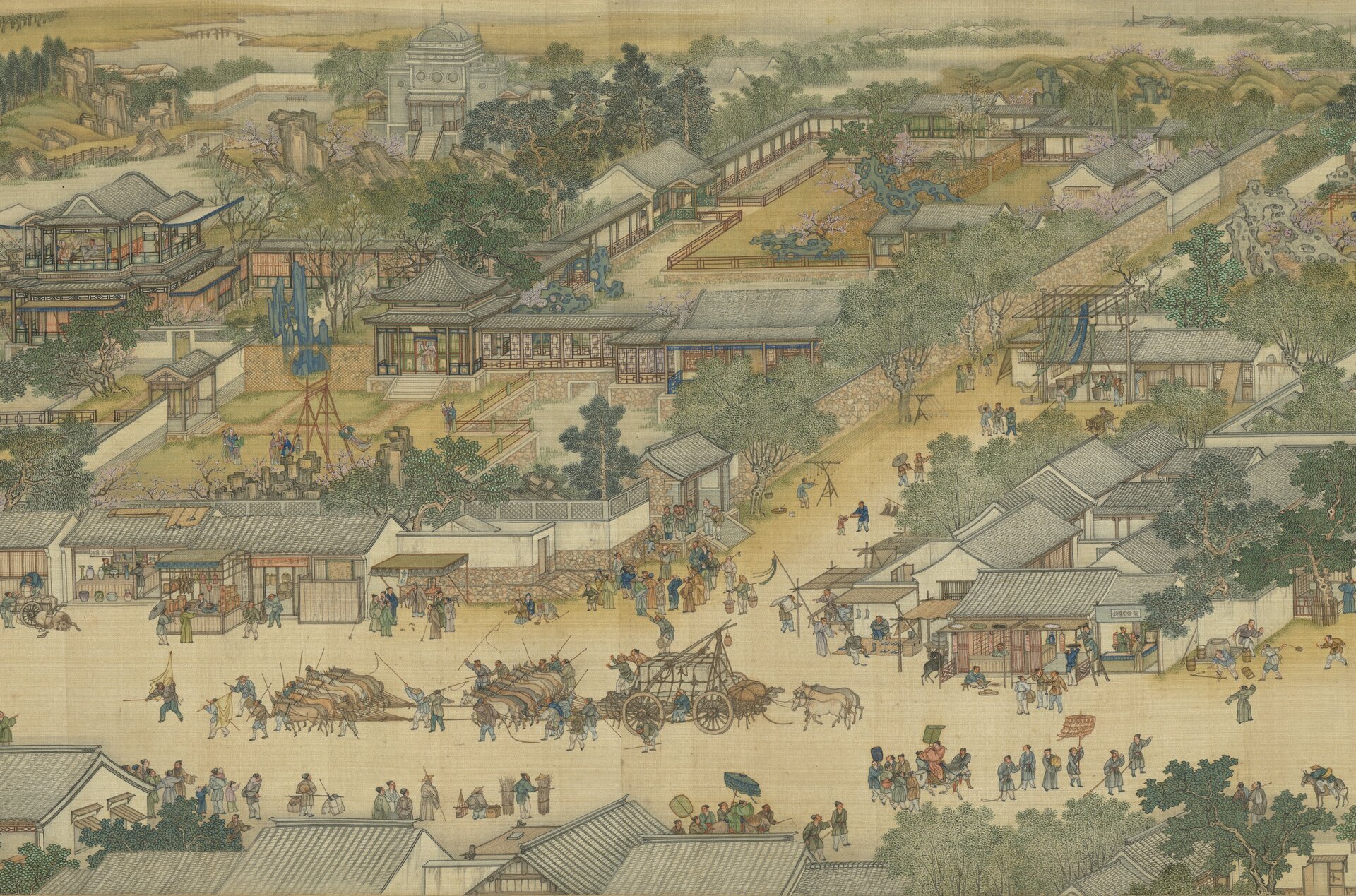
Look at the panoramic painting on silk fabric from the twelfth‑century China. Think how cities in Europe were portrayed between the 11th and 14th centuries.
Rw1AH87GpeY8g
Obraz przedstawiający część "Wersji Qing Court" wzdłuż rzeki podczas święta Qingming. Na rycinie widoczne jest miasto z niską zabudową i ciemnymi spadzistymi dachami. Na ulicach przemieszcza się wielu ludzi i wozów z dobrami. Pomiędzy zabudowaniami posadzone wysokie drzewa.
Part of the "Qing Court Version" along the river during the Qingming festival - an eighteenth-century fragment of the panorama copy from the twelfth century with slightly changed colors and "corrected" some fragments to make the city look richer. The scroll on which the picture was painted is 35 centimeters high and up to 11 meters wide.
Source: Wikimedia Commons, domena publiczna.
R4t8Usbr4WocP
Complete the sentences accordingly. The medieval Chinese city was presented as a {tu uzupełnij} Możliwe odpowiedzi: 1. shopping center, 2. defense center, 3. identical in contemporary Europe, 4. people at work, 5. completely different from the subject of European performances, 6. symbolically, 7. religious center, 8. omitted, 9. priests, 10. warriors, 11. presented in full economic activity. Its rural surroundings were outlined {tu uzupełnij} Możliwe odpowiedzi: 1. shopping center, 2. defense center, 3. identical in contemporary Europe, 4. people at work, 5. completely different from the subject of European performances, 6. symbolically, 7. religious center, 8. omitted, 9. priests, 10. warriors, 11. presented in full economic activity. Details show {tu uzupełnij} Możliwe odpowiedzi: 1. shopping center, 2. defense center, 3. identical in contemporary Europe, 4. people at work, 5. completely different from the subject of European performances, 6. symbolically, 7. religious center, 8. omitted, 9. priests, 10. warriors, 11. presented in full economic activity. This way of showing the world on an expensive work of art was {tu uzupełnij} Możliwe odpowiedzi: 1. shopping center, 2. defense center, 3. identical in contemporary Europe, 4. people at work, 5. completely different from the subject of European performances, 6. symbolically, 7. religious center, 8. omitted, 9. priests, 10. warriors, 11. presented in full economic activity.
Complete the sentences accordingly. The medieval Chinese city was presented as a {tu uzupełnij} Możliwe odpowiedzi: 1. shopping center, 2. defense center, 3. identical in contemporary Europe, 4. people at work, 5. completely different from the subject of European performances, 6. symbolically, 7. religious center, 8. omitted, 9. priests, 10. warriors, 11. presented in full economic activity. Its rural surroundings were outlined {tu uzupełnij} Możliwe odpowiedzi: 1. shopping center, 2. defense center, 3. identical in contemporary Europe, 4. people at work, 5. completely different from the subject of European performances, 6. symbolically, 7. religious center, 8. omitted, 9. priests, 10. warriors, 11. presented in full economic activity. Details show {tu uzupełnij} Możliwe odpowiedzi: 1. shopping center, 2. defense center, 3. identical in contemporary Europe, 4. people at work, 5. completely different from the subject of European performances, 6. symbolically, 7. religious center, 8. omitted, 9. priests, 10. warriors, 11. presented in full economic activity. This way of showing the world on an expensive work of art was {tu uzupełnij} Możliwe odpowiedzi: 1. shopping center, 2. defense center, 3. identical in contemporary Europe, 4. people at work, 5. completely different from the subject of European performances, 6. symbolically, 7. religious center, 8. omitted, 9. priests, 10. warriors, 11. presented in full economic activity.
Complete the sentences accordingly.
completely different from the subject of European performances, identical in contemporary Europe, religious center, shopping center, defense center, presented in full economic activity, priests, omitted, warriors, people at work, symbolically
The medieval Chinese city was presented as a ............................................................................................................................. Its rural surroundings were outlined ............................................................................................................................. Details show ............................................................................................................................. This way of showing the world on an expensive work of art was .............................................................................................................................
Exercise 4
Marco Polo had to travel a long time to reach the easternmost destination from Venice. Based on the sources available to you, tell which city was his final destination?
Marco Polo had to travel a long time to reach the easternmost destination from Venice. Based on the sources available to you, tell which city was his final destination?
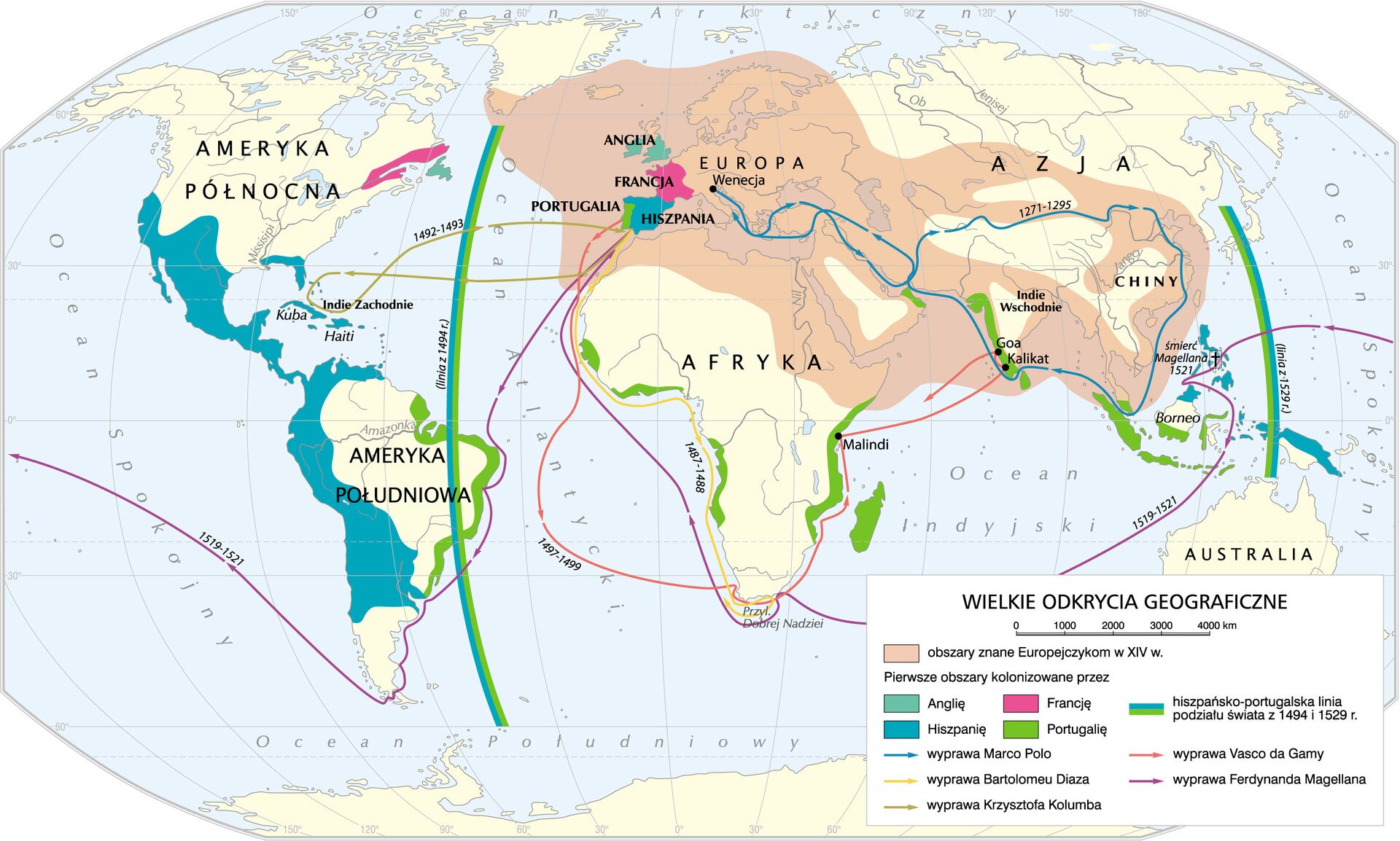
Using modern maps or distance calculators, count how many kilometers – even when measured in a straight line – Marco Polo had to travel to reach the easternmost destination, embarking from Venice. Based on the previous map, tell which city was the final destination.
RmptQp5oZY0TU
Mapa przedstawiająca przebieg wielkich odkryć geograficznych.
The great geographical discoveries
Source: Krystian Chariza i zespół, Wikimedia Commons, licencja: CC BY 3.0.
R1TP6b8BB5a4A
Complete the sentences correctly. The easternmost town in which Marco Polo probably stayed was {tu uzupełnij} Możliwe odpowiedzi: 1. 2000 kilometers (exactly 2789 kilometers), 2. China, 3. 6000 kilometers (exactly 5990 kilometers), 4. 9000 kilometers (exactly 8917 kilometers), 5. Haikou, 6. Dingxi, 7. Asia, 8. Hangzhou, 9. East India in {tu uzupełnij} Możliwe odpowiedzi: 1. 2000 kilometers (exactly 2789 kilometers), 2. China, 3. 6000 kilometers (exactly 5990 kilometers), 4. 9000 kilometers (exactly 8917 kilometers), 5. Haikou, 6. Dingxi, 7. Asia, 8. Hangzhou, 9. East India. Its distance from Venice is about {tu uzupełnij} Możliwe odpowiedzi: 1. 2000 kilometers (exactly 2789 kilometers), 2. China, 3. 6000 kilometers (exactly 5990 kilometers), 4. 9000 kilometers (exactly 8917 kilometers), 5. Haikou, 6. Dingxi, 7. Asia, 8. Hangzhou, 9. East India.
Complete the sentences correctly. The easternmost town in which Marco Polo probably stayed was {tu uzupełnij} Możliwe odpowiedzi: 1. 2000 kilometers (exactly 2789 kilometers), 2. China, 3. 6000 kilometers (exactly 5990 kilometers), 4. 9000 kilometers (exactly 8917 kilometers), 5. Haikou, 6. Dingxi, 7. Asia, 8. Hangzhou, 9. East India in {tu uzupełnij} Możliwe odpowiedzi: 1. 2000 kilometers (exactly 2789 kilometers), 2. China, 3. 6000 kilometers (exactly 5990 kilometers), 4. 9000 kilometers (exactly 8917 kilometers), 5. Haikou, 6. Dingxi, 7. Asia, 8. Hangzhou, 9. East India. Its distance from Venice is about {tu uzupełnij} Możliwe odpowiedzi: 1. 2000 kilometers (exactly 2789 kilometers), 2. China, 3. 6000 kilometers (exactly 5990 kilometers), 4. 9000 kilometers (exactly 8917 kilometers), 5. Haikou, 6. Dingxi, 7. Asia, 8. Hangzhou, 9. East India.
The easternmost town in which Marco Polo probably stayed was .................................................................................. in ................................................................................... Its distance from Venice is about ...................................................................................
Task 1
Refer to the illustration depicting the story of Marco Polo, the Venetian traveler and merchant.
R3ytI6uRD3cdH1
Obraz przedstawiający: Bracia Polo przyjeżdżają do Kublai Chana z darami od papieża Grzegorza X. Dwóch mężczyzn w białych habitach klęka przed postacią na tronie. Ofiarowują jej zdobioną księgę i złoty krzyż. Na ilustracji widnieją dopiski. 1. Niccolo and Matteo Polo, the father and uncle of Marco Polo, came to the khan court probably in 1275 after a journey lasting almost 4 years. It was their second visit to the Mongolian ruler. They were accompanied by Niccolo’s son, the 17-year-old Marco., 2. Niccolo and Matteo in the Kublai Khan palace; they handed over the papal documents received from Gregory X, holy oil from the Holy Sepulcher and numerous other gifts., 3. Grand Khan Kublai was the grandson of Genghis Khan and the first emperor of China in the Yuan dynasty. Thanks to his rule, the Mongol empire was at the height of his power, and after conquering China, he made himself the ruler of the huge empire in 1279., 4. Marco Polo, like his father and uncle, was a Venetian merchant and traveler. His stories of the Middle Kingdom, written by Rusticello of Pisa, full of amazing events, descriptions of battles, nature, magnificent celebrations, palaces and their rulers, became one of the first descriptions of the Far East., 5. In the service of Kublai Khan, Marco Polo had a special position as a trusted emissary of the ruler. Traveling to the furthest corners of the empire, he enforced taxes and collected information for the great khan., 6. Having served in the court of the khan for 17 years, Marco Polo became an important figure. When managing his empire, the Khan often relied on foreigners, mainly Persians and Arabs, not trusting the Chinese people he conquered and the Mongols he led. This was primarily due to concerns for their own safety.
Obraz przedstawiający: Bracia Polo przyjeżdżają do Kublai Chana z darami od papieża Grzegorza X. Dwóch mężczyzn w białych habitach klęka przed postacią na tronie. Ofiarowują jej zdobioną księgę i złoty krzyż. Na ilustracji widnieją dopiski. 1. Niccolo and Matteo Polo, the father and uncle of Marco Polo, came to the khan court probably in 1275 after a journey lasting almost 4 years. It was their second visit to the Mongolian ruler. They were accompanied by Niccolo’s son, the 17-year-old Marco., 2. Niccolo and Matteo in the Kublai Khan palace; they handed over the papal documents received from Gregory X, holy oil from the Holy Sepulcher and numerous other gifts., 3. Grand Khan Kublai was the grandson of Genghis Khan and the first emperor of China in the Yuan dynasty. Thanks to his rule, the Mongol empire was at the height of his power, and after conquering China, he made himself the ruler of the huge empire in 1279., 4. Marco Polo, like his father and uncle, was a Venetian merchant and traveler. His stories of the Middle Kingdom, written by Rusticello of Pisa, full of amazing events, descriptions of battles, nature, magnificent celebrations, palaces and their rulers, became one of the first descriptions of the Far East., 5. In the service of Kublai Khan, Marco Polo had a special position as a trusted emissary of the ruler. Traveling to the furthest corners of the empire, he enforced taxes and collected information for the great khan., 6. Having served in the court of the khan for 17 years, Marco Polo became an important figure. When managing his empire, the Khan often relied on foreigners, mainly Persians and Arabs, not trusting the Chinese people he conquered and the Mongols he led. This was primarily due to concerns for their own safety.
The Polo brothers come to Kublai Khan with gifts from Pope Gregory X
Source: domena publiczna.
Exercise 5
Przypomnij sobie tytuł abstraktu, wysłuchaj nagrania i spróbuj zaproponować własny temat dla dzisiejszej lekcji.
Przypomnij sobie tytuł abstraktu, wysłuchaj nagrania i spróbuj zaproponować własny temat dla dzisiejszej lekcji.
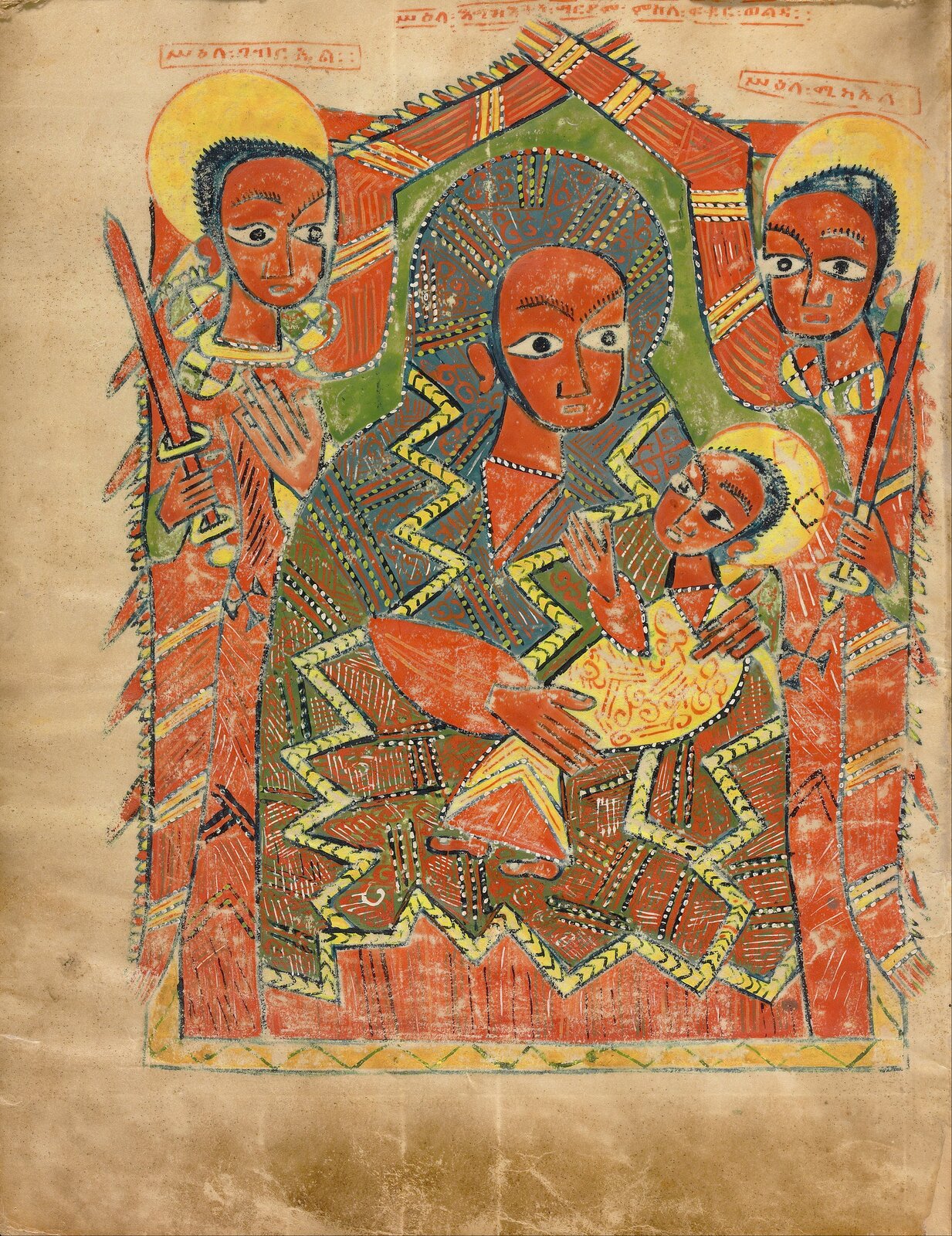
Despite the growing number of Muslims, Christianity in Ethiopia has survived. Reminiscing about the Roman roots of their faith, the Ethiopians often reached for Byzantine patterns in art. However, they have developed their own original style. Look at the illustration and answer the question.
R13RQYS3Thmha
Ilustracja barwna przedstawiająca Madonnę z Dzieciątkiem, Archaniołami Michałem i Gabrielem. Madonna trzyma dzieciątko w ramionach, patrzy na nie. Dzieciątko oczyma wpatrzone w mamę. Po lewej i po prawej stronie Madonny stoją aniołowie trzymając w rękach miecze.
Source: Google Cultural Institute, Wikimedia Commons, licencja: CC 0 1.0.
R14rTDgX1wTI8
Wykonaj zadanie
Wykonaj zadanie
What scene was depicted on it?
the resurrection of Jesus.
Mary with Child and archangels.
The final judgment.
R10tgyxcY3FrS
Exercise 6
Combine the terms with their definitions. the title of the ruler used in many Muslim countries. Initially, it meant the commander-in-chief of the whole caliph. Możliwe odpowiedzi: 1. Chan, 2. Sultan, 3. Emir, 4. Caliph, 5. Emperor, 6. King, 7. Shah the title of the ruler of the empire used in Persia and other Asian countries. Możliwe odpowiedzi: 1. Chan, 2. Sultan, 3. Emir, 4. Caliph, 5. Emperor, 6. King, 7. Shah title of rulers of the former Mongol and Turkish people. Możliwe odpowiedzi: 1. Chan, 2. Sultan, 3. Emir, 4. Caliph, 5. Emperor, 6. King, 7. Shah the title of Muhammad's successors, who are religious and state leaders of Muslims. Możliwe odpowiedzi: 1. Chan, 2. Sultan, 3. Emir, 4. Caliph, 5. Emperor, 6. King, 7. Shah in the Arab state, the provincial administrator appointed by the caliph. Możliwe odpowiedzi: 1. Chan, 2. Sultan, 3. Emir, 4. Caliph, 5. Emperor, 6. King, 7. Shah in medieval Europe, the title of head of all Christian rulers, the patron of the Pope. Możliwe odpowiedzi: 1. Chan, 2. Sultan, 3. Emir, 4. Caliph, 5. Emperor, 6. King, 7. Shah the title of monarch holding the highest authority in the state. It derives from the name of Charlemagne. Możliwe odpowiedzi: 1. Chan, 2. Sultan, 3. Emir, 4. Caliph, 5. Emperor, 6. King, 7. Shah
Combine the terms with their definitions. the title of the ruler used in many Muslim countries. Initially, it meant the commander-in-chief of the whole caliph. Możliwe odpowiedzi: 1. Chan, 2. Sultan, 3. Emir, 4. Caliph, 5. Emperor, 6. King, 7. Shah the title of the ruler of the empire used in Persia and other Asian countries. Możliwe odpowiedzi: 1. Chan, 2. Sultan, 3. Emir, 4. Caliph, 5. Emperor, 6. King, 7. Shah title of rulers of the former Mongol and Turkish people. Możliwe odpowiedzi: 1. Chan, 2. Sultan, 3. Emir, 4. Caliph, 5. Emperor, 6. King, 7. Shah the title of Muhammad's successors, who are religious and state leaders of Muslims. Możliwe odpowiedzi: 1. Chan, 2. Sultan, 3. Emir, 4. Caliph, 5. Emperor, 6. King, 7. Shah in the Arab state, the provincial administrator appointed by the caliph. Możliwe odpowiedzi: 1. Chan, 2. Sultan, 3. Emir, 4. Caliph, 5. Emperor, 6. King, 7. Shah in medieval Europe, the title of head of all Christian rulers, the patron of the Pope. Możliwe odpowiedzi: 1. Chan, 2. Sultan, 3. Emir, 4. Caliph, 5. Emperor, 6. King, 7. Shah the title of monarch holding the highest authority in the state. It derives from the name of Charlemagne. Możliwe odpowiedzi: 1. Chan, 2. Sultan, 3. Emir, 4. Caliph, 5. Emperor, 6. King, 7. Shah
Combine the terms with their definitions.
the title of Muhammad's successors, who are religious and state leaders of Muslims., in the Arab state, the provincial administrator appointed by the caliph., the title of the ruler of the empire used in Persia and other Asian countries., in medieval Europe, the title of head of all Christian rulers, the patron of the Pope., the title of the ruler used in many Muslim countries. Initially, it meant the commander-in-chief of the whole caliph., the title of monarch holding the highest authority in the state. It derives from the name of Charlemagne., title of rulers of the former Mongol and Turkish people.
Jedwabny szlak – szlak handlowy łączący Chiny z Europą. Jego początki sięgają starożytności. Liczył ponad 12 tys. kilometrów i przewożono nim m.in. złoto, perfumy, rośliny uprawne (na wschód) oraz papier, jedwab, żelazo, korzenie (na zachód).
Warny – termin oznaczający stan społeczny w Indiach. Przynależność do warny była dziedziczna. System ten dzielił się na 3 lub 4 warny: stan kapłanów; wojowników kupców i rolników; oraz wyrobników.
Dźati – kasta, część systemu podziału społeczeństwa w Indiach. Przynależność do kasty była ściśle określona i dziedziczona po rodzicach, wiązała się ściśle ze statusem społecznym.