Przeczytaj
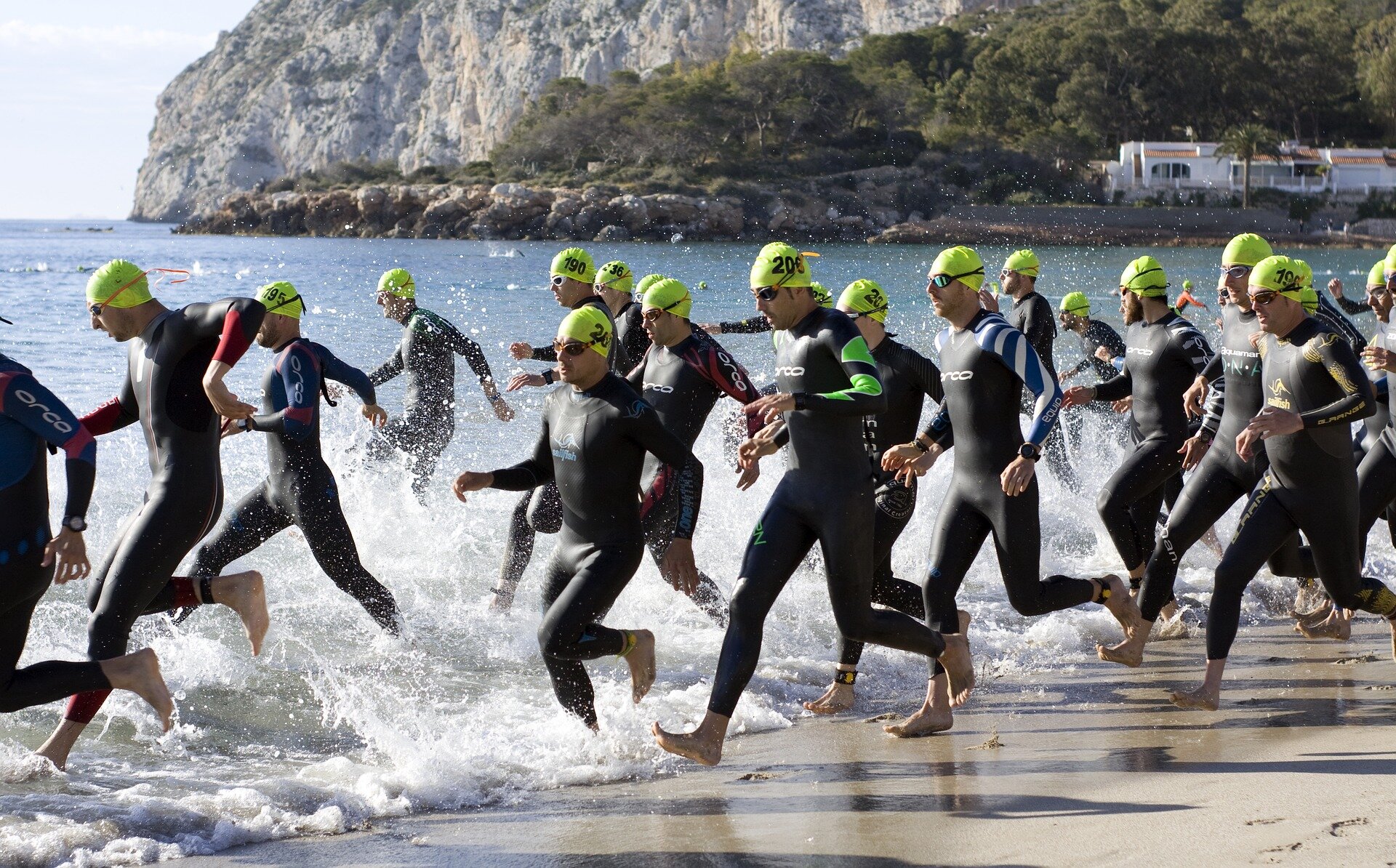
The photograph below presents a group of sportspeople running quickly into the water. They are at the seaside. In the background, there are picturesque cliffs or mountains, green trees, and a white bungalow. The scenery and the sunny weather are inviting. It must be incredible to run in such surroundings. Imagine how incredibly pleasant the water is. Wouldn’t you fancy joining the runners? And what if you could win a prize? Study the material below to learn more about aquathlon and understand the reasons people find it attractive.
Poniższa fotografia przedstawia grupę sportowców wbiegających do wody. Znajdują się oni na brzegu morza. W tle widać malownicze klify lub góry, zielone drzewa oraz biały dom parterowy. Sceneria i słoneczna pogoda zachęcają do zanurzenia się w wodzie – aktywność sportowa w takim otoczeniu na pewno wiąże się z niesamowitymi odczuciami. Wyobraź sobie, jak przyjemna jest woda. Nie chcesz dołączyć do biegaczy ze zdjęcia? Może przekonałaby cię możliwość wygrania nagrody? Zapoznaj się z poniższym materiałem, aby dowiedzieć się więcej o aquathlonie i zrozumieć, dlaczego niektórym ludziom ten sport tak bardzo się podoba.
Drag the names of sports to match them with their translations .
Study the text and do the exercises below.
Would You Fancy Starting In An Aquathlon?Running gives you power and energy and builds your muscles. Swimming makes you stronger, quicker and improves your staminaimproves your stamina. What if these sports are combinedare combined? Then there is an aquathlonaquathlon – a mixture ofmixture of running and swimming, but you need to add a group of other sportspeople trying to overtakeovertake you to understand what it is all about.
___
Aquathlon’s originsorigins are connected with Australia. In the 1950s, this multisportmultisport was practised by lifeguardslifeguards, who needed to be able to run and swim equally well. Later it spread to California, the U.S.A. and gained popularity amonggained popularity among surfers and swimmers. The first official event was heldwas held in 1971 in San Diego.
___
Mainly it’s all about the equipment. TriathlonTriathlon blendsblends three sports – swimming, running, and cycling. Therefore, in order to participate inparticipate in it, you need to have a bike and this can be costly. For many people wanting to take uptake up triathlon such an exorbitant priceexorbitant price can be a serious obstacleserious obstacle. Whereas in the aquathlon, there is no cycling involved, which makes it more approachableapproachable and financially affordableaffordable for beginners.
___
Apart from a warm‑upwarm‑up at the start and a cooldowncooldown at the end, a typical formula mixes a run, followed by a swim and another run. This works especially well if the race takes place in colder months so that sportspeople are better prepared for the coldness of the water. Usually, the race commencescommences with a 2.5 km run, followed by a 1 km swim and again a 2.5 km run. If the water’s temperature is below 22 degrees Celsius, then there is a 1 km swim and a 5 km run.
___
When preparing for your first race, you should take into accounttake into account certain issues. You have to keep a special diet and train for at least a few months before you want to manage to complete the whole race. You might purchasepurchase a tri‑suittri‑suit, a pair of gogglesgoggles and a bottle of water to rinserinse them before the swimming race. Also, contestantscontestants need a pair of running shoes with speed lacesspeed laces which do not have to be tied. At the start, you will usually get a swimming capswimming cap and a timing chiptiming chip.
___
When racing, all sportspeople either start in a massstart in a mass or in wavesin waves, so you should be prepared for potential kicking and pushing – these all may happen to you, though rather aren’t done on purposedone on purpose. However, when a group of motivated people are competingcompeting to win the race, such physical contact is almost inevitableinevitable. After the race, remember to hydratehydrate and consume a meal rich in proteinsproteins, carbohydratescarbohydrates, and healthy fatshealthy fats. Taking an early nightTaking an early night is also recommendedrecommended.
___
Contrary toContrary to triathlon, aquathlon is neither prone toprone to causing injuries nor expensive. Also, with no cycling involved, there is a much lower chance of getting a head injury. Aquathlon races are shorter and the participants don’t need that much time to recoverrecover after a race. This makes an aquathlon race easier to organise and plan and quicker to do.
___
If you are keen on aquathlon, the great news is that you can train in Poland. The annualannual races are organised in Gdynia, Gdańsk, Warsaw, or Wrocław. The youngest contestants are 7 years old and they have to cover the distancecover the distance ofof a 50 m swim and 100 m run. While your peerspeers have to swim 400 m and complete a 2 km run. If this feels like fun for you, check social media websites for future event dates and get down to training!
Źródło: Katarzyna Piotrowska, dostępny w internecie: https://www.triathlon.org/multisports/aquathlon [dostęp 17.08.2023], licencja: CC BY 3.0.
2. 1. Aquathlon in Poland, 2. Aquathlon’s pros, 3. The beginnings of aquathlon, 4. Aquathlon’s cons, 5. Why is triathlon better than aquathlon?, 6. Final stages, 7. Aquathlon versus triathlon, 8. Getting ready, 9. A typical aquathlon race
3. 1. Aquathlon in Poland, 2. Aquathlon’s pros, 3. The beginnings of aquathlon, 4. Aquathlon’s cons, 5. Why is triathlon better than aquathlon?, 6. Final stages, 7. Aquathlon versus triathlon, 8. Getting ready, 9. A typical aquathlon race
4. 1. Aquathlon in Poland, 2. Aquathlon’s pros, 3. The beginnings of aquathlon, 4. Aquathlon’s cons, 5. Why is triathlon better than aquathlon?, 6. Final stages, 7. Aquathlon versus triathlon, 8. Getting ready, 9. A typical aquathlon race
5. 1. Aquathlon in Poland, 2. Aquathlon’s pros, 3. The beginnings of aquathlon, 4. Aquathlon’s cons, 5. Why is triathlon better than aquathlon?, 6. Final stages, 7. Aquathlon versus triathlon, 8. Getting ready, 9. A typical aquathlon race
6. 1. Aquathlon in Poland, 2. Aquathlon’s pros, 3. The beginnings of aquathlon, 4. Aquathlon’s cons, 5. Why is triathlon better than aquathlon?, 6. Final stages, 7. Aquathlon versus triathlon, 8. Getting ready, 9. A typical aquathlon race
7. 1. Aquathlon in Poland, 2. Aquathlon’s pros, 3. The beginnings of aquathlon, 4. Aquathlon’s cons, 5. Why is triathlon better than aquathlon?, 6. Final stages, 7. Aquathlon versus triathlon, 8. Getting ready, 9. A typical aquathlon race
Answer the following questions. Write 3‑4 sentences.
What is an aquathlon?
What equipment do you need to start in aquathlon?
Why is aquathlon easier to do than triathlon?
Słownik
/ˈækwəthetalən /
aquathlon, aquatlon (form of triathlon that includes only swimming and running)
/ əˈfɔːdəbl̩ /
niedrogi/niedroga, w przystępnej cenie (able to be bought by average people)
/ ˈænjuəl /
doroczny/doroczna (something that takes place every year)
/ əˈprəʊtʃəbl̩ /
przystępny/przystępna, kontaktowy/kontaktowa (enjoyable)
/ a: kəmˈbaɪnd / / bi kəmˈbaɪnd /
są połączeni/połączone [być połączonym/połączoną] (be joined)
/ blendz / / blend /
łączy [łączyć], miesza [mieszać] (mix together)
/ ˌkɑːbəˈhaɪdreɪts / / ˌkɑːbəˈhaɪdreɪt /
węglowodany [węglowodan] (main sources of energy for a person’s body which are made up of carbon, hydrogen, and oxygen)
/ kəˈmens /
zacząć, rozpocząć wykonywanie czegoś (start)
/ kəmˈpiːtɪŋ / / kəmˈpiːt /
współzawodniczący/współzawodnicząca [współzawodniczyć] (rival)
/ kənˈtestənts / / kənˈtestənt /
zawodnicy/zawodniczki [zawodnik/zawodniczka] (participant)
/ kənˈtreəri tuː /
przeciwnie do (in opposition to)
/ ˈkuːldaʊn /
ćwiczenia wykonywane po intensywnym treningu mające na celu schłodzenie organizmu i jego wyciszenie (easy exercise after an intensive training which helps the body to gradually go back to its normal state)
/ ˈkʌvər ðə ˈdɪstəns ɒv /
pokonać dystans, pokonać odległość (travel the distance)
/ dʌn ˈɒn ˈpɜːpəs / / du: ˈsʌmthetaɪŋ ˈɒn ˈpɜːpəs /
zrobiony/zrobiona celowo, specjalnie [robić coś celowo, specjalnie] (do sth intentionally)
/ ɪɡˈzɔːbɪtənt praɪs /
niebotyczna, wygórowana cena (excessive money you need to pay for sth)
/ ɡeɪnd ˌpɒpjʊˈlærɪti əˈmʌŋ / / ɡeɪn ˌpɒpjʊˈlærɪti əˈmʌŋ /
zyskał/zyskała na popularności wśród [zyskać na popularności wśród], stał/stała się popularnym/popularną wśród [stać się popularnym/popularną wśród] (become popular among)
/ ˈɡɒɡl̩z /
okulary ochronne, gogle (kind of close‑fitting glasses that protect eyes against water, dust or sun)
/ ˈhelthetai fæts / / ˈhelthetai fæt /
zdrowe tłuszcze [zdrowy tłuszcz] (unsaturated fats also known as good fats)
/ ˈhaɪdreɪt /
nawodnić (drink water to return its levels in a person’s body to normal or to the level it was before)
/ ɪmˈpruːvz jə ˈstæmɪnə / / ɪmˈpruːv ˈsəˌmwənz ˈstæmɪnə /
poprawia twoją wytrzymałość [poprawiać czyjąś wytrzymałość] (develop strength)
/ ɪnˈevɪtəbl̩ /
nieunikniony/nieunikniona, nieuchronny/nieuchronna (something that cannot be avoided)
/ ˈlaɪfɡɑːdz / / ˈlaɪfɡɑːd /
ratownicy wodni/ratowniczki wodne [ratownik wodny/ratowniczka wodna] (water rescuer)
/ ˈmɪkstʃər ɒv /
mieszanka, mieszanina czegoś (combination of different things)
/ ˌmʌltɪˈspɔːt /
dotyczący/dotycząca wielu sportów (concerning many sports)
/ ˈɒrɪdʒɪnz ɒv /
pochodzenie czegoś, źródło (point or place where sth begins)
/ ˌəʊvəˈteɪk /
wyprzedzić, prześcignąć (catch up with sb/sth and pass)
/ pɑːˈtɪsɪpeɪt ɪn /
partycypować w, brać udział w (take part in)
/ pɪəz / / pɪə /
rówieśnicy/rówieśniczki [rówieśnik/rówieśniczka] (person your age)
/ prəʊn tuː /
podatny/podatna na (likely to)
/ ˈprəʊtiːnz / / ˈprəʊtiːn /
proteiny [proteina], białka [białko] (nutrients found in food such as milk, meat, and eggs that are important for muscle building and the immune system)
/ ˈpɜːtʃəs /
zakupić (buy)
/ ˌrekəˈmendɪd /
zalecany/zalecana (advise and suggested as good)
/ rɪˈkʌvə /
dojść do siebie, odzyskać siły, wyzdrowieć (get better)
/ rɪns /
przepłukać, wypłukać (wash lightly in water)
/ ˈsɪərɪəs ˈɒbstəkl̩ /
poważna przeszkoda (thing that blocks the way that must be treated seriously)
/ spi:d ˈleɪsɪz /
elastyczne sznurowadła sportowe, które nie wymagają wiązania (elastic sports laces that do not require tying)
/ stɑːt ɪn ə mæs /
startować w dużej grupie sportowców w tym samym czasie (begin a race or a competition together with other people, at the same time)
/ stɑːt ɪn weɪvz /
startować falowo (participants begin the race in groups instead of starting at the same time)
/ ˈswɪmɪŋ kæp /
czepek pływacki (tight cap that is worn while swimming to keep hair dry)
/ ˈteɪk ˈɪntə əˈkaʊnt /
wziąć pod uwagę (consider)
/ ˈteɪk ˈʌp /
zająć się czymś, zainteresować się czymś (start doing new sports)
/ ˈteɪkɪŋ ən ˌɜ:li naɪt / / ˈteɪk ən ˌɜ:li naɪt /
wczesne pójście spać [iść spać wcześnie] (go to bed early)
/ ˈtaɪmɪŋ tʃɪp /
chip do pomiaru czasu (a small electronic device used for measuring sportspeople’s results)
/ traɪˈæthetalən /
triathlon, trójbój (a sport race in which people swim, ride a bike, and run)
/ trʌɪˌsut /
strój do triathlonu i aquathlonu (set of clothing for triathlon and aquathlon)
/ ˈwɔːmʌp /
rozgrzewka (gentle exercise to prepare you for a match or training)
/ wəz held / / bi held /
odbył/odbyła się [odbywać się] (take place)
Źródło: GroMar Sp. z o.o., licencja: CC BY‑SA 3.0