Do you know that Poland, like you, celebrates its birthday every year? We celebrate them on November 11, in memory of independence. This joyful day should be spent exceptionally.
Exercise 1
Listen carefully to the text „History of Poland in a nutshell.” Pay attention to how long our Fatherland was not present on the world map.
History of Poland in a nutshell
RiXZuuosEembj1
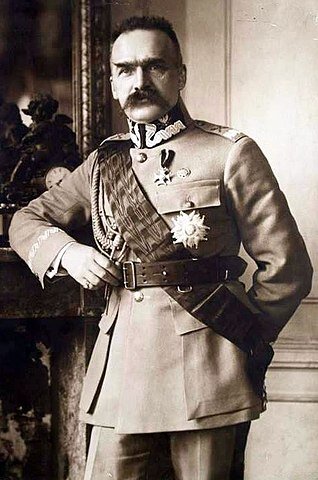
Zdjęcie w kolorze sepii przedstawiające Marszałka Polski, Józefa Piłsudskiego, w ujęciu od kolan. Marszałek ma ciemne, krótkie włosy, krzaczaste brwi i sumiaste wąsy. Ubrany jest w mundur. Do kurtki munduru przepięte są odznaczenia. Szeroka szarfa z prawego ramienia biegnie skośnie do pasa. Częściowo zasłania ozdobny, pleciony sznur naramienny. Marszałek przepasany jest grubym skórzanym pasem.
Józef Piłsudski in 1921
Source: domena publiczna.
The Polish state arises in the 10th century. For thousands of years, the fate of Poland and Poles is different. There are times of magnificence when our country is rich and strong. There are also such when its weakness is used by the neighbours. At the end of the eighteenth century, Russia, Prussia and Austria communicate with each other and forcefully occupy the territory of our Fatherland. Poland ceases to exist. It is not on the mapmapmap of Europe. Schools and offices are forbidden to speak Polish. Poles, however, never accept the loss of their Fatherland and fight against the invadersinvaderinvaders. Tadeusz Kosciuszko leads in the first uprising against the Russians. Henryk Dąbrowski organises Polish legionsPolish legionsPolish legions in Italy. In the 19th century, other armed insurrections, including November and January, break out against the partitioners. However, these actions do not give the desired freedomfreedomfreedom. Such a chance appears only when our occupants argue and start to fight among themselves. Thanks to this, Poland manages to regain independenceto regain independenceto regain independence on November 11, 1918. After 123 years of captivitycaptivitycaptivity, our Fatherland is reborn and returns to the map of Europe. November 11 is celebrated in Poland as the National Independence DayNational Independence DayNational Independence Day.
Exercise 2
Do you know what shape does Poland have in 1918? Tell the others about that.
Do you know what shape does Poland have in 1918? Tell the others about that.
R1EV9q2mN9Zau
Do you know what shape does Poland have in 1918? Tell the others about that.
Do you know what shape does Poland have in 1918? Tell the others about that.
Poland in 1918
Source: domena publiczna.
RVniGw3VRr8KX
Exercise 3
Wymyśl pytanie na kartkówkę związane z tematem abstraktu
Wymyśl pytanie na kartkówkę związane z tematem abstraktu
Read the text and mark in it
using red – names of countries that have enslaved Poland;
using blue – surnames of Poles who made mark in the fight for the freedom of their Fatherland;
using green – the date when Poland regained its independence;
using orange – the name of the holiday celebrated in remembrance of this event.
Historia Polski w telegraficznym skrócie
The Polish state arises in the 10th century. For thousands of years, the fate of Poland and Poles is different. There are times of magnificence when our country is rich and strong. There are also such, when its weakness is used by the neighbours. At the end of the eighteenth century {red}Russia{/red}, {red}Prussia{/red} and {red}Austria{/red} communicate with each other and forcefully occupy the territory of our Fatherland.
Poland ceases to exist. It is not on the map of Europe. Schools and offices are forbidden to speak Polish. Poles, however, never accept the loss of their Fatherland and fight against the invaders. {blue}Tadeusz Kościuszko{/blue} eads in the first uprising against the Russians. {blue}Henryk Dąbrowski{/blue} organises Polish legions in Italy. In the 19th century, other armed insurrections, including November and January, break out against the partitioners. However, these actions do not give the desired freedom.
Such a chance appears only when our occupants argue and start to fight among themselves. Thanks to this, Poland manages to regain independence {green}on November 11, 1918.{/green}After 123 years of captivity, our Fatherland is reborn and returns to the map of Europe. November 11 is celebrated in Poland{orange}as the National Independence day{/orange}
Exercise 4
Answer the questions and follow the instructions:
Why do you think the word „Fatherland” is written in the text with a capital letter?
Find and read the passage that says about the rebirth of Poland.
Imagine that it is 1918. Consider what Poles feel after regaining freedom. How can they behave?
R17oeFEfy5a1U
Exercise 5
Combine dates with the names of holidays celebrated on these days. Holiday: 11 November. Możliwe odpowiedzi: 1. National Independence Day, 2. National Polish Flag’s Day, 3. Mother’s Day, 4. Children’s Day, 5. National Remembrance Day of the Warsaw Uprising, 6. May 3rd Constitution Day, 7. Teacher’s Day, 8. Father’s Day. Holiday: 26 May. Możliwe odpowiedzi: 1. National Independence Day, 2. National Polish Flag’s Day, 3. Mother’s Day, 4. Children’s Day, 5. National Remembrance Day of the Warsaw Uprising, 6. May 3rd Constitution Day, 7. Teacher’s Day, 8. Father’s Day. Holiday: 23 June. Możliwe odpowiedzi: 1. National Independence Day, 2. National Polish Flag’s Day, 3. Mother’s Day, 4. Children’s Day, 5. National Remembrance Day of the Warsaw Uprising, 6. May 3rd Constitution Day, 7. Teacher’s Day, 8. Father’s Day. Holiday: 3 May. Możliwe odpowiedzi: 1. National Independence Day, 2. National Polish Flag’s Day, 3. Mother’s Day, 4. Children’s Day, 5. National Remembrance Day of the Warsaw Uprising, 6. May 3rd Constitution Day, 7. Teacher’s Day, 8. Father’s Day. Holiday: 2 May. Możliwe odpowiedzi: 1. National Independence Day, 2. National Polish Flag’s Day, 3. Mother’s Day, 4. Children’s Day, 5. National Remembrance Day of the Warsaw Uprising, 6. May 3rd Constitution Day, 7. Teacher’s Day, 8. Father’s Day. Holiday: 1 August. Możliwe odpowiedzi: 1. National Independence Day, 2. National Polish Flag’s Day, 3. Mother’s Day, 4. Children’s Day, 5. National Remembrance Day of the Warsaw Uprising, 6. May 3rd Constitution Day, 7. Teacher’s Day, 8. Father’s Day. Holiday: 14 October. Możliwe odpowiedzi: 1. National Independence Day, 2. National Polish Flag’s Day, 3. Mother’s Day, 4. Children’s Day, 5. National Remembrance Day of the Warsaw Uprising, 6. May 3rd Constitution Day, 7. Teacher’s Day, 8. Father’s Day. Holiday: 1 June. Możliwe odpowiedzi: 1. National Independence Day, 2. National Polish Flag’s Day, 3. Mother’s Day, 4. Children’s Day, 5. National Remembrance Day of the Warsaw Uprising, 6. May 3rd Constitution Day, 7. Teacher’s Day, 8. Father’s Day.
Combine dates with the names of holidays celebrated on these days. Holiday: 11 November. Możliwe odpowiedzi: 1. National Independence Day, 2. National Polish Flag’s Day, 3. Mother’s Day, 4. Children’s Day, 5. National Remembrance Day of the Warsaw Uprising, 6. May 3rd Constitution Day, 7. Teacher’s Day, 8. Father’s Day. Holiday: 26 May. Możliwe odpowiedzi: 1. National Independence Day, 2. National Polish Flag’s Day, 3. Mother’s Day, 4. Children’s Day, 5. National Remembrance Day of the Warsaw Uprising, 6. May 3rd Constitution Day, 7. Teacher’s Day, 8. Father’s Day. Holiday: 23 June. Możliwe odpowiedzi: 1. National Independence Day, 2. National Polish Flag’s Day, 3. Mother’s Day, 4. Children’s Day, 5. National Remembrance Day of the Warsaw Uprising, 6. May 3rd Constitution Day, 7. Teacher’s Day, 8. Father’s Day. Holiday: 3 May. Możliwe odpowiedzi: 1. National Independence Day, 2. National Polish Flag’s Day, 3. Mother’s Day, 4. Children’s Day, 5. National Remembrance Day of the Warsaw Uprising, 6. May 3rd Constitution Day, 7. Teacher’s Day, 8. Father’s Day. Holiday: 2 May. Możliwe odpowiedzi: 1. National Independence Day, 2. National Polish Flag’s Day, 3. Mother’s Day, 4. Children’s Day, 5. National Remembrance Day of the Warsaw Uprising, 6. May 3rd Constitution Day, 7. Teacher’s Day, 8. Father’s Day. Holiday: 1 August. Możliwe odpowiedzi: 1. National Independence Day, 2. National Polish Flag’s Day, 3. Mother’s Day, 4. Children’s Day, 5. National Remembrance Day of the Warsaw Uprising, 6. May 3rd Constitution Day, 7. Teacher’s Day, 8. Father’s Day. Holiday: 14 October. Możliwe odpowiedzi: 1. National Independence Day, 2. National Polish Flag’s Day, 3. Mother’s Day, 4. Children’s Day, 5. National Remembrance Day of the Warsaw Uprising, 6. May 3rd Constitution Day, 7. Teacher’s Day, 8. Father’s Day. Holiday: 1 June. Możliwe odpowiedzi: 1. National Independence Day, 2. National Polish Flag’s Day, 3. Mother’s Day, 4. Children’s Day, 5. National Remembrance Day of the Warsaw Uprising, 6. May 3rd Constitution Day, 7. Teacher’s Day, 8. Father’s Day.
Combine dates with the names of holidays celebrated on these days.
National Remembrance Day of the Warsaw Uprising, National Independence Day, National Polish Flag’s Day, Children’s Day, Teacher’s Day, Father’s Day, May 3rd Constitution Day, Mother’s Day
11 November
26 May
23 June
3 May
2 May
1 August
14 October
1 June
R1dcWsyjl58pJ
Exercise 6
Wybierz prawidłową odpowiedź. Which of these holidays are National holidays? Show the correct answer. Możliwe odpowiedzi: 1. National Independence Day, 2. Mother’s Day, 3. Father’s Day, 4. May 3rd Constitution Day, 5. National Polish Flag’s Day, 6. National Remembrance Day of the Warsaw Uprising, 7. Teacher’s Day, 8. Children’s Day
Wybierz prawidłową odpowiedź. Which of these holidays are National holidays? Show the correct answer. Możliwe odpowiedzi: 1. National Independence Day, 2. Mother’s Day, 3. Father’s Day, 4. May 3rd Constitution Day, 5. National Polish Flag’s Day, 6. National Remembrance Day of the Warsaw Uprising, 7. Teacher’s Day, 8. Children’s Day
Which of these holidays are National holidays? Show the correct answer.
National Independence Day
Mother’s Day
Father’s Day
May 3rd Constitution Day
National Polish Flag’s Day
National Remembrance Day of the Warsaw Uprising
Teacher’s Day
Children’s Day
Exercise 7
How do you think modern Polish people should celebrate Independence Day (e.g. baking a cake, making cards)? Provide different suggestions and write them down together. Do not criticise the ideas of others. Choose those proposals that you like best. Maybe some of them will be achieved?
R1PqlkRWz7JZF
Wykonaj ćwiczenie zgodnie z poleceniem.
Wykonaj ćwiczenie zgodnie z poleceniem.
Exercise 8
What are the monuments in your area? Talk about it with the others.
What are the monuments in your area? Talk about it with the others.
In our country, we have many great monuments. Look at some of them. Have you already visited the indicated places?
What are the monuments in your area? Choose one and describe it briefly in the notebook. The following questions will help you:
What is the name of the building described?
Where is it?
When it was built and in what style?
What was its destination and what it is used for now?
R10SQYxwtMwyn
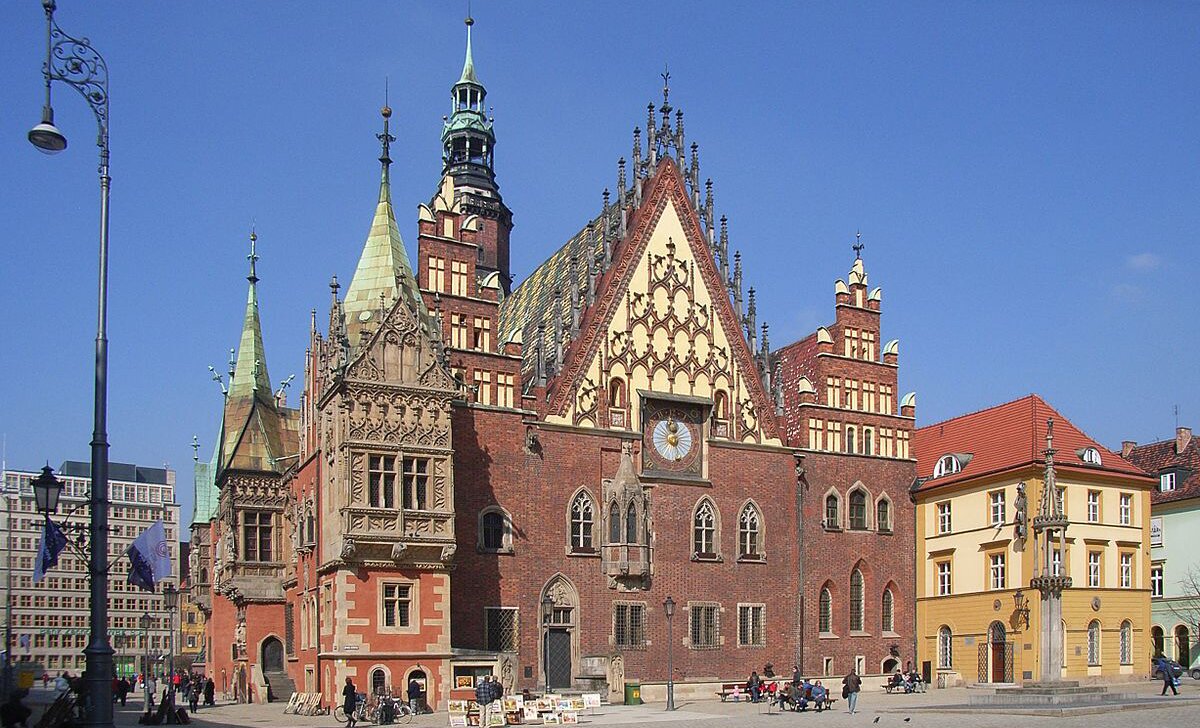
Fotografia barwna przedstawiająca wrocławski ratusz od strony południowo-wschodniej. Wschodnia, główna elewacja ratusza jest ceglana. Znajduje się na niej zegar z 1580 r. Widoczna część elewacji południowej pomalowana jest na rdzawoczerwono. Wystają z niej kamienne, bogato zdobione wykusze, czyli zwieszające się nad ziemią części budynku kryte osobnymi daszkami. Nad dwupiętrową budowlą góruje 66-metrowa wieża. Color photography depicting the Wroclaw Town Hall from the south-east side. The eastern, main elevation of the town hall is brick. There is a clock from 1580 on it. The visible part of the southern façade is painted in rust-red. There are stone, richly ornamented bay windows, which hang over the ground, parts of the building covered with separate roofs. A 66-meter tall tower dominates the two-story building.
Town Hall in Wroclaw. One of the most beautiful town halls in Poland. Its oldest part was built around 1299. Today, the City Museum of Wroclaw is located here. Source: CC BY-SA 3.0, Südstädter.
R13K2vtq39cqm
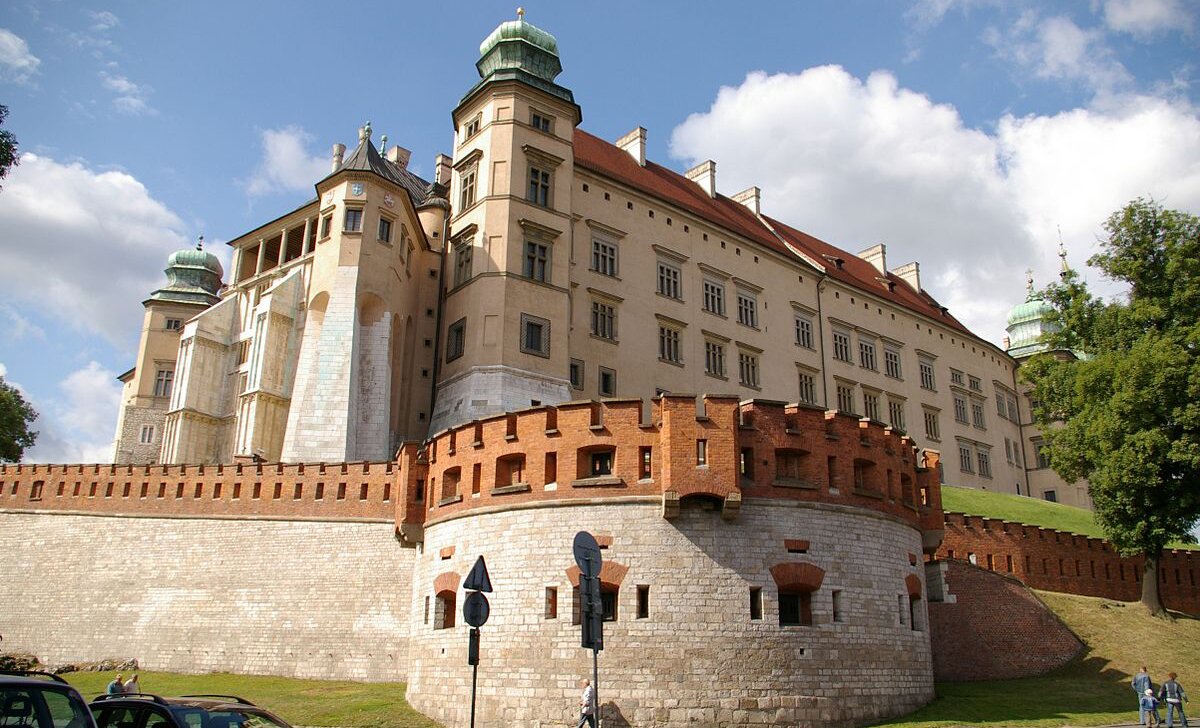
Fotografia barwna przedstawiająca Zamek Królewski na Wawelu od strony północno-wschodniej. W centrum zdjęcia znajduje się narożnik budynku z Wieżą Zygmunta III. Obok niej, po lewej - niższa wieża, zwana Kurzą Stopką. Zamek okala mur obronny. Pod Kurzą Stopką wybrzusza się, przybierając formę półokrągłej bastei - miejsca, z którego strzelano do wroga. Color photograph of the Wawel Royal Castle from the north-east. In the center of the photo there is a corner of the building with the Sigismund III Tower. Next to it, on the left - a lower tower, called the Kurza Foot. The castle is surrounded by a defensive wall. Under the Kurza Foot, it bulges, taking the form of a half-round bastion - the place from which the enemy was fired.
The Wawel Royal Castle in Krakow is located on the Wawel Hill. It is the former seat of Polish kings. You can admire here beautiful arcades and a collection of tapestries. You can also visit the cathedral and the Dragon's Cave. Source: CC BY-SA 3.0, Jakub Hałun.
R1RoOR3wHlwup
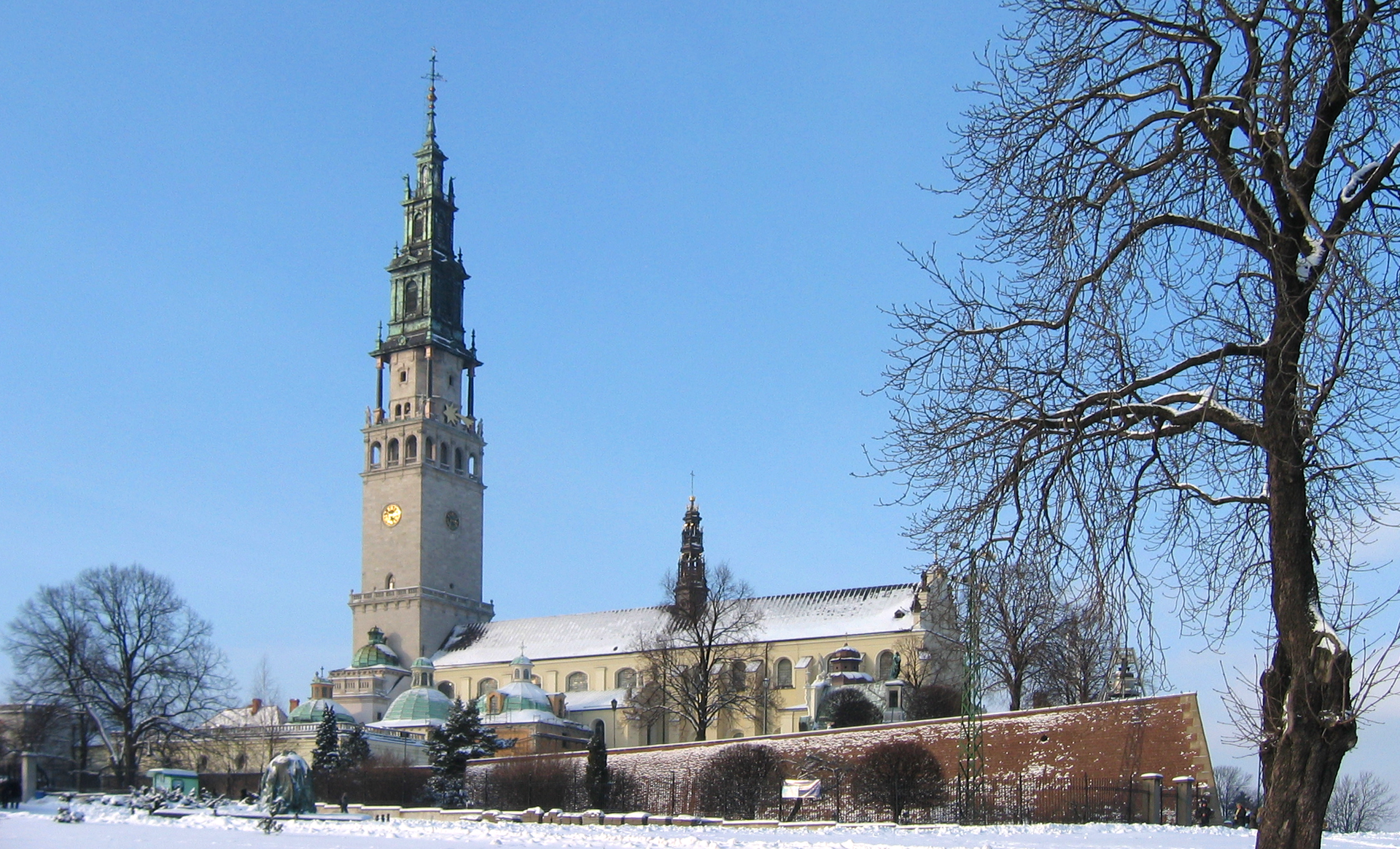
Fotografia barwna przedstawiająca klasztor zakonu paulinów w Częstochowie w zimowej szacie. Po lewej stronie budowli jest strzelista wieża, na jej czubku widać krzyż. Color photography depicting the monastery of the Pauline order in Częstochowa in a winter robe. On the left side of the building there is a towering tower with a cross on its top.
The Jasna Góra monastery in Częstochowa is the most important place of religious worship in Poland and the pilgrimage destination of the faithful from all over the world. In the Jasna Góra Basilica there is a miraculous image of Our Lady of Czestochowa - Queen of the Polish Crown - so called in remembrance of the victorious defense of Jasna Góra against the Swedes in 1655. Source: CC BY-SA 3.0, Maciej Szczepańczyk.
Rnu6geoTDhC6O
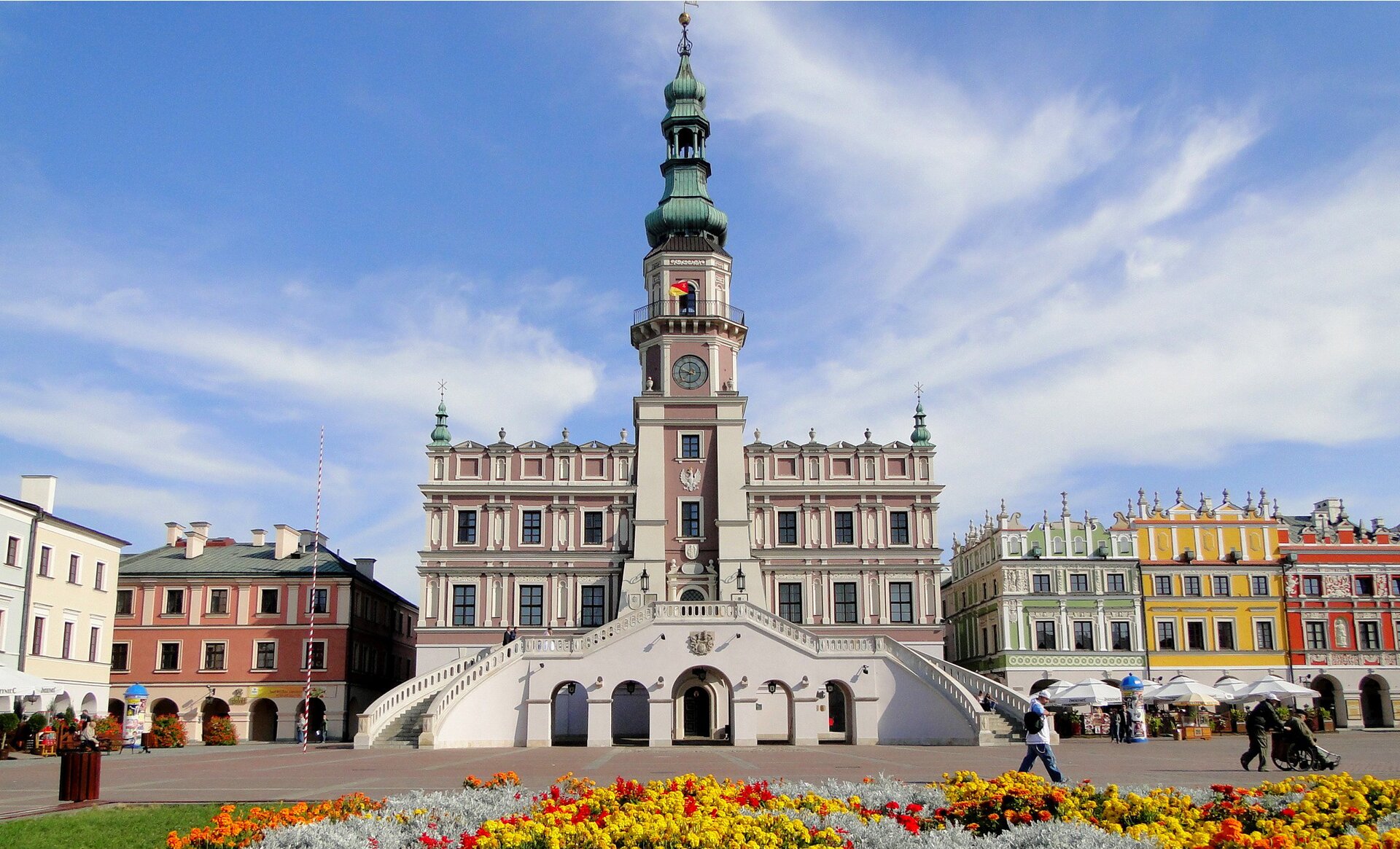
Fotografia barwna prezentująca frontową elewację ratusza w Zamościu. To trzypoziomowy budynek z sześciopiętrową wieżą, na której znajduje się zegar z 1770 r. Wieża zwieńczona jest cebulastym daszkiem, zwanym dachem hełmowym lub po prostu hełmem. Do wejścia ratusza, usytuowanym na drugim poziomie budowli, prowadzą z dwóch stron symetryczne, półkoliste, wachlarzowe schody, wsparte na pięciu arkadach, czyli kolumnach połączonych ze sobą łukiem. Color photography presenting the front elevation of the town hall in Zamość. It is a three-storey building with a six-storey tower, on which there is a clock from 1770. The tower is topped with an onion roof, called a helmeted roof or simply a helmet. To enter the town hall, located on the second level of the building, they lead from two sides symmetrical, semicircular, fan-shaped stairs, supported on five arcades, ie columns connected with each other by an arch.
Town Hall in Zamość. You can admire here a beautiful semi-circular staircase - the only one in Poland. The 52-meter tower offers a magnificent view of the city skyline. From May to September, every midday you can hear the bugle-call played by the trumpeter. Source: CC BY-SA 3.0, Danutar.
RQUyvCq0BRVj9
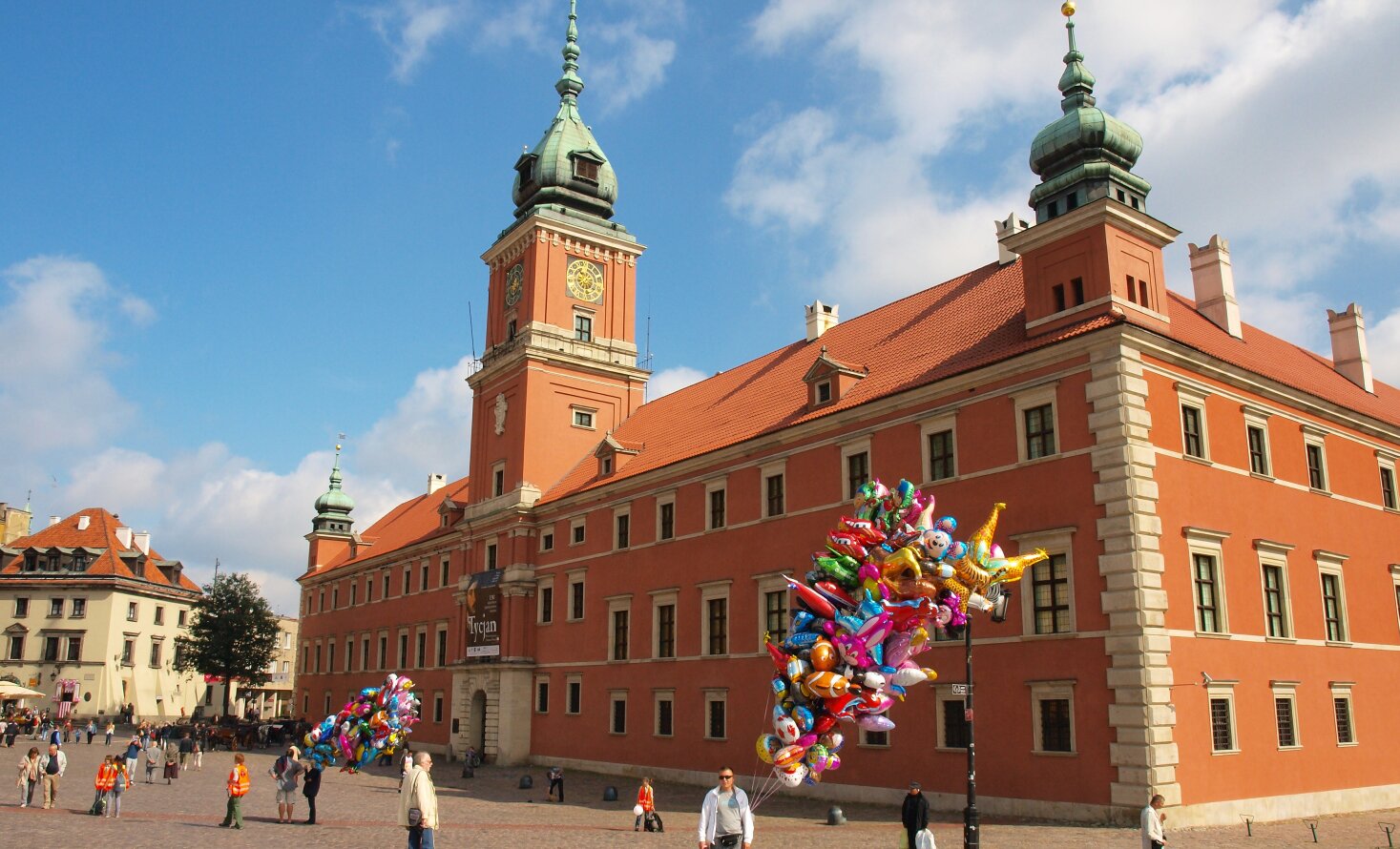
Fotografia barwna prezentująca fasadę warszawskiego Zamku Królewskiego oraz fragment jego elewacji południowej. W centrum frontalnej, zachodniej części zamku znajduje się potężna wieża, zwana Wieżą Zygmuntowską. Ozdobiona okazałym zegarem z pozłacanymi wskazówkami. Pod nią znajduje się główne wejście do zamku. W narożach, po obu stronach, dwie mniejsze wieżyczki. Zamek pomalowany jest na świetlisty, pomarańczowy kolor. Ten okazały, monumentalny, trzypoziomowy budynek mieści się na Placu Zamkowym. Color photography presenting the facade of the Warsaw Royal Castle and a fragment of its southern façade. In the center of the front, west part of the castle there is a huge tower, called the Sigismund Tower. Decorated with a stately clock with gold-plated tips. Below it is the main entrance to the castle. In the corners, on both sides, two smaller turrets. The castle is painted in a bright orange color. This impressive, monumental, three-level building is located on Castle Square.
The Royal Castle in Warsaw is the former residence of the prince, and from the sixteenth century, the seat of the king and the Sejm of the First Polish Republic. This is where the Constitution of May 3 was proclamed. Today, there is a museum here. It is also a place of celebrations and state meetings. Source: CC BY-SA 3.0, Wiktor Baron.
R1G6VCguujku8
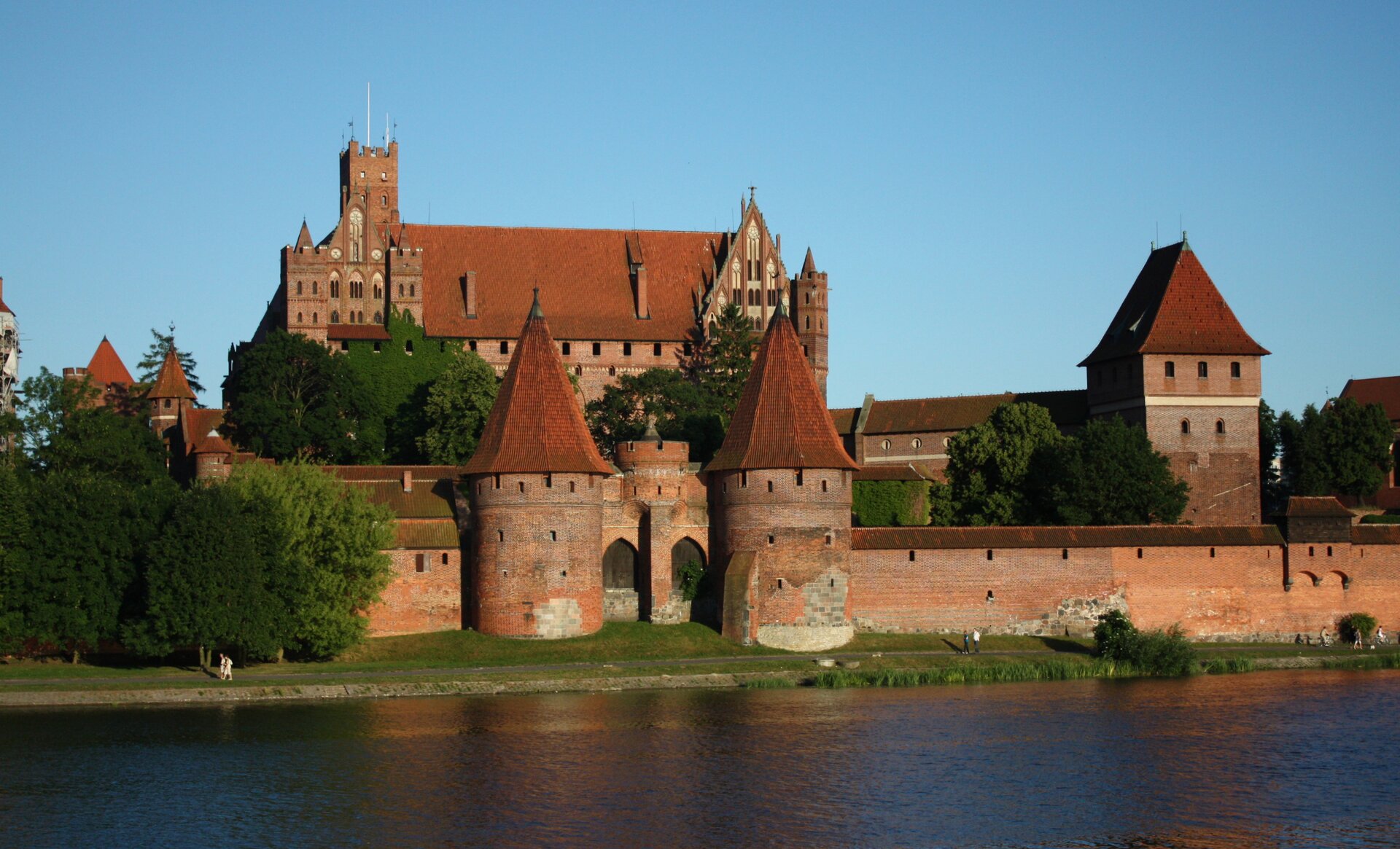
Fotografia barwna przedstawiająca Zamek w Malborku od strony Nogatu - rzeki stanowiącej wschodnie ramię ujściowe Wisły. Color photography depicting the Malbork Castle from the side of the Nogat River - the river constituting the eastern Vistula estuary.
The Teutonic castle in Malbork is a medieval fortress. It is the world's largest brick building built by human hands: it occupies as much space as 30 football fields! Currently, in this castle-museum knights' tournaments and battle staging are held. Source: CC BY-SA 3.0, Ludwig Schneider.
RJBdqnXfQHKwc
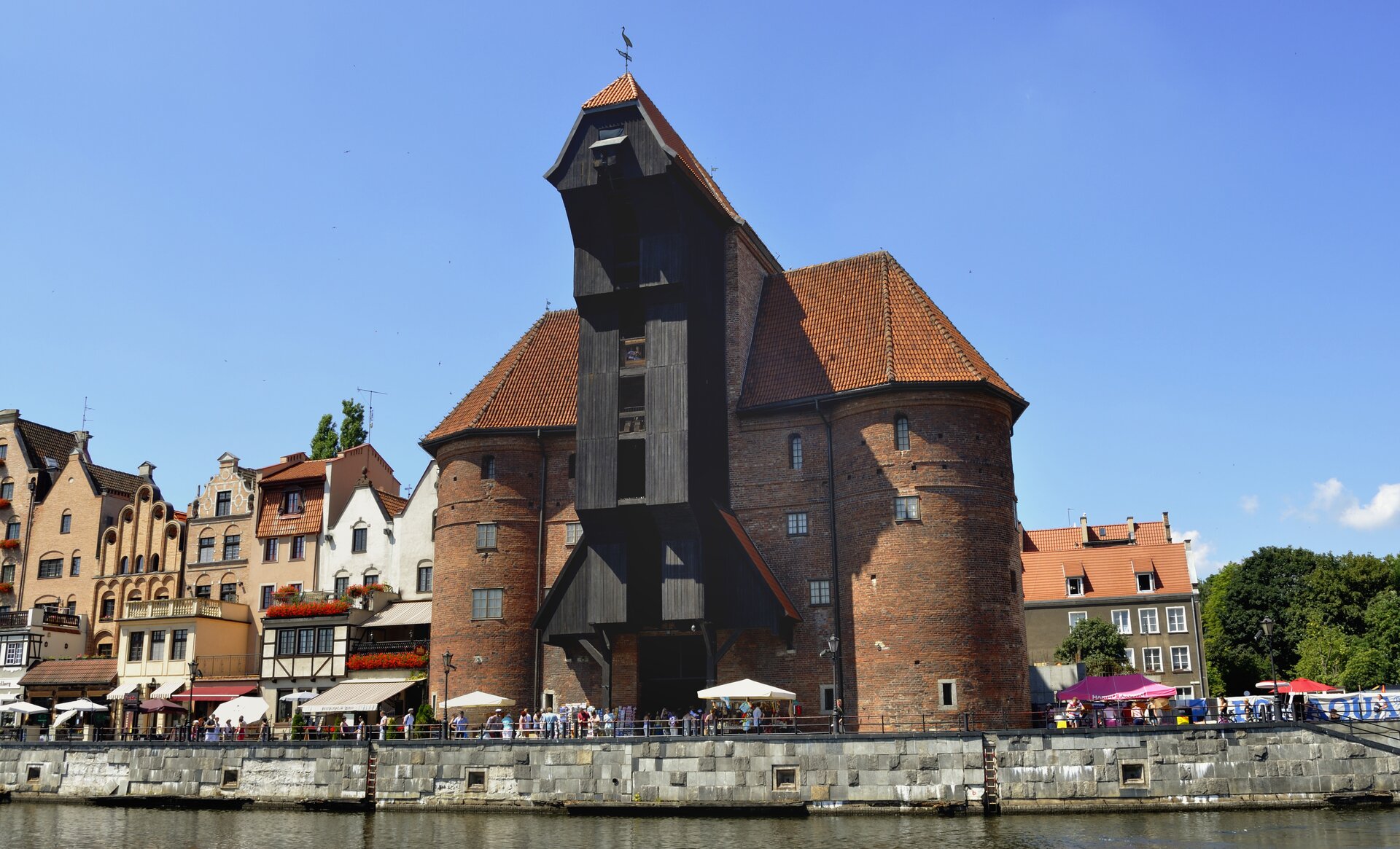
Fotografia barwna przedstawiająca gdański Żuraw od strony rzeki Motławy. Budynek ma około 30 m wysokości i 4 kondygnacje. Jego bryłę tworzą dwie masywne, okrągłe, ceglane baszty połączone mechanizmem dźwigowym. Jest on obudowany czarnym drewnem, wsparty na dwóch drewnianych filarach. Color photograph of the Gdańsk Crane from the Motława River. The building is about 30 m high and has 4 floors. Its mass consists of two massive, round, brick towers joined by a crane mechanism. It is enclosed in black wood, supported on two wooden pillars.
The port crane in Gdansk is the oldest in Europe, it was built in fifteenth-century, setting in ... a city gate. In the fifteenth century, the crane loaded goods on ships and put masts, today it is a part of the National Maritime Museum. Source: CC BY-SA 3.0, DerHexer.
R1NFDZiuwMcY2
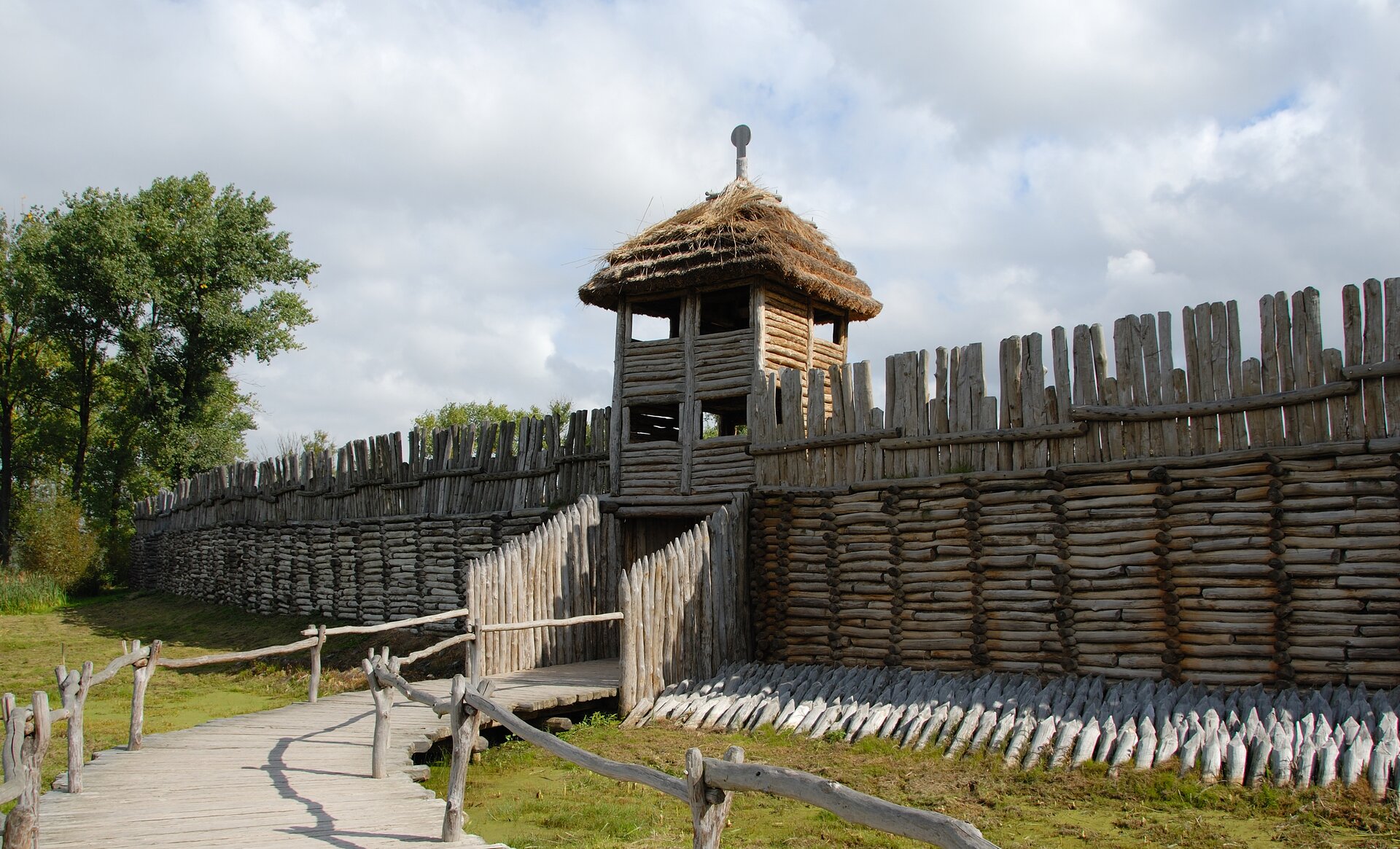
Fotografia barwna przedstawiająca drewnianą bramę zrekonstruowanej osady w Biskupinie. Color photography depicting the wooden gate of the reconstructed settlement in Biskupin.
The settlement in Biskupin is the seat of the pra-Slavs from the eighth century BC. Today we can visit here a reconstruction of the old settlement: rows of wooden houses covered with a common roof, wood-lined streets. Biskupin is an important archaeological site in Poland. Source: CC BY-SA 2.0, Tomcio77.
RxprA4N0oNNhG
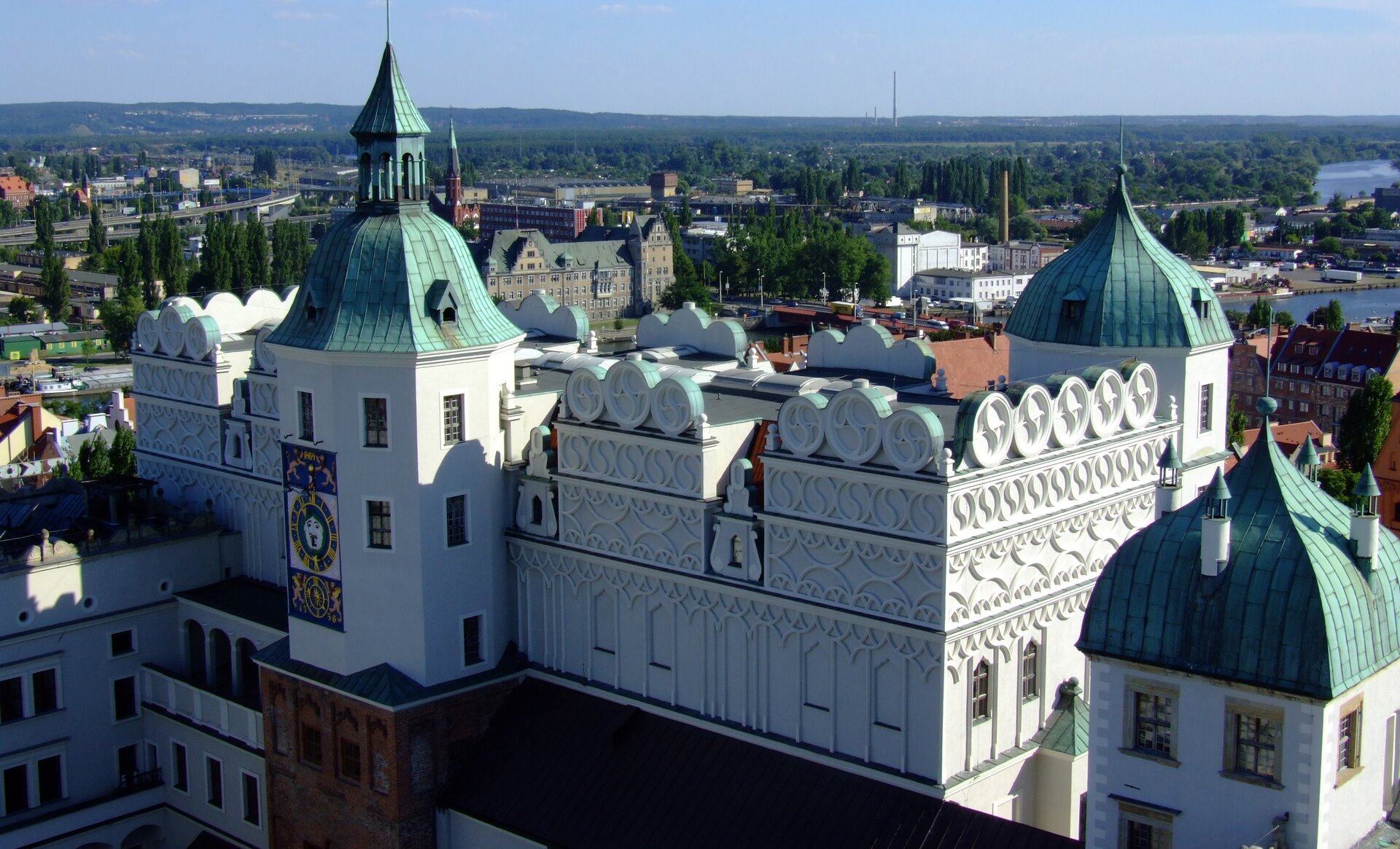
Fotografia barwna przedstawiająca południowe skrzydło Zamku Książąt Pomorskich w Szczecinie. Color photograph depicting the southern wing of the Pomeranian Dukes' Castle in Szczecin.
The Pomeranian Dukes' Castle in Szczecin is located on the Oder. Until the 16th century it was the seat of the Gryfit family, princes of Pomerania. Today, here is the cultural center for Szczecin and the whole region. On the tower of the castle you can observe the Foucault pendulum - experimental evidence of the Earth's rotation. Source: CC BY-SA 2.0, Dr benway.
R1KKRxasfiJdt1
Grafika przedstawiająca tablicę szkolną, na której znajdują się zdania do dokończenia. How was this lesson? Did you like it? Finish selected sentences: It was easy for me (uzupełnij).
It was difficult for me (uzupełnij)
Today I learned (uzupełnij).
I understood that (uzupełnij)
It surprised me (uzupełnij)
Grafika przedstawiająca tablicę szkolną, na której znajdują się zdania do dokończenia. How was this lesson? Did you like it? Finish selected sentences: It was easy for me (uzupełnij).
It was difficult for me (uzupełnij)
Today I learned (uzupełnij).
I understood that (uzupełnij)
It surprised me (uzupełnij)
How was this lesson? Did you like it? Finish selected sentences.