Przeczytaj
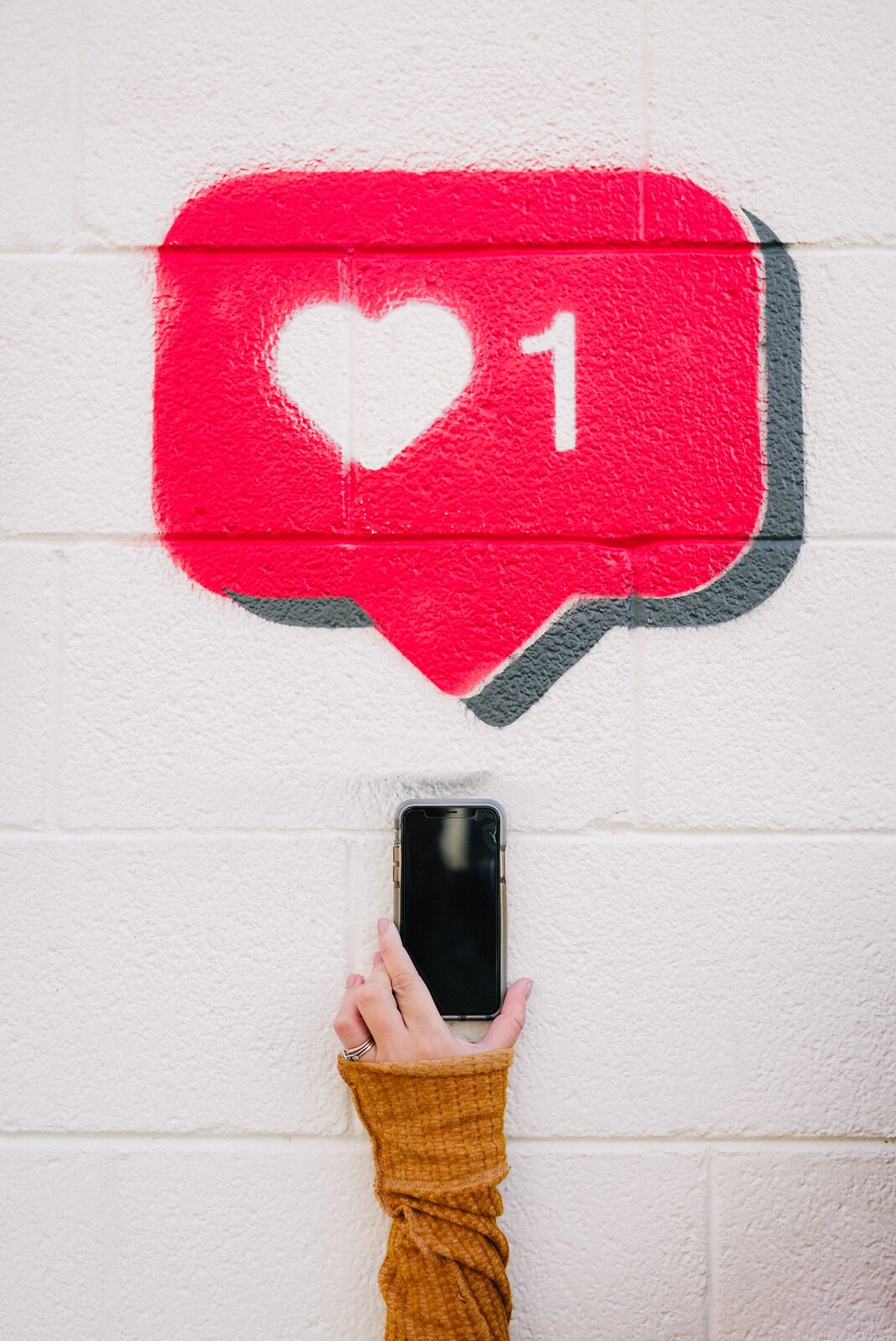
The picture below shows a sign representing a “like” you can give or receive on social media. What do you think of this practice? What do people do to get as many likes as possible? In this section you are going to read a text about the impact social media has on us and how to deal with it. Before you read it, think: could you live without social media?
Fotografia przedstawia znaczek reprezentujący „lajka”, którego możesz dać lub dostać za posty w mediach społecznościowych. Co o tym sądzisz? Co robią ludzie, żeby otrzymać jak najwięcej „lajków”? W tej sekcji przeczytasz tekst na temat tego, jak wpływają na nas media społecznościowe oraz jak możemy sobie z tym radzić. Zanim przeczytasz, zastanów się: czy mógłbyś/mogłabyś żyć bez mediów społecznościowych?
Look at the illustration below and choose the correct answers. There is only one correct answer in each point.
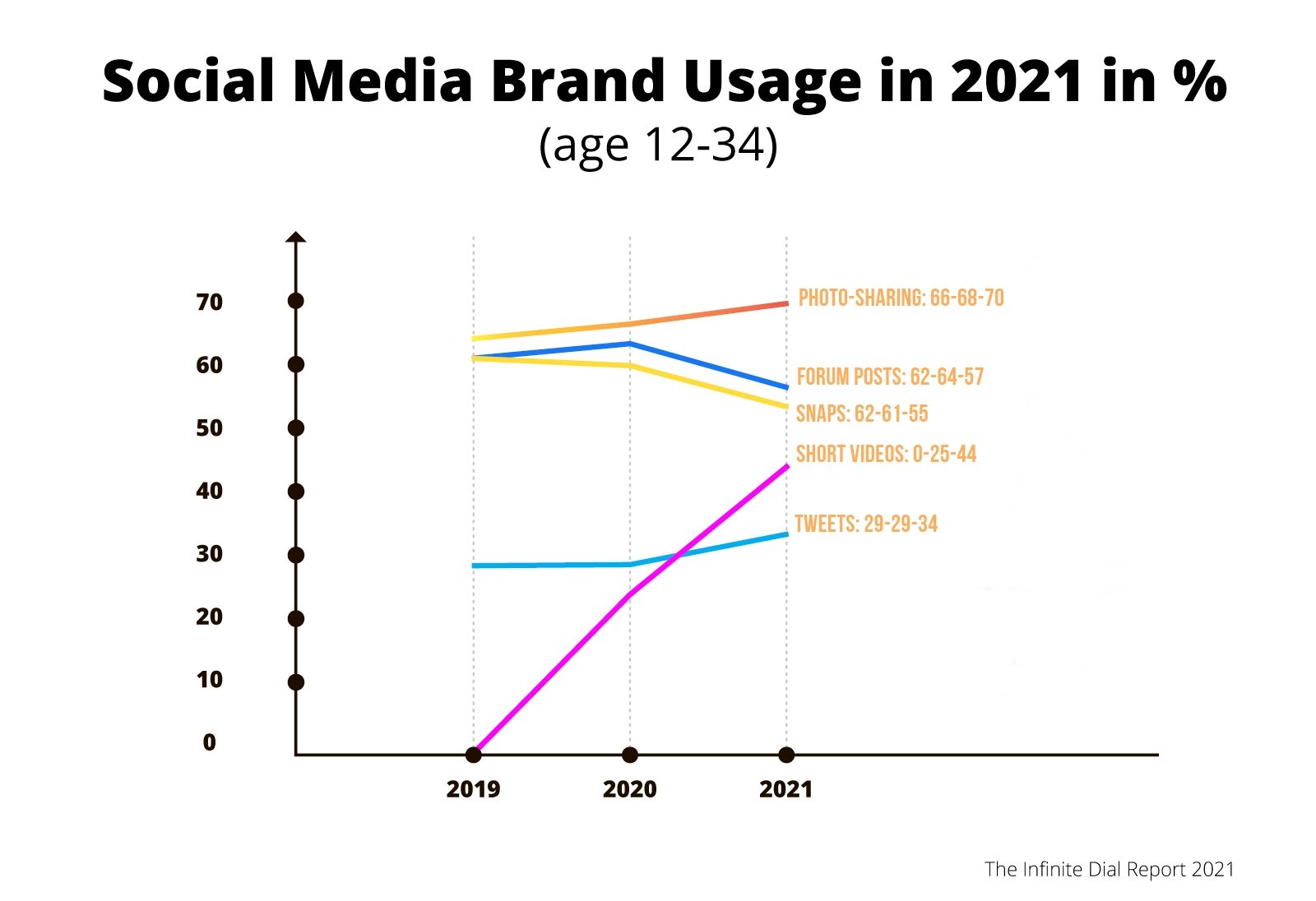
Study the text below then choose the correct answer.
The study shows the social media brand usage among people at the age of 12‑34. Short videos became popular in 2020. In 2020 25% of the 12–34‑year‑olds used this type of social media, whereas in 2021 it was 44%. When it comes to tweets, in 2019 and 2020 29% of people at the age of 12‑34 used them. However, in 2021 it was 34%. In 2019 snaps were used by 62% of people. In 2020 61% used snaps, whereas in 2021 it was only 55%. In 2019 social media such as forum posts were chosen by 62% of people at the age of 12‑34, in 2020 by 64%, and in 2021 it was 57%. The last social media type is photo sharing. In 2019 66% of people decided to choose this kind of social media, in 2020 it was 68%, whereas in 2021 it got the attention of 70% of people at the age of 12‑34.
- The chart shows
a) an increase of all aspects of social media use over a period of three years.
b) a constant rise in the percentage of social media users over a period of three years.
c) how people’s use of social media changed over a period of three years.
- What you can notice is that
a) one particular aspect has almost doubled in popularity within a year.
b) there has been a significant increase in posting photos.
c) the interest in discussion on forums has dramatically dropped.
- What conclusion can be drawn from the data?
a) More people used social media for expressing their opinions in 2021 than in 2019.
b) All aspects of social media use presented noted a decrease at some moment.
c) Only one aspect has noted a dramatic rise over the three-year period.
Read the text and do the exercises below.
Is Social Media Good for Us?Whether you love it, hate it or just accept it, there is no doubt that social media has become part of our lives, especially for teens. A 2021 Pew Research Center survey found that a majority of young users of the most popular platforms say they visit these sites on a daily basis. When they hashtaghashtag their posts, scroll through the main feedfeed on a platform, or click on a link without realising it is clickbaitclickbait, do they ever think about how social media affects them? When asked, 81% of teenagers felt it has a positive effect on their lives.
Social media gives us an opportunity to create identities, to keep in touch with friends and to build social networks. These networks are especially important, as they can provideprovide you withwith much‑needed support, especially those of us who experience exclusionexclusion, or have disabilities or chronic illnesses. It is also a great place for self‑expression, for example in a blogosphereblogosphere, where people can write about any subject they are interested in and find like‑mindedlike‑minded readers to share experiences with. You may use social media to run a moblogmoblog from your cell, or document the events from your life in the form of lifecastinglifecasting, allowing viewers to comment and chat with each other while they are watching your video streamvideo stream.
Social media can also have positive effects on body image and can promote body positivitybody positivity. Viewing body‑positive content on social media platforms can help individuals become more accepting and appreciative ofappreciative of their bodies, and seeing other people having similar body imperfections as you may help you regain confidence. What is especially valuable, you can join a body‑accepting community whose members will give you support and advice.
However, social media use can also have a negative effect, especially on young people, as it disruptsdisrupts their sleep, distracts them from studying, and exposes them to peer pressurepeer pressure and unrealisticunrealistic views of other people’s lives. They think that others are having more fun and are living better lives so they develop the so‑called FOMOFOMO, the fear of missing out on certain things. Also, due to their impulsive nature, teens who publish content on social media are at risk of sharing intimate photos or highly personal stories, thus they may become a target of phishingphishing, when they are tricked into handing over sensitive information or installing malwaremalware. Sometimes what they publish goes viralgoes viral and may become the cause of embarrassment. What is worse, social media can breed toxic behaviourbreed toxic behaviour. Thanks to anonymity and distance afforded by the online environment, a lot of people begin to act in a way totally different from their face‑to‑face interactions, for example they blatantly lieblatantly lie about their lives, or distort the truthdistort the truth. Some of them engage in risky behaviour such as cyberbullyingcyberbullying, rumour spreading, cyberstalkingcyberstalking, or trollingtrolling in order to gain likes, shares or positive reactions on their social media.
Studies have also shown a correlationcorrelation between time spent on social media and a negative body image. Even if teens know that the content they are viewing is manipulated, it still makes them feel insecure about how they look or what is going on in their life. This leads to problems with self‑esteemself‑esteem, especially in teenage girls. They are bombarded with their friends posting the most perfect pictures of themselves, or they are following celebrities or influencers who use filters, do a lot of photoshopping and have their makeup and hair teams. It may raise doubts about self‑worthself‑worth, potentially leading to mental health issues such as anxietyanxiety, eating disorderseating disorders or depression.
What you can do to reduce these risks is use social media in moderationin moderation and not allow yourself to become its slaveslave. Use it as part of a lifestyle which also includes activities such as exercise, sleep or spending time with friends in real life. Do something creative and engaging, invest in good friendships and try to find a way to contributecontribute to the lives of others, for example through voluntary work, which will give you a sense of purpose, relieverelieve stress and will combatcombat loneliness.
Źródło: Agnieszka Sękiewicz‑Magoń , licencja: CC BY-SA 3.0.
Social media jako rzeczownik zbiorowy (collective nouns)
Rzeczowniki zbiorowe to takie, które określają grupę (osób, zwierząt lub rzeczy). Możemy łączyć je z czasownikiem w liczbie pojedynczej lub mnogiej, w zależności od tego, czy odnosimy się grupy jako do jednej całości, czy też jako do zbioru indywidualnych jednostek. Do rzeczowników zbiorowych należą:
family – rodzina
company – firma
team – zespół
crew – załoga
(social) media – media (społecznościowe)
data – dane
Przykłady:
My team is really helpful. – Mój zespół jest naprawdę pomocny. (jako całość)
My team are working hard at the moment. – Mój zespół ciężko teraz pracuje. (każda osoba w zespole)
Social media is attracting much attention from linguists. – Media społecznościowe przykuwają uwagę językoznawców. (jako ogólna idea)
Social media play an important role in our lives. – Media społecznościowe odgrywają ważną rolę w naszym życiu. (różne platformy)
- According to the text, social media may be helpful when you feel you are being deliberately excluded.
True False
- The text suggests that it’s rare on social media to connect with people who are interested in the same things as you.
True False
- The text mentions only activities which involve writing about your life on social media.
True False
- The author says that social media can only increase fears about your appearance.
True False
- FOMO is explained in the text as being afraid that you will miss people and things.
True False
- The text claims that people always lie about their lives on social media.
True False
- According to the text, some people develop toxic behaviour because they want to gain popularity.
True False
- The text warns that following influencers will cause depression and other mental issues.
True False
- The advice given in the last paragraph is that you should stop using social media if you don’t want to be negatively affected by it.
True False
- The text was written to present both the positive and negative influence that social media has on us.
True False
Finish the sentences so that they are true for you.
In my opinion, the most dangerous type of toxic behaviour on social media is…
The toxic behaviour I (or someone I know) have experienced on social media was…
If I witnessed some toxic behaviour on social media, such as…, I would…
Answer the questions below in 2–3 sentences.
How do social media affect you?
What can you do not to get addicted to comments on your social media?
What can you do to make the risks created by social media less serious?
What negative effect do social media have on you?
What opportunities do social media give you?
Słownik
/ ˈeəbrʌʃt /
retuszowany (having had imperfections and blemishes removed through digital manipulation)
/ æŋˈzaɪəti /
niepokój (a worried feeling you have because you think something bad might happen)
/ əˈpriːʃiətɪv ɒv /
wdzięczny za (showing that you are grateful or that you enjoyed something)
/ ˈbleɪtntli laɪ /
bezczelnie kłamią [bezczelnie kłamać] (lie in an open and unashamed manner)
/ ˈblɒɡəsfɪə(r) /
blogosfera (the imaginary place on the Internet where people’s blogs go so that other people can read them and react to them)
/ ˈbɒdi ˌpɒzəˈtɪvəti /
ciałopozytywność (ruch promujący akceptowanie swojego ciała) (the fact of feeling good about your body and the way it looks)
/ briːd ˈtɒksɪk bɪˈheɪvjə /
rodzić, powodować toksyczne zachowania (to make negative feelings or situations develop)
/ ˈklɪkbeɪt /
nagłówek, którego celem jest skłonienie do kliknięcia w określony link (something (such as a headline) designed to make readers want to click on a hyperlink especially when the link leads to content of little value or interest)
/ ˈkɒmbæt /
zwalczyć (to do something in order to try to stop something bad from happening or a bad situation from becoming worse)
/ kənˈtrɪbjuːt /
wnieść wkład, poprawić (to be a part of a group or an activity and help it to be successful)
/ ˌkɒrəˈleɪʃn̩ /
związek, korelacja (the process of making connections between two or more things)
/ ˈsaɪbəbʊliɪŋ /
cyberprzemoc, cybernękanie (acts in cyberspace intended to make life unpleasant for another person)
/ ˈsaɪbəstɔːkɪŋ /
cyberprześladowanie, śledzenie osób za pomocą internetu (the use of the Internet to follow and watch someone in a threatening way)
/ dɪˈlɪbərətli /
celowo (with a definite intention, not by chance or by accident)
/ dɪsˈrʌpts / / dɪsˈrʌpt /
zakłóca, przeszkadza [zakłócać, przeszkadzać] (to interrupt something and prevent it from continuing by creating a problem)
/ dɪˈstɔːt ðə truːtheta /
zniekształcają prawdę [zniekształcać prawdę] (to change something such as information so that it is no longer true or accurate)
/ ˈi:tɪŋ dɪsˈɔːdəz / / ˈi:tɪŋ dɪsˈɔːdə /
zaburzenia odżywiania [zaburzenie odżywiania] (any of a range of mental conditions in which there is a persistent disturbance of eating behaviour and impairment of physical or mental health)
/ ɪkˈskluːʒn̩ /
wykluczenie (a situation in which someone is deliberately prevented from being involved in an activity or from entering a place)
/ fiːd /
aktualności(na stronie internetowej) (a feature allowing web users to receive news headlines and updates on their browser from a website as soon as they are published)
/ ˈfəʊməʊ / / fɪər əv ˈmɪsɪŋ ˈaʊt /
strach przed pominięciem, wykluczeniem z życia towarzyskiego (fear of not being included in something (such as an interesting or enjoyable activity) that others are experiencing)
/ ˈɡəʊz ˈvaɪrəl / / ˈɡəʊ ˈvaɪrəl /
zyskuje wielką popularność, idzie w świat [zyskiwać wielką popularność] (to spread quickly and widely on the internet through social media and email)
/ ˈhærəsmənt /
prześladowanie, dokuczanie (annoying or unpleasant behavior toward someone that takes place regularly, for example threats, offensive remarks, or physical attacks)
/ ˈhæʃtæɡ /
oznaczają zawartość [oznaczać zawartość] (to label (a message) with a hashtag)
/ ˈɪnfluənsəz / / ˈɪnfluənsə /
opiniotwórcy, influencerzy [opiniotwórca, influencer] (a person who is able to influence consumption, lifestyle, or political preferences of their online audience by creating engaging social media content, often as part of a marketing campaign)
/ ɪn ˌmɒdəˈreɪʃn̩ /
z umiarem (in a way that is reasonable and not excessive)
/ ˈlaɪfkɑːstɪŋ /
nadawanie relacji ze swojego życia na żywo (broadcasting real‑time, live video footage or video feed to an audience accessing the video stream over the Internet)
/ ˌlaɪk ˈmaɪndɪd /
o podobnych upodobaniach (having similar tastes, interests, and opinions)
/ ˈmælweə(r) /
złośliwe oprogramowanie (software such as a virus that is designed to damage or destroy information on a computer)
/ ˈmɒblɒɡ /
blog prowadzony z telefonu komórkowego (a weblog posted from a mobile device, such as a cell phone)
/ pɪə ˈpreʃə /
nacisk ze strony rówieśników (influence from members of one’s peer group)
/ ˈfɪʃɪŋ /
wyłudzanie poufnych informacji osobistych przez podszywanie się pod instytucję lub jakąś osobę (the practice of trying to trick someone into giving their secret information, e.g. bank details, by sending them an email that looks as if it comes from their bank or other institution and that asks them to give their account number or password)
/ prəˈvaɪd wɪð /
dostarczają [dostarczać] (to give or supply one with something for their use or benefit)
/ rɪˈliːv /
zmniejszy, rozładuje [zmniejszyć, rozładować] (to make pain or stress less unpleasant)
/ self ɪˈstiːm /
poczucie własnej wartości (the feeling that you are as important as other people and that you deserve to be respected and treated well)
/ self wɜːtheta /
poczucie własnej wartości (the feeling that you are as important as other people and that you deserve to be respected and treated well)
/ sɪɡˈnɪfɪkənt /
znaczący (very important)
/ sleɪv /
niewolnik (here: a person who is completely under the control of another person or of a powerful influence)
/ ˈtrəʊlɪŋ /
trollowanie, podjudzanie do negatywnych komentarzy (deliberately trying to upset someone or start an argument with them, especially by posting offensive or unkind things on the internet)
/ ˌʌnrɪəˈlɪstɪk /
nieprawdziwy, nierealistyczny (not realistic, untrue)
/ ˈvɪdɪəʊ striːm /
transmisja video (a continuous transmission of video files from a server to a client)
Źródło: GroMar Sp. z o.o., licencja: CC BY‑SA 3.0