Przeczytaj
A good diet is a balanced diet. A balanced diet means that you eat foods from all the food groups. Because of that, you take in all of the needed nutrients. In this section, you’re going to read a text about a healthy eating pyramid to learn about nutrition and balanced meals.
Dobra dieta to zbilansowana dieta. Oznacza to, że spożywasz produkty z każdej grupy pokarmów. Dzięki temu przyjmujesz wszystkie potrzebne składniki odżywcze. W tej sekcji przeczytasz o piramidzie zdrowego żywienia oraz dowiesz się więcej o odżywianiu i zbilansowanych posiłkach.
Match words with their definitions.
Połącz poniższe wyrazy z ich definicjami.
Read the text and then, do the exercises below.
Przeczytaj tekst, a następnie wykonaj ćwiczenia.
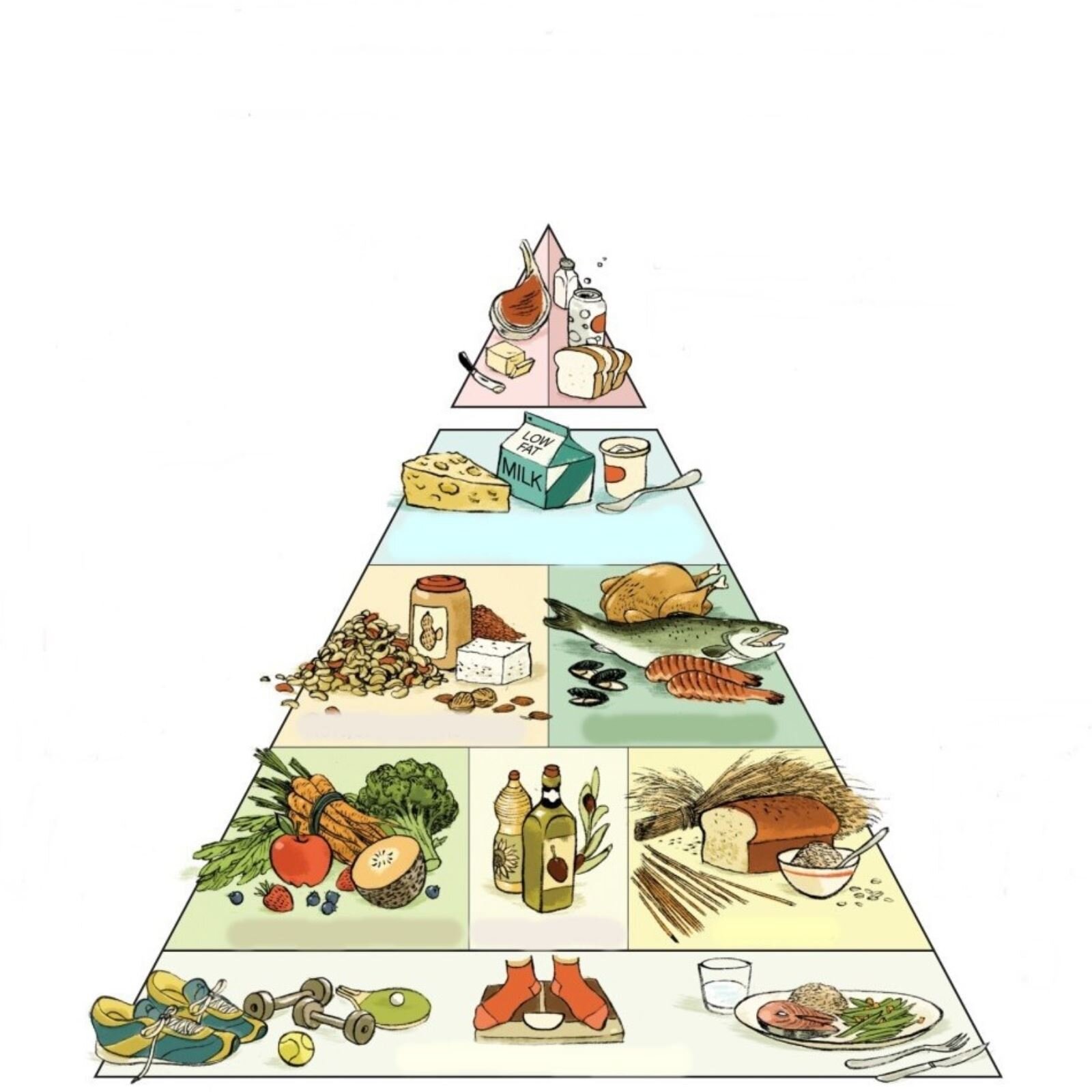
NutritionistsNutritionists and dieticiansdieticians use a healthy eating pyramidhealthy eating pyramid to plan meals. The healthy eating pyramid consists ofconsists of five shelvesshelves. The lowest shelf is the most important one. It’s all about exercise and weight controlweight control. In short, no matter what we eat, we always need physical activityphysical activity and portionsportions of the right size to keep healthy. The second shelf includes fruit and vegetables, healthy fats, and wholemealwholemeal products such as cereals, bread, pasta, and rice. The third shelf is all about nuts, seeds, as well as proteinsproteins such as poultrypoultry, fish, and eggs. The fourth shelf consists of dairy: milk, yogurt, and cheese. The fifth shelf has red meat, butter, and sweets. We should eat them in moderationin moderation. In short, the food pyramid suggests what to eat and in what amountsamounts in order to be healthy.
The pyramid is based on food requirementsfood requirements. For example, fruit and vegetables are some of the most important products because our body requires a lot of vitaminsvitamins and mineralsminerals. Our body needs a bit fewer carbohydratescarbohydrates than vitamins and that’s why foods like bread and pasta are higher on the pyramid. Red meat is at the very top because we only need a small amount of it to be healthy. It’s also important to remember that some food categories, like fats, have both bad and good products. For example, there’s a difference between saturatedsaturated and unsaturated fatsunsaturated fats. Generally, nutritionists recommendrecommend consumingconsuming mostly unsaturated fats that can be found in seedsseeds, nuts, vegetable oil and avocados. Saturated fats are the fats found in meat and dairy products. They’re important, but taking in too much saturated fat can lead to obesityobesity and heart problemsheart problems.
Źródło: Zuzanna Kościuk, [na podstawie:] https://www.hsph.harvard.edu/nutritionsource/healthy-eating-pyramid/ [dostęp 15.01.2023], https://www.hsph.harvard.edu/nutritionsource/healthy-eating-plate/ [dostęp 15.01.2023], licencja: CC BY-SA 3.0.
Group names of food items according to the information about the food eating pyramid.
Pogrupuj nazwy artykułów spożywczych, korzystając z informacji dotyczących piramidy zdrowego żywienia.
Search for the information in the text and decide if the following sentences are true or false.
Znajdź w tekście odpowiednie informacje i zdecyduj, czy podane zdania są prawdziwe, czy fałszywe.
Based on the information from the text, drag the words from the box to fill in the gaps.
Korzystając z informacji zawartych w tekście, przeciągnij w odpowiednie luki wyrazy z ramki.
2. We should mind the size of our food 1. DIETETICIANS, 2. UNSATURATED, 3. NUTRITIONISTS, 4. WEIGHT CONTROL, 5. FOOD GROUPS, 6. PORTIONS.
3. A healthy diet draws from all the 1. DIETETICIANS, 2. UNSATURATED, 3. NUTRITIONISTS, 4. WEIGHT CONTROL, 5. FOOD GROUPS, 6. PORTIONS to keep us as healthy as possible.
4. 1. DIETETICIANS, 2. UNSATURATED, 3. NUTRITIONISTS, 4. WEIGHT CONTROL, 5. FOOD GROUPS, 6. PORTIONS and 1. DIETETICIANS, 2. UNSATURATED, 3. NUTRITIONISTS, 4. WEIGHT CONTROL, 5. FOOD GROUPS, 6. PORTIONS use a healthy eating pyramid to plan meals.
5. Nutritionists recommend consuming mostly 1. DIETETICIANS, 2. UNSATURATED, 3. NUTRITIONISTS, 4. WEIGHT CONTROL, 5. FOOD GROUPS, 6. PORTIONS fats.
Słownik
/ əˈmaʊnts / / əˈmaʊnt /
ilości [ilość]
/ ˌbælənst ˈdaɪət /
zbilansowana dieta
/ ˌkɑːbəˈhaɪdreɪts /
węglowodany
/ kənˈsɪsts ɒv / / kənˈsɪst ɒv /
składa się z [składać się z]
/ kənˈsjuːmɪŋ / / kənˈsjuːm /
spożywanie [spożywać]
/ ˈdaɪət /
dieta
/ ˌdaɪəˈtɪʃn̩z / / ˌdaɪəˈtɪʃn̩ /
dietetycy [dietetyk/dietetyczka]
/ fæts / / fæt /
tłuszcze [tłuszcz]
/ fuːd ɡruːps / / fuːd ɡruːp /
grupy żywności [grupa żywności]
/ fuːd rɪˈkwaɪəmənts / / fuːd rɪˈkwaɪəmənt /
wymogi jedzeniowe [wymóg jedzeniowy]
/ ˈhelthetai ˈi:tɪŋ ˈpɪrəmɪd /
piramida zdrowego odżywiania
/ ˈhɑ:t ˈprɒbləmz / / ˈhɑ:t ˈprɒbləm /
problemy z sercem [problem z sercem]
/ ɪn ˌmɒdəˈreɪʃn̩ /
z umiarem
/ ˈnjuːtrɪənts / / ˈnjuːtrɪənt /
składniki odżywcze [składnik odżywczy]
/ njuːˈtrɪʃn̩ /
żywienie, odżywianie
/ ˈmɪnərəlz / / ˈmɪnərəl /
minerały [minerał]
/ njuˈtrɪʃənɪsts / / njuˈtrɪʃənɪst /
specjaliści od żywienia [specjalista/specjalistka od żywienia]
/ əʊˈbiːsɪti /
otyłość
/ ˈfɪzɪkl̩ ækˈtɪvəti /
aktywność fizyczna
/ ˈprəʊtiːnz / / ˈprəʊtiːn /
proteiny
/ ˈpɔːʃn̩z / / ˈpɔːʃn̩ /
porcje [porcja]
/ ˈpəʊltri /
drób
/ ˌrekəˈmend /
zalecać
/ rɪˈfaɪnd ɡreɪnz /
przetworzone ziarna
/ sɔːlt /
sól
/ ˈsætʃəreɪtɪd fæts /
tłuszcze nasycone
/ siːdz / / siːd /
ziarna [ziarno]
/ ʃelvz / / ʃelf /
półki, schodki, poziomy [półka, schodek, poziom]
/ ˈʃʊɡə /
cukier
/ ʌnˈsætʃəreɪtɪd fæts /
tłuszcze nienasycone
/ ˈvɪtəmɪnz / / ˈvɪtəmɪn /
witaminy [witamina]
/ ˈhəʊlmiːl /
pełnoziarnisty, razowy
/ weɪt kənˈtrəʊl /
kontrola wagi ciała
Źródło: GroMar Sp. z o.o., licencja: CC BY‑SA 3.0