Positivist beliefbeliefbelief system. Realism and naturalism
The positivist era in Poland started in 1864, after the fall of the January UprisinguprisingUprising. It was the time when romantic ideals started to lose over cognitive recognition. Attitudes aimed at the reconstruction and integrationintegrationintegration of societysocietysociety were promoted (work at the grassrootswork at the grassrootswork at the grassroots, organic workorganic workorganic work, emancipation of womenemancipation of womenemancipation of women, assimilationassimilationassimilation of Jews). People believed in progressprogressprogress, the value of science and hard work.
Exercise 1
Take part in a discussion about romantic beliefs. Decide what could be the reasons for romantic ideals to become obsolete – take into account the historical context.
Find in the available sources the origins of the word positivismpositivismpositivism.
Exercise 2
Read a passage from Aleksander Świętochowski's text entitled My i wy, which is a kind of a positivist manifesto, and decide what is the reason for the lack of understanding between the representatives of the two eras.
Aleksander ŚwiętochowskiMy i wy
[...] My jesteśmy młodzi, nieliczni, nie rządzący się widokami materialnych korzyści, uwolnieni z obowiązku hołdowania pewnym stosunkom i znajomościom, wypowiadamy swoje przekonania otwarcie, nie lękamy się sądu i kontroli, pragniemy ją rozciągnąć na wszystkich, pragniemy pracy i nauki w społeczeństwie, pragniemy wywołać siły nowe, zużytkować istniejące, skierować uwagę przed, a nie poza siebie - oto nasze wady. Wy jesteście starzy, liczni, krępowani między sobą tysiącem niewidzialnych nici, skradacie się ze swoimi zasadami nieśmiało, żądacie w literaturze spokoju, nieruchomości, każecie wszystkim patrzyć w przeszłość, szanować nawet jej błędy, chcecie, ażeby was, tak jak senatorów rzymskich, była zawsze jedna tylko liczba, ażeby was nikt nie sądził, nikt o nic nie upominał - oto wasza zasługa. Czy idąc tak odmiennymi drogami, możemy się spotkać kiedykolwiek i uszanować wzajemnie swoje cele? Nigdy! Wiemy to - między naszymi obozami popalone mosty, pozrywane groble. Zarzucacie nam, że gardzimy wszystkim, co się przed nami stało, że nie jesteśmy sprawiedliwi dla zasług starszego pokolenia. Kłamstwo - ufundowane na tym, że nie jesteśmy zapalczywymi tych zasług czcicielami. Nie przeczymy, że każdy miał swój czas, w którym coś pożytecznego zrobił, ale czyż to nadaje mu prawo słusznego żądania od innych, ażeby cały swój czas poświęcali rozpamiętywaniu jego czynów jako osłodą jego ostatnich chwil życia? Wdzięczność i szacunek dla poprzedników w sferze pracy umysłowej nie jest wdzięcznością syna dla dobrego ojca. Postęp biegnie tak szybko, obowiązki jednostek tak wielkie, że ci, co wstąpili później do wielkiej pracowni ducha, zaledwie czas mają obejrzeć się na tych, co przed nimi byli. A cóż dopiero gdy starsi, zasmakowawszy w korzyściach swego wpływu na społeczeństwo, który już zaczyna być zgubnym, nie chcą oddać cugli młodszym, przybywającym ze świeżością sił i lepszym pojęciem potrzeb? Cóż powiedzieć, gdy starsi zamiast usunąć się z pola, na którym już nic zrobić nie mogą, stoją na nim upornie, opóźniając postęp przekonań i wlewając w społeczeństwo tę martwotę, która im już tylko z całego życia pozostała? Naturalnie wtedy wywołują oni nie tylko opór, ale nawet potępiające sądy o swej działalności, której w porę nie umieli przerwać. Szkody, które robią przy końcu swego zawodu, każą nieraz zapominać o dobrodziejstwach przy jego początku. W życiu społeczeństw są zawsze pewne chwile, w których pokolenia jak warta zmieniają się nawzajem. Szczęśliwy ogół, około którego straż zmienia się regularnie; nieszczęśliwy i źle strzeżony, gdy starych i znużonych długim czuwaniem gwardzistów nie zastępują nowi. W obowiązkach ludzi, którzy stanęli do przewodniczenia drugim, leży nie tylko powinność spełniania swej władzy sumiennie, ale także złożenia jej w porę. Każdy organizm ma swoją chwilę, od której przestaje być czynnym.
aleks Source: Aleksander Świętochowski, My i wy, 1871.
RVaEN72ZFFO6J
Exercise 3
Przypomnij sobie tytuł abstraktu, wysłuchaj nagrania i spróbuj zaproponować własny temat dla dzisiejszej lekcji.
Przypomnij sobie tytuł abstraktu, wysłuchaj nagrania i spróbuj zaproponować własny temat dla dzisiejszej lekcji.
Use the table to compare the features of romantics, criticised by Świętochowski, and the features of young positivists. In your opinion, is it unwise to reject the beliefs of the preceding generations, or on contrary – necessary for development? What is the funtion of the respective use of 1st and 2nd person plural in the text?
ROMANTICS
POSITIVISTS
R1e5MG44VtVNb1
Exercise 4
Match the names of philosophical trends popular during the era of positivism with their definitions. Word: scientism. Możliwe odpowiedzi: 1. philosophical view arguing that gaining true knowledge about the reality is only possible through scientific cognition, 2. philosophical view according to which society functions like a living organism and its individual elements are closely interconnected, 3. a direction in philosophy and social sciences explaining the forms of existence and structure of reality as a result of the action of the laws of evolution, 4. philosophical doctrine, according to which usefulness to society is the basic criterion of the individual's action and judgement. Word: utilitarianism. Możliwe odpowiedzi: 1. philosophical view arguing that gaining true knowledge about the reality is only possible through scientific cognition, 2. philosophical view according to which society functions like a living organism and its individual elements are closely interconnected, 3. a direction in philosophy and social sciences explaining the forms of existence and structure of reality as a result of the action of the laws of evolution, 4. philosophical doctrine, according to which usefulness to society is the basic criterion of the individual's action and judgement. Word: organicism. Możliwe odpowiedzi: 1. philosophical view arguing that gaining true knowledge about the reality is only possible through scientific cognition, 2. philosophical view according to which society functions like a living organism and its individual elements are closely interconnected, 3. a direction in philosophy and social sciences explaining the forms of existence and structure of reality as a result of the action of the laws of evolution, 4. philosophical doctrine, according to which usefulness to society is the basic criterion of the individual's action and judgement. Word: evolutionism. Możliwe odpowiedzi: 1. philosophical view arguing that gaining true knowledge about the reality is only possible through scientific cognition, 2. philosophical view according to which society functions like a living organism and its individual elements are closely interconnected, 3. a direction in philosophy and social sciences explaining the forms of existence and structure of reality as a result of the action of the laws of evolution, 4. philosophical doctrine, according to which usefulness to society is the basic criterion of the individual's action and judgement.
Match the names of philosophical trends popular during the era of positivism with their definitions. Word: scientism. Możliwe odpowiedzi: 1. philosophical view arguing that gaining true knowledge about the reality is only possible through scientific cognition, 2. philosophical view according to which society functions like a living organism and its individual elements are closely interconnected, 3. a direction in philosophy and social sciences explaining the forms of existence and structure of reality as a result of the action of the laws of evolution, 4. philosophical doctrine, according to which usefulness to society is the basic criterion of the individual's action and judgement. Word: utilitarianism. Możliwe odpowiedzi: 1. philosophical view arguing that gaining true knowledge about the reality is only possible through scientific cognition, 2. philosophical view according to which society functions like a living organism and its individual elements are closely interconnected, 3. a direction in philosophy and social sciences explaining the forms of existence and structure of reality as a result of the action of the laws of evolution, 4. philosophical doctrine, according to which usefulness to society is the basic criterion of the individual's action and judgement. Word: organicism. Możliwe odpowiedzi: 1. philosophical view arguing that gaining true knowledge about the reality is only possible through scientific cognition, 2. philosophical view according to which society functions like a living organism and its individual elements are closely interconnected, 3. a direction in philosophy and social sciences explaining the forms of existence and structure of reality as a result of the action of the laws of evolution, 4. philosophical doctrine, according to which usefulness to society is the basic criterion of the individual's action and judgement. Word: evolutionism. Możliwe odpowiedzi: 1. philosophical view arguing that gaining true knowledge about the reality is only possible through scientific cognition, 2. philosophical view according to which society functions like a living organism and its individual elements are closely interconnected, 3. a direction in philosophy and social sciences explaining the forms of existence and structure of reality as a result of the action of the laws of evolution, 4. philosophical doctrine, according to which usefulness to society is the basic criterion of the individual's action and judgement.
Match the names of philosophical trends popular during the era of positivism with their definitions.
philosophical doctrine, according to which usefulness to society is the basic criterion of the individual's action and judgement, philosophical view arguing that gaining true knowledge about the reality is only possible through scientific cognition, a direction in philosophy and social sciences explaining the forms of existence and structure of reality as a result of the action of the laws of evolution, philosophical view according to which society functions like a living organism and its individual elements are closely interconnected
scientism
utilitarianism
organicism
evolutionism
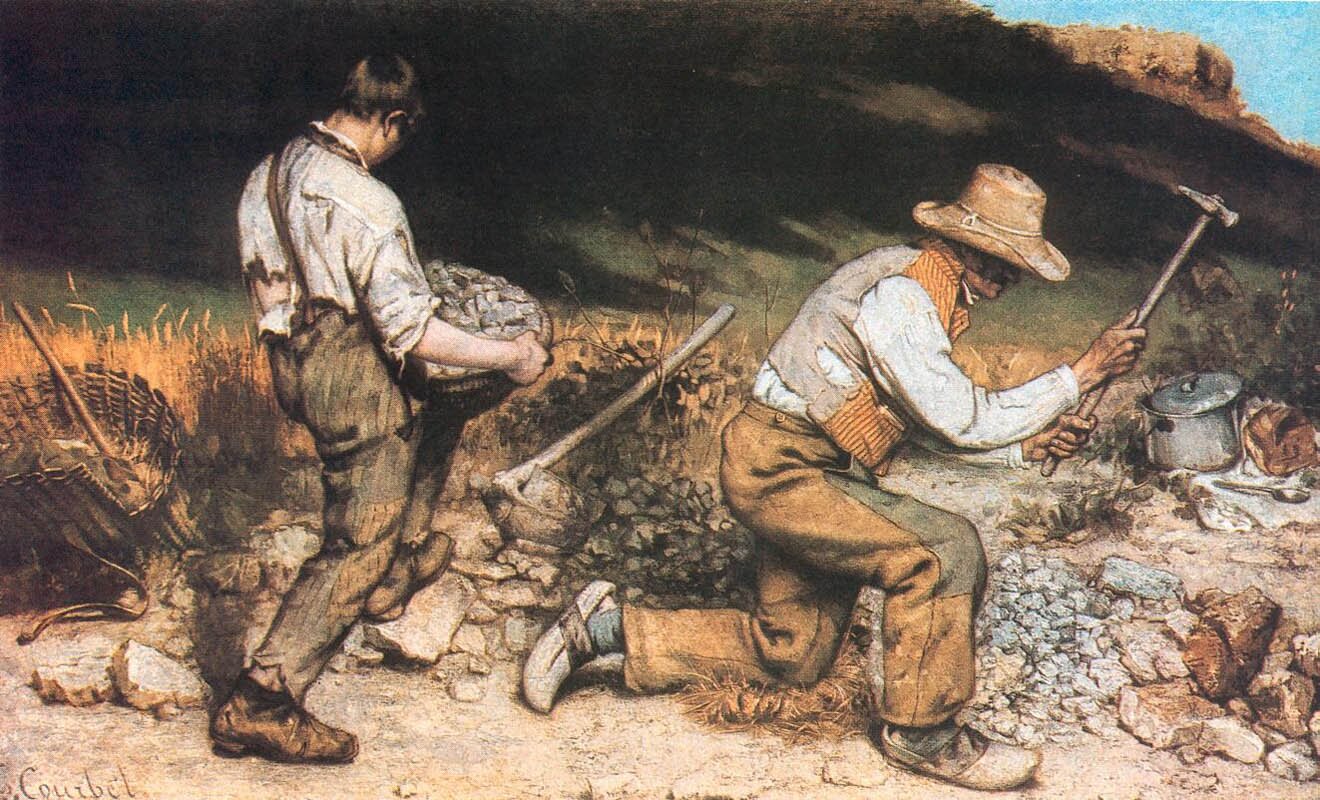
The basic creative method for positivists was realism, an idea of a faithful recreation of reality.
Realism in painting is a particular starting point and at the same time a destination for the era of positivism – in regards to both the belief system, literature and philosophy…
R3Vr17wZciflo
Obraz przedstawia dwóch mężczyzn. Jeden z nich ma młotek, którym zamierza się na kamienie, drugi dźwiga kamienny blok. Mężczyźni mają na sobie połatane ubrania. Pracują w górzystym terenie.
The painting was destroyed during the allied air raids over Dresden.
Source: Gustav Courbet, The Stone Breakers, 1849, domena publiczna.
Painter Gustav Courbet – French realist – advised his students to wander – walk and observe, and then capture the details of the world they saw on canvas. French writer – Stendhal – argued that a good novel should be like a „a mirror that hangs over a road. It reflects the azure sky, the mud of a roadside puddle”.
This is why positivists reached for entirely new themes. An audience used to romantic landscapes and a romantic dimension in novels was destined to be surprised by the portrayals of ordinary people, short stories about peasants seeking work in the city, a purchase of a cow, mines, Vogt, uneducated writers, or neglected children…
Exercise 5
Read the excerpt from the Chronicles of B. Prus and do the tasks.
Bolesław PrusKroniki
RYIddlupORvoK
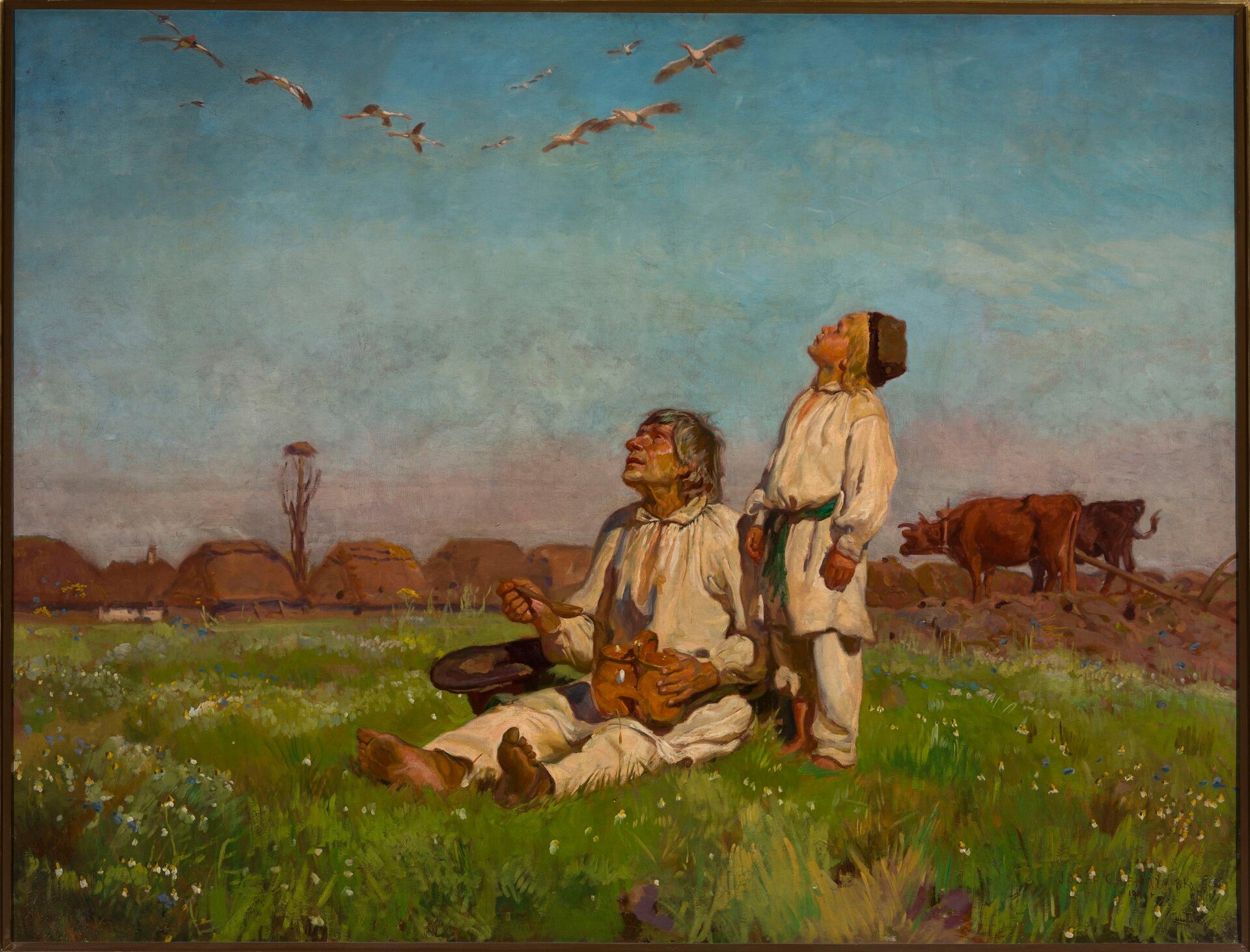
Obraz przedstawia mężczyznę i chłopca na łące. Mężczyzna siedzi, obok niego stoi chłopiec. Mają na sobie chłopskie, jasne stroje. Zadzierają głowy i patrzą na klucz lecących bocianów. W tle widać chaty i woły.
Oil on canvas, National Museum in Warsaw
Source: Józef Chełmoński, Storks, 1900, domena publiczna.
Pewien tutejszy autor napisał kilka lat temu powieść pod tytułem Figa z Makiem czy też Dziura w Moście, usiłując scharakteryzować w niej życie społeczne, stosunki społeczne i typy kilku pokoleń. U nas w Anglii pytano by przede wszystkim: O ile owe typy i stosunki są prawdziwe i o ile nowe? Tu jednak najniecierpliwiej dowiadywano się, dlaczego powieść nosi tytuł Figa z Makiem czy też Dziura w Moście, i czy Dziura ożeni się z Makiem, a Figa z Mostem?... Gdyby z góry było wiadome: kto się z kim ożeni i kto za kogo pójdzie, polska powieść nie miałaby czytelników.
prus Source: Bolesław Prus, Kroniki, t. 9, s. 110.
Exercise 6
Think and determine the meaning B. Prus' text. Is it serious or jocular? Why do Prus write: U nas w Anglii?
Exercise 7
What did nineteenth‑century readers expect from literature according to B. Prus?
RWwg5fcdGi5bC
Exercise 8
Wymyśl pytanie na kartkówkę związane z tematem abstraktu.
Wymyśl pytanie na kartkówkę związane z tematem abstraktu.
On the basis of the pieces by Courbet and Chełmoński above, identify the features of realist painting – and at the same time also the poetics of realism in literature.
Anonymity of characters.
Typical images of places, e.g. countryside, a city.
Daily life, triviality, prosaism, commonness.
Elements of ugliness.
A character representative to his social, professional or moral group.
The foreground exposing a certain taboo: dirt, destruction, lack of the classically understood aesthetics.
The foreground exposing the loneliness and tragedy of a man, his strong relationship with the forces of evil and the transcendental world.
Compatibility of the image with the objective world; lack of imagery or unnecessary ornamentation.
Meticulousness.
A unique, heroic protagonist, prophet, bard.
Poetics of the sublime.
Spatial order.
Theatrically posed characters.
R1NgnO6dcqkK9
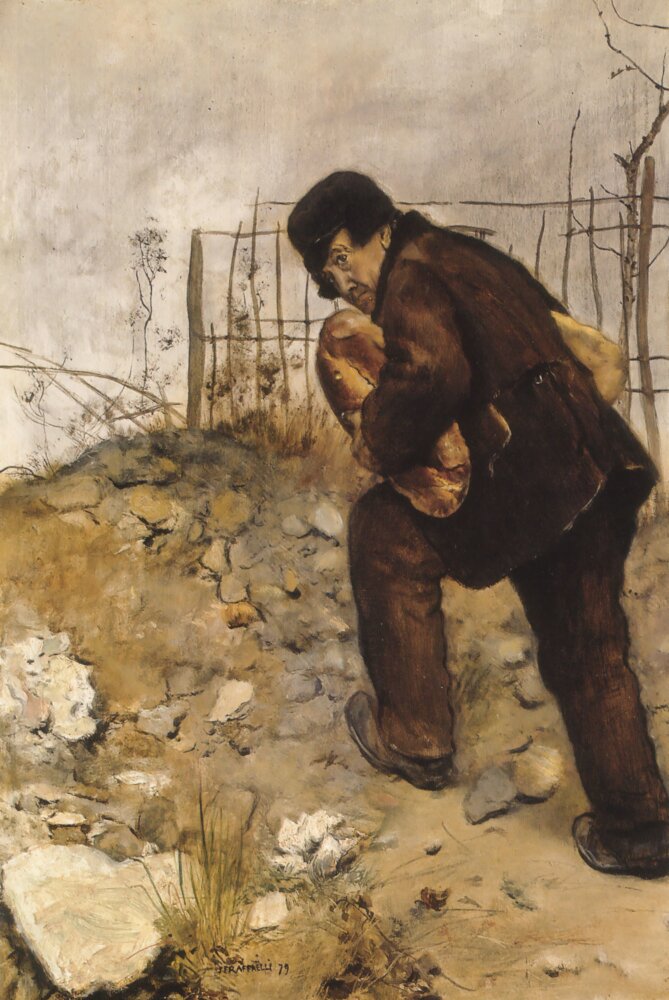
Obraz przedstawia mężczyznę, który pod pachami niesie dwa bochny chleba. Ma na sobie ciemny strój, odwraca się w kierunku osoby obserwującej obraz. Idzie kamienistą ścieżką wiodącą lekko pod górkę. Po jego prawej stronie fragment płotu.
Realism strived to reveal the truth about the society and the man; truth based on a detailed description of reality. The meticulousness of picturing the world crossed the frameworks of romantic poetics. Naturalism was born, showing a "brutally true" picture of a man.
Source: Jean-François Raffaëlli, Man with two loaves of bread, 1879, domena publiczna.
Exercise 9
Read a passage from Emile Zola's novel „Nana” and follow the instructions:
a) Identify the details of the description in the passage. Explain what a „brutally true” description of a man is.
b) Describe your feelings after the reading.
c) Identify what the subject of the description further in the passage is. What is the result of such description? Where is the place of a man?
Exercise 10
Decide which of the ways of portraying reality is closer to you – romantic or positivist.
RYvdI2QuMlIlV
Prepare a multiple choice test that will allow your school friend to check the knowledge that they gained during the lesson.
Prepare a multiple choice test that will allow your school friend to check the knowledge that they gained during the lesson.
Prepare a multiple choice test that will allow your school friend to check the knowledge that they gained during the lesson.