Poland in the contemporary world
Foreign policy consists of self‑interest strategies chosen by the state to safeguardto safeguard its national interests and to achieve goals on an international scale.
According to the Constitution of the Republic of Poland the responsibilities connected with the foreign policy are shared by the President of the Republic and the Council of Ministers.
You will be able to explain the role of the President of the Republic of Poland and the Council of Ministers in carrying out the Polish foreign policy.
You will be able to explain the difference between an embassy and a consulate.
You will be able to name and explain the most important goals of the Polish foreign policy after 1989.
According to the Constitution, the Council of Ministers is responsible for conductingconducting Polish foreign policy. This includes ensuring external security of the state and exercising general control in the field of relations with other states and international organizations. The person directlydirectly responsible for the coordination of foreign policy in the government is the Minister of Foreign Affairs. The Minister is assistedassisted by foreign service, i.e. officials and diplomats working in the Ministry of Foreign Affairs in Warsaw and diplomatic missions abroad.
The President of the Republic of Poland is also an important body implementing foreign policy. According to the Constitution, the President represents the state in external relations (he is “the supreme representative of the Republic of Poland”), guarantees the continuity of state power, safeguards the sovereignty and security of our country and the inviolability and integrity of its territory. In the field of foreign policy the President cooperates with the Prime Minister and the Minister of Foreign Affairs. His main competence is ratifying and renouncing international agreements.
Visa – permission to cross the border or stay in the territory of a given country.
The role of Poland in the world in the last 25 years has changed significantly. Before 1989 Poland was a socialist state, non‑sovereign in international relations, violating basic civil rights and freedoms, with a centrally managed economycentrally managed economy. After the transition of 1989 Poland became a democratic country, sovereign in international relations, observing the rule of law, with a market economymarket economy. We are currently the member of the most important global and regional international organizations of an economic, political and military character. We participate in numerous peace operations. We have orderlyorderly relationships with our nearest neighbors, we are perceivedperceived as a stablestable and predictablepredictable partner.
In 1989 after regainingregaining the sovereignty and independence from the Eastern Bloc, above all the Union of Soviet Socialist Republics (USSR), the most important goals of the new Polish foreign policy included:
becoming a part of the European security system by developing cooperation with European communities,
developing cooperation with the closest neighbors: Germany in the West, and the states created after the collapse of the Soviet Union in the East,
creating new regional tiesregional ties, especially in relations between the Czech Republic, Slovakia and Hungary,
development of political, economic and cultural cooperation with the countries of Western Europe and the United States.
The strategic goal of Poland in the early 1990s was membership in the European Union and the North Atlantic Treaty Organization. These organizations were able to provide Poland withto provide Poland with military and economic security. In relations with our eastern neighbors, the main issues at the beginning of the 1990s were: the withdrawalwithdrawal of Soviet troops from Poland and the establishment of relations with the states formed after the collapse of the USSR. On the anniversary of the Soviet aggression on Poland, on September 17, 1993, the last group of Russian soldiers left the territory of our country. Since the beginning of the 1990s, Poland has recognized the United States as a strategic partner. Our country maintainsmaintains relations with this country in the sphere ofin the sphere of economy, promotion of democracy and, through NATO, in the area of security.
Polish membership in international organisations
Poland is currently a member of the most important international organisations of a universal nature (open to members from all regions of the world) and regional ones (which can be accessed only by countries from a specific region of the world, e.g. Europe). The Republic of Poland belongs to several dozen governmental organisations. It also cooperates within other structures, such as the Visegrad Group (association of Poland, the Czech Republic, Slovakia and Hungary). Poland is also a founding memberfounding member of the United Nations (UN) and has joined a number of specialized agencies that are part of the United Nations system.
From the very beginning, Poland actively participated in the meetings of the Conference on Security and Co‑operation in Europe (CSCE). To date, the Organization for Security and Co‑operation in Europe (OSCE), which is a continuation of the CSCE, remains an important element of European security for Poland.
Since 1989, Poland has begun to seekseek membership in organizations previously gatheringgathering only Western European countries. The first organisation that opened to the countries of Central and Eastern Europe was the Council of Europe. Poland’s accession to the Council of Europe (1991) meant that our country was recognised as a democratic state, respectful of the rule of law and human rights. In 1993, the Convention for the Protection of Human Rights and Fundamental Freedoms – the most important document of the Council of Europe on human rights – became applicablebecame applicable to Poland. This gave Poles the opportunity to lodge complaintsto lodge complaints to the European Court of Human Rights.
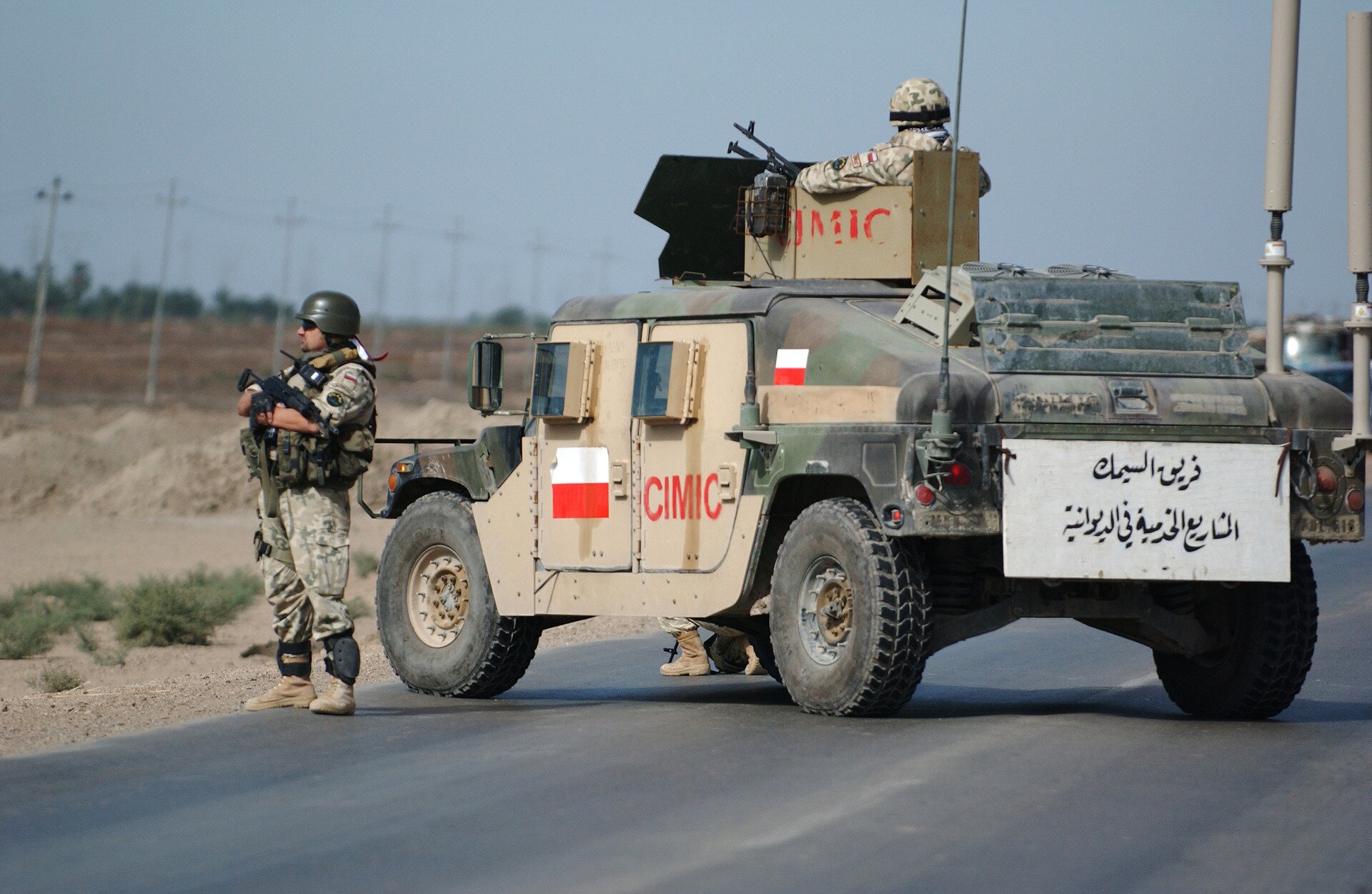
Poland also sought to join the most important economic, political and military organisations. The strategic goal was membership in the European Union and NATO. We received the status of a full member of the EU on 1 May, 2004, and NATO – on 12 March, 1999. Poland participates in peacekeeping operations of the United Nations, the European Union, the Organization for Security and Cooperation in Europe and NATO. The nature of the tasks entrustedentrusted to Polish soldiers is very diversediverse: from control and observation, through logistics, to sapper trainings or securing contingents. Considering the number of soldiers and missions in which our country participated, Poland is the most involved of all European countries.
Poland is a country that has clearly defined foreign policy goals and is able to persistentlypersistently pursue these goals.
Do you know what international organizations Poland belongs to? Highlight the universal organizations with green, the regional – with yellow, and the informal groups – with gray.
{green}World Health Organization{/green} {yellow}Central European Initiative{/yellow}
{green}International Atomic Energy Agency{/green} {gray}Visegrád Group{/gray} {yellow}Council of Europe{/yellow}
{yellow}North Atlantic Treaty Organization{/yellow} {yellow}European Union{/yellow}
{green}United Nations Organization{/green} {gray}Weimar Triangle{/gray} {yellow}European Space Agency{/yellow}
{gray}Three Seas Initiative/Baltic, Adriatic, Black Sea (BABS) Initiative{/gray}
{yellow}Council of the Baltic Sea States{/yellow} {green}Universal Postal Union{/green}
Listen to the abstract recording to review the material and new vocabulary. Then do the vocabulary exercise. Match the pairs: English and Polish words.
składać skargi, gospodarka rynkowa, gospodarka centralnie planowana, uporczywie, konsekwentnie, zacząć obowiązywać, więzi regionalne, zabezpieczeć, w sferze, w zakresie
| to safeguard | |
| centrally managed economy | |
| market economy | |
| regional ties | |
| in the sphere of | |
| to become applicable | |
| to lodge complaints | |
| persistently |
Keywords
foreign policy, Minister of Foreign Affairs, external security, foreign service, diplomatic mission, embassy, consulate, inviolability/integrity of territory, ratifying and renouncing international agreements, visa, sovereignty, international organization, peace operation, regional ties, European Union, North Atlantic Treaty Organization, the Council of Europe, European Court of Human Rights, Organization for Security and Co‑operation in Europe, Convention for the Protection of Human Rights and Fundamental Freedoms
Glossary
zabezpieczać
przewodzić, prowadzić
bezpośrednio
wspierać, pomagać
goszczący
gospodarka centralnie planowana
gospodarka rynkowa
uporządkowane
być postrzeganym
stabilny
przewidywalny
odzyskać
więzi regionalne
zapewniać
wycofanie
utrzymywać
w sferze, w zakresie
członek‑założyciel (państwo założycielskie)
szukać, dążyć do
skupiać
zacząć obowiązywać
składać skargi
powierzony
zróżnicowany
uporczywie, konsekwentnie
realizować (cele)